
14 Best Email Marketing Tools for BigCommerce Stores in 2026 (Tested & Compared)

BigCommerce stores usually have more operational complexity than their email list suggests. Catalogs can be large, customer groups can be meaningful, and the checkout may carry wholesale, guest, subscription, or multi-store rules that a basic newsletter tool cannot understand.
That makes the integration the product. A platform that only imports email addresses can send campaigns, but it cannot reliably answer the questions that make ecommerce email useful: what did this customer buy, what is in the cart, which products are compatible, when should the customer reorder, and which message actually drove the sale?
I compared 14 email marketing tools for BigCommerce across customer and consent sync, catalog and order data, cart recovery, customer-group segmentation, post-purchase automation, transactional email, deliverability controls, reporting, setup effort, and total cost. The list includes specialist ecommerce platforms, general-purpose tools, and lower-cost send-volume options.
For store-specific implementation details, benchmarks, and sequence blueprints, see the BigCommerce email marketing guide. For a broader comparison, see the best email marketing platforms for ecommerce.
Quick comparison table
| Tool | Best for | BigCommerce connection | Starting price | Main tradeoff |
|---|---|---|---|---|
| Klaviyo | Advanced ecommerce data | Native integration | Free for a small list; paid plans scale with profiles | Expensive at scale |
| Omnisend | Email, SMS, and push | Native integration | Free tier; paid plans from about $16/mo | Less predictive depth |
| Sequenzy | Value lifecycle automation | API and store-event sync | Free up to 2,500 emails/mo | More setup ownership |
| Drip | Email-first ecommerce | Ecommerce integration | Paid plans scale with contacts | No SMS or broad CRM |
| ActiveCampaign | CRM and branching | Connector and API options | Paid plans scale with contacts | More complexity than most stores need |
| Mailchimp | Familiar general marketing | Connector options | Free for small lists | Event coverage varies |
| Brevo | Send-volume budgets | Connector options | Free daily allowance | Simpler product workflows |
| GetResponse | Funnels and webinars | Connector options | From about $19/mo | Ecommerce depth is not its core |
| MailerLite | Simple campaigns and forms | Connector and embed options | Free for small lists | Limited product intelligence |
| Sendlane | Mid-market DTC | Ecommerce integrations | Paid plans | Smaller ecosystem |
| Remarkety | Automated merchandising | Ecommerce-focused connection | Paid plans | Less general-purpose |
| Flodesk | Design-led campaigns | Forms and connectors | Flat-fee plans | Not built around catalog events |
| SmartrMail | Catalog recommendations | Ecommerce integrations | Paid plans | Narrower automation surface |
| Sender | Low-cost early growth | Forms and connectors | Generous free tier | Less advanced attribution |
Best BigCommerce email platform by use case
Best for advanced BigCommerce stores: Klaviyo
Klaviyo is the best fit when customer, catalog, order, and behavioral data need to drive a sophisticated retention program. It earns its cost when the team actually uses deep segments, dynamic product content, and revenue reporting.
Best for email, SMS, and push: Omnisend
Omnisend is the practical middle ground for small and mid-sized stores that want multiple channels without assembling several tools. Its prebuilt ecommerce workflows shorten the path from install to first useful automation.
Best value for lifecycle email: Sequenzy
Sequenzy is a strong value choice when the store wants AI-assisted welcome, cart, post-purchase, and win-back sequences without paying for every inactive contact. Send-volume pricing is attractive for seasonal or large-but-lightly-mailed lists.
Best email-first revenue attribution: Drip
Drip makes sense when email is the main retention channel and the team wants clean visual workflows and purchase reporting rather than a full CRM or messaging suite.
Best for CRM-connected commerce: ActiveCampaign
ActiveCampaign fits stores where a BigCommerce purchase is one part of a larger sales process. Lead scoring, sales follow-up, and branching automations can matter more than product recommendations for B2B and consultative businesses.
Best low-cost sending: Brevo
Brevo is worth considering when the list is large but sending volume is moderate, or when transactional delivery needs to live alongside campaigns. It is less compelling when every flow depends on rich product events.
What a BigCommerce email platform actually needs
Complete customer and consent synchronization
The tool should distinguish subscribed contacts from customers who merely received an operational order email. Preserve consent source, timestamp, list membership, unsubscribe state, and suppression status. A customer address is not automatically a marketing subscriber.
Catalog and order data
Useful ecommerce journeys need products, variants, categories, prices, discounts, order status, refunds, fulfillment, and line items. Test whether the integration exposes the fields your segments use rather than relying on a generic “BigCommerce integration” badge.
Cart and checkout recovery
Cart recovery should identify what was left behind and link back to a working checkout. Test logged-in and guest behavior, multiple carts, coupon handling, and the timing of abandoned-cart events. A reminder without a reliable recovery URL is just a regular campaign.
Customer groups and B2B rules
BigCommerce customer groups can represent wholesale pricing, trade buyers, VIPs, or regional rules. The email platform should either sync those groups or give the team a dependable way to send the attributes through custom fields or events.
Multi-store and operational boundaries
If the business runs multiple storefronts, confirm whether data is kept separate, shared intentionally, or accidentally duplicated. Decide which domain sends each message and which store owns the customer relationship before turning on automations.
Transactional and marketing separation
Order confirmations, shipping updates, password emails, and promotional campaigns have different consent and deliverability requirements. Keep them distinguishable in the platform, authenticate the sending domain, and make sure a marketing unsubscribe does not break required operational messages.
Pricing at the real list shape
Compare both active contacts and monthly sends. A store with 100,000 historical contacts but a 20,000-person engaged audience may pay very differently under contact pricing than under volume pricing. Include SMS, transactional messages, add-ons, and implementation time in the estimate.
How we evaluated these BigCommerce email tools
We scored the jobs an operator must be able to complete after installation:
- Capture a subscriber with a clear source and consent state.
- Sync a customer, product, order, refund, and fulfillment event.
- Recover a cart with the correct products and a working return path.
- Build a welcome, post-purchase, replenishment, and win-back flow.
- Segment by purchase history, category, customer group, and engagement.
- Prevent duplicate sends when more than one event arrives for an order.
- Keep transactional messages separate from promotional suppression.
- Review revenue attribution without treating every assisted order as causal proof.
- Estimate cost for a small store, a growing store, and a seasonal list.
The integration has to be evaluated with a real test customer and test order. A marketplace listing can tell you that a connector exists; it cannot tell you whether the connector delivers the exact events your automation needs.
The 14 best email marketing tools for BigCommerce
1. Klaviyo — best for advanced BigCommerce data
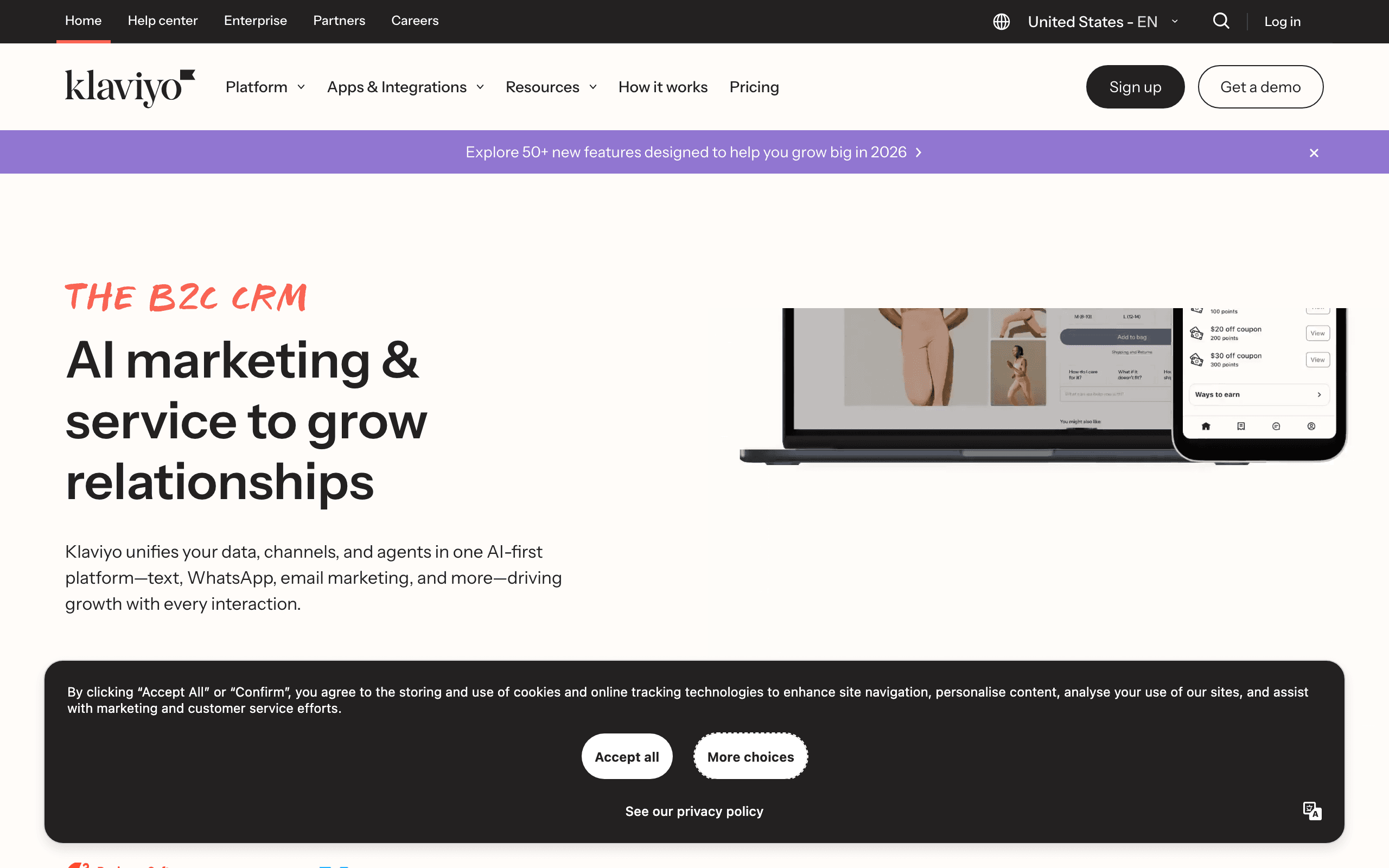
Best for: Established BigCommerce stores with enough order volume to use advanced segmentation, product recommendations, and revenue reporting.
Pricing: Free for a small list, with paid email plans scaling by profiles; SMS and additional usage are separate costs.
Klaviyo is the strongest specialist option when BigCommerce data needs to become a serious retention program. Customer profiles, product and order events, behavioral signals, and predictive features can support cart recovery, browse follow-up, replenishment, VIP treatment, and win-back journeys.
The platform is particularly useful for teams that already know which segments they want to operate. A high-value customer, a first-time buyer, a customer who bought from one category but not its companion category, and a customer who has stopped engaging can all receive different treatment.
The downside is cost and operational weight. Pricing rises with the profile count, and the platform rewards teams that maintain event definitions, suppression rules, templates, and reporting discipline. It is not automatically the best choice for a small store with a handful of campaigns.
What it does well: Deep profiles, mature ecommerce flows, product-aware content, predictive segments, and strong email plus SMS capabilities.
Where it falls short: Contact-based economics, implementation complexity, and more data than a small team may be ready to manage.
Verdict: The best advanced choice when BigCommerce data and email revenue justify a specialist platform.
2. Omnisend — best for email, SMS, and push
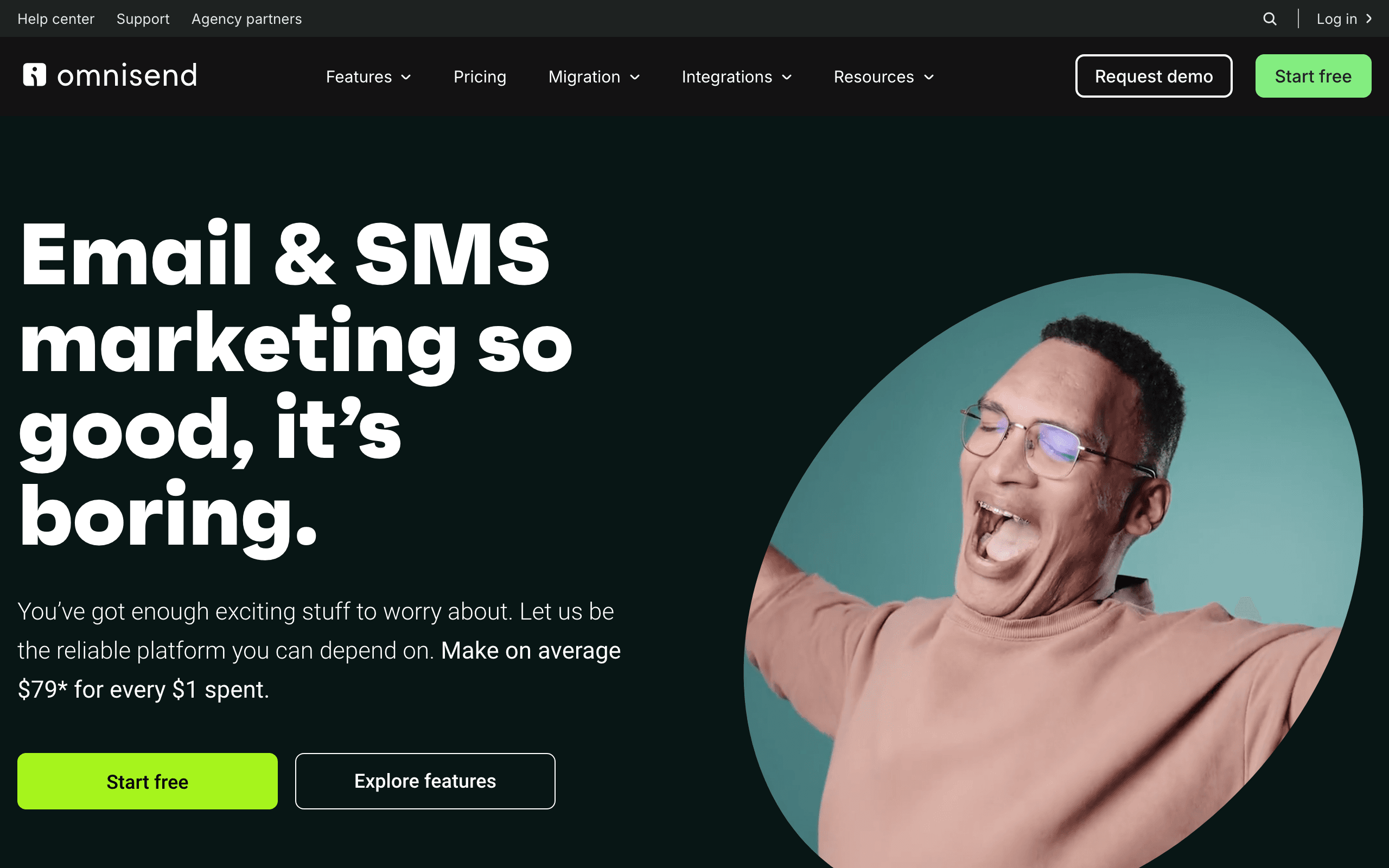
Best for: Small and mid-sized BigCommerce stores that want multiple channels and prebuilt ecommerce workflows.
Pricing: Free for a small audience, with paid plans based on contacts and message channels.
Omnisend is the practical middle ground between a basic newsletter tool and an advanced data platform. Its BigCommerce connection and prebuilt automations make it straightforward to launch welcome, cart, browse, post-purchase, and win-back sequences.
Email, SMS, and push can be coordinated from one automation. That is useful when the store has a clear reason to use more than email, such as a time-sensitive promotion or a replenishment reminder where an additional channel improves reach.
The tradeoff is that additional channels add both cost and consent management. Reporting and predictive capabilities are not as deep as Klaviyo's, so stores with complex merchandising or high-value segmentation should compare actual event coverage before choosing.
What it does well: Fast ecommerce setup, useful templates, multichannel workflows, and approachable automation.
Where it falls short: Channel costs, less predictive depth, and a ceiling for highly custom data models.
Verdict: The best all-around multichannel choice for many growing BigCommerce stores.
3. Sequenzy — best value for AI-assisted lifecycle automation
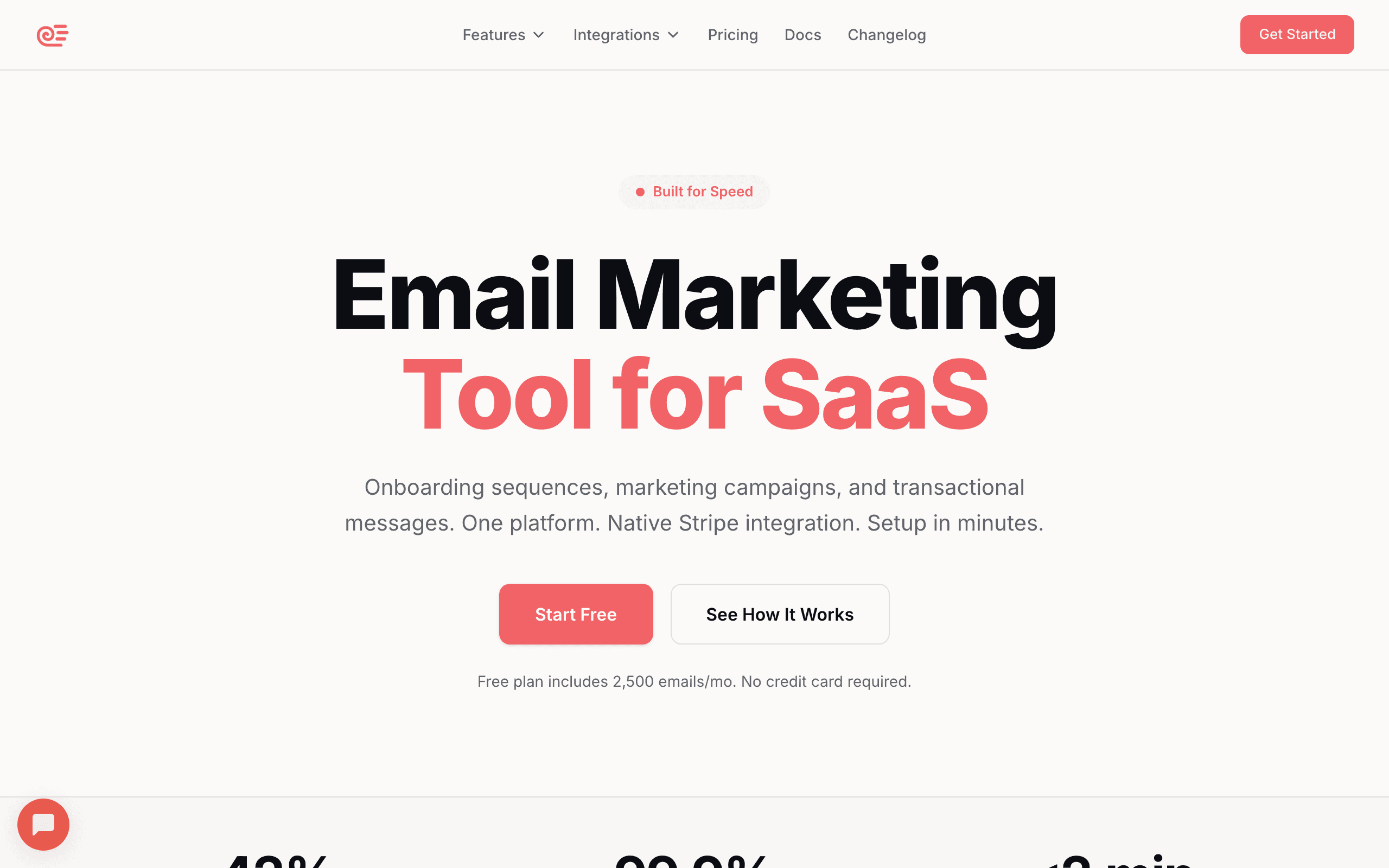
Best for: Stores that want a complete lifecycle program, transactional delivery, and email-volume pricing.
Pricing: Free up to 2,500 emails per month, with paid plans starting around $19/month depending on current volume tiers.
Sequenzy is a good fit when the store needs more than broadcasts but does not want to pay for every historical or inactive contact. AI-assisted sequence creation can turn a goal such as “recover carts and increase second purchases” into a useful first draft of the required flows.
The platform can support welcome, cart recovery, post-purchase, replenishment, and win-back programs, with transactional and marketing email available in the same broader system. That can simplify a stack that otherwise separates product events, campaigns, and operational sending.
BigCommerce teams should treat the integration as an implementation project. Confirm customer, order, product, consent, refund, and cart payloads; define idempotency; and test guest checkout before using live revenue journeys.
What it does well: Send-volume economics, AI-assisted flow creation, lifecycle coverage, and a path to combine transactional and marketing email.
Where it falls short: More setup ownership than a native marketplace app and less mature predictive merchandising than the largest specialists.
Verdict: The strongest value option for a technically comfortable store that wants useful automation without contact-based pricing.
4. Drip — best email-first revenue attribution
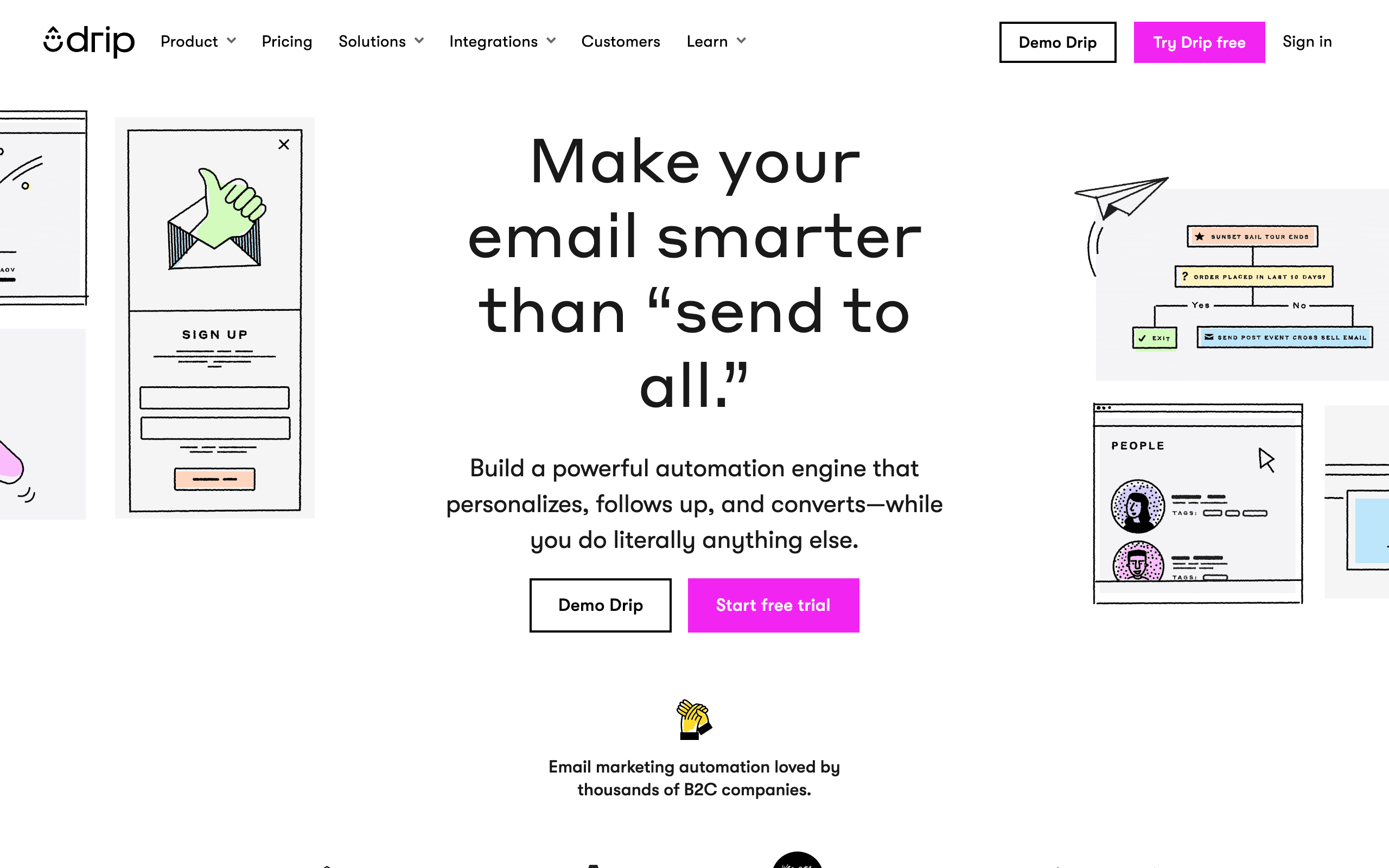
Best for: Stores where email is the main retention channel and purchase attribution matters more than SMS or CRM breadth.
Drip keeps the center of gravity on ecommerce email. Its visual workflows, customer tagging, purchase events, and revenue reporting are easy to map to a store's core lifecycle: welcome, cart, post-purchase, product interest, and win-back.
It is a good alternative when Klaviyo feels too broad or expensive and Omnisend's additional channels are not important. The interface is focused enough that a small retention team can own it without adopting a complete CRM.
The limitations are equally clear: no native SMS-first strategy, fewer all-in-one sales features, and less room for a complex B2B process. Confirm the current BigCommerce integration for catalog and cart fields before committing to product-level personalization.
Verdict: A clean email-first choice for stores that want visual automation and purchase reporting.
5. ActiveCampaign — best for CRM-connected BigCommerce
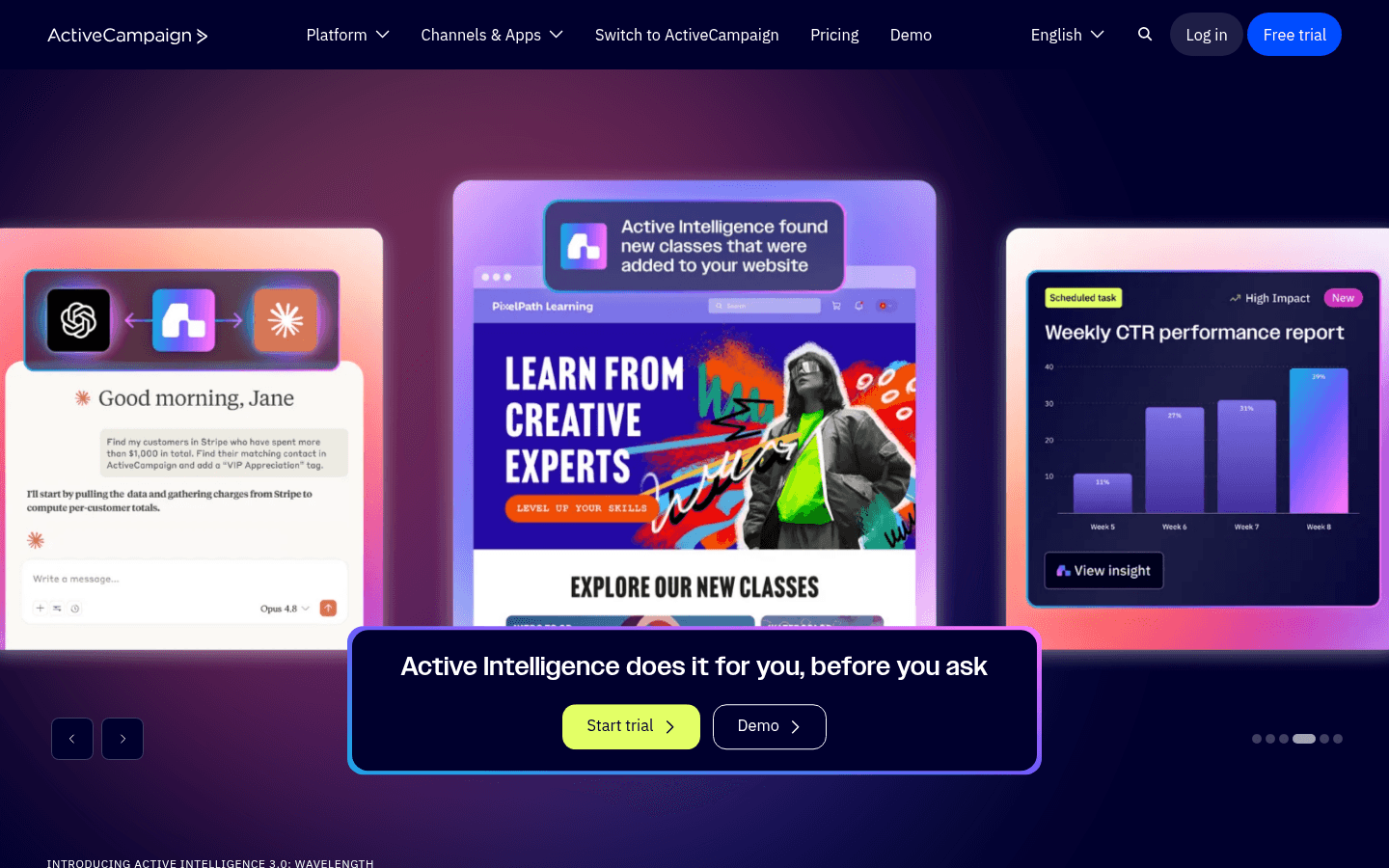
Best for: B2B, wholesale, and consultative stores where purchases, lead scores, sales tasks, and customer service signals interact.
ActiveCampaign is broader than a typical ecommerce email tool. Its value appears when the BigCommerce customer journey continues into sales follow-up, account management, onboarding, or a CRM process. A form lead can be scored, nurtured, assigned, and later connected to a purchase event.
The automation builder handles complex branching well, but that power comes with a learning curve. DTC stores that only need cart recovery and product recommendations may be paying for capabilities they will not use.
Verdict: Choose it for a real CRM and branching requirement, not simply because it has many automation features.
6. Mailchimp — best familiar general-purpose platform
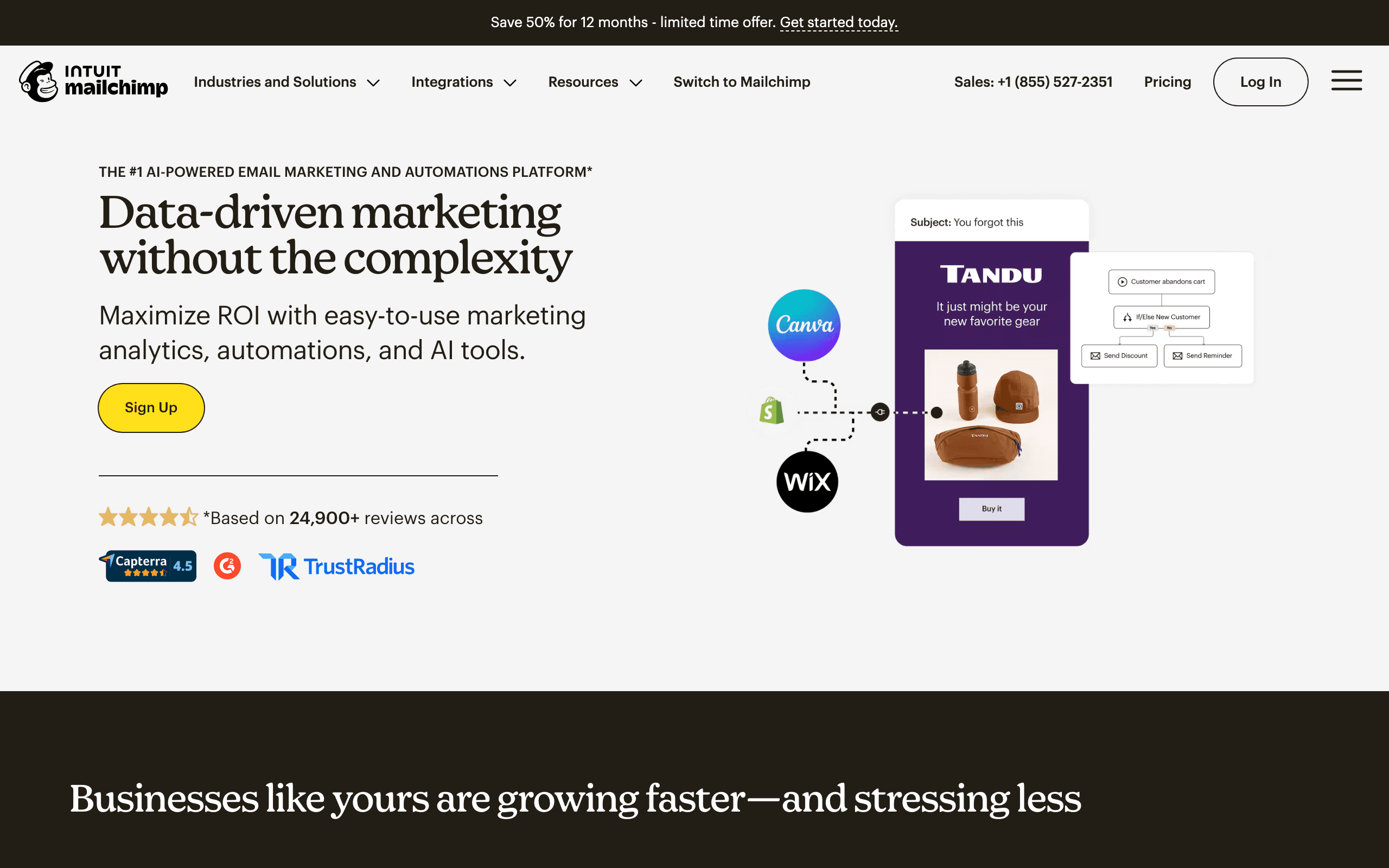
Best for: Stores that need a familiar editor, templates, forms, landing pages, and broad campaign tooling.
Mailchimp is still a reasonable choice when the marketing program is mostly newsletters, promotions, lead capture, and straightforward follow-up. Agencies often have existing experience with its editor and reporting, which lowers training cost.
The BigCommerce question is event depth. Test whether the current connection provides the product, order, cart, customer-group, and consent fields required for your flows. A clean subscriber sync is not the same thing as a complete ecommerce data model.
Verdict: A safe general-purpose pick for simpler programs, but not the default for advanced BigCommerce lifecycle marketing.
7. Brevo — best for volume-oriented budgets
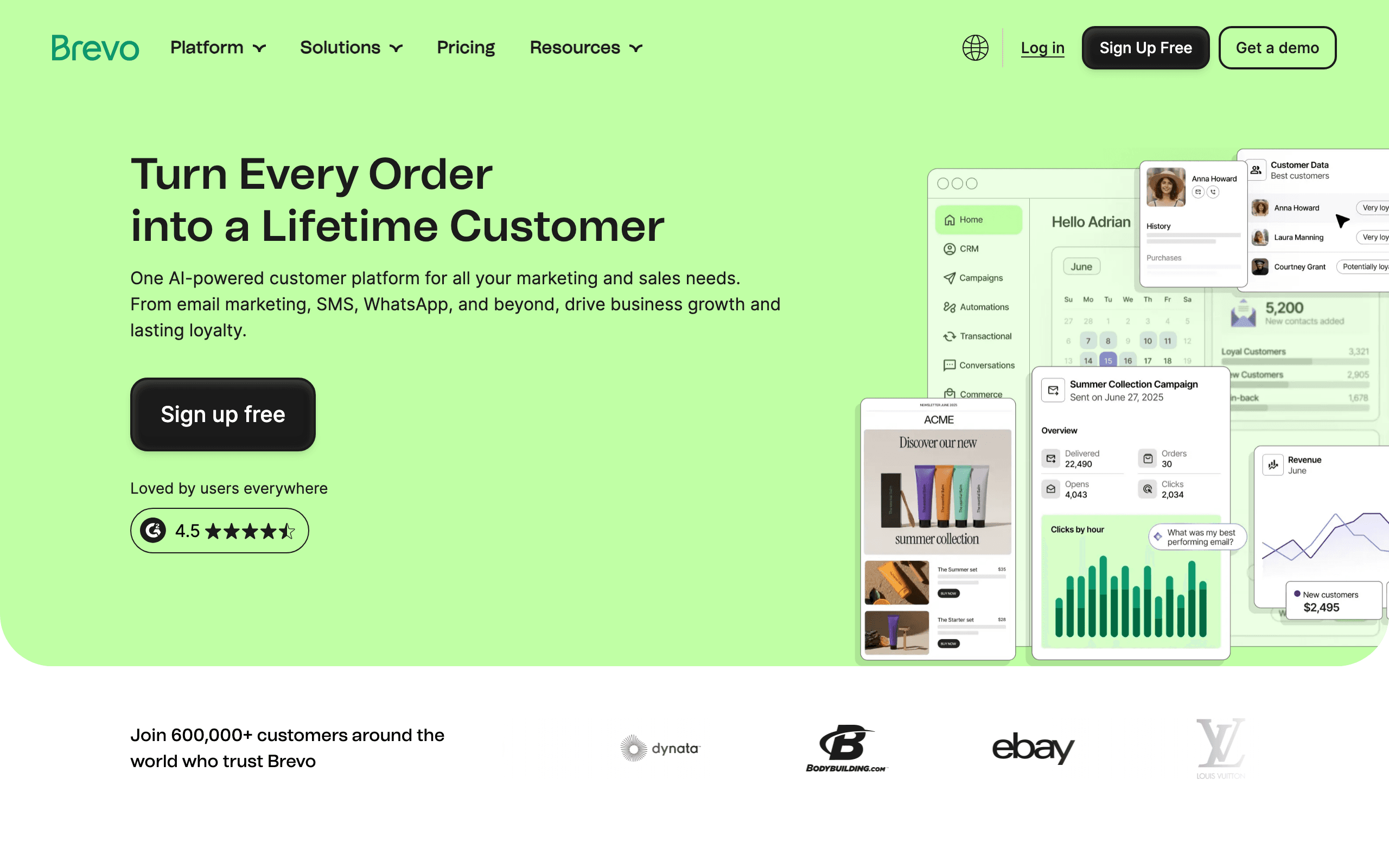
Best for: Stores with large contact databases, moderate send volume, and a need for email, SMS, or transactional delivery.
Brevo's volume-oriented economics can work well for a store that has many contacts but does not send to all of them every week. Transactional email is another reason to consider it, especially when operational messages need reliable domain authentication and delivery controls.
Its product-aware ecommerce automation is less deep than Klaviyo, Omnisend, or Drip. Use it for sensible segments and flows, not for a highly predictive merchandising program it was not selected to support.
Verdict: A cost-conscious option when volume economics and transactional delivery matter most.
8. GetResponse — best for funnels and webinars
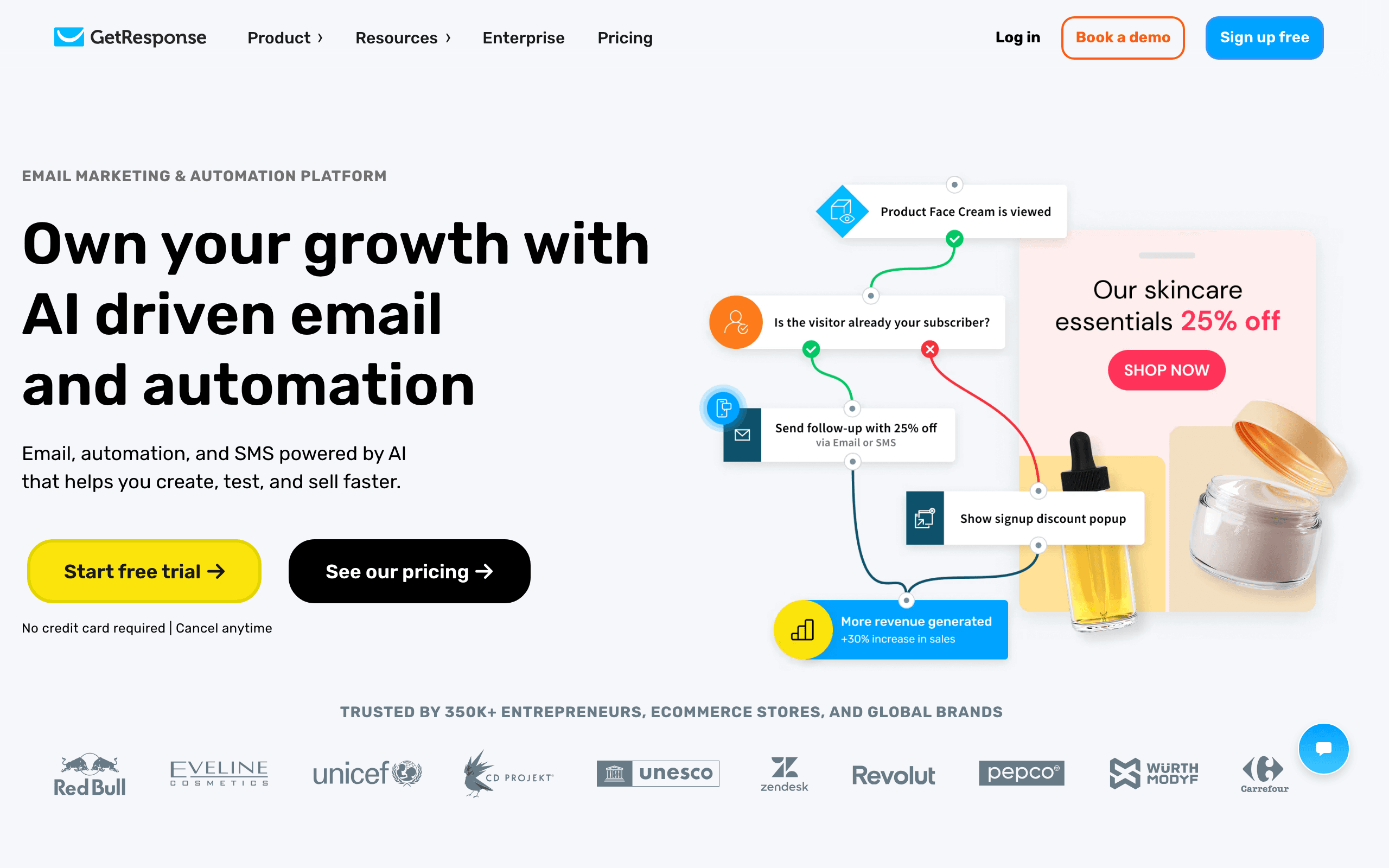
Best for: Brands that combine ecommerce with lead magnets, webinars, courses, or funnel-driven acquisition.
GetResponse is useful when BigCommerce is only one part of a broader acquisition funnel. Landing pages, forms, webinars, automation, and campaigns can live in the same system, which is helpful for educational products and event-led businesses.
It is not the obvious choice for a catalog-first retention team. Validate cart, order, product, and recommendation support before expecting it to behave like a specialist ecommerce platform.
Verdict: A strong funnel platform with ecommerce support, not the deepest BigCommerce merchandising tool.
9. MailerLite — best for simple campaigns and forms
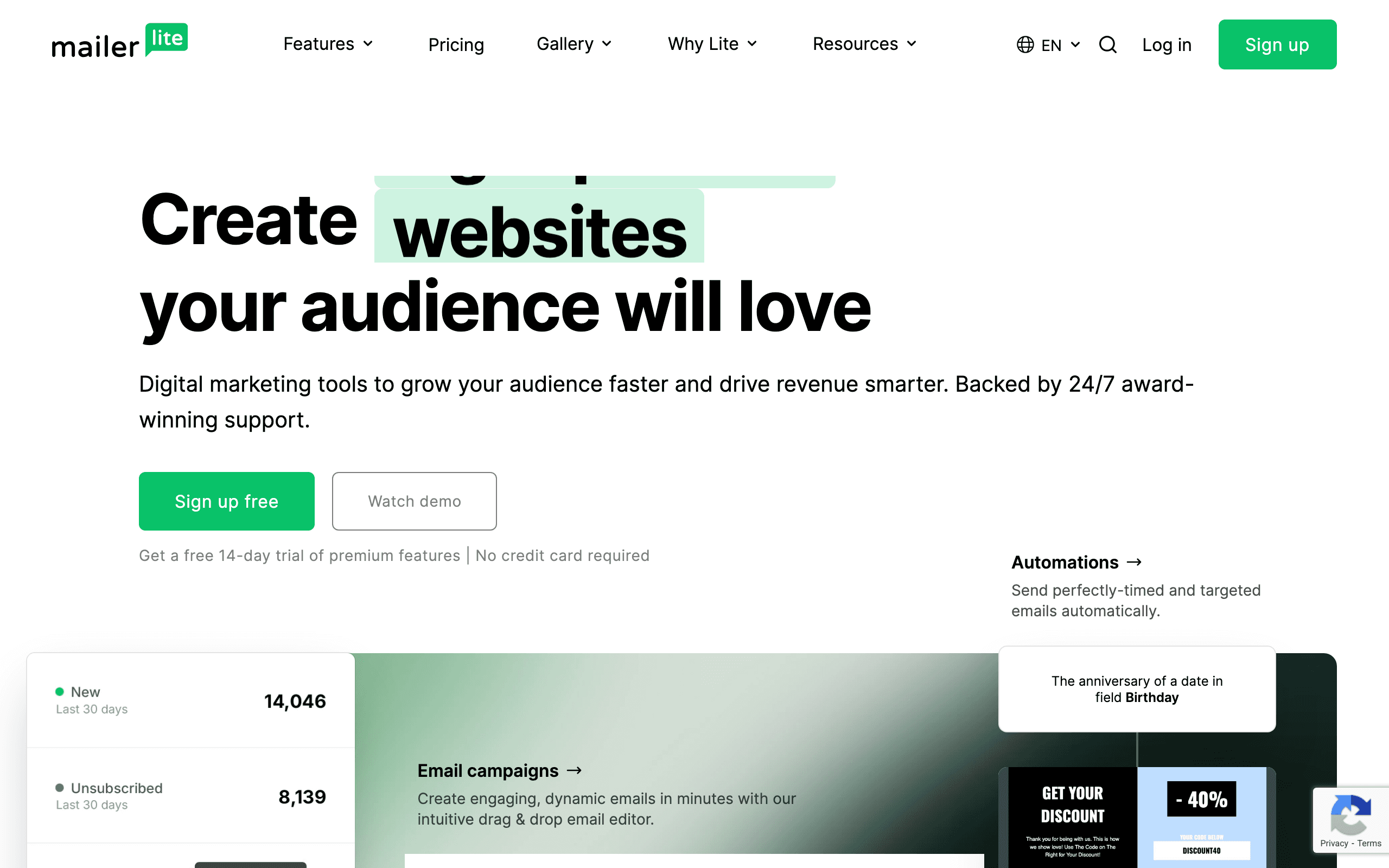
Best for: Small stores that prioritize newsletters, lead magnets, landing pages, and uncomplicated automation.
MailerLite is approachable and fast to launch. Its editor, forms, landing pages, and basic workflows are enough for a new store that is still learning which content and offers its audience responds to.
The platform becomes less suitable as product-level segments and event-driven retention become the main growth lever. Use a connector or API only if someone owns monitoring and can verify that order and consent changes are not silently lost.
Verdict: A sensible first platform for simple programs, with a clear ceiling for advanced ecommerce data.
10. Sendlane — best mid-market alternative
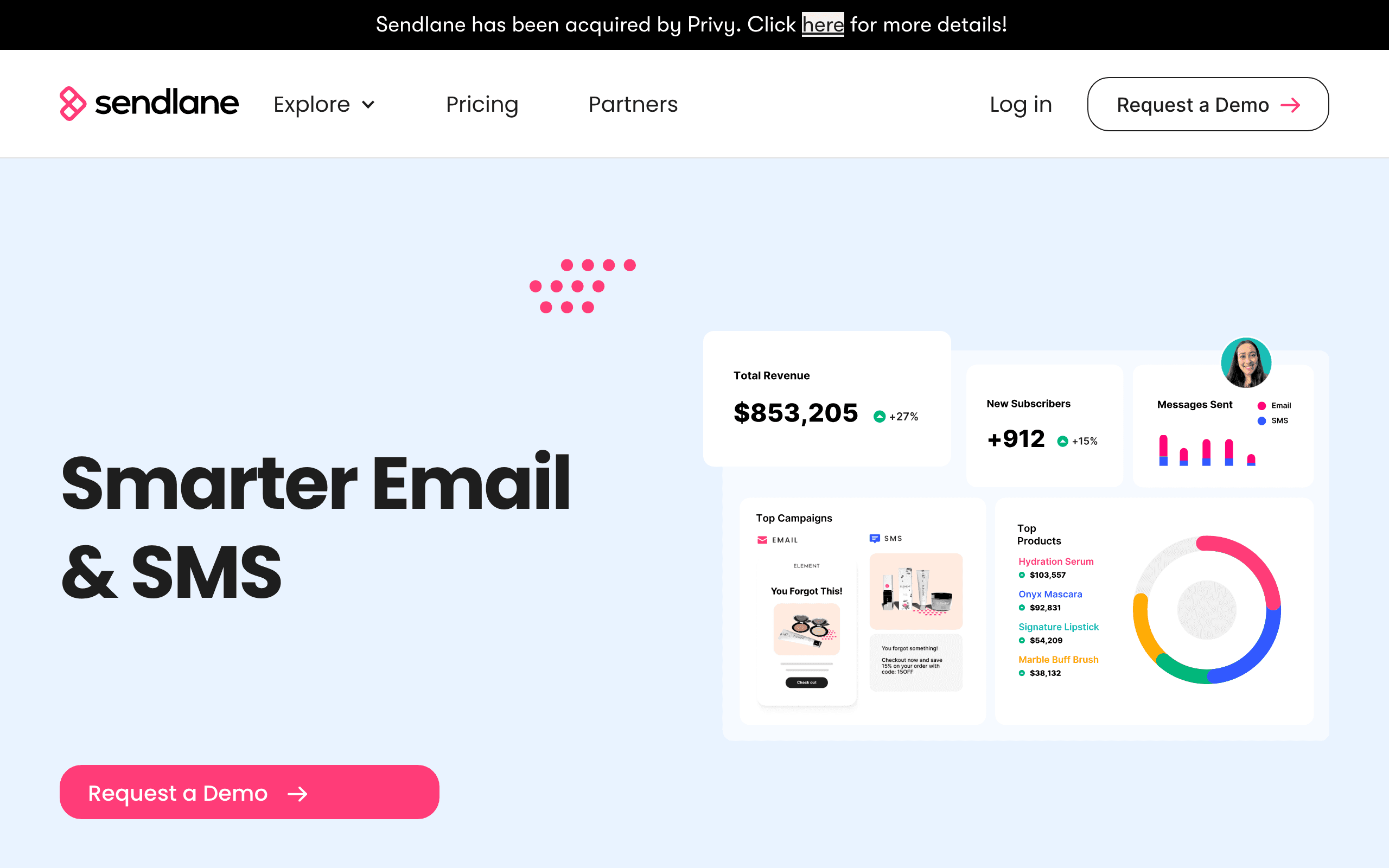
Best for: Growing DTC brands that want ecommerce automation and a more focused alternative to the largest suites.
Sendlane is built around ecommerce lifecycle work: list growth, cart recovery, post-purchase journeys, segmentation, and promotional campaigns. It can be attractive to a team that wants more depth than a general newsletter tool but does not need a broad CRM.
The ecosystem and integration coverage are smaller than Klaviyo's. Confirm the BigCommerce event map, template requirements, and support expectations before moving a large store.
Verdict: Worth evaluating as a focused mid-market option when the integration meets the store's event needs.
11. Remarkety — best for automated merchandising
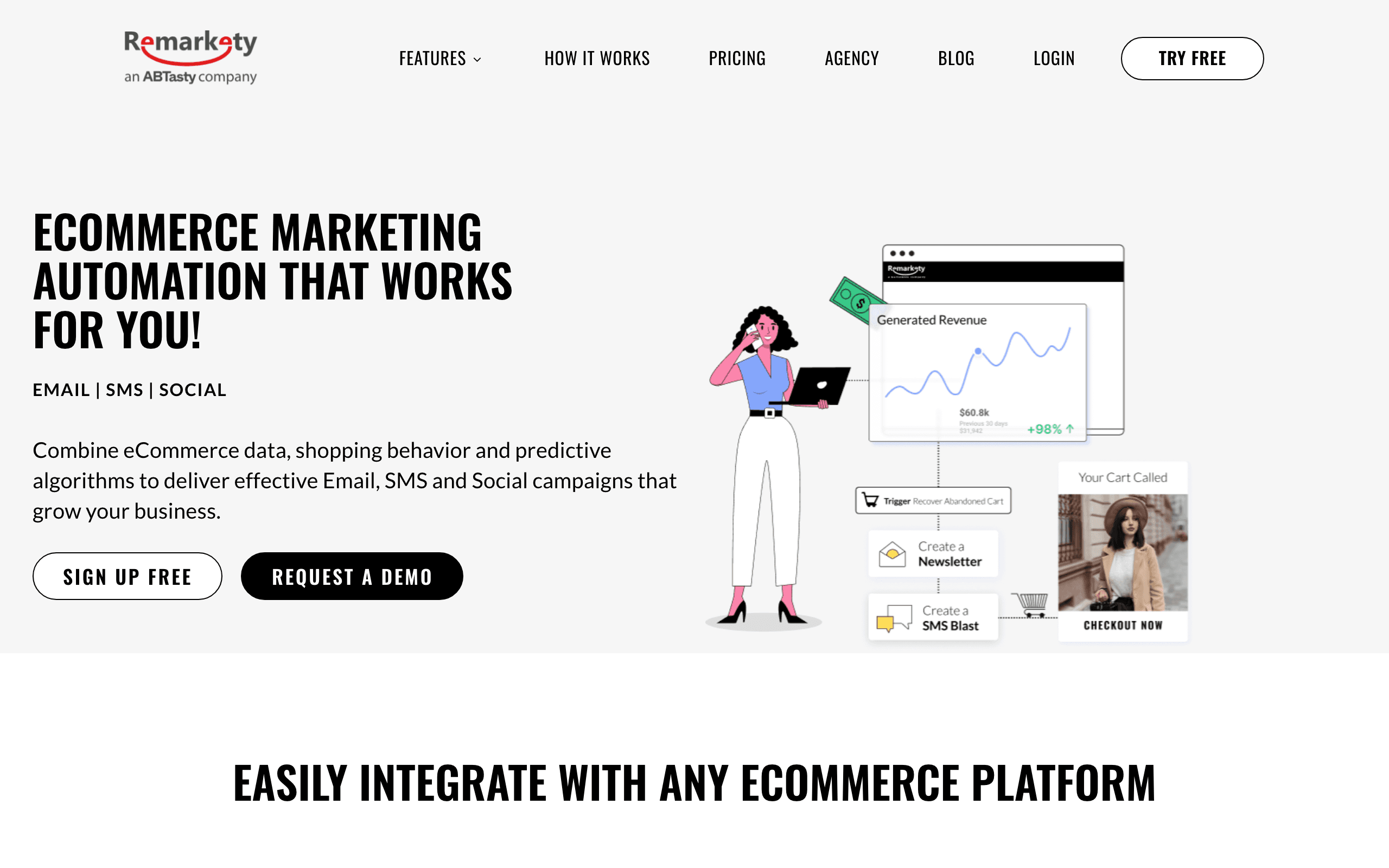
Best for: Stores that want product recommendations, behavioral segments, and automated merchandising campaigns.
Remarkety is more ecommerce-specific than a general campaign platform. Its appeal is using shopping behavior and catalog relationships to automate recommendations, repeat-purchase messages, and targeted promotions.
The narrower focus can be an advantage for a merchandising team and a limitation for a company that also needs a CRM, webinars, or complex lead operations. Test the BigCommerce catalog and order mapping with the products that matter most.
Verdict: A specialist option for stores where merchandising automation is the central use case.
12. Flodesk — best for design-led campaigns
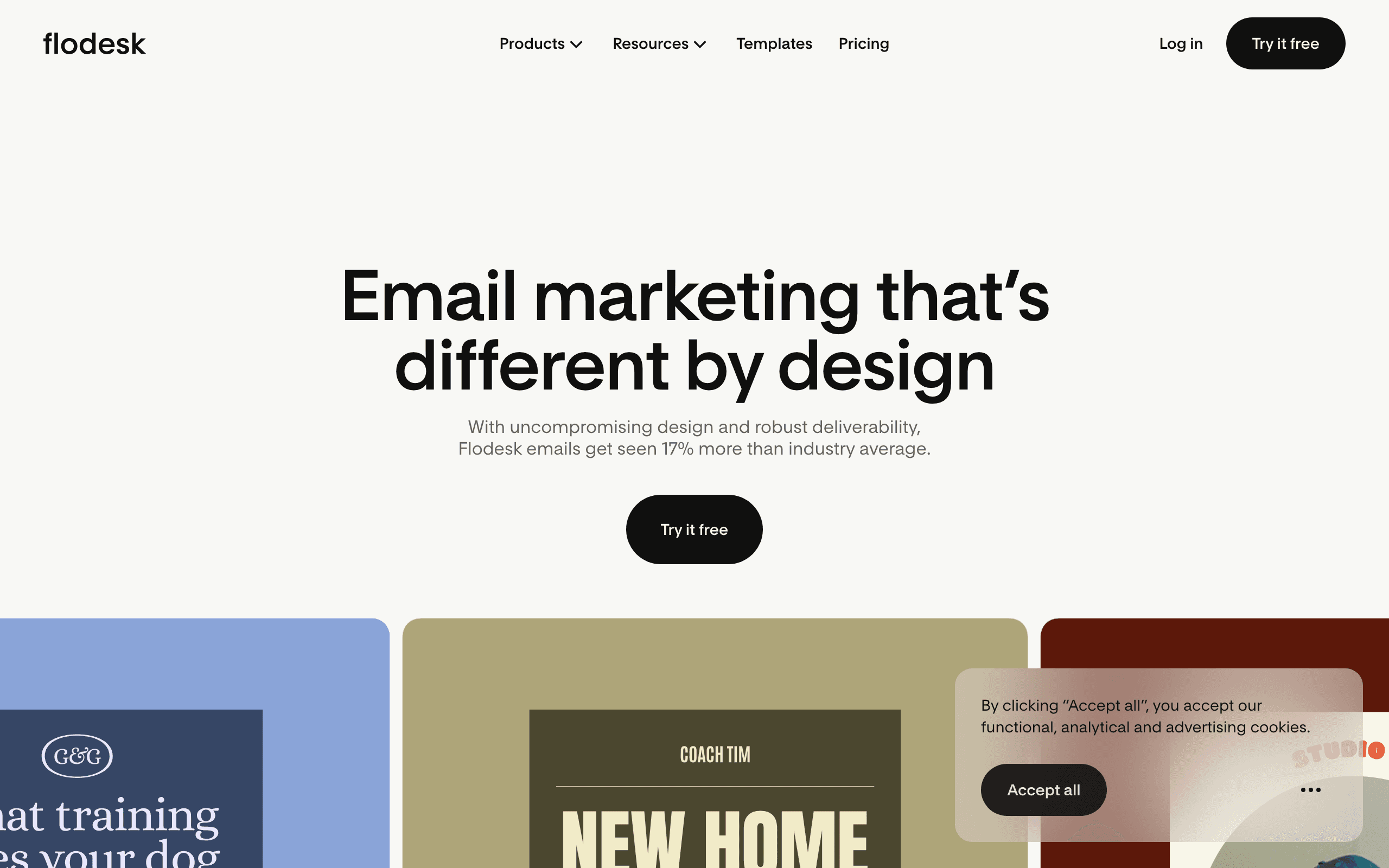
Best for: Small brands that care most about polished newsletters, launches, and visual consistency.
Flodesk makes it easy for a design-conscious team to produce attractive campaigns without a large production process. It can work well for a brand that uses BigCommerce as the checkout but treats email as editorial storytelling and promotion.
It is not a product-event specialist. If cart recovery, dynamic recommendations, and order-driven segmentation are core revenue programs, a more ecommerce-focused tool will provide a stronger foundation.
Verdict: Choose it for design-led broadcasts, not as the primary BigCommerce lifecycle engine.
13. SmartrMail — best for catalog recommendations
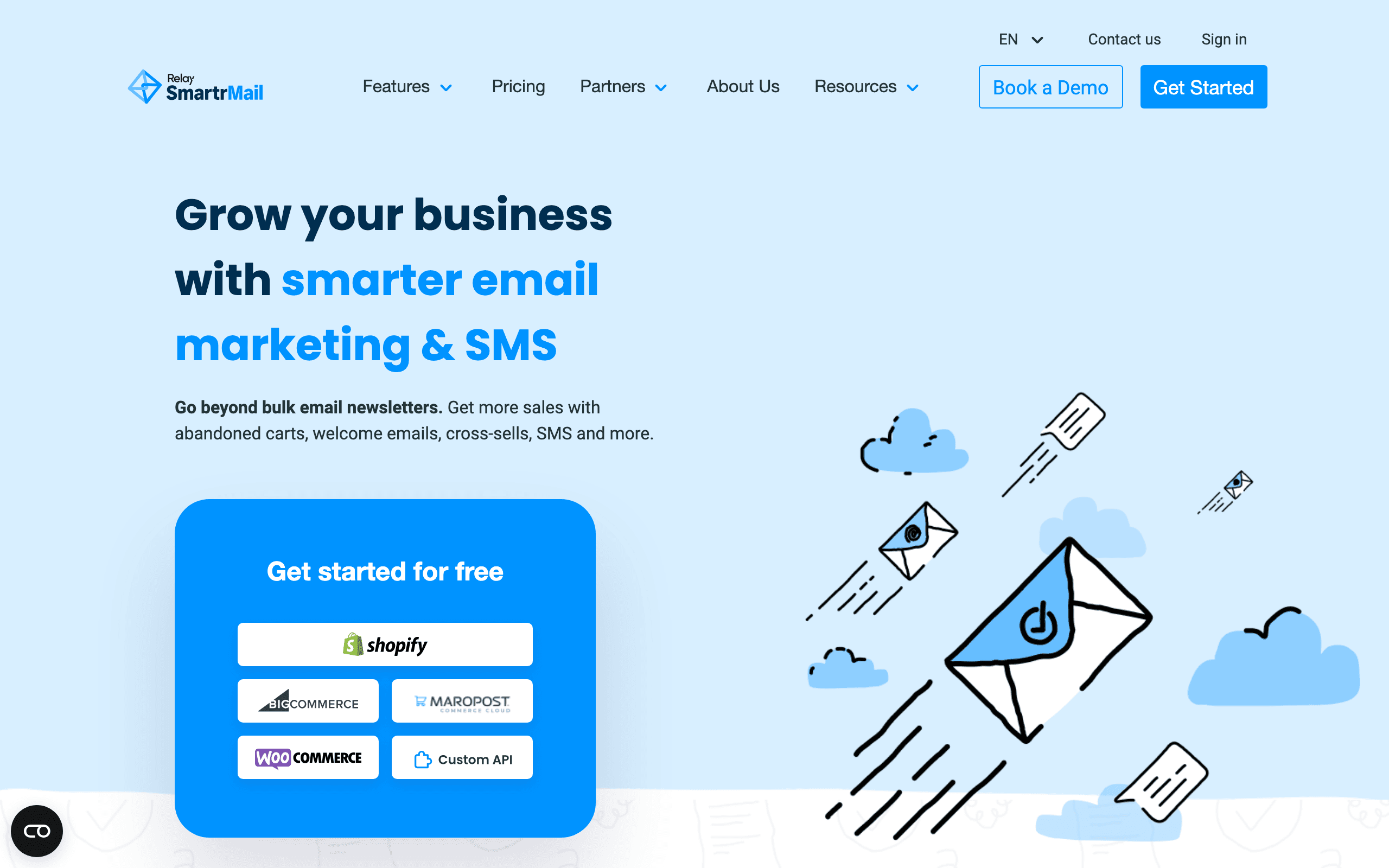
Best for: Stores that want automated product recommendations and repeat-purchase campaigns without a broad marketing suite.
SmartrMail focuses on the catalog. That makes it useful for stores with many products, regular merchandising changes, and a need to turn shopping history into relevant product emails.
The tradeoff is a narrower automation and CRM surface. Make sure the tool covers consent, cart, post-purchase, suppression, and reporting requirements before using it as the only email system.
Verdict: A focused catalog option for stores that value recommendations more than broad workflow complexity.
14. Sender — best generous early free tier
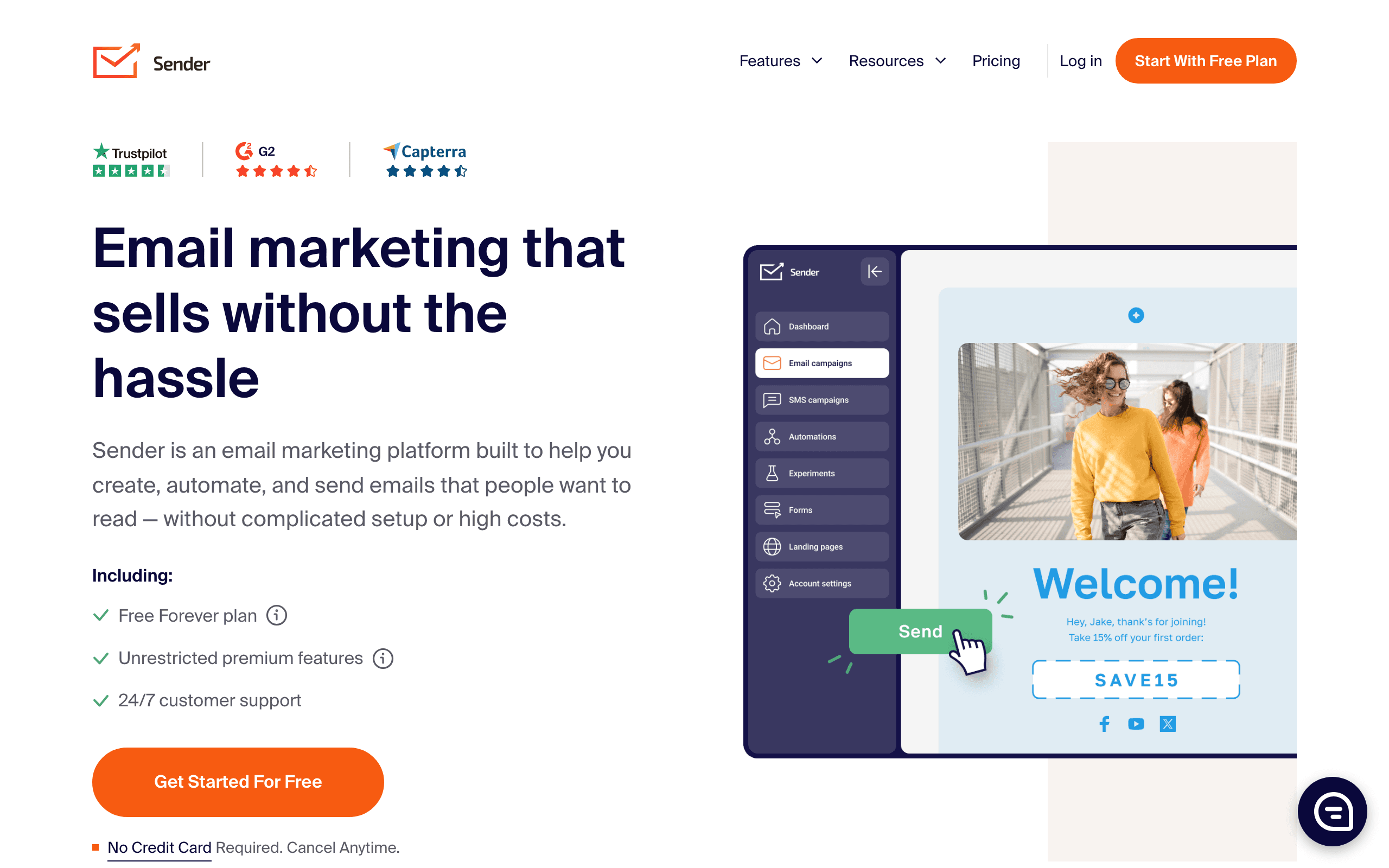
Best for: New stores that need campaigns, forms, and basic automation at a low initial cost.
Sender gives a small team a quick way to launch newsletters, signup forms, and simple sequences. It is attractive when the immediate priority is building a permission-based list rather than operating a complex product-event model.
As the store grows, validate whether its BigCommerce connection and reporting can keep up with customer groups, product-level segments, cart recovery, and revenue attribution. A cheap start is only valuable if the migration path is manageable.
Verdict: A useful early-stage option with a low barrier to testing email marketing.
BigCommerce pricing: contacts, sends, and implementation
The cheapest entry plan is rarely the relevant comparison. Price each platform at the store's actual active audience and monthly send volume, then add:
- SMS, push, or WhatsApp credits.
- Transactional email volume and dedicated sending options.
- Extra users, domains, or stores.
- Premium templates, recommendations, or data features.
- Connector, automation, or API maintenance.
- Migration and deliverability work.
Contact-based pricing rewards a tightly maintained engaged audience but can penalize stores that retain years of inactive records. Send-volume pricing is easier to predict for seasonal businesses, but it can become expensive when the store sends frequent campaigns to a broad list. Run both scenarios before choosing.
The five BigCommerce flows to build first
1. Welcome series
Send an immediate expectation-setting email, then explain the product promise, show useful bestsellers, and make the first purchase easy. Keep a first-time subscriber out of the welcome flow after their first order.
2. Abandoned-cart recovery
Start with a reminder that reflects the actual cart. Follow with reassurance about shipping, returns, or product fit. Use an incentive only when margin and customer behavior justify it; discounting every cart trains customers to wait.
3. Post-purchase education
Confirm what happens next, explain how to use or care for the product, request a review after a realistic usage period, and recommend a complementary item only when it is genuinely relevant.
4. Replenishment or renewal
Estimate the normal consumption cycle from actual orders. Give the customer an easy reorder path, and do not send reminders for products that are durable or purchased irregularly.
5. Win-back
Define “lapsed” by product category and buying cycle. A 30-day lapse may be meaningful for consumables and meaningless for furniture. Use the customer's previous category and value to make the message specific.
BigCommerce segmentation that changes the message
Start with segments that alter what the customer sees:
- First-time buyers versus repeat buyers.
- BigCommerce customer group or wholesale status.
- Category purchased and complementary category not yet purchased.
- High-value customers who deserve early access or service.
- Customers whose expected replenishment window is approaching.
- Cart abandoners with and without prior purchases.
- Engaged subscribers who have not purchased.
- Customers who have purchased but stopped opening or clicking.
Do not create dozens of segments just because the platform allows them. A small set of reliable behavioral segments is more useful than a taxonomy no one checks.
Common BigCommerce email mistakes
Treating an integration badge as event coverage
Test products, variants, carts, orders, refunds, customer groups, and consent. Do not build a revenue flow around fields you have not seen arrive.
Mixing transactional and promotional email
Use separate message categories, sending domains or streams where appropriate, suppression logic, and permissions. An unsubscribe should be respected without preventing a required order update.
Installing several systems that all send the same event
Multiple plugins and platforms can each trigger a welcome or cart email. Assign ownership for each automation and disable the duplicate before launching the new one.
Ignoring guest checkout
Guest orders may have different consent and identity behavior from logged-in customers. Test how a guest becomes a known subscriber and whether a later signup correctly joins the purchase history.
Using discounts as the only retention strategy
Product education, service, replenishment, loyalty, and useful recommendations often create better long-term economics than a permanent coupon.
Underestimating DNS and list hygiene
Authenticate SPF, DKIM, and DMARC, remove invalid addresses, monitor complaints, and suppress disengaged contacts before deliverability problems become expensive.
How to choose by BigCommerce store stage
New store
Start with a tool your team can operate. Build consent capture, welcome, cart recovery, and post-purchase before paying for predictive features.
Growing store
Choose between Omnisend, Drip, Sequenzy, or a comparable platform based on whether multichannel reach, email attribution, or send-volume economics is most important.
Complex or B2B store
Prioritize customer groups, CRM handoffs, account-specific data, and event ownership. ActiveCampaign may be more useful than a consumer-focused platform if sales follow-up is central.
Established or multichannel store
Klaviyo or Omnisend can make sense when the team has enough data and revenue to operate multiple channels. Add complexity only after the core event model is trustworthy.
BigCommerce email marketing FAQs
What is the best email marketing tool for BigCommerce?
Klaviyo is the strongest advanced choice, Omnisend is the best multichannel middle ground, and Sequenzy is a strong value pick for AI-assisted lifecycle email and send-volume pricing. Drip is a good email-first alternative.
Does BigCommerce have email marketing built in?
BigCommerce supports store and operational communication, but a complete marketing program still needs permission-based campaigns, segmentation, cart recovery, post-purchase journeys, and win-back automation.
Is Klaviyo worth it for BigCommerce?
It can be worth it when the store has enough product, order, and engagement data to benefit from advanced segments and attribution. Price it at the actual profile count and include SMS if you plan to use it.
Is Omnisend better than Klaviyo for BigCommerce?
Omnisend is often easier for a small or mid-sized store that wants email, SMS, and push quickly. Klaviyo is usually stronger when advanced segmentation, predictive data, and detailed revenue analysis justify additional complexity.
Can I use Sequenzy with BigCommerce?
Yes. Sequenzy can support BigCommerce customer, order, product, and lifecycle workflows through integration and API options. Confirm exact event payloads, consent handling, and duplicate prevention before enabling live automations.
What should I test before choosing a BigCommerce email tool?
Test one subscriber, one guest checkout, one logged-in order, one cart, one refund, one unsubscribe, and one customer-group change. Inspect the data that arrives and verify which platform owns each message.
How do I migrate from one BigCommerce email platform to another?
Export subscribers, consent and suppression fields, tags, customer groups, templates, campaign history, automation rules, and transactional settings. Rebuild one flow at a time, run test events, and keep the old system from sending duplicates during the transition.
What should I read next?
Read the full BigCommerce store guide, the ecommerce platform roundup, and cart abandonment email templates.
Final recommendation
Choose Klaviyo when advanced BigCommerce data and revenue attribution are core to the growth plan. Choose Omnisend when email, SMS, and push should launch together with minimal friction. Choose Sequenzy when AI-assisted lifecycle automation and send-volume pricing matter more than a fully native marketplace setup. Choose Drip when email is the main retention channel and clean purchase attribution is the priority.
The right platform is the one that receives trustworthy store events, gives the team a small set of useful segments, and stays financially sensible after the list grows. Start with consent, welcome, cart, post-purchase, and win-back; only then add complexity.