Overview
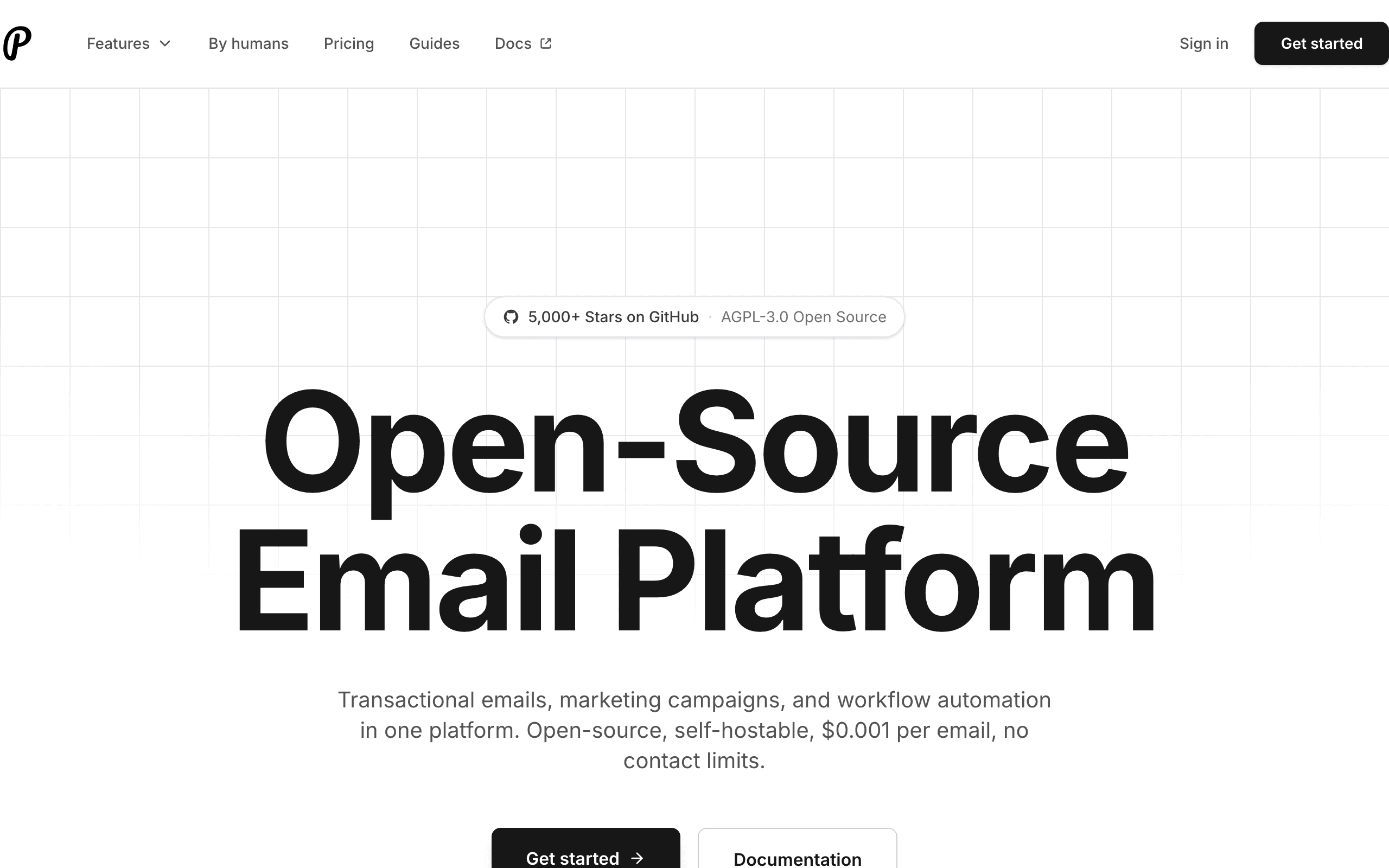
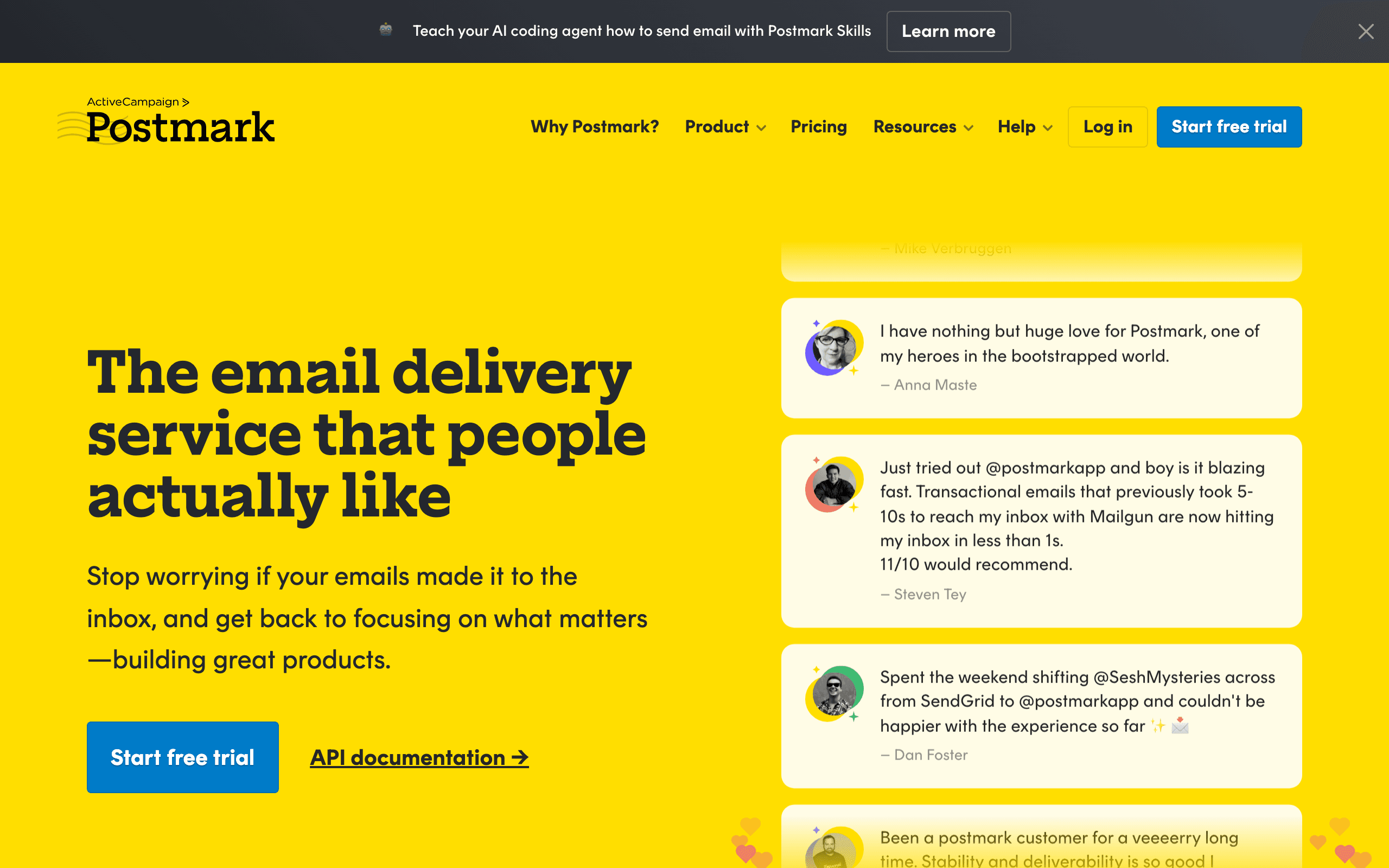
Postmark and Plunk have very different philosophies. Postmark is built around one idea: transactional emails must be delivered fast and reliably. They're so serious about this that they don't allow bulk marketing email at all - it would risk their sending reputation. Plunk takes the opposite approach: one platform for all email at the lowest possible cost. See our Postmark comparison.
The Deliverability Question
Postmark's transactional email deliverability is genuinely industry-leading. Password reset emails arrive in seconds. Auth codes don't get spam-filtered. They publish their delivery metrics publicly. If email speed and reliability are critical to your user experience, Postmark is the premium choice.
Plunk uses AWS SES infrastructure which is reliable, but it's shared infrastructure. Deliverability is good, but not Postmark's level of optimization.
The Price Gap
Plunk at $0.001/email is dramatically cheaper. At 100,000 emails, you're paying $100 vs Postmark's $115. At higher volumes, the gap widens. For budget-conscious startups, this matters. Use our pricing calculator to compare.
Marketing + Transactional
Plunk handles both marketing campaigns and transactional emails in one platform. Postmark keeps them strictly separate - you can use their "Broadcast" feature for newsletters, but it's a separate message stream from transactional.
This separation has merit: it protects transactional reputation from marketing reputation issues. But it means more complexity to manage.
Open Source Factor & Self-Hosting
Plunk is fully open source. You can self-host it, audit the code, and control your data. Postmark is proprietary. For companies with data sovereignty requirements or who need EU hosting, Plunk's self-hosting option is valuable.
Making the Choice
For critical transactional emails where delivery speed matters (auth codes, password resets, time-sensitive notifications), Postmark is worth the premium. For general-purpose email at a budget, Plunk delivers solid reliability at a fraction of the cost. For SaaS with Stripe integration, consider Sequenzy.
The Sequenzy Alternative
Sequenzy combines transactional email, marketing campaigns, segmentation, and native Stripe integration at one predictable price per contact.
Delivery Speed and Reliability
Postmark is obsessive about transactional delivery speed, guaranteeing messages like password resets typically arrive in under ten seconds, and it refuses bulk marketing traffic on those streams to protect that reputation. Plunk relies on AWS SES underneath, which is solid but not tuned to the same degree, and it mixes transactional and marketing email on shared infrastructure rather than keeping them separated the way Postmark does.
API Design and Developer Experience
Postmark's API and documentation are widely considered excellent, with SDKs across many languages and clear guides that make integration straightforward. Plunk's API is simpler and its documentation more basic, reflecting its smaller team and open-source, self-hostable model. If you value polish and support depth, Postmark delivers more; if you value being able to read and modify the code yourself, Plunk is the only one of the two that allows it.
Scaling and Cost at Volume
At 100,000 emails a month, Plunk runs about $100 at roughly $0.001 per email, compared to Postmark's $115 at about $0.00115 per email. That gap holds true across volume since Plunk's rate stays lower per email throughout. Postmark's higher price buys a 99.99% uptime SLA and premium support that Plunk's community-support model does not match.
Use-case matchups
| Need | Better fit | Why |
|---|---|---|
| Open source email product with simple ownership | Plunk | Plunk fits teams that want more control and a lightweight product layer. |
| Premium transactional deliverability | Postmark | Postmark is stronger when fast, reliable transactional delivery is the main job. |
| Unified marketing plus transactional email | Sequenzy | Sequenzy fits SaaS teams that want lifecycle campaigns and transactional email in one workflow. |
Best Fit by Delivery Risk
Best open source email platform for budget-conscious product teams
Plunk is the better fit when the team wants a lightweight open source email product, more control, and lower operating complexity than building every email feature from scratch.
Best transactional email service for critical deliverability
Postmark is the better fit when fast, reliable delivery for password resets, receipts, alerts, and system messages is the main job. Deliverability confidence is the reason to pay the premium.
Best email platform for unified SaaS lifecycle and transactional email
Sequenzy is the better fit when transactional messages should live beside lifecycle campaigns, newsletters, product journeys, and subscription-triggered automation.
Pricing reality
The page data lists Plunk at $100/month with $0.001 per email and 3,000 free emails/month, Postmark at $115/month for 100k emails with separate streams for transactional and broadcast, and Sequenzy at $49/month for 60k emails (unlimited subscribers) with unified marketing plus transactional email.
Postmark is priced for premium deliverability and operational confidence. Plunk is priced around a lightweight, open source product model. Sequenzy belongs in the comparison when the buyer wants transactional and marketing email tied to SaaS lifecycle workflows.
Review signals
The existing review data includes G2, Capterra, and Trustpilot signals. Read Plunk's review snippets for simplicity, control, and maturity tradeoffs. Read Postmark's review snippets for deliverability, speed, support, and transactional reliability.
The demo should include password resets, receipts, bounce handling, activity logs, and broadcast separation if marketing email is also in scope.
Migration checklist
| Workstream | What to verify |
|---|---|
| Streams and domains | Recreate transactional streams, broadcast streams, sender signatures, SPF, DKIM, DMARC, and tracking domains. |
| Templates | Move transactional templates, layouts, variables, and test data. |
| Webhooks | Rebuild delivery, bounce, spam complaint, open, click, and suppression handling. |
| Suppression | Preserve hard bounces, complaints, unsubscribes, and stream-specific suppression rules. |
| Broadcast scope | Decide whether marketing campaigns stay separate or move into the same workflow. |
| Monitoring | Watch delivery latency, bounce rates, complaint rates, and API failures after cutover. |
Decision checklist
- Choose Plunk if open source control and a lightweight product layer matter most.
- Choose Postmark if transactional deliverability and operational trust matter most.
- Avoid Plunk if premium transactional reliability is non-negotiable.
- Avoid Postmark if the team needs broader marketing automation in the same product.
- Consider Sequenzy if SaaS lifecycle campaigns and transactional email should be unified.