Overview
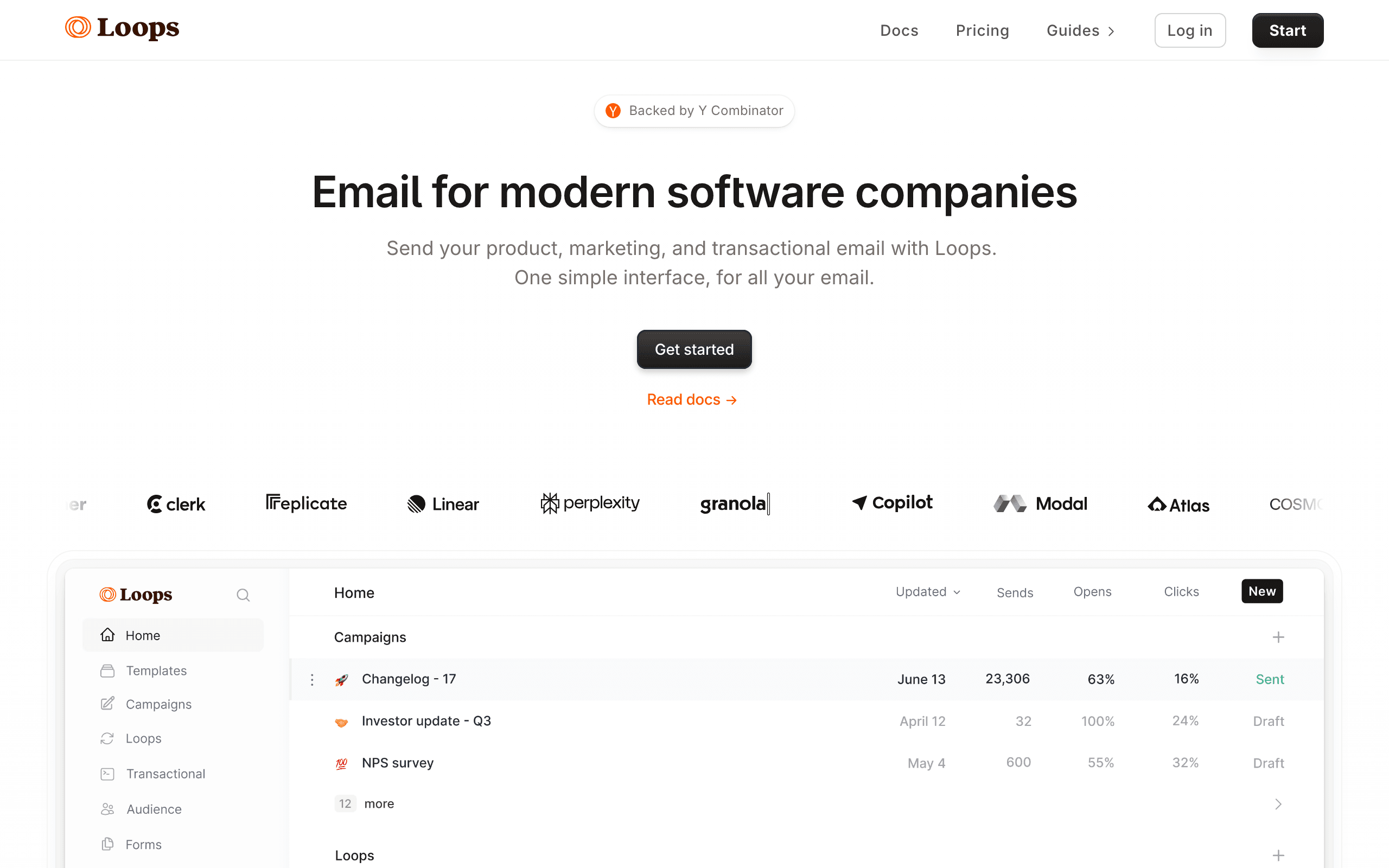
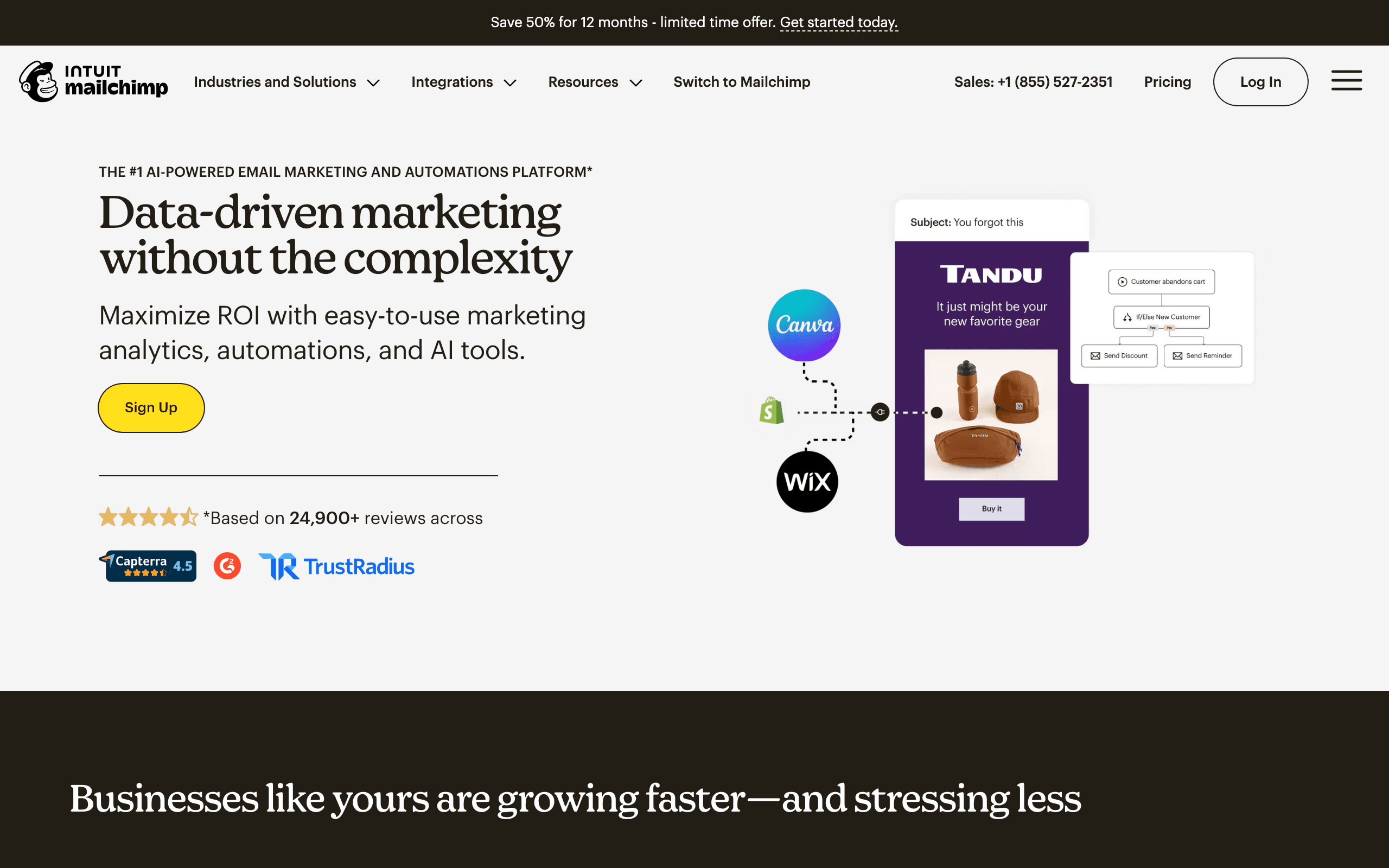
Loops and Mailchimp represent different eras of email marketing. Mailchimp launched in 2001 and has grown into an all-in-one marketing platform. Loops launched recently with a singular focus: email for SaaS companies. See our Mailchimp comparison and Loops comparison pages for more.
The SaaS Question
If you're a SaaS company, this is the key question: do you want a tool built for you, or a general tool that works for everyone? Loops understands SaaS workflows - onboarding sequences, product events, user lifecycle. Mailchimp can do these things, but you'll need to configure them yourself. For insights, read our SaaS onboarding email guide.
Feature Bloat vs Focus
Mailchimp has accumulated 23 years of features: landing pages, websites, social media scheduling, postcards, surveys, and more. Some love having everything in one place. Others find it overwhelming. Loops does one thing well: email marketing for SaaS. For a SaaS-first alternative with Stripe integration, consider Sequenzy.
Pricing Comparison
Mailchimp's pricing has become notoriously complex. Different tiers have different send limits, and features are gated behind higher plans. Loops charges per contact with unlimited sends and all features included. At 10,000 contacts, both cost around $100/month, but Loops is more predictable as you scale. Check our pricing page for comparison.
The Integration Factor
Mailchimp has 300+ integrations built over two decades. Loops has fewer but covers the essentials for SaaS. If you need specific integrations like Stripe or custom tools, check both before deciding. Mailchimp's broader ecosystem wins here, but Loops covers segmentation and analytics well.
The Sequenzy Alternative
If you're a SaaS with Stripe billing, consider Sequenzy. We combine campaigns, AI sequences, smart segmentation, and native Stripe integration at one simple price per contact.
Integration Ecosystem Maturity
Mailchimp's 300+ integrations represent two decades of ecosystem building. Virtually every business tool connects to Mailchimp. This breadth is valuable for businesses using diverse marketing stacks. Loops covers the essentials for SaaS but the integration catalog is much smaller.
For SaaS companies, integration depth matters more than breadth. Loops integrates well with the tools SaaS teams actually use. Mailchimp's broader ecosystem includes many integrations irrelevant to software businesses. Evaluate based on the specific integrations you need, not the total count.
Transactional vs Marketing Email Boundaries
Loops includes transactional email as a core feature, making it natural to send password resets, billing receipts, and system notifications alongside marketing campaigns. For SaaS companies, this unified approach simplifies the email stack and keeps all messaging in one platform.
Mailchimp separates transactional email into Mandrill, a separate product requiring additional setup and cost. This split means SaaS companies using Mailchimp still need a separate transactional email solution. The added complexity and cost make Mailchimp less practical for SaaS than it initially appears.
Audience Size and Growth Stage
Mailchimp makes sense for established businesses with large, diverse audiences and complex multichannel marketing needs. The breadth of features supports sophisticated marketing programs that span email, social, ads, and content.
Loops makes sense for SaaS startups and growth-stage companies where email is the primary communication channel with users. The focused feature set matches the needs of product-led companies without the overhead of unused marketing tools. Check our email deliverability guide for tips on maintaining inbox placement as your list grows.
Use-case matchups
| Situation | Best first look | Why |
|---|---|---|
| SaaS startup needs onboarding, product updates, and transactional email | Loops | Loops is built around SaaS events and includes transactional email on paid plans. |
| Retail or general business needs broad marketing tools | Mailchimp | Mailchimp is stronger for landing pages, social tools, ecommerce integrations, templates, and broad integrations. |
| Developer-friendly product email matters most | Loops | Loops has a cleaner SaaS-focused workflow than a general marketing platform. |
| Existing marketing stack depends on Mailchimp integrations | Mailchimp | Mailchimp's ecosystem can be a real switching-cost advantage. |
| SaaS business needs Stripe-native lifecycle automation | Sequenzy | Sequenzy is the better fit when billing events need to trigger email without middleware. |
Best Fit by Audience Type
Best SaaS email platform for startup product communication
Loops is the better fit when the audience is product users and the email program centers on onboarding, lifecycle nudges, product updates, and transactional messages. It avoids the overhead of a broad SMB marketing suite.
Best email marketing tool for general business and ecommerce campaigns
Mailchimp is the better fit when the business needs a large template ecosystem, landing pages, ecommerce integrations, social tools, and broad SMB marketing features. It is stronger when the audience is not a SaaS user base.
Best email platform for Stripe-native SaaS lifecycle automation
Sequenzy is the better fit when billing events should trigger email without middleware. Failed payments, subscription changes, trials, invoices, and retention campaigns need billing context inside the email stack.
Pricing reality
Loops should be evaluated as a SaaS email system with contact-based pricing and unlimited sends. Its value is strongest when transactional and marketing email share product-event context.
Mailchimp should be evaluated as broad marketing software. Its price can be justified for general businesses using landing pages, ecommerce, social tools, templates, and integrations, but SaaS teams may pay for features they do not need.
Sequenzy is relevant when the key missing piece is Stripe-aware automation. If billing events are the main trigger source, compare that directly rather than only comparing contact tiers.
Review signals
The Loops review snippets praise SaaS focus, event-based triggers, transactional email, clean UX, and developer-friendliness, with cautions around template variety and ecosystem maturity.
The Mailchimp snippets praise retail fit, landing pages, social posting, and Shopify integration, while warning that pricing and feature gating have weakened the value for some long-term users.
Migration checklist
| Workstream | Moving to Loops | Moving to Mailchimp | Moving to Sequenzy |
|---|---|---|---|
| Audience data | Import contacts, companies, properties, events, suppressions, and lifecycle stages. | Import audiences, tags, segments, ecommerce fields, landing pages, and suppressions. | Import subscribers, tags, attributes, suppressions, and Stripe/customer state. |
| Automations | Rebuild onboarding, product announcements, event-triggered campaigns, and transactional sends. | Rebuild customer journeys, newsletters, ecommerce automations, forms, and ads workflows. | Rebuild trial, activation, upgrade, downgrade, failed-payment, campaign, and transactional flows. |
| Integrations | Connect SaaS product events and API calls. | Reconnect broad marketing, ecommerce, CRM, and form integrations. | Connect app events, Stripe, campaigns, and transactional paths. |
| Templates | Rebuild product-email templates and campaign broadcasts. | Rebuild visual campaign templates and landing pages. | Rebuild lifecycle, campaign, and transactional templates. |
| Reporting | Validate activation, product, campaign, and transactional reporting. | Validate campaign, ecommerce, audience, and journey reporting. | Validate campaign, automation, transactional, and subscription reporting. |
Decision checklist
- Is this a SaaS product email problem or a general marketing problem?
- Do you need Mailchimp's broader integrations enough to accept complexity?
- Should transactional email live inside the same platform as campaigns?
- Are product events or ecommerce/customer-list attributes the main trigger source?
- Would Stripe-native lifecycle automation remove custom glue work?