12 Best Klaviyo Alternatives in 2026
Klaviyo is a genuinely good platform, which makes "Klaviyo alternatives" a harder article to write honestly than most. Every list of this kind is tempted to pretend the leader is secretly bad. It is not.
What is true is that Klaviyo is priced and designed for a specific store: one on Shopify, with enough traffic and data that segmentation changes what gets sent, and a team with the capacity to use the depth. Plenty of stores are paying for that profile without being that store.
So the useful question is not "what is cheaper than Klaviyo." It is "which specific Klaviyo problem am I solving." A store choking on profile-based billing needs a different answer than a store whose real issue is that Klaviyo's WooCommerce integration is shallower than its reputation, which needs a different answer again from a store whose SMS program outgrew a bundled tool.
This comparison is organized around those problems. I have also been specific about what you give up, because the most expensive migration is the one that rebuilds the same flows on weaker data and saves $40 a month.
For the SMS-specific version of this decision, see Klaviyo SMS alternatives. For a direct feature comparison, see Sequenzy vs Klaviyo.
Quick comparison table
| Alternative | Solves which Klaviyo problem | Billing model | Cost at 10k contacts | Depth versus Klaviyo |
|---|---|---|---|---|
| Omnisend | Cost and complexity, same job | Contacts | About $115 to $132/mo | Slightly shallower, much simpler |
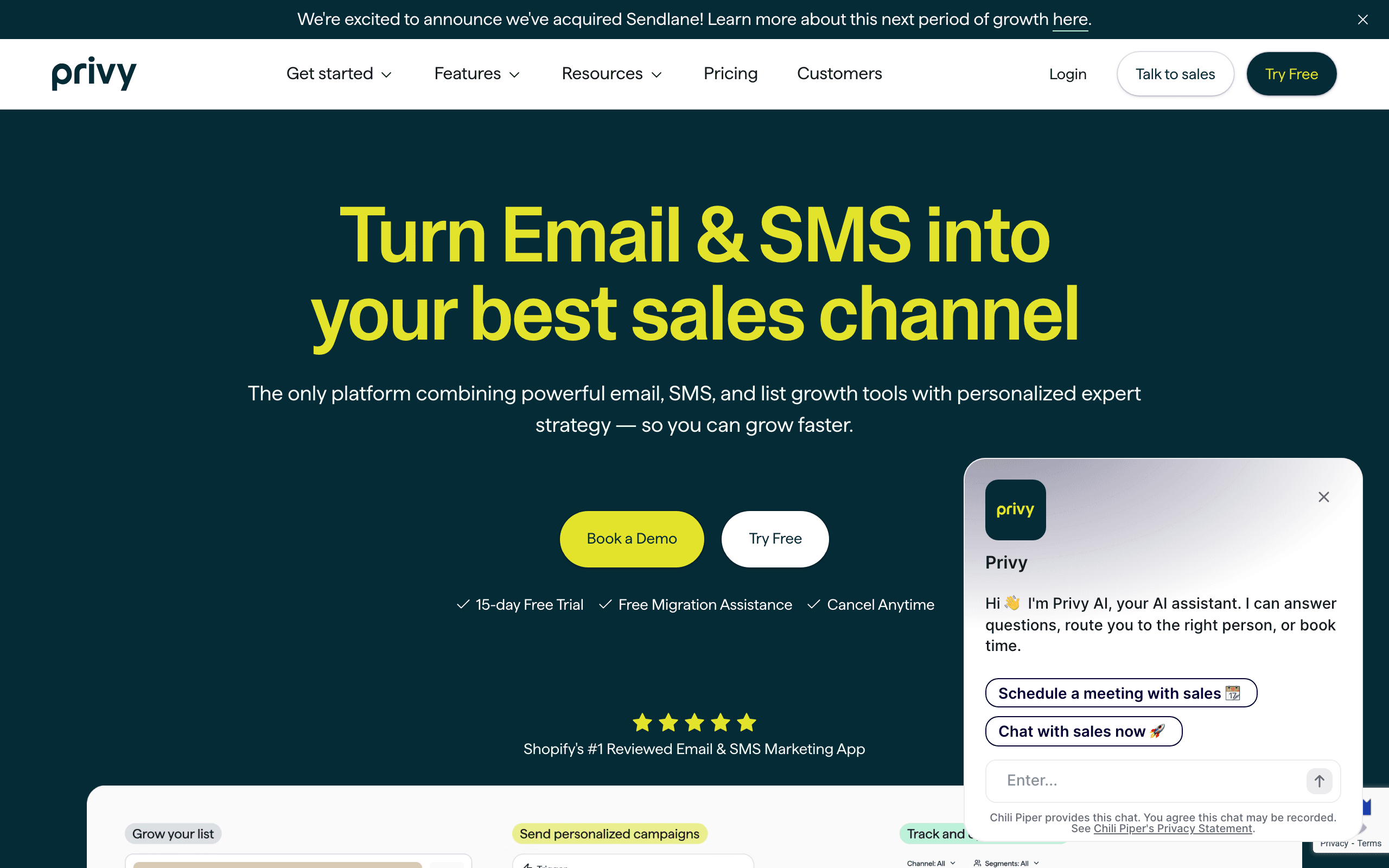
| Sendlane | Paying for dormant profiles | Sends, unlimited contacts | $100/mo for 50k sends | Comparable commerce depth |
| Brevo | Large list, infrequent sending | Sends, unlimited contacts | Low, tier depends on volume | Much shallower commerce |
| Sequenzy | Profile billing plus lifecycle focus | Sends | Paid plans from $19/mo | Lighter merchandising, strong API |
| Shopify Email | Never used the depth | Per email after free allowance | Free for first 10k emails | Far shallower, near-zero effort |
| Drip | Wants behavior depth, not a CDP | Contacts | About $154/mo | Comparable email, no SMS focus |
| ActiveCampaign | Needs branching logic and CRM | Contacts | Varies by tier | Better automation, weaker merchandising |
| MailerLite | Small store, cost sensitive | Subscribers | Low | Much shallower |
| Mailchimp | Wants familiarity and templates | Contacts | Mid | Shallower commerce |
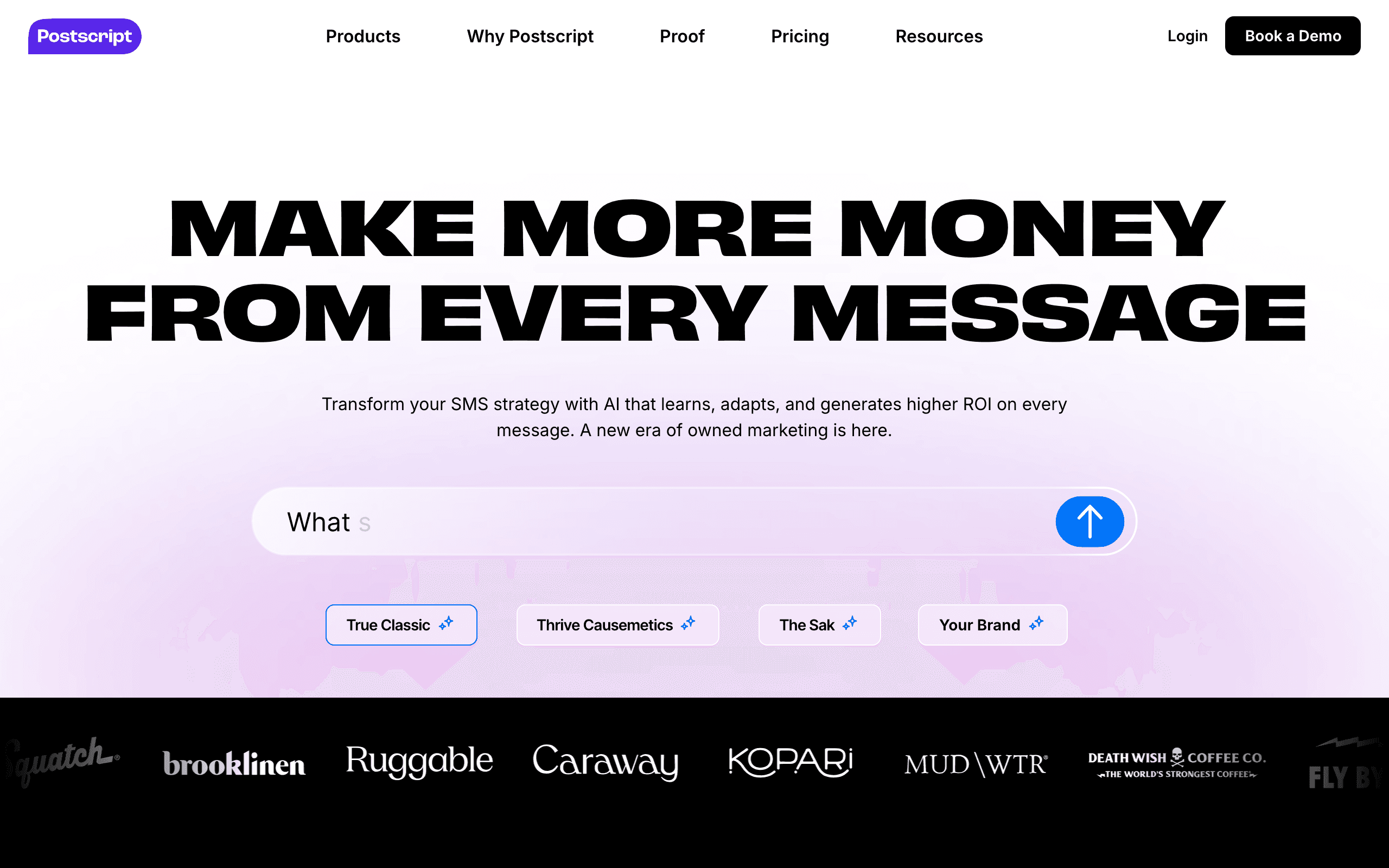
| Postscript | SMS was the real reason | Per message | $0.007 to $0.009/SMS plus carrier fees | Deeper SMS, no real ESP |
| Attentive | SMS is now a department | Custom, committed | $2,000 to $3,000 per quarter minimum | Deeper messaging, enterprise only |
| Bloomreach | Outgrew Klaviyo upward | Enterprise quote | Custom | Deeper CDP, much heavier |
Pricing changes frequently. Confirm current rates, plan gates, and SMS terms with each vendor before committing.
First, diagnose the actual problem
Most failed migrations happen because the team solved the wrong problem. Work out which of these you have.
Problem 1: the bill grew faster than revenue
Klaviyo bills on active profiles. A store that has been running for five years with a 60,000-profile database and a 12,000-person engaged segment pays for all 60,000.
This is a real problem with a real fix. Send-based platforms (Sendlane, Brevo, Sequenzy) or cheaper contact-based ones (Omnisend, MailerLite) genuinely change the math. Before switching, though, try list hygiene: sunsetting genuinely dead profiles can cut the bill substantially without a migration.
Problem 2: you are paying for depth you never use
If your program is a welcome series, a cart flow, and a weekly campaign, you are using maybe 20 percent of what you are buying. Predictive lifetime value, churn modeling, and browse abandonment are all real features that only pay off when someone uses them.
The fix is a simpler platform, and the honest candidates are Omnisend, Shopify Email, or MailerLite depending on how simple you actually are.
Problem 3: you are not on Shopify
Klaviyo's reputation is built on its Shopify integration. On WooCommerce, BigCommerce, or a custom stack, the event fidelity is noticeably lower and you do more validation work for less payoff.
The fix depends on your platform. On WooCommerce, Omnisend's plugin is better maintained. On a custom stack, an API-first platform may serve you better than any prebuilt connector.
Problem 4: SMS became the main channel
Klaviyo's SMS is good but not specialist. If text is now your largest revenue channel, the capture units and reply management at Postscript or Attentive are materially better.
The fix is a specialist, but note this usually means running two platforms, which reintroduces suppression and attribution problems. See the best Klaviyo SMS alternatives for that specific decision.
Problem 5: nothing, you just saw a cheaper price
There is no fix, because there is no problem. If predictive segmentation, browse abandonment, and product recommendations are driving measurable revenue, switching to save $50 a month is a bad trade. Migration costs weeks of team time and all of your attribution history.
How I evaluated these alternatives
- Priced each platform at 5,000, 10,000, 25,000, and 50,000 contacts with a realistic monthly send volume.
- Rebuilt the same four flows (welcome, abandoned checkout, post-purchase, win-back) on each and timed how long it took.
- Checked which Klaviyo segment definitions could be reproduced exactly, approximately, or not at all.
- Exported from Klaviyo and imported into each platform, noting what was lost in transit.
- Compared attribution windows and reported revenue against store orders over the same period.
- Tested the store integration with an order, a refund, and an abandoned checkout.
- Noted which features required a plan upgrade after the entry tier.
The 12 best Klaviyo alternatives
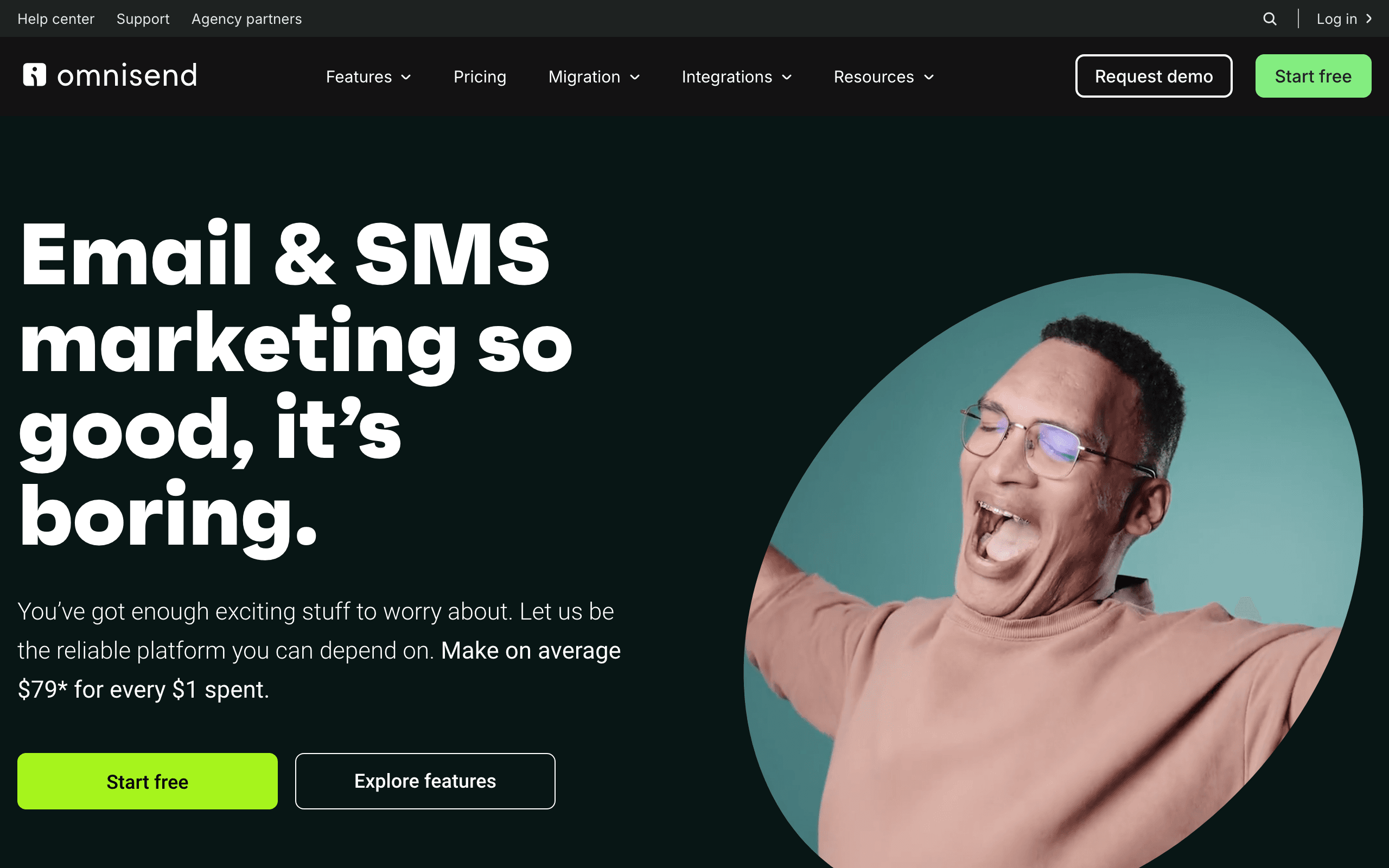
1. Omnisend

Best for: Stores that want to do the same job for less, with less setup.
Pricing: Standard from about $16/month at low contact counts, roughly $115 to $132/month at 10,000 contacts. SMS runs from about $0.009 down to $0.007 per US message on current Pro plans, with bundles from around $10/month and credits rolling over for 60 days.
Omnisend is the closest like-for-like replacement and the right first evaluation for most stores leaving Klaviyo. The prebuilt commerce automations cover the same jobs, email, SMS, and push share one canvas, and Shopify and WooCommerce both connect without engineering work.
The savings are meaningful but not dramatic at 10,000 contacts. What is more valuable for many teams is the reduced operating overhead: the flows are simpler to build, the interface is easier for a non-specialist, and the SMS story is coherent without a second platform.
You do lose depth. Segmentation is less expressive, there is no predictive lifetime value or churn modeling, and reporting is less granular. If those things were driving revenue, this is a downgrade rather than a saving.
- Pros: Closest feature parity, lower bill, three channels on one canvas, credits roll over, faster to operate.
- Cons: Shallower segmentation, no predictive analytics, SMS gated to Pro, still contact-based billing.
Verdict: The default alternative. Choose it when the job is the same and the depth was never used.
2. Sendlane

Best for: Stores with a large database and a moderate send calendar.
Pricing: Professional from $100/month for 50,000 email sends with unlimited contacts. SMS from about $0.009 per credit, subject to destination rates.
Sendlane is the strongest answer to the profile-billing problem specifically. Unlimited contacts on send-based pricing means a 60,000-profile database with a 12,000-person engaged segment costs the same as a 12,000-profile one, which is exactly the situation that drives Klaviyo bills up.
Crucially, it does not require giving up commerce depth to get there. Behavior-based automation, segmentation, and revenue attribution are built for stores, and multi-store operations are handled well.
The starting spend is higher than an entry plan elsewhere, and the ecosystem is smaller, so there are fewer agencies familiar with it and fewer community answers when something breaks.
- Pros: Unlimited contacts on send-based pricing, comparable commerce depth, email and SMS together, strong multi-store support.
- Cons: $100/month floor, smaller ecosystem and agency network, less brand recognition, regional SMS needs verification.
Verdict: The best alternative for stores whose problem is the database, not the depth.
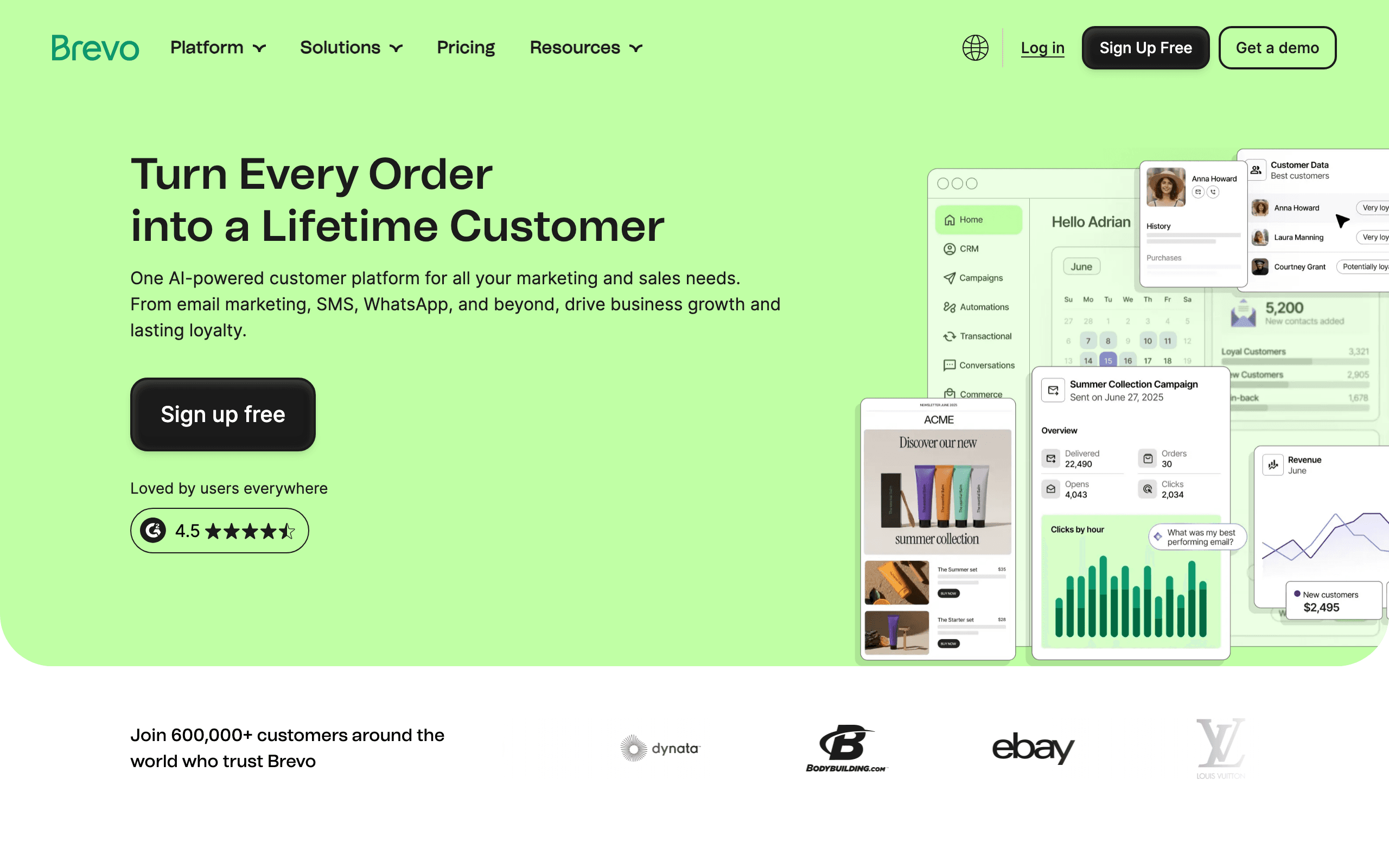
3. Brevo

Best for: Large lists mailed infrequently, plus transactional email in the same account.
Pricing: Free plan with a daily allowance, then Starter from around $9/month for 5,000 emails, with unlimited contacts. SMS is credit-based and priced per destination.
Brevo produces the largest raw saving on this list for a specific shape of store: a big accumulated list, a handful of campaigns a month, and a need for transactional email that Klaviyo does not cover well.
Unlimited contacts with volume-based email billing means the database costs nothing to hold. International SMS coverage is the broadest here in practical terms, which matters for multi-market stores.
The trade-off is the largest drop in commerce capability on this list. Cart, catalog, and behavioral automation are noticeably thinner, reporting is basic, and there is nothing resembling Klaviyo's predictive tooling. If your flows are doing the heavy lifting, this will cost you revenue.
- Pros: Biggest cost reduction for large dormant lists, transactional email included, broad international SMS, very low entry price.
- Cons: Significantly shallower commerce automation, basic reporting, SMS pricing varies sharply by country, weaker store integrations.
Verdict: A big saving with a real capability cost. Correct only for genuinely simple programs.
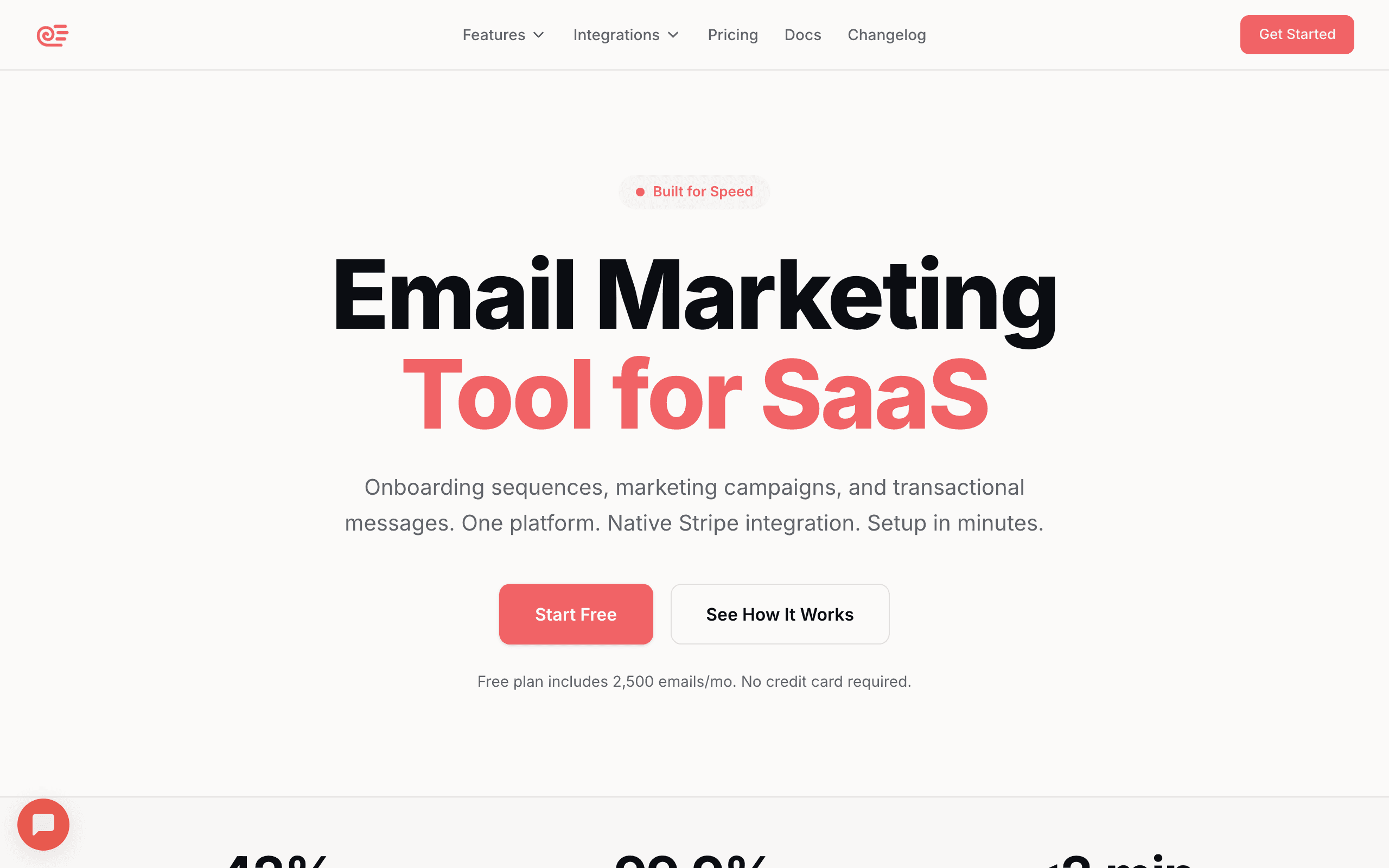
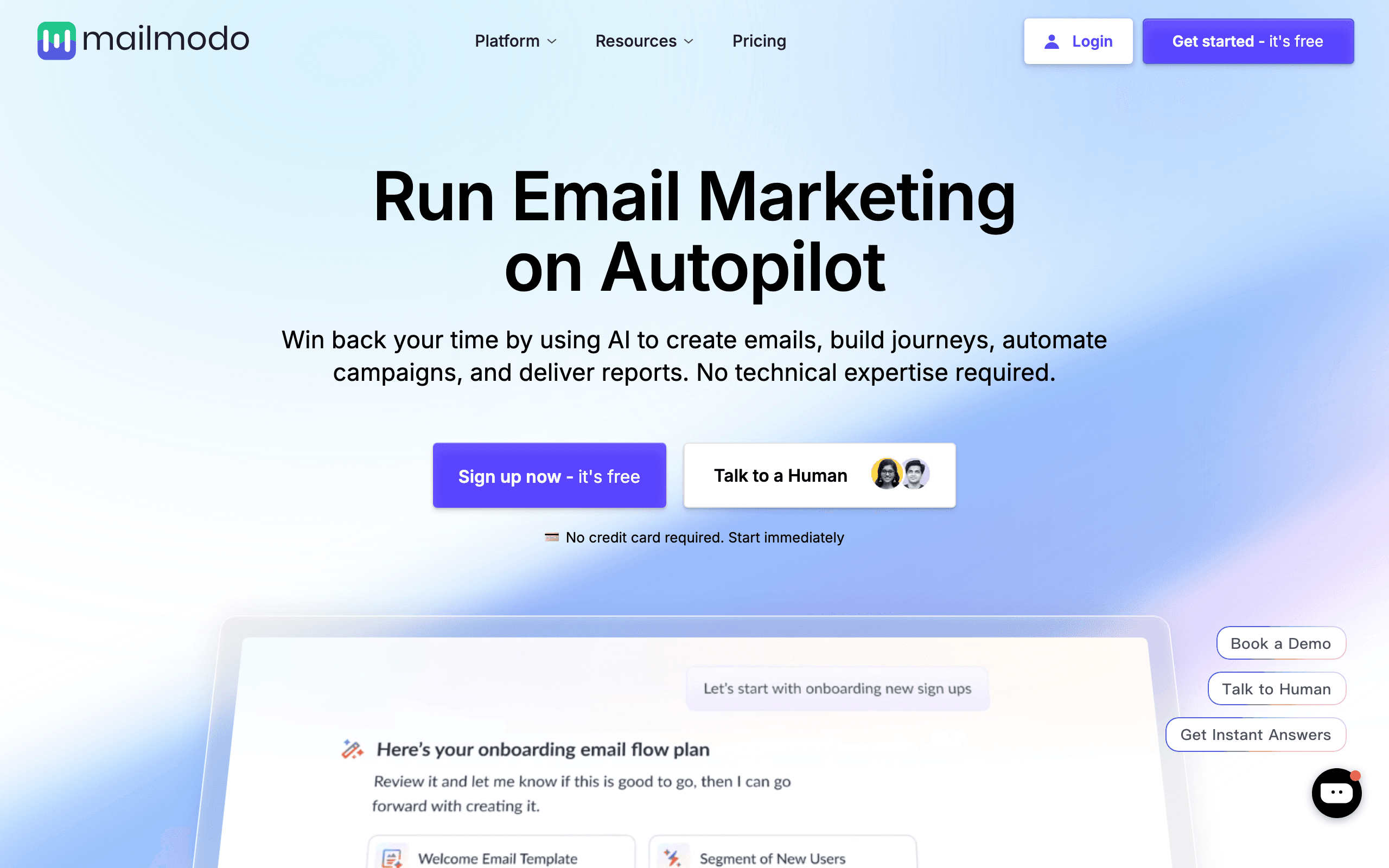
4. Sequenzy

Best for: Lifecycle-led teams that want send-based pricing and an API-first platform.
Pricing: Paid plans from $19/month with send-based email pricing, plus an SMS add-on from $16/month including 1,000 credits on paid plans.
Disclosure: I build Sequenzy. The honest read for a Klaviyo migration is that this is not a Klaviyo replacement for a store whose revenue depends on predictive segmentation, browse abandonment, or AI product recommendations. Klaviyo is better at those, and pretending otherwise would waste your time.
Where it is a genuine alternative is a team whose Klaviyo bill is driven by stored profiles rather than sends, and whose program is lifecycle sequences rather than deep merchandising. Send-based pricing means a large historical database does not cost anything to keep. Catalog sync and dynamic product blocks cover product-driven emails, and both Shopify and Stripe connect natively, which is useful for hybrid businesses selling physical product and subscriptions.
Two things it does better than most on this list: transactional and marketing email live in one platform, and everything is available through a full API, CLI, and MCP server, so teams that script their operations are not fighting the tool. SMS is a paid add-on with managed toll-free provisioning, separate consent from email, and enforced quiet hours, but there is no two-way inbox yet.
- Pros: Send-based pricing, transactional plus marketing in one platform, Shopify and Stripe together, strong API, CLI, and MCP, SMS inside the same sequences.
- Cons: No predictive analytics or AI product recommendations, WooCommerce sync is beta, lighter merchandising than Klaviyo, smaller ecosystem.
Verdict: A fit for lifecycle-led and hybrid businesses. Not a replacement for Klaviyo's data depth.
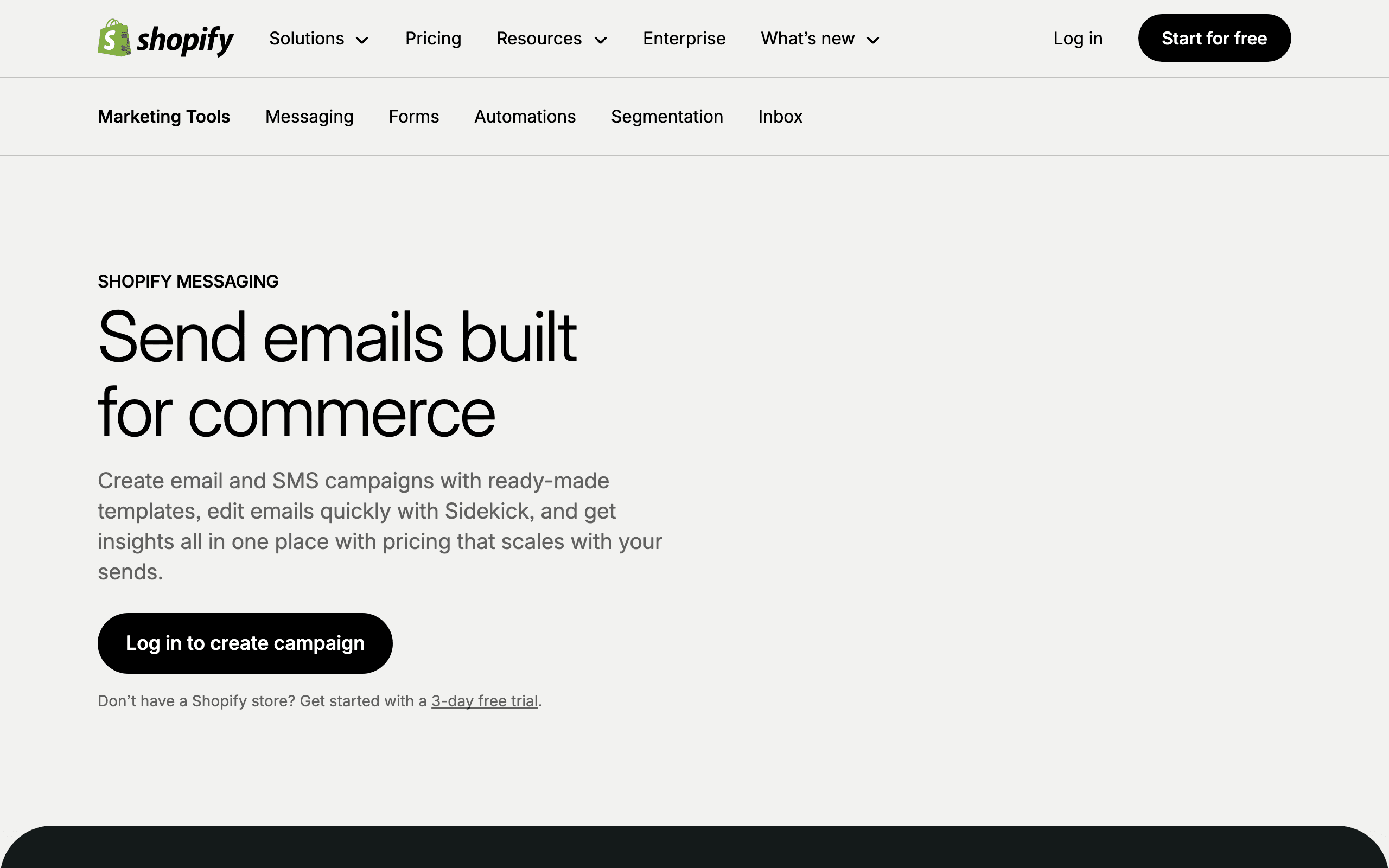
5. Shopify Email

Best for: Stores that were only ever sending campaigns.
Pricing: Included with eligible Shopify plans, with the first 10,000 marketing emails each month at no charge and additional volume billed per Shopify's current rules.
This is the answer nobody puts on a Klaviyo alternatives list, and it is correct more often than the industry admits. If your Klaviyo account contains a welcome email, an abandoned cart flow you never tuned, and a monthly newsletter, you are paying a specialist price for a generalist job.
Shopify Email lives in the admin, uses the existing catalog, has no integration to maintain, and gives you 10,000 emails a month at no cost. For a store under that volume, the entire email line item disappears.
The ceiling is genuinely low: basic segmentation, narrow automation, no browse behavior, no product recommendations, no serious attribution. Shopify's own abandoned-checkout messaging is not a substitute for a tuned three-message recovery flow.
- Pros: No platform bill under 10k emails, zero integration risk, native catalog and customer data, immediate setup.
- Cons: Shopify only, minimal segmentation and automation, no meaningful attribution, low ceiling.
Verdict: The honest answer for a simple program. Move back up when unbuilt flows cost more than the subscription.
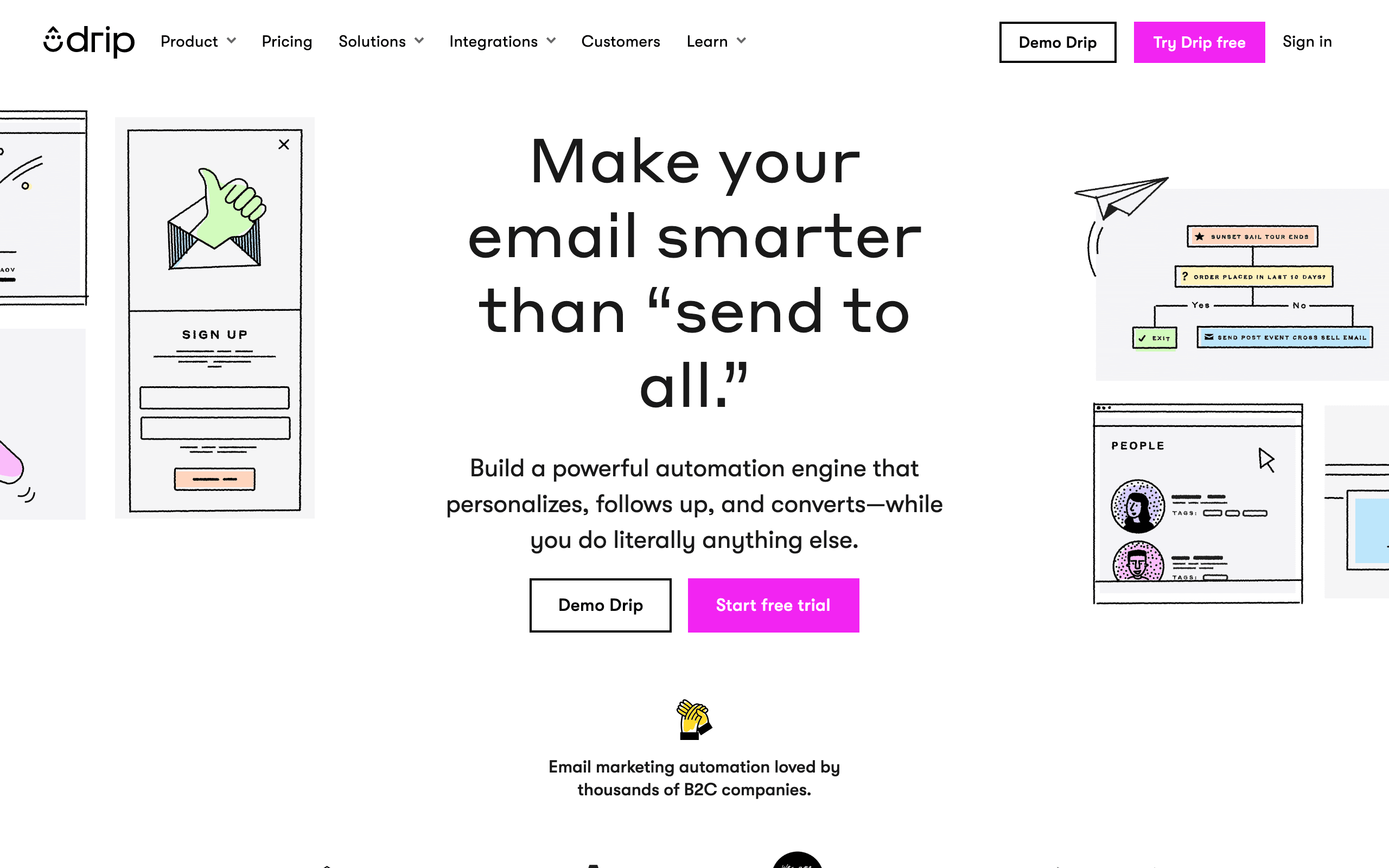
6. Drip

Best for: Email-first stores that want behavioral depth without a customer data platform.
Pricing: From about $39/month at 2,500 contacts, rising to roughly $154/month at 10,000 contacts, with all features included at every tier.
Drip is the closest thing here to Klaviyo's behavioral philosophy without Klaviyo's platform weight. The visual workflow builder handles conditions, branches, delays, and purchase-based segments, and revenue reporting answers which flow made money.
Every feature is available on every plan, which removes a common Klaviyo frustration where a capability is gated behind a tier.
At 10,000 contacts it is not actually cheaper than Klaviyo, which limits its usefulness as a cost play. It is also email-first: do not select it expecting a native SMS program without confirming the current path for your market.
- Pros: Strong behavioral automation, all features on every plan, good revenue attribution, e-commerce oriented.
- Cons: Not meaningfully cheaper at 10k contacts, no permanent free plan, not an SMS choice, smaller ecosystem.
Verdict: A lateral move on price, a sideways move on philosophy. Choose it for the flat feature access.
7. ActiveCampaign

Best for: Businesses that need branching journeys and a CRM more than merchandising.
Pricing: Starter from about $15/month at 1,000 contacts on annual billing, with automation, CRM, and advanced features gated by tier.
ActiveCampaign is the right alternative when your reason for leaving is that Klaviyo cannot express your journey logic. Conditions, goals, scoring, waits, and CRM tasks handle wholesale, B2B, and sales-assisted motions that a pure commerce platform models awkwardly.
Its Deep Data integrations bring order and product information into that builder, so purchase behavior can drive genuinely complex logic.
It is not commerce-first. You will build more from scratch, product recommendations are not a strength, and the tier gating means the useful features are not on the entry plan. SMS is not a native specialty.
- Pros: Best conditional automation available, CRM and sales workflows, works well beyond commerce, huge integration list.
- Cons: Not commerce-first, features gated by tier, contact billing climbs, weaker merchandising and SMS.
Verdict: The right answer only if journey logic, not merchandising, is your constraint.
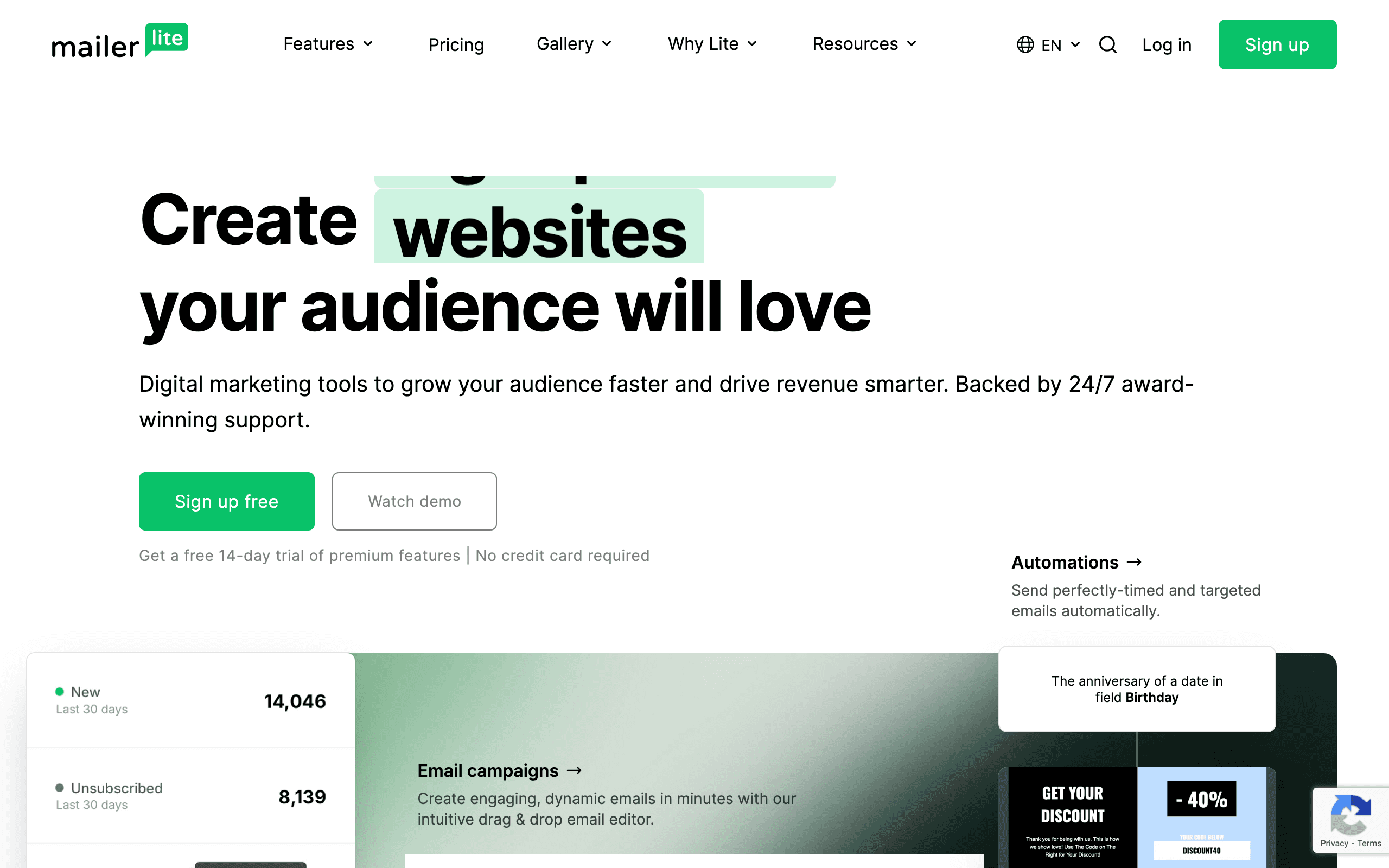
8. MailerLite

Best for: Small stores where Klaviyo was always oversized.
Pricing: Free up to 250 subscribers and 2,500 monthly emails, with Comfort from about $12/month.
MailerLite is the cheapest credible destination on this list for a store with a small list and a simple program. The editor is clean, landing pages and forms are included, and basic automations cover a welcome series and simple follow-ups.
For a store with 2,000 subscribers sending two campaigns a month, this is genuinely sufficient and the cost difference against Klaviyo is most of the point.
The commerce integration is basic and there is no meaningful SMS story. If a segment needs multiple order conditions or an email needs a dynamic product block, this is the wrong tool.
- Pros: Very low cost, clean editor, landing pages and forms included, generous free tier.
- Cons: Basic commerce integration, limited automation, no real SMS, shallow segmentation.
Verdict: Right when the store is genuinely small. Wrong the moment merchandising matters.
9. Mailchimp

Best for: Teams that want familiarity, templates, and a broad marketing suite.
Pricing: Free tier for small lists, then paid marketing plans from about $13/month, billed by contacts.
Mailchimp is the alternative people pick for reasons that have nothing to do with commerce: a freelancer already knows it, the template library is unmatched, and the wider marketing surface covers landing pages, forms, and ads.
Its Shopify and WooCommerce connectors sync customers and orders well enough for basic segmentation and campaigns.
Against Klaviyo specifically, this is a downgrade in every commerce dimension: cart, browse, product, and revenue workflows are all less central. Contact-based billing also climbs quickly, so it may not even solve a cost problem.
- Pros: Familiar to almost everyone, best template ecosystem, broad marketing surface, easy hiring.
- Cons: Shallow commerce automation, contact billing climbs, weak SMS, not a cost win at scale.
Verdict: A comfort choice. Rarely the right technical answer for a store.
10. Postscript

Best for: Stores where SMS, not email, was the reason Klaviyo mattered.
Pricing: Starter $0/month with a $49 minimum spend at about $0.009/SMS, Growth $100/month at about $0.008, Professional $500/month at about $0.007. Average US carrier fees of about $0.00418/SMS are billed separately.
If your Klaviyo bill is dominated by SMS credits and your text program is now the main revenue channel, Postscript is a genuine upgrade rather than a compromise. Capture tools, Shopify-native flows, and real reply management are all better than the bundled equivalent.
Published rates make budgeting straightforward, and higher tiers meaningfully lower the per-message cost: at 250,000 messages, Professional's $500 fee is repaid by the rate difference alone.
The important caveat is that this is not an ESP replacement. Its email product is newer, and most brands run it alongside an email platform, which means two systems and a suppression problem to solve deliberately.
- Pros: Best self-serve SMS tooling, published transparent rates, deep Shopify flows, real reply management.
- Cons: Not a Klaviyo email replacement, carrier fees add meaningfully, entry minimum spend, Shopify-centric.
Verdict: Replaces Klaviyo's SMS, not Klaviyo. Plan for two platforms.
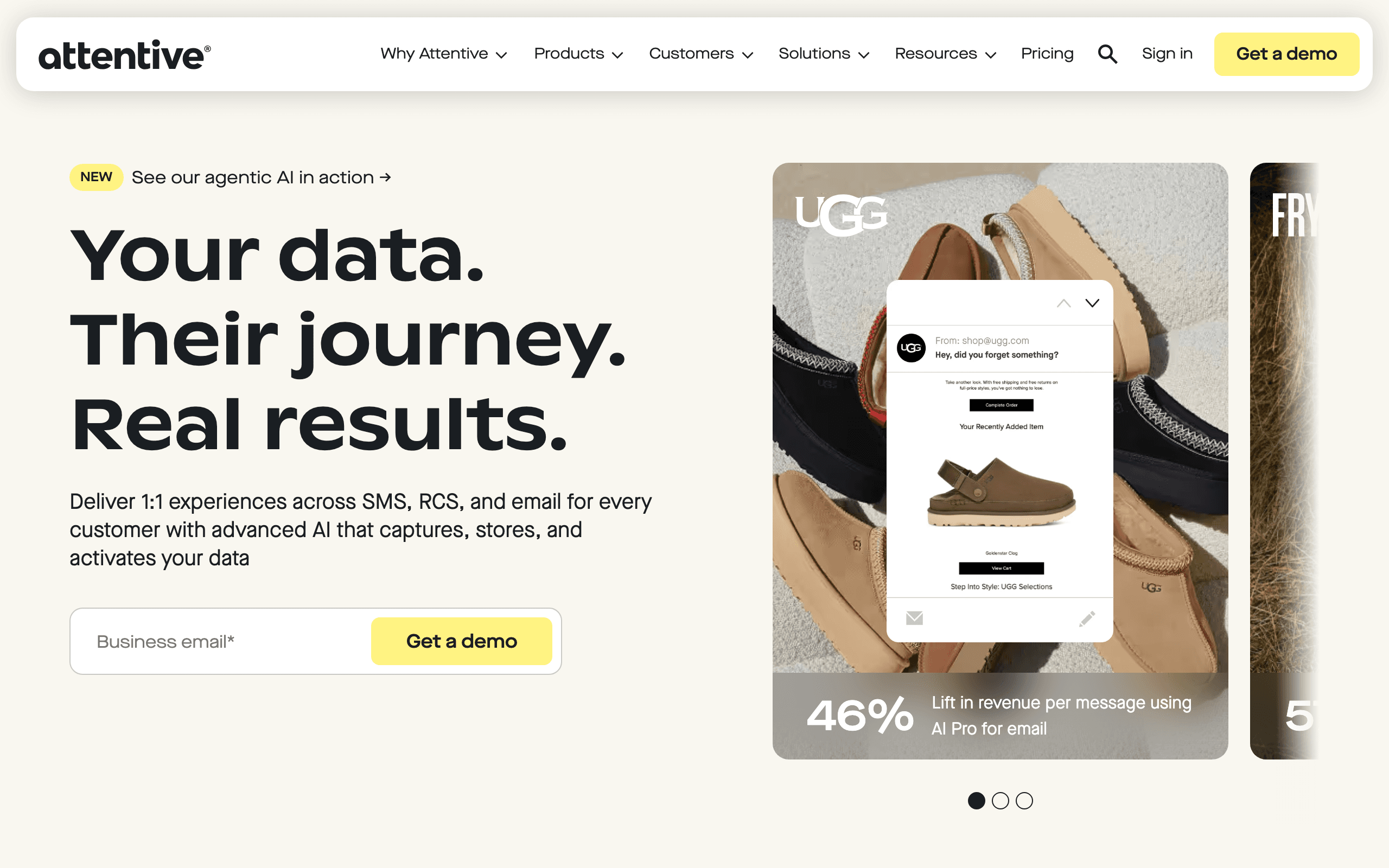
11. Attentive

Best for: Brands that outgrew Klaviyo's messaging rather than its data.
Pricing: Custom and consumption-based. Reported minimums commonly sit around $2,000 to $3,000 per quarter, with roughly $0.01 per SMS and volume commitments often starting near 50,000 messages a month.
Attentive is the upward move for a brand where messaging has become a department. Its signup units, two-tap capture, RCS, and conversational commerce are all materially ahead of what a bundled platform offers, and its email product is credible enough that some brands consolidate entirely.
Strategic support is a real part of the value and can genuinely offset a hire.
It is sales-led, contract-based, and priced for volume, so it is not a cost-reduction move under any circumstances. Below roughly $5M in revenue the minimums are difficult to justify.
- Pros: Best list growth in the category, RCS and conversational commerce, cross-channel journeys, strategic support.
- Cons: Enterprise minimums, no published pricing, contract complexity, never a saving.
Verdict: An upgrade, not an alternative. Relevant only at real scale.
12. Bloomreach Engagement

Best for: Retailers that outgrew Klaviyo upward rather than downward.
Pricing: Enterprise quote based on customers, catalog size, and event volume.
Bloomreach is here to complete the picture. Some stores leave Klaviyo because it is not enough: they need a real customer data platform, commerce search and merchandising, and personalization across web as well as messaging.
That is a different purchase with a different budget, a longer implementation, and usually a dedicated team. It solves problems Klaviyo genuinely cannot.
If you are reading a Klaviyo alternatives article to save money, this is not your answer. If you are here because Klaviyo's data model has become the constraint on a large retail business, it belongs on your shortlist.
- Pros: Full CDP, commerce search and merchandising, web personalization, enterprise-grade orchestration.
- Cons: Enterprise cost and implementation, requires a dedicated team, far beyond most stores' needs.
Verdict: The upward exit. Only relevant when Klaviyo's data model is the limiting factor.
What it actually costs at each list size
Email plans only, before SMS. Use this to check whether a migration is worth the disruption.
| Active contacts | Klaviyo | Omnisend | Sendlane | Brevo | Shopify Email |
|---|---|---|---|---|---|
| 1,000 | Free tier or about $20/mo | Free tier or about $16/mo | $100/mo floor | Free to about $9/mo | Free under 10k emails |
| 5,000 | Roughly $70 to $100/mo | Roughly $50 to $65/mo | $100/mo for 50k sends | Tier depends on send volume | Free under 10k emails |
| 10,000 | About $150/mo | About $115 to $132/mo | $100/mo for 50k sends | Tier depends on send volume | Per-email after 10k |
| 25,000 | Climbs steeply | Climbs | Higher send tier | Send-volume tier | Per-email after 10k |
| 50,000, mostly dormant | Full profile count billed | Full contact count billed | Unlimited contacts, sends billed | Unlimited contacts, sends billed | Per-email after 10k |
The pattern is clear: contact-based platforms diverge from send-based platforms as your dormant list grows. At 10,000 engaged contacts the difference between Klaviyo and Omnisend is real but modest. At 50,000 contacts where only 12,000 are engaged, the difference between profile-based and send-based billing is the whole decision.
Before migrating for cost, try this: sunset profiles with no engagement in 12 months, confirm the new profile count, and re-price Klaviyo. A significant share of stores that plan a migration find that hygiene solves most of it.
What you lose when you leave
Be specific about this before committing, because these losses are permanent and mostly invisible until you need them.
Predictive analytics. Expected date of next order, predicted lifetime value, and churn risk are not standard features elsewhere. If your VIP or win-back segments are built on them, you will need to approximate with rules.
Shopify event fidelity. Klaviyo's integration captures more, more reliably, than anyone else's. Stores with unusual checkout apps notice this most.
Attribution history. Reporting history does not migrate. You will lose the ability to compare this quarter's flow performance against last year's on a like-for-like basis. Export what you need before you cancel.
The flow library. Klaviyo's prebuilt flows encode a lot of accumulated knowledge about timing, branching, and suppression. Rebuilding them elsewhere means rediscovering some of that.
The ecosystem. More agencies, more freelancers, more integrations, and more documented answers exist for Klaviyo than for any alternative on this list. That is worth something when you need help quickly.
Benchmarks. Klaviyo's benchmark data gives you a sense of whether your numbers are good. Losing it makes performance harder to judge.
A migration plan that does not lose revenue
Two to six weeks depending on how many flows you run. Do not compress it.
Week 1: export and audit. Pull contacts with consent state, suppression lists, bounce and complaint history, and a full inventory of active flows, segments, and templates. Export at least 24 months of flow-level revenue reporting, because you will not get it back.
Week 1: rank the flows. List every active flow by attributed revenue. You will rebuild the top three or four. Most stores discover that half their flows produce almost nothing and do not need to move at all.
Week 2: rebuild the top flows. Welcome, abandoned checkout, and post-purchase first. Build them in the new platform but leave them off.
Week 2: import suppression first. Before any contact import, load the suppression list. This is the single most common migration mistake: importing contacts before suppressions and mailing someone who unsubscribed two years ago.
Week 3: verify the integration. Place a real order, a refund, and an abandoned checkout. Confirm each event arrives with the right data. Do not skip the refund test.
Week 3 to 4: run in parallel. Turn on the new welcome flow only, with the Klaviyo equivalent off. Compare performance for two weeks on real traffic before moving anything else.
Week 4 to 6: cut over flow by flow. One at a time, highest revenue first, with a week of observation between each. Keep Klaviyo active until the last flow is verified.
Then cancel. Not before. The cost of an extra month of overlap is far lower than the cost of discovering a broken cart flow after you lost access.
Frequently asked questions
What is the best Klaviyo alternative?
Omnisend is the closest like-for-like replacement for most e-commerce teams: similar prebuilt commerce flows, email plus SMS plus push, and a lower bill under roughly 10,000 contacts. Sendlane and Brevo are better if your problem is paying for stored contacts you never message. Shopify Email is the honest answer for stores that only ever used campaigns. The right alternative depends entirely on which Klaviyo problem you are solving.
Why do stores leave Klaviyo?
In practice there are four reasons: the bill grew faster than revenue as the profile count climbed, the team never used the depth they were paying for, the store is not Shopify so the integration is shallower than the reputation suggests, or SMS became the main channel and a specialist would serve it better. Only the first two are usually solved by an email platform switch.
How much cheaper is a Klaviyo alternative?
At 10,000 active profiles Klaviyo's email plan runs around $150 per month before SMS. Omnisend at the same contact count is roughly $115 to $132, Sendlane is $100 for 50,000 sends with unlimited contacts, and Brevo prices by send volume with unlimited contacts from about $9 per month at low volumes. The savings are real but rarely transformative unless most of your database is dormant.
What do I lose by leaving Klaviyo?
Predictive analytics such as expected lifetime value and churn risk, the most complete Shopify event model in the category, the deepest prebuilt flow library, benchmark data, and the largest agency and partner ecosystem. You also lose historical flow-level attribution, because reporting history does not migrate.
Is migrating away from Klaviyo hard?
The list is easy; the program is not. Contacts and suppression lists export cleanly, but flows, segments, templates, and attribution history all have to be rebuilt. Budget two to six weeks depending on how many flows you run, and plan to run both platforms in parallel for at least two weeks before cutting over.
Is Omnisend actually better than Klaviyo?
Not on depth. Klaviyo has better segmentation, better predictive data, and a more complete Shopify integration. Omnisend is better on price under roughly 10,000 contacts, faster to launch, and simpler to operate with a small team. For a store that uses a handful of flows and a weekly campaign, simpler and cheaper often produces more revenue than deeper and unused.
Should I leave Klaviyo because of SMS costs?
Probably not by itself. SMS pricing is dominated by carrier economics and is broadly similar across platforms, so switching rarely produces a large SMS saving. What does change is structure: a specialist like Postscript publishes lower per-message rates at higher tiers, and a bundled platform avoids paying twice to store the same contacts. Model your actual volume before deciding.
When should I stay with Klaviyo?
Stay when predictive segmentation, browse abandonment, product recommendations, or flow-level attribution are demonstrably driving revenue, when you are on Shopify and using the event depth, or when your team already knows the platform well. A migration that rebuilds the same flows on weaker data is a cost with no return.
Final recommendation
- Same job, lower cost: Omnisend. The closest replacement and the easiest migration.
- Large dormant database: Sendlane if you want to keep commerce depth, Brevo if you are willing to trade it for the biggest saving.
- Genuinely simple program on Shopify: Shopify Email. The whole line item can disappear.
- Lifecycle-led or hybrid store with Stripe revenue: Sequenzy, for send-based pricing and one platform across both revenue streams.
- Journey logic is the constraint: ActiveCampaign.
- SMS is now the main channel: Postscript, or Attentive at real scale, and plan for two platforms.
- Klaviyo has become the ceiling: Bloomreach or another enterprise CDP.
- No clear problem: stay, and run list hygiene instead.
The best outcome from reading a Klaviyo alternatives article is often deciding not to migrate. Sunset your dead profiles, turn off the flows nobody tuned, re-price the plan, and see whether the problem was ever the platform.
Related resources
- Klaviyo SMS alternatives - the SMS-specific version of this decision
- Sequenzy vs Klaviyo - direct feature comparison
- Klaviyo alternatives - the wider alternatives page
- Klaviyo pricing explained - how the bill is actually built
- Best email marketing platforms for e-commerce - the broader category



