Updated 2026-03-15

Best Email Marketing Tools for Shopify Stores

Your Shopify store deserves email marketing that actually talks to your store data.

Shopify makes it easy to launch a store. Growing it is the harder part. Email marketing is the highest-ROI channel for Shopify stores because it turns one-time buyers into repeat customers and recovers revenue from abandoned carts. The key is picking a platform that integrates well with Shopify so customer data, purchase history, and product catalogs sync automatically. I reviewed 11 email marketing tools that work with Shopify, focusing on integration depth, automation capabilities, pricing, and how much setup they require.

TL;DR

For most Shopify stores, Sequenzy offers the best value - AI-powered cart recovery and post-purchase sequences with pay-per-email pricing that saves money compared to contact-based platforms. Start free with up to 2,500 emails/month. For stores wanting the deepest integration and advanced features like predictive analytics, Klaviyo is the industry leader but gets expensive fast. For multi-channel marketing on a budget, Omnisend combines email, SMS, and push notifications at competitive pricing.

Why Shopify Stores Need Dedicated Email Marketing

Native Data Sync

The best Shopify email tools pull in customer data, purchase history, and product catalogs automatically. This means your automations can reference actual products the customer browsed, bought, or abandoned without manual setup.

Cart Recovery on Autopilot

About 70% of Shopify carts are abandoned. A 3-email recovery sequence running automatically can recapture 5-15% of that lost revenue every month. With native Shopify integration, the cart contents appear in the email automatically.

Post-Purchase Revenue

The second purchase is where profit really starts. Post-purchase emails with product tips, review requests, and personalized cross-sells dramatically increase customer lifetime value.

Segmentation by Purchase Behavior

Knowing what customers bought, how much they spent, and how recently they ordered lets you send relevant emails. VIP segments, lapsed buyer win-backs, and product-specific campaigns all depend on Shopify data flowing into your email platform.

Shopify Stores Email Marketing Benchmarks

Know these numbers before you start. They'll help you set realistic goals and pick the right tool.

25-35%
Average Open Rate

Shopify store emails typically see 25-35% open rates. Cart recovery and post-purchase emails perform best at 40-50%. If your campaign open rates are below 20%, review your subject lines and sender reputation.

3-5%
Average Click Rate

Click rates of 3-5% are strong for Shopify stores. Product recommendation emails and cart recovery drive the highest clicks. Emails with product images from your catalog outperform text-only messages.

Tuesday-Thursday, 10am-2pm
Best Send Time

Most Shopify stores see peak engagement mid-week during lunch hours. However, flash sales and limited-time offers can perform well any day. Cart recovery emails should send based on abandonment time, not day of week.

5-15% of abandoned carts
Cart Recovery Rate

A well-optimized 3-email cart recovery sequence recovers 5-15% of abandoned carts. The first email (1 hour) typically drives 50-60% of total recoveries. Stores with high-quality product photography in recovery emails see higher conversion rates.

Important Tips Before You Choose

Lessons from shopify storeswho've been doing this for years. Save yourself the trial and error.

Set up cart recovery before anything else - it is your fastest ROI

About 70% of Shopify carts are abandoned. A 3-email cart recovery sequence running automatically can recapture 5-15% of that lost revenue every month. This single automation often generates more revenue than all other email campaigns combined. Set it up on day one.

Segment customers by purchase behavior, not just demographics

Your most powerful segments are based on what people actually bought. Create segments for first-time buyers, repeat customers, VIP spenders (top 10% by revenue), lapsed customers (no purchase in 90+ days), and product-category buyers. These segments enable highly relevant cross-sells and win-back campaigns.

Time your post-purchase sequence to the product experience

Send product tips 3 days after delivery (when excitement is high), a review request at day 10 (when they have used it enough to form an opinion), and a cross-sell recommendation at day 21 (when they are considering what is next). Each email should reference the specific product they purchased.

Use product images from your Shopify catalog in every email

Emails with actual product photos from your store convert dramatically better than text-only emails. Tools with native Shopify integration pull product images, prices, and descriptions directly into your emails. Use this for cart recovery, cross-sells, and new product announcements.

Build a VIP segment and treat them differently

Your top 10% of customers by revenue are your VIPs. Give them early access to sales, exclusive discounts, and first look at new products. A simple VIP email program can increase their lifetime value by 20-30% because they already love your brand and respond to recognition.

Clean your list quarterly to maintain deliverability

Shopify stores accumulate subscribers quickly through checkout and pop-ups. Many never engage after subscribing. Remove or suppress subscribers who have not opened an email in 6+ months. A clean list improves deliverability for everyone else and saves money on contact-based pricing plans.

19 Best Email Marketing Tools for Shopify Stores

#ToolDescriptionBest ForPricing
1SequenzyAI-powered email marketing with native Shopify integration and pay-per-email pricing.Shopify stores wanting smart automation with affordable pay-per-email pricingFree up to 2,500 emails/mo, then $19/mo (unlimited contacts)
2KlaviyoThe leading Shopify email and SMS platform with the deepest integration.Established Shopify stores with $10K+ monthly revenue wanting advanced featuresFree up to 250 contacts, then from $20/month
3OmnisendE-commerce marketing platform with email, SMS, and push notifications for Shopify.Shopify stores wanting email, SMS, and push in one affordable platformFree up to 250 contacts, then from $16/month
4Shopify EmailShopify's built-in email marketing tool with native store integration.Brand new Shopify stores sending basic promotional emailsFree for 10,000 emails/month, then $1/1,000 emails
5DripE-commerce email and automation built specifically for online stores.Mid-size Shopify stores wanting Klaviyo-level features at a lower price$39/month for 2,500 contacts
6SegunoEmail marketing app built exclusively for Shopify stores.Shopify-only stores wanting an embedded email experienceFree up to 250 contacts, then from $10/month
7ActiveCampaignAdvanced automation and CRM platform with Shopify integration.Shopify stores with complex customer journeys or B2B sales$29/month for 1,000 contacts
8MailchimpThe most recognized email platform with a Shopify integration.Small Shopify stores just starting with email marketingFree up to 500 contacts, then from $13/month
9BrevoBudget-friendly email and SMS marketing with Shopify integration.Budget-conscious Shopify stores needing email and SMSFree up to 300 emails/day, then from $25/month
10MailerLiteClean, simple email marketing with Shopify integration.Small Shopify stores prioritizing simplicity and valueFree up to 1,000 subscribers, then from $10/month
11PrivyPop-ups, email, and SMS marketing built for Shopify stores.Shopify stores focused on growing their email list with pop-upsFree pop-ups, email from $30/month
12AttentiveEnterprise SMS + email platform for scaled Shopify DTC brands.Scaled Shopify DTC brands doing $5M+ annuallyCustom, typically $500+/month
13PostscriptSMS-first platform with Shopify-native integration and growing email features.SMS-led Shopify stores wanting email in the same toolFree up to 1,000 SMS, email from custom pricing
14Yotpo EmailReviews + loyalty + SMS + email suite for review-led Shopify brands.Shopify brands running Yotpo Reviews and LoyaltyFrom $19/month email, bundled suite pricing
15SmartrMailBudget Shopify-focused alternative to Klaviyo with product recommendations.Budget-conscious Shopify stores wanting Klaviyo features at a lower priceFrom $29/month for 1,000 contacts
16SendlaneKlaviyo alternative for mid-size Shopify operators priced out of Klaviyo.Mid-size Shopify stores priced out of KlaviyoFrom $100/month based on list size
17RecartSMS-first abandoned cart recovery for Shopify.Shopify stores with abandoned cart revenue leakageFrom $299/month based on SMS volume
18SegunoShopify-exclusive email platform built natively for Shopify-only operations.Pure-Shopify stores wanting minimum setupFree up to 250 subscribers, then from $10/month
19Retention.comAnonymous-visitor-to-email identity resolution for high-traffic Shopify stores.High-traffic Shopify stores wanting to identify anonymous visitorsFrom $1/identified contact, custom tiers
Our Top Pick for Shopify Stores
#1
Sequenzy

AI-powered email marketing with native Shopify integration and pay-per-email pricing.

Visit
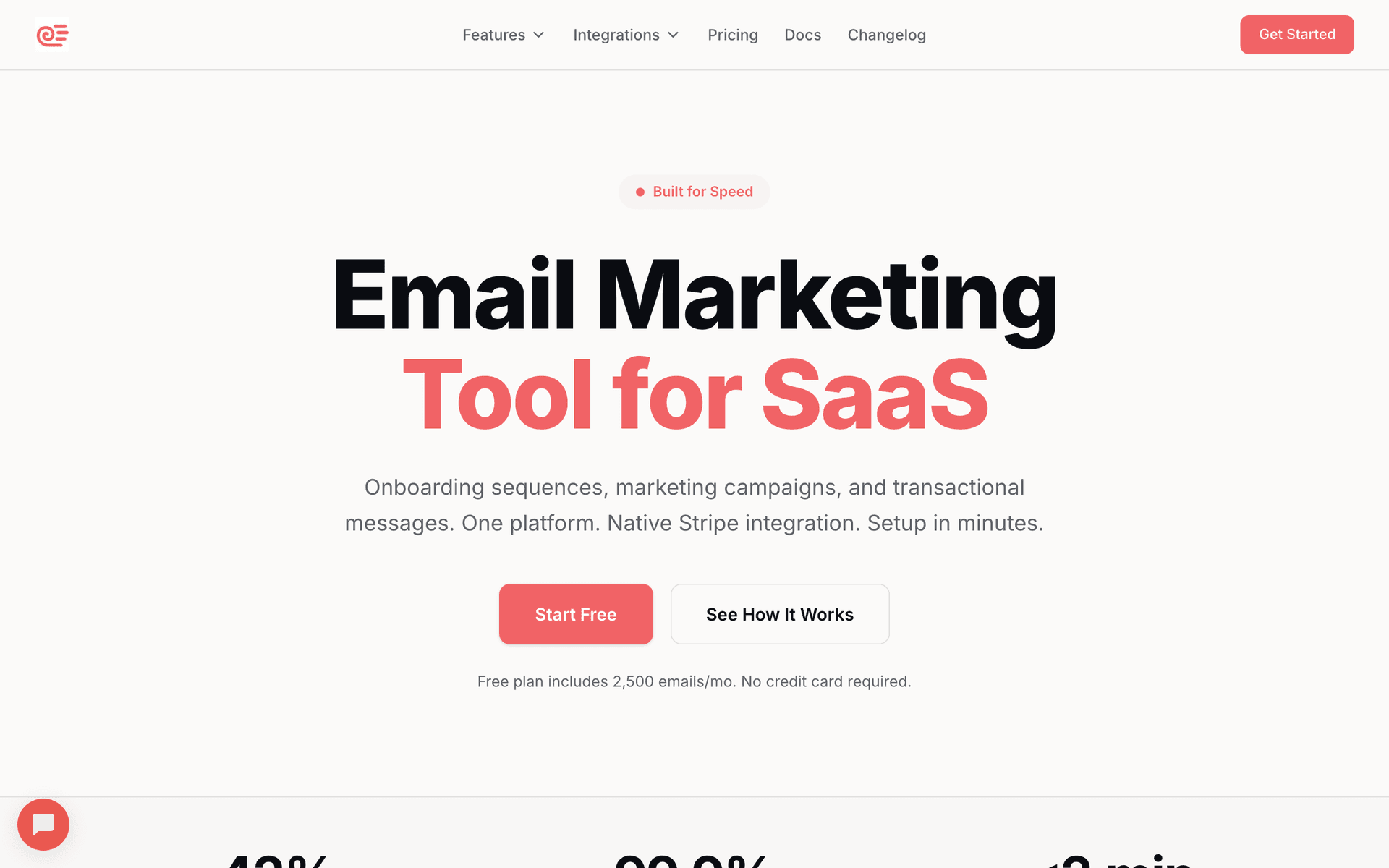
Sequenzy dashboard screenshot

Sequenzy recently launched a native Shopify integration that syncs customers, orders, and product data automatically. The AI sequence builder creates cart recovery, post-purchase, and win-back flows in seconds - describe what you want and it builds the complete sequence with subject lines, copy, and timing. What sets it apart from Klaviyo is the pricing model: the free tier covers up to 2,500 emails per month, and the $29/month plan covers 50,000 emails with unlimited contacts. For stores with large customer databases that only send during sales or seasonal pushes, this saves significant money compared to contact-based pricing. The Shopify integration automatically tags customers by purchase behavior (new buyer, repeat customer, VIP, churned) so segmentation works out of the box. Being honest: the Shopify integration is newer than Klaviyo's, so it does not have features like browse abandonment or predictive analytics yet. But for cart recovery, post-purchase sequences, and customer segmentation based on real order data, it works well and costs significantly less.

Best for
Shopify stores wanting smart automation with affordable pay-per-email pricing
Pricing
Free up to 2,500 emails/mo, then $19/mo (unlimited contacts)

Pros

  • Native Shopify integration with automatic customer and order sync
  • AI generates cart recovery and post-purchase sequences instantly
  • Free tier available for up to 2,500 emails/month
  • Automatic customer tagging based on purchase behavior

Cons

  • Shopify integration is newer than Klaviyo's or Omnisend's
  • No browse abandonment tracking yet
  • No built-in SMS marketing
  • No predictive analytics or product recommendation engine
#2
Klaviyo

The leading Shopify email and SMS platform with the deepest integration.

Visit
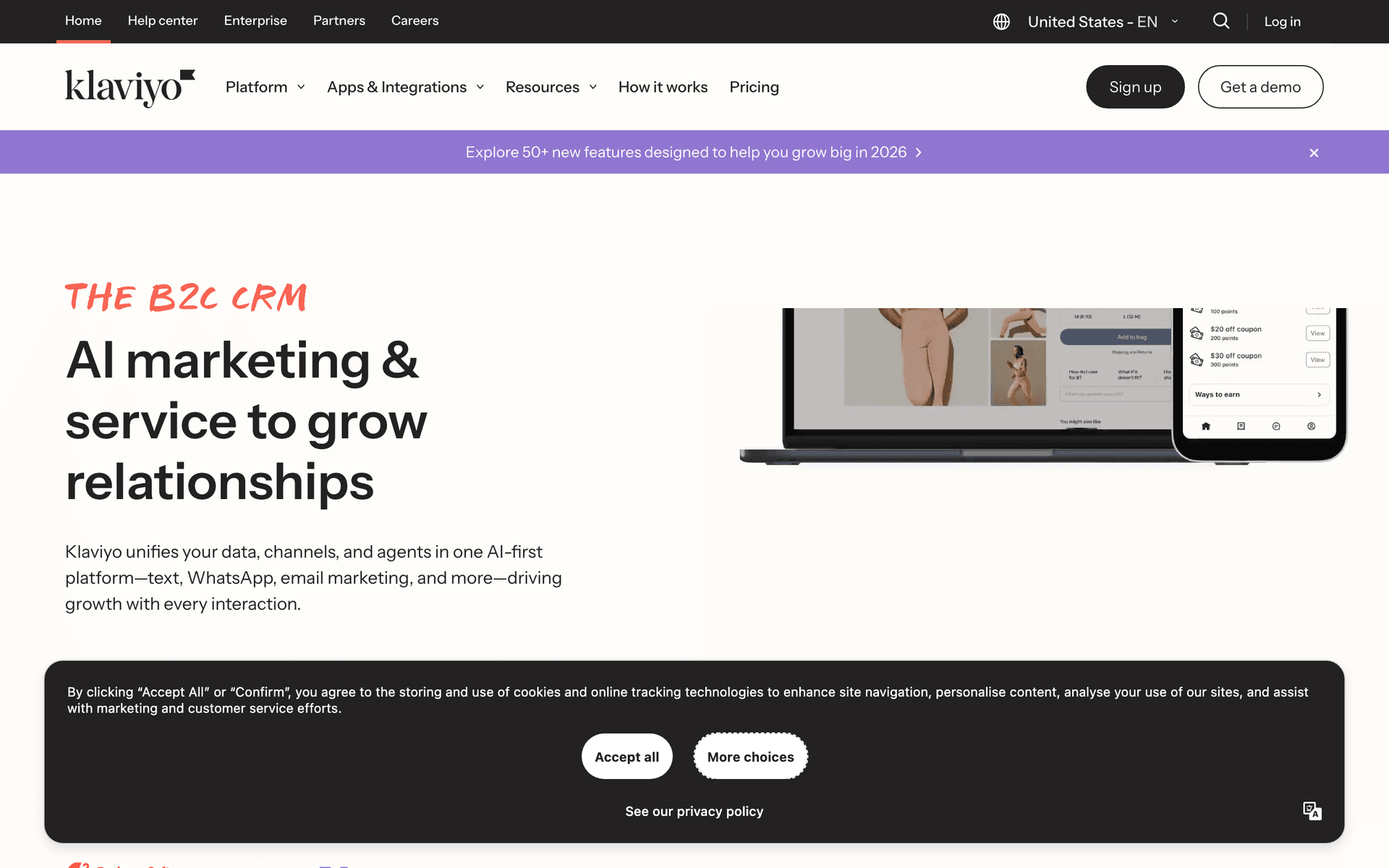
Klaviyo dashboard screenshot

Klaviyo is the most established email platform for Shopify stores. The integration syncs everything: purchases, browsing behavior, customer profiles, and product catalogs. Predictive analytics estimate customer lifetime value and churn risk. The AI product recommendation engine suggests items based on individual purchase patterns. For large Shopify stores with the budget, it is the most feature-rich option. The downside is cost. Klaviyo gets expensive quickly as your subscriber list grows, and the interface can feel overwhelming if you just want basic automations.

Best for
Established Shopify stores with $10K+ monthly revenue wanting advanced features
Pricing
Free up to 250 contacts, then from $20/month

Pros

  • Deepest Shopify integration on the market
  • AI-powered product recommendations and predictive analytics
  • Built-in SMS marketing
  • Massive community and library of pre-built flows

Cons

  • Gets expensive fast as your list grows
  • Complex interface with steep learning curve
  • SMS adds significant cost on top of email
  • Overkill for stores under $5K/month revenue
#3
Omnisend

E-commerce marketing platform with email, SMS, and push notifications for Shopify.

Visit
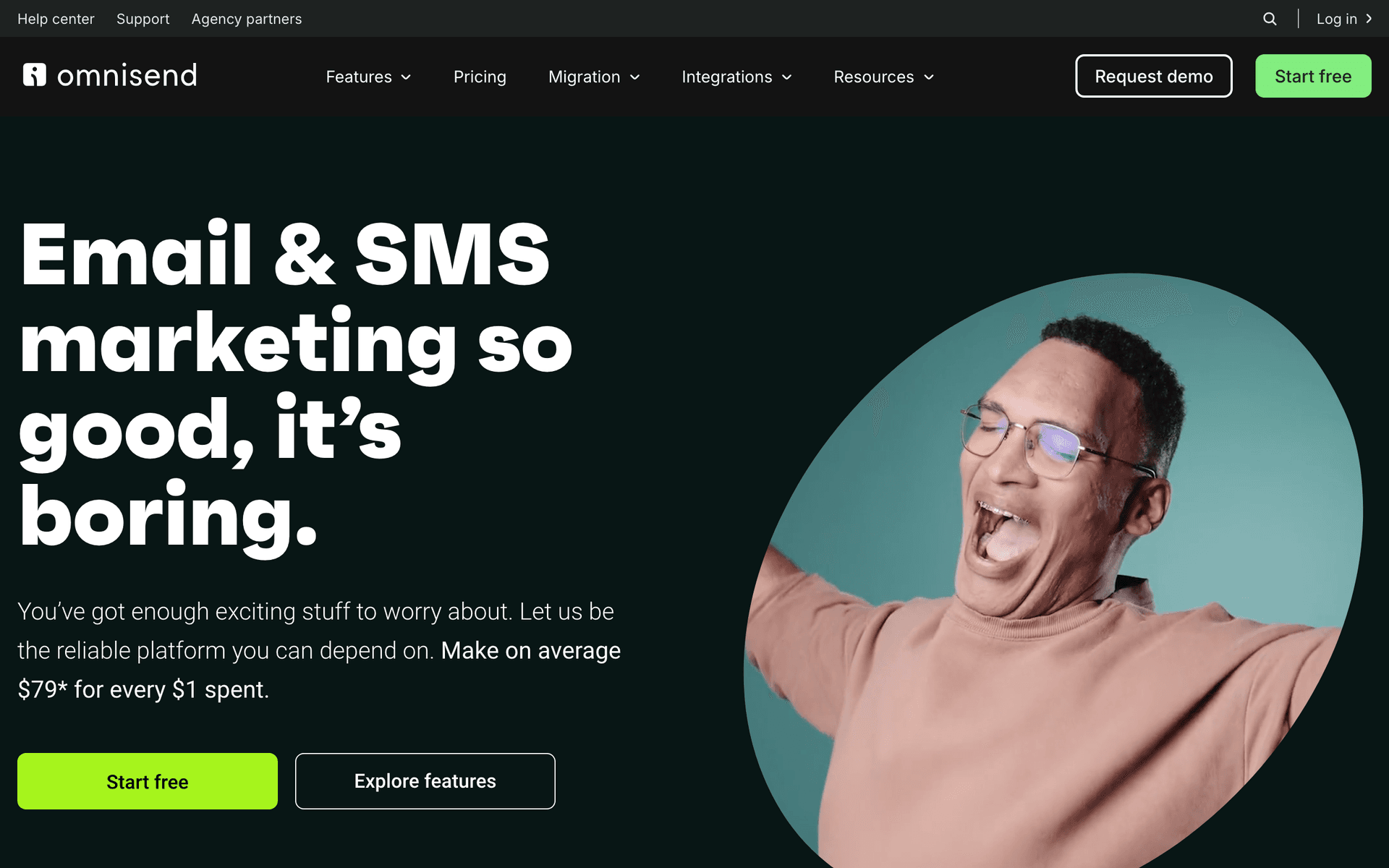
Omnisend dashboard screenshot

Omnisend is purpose-built for e-commerce with a solid Shopify integration. Pre-built automation workflows for cart abandonment, welcome series, and post-purchase are ready to activate in a few clicks. The product picker pulls items directly from your Shopify catalog into emails. Email, SMS, and push notifications in one platform is convenient. Pricing is competitive, especially compared to Klaviyo at scale.

Best for
Shopify stores wanting email, SMS, and push in one affordable platform
Pricing
Free up to 250 contacts, then from $16/month

Pros

  • Pre-built Shopify automation workflows
  • Email, SMS, and push notifications combined
  • Product picker from your Shopify catalog
  • More affordable than Klaviyo at scale

Cons

  • Less powerful segmentation than Klaviyo
  • Free tier is quite limited
  • Reporting could be more detailed
  • Fewer third-party integrations
#4
Shopify Email

Shopify's built-in email marketing tool with native store integration.

Visit
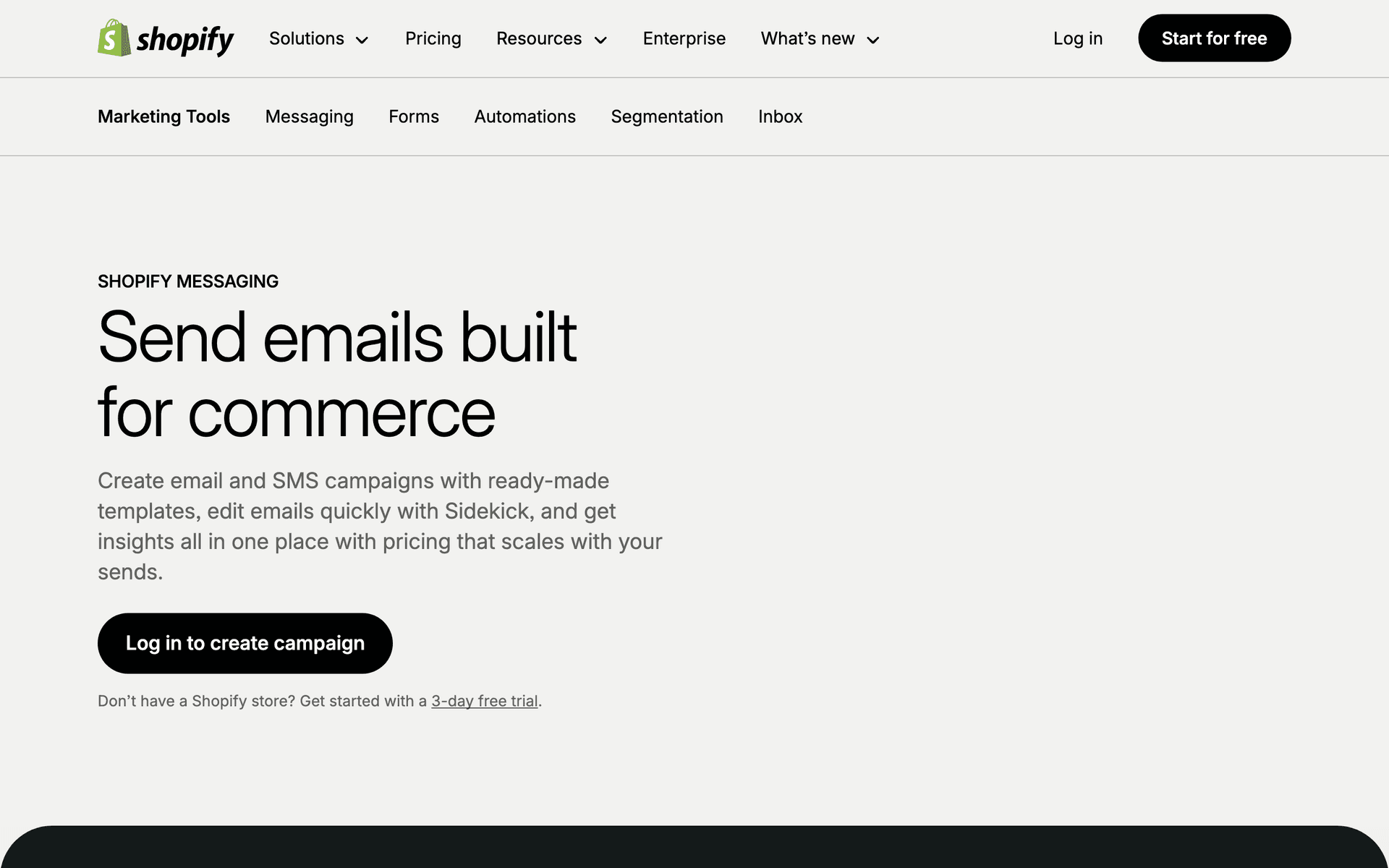
Shopify Email dashboard screenshot

Shopify Email is free for your first 10,000 emails per month, which makes it tempting. It lives inside your Shopify admin, so there is nothing to set up. Templates pull product images and details from your store automatically. For simple promotional emails and basic campaigns, it works fine. Where it falls short is automation. There is no cart abandonment sequence (beyond Shopify's basic checkout abandonment email), no post-purchase automation, and no advanced segmentation. For stores that want to grow past basic newsletters, you will outgrow it quickly.

Best for
Brand new Shopify stores sending basic promotional emails
Pricing
Free for 10,000 emails/month, then $1/1,000 emails

Pros

  • Free for first 10,000 emails per month
  • Built right into Shopify admin
  • Zero setup required
  • Templates auto-pull product data

Cons

  • Very limited automation
  • No cart recovery sequences
  • Basic segmentation only
  • No A/B testing
#5
Drip

E-commerce email and automation built specifically for online stores.

Visit
Drip dashboard screenshot

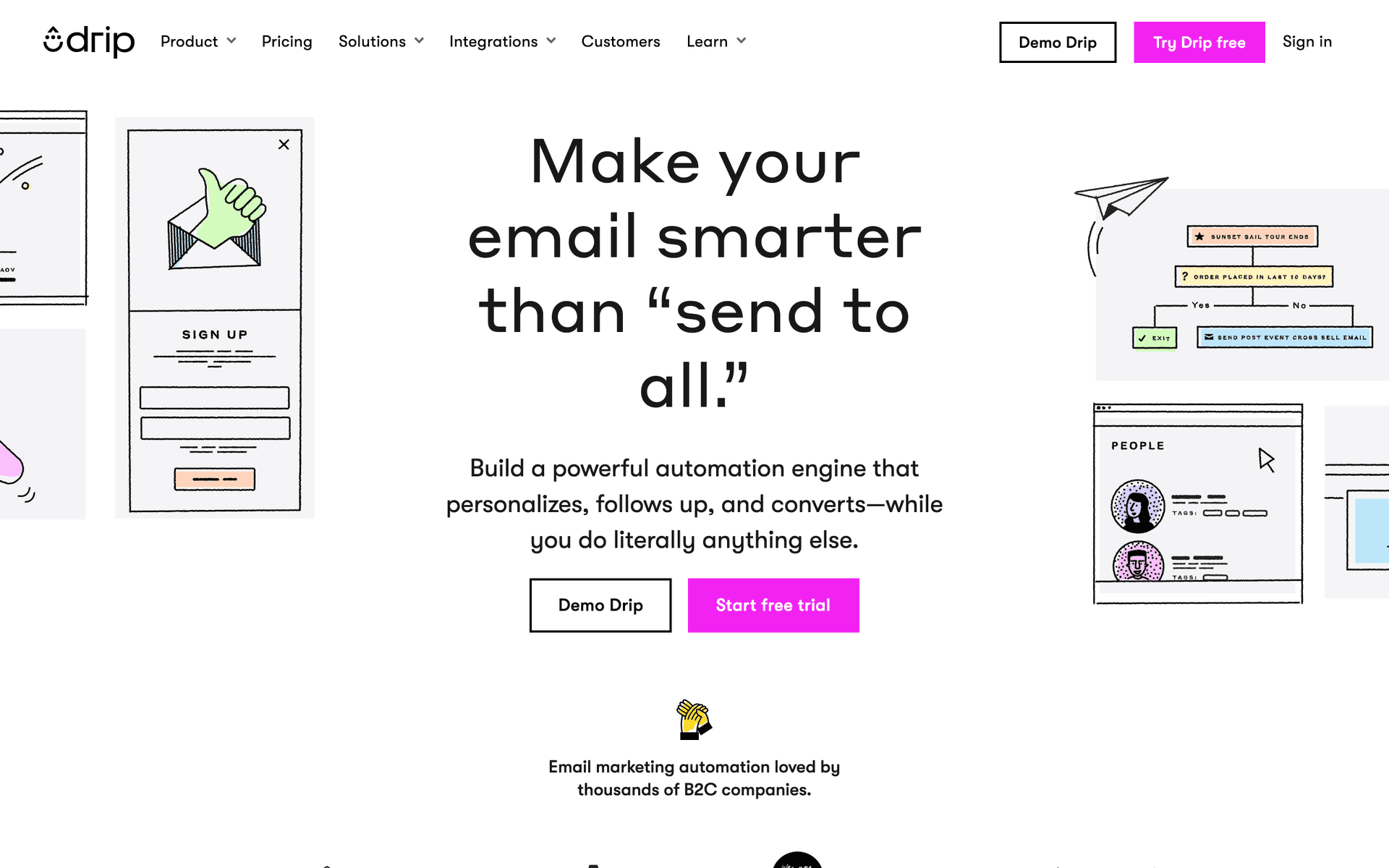
Drip integrates well with Shopify and the visual workflow builder makes it easy to map out customer journeys based on purchase behavior. Revenue attribution shows exactly which emails drive sales. It is a solid Klaviyo alternative at a slightly lower price. The starting price of $39 per month is higher than many competitors, and there is no free tier.

Best for
Mid-size Shopify stores wanting Klaviyo-level features at a lower price
Pricing
$39/month for 2,500 contacts

Pros

  • Purpose-built for e-commerce
  • Visual workflow builder for automation
  • Revenue attribution on every email
  • Good Shopify integration

Cons

  • Higher starting price than most
  • No free tier
  • Fewer integrations than Klaviyo
  • Limited SMS features
#6
Seguno

Email marketing app built exclusively for Shopify stores.

Visit
Seguno dashboard screenshot

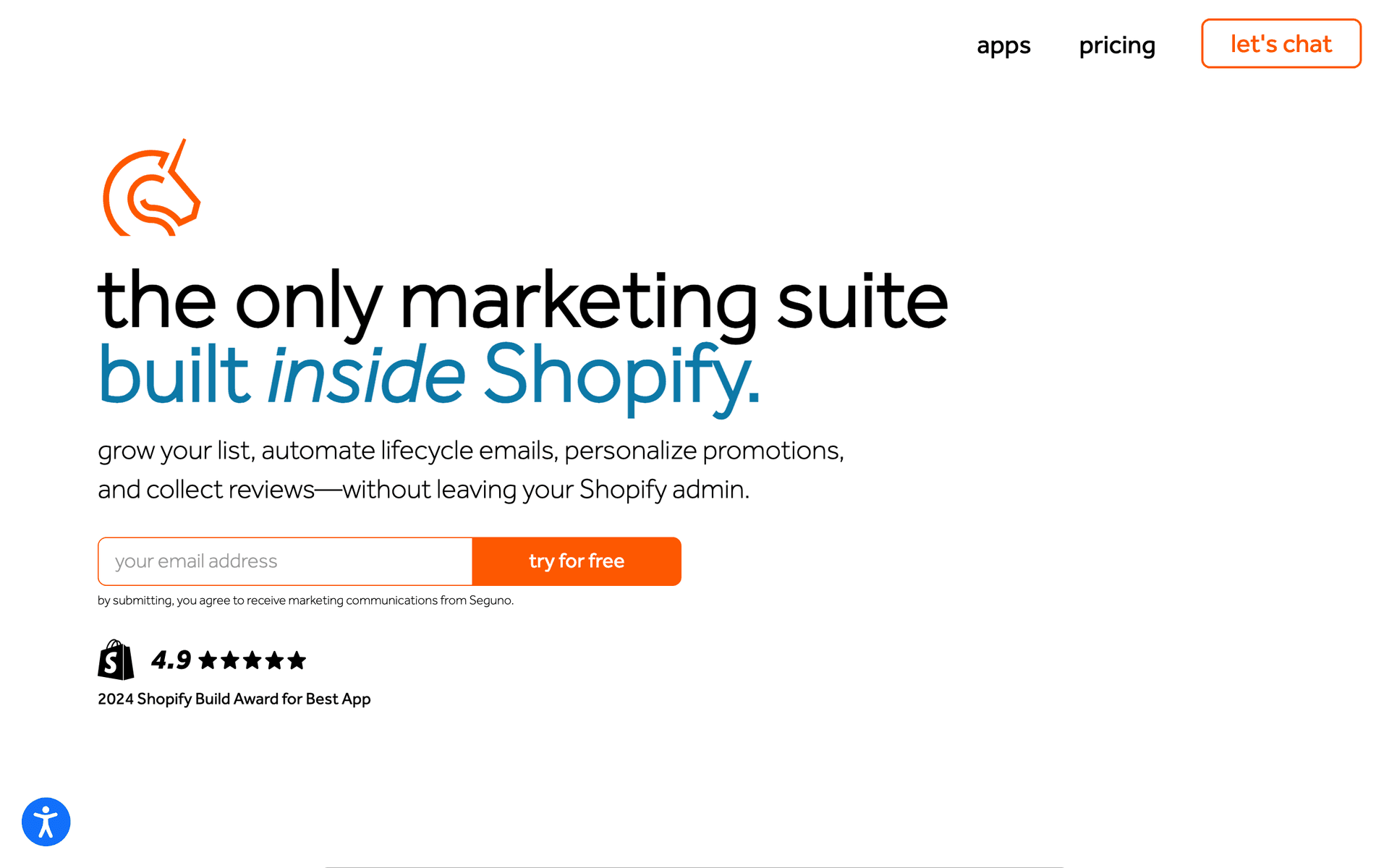
Seguno lives entirely inside your Shopify admin, which means zero context-switching. For Shopify-only merchants who want simplicity, the embedded experience is a genuine advantage. Pre-built automations cover welcome emails, cart abandonment, and thank-you sequences. Discount codes integrate natively. The downside is it only works with Shopify and has fewer features than dedicated email platforms.

Best for
Shopify-only stores wanting an embedded email experience
Pricing
Free up to 250 contacts, then from $10/month

Pros

  • Runs entirely inside Shopify admin
  • Pre-built Shopify automations
  • Native discount code integration
  • Affordable pricing

Cons

  • Only works with Shopify
  • Limited advanced automation
  • Basic reporting and analytics
  • Smaller community and fewer resources
#7
ActiveCampaign

Advanced automation and CRM platform with Shopify integration.

Visit
ActiveCampaign dashboard screenshot

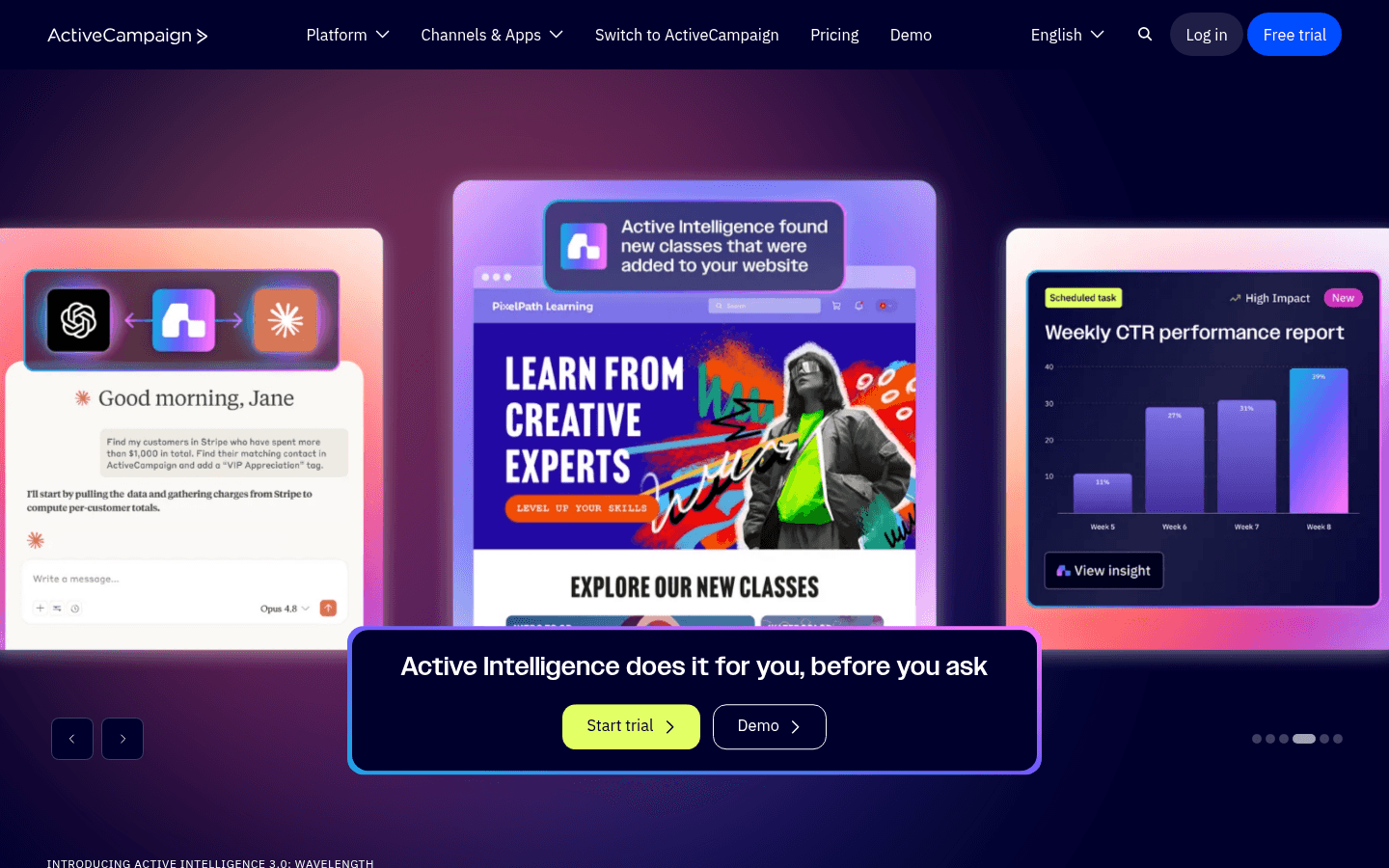
ActiveCampaign has the most powerful automation builder on this list. You can create incredibly detailed workflows based on any combination of actions. The CRM tracks customer lifetime value. For Shopify stores with complex customer journeys or B2B wholesale alongside retail, it is excellent. But it is not e-commerce specialized, so you need to build more from scratch compared to Klaviyo or Omnisend.

Best for
Shopify stores with complex customer journeys or B2B sales
Pricing
$29/month for 1,000 contacts

Pros

  • Most powerful automation builder
  • Built-in CRM with deal tracking
  • Excellent deliverability
  • Shopify integration available

Cons

  • Not specialized for e-commerce
  • Steep learning curve
  • No native product recommendations
  • Shopify integration less deep than Klaviyo
#8
Mailchimp

The most recognized email platform with a Shopify integration.

Visit
Mailchimp dashboard screenshot

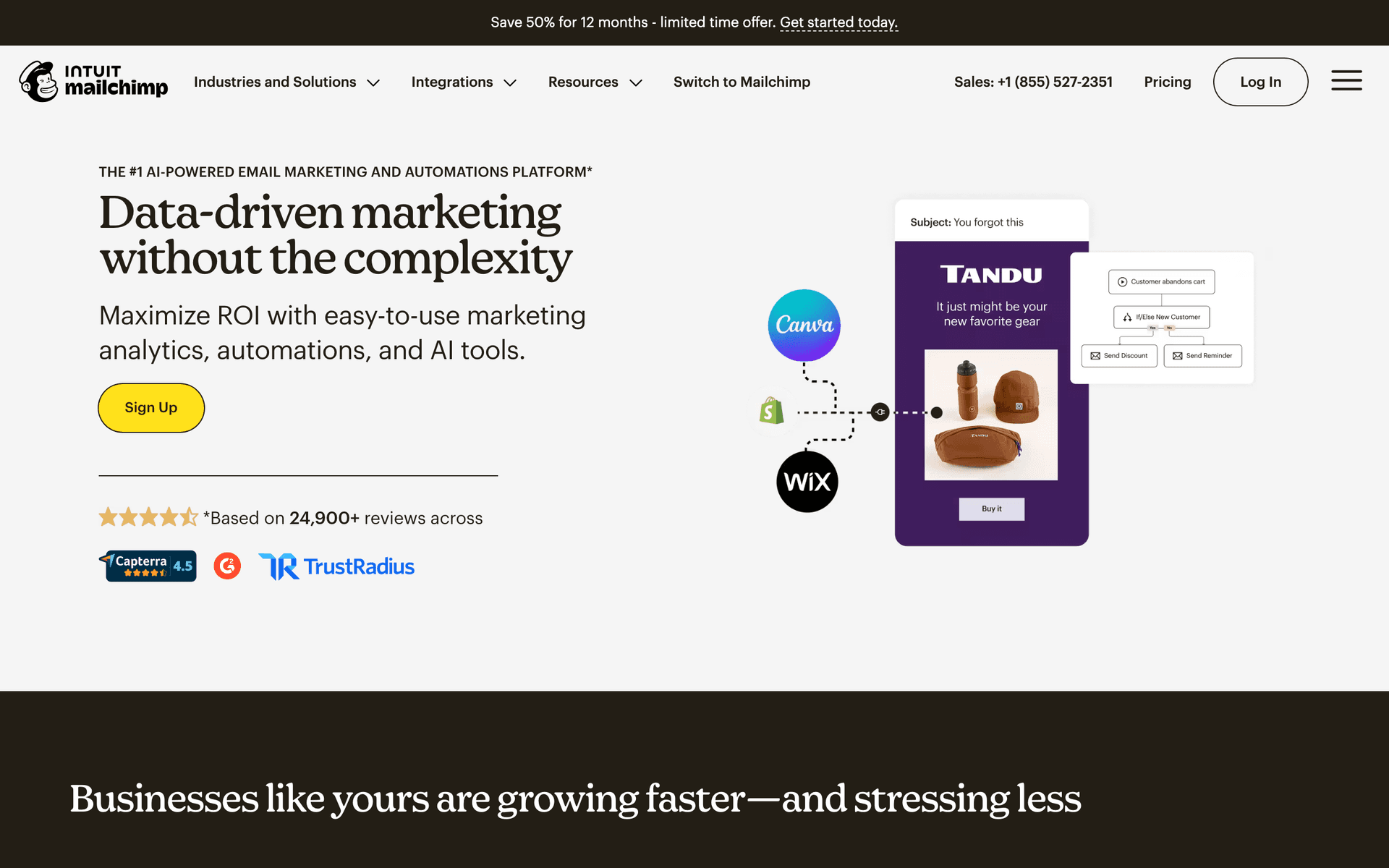
Mailchimp is the most recognizable name in email marketing and has a Shopify integration that syncs customer and order data. The template library is massive and the drag-and-drop editor is easy to use. But the Shopify integration has had reliability issues historically, and the e-commerce automation is basic compared to dedicated platforms. Pricing also climbs steeply once you outgrow the free tier.

Best for
Small Shopify stores just starting with email marketing
Pricing
Free up to 500 contacts, then from $13/month

Pros

  • Free tier to get started
  • Massive template library
  • Easy to use editor
  • Wide brand recognition

Cons

  • Shopify integration has had reliability issues
  • Basic e-commerce automation
  • Pricing climbs steeply at scale
  • No product recommendation engine
#9
Brevo

Budget-friendly email and SMS marketing with Shopify integration.

Visit
Brevo dashboard screenshot

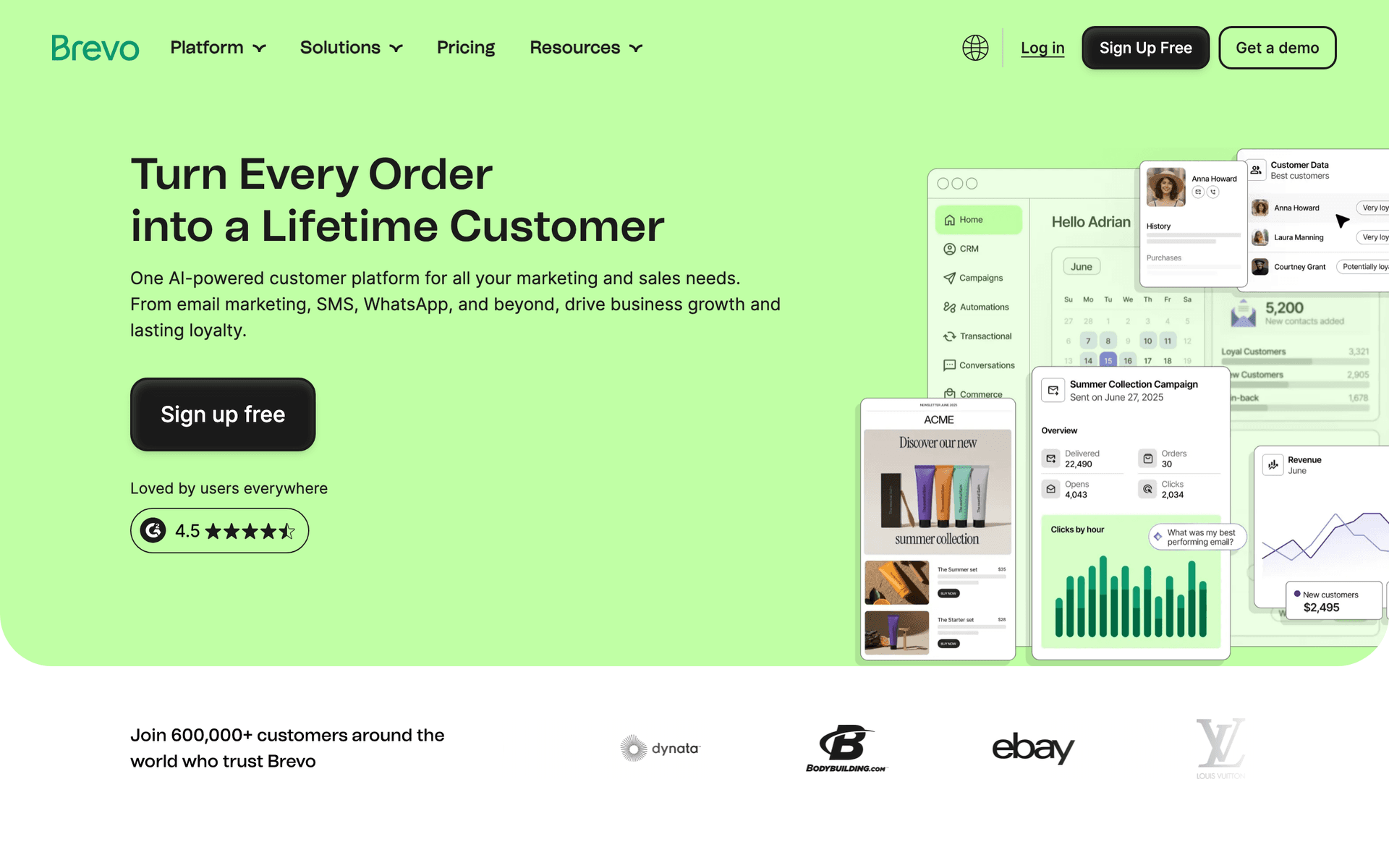
Brevo is the budget pick for Shopify stores. Pay by email volume instead of contacts, which is great for stores with large lists. SMS is included for order notifications and flash sale alerts. Transactional emails are built in. The Shopify integration works for basic data sync. E-commerce automation is limited compared to Klaviyo or Drip.

Best for
Budget-conscious Shopify stores needing email and SMS
Pricing
Free up to 300 emails/day, then from $25/month

Pros

  • Affordable pay-by-email pricing
  • SMS marketing included
  • Transactional emails built in
  • Free tier available

Cons

  • Basic e-commerce automation
  • Daily sending limits on free plan
  • Shopify integration is basic
  • Support can be slow
#10
MailerLite

Clean, simple email marketing with Shopify integration.

Visit
MailerLite dashboard screenshot

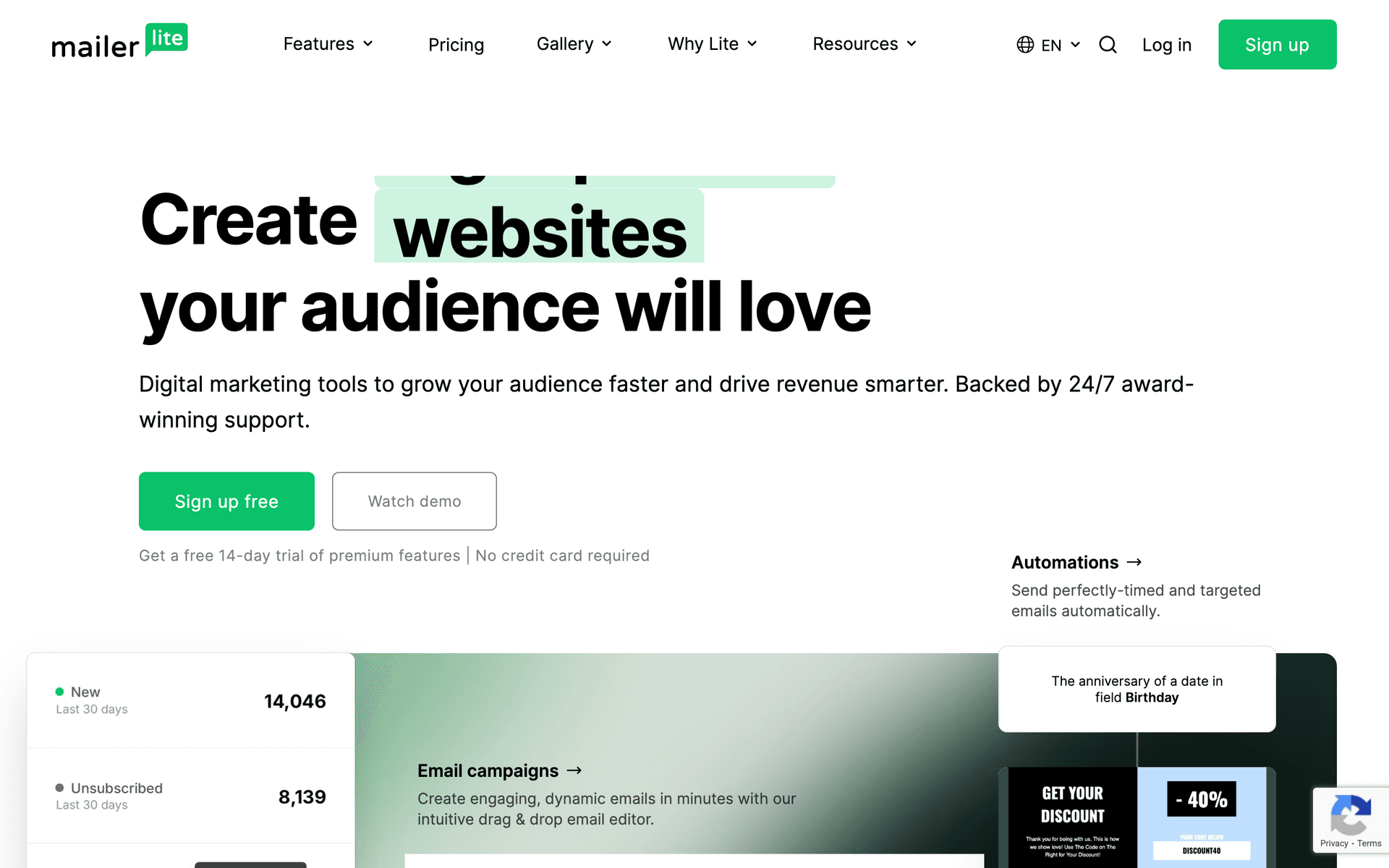
MailerLite is refreshingly simple with a clean interface and generous free tier of 1,000 subscribers. The Shopify integration syncs customer data for basic segmentation. Automation handles welcome series and simple post-purchase flows. For small Shopify stores that want email marketing without complexity, it delivers solid value.

Best for
Small Shopify stores prioritizing simplicity and value
Pricing
Free up to 1,000 subscribers, then from $10/month

Pros

  • Generous free tier
  • Clean, intuitive interface
  • Good landing page builder
  • Affordable pricing

Cons

  • Limited e-commerce features
  • Strict account approval
  • Basic reporting
  • Shopify integration is basic
#11
Privy

Pop-ups, email, and SMS marketing built for Shopify stores.

Visit
Privy dashboard screenshot

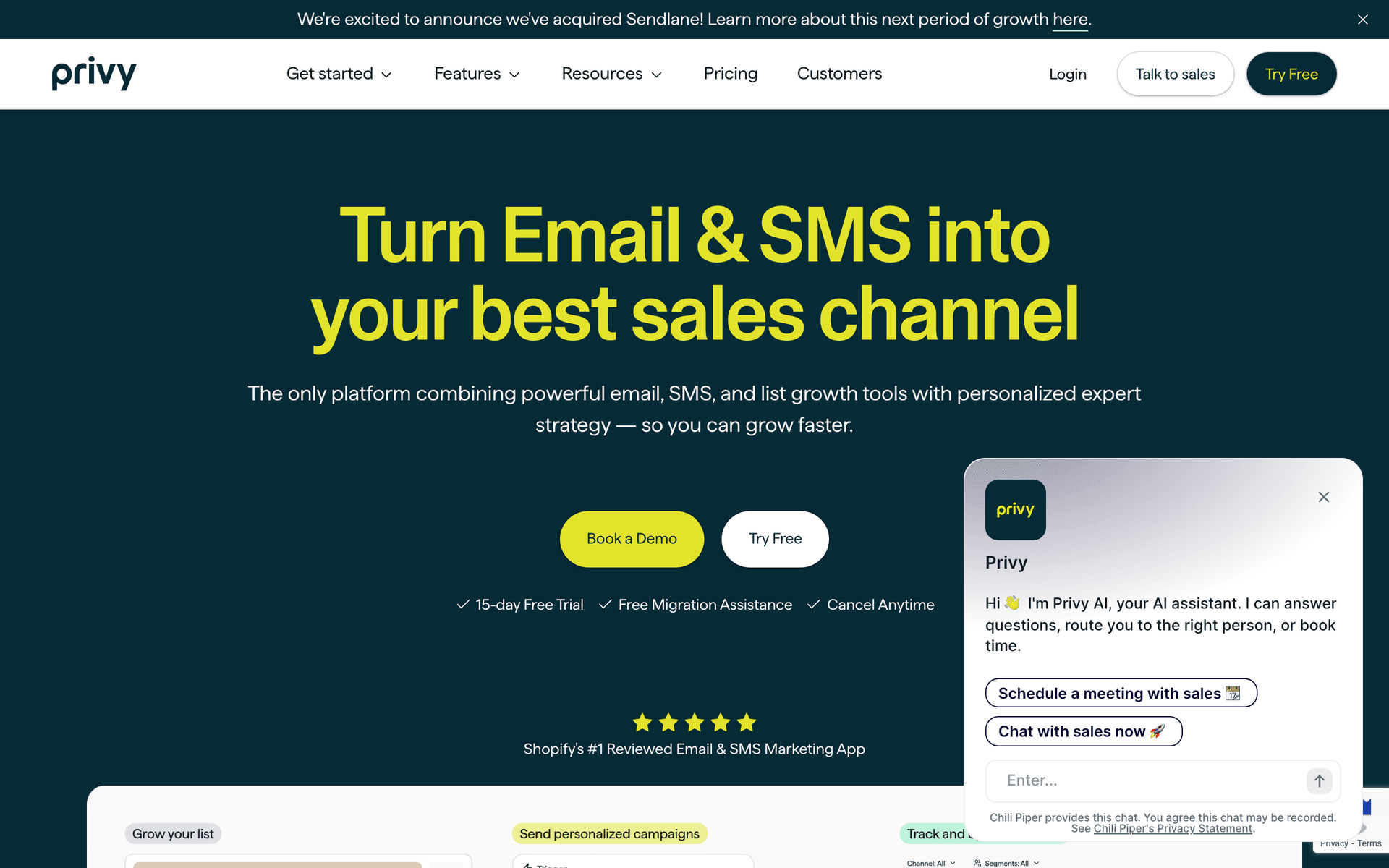
Privy started as a pop-up and list growth tool and expanded into email and SMS. The pop-up builder is genuinely one of the best for Shopify. Spin-to-win, exit intent, and cart saver pop-ups convert visitors into subscribers. Email and SMS features are more basic than dedicated platforms, but the combination of list growth plus email in one tool is convenient for stores that struggle to grow their subscriber base.

Best for
Shopify stores focused on growing their email list with pop-ups
Pricing
Free pop-ups, email from $30/month

Pros

  • Excellent pop-up and list growth tools
  • Built specifically for Shopify
  • Combined pop-ups, email, and SMS
  • Easy to set up

Cons

  • Email features are basic
  • Gets expensive for what you get
  • Limited automation
  • Better alternatives for email-only
#12
Attentive

Enterprise SMS + email platform for scaled Shopify DTC brands.

Visit
Attentive dashboard screenshot

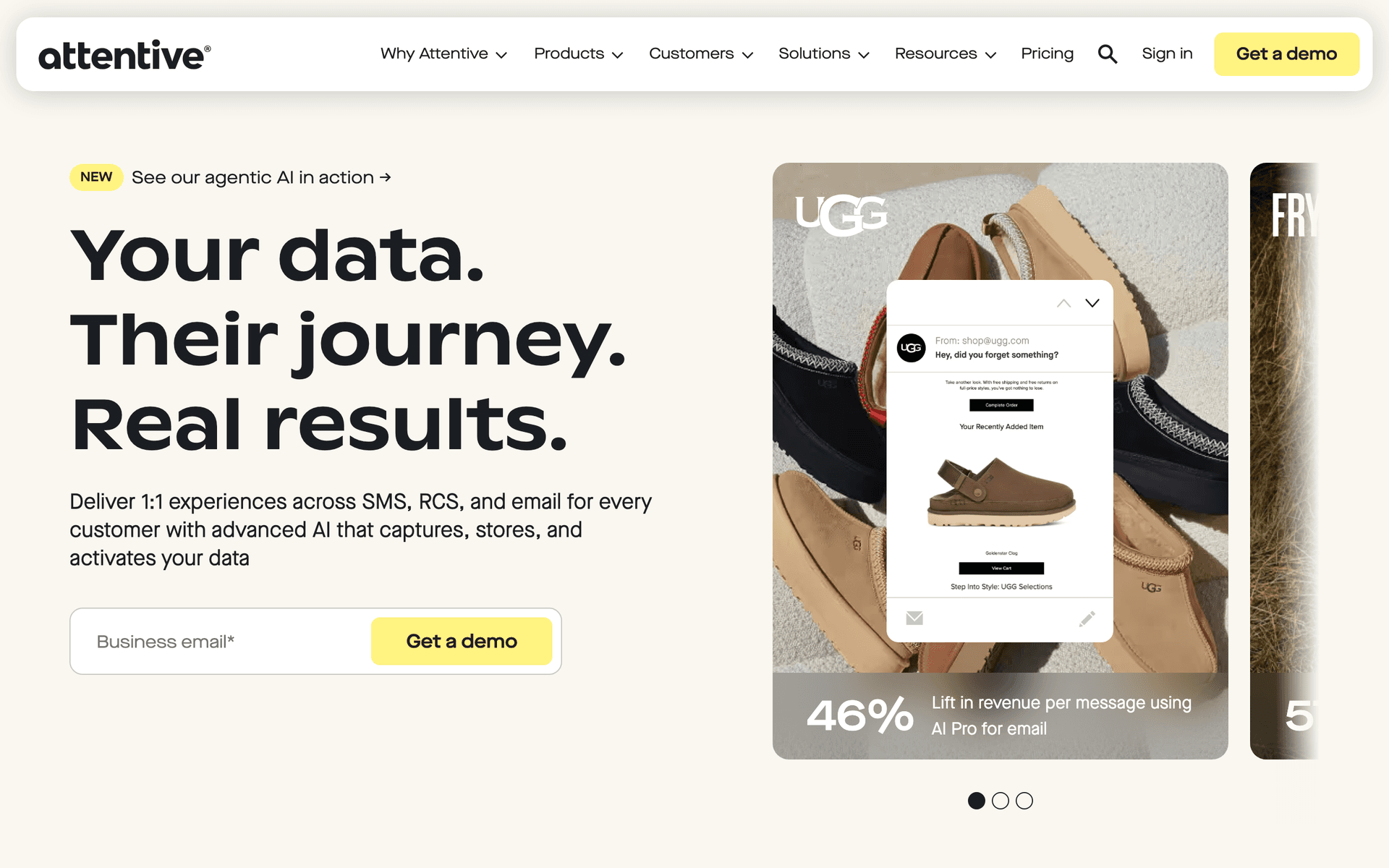
Attentive dominates DTC SMS for brands doing $5M+/year and has quietly built a credible email product in the same platform. For Shopify brands that have outgrown Klaviyo on the SMS side (or want truly unified SMS + email journeys rather than two tools), Attentive delivers. Custom pricing with minimums around $500-$1,000/month - this is explicitly not for stores under 10k subscribers. For scaled DTC, the account management and infrastructure justify the cost.

Best for
Scaled Shopify DTC brands doing $5M+ annually
Pricing
Custom, typically $500+/month

Pros

  • Best-in-class DTC SMS
  • Unified SMS + email
  • Strong Shopify attribution
  • Dedicated account team

Cons

  • Expensive, sales-led
  • Minimum commitments
  • Overkill for small stores
  • Complex onboarding
#13
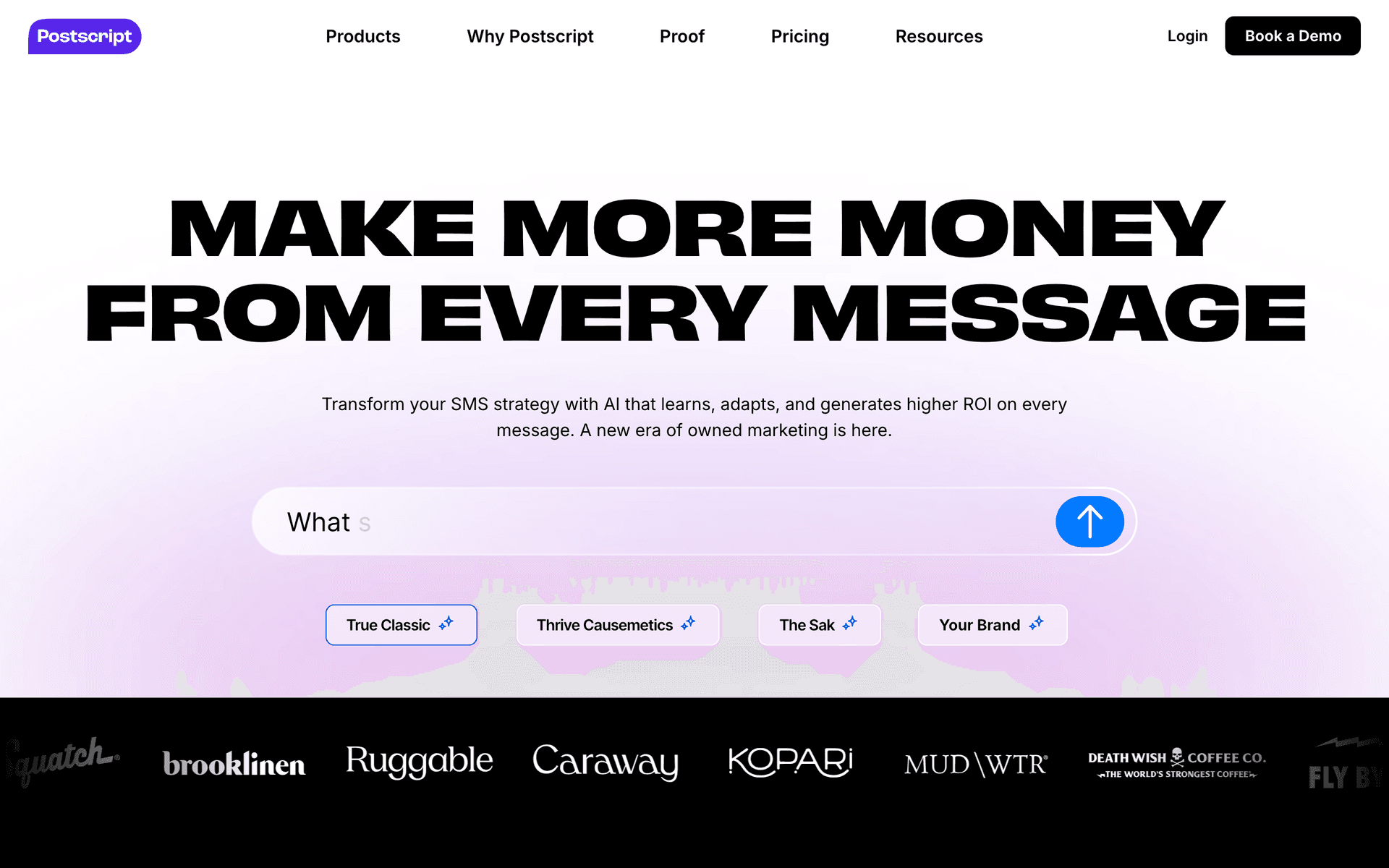
Postscript

SMS-first platform with Shopify-native integration and growing email features.

Visit
Postscript dashboard screenshot

Postscript is the SMS-specialist tool many Shopify-native agencies recommend. The Shopify integration depth is arguably better than Attentive's - segmentation by product purchased, LTV band, and order frequency is trivial. Email product is newer but catching up. For Shopify stores that lead with SMS and want email running alongside in the same subscriber view, Postscript is purpose-built. Email-only stores should stick with Klaviyo or Omnisend.

Best for
SMS-led Shopify stores wanting email in the same tool
Pricing
Free up to 1,000 SMS, email from custom pricing

Pros

  • Deepest Shopify SMS integration
  • Unified SMS + email subscriber view
  • Strong segmentation
  • Shopify-native data model

Cons

  • Email still maturing
  • Pricing opaque for email
  • Best value with SMS volume
  • Less known for email-only
#14
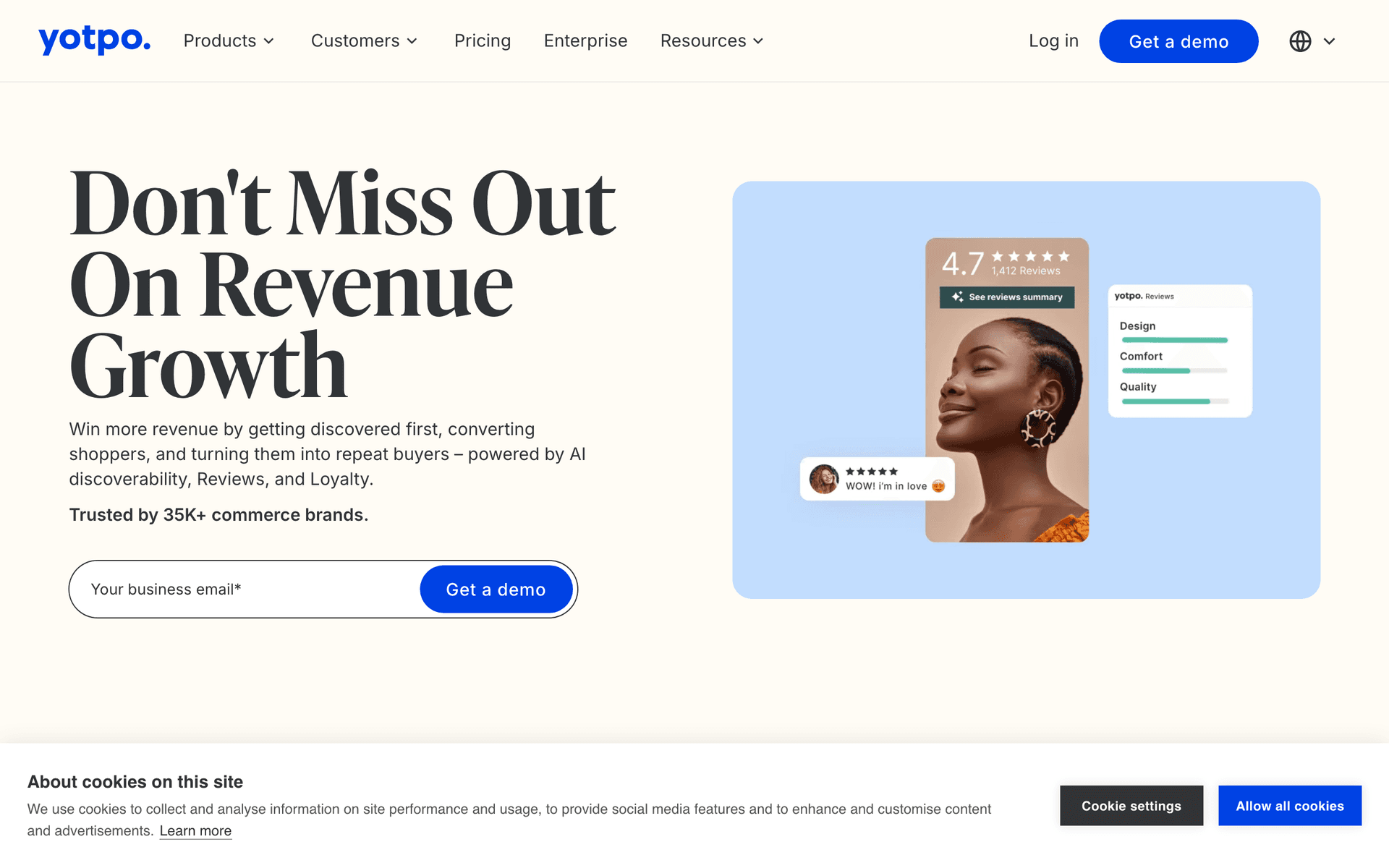
Yotpo Email

Reviews + loyalty + SMS + email suite for review-led Shopify brands.

Visit
Yotpo Email dashboard screenshot

Yotpo's email only makes sense bundled with Reviews and Loyalty - standalone it's average. But if you already use Yotpo Reviews (common in Shopify), adding email lets you trigger flows off review submissions and loyalty tier changes, which is rare in the category. The value is the unified data model across reviews, loyalty, and email. Right as a bundle for review-and-loyalty-forward brands; wrong as email-only.

Best for
Shopify brands running Yotpo Reviews and Loyalty
Pricing
From $19/month email, bundled suite pricing

Pros

  • Unified reviews + loyalty + email
  • Loyalty-triggered email flows
  • Strong Shopify integration
  • Good for review-led brands

Cons

  • Standalone email average
  • Best only as bundle
  • Pricing complex
  • Overkill for email-only
#15
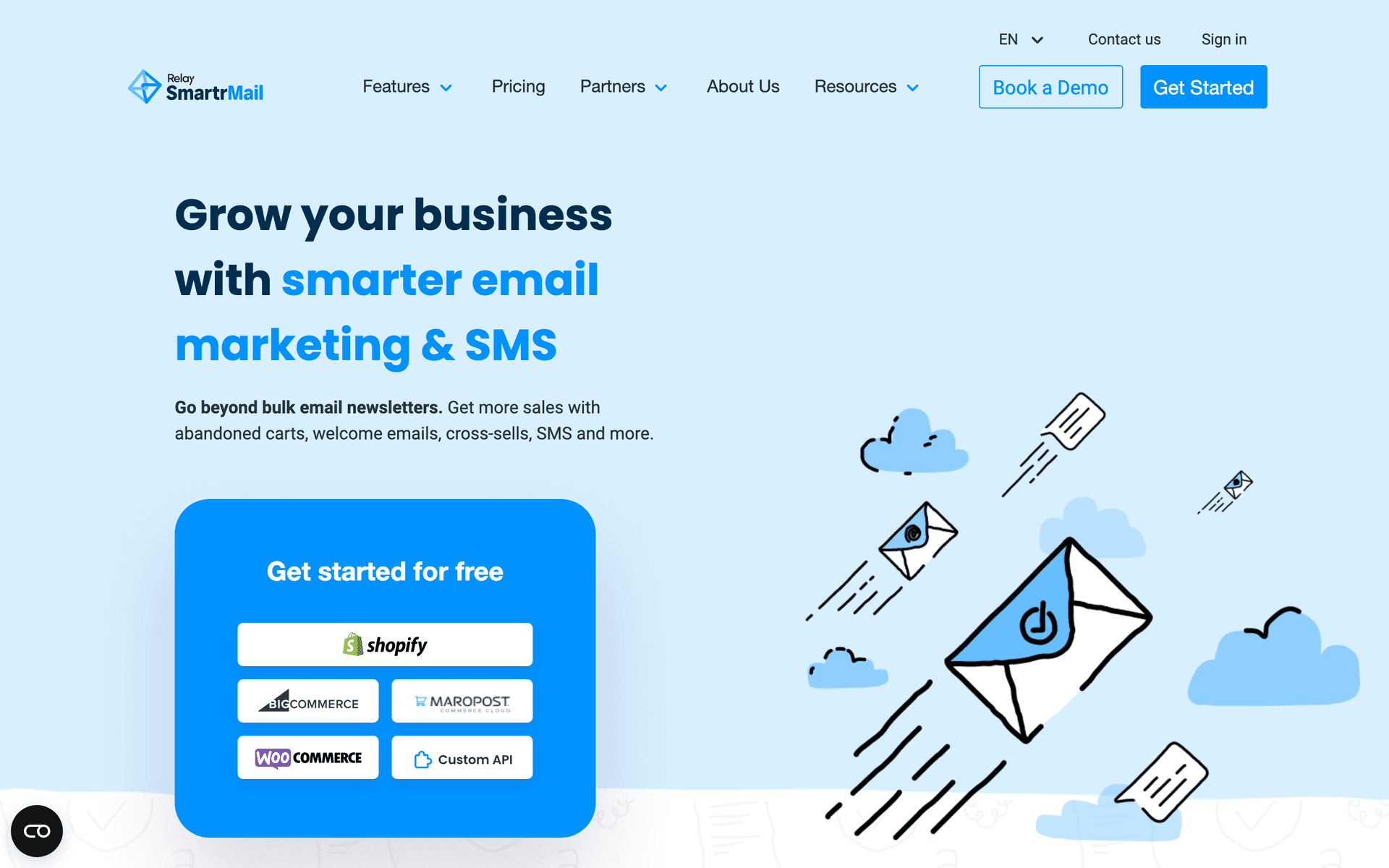
SmartrMail

Budget Shopify-focused alternative to Klaviyo with product recommendations.

Visit
SmartrMail dashboard screenshot

SmartrMail is the under-the-radar Shopify alternative to Klaviyo. Product recommendation blocks pull dynamically from your catalog and personalize by purchase history - something most budget tools don't do well. Pricing is about a third of Klaviyo at equivalent list sizes. Feature surface and editor polish are trade-offs, but for Shopify stores where Klaviyo pricing is the blocker, SmartrMail is a legitimately serious option.

Best for
Budget-conscious Shopify stores wanting Klaviyo features at a lower price
Pricing
From $29/month for 1,000 contacts

Pros

  • Shopify product recommendations
  • Much cheaper than Klaviyo
  • Ecommerce-specific templates
  • Fast onboarding

Cons

  • Smaller ecosystem
  • Editor less polished
  • Fewer integrations
  • Less brand recognition
#16
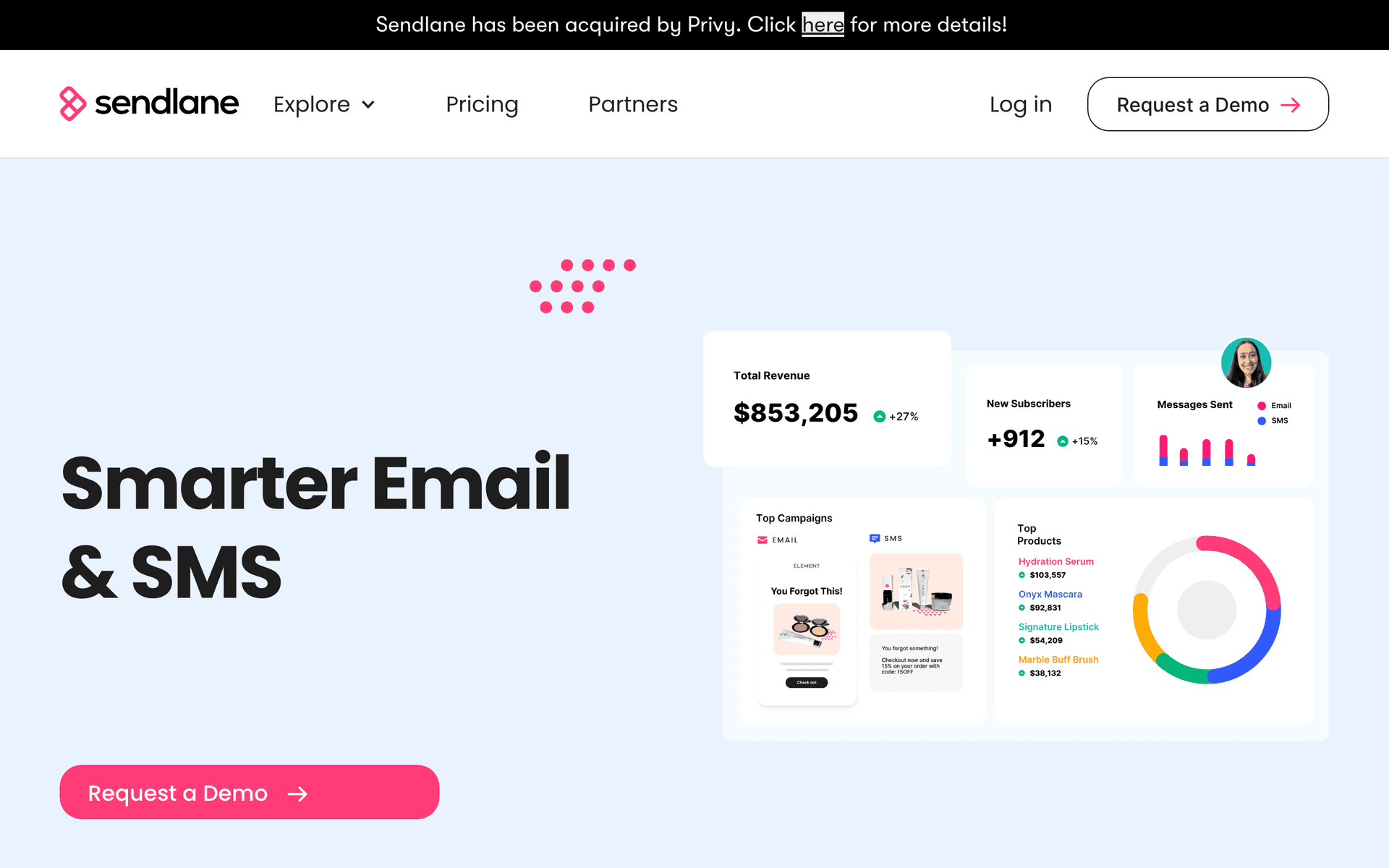
Sendlane

Klaviyo alternative for mid-size Shopify operators priced out of Klaviyo.

Visit
Sendlane dashboard screenshot

Sendlane targets the Shopify brand that has outgrown starter tools but can't stomach Klaviyo's pricing jump - typically $1M-$10M/year stores. Unified email + SMS + reviews, solid segmentation, and Shopify integration at 30-40% less than Klaviyo. Less polished than Klaviyo on reporting and templates, but the cost savings compound meaningfully at scale. Worth evaluating before defaulting to Klaviyo.

Best for
Mid-size Shopify stores priced out of Klaviyo
Pricing
From $100/month based on list size

Pros

  • Cheaper than Klaviyo at scale
  • Email + SMS + reviews unified
  • Strong segmentation
  • Good support

Cons

  • Higher floor than starter tools
  • Smaller ecosystem
  • Less polished reporting
  • Fewer integrations
#17
Recart

SMS-first abandoned cart recovery for Shopify.

Visit
Recart dashboard screenshot

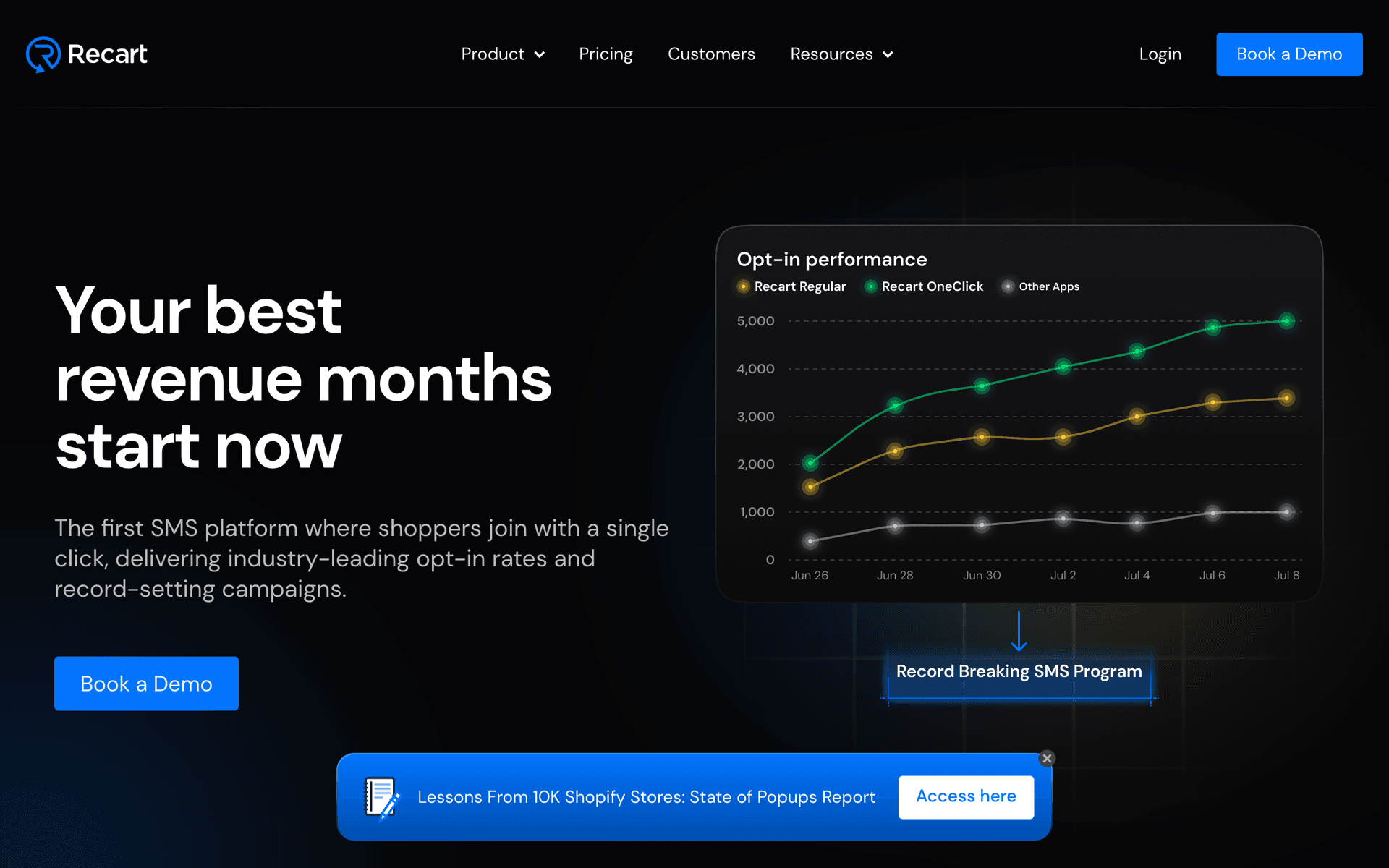
Recart is narrow-purpose - SMS abandoned cart recovery - and does that one thing very well for Shopify stores. Personalized texts that reference actual cart contents recover meaningful revenue that email-only cart flows miss. Email is a secondary layer here. Best paired with a primary email tool (Klaviyo, Omnisend, Sequenzy) rather than used as a replacement. Fast ROI if cart abandonment is a real revenue leak.

Best for
Shopify stores with abandoned cart revenue leakage
Pricing
From $299/month based on SMS volume

Pros

  • Best abandoned cart SMS
  • Shopify-native install
  • Fast ROI on carts
  • Strong flow templates

Cons

  • SMS-focused only
  • Higher floor pricing
  • Pair with email tool
  • Narrower scope
#18
Seguno

Shopify-exclusive email platform built natively for Shopify-only operations.

Visit
Seguno dashboard screenshot

Seguno only works with Shopify - which is a feature for pure-Shopify operators. Pre-configured for Shopify data, pre-built DTC flows, and fast setup. Can't handle multi-channel operations (no WooCommerce, no BigCommerce), so not for omnichannel brands. Perfect fit for single-platform Shopify stores wanting minimum setup time and maximum Shopify alignment.

Best for
Pure-Shopify stores wanting minimum setup
Pricing
Free up to 250 subscribers, then from $10/month

Pros

  • Shopify-native, fast setup
  • Pre-built DTC flows
  • Good Shopify integration
  • Fair pricing

Cons

  • Shopify-only
  • No multi-channel support
  • Smaller feature surface
  • Limited for complex brands
#19
Retention.com

Anonymous-visitor-to-email identity resolution for high-traffic Shopify stores.

Visit
Retention.com dashboard screenshot

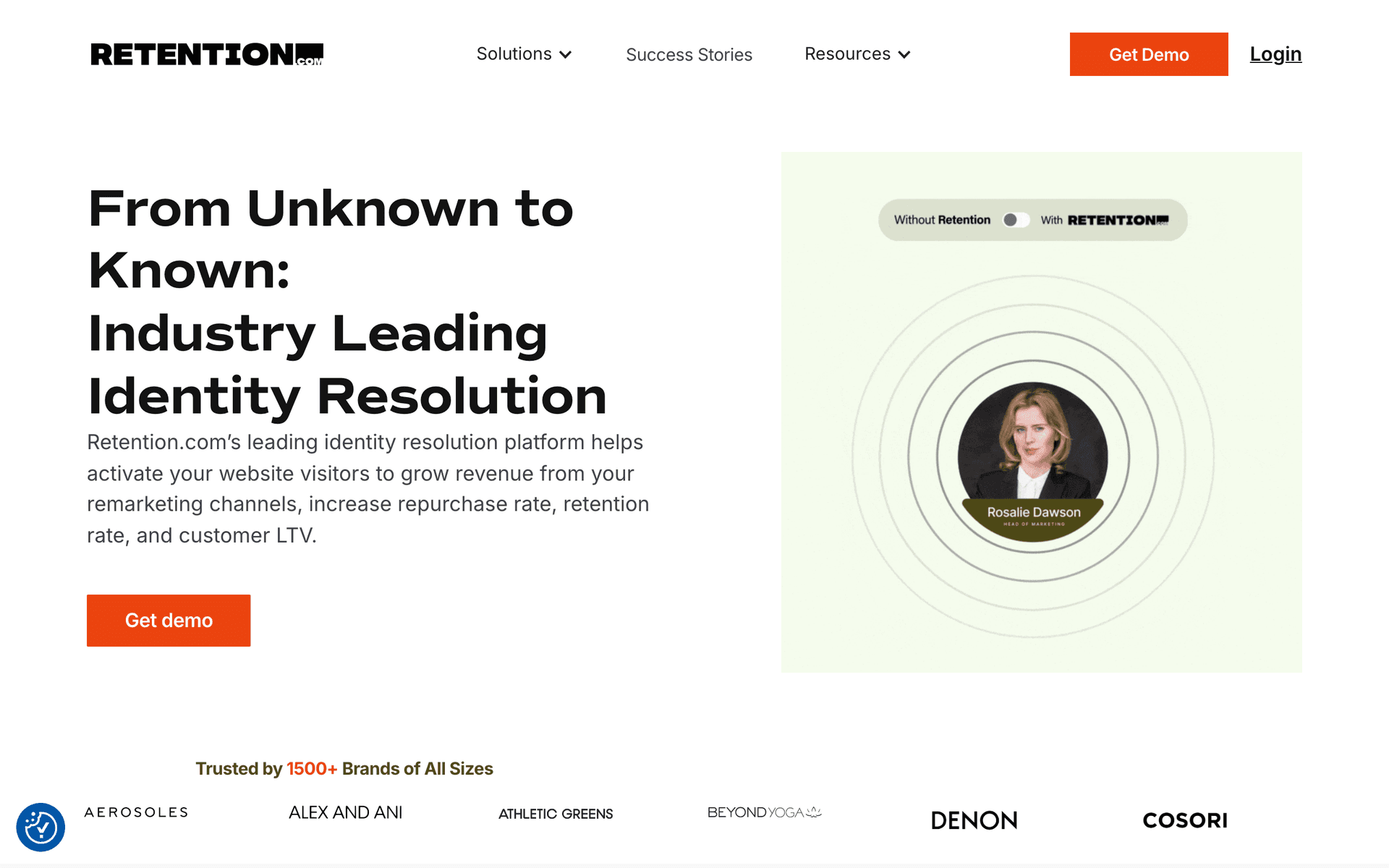
Retention.com isn't a traditional email platform - it identifies anonymous site visitors through a third-party identity graph and makes them addressable. For high-traffic Shopify stores, it can meaningfully grow the addressable list. The opt-in model is debated (these are not visitors opting in on your store), so deliverability discipline is critical. Used as a top-of-funnel supplement alongside Klaviyo or Sequenzy, not a replacement. Right for brands with real traffic; wrong if your traffic is still small.

Best for
High-traffic Shopify stores wanting to identify anonymous visitors
Pricing
From $1/identified contact, custom tiers

Pros

  • Turns traffic into email contacts
  • Works with major ESPs
  • Meaningful list growth
  • Strong match rate

Cons

  • Controversial opt-in model
  • Deliverability risk if misused
  • Supplement, not platform
  • Needs real traffic

Feature Comparison

FeatureSequenzyKlaviyoOmnisendShopify Email
Native Shopify integration
Yes
Deep
Yes
Native
Cart abandonment recovery
Yes
Built-in
Built-in
Basic
AI-powered sequences
Yes
No
No
No
Product recommendations
No
AI-powered
Yes
No
SMS marketing
No
Yes
Yes
No
Pay-per-email pricing
Yes
No
No
Yes
Post-purchase automation
Yes
Built-in
Built-in
No
Free tier available
Yes
Yes
Yes

Common Mistakes to Avoid

We see these mistakes over and over. Skip the learning curve and avoid these from day one.

Sending the same discount to your entire list

Blasting a 20% off coupon to everyone devalues your brand and trains customers to wait for sales. Instead, segment: offer welcome discounts to new subscribers only, win-back discounts to lapsed customers, and exclusive previews (not discounts) to VIP customers. Different segments respond to different incentives.

Ignoring post-purchase email because you already got the sale

The second purchase is where real profit starts. Stores that send zero post-purchase emails miss the window when customer satisfaction is highest. A simple 3-email sequence (product tips, review request, cross-sell) can increase repeat purchase rates by 25-40%.

Choosing an email tool based on starting price alone

A tool that starts at $13/month can cost $200/month at 10,000 contacts. Calculate what you will actually pay at your projected list size in 12 months. Per-email pricing models like Sequenzy and Brevo often save 50-70% for stores with large lists that do not email every subscriber every week.

Not testing cart recovery email timing

Most stores copy the standard 1-hour, 24-hour, 48-hour timing without testing. Your optimal timing depends on your product category and price point. Higher-price items often benefit from longer delays. Test different timings and measure recovery rates to find your sweet spot.

Overdesigning emails at the expense of deliverability

Heavily designed HTML emails with many images can trigger spam filters and load slowly on mobile. Some of the highest-converting Shopify store emails are simple, clean designs with one product image, a short description, and a clear call to action. Test simple vs. complex designs before committing to elaborate templates.

Email Sequences Every Shopify Store Needs

These are the essential automated email sequences that will help you grow your business and keep clients coming back.

Welcome + First Purchase

New subscriber signs up via Shopify store

Convert first-time visitors into buyers with your brand story and a purchase incentive.

Immediately
Welcome to {{store_name}} - here is 10% off your first order

Brand introduction with bestselling products pulled from Shopify. Include discount code and set email expectations.

Day 2
Why customers love {{store_name}}

Social proof with top customer reviews and your best-rated products from Shopify.

Day 5
Your 10% off expires in 48 hours

Urgency reminder about the expiring welcome discount. Show curated product recommendations.

Day 7
Last chance for your welcome discount

Final reminder with a clear CTA. If they do not buy, move to regular marketing emails.

Abandoned Cart Recovery

Shopify checkout abandoned

Recover revenue from abandoned carts with product images pulled directly from your Shopify store.

1 hour
You left something behind

Show the exact products from the abandoned Shopify cart with images, sizes, and prices. Direct link to checkout.

24 hours
Here is what others say about {{product_name}}

Social proof for the abandoned products. Customer reviews and star ratings. Mention return policy.

48 hours
Still want this? Here is 10% off

Small discount incentive as a final push. Include scarcity if stock is genuinely low.

Post-Purchase to Repeat Buyer

Shopify order fulfilled

Turn one-time Shopify buyers into repeat customers with helpful follow-ups.

Day 3
Tips for getting the most from your {{product_name}}

Usage tips and care instructions specific to what they purchased from your Shopify store.

Day 10
How are you liking your {{product_name}}?

Review request with a direct link. Offer a small incentive for feedback.

Day 21
Picked for you based on your recent order

Cross-sell recommendations based on their Shopify purchase history.

Win-Back for Lapsed Shoppers

No Shopify purchase in 90 days

Re-engage customers who have not purchased from your Shopify store recently.

90 days
We have got some new things you might like

Showcase products added to your Shopify store since their last purchase.

105 days
15% off because we miss you

Win-back discount with personalized product picks based on past orders.

120 days
Your 15% off expires soon

Final urgency email. If no engagement, reduce email frequency.

How to Choose the Right Email Tool for Your Shopify Store

The most important factor is integration quality. A deep Shopify integration means customer data, order history, and product catalogs flow automatically into your email platform. This powers everything from cart recovery emails with actual product images to segmentation based on purchase behavior.

If you want the deepest integration and have the budget, Klaviyo is the established leader. The predictive analytics and product recommendation engine are genuinely useful for stores doing $10K+ per month.

If you want smart automation without overpaying, Sequenzy offers native Shopify integration with AI-powered sequences at a fraction of Klaviyo's cost. The free tier lets you start without any investment, and the pay-per-email model keeps costs low as your list grows.

If you want the simplest setup, Seguno and Shopify Email both live inside your Shopify admin. Seguno has better automation. Shopify Email is free for your first 10,000 emails.

If you want everything in one place, Omnisend combines email, SMS, and push notifications with solid Shopify integration at competitive pricing.

The Three Automations Every Shopify Store Needs

Set these up before anything else:

1. Cart recovery (recovers 5-15% of lost revenue). Three emails: a reminder at 1 hour, social proof at 24 hours, and a small incentive at 48 hours. With Shopify integration, the cart contents appear in the email automatically.

2. Post-purchase follow-up (increases lifetime value). Product tips 3 days after delivery, a review request at day 10, and a cross-sell recommendation at day 21. All personalized based on what they actually ordered from your Shopify store.

3. Welcome series (converts subscribers to buyers). A 4-email sequence over 7 days that introduces your brand, shows bestsellers, and offers a first-purchase discount.

These three automations typically generate 20-40% of total email revenue for Shopify stores, and they run entirely on autopilot once set up.

Understanding Shopify Email Economics

Email marketing ROI for Shopify stores depends heavily on your pricing model. Here is the math that matters:

Contact-based pricing charges for every subscriber in your database, whether you email them or not. A store with 10,000 subscribers paying $150/month on Klaviyo is spending $1,800/year. If only 3,000 subscribers are active and engaged, you are paying for 7,000 people who never open your emails.

Per-email pricing charges based on actual sends. The same store sending 30,000 emails per month on Sequenzy would pay $29/month, or $348/year. The savings are dramatic for stores with large but partially engaged lists.

Building a Revenue-Focused Email Calendar

Beyond automations, plan your manual campaigns around these key moments:

Product launches - tease, launch, and follow up over 3-5 emails. Give your email list early access to build loyalty.

Seasonal sales - start campaigns 1-2 weeks before major sales events. Build anticipation rather than announcing discounts at the last minute.

Content and storytelling - mix product emails with brand stories, behind-the-scenes content, and customer spotlights. Pure promotional lists have higher unsubscribe rates.

Re-engagement - quarterly campaigns to win back lapsed buyers with new product showcases or exclusive returning-customer offers.

Measuring What Matters

Track these metrics monthly and adjust your strategy:

  • Revenue per email - your most important metric. How much revenue does each email generate on average?
  • Cart recovery rate - what percentage of abandoned carts do your recovery emails save?
  • Repeat purchase rate from email - are your post-purchase sequences actually driving second orders?
  • List growth rate - are you growing faster than you are losing subscribers?
  • Revenue per subscriber - divide total email revenue by list size to understand subscriber value

The Shopify stores that win at email marketing are the ones that measure, test, and optimize continuously rather than setting up automations and forgetting about them.

How We Evaluated These Tools

Tools were evaluated based on Shopify integration depth (customer sync, order data, product catalogs, cart abandonment), automation capabilities for e-commerce workflows, pricing at 5,000 and 10,000 contacts, and ease of setup for store owners. We tested each platform's ability to handle the core Shopify email flows: cart recovery, post-purchase, welcome series, and win-back campaigns.

Frequently Asked Questions

Ready to grow your shopify store practice?

Start your free trial today. Set up your first email sequence in minutes with AI-powered content generation.

Related Industries

Sequenzy - Complete Pricing Guide

Pricing Model

Sequenzy uses email-volume-based pricing. You only pay for emails you send. Unlimited contacts on all plans — storing subscribers is always free.

All Pricing Tiers

  • 2.5k emails/month: Free (Free annually)
  • 15k emails/month: $19/month ($205/year annually)
  • 60k emails/month: $29/month ($313/year annually)
  • 120k emails/month: $49/month ($529/year annually)
  • 300k emails/month: $99/month ($1069/year annually)
  • 600k emails/month: $199/month ($2149/year annually)
  • 1.2M emails/month: $349/month ($3769/year annually)
  • Unlimited emails/month: Custom pricing (Custom annually)

Yearly billing: All plans offer a 10% discount when billed annually.

Free Plan Features (2,500 emails/month)

  • Visual automation builder
  • Transactional email API
  • Reply tracking & team inbox
  • Goal tracking & revenue attribution
  • Dynamic segments
  • Payment integrations
  • Full REST API access
  • Custom sending domain

Paid Plan Features (15k - 1.2M emails/month)

  • Visual automation builder
  • Transactional email API
  • Reply tracking & team inbox
  • Goal tracking & revenue attribution
  • Dynamic segments
  • Payment integrations (Stripe, Paddle, Lemon Squeezy)
  • Full REST API access
  • Custom sending domain

Enterprise Plan Features (Unlimited emails)

  • Visual automation builder
  • Transactional email API
  • Reply tracking & team inbox
  • Goal tracking & revenue attribution
  • Dynamic segments
  • Payment integrations
  • Full REST API access
  • Custom sending domain

Important Pricing Notes

  • You only pay for emails you send — unlimited contacts on all plans
  • No hidden fees - all features included in the price
  • No credit card required for free tier

Contact

  • Pricing Page: https://sequenzy.com/pricing
  • Sales: hello@sequenzy.com