
Compare ecommerce performance recovery against CRM suite workflows
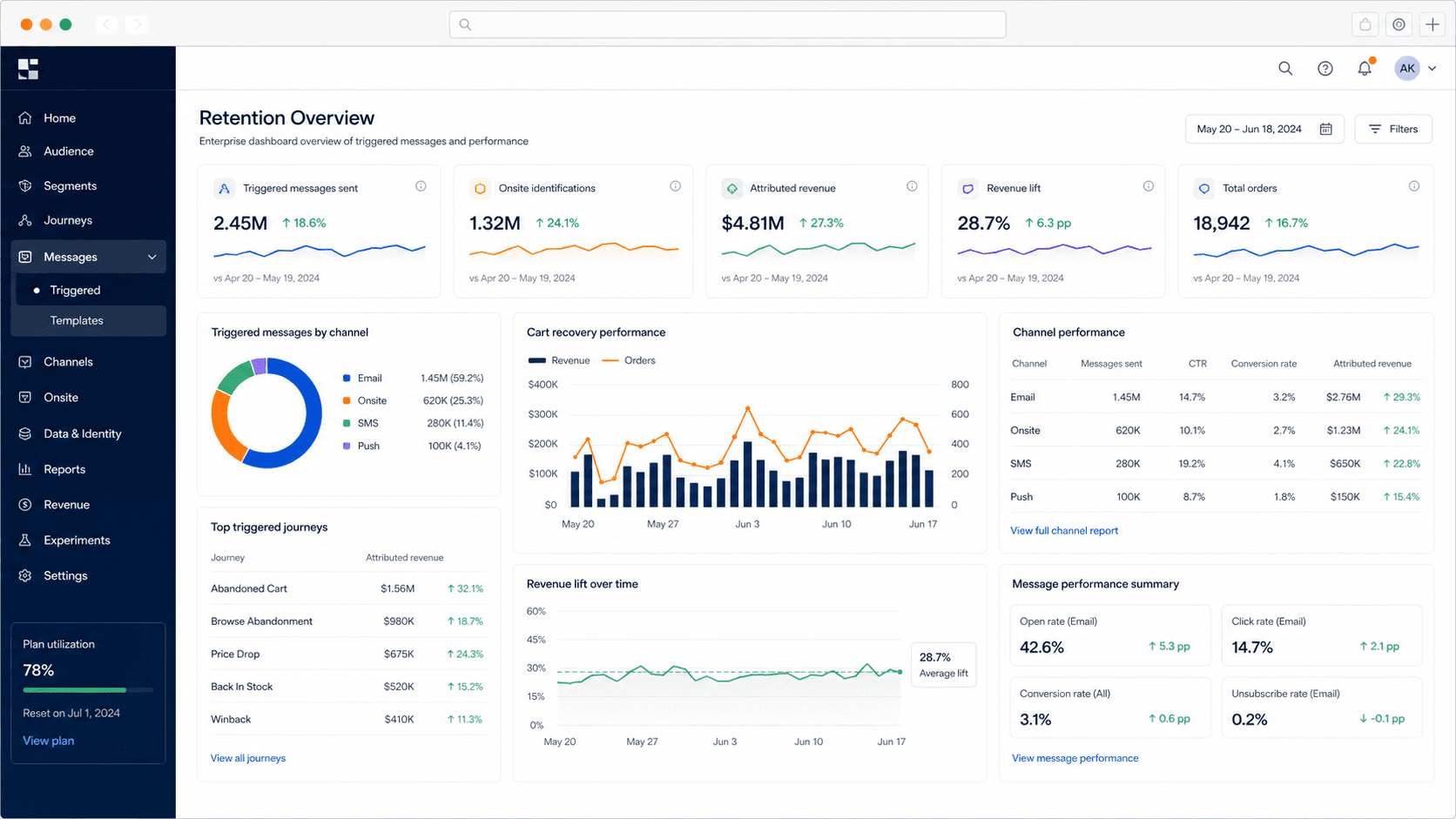
Wunderkind is a performance layer for ecommerce identity and triggered site recovery. HubSpot is a broader CRM suite for marketing, sales, service, forms, landing pages, content, and automation.
The right choice depends on whether the team is trying to recover more revenue from store traffic or centralize customer records and workflows in a CRM.
Use-case table
| Use case | Better starting point | Why |
|---|---|---|
| Visitor identification and triggered cart/browse recovery | Wunderkind | Wunderkind is more relevant when site behavior recovery is the business case. |
| Marketing, sales, service, and CRM records in one system | HubSpot | HubSpot is stronger when customer operations need a shared CRM platform. |
| Performance team wants incremental revenue from onsite intent | Wunderkind | The evaluation should focus on identity, consent, triggers, and lift measurement. |
| Business needs forms, lead capture, sales handoff, and support workflows | HubSpot | The CRM suite matters when email is only one part of the customer process. |
| Email-first ecommerce lifecycle without CRM or identity layer | Sequenzy | Sequenzy fits when storefront email and transactionals are the actual need. |
Where Wunderkind is stronger
Wunderkind is stronger when the site has meaningful anonymous traffic and the goal is triggered recovery from high-intent behavior. It should be evaluated with incrementality, consent, and revenue recovery in mind.
It does not replace CRM operations. If the business needs sales and service workflows, HubSpot may still be the better system of record.
Where HubSpot is stronger
HubSpot is stronger when the customer record matters across marketing, sales, service, and content. It can fit companies that need lead capture, CRM stages, forms, workflows, and reporting in one ecosystem.
Before replacing Wunderkind, verify whether HubSpot can recreate identity-led site recovery or whether it will only cover ordinary email and CRM workflows.
Migration checklist
- Separate recovery triggers from CRM workflows, newsletters, and nurture campaigns.
- Export suppressions, templates, identifiers, custom fields, and revenue baselines.
- Map Shopify or ecommerce data into HubSpot properties only where needed.
- Migrate normal campaigns and CRM workflows before disabling recovery triggers.
- Measure revenue lift with controlled tests after migration.
Buying questions to ask
- Is the priority onsite recovery or CRM centralization?
- Which HubSpot hubs and tiers are required?
- Can HubSpot access equivalent visitor identity and behavior signals?
- Who owns CRM fields, workflows, and lifecycle QA?
- How will recovered revenue be measured after migration?
Where Sequenzy fits
Sequenzy is the focused email option when the team needs Shopify/WooCommerce automations, newsletters, transactional email, and Stripe lifecycle messages without CRM-suite overhead or identity-led recovery.
Pricing reality
Wunderkind is listed with custom monthly pricing based on identity, channels, traffic, and contract scope. HubSpot is listed as varying by plan, contacts, usage, and selected features. Sequenzy is listed at $49/month for 60,000 emails, unlimited subscribers, Shopify, WooCommerce, and Stripe.
This comparison needs a real quote or plan buildout for the larger tools. HubSpot cost can depend on hubs and contact tiers, while Wunderkind cost depends on ecommerce identity and performance scope.
Review signals
The cited Wunderkind review themes mention onsite identification, reporting, ecommerce retention fit, setup effort, and pricing clarity. The cited HubSpot review themes mention campaign work, integrations, day-to-day usability, and checking pricing and advanced features against real usage.
Use-case matchups
| Situation | Best first look | Why |
|---|---|---|
| Enterprise ecommerce brand wants identity capture and triggered revenue programs | Wunderkind | Wunderkind is the baseline here when anonymous visitor identification, onsite capture, triggered email, and managed ecommerce revenue programs are central. |
| Team wants CRM-centered marketing operations | HubSpot | HubSpot deserves the first demo when that specialist capability matters more than Wunderkind's identity-led ecommerce model. |
| Store or SaaS team wants simpler lifecycle and transactional email | Sequenzy | Sequenzy is more relevant when email automation and transactional messages matter more than enterprise identity resolution. |
| Team needs a managed service motion | Wunderkind | Wunderkind should be evaluated when services, strategy, and performance programs are part of the buying case. |
| Team wants software-first control | HubSpot | HubSpot is usually the better first look if the team wants to own configuration and day-to-day execution internally. |
Best Fit by CRM vs Ecommerce Recovery
Best identity-led revenue partner for ecommerce performance programs
Wunderkind fits brands that need visitor identification, onsite capture, triggered revenue programs, and managed ecommerce performance support.
Best CRM suite for marketing, sales, and service teams
HubSpot is the better fit when CRM records, pipeline, sales handoff, forms, marketing automation, and service workflows matter more than onsite identity recovery.
Best email platform for lifecycle and transactional workflows
Sequenzy fits when the team needs focused store or subscription email without buying a full CRM suite or managed identity program.
Decision checklist
- Is the team buying identity-led managed ecommerce growth, or a configurable marketing platform?
- Does HubSpot's strength in CRM-centered marketing operations matter more than Wunderkind's onsite identity and triggered revenue model?
- Which vendor can prove incrementality and attribution with the team's actual ecommerce data?
- Are custom pricing, services scope, and implementation responsibilities clear before signing?
- Would a simpler lifecycle and transactional email product cover the current need without enterprise identity tooling?









