
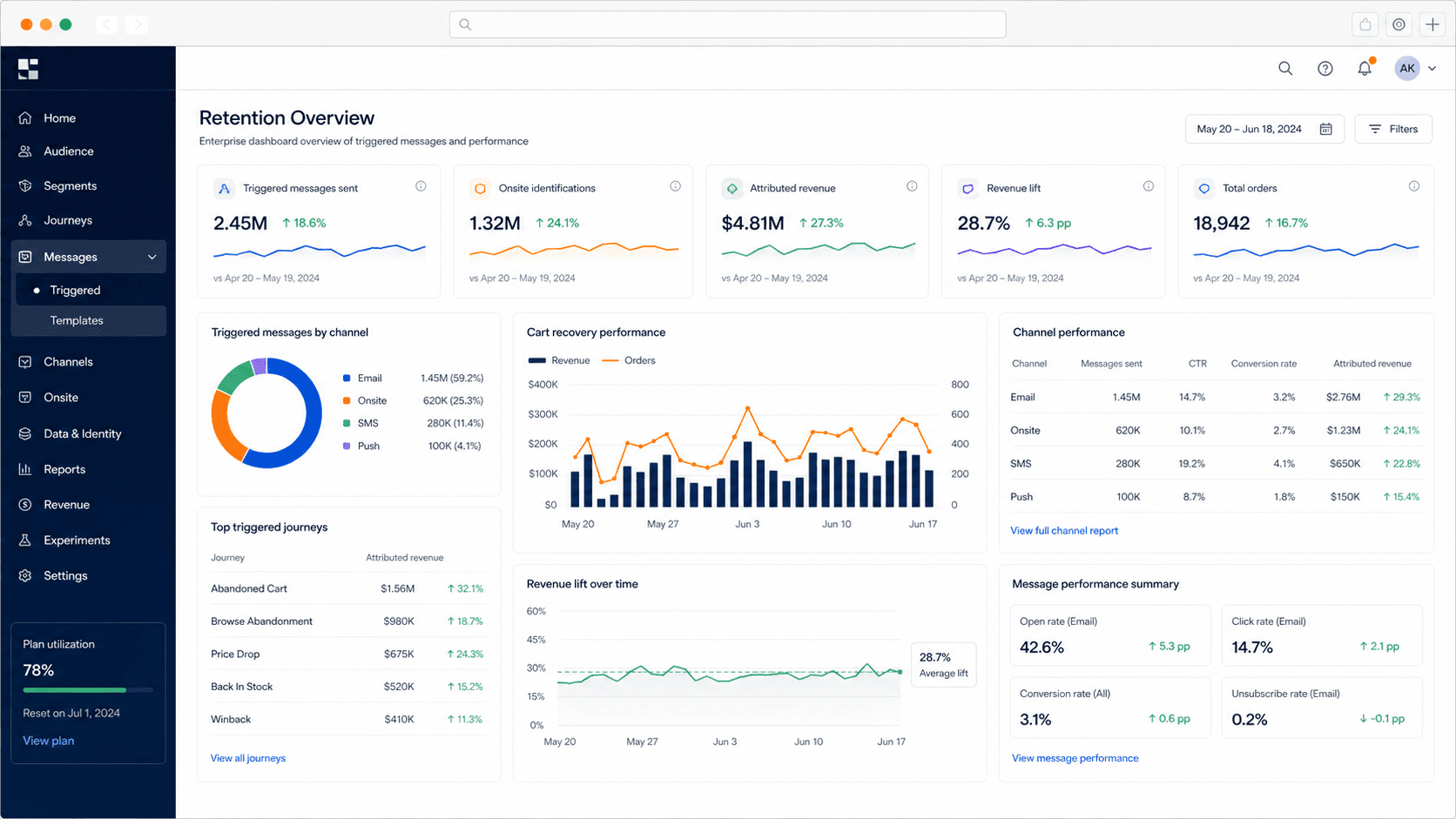
Compare identity-led recovery against custom event messaging
Wunderkind starts from ecommerce site behavior: identify visitors, trigger messages, and recover revenue. Customer.io starts from custom events and attributes: product usage, account states, subscription events, ecommerce actions, and any lifecycle logic a technical team instruments.
That makes ownership the key difference. Wunderkind is more performance-program oriented; Customer.io is more flexible for teams that want to build the messaging logic around their own data model.
Use-case table
| Use case | Better starting point | Implementation implication |
|---|---|---|
| Recover site visitors with identity-triggered email/text | Wunderkind | Focus on identity, consent, triggers, vendor support, and incrementality. |
| Build lifecycle journeys from custom events and APIs | Customer.io | Expect event design, API work, profile attributes, and ongoing data QA. |
| Ecommerce team wants a managed recovery layer | Wunderkind | Wunderkind is stronger when the goal is recovered revenue from onsite behavior. |
| SaaS, marketplace, or app team wants flexible messaging | Customer.io | Customer.io fits when lifecycle logic goes beyond store traffic and purchase events. |
| Email-first storefront and subscription lifecycle | Sequenzy | Sequenzy fits when custom event infrastructure is not needed. |
Where Wunderkind is stronger
Wunderkind is stronger when the site traffic itself is the opportunity. It is the more direct fit for ecommerce brands trying to recover revenue from unidentified visitors and high-intent behavior.
It is less useful if the business needs a generic event messaging system for product, app, or subscription states.
Where Customer.io is stronger
Customer.io is stronger when the team wants to define its own lifecycle model. It can fit SaaS, marketplaces, apps, and technical ecommerce teams that want event-driven control across channels.
Before replacing Wunderkind, check whether Customer.io will have access to comparable identity signals and whether the team can maintain the event quality required.
Migration checklist
- Translate every Wunderkind trigger into explicit events, attributes, and audience rules.
- Export suppressions, consent fields, templates, custom properties, and revenue benchmarks.
- Decide which events come from storefront, app, backend, billing, or data warehouse.
- Rebuild core campaigns before migrating triggered recovery logic.
- Validate incremental lift after migration rather than trusting platform attribution.
Buying questions to ask
- Is the team buying recovered site revenue or flexible event messaging?
- Who owns event naming, API integration, and QA?
- Can Customer.io reproduce the identity-led triggers?
- How will consent and suppression rules work across channels?
- What reporting proves the new setup did not lose recovery revenue?
Where Sequenzy fits
Sequenzy is the pragmatic email-first option when the team needs storefront and subscription lifecycle messages without identity-led recovery or custom event platform work.
Pricing reality
Do not compare these only on headline price. Wunderkind pricing depends on identity-led ecommerce scope, while Customer.io pricing depends on usage and selected lifecycle features.
Review signals
Reviewers researching Wunderkind tend to focus on its onsite identification technology, its reporting, and how well it fits ecommerce retention work, alongside real questions about setup effort and pricing clarity given its enterprise, custom-quoted model. Customer.io reviews center more on day-to-day campaign building, integrations, and general usability, with the same advice to check current pricing and advanced features against your actual usage before committing to either platform.
Use-case matchups
| Situation | Best first look | Why |
|---|---|---|
| Enterprise ecommerce brand wants identity capture and triggered revenue programs | Wunderkind | Wunderkind is the baseline here when anonymous visitor identification, onsite capture, triggered email, and managed ecommerce revenue programs are central. |
| Team wants event-driven lifecycle messaging | Customer.io | Customer.io deserves the first demo when that specialist capability matters more than Wunderkind's identity-led ecommerce model. |
| Store or SaaS team wants simpler lifecycle and transactional email | Sequenzy | Sequenzy is more relevant when email automation and transactional messages matter more than enterprise identity resolution. |
| Team needs a managed service motion | Wunderkind | Wunderkind should be evaluated when services, strategy, and performance programs are part of the buying case. |
| Team wants software-first control | Customer.io | Customer.io is usually the better first look if the team wants to own configuration and day-to-day execution internally. |
Best Fit by Lifecycle Data Ownership
Best identity-led revenue partner for ecommerce recovery programs
Wunderkind fits ecommerce teams that want managed identity capture and triggered revenue programs built around onsite visitor behavior. It should be evaluated first when the buying case includes services, performance accountability, and ecommerce revenue recovery rather than self-serve lifecycle tooling.
Best lifecycle platform for custom product events
Customer.io is the better fit when the team owns event instrumentation and wants to build detailed product-led journeys around custom events. Choose it when software-first control, event data, and internal campaign ownership matter more than a managed ecommerce revenue partner.
Best email platform for store and billing lifecycle messages
Sequenzy fits when supported Shopify, WooCommerce, or Stripe events cover the lifecycle need without a custom event infrastructure project. It is the simpler path when email automation and transactionals are enough and the team does not need identity resolution or managed services.
Decision checklist
- Does your team want a managed, identity-led growth program from Wunderkind, or a configurable platform that it runs itself in Customer.io?
- Does Customer.io's strength in event-driven lifecycle messaging matter more than Wunderkind's onsite identity and triggered revenue model?
- Which vendor can show incremental lift from your own ecommerce data, rather than relying on platform-reported attribution?
- Is it clear what Wunderkind's custom pricing includes, which services are in scope, and who owns implementation before you sign?
- Could a simpler email product with lifecycle and transactional messaging, such as Sequenzy, handle the current need without enterprise identity tooling?








