Overview
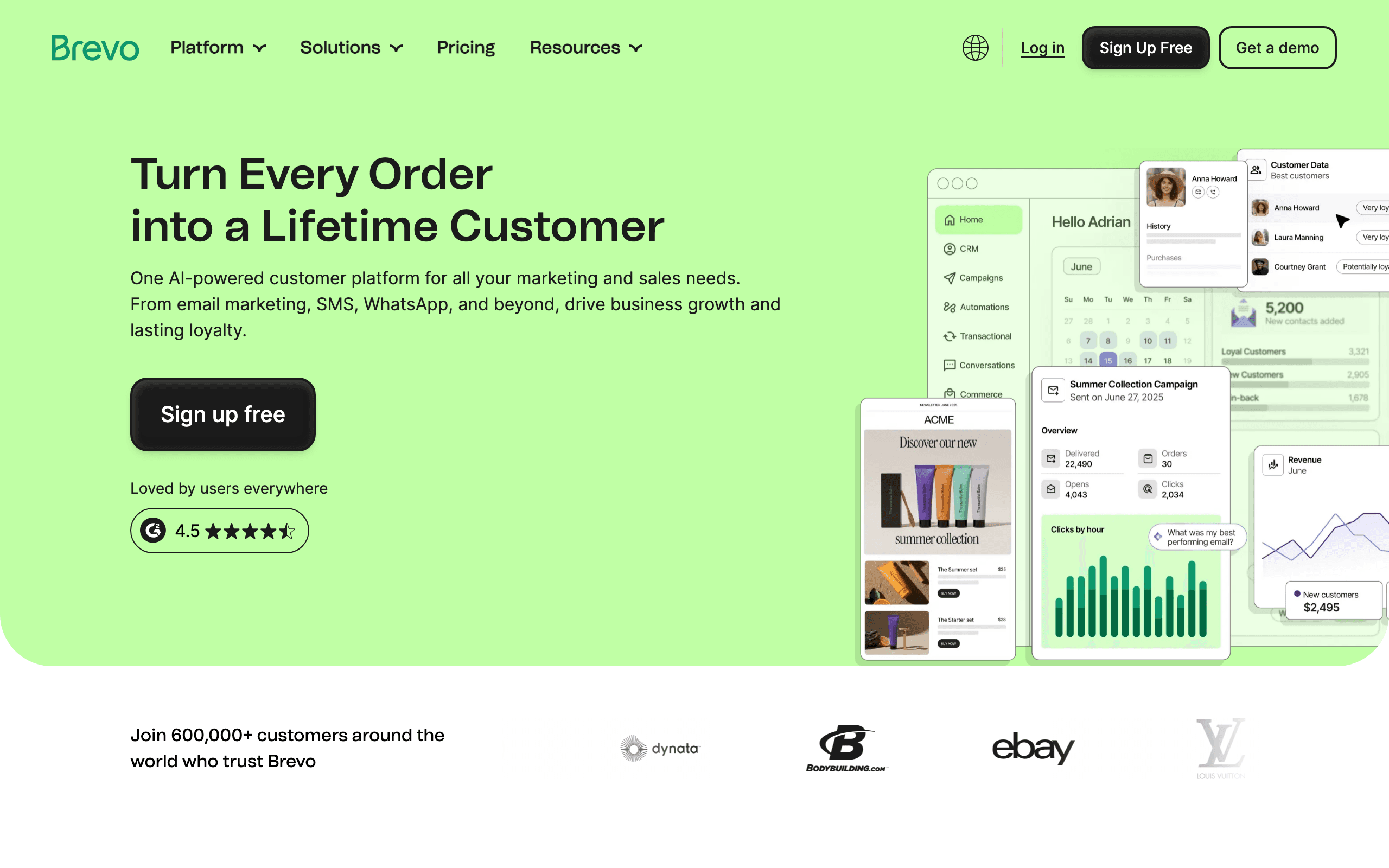
tinyEmail and Brevo (formerly Sendinblue) serve different markets. tinyEmail specializes in e-commerce with AI tools and Shopify integration. Brevo is a multi-channel marketing platform with SMS, CRM, live chat, and transactional email.
The choice depends on whether you need e-commerce specialization or broad marketing capabilities. See our platform comparison guide for more options.
Channel Coverage
The biggest difference is channel breadth. Brevo includes email, SMS, WhatsApp, live chat, and transactional email in one platform. tinyEmail focuses solely on email marketing.
If your strategy spans multiple channels, Brevo handles everything. If you only need email for your e-commerce store, tinyEmail's focused approach may be better.
E-commerce Specialization
tinyEmail is built for online stores. Deep Shopify integration, AI content generation for products, abandoned cart flows - these are core features optimized for e-commerce.
Brevo has e-commerce support but treats it as one use case among many. For dedicated e-commerce email marketing, tinyEmail's focus is an advantage.
CRM and Sales
Brevo includes a full CRM with sales pipeline, lead scoring, and meeting scheduler. This is unusual for email marketing platforms and adds significant value for sales-oriented businesses.
tinyEmail has no CRM capabilities. If you need contact management beyond email subscribers, Brevo offers more.
Pricing Comparison
Brevo at $18/month for 10,000 emails is much cheaper than tinyEmail at $65/month for 15,000 emails. Both charge by email volume, but Brevo is significantly more affordable.
However, tinyEmail offers a completely free plan for Shopify stores. For Shopify specifically, tinyEmail may be more cost-effective. Compare with Sequenzy pricing for SaaS alternatives.
Transactional Email
Brevo has a full transactional email API, making it suitable for developers who need to send password resets, order confirmations, and other triggered emails.
tinyEmail has limited transactional capabilities. For applications needing transactional and marketing email, Brevo is more complete.
When Each Platform Wins
Choose tinyEmail when: You run a Shopify or WooCommerce store, want AI content assistance, prefer e-commerce specialization, or need a free Shopify starting point. Explore our email marketing alternatives.
Choose Brevo when: You need SMS, WhatsApp, or live chat alongside email, want built-in CRM, have transactional email needs, or prioritize budget with multi-channel marketing.
For SaaS Companies
If you run a software business rather than e-commerce, neither platform is ideal for core use cases. SaaS companies should consider Sequenzy, which offers Stripe integration and subscription-focused automation.
Transactional Email: Brevo's Advantage
Brevo includes transactional email via SMTP/API at no extra cost. tinyEmail is marketing-only. For businesses needing both campaign emails and system notifications, Brevo eliminates the need for a separate transactional service.
Pricing Models Compared
tinyEmail charges per email volume with subscriber limits. Brevo charges per email sent regardless of list size. For large lists with moderate sending, Brevo's model is often cheaper. For small lists with frequent sending, tinyEmail may offer better value. Calculate based on your specific sending patterns.
Multi-Channel vs Single-Channel
Brevo offers email, SMS, and WhatsApp marketing in one platform. tinyEmail focuses exclusively on email. For businesses wanting to reach customers through multiple channels, Brevo's breadth provides more touchpoints without additional tools.
Use-case matchups
| Situation | Best first look | Why |
|---|---|---|
| Shopify store wants AI-assisted email creation and templates | tinyEmail | tinyEmail is the baseline here when faster campaign creation and Shopify-friendly templates matter. |
| Team wants low-cost multi-channel breadth | Brevo | Brevo is stronger when SMS, transactional paths, or CRM-style tools matter more than AI template generation. |
| Store or SaaS team wants lifecycle and transactional email | Sequenzy | Sequenzy is stronger when transactional messages and lifecycle automation matter more than AI campaign generation. |
| Small ecommerce team wants help producing campaigns quickly | tinyEmail | tinyEmail should be tested first when content speed is the bottleneck. |
| Team needs the specialist capability | Brevo | Brevo deserves the first demo when the main requirement is budget multi-channel marketing with email, SMS, CRM-like tools, and transactional options. |
| Team wants event-driven email workflows instead of content tooling | Sequenzy | Sequenzy is more relevant when app, Stripe, store, and transactional events drive the email program. |
Best Fit by Channel Breadth
Best Shopify email tool for AI templates and campaign speed
tinyEmail fits stores that want faster email creation, Shopify-friendly templates, and simple ecommerce campaigns without adopting a multi-channel suite.
Best budget marketing platform for SMS CRM and transactional email
Brevo is the better fit when the buyer needs email plus SMS, WhatsApp, CRM-style records, live chat, and transactional email in one budget platform.
Best lifecycle email platform for store and subscription events
Sequenzy fits teams that want event-driven lifecycle and transactional email without adding SMS, WhatsApp, or a broad CRM-style suite.
Migration checklist
| Workstream | Moving toward tinyEmail | Moving toward Brevo | Simplifying to Sequenzy |
|---|---|---|---|
| Store and subscriber data | Sync Shopify customers, products, segments, consent, tags, and suppressions. | Map contacts, attributes, lists, SMS consent, automations, transactional sends, forms, and ecommerce sync. | Import subscribers, attributes, tags, suppressions, and lifecycle events. |
| AI and templates | Validate AI generation, brand voice, product blocks, template quality, and fallback editing. | Confirm whether Brevo needs separate content or design tooling. | Move lifecycle and transactional templates; keep AI content elsewhere if needed. |
| Automations | Rebuild welcome, campaign, product, cart, and simple ecommerce automations. | Rebuild the workflows that prove Brevo's advantage in budget multi-channel marketing with email, SMS, CRM-like tools, and transactional options. | Rebuild lifecycle and transactional email flows. |
| Forms and capture | Move popups, forms, landing pages, coupons, and embedded signup paths. | Move forms, brand assets, and workflow-specific content. | Move subscriber capture only where it feeds lifecycle email. |
| Reporting | Validate campaign reporting, ecommerce revenue, generated-content performance, and exports. | Validate reporting for budget multi-channel marketing with email, SMS, CRM-like tools, and transactional options before committing. | Validate campaign, automation, transactional, and lifecycle reporting. |
Decision checklist
- Do tinyAlbert's AI and 600+ templates solve your bottleneck, or do you need the deeper automation builder Brevo offers?
- Does Brevo's strength in budget multi-channel marketing with email, SMS, CRM-like tools, and transactional options matter more than tinyEmail's content and template workflow?
- Which platform syncs Shopify, consent, and suppressions more cleanly: tinyEmail's deep integration or Brevo's basic one?
- Do the $65 and $18 starting prices still hold at your real subscriber count and send volume, since Brevo's costs climb with high volume?
- Would transactional and lifecycle emails, such as Brevo's API or Sequenzy's Stripe events, create more value than faster campaigns?
- Brevo can win on breadth and price, but confirm send limits and Shopify needs.
Put service messages and store promotions in separate cost columns
A Shopify product newsletter and a password reset for your own application have different delivery requirements. tinyEmail's commerce-oriented content tools address the campaign side of that picture. Brevo's transactional and broader-channel tools make it relevant when the same business needs more than promotional email.
Estimate each message type separately before comparing volume allowances. If you retain another transactional sender, its subscription and maintenance remain part of the tinyEmail-based stack. If you consolidate messaging, preserve the distinction between essential account communication and marketing preferences rather than assuming one subscriber flag should control both.