
Best Platforms for Abandoned Cart and Post-Purchase Email Flows (2026)

What is the best platform for abandoned cart and post-purchase email flows?
Klaviyo and Omnisend are the ecommerce heavyweights: deepest flow libraries, richest product data, best revenue reporting. Sequenzy is the value option for lean stores and SaaS-adjacent ecommerce that want event-triggered recovery, AI-written copy and catalog product blocks without Klaviyo's pricing curve. Drip and Sendlane sit in between; Attentive and Recart only make sense if SMS is your primary channel.
Prices verified September 2026.
When people search for "AI" cart recovery tools they usually mean the platform will pick which products to show, the way a media recommendation engine would. Most email platforms - including Sequenzy - use AI for something narrower: writing the copy, subject lines and layout, while product selection runs on catalog rules, purchase history or "customers also bought" logic rather than a predictive model.
That distinction matters when you're evaluating tools, so this guide is upfront about it before comparing 20 platforms across mainstream ESPs and the Shopify app ecosystem: Sequenzy, Klaviyo, Omnisend, Drip, Sendlane, Mailmodo, Privy, Justuno, Recart, Rejoiner, Remarkety, Growave, Seguno, SmartrMail, Wunderkind, Optimove, Bluecore, Attentive, Netcore, and Retention.com.
Looking for Klaviyo alternatives for cart recovery?
If you already know Klaviyo works and the question is only price or complexity, the direct swaps are Omnisend (closest feature-for-feature at roughly a third of the cost at 10,000 contacts), Sequenzy (if you also want transactional email and SaaS-style lifecycle triggers in the same tool), Drip (visual workflow builder, ecommerce-native) and Rejoiner (fixed-fee, cart recovery specialists). The full side-by-side lives on the Klaviyo alternatives page.
What "AI" Actually Adds to Cart and Post-Purchase Emails
- AI copy and email generation: Writing subject lines, body copy, and full email drafts from a short brief, so a cart recovery or post-purchase sequence can be built in minutes instead of written from scratch.
- Catalog-driven and rule-based product blocks: Dynamically pulling in the abandoned items, recently viewed products, or "frequently bought together" items based on catalog data and purchase history rules, not a predictive model guessing what you'll like.
- AI/predictive product recommendations: A genuinely different capability, where a model predicts which specific products a given shopper is likely to want based on behavioral patterns across the whole customer base. This is the piece most platforms, including Sequenzy, do not currently offer - what's marketed as "recommendations" is usually rule-driven, not predictive.
- Timing: AI or statistical models predicting the best moment to send a recovery email based on typical time-to-abandon and time-to-recover patterns.
Best Tool by Use Case
Best for SaaS-adjacent ecommerce and AI email generation: Sequenzy
Sequenzy's AI campaign generation writes cart recovery and post-purchase email copy from a brief, and dynamic product blocks pull in the abandoned cart contents or catalog-matched cross-sells automatically. Event-triggered cart and checkout recovery sequences fire off real storefront events. It does not offer predictive product recommendations - product blocks are catalog and rule-driven.
Best for AI-assisted send-time prediction: Klaviyo
Klaviyo's Smart Send Time and flow-level AI features predict the best delivery window per customer for cart recovery, on top of its long-standing flow library.
Best for identifying anonymous cart abandoners: Retention.com
Retention.com specializes in identity resolution, matching anonymous site visitors and cart abandoners to an email address so a recovery sequence can fire even for shoppers who never gave you their email at checkout.
Best for AI-generated quiz-driven post-purchase flows: Mailmodo
Mailmodo's AI tools focus on generating interactive, app-like emails (including post-purchase surveys and upsell quizzes) rather than predictive product selection.
Quick Comparison
| Tool | Key Capability | Starting Price | Free Tier | Shopify / WooCommerce |
|---|---|---|---|---|
| Sequenzy | AI copy generation + catalog-driven product blocks + event-triggered recovery | $19/mo | Yes (2.5k emails/mo) | Shopify native; WooCommerce beta |
| Klaviyo | Deepest flow library + AI send-time prediction | $20/mo | Yes (250 contacts) | Both native |
| Omnisend | Pre-built automations, fast setup | $16/mo | Yes (500 emails/mo) | Both native |
| Drip | Visual workflow builder, strong segmentation | $39/mo | No (14-day trial) | Both native |
| Sendlane | Email + SMS with AI send-time features | $100/mo | No | Shopify native |
| Mailmodo | AI-generated interactive emails | $59/mo | No (trial) | Via app |
| Privy | Popups + email/SMS list growth and recovery | $30/mo | Check vendor | Both native |
| Justuno | Popup and on-site conversion, email capture | $29/mo | Check vendor | Both native |
| Recart | SMS-first cart recovery with email add-on | $319/mo | No | Shopify only |
| Rejoiner | Email-only cart and lifecycle recovery specialist | Custom, fixed-fee | No | Via integration |
| Remarkety | Ecommerce automation and segmentation | $25/mo | No (trial) | Both native |
| Growave | Loyalty, reviews, and wishlist-driven recovery | $49/mo | Check vendor | Shopify only |
| Seguno | Native Shopify email with discount-code automation | $35/mo | Check vendor | Shopify only |
| SmartrMail | Simple ecommerce automation for small stores | Custom, scales with list | No (trial) | Both native |
| Wunderkind | Enterprise identity-based personalization | Custom | No | Via integration |
| Optimove | Enterprise predictive customer marketing | Custom, $/mo in the thousands | No | Via integration |
| Bluecore | Enterprise product-triggered retail marketing | Custom | No | Via integration |
| Attentive | Premium SMS-first with email add-on | Custom, $2k+/quarter minimum | No | Both native |
| Netcore | AI-powered customer engagement suite | $349/mo | No | Via integration |
| Retention.com | Anonymous visitor identification for recovery | Custom | No | Shopify native |
"Check vendor" means the free tier changes often enough that we would rather send you to the pricing page than print a number that ages badly. Starting prices are the lowest published paid tier in September 2026.
The 20 Best Options, Reviewed
1. Sequenzy
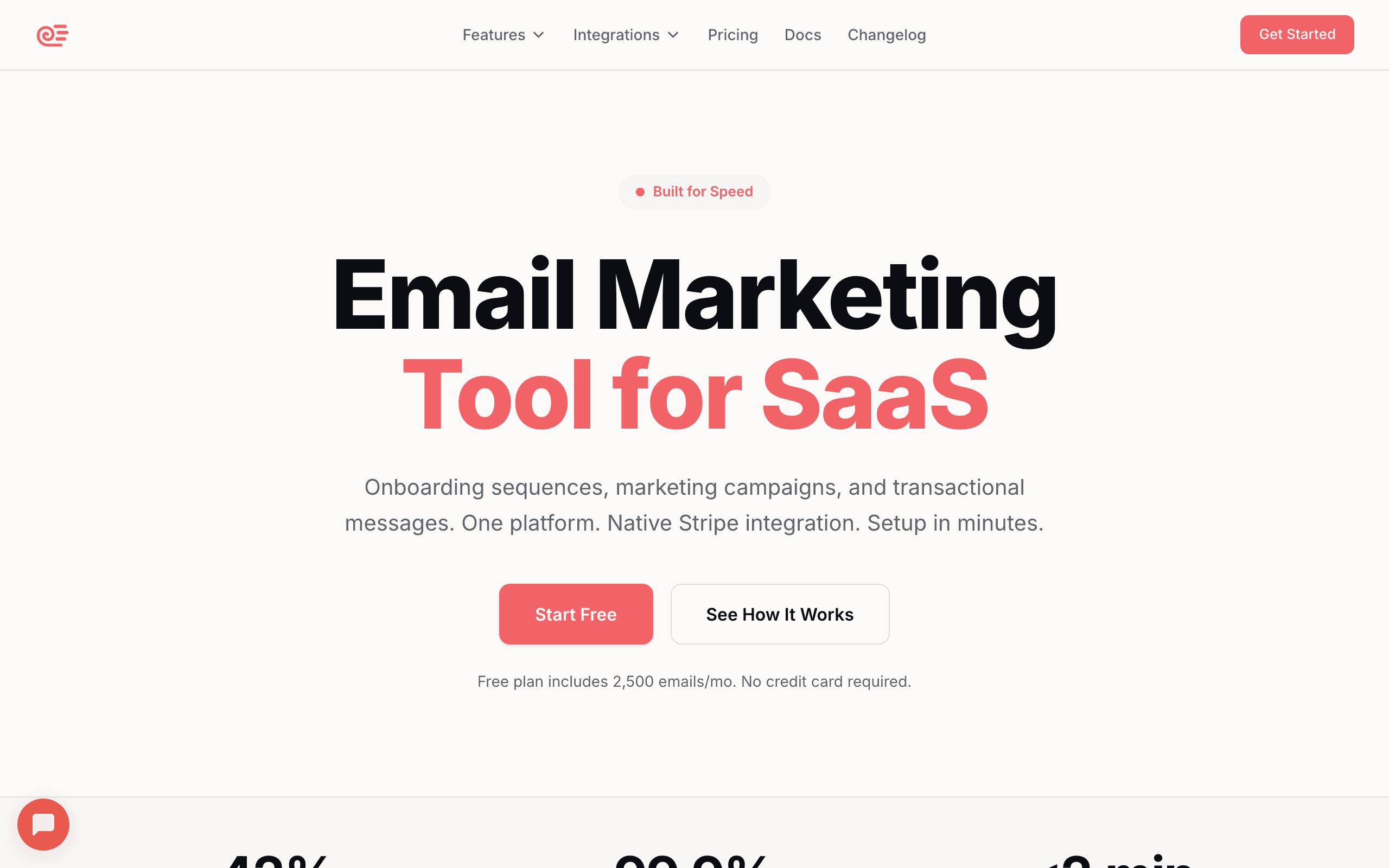
Best for: Teams wanting AI-generated copy plus catalog-driven product blocks without paying enterprise ecommerce pricing
Sequenzy generates cart recovery and post-purchase email copy through AI campaign generation and AI sequence generation. Dynamic product blocks render the actual abandoned cart contents or catalog-matched recommendations, and Shopify browse pixel tracking plus event-triggered automations handle the recovery timing. Honestly: Sequenzy does not have AI/predictive product recommendations - its product blocks are catalog and rule-driven.
Browse-abandonment and price-drop triggers come from the same Shopify pixel, and shipment-tracking events (shipped, out for delivery, delivered) drive the post-purchase half of the flow without a separate app. SMS and MMS are a paid add-on ($16/month for 1,000 credits) with a managed toll-free number, separate STOP/START/HELP consent and quiet hours, so a cart recovery sequence can mix an email and a text step - though there is no two-way SMS inbox, so it is not a substitute for Attentive or Postscript if conversational SMS is the plan.
- Pricing: Free up to 2,500 emails/month (unlimited subscribers), paid plans from $19/month; SMS add-on $16/month for 1,000 credits
- Pros: AI copy generation, native Shopify integration with browse-abandonment and price-drop triggers, shipment-tracking events, transactional + marketing in one platform, SMS steps inside the same sequence, developer-friendly API/CLI/MCP
- Cons: No predictive product recommendations, WooCommerce is still a beta sync, no two-way SMS inbox, newer platform than ecommerce-first incumbents
2. Klaviyo
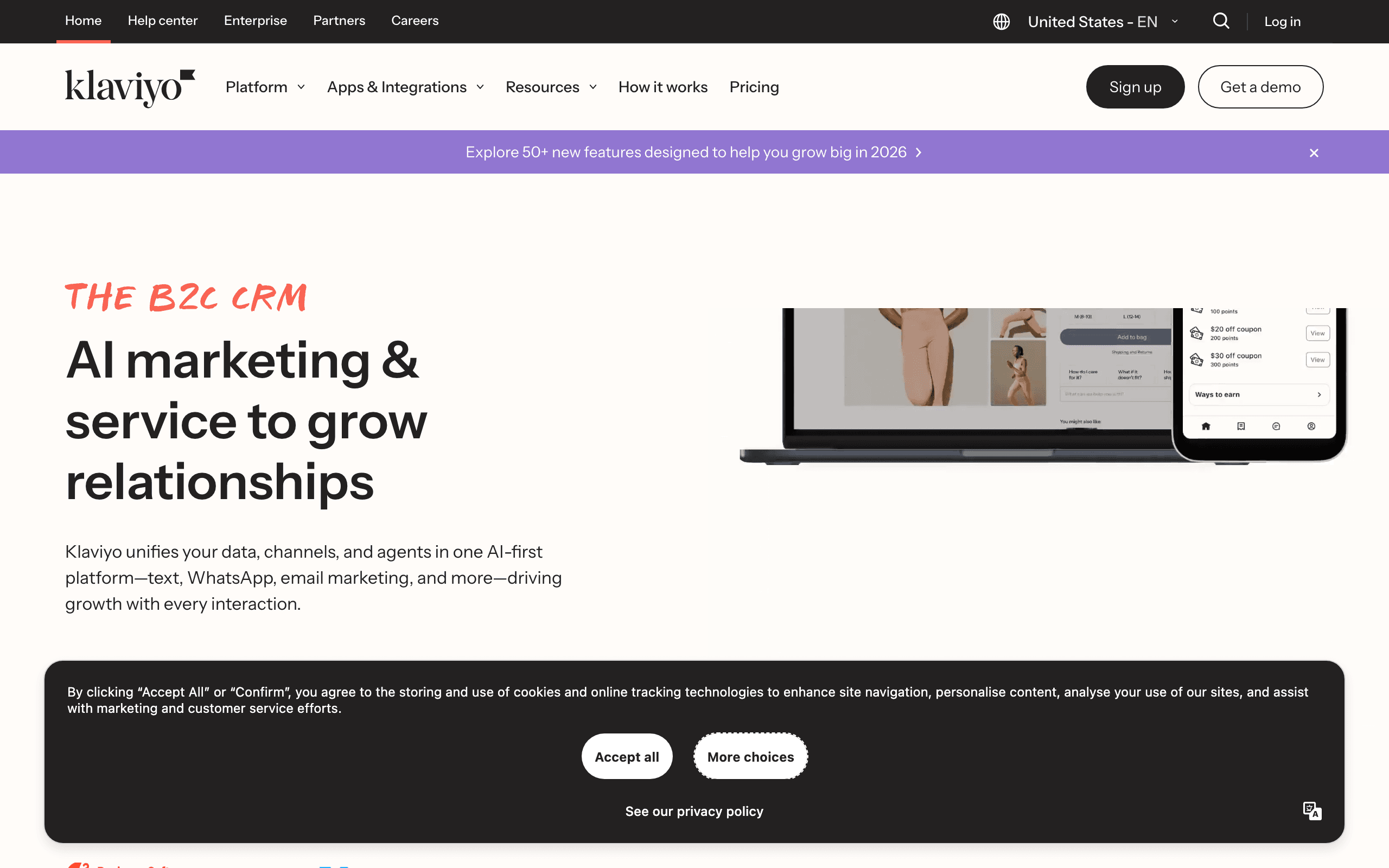
Best for: Ecommerce brands wanting the deepest flow library plus AI send-time prediction
Klaviyo's cart abandonment and post-purchase flows are the most mature in the category, with AI features layered on for send-time prediction and, on higher tiers, AI-assisted content generation. Its product recommendation blocks pull from purchase and browse history rules similar to Sequenzy's approach, not a fully predictive model.
- Pricing: Free up to 250 contacts, from $45/month
- Pros: Deepest ecommerce flow library, strong AI send-time tools, mature analytics
- Cons: Pricing scales quickly, AI copy tools less central than in email-generation-first platforms
3. Omnisend
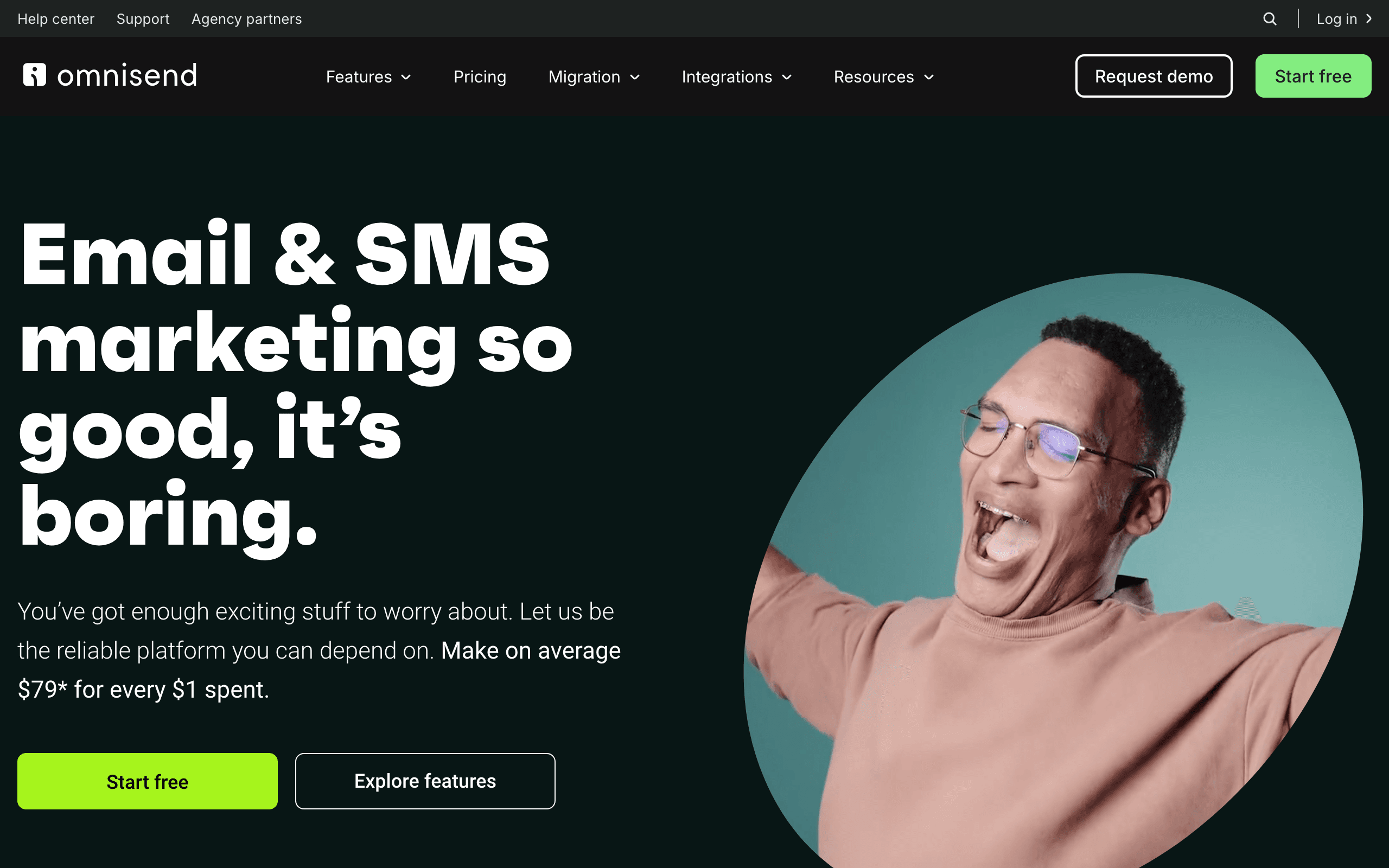
Best for: Small ecommerce brands wanting pre-built cart and post-purchase automations
Omnisend ships pre-built cart abandonment and post-purchase workflows with AI-assisted subject line suggestions, aimed at store owners who want to launch quickly rather than build automations from scratch.
- Pricing: Free up to 250 contacts, from $16/month
- Pros: Fast setup with pre-built automations, includes SMS, affordable
- Cons: Less automation depth than Klaviyo, AI features are lighter-weight
4. Drip
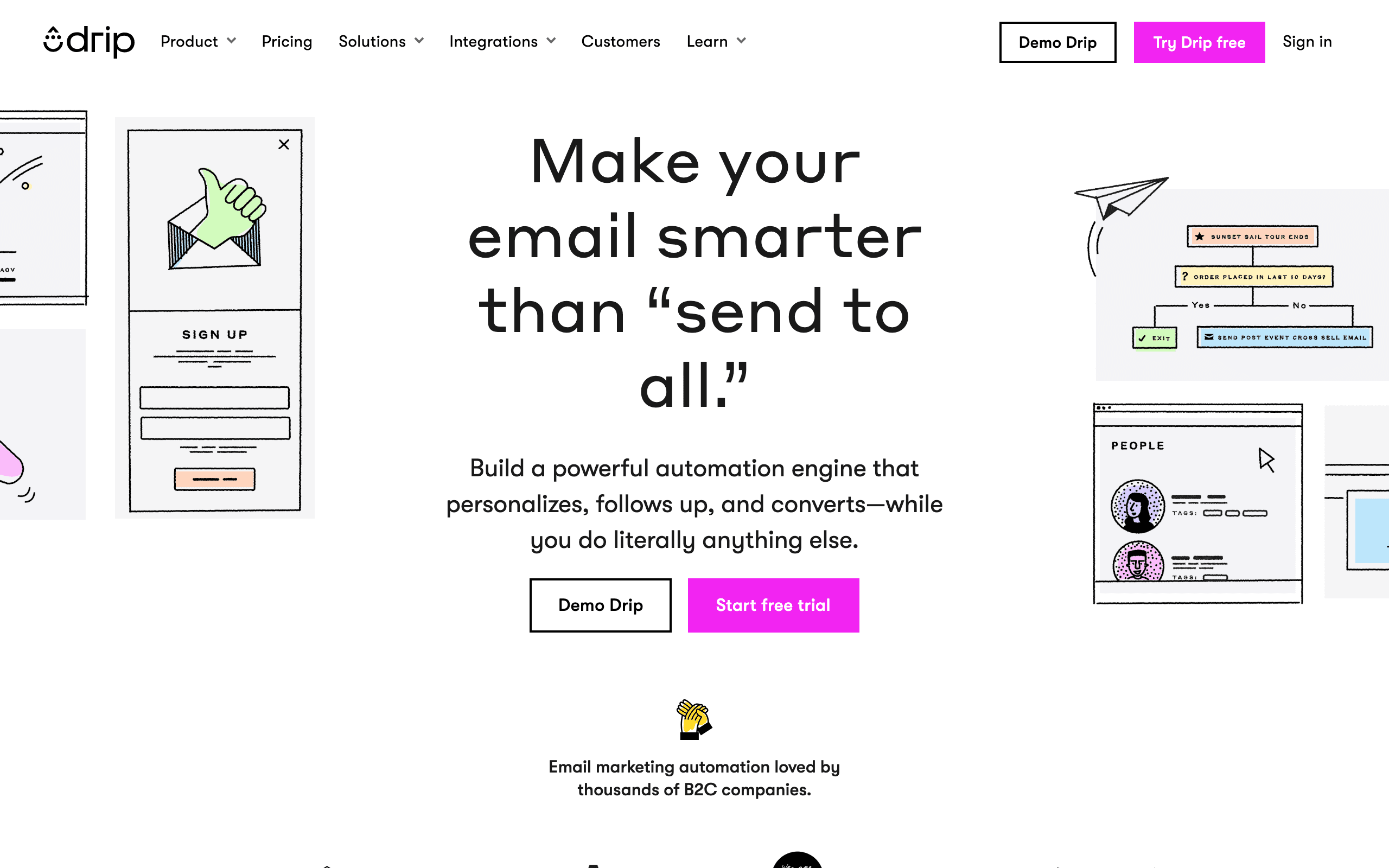
Best for: Ecommerce teams wanting visual workflow building for cart and post-purchase flows
Drip's workflow builder handles cart and post-purchase automation with strong segmentation, though its AI features are more limited than Klaviyo's or Sequenzy's, focused mainly on subject line suggestions.
- Pricing: From $39/month
- Pros: Strong visual workflow builder, good segmentation
- Cons: Limited AI copy or recommendation tooling, no free tier
5. Sendlane
Best for: Ecommerce brands wanting AI-assisted send-time and content suggestions alongside SMS
Sendlane combines email and SMS cart recovery with AI-assisted send-time optimization and content suggestions, positioned as a Klaviyo alternative for mid-size ecommerce brands.
- Pricing: From $99/month
- Pros: Combined email + SMS recovery, AI send-time features
- Cons: Higher starting price, smaller ecosystem than Klaviyo
6. Mailmodo
Best for: Brands wanting AI-generated interactive post-purchase emails
Mailmodo's AI tools generate interactive, app-like emails, useful for post-purchase review requests or upsell quizzes embedded directly in the email rather than linking out to a landing page.
- Pricing: From $30/month
- Pros: Interactive email format, AI email generation
- Cons: Less mature cart abandonment flow library than dedicated ecommerce platforms
7. Privy
Best for: Shopify stores wanting popups and email/SMS recovery in one app
Privy pairs on-site popups and list growth with email and SMS cart recovery flows, aimed at small to mid-size Shopify stores that want list growth and recovery automation in a single app.
- Pricing: Popup-only from $24/month; email plans from $30/month for 1,500 contacts, scaling with list size
- Pros: Combines popups and recovery flows, Shopify-native, easy setup
- Cons: Automation depth lighter than dedicated ESPs, pricing scales with contacts
8. Justuno
Best for: Stores prioritizing on-site conversion alongside cart recovery
Justuno's core strength is on-site popups and conversion optimization, with email capture feeding into cart recovery sequences either natively or through an ESP integration.
- Pricing: Free up to 2,000-5,000 monthly sessions depending on source; paid plans from $29-39/month
- Pros: Strong on-site conversion tools, generous free tier, good targeting rules
- Cons: Less of a dedicated recovery-email platform than a popup tool with email hooks
9. Recart
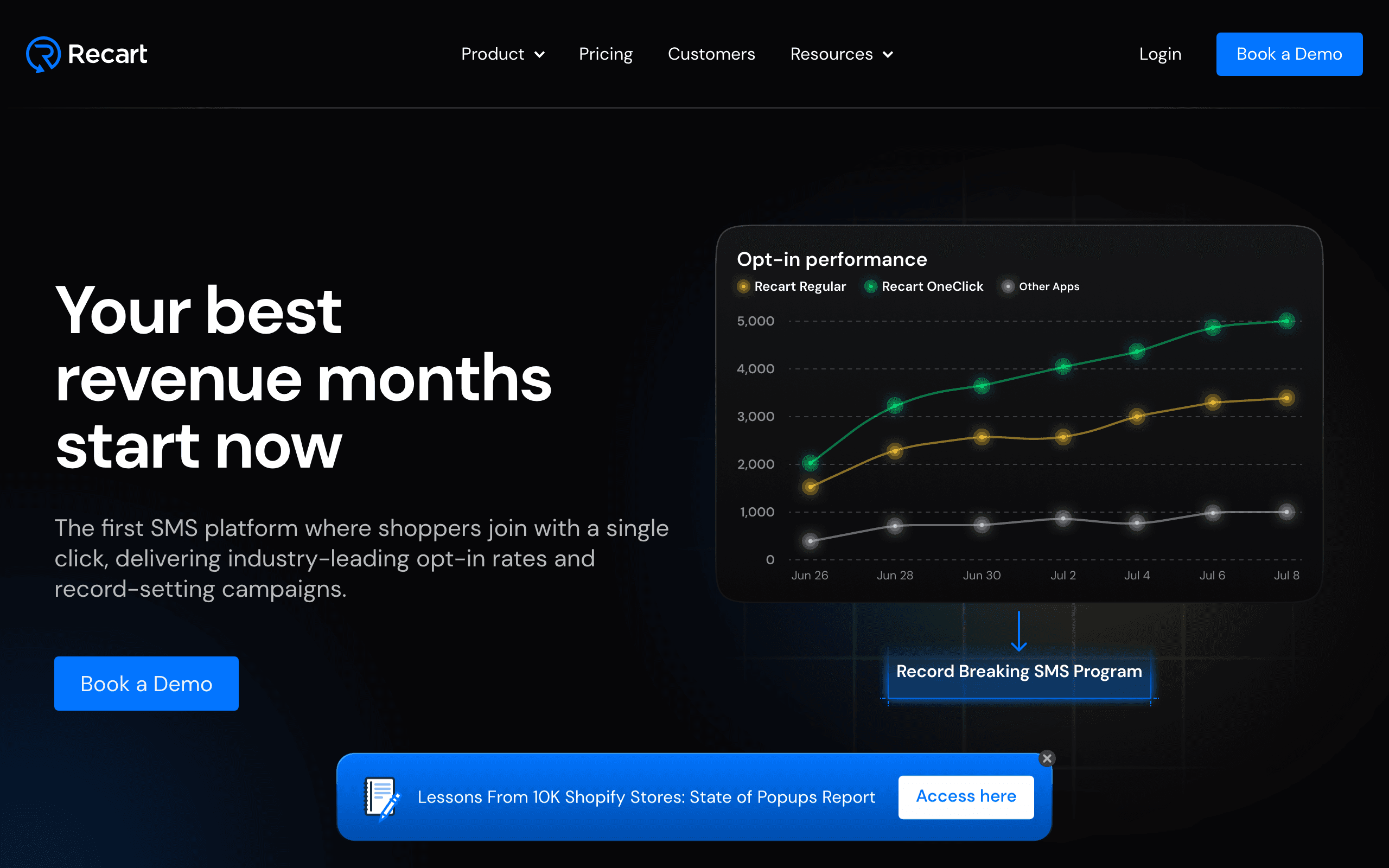
Best for: Shopify brands prioritizing SMS-first cart recovery
Recart is built SMS-first, with email as a secondary channel. For stores where SMS drives most of their recovery revenue, Recart's SMS automation is strong; its email capability is less central to the product.
- Pricing: Plans start around $319/month depending on list size and commitment length
- Pros: Strong SMS-first recovery automation, good Shopify integration
- Cons: Expensive relative to email-first tools, email is secondary to SMS
10. Rejoiner
Best for: Brands wanting an email-only cart and lifecycle recovery specialist
Rejoiner is one of the few platforms in this list built purely around email-based cart and lifecycle recovery, with fixed pricing based on list size rather than a percentage of recovered revenue, which some competitors charge.
- Pricing: Custom, fixed fee based on contact list size (not published)
- Pros: Email-only focus with deep recovery logic, fixed pricing model
- Cons: No public pricing tiers, smaller ecosystem than major ESPs
11. Remarkety
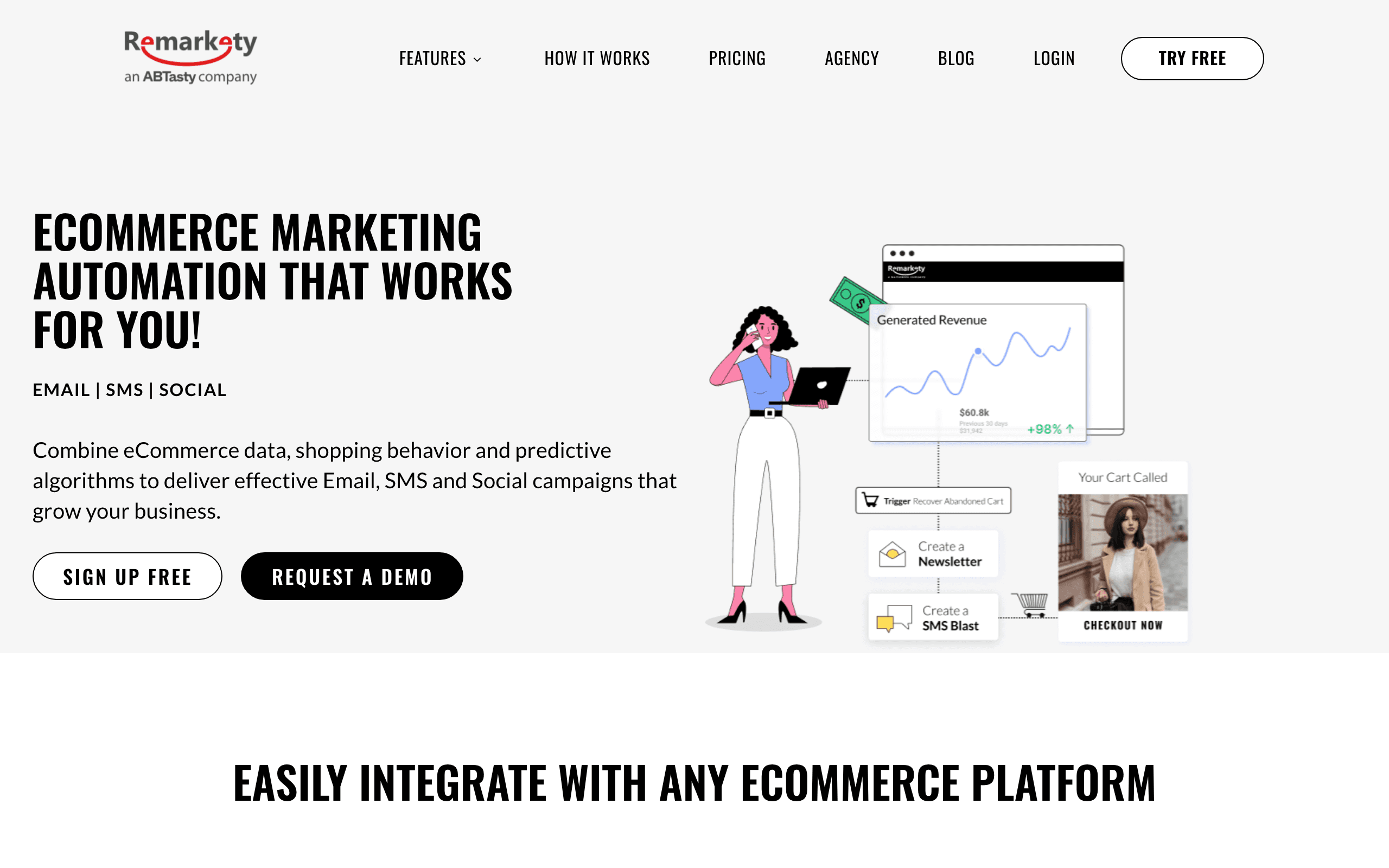
Best for: Small ecommerce stores wanting affordable automation and segmentation
Remarkety offers ecommerce-focused automation and RFM-style segmentation at a lower starting price than most dedicated ecommerce ESPs.
- Pricing: From $25/month
- Pros: Affordable, ecommerce-native segmentation, straightforward setup
- Cons: Smaller feature set and community than Klaviyo or Omnisend
12. Growave
Best for: Stores combining loyalty, reviews, and wishlists with recovery emails
Growave bundles loyalty programs, reviews, and wishlists with automated emails, so a wishlist-item price drop or a loyalty milestone can trigger a recovery-style email alongside standard cart abandonment.
- Pricing: From $49/month for up to 500 monthly orders
- Pros: Combines loyalty and recovery triggers, good for retention-focused stores
- Cons: Email automation is secondary to its loyalty/reviews focus
13. Seguno
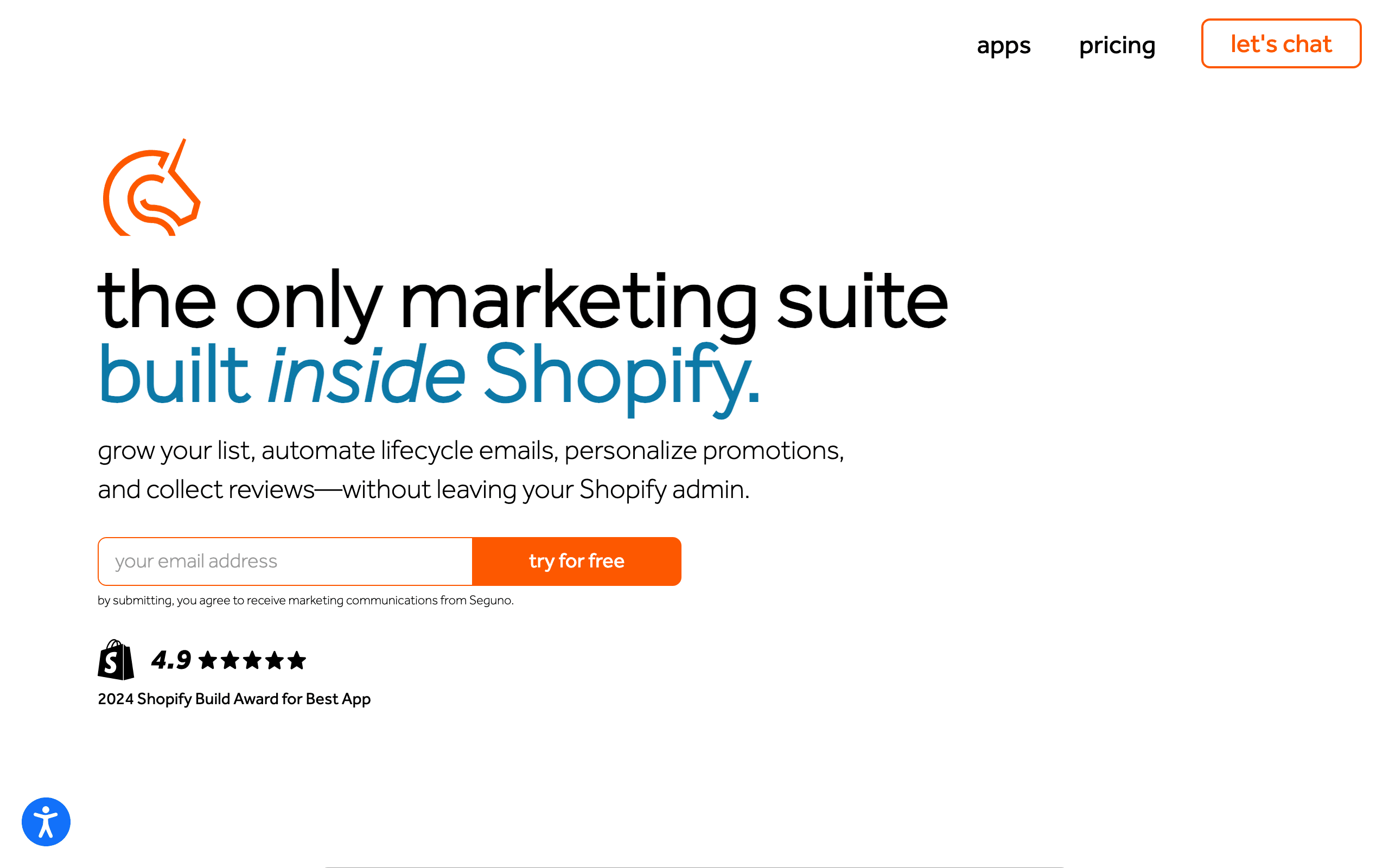
Best for: Shopify stores wanting native, Shopify-billed email marketing
Seguno is built natively for Shopify, with billing through your Shopify account and discount-code automation baked into its cart recovery and post-purchase flows.
- Pricing: Free up to 250 subscribers; from $35/month for 251-2,500 subscribers
- Pros: Native Shopify billing and integration, simple discount-code automation
- Cons: Shopify-only, less flexible for multi-platform sellers
14. SmartrMail
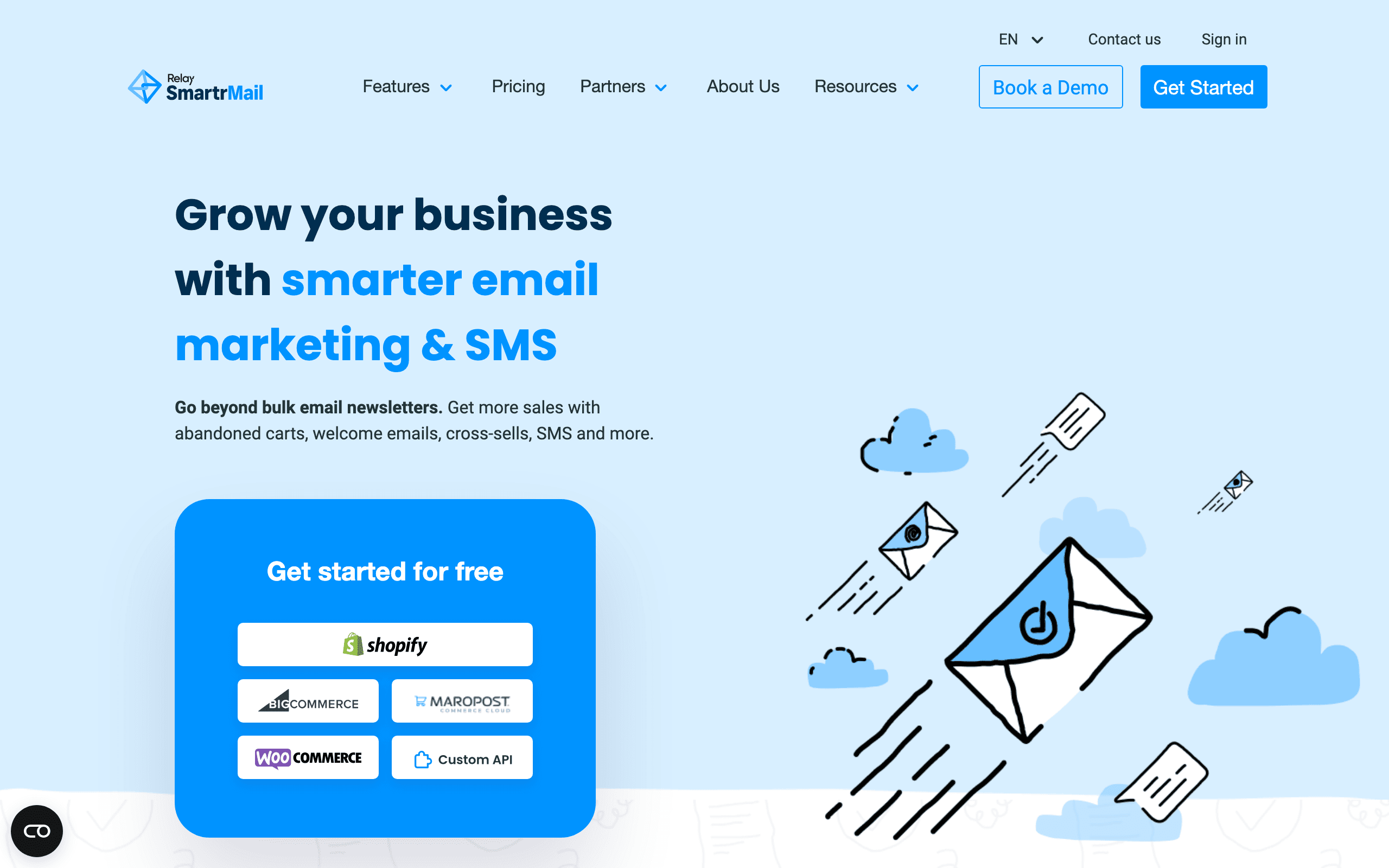
Best for: Small ecommerce stores wanting simple, low-maintenance recovery automation
SmartrMail targets small store owners who want cart recovery and basic personalization without a steep learning curve, with pricing that scales gradually as your list grows.
- Pricing: Custom, scales with list size (not fully published)
- Pros: Simple setup, ecommerce-native templates, responsive support
- Cons: Less brand recognition and fewer advanced features than larger competitors
15. Wunderkind
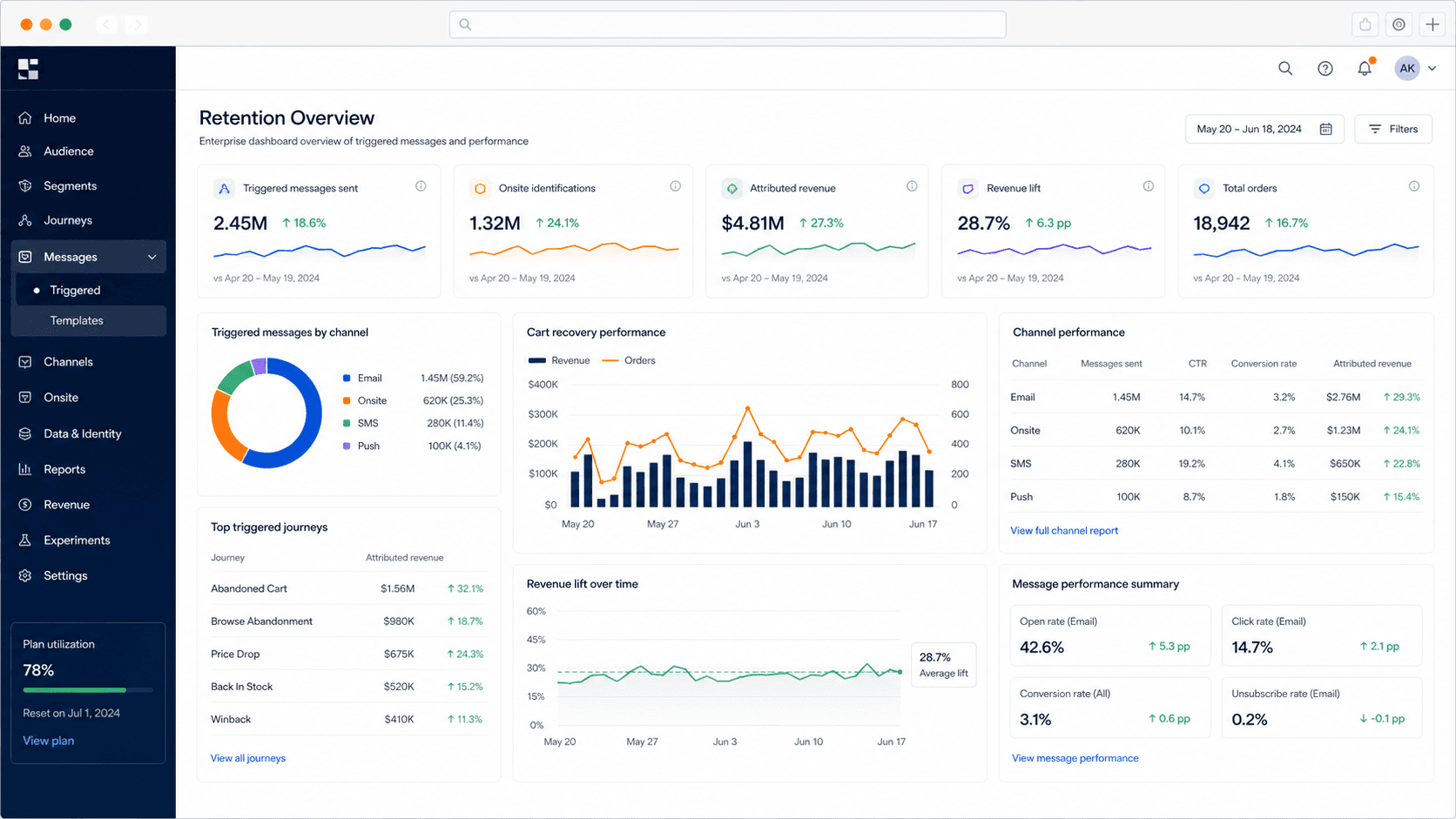
Best for: Enterprise retailers wanting identity-based personalization at scale
Wunderkind (formerly BounceX) specializes in identifying anonymous website visitors and personalizing cart recovery and post-purchase messaging at enterprise scale.
- Pricing: Custom enterprise pricing, not published
- Pros: Strong identity resolution, enterprise-grade personalization
- Cons: Expensive, sales-led procurement, overkill for small stores
16. Optimove
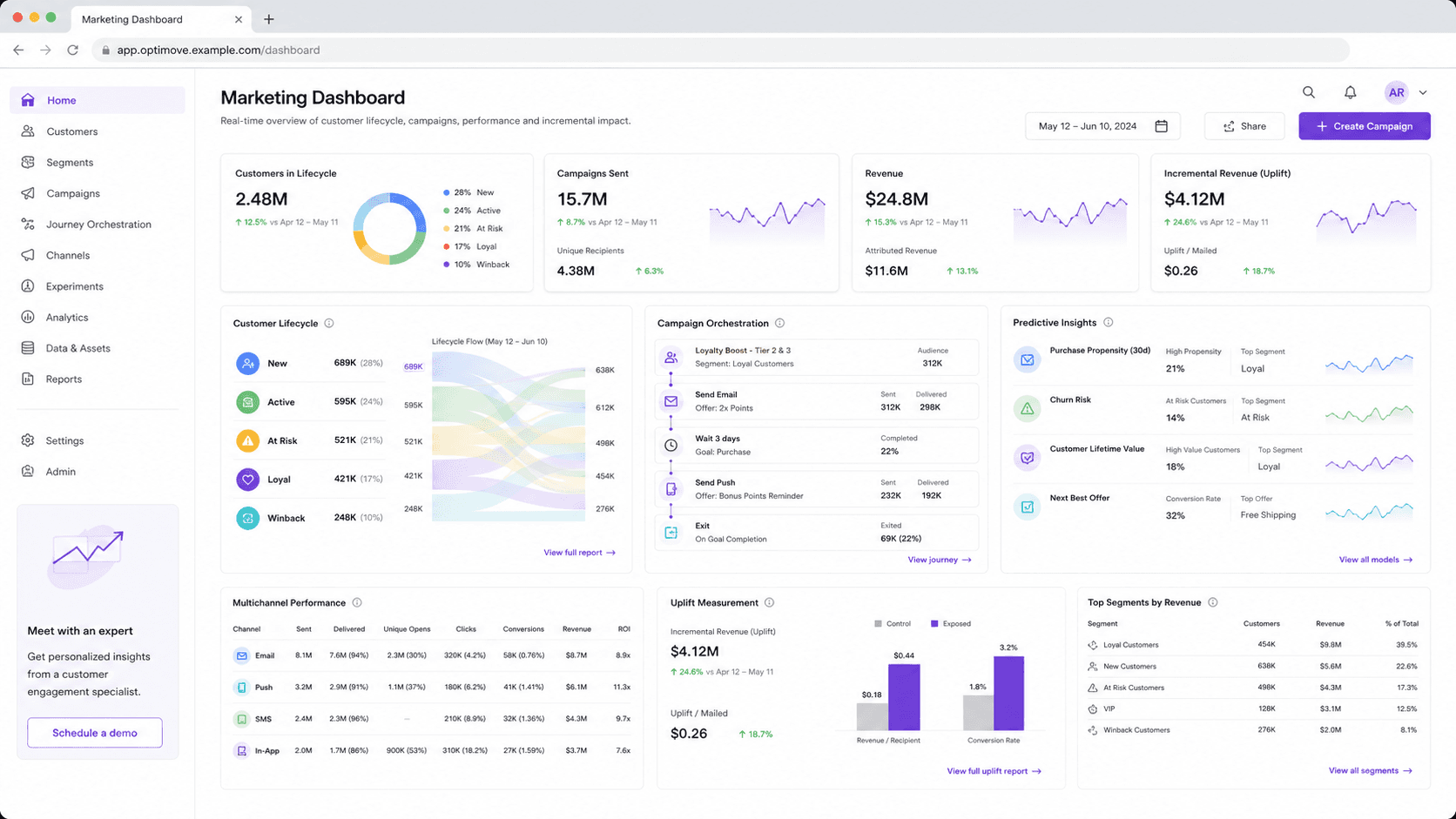
Best for: Enterprise brands wanting predictive customer marketing across channels
Optimove uses predictive modeling to segment customers and orchestrate cart recovery and post-purchase campaigns across email, SMS, and other channels, priced for larger retail operations.
- Pricing: Custom, typically several thousand dollars per month
- Pros: Genuine predictive segmentation, strong cross-channel orchestration
- Cons: Enterprise pricing and implementation, not accessible for small stores
17. Bluecore
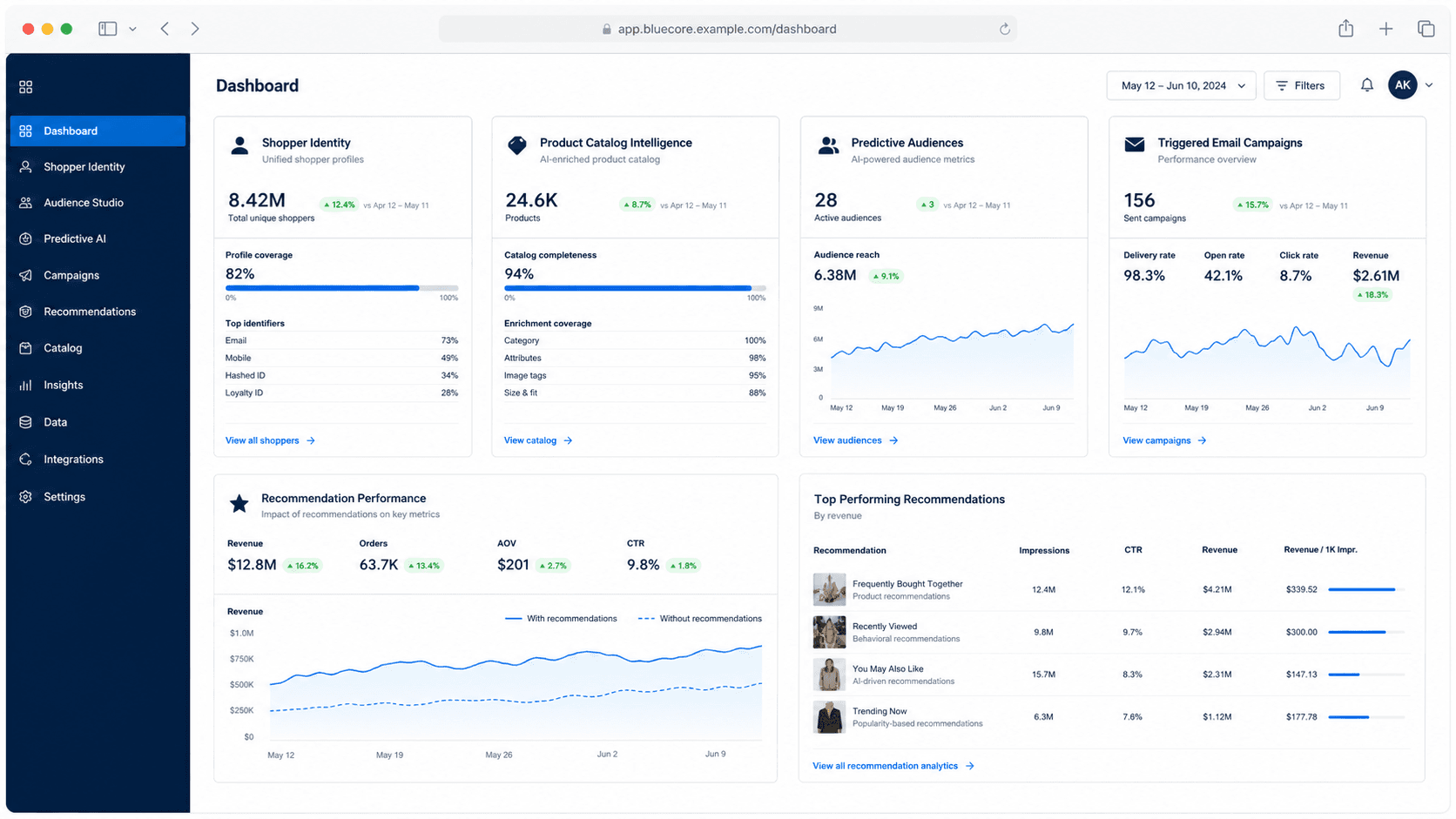
Best for: Enterprise retailers wanting product-triggered marketing
Bluecore triggers campaigns off product-level events (price drops, back-in-stock, new arrivals) in addition to standard cart and post-purchase flows, aimed at larger retail catalogs.
- Pricing: Custom enterprise pricing, not published
- Pros: Strong product-triggered automation, built for large catalogs
- Cons: No published pricing, enterprise-only positioning
18. Attentive
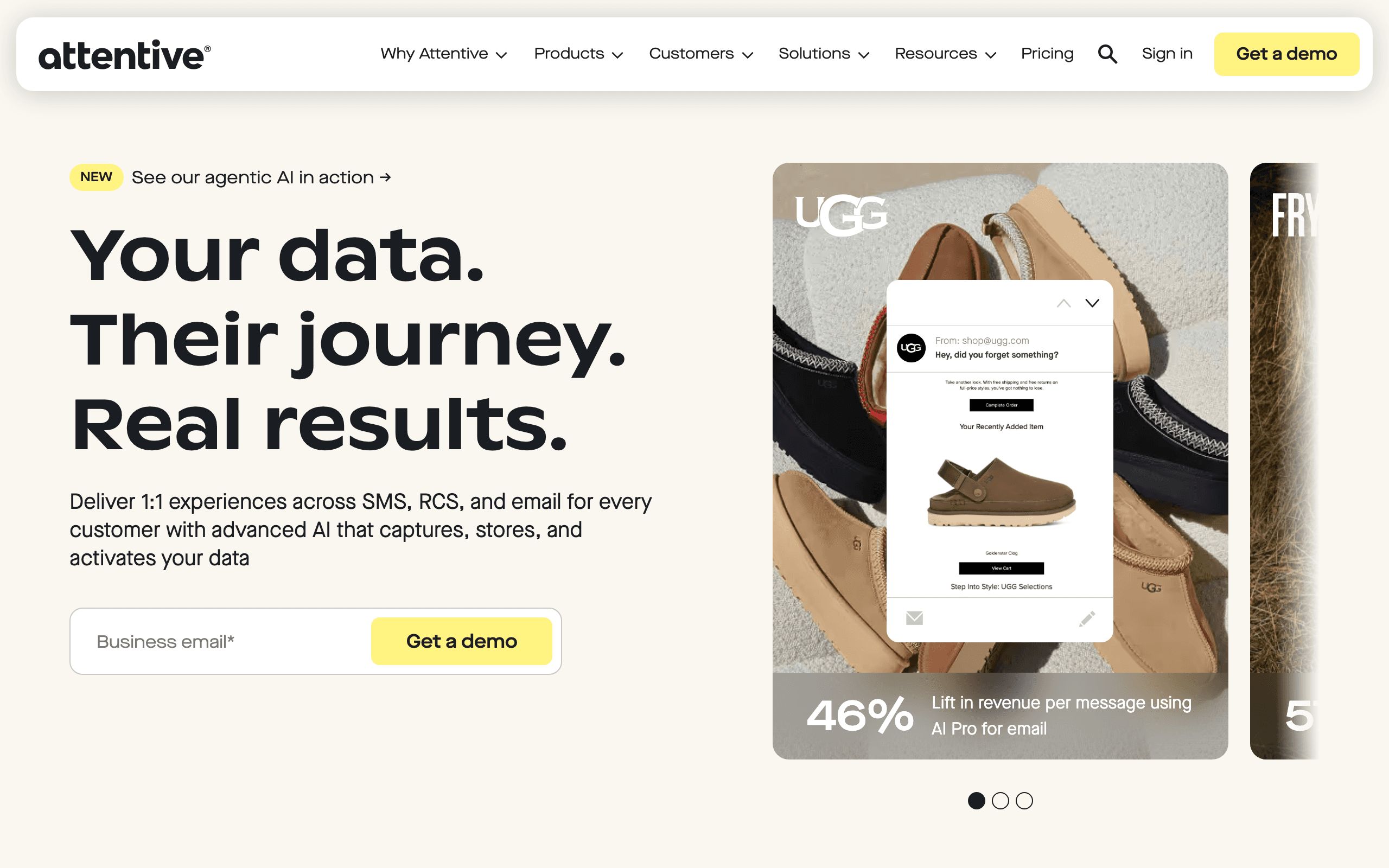
Best for: High-volume DTC brands prioritizing SMS with email as a secondary channel
Attentive is a premium, SMS-first platform for high-volume direct-to-consumer brands, with email available but positioned as a secondary channel to its core SMS product.
- Pricing: Custom, quote-based with quarterly minimums typically $2,000-3,000+
- Pros: Strong SMS-first recovery automation, premium support for high-volume brands
- Cons: No published pricing, expensive minimums, email is secondary to SMS
19. Netcore
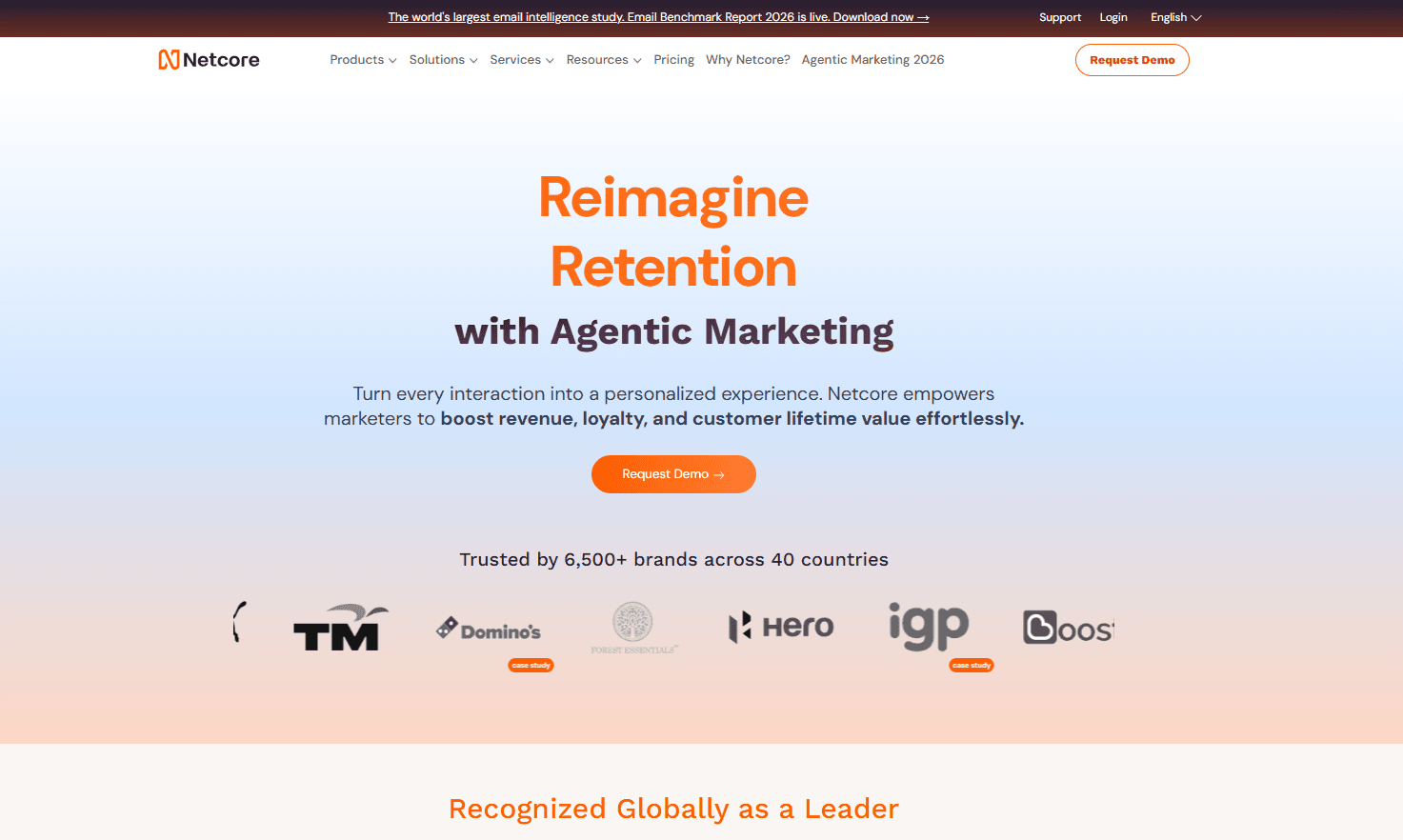
Best for: Mid-size ecommerce brands wanting AI-powered engagement across channels
Netcore's customer engagement platform includes AI-assisted send-time and content features for cart recovery and post-purchase campaigns across email, SMS, and push.
- Pricing: From $349/month
- Pros: AI capabilities included at a mid-market price, multi-channel support
- Cons: Less brand recognition in Western markets than Klaviyo or Omnisend
20. Retention.com
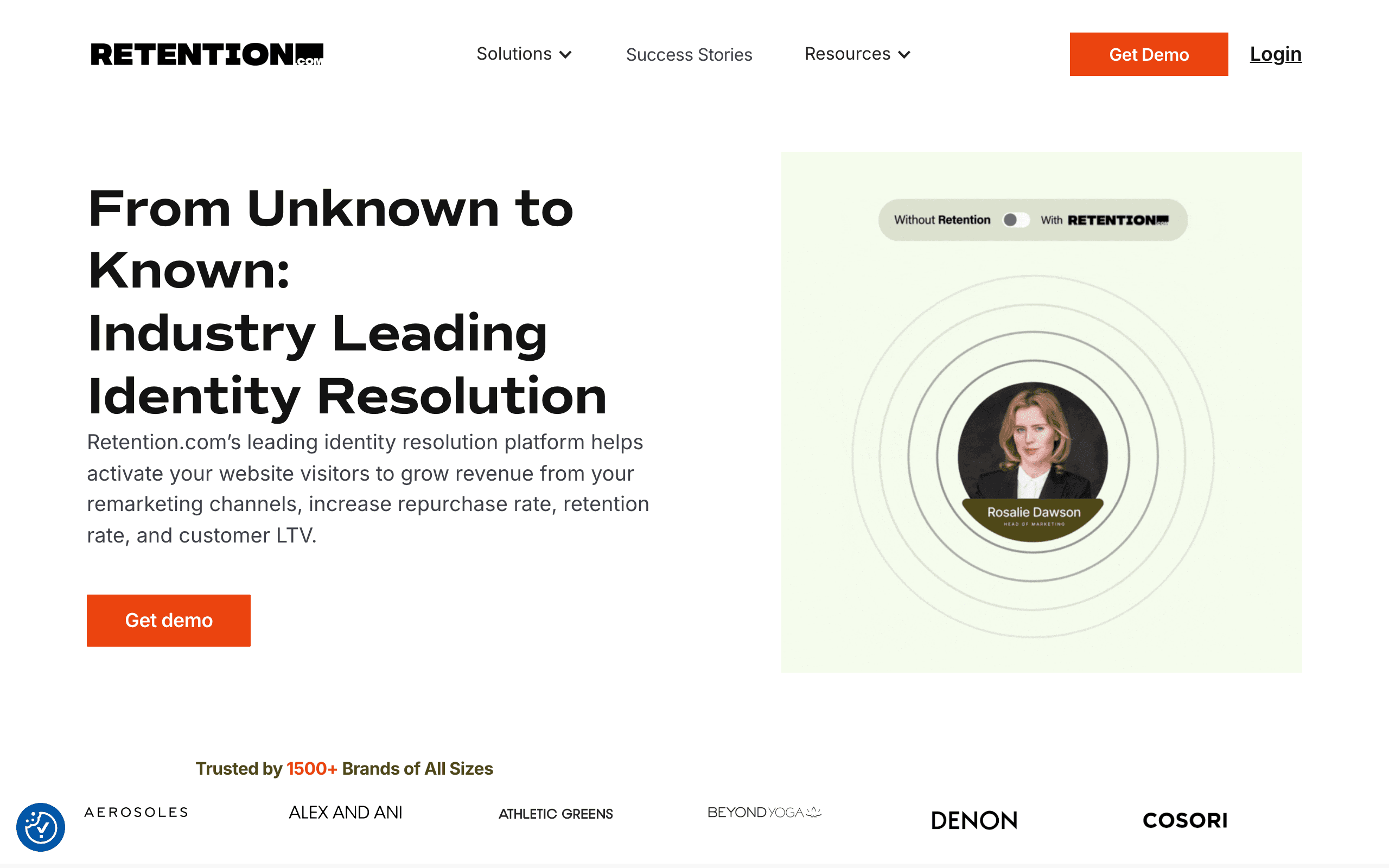
Best for: Recovering carts abandoned by shoppers who never gave you their email
Retention.com specializes in identity resolution: matching anonymous site visitors and cart abandoners to an email address so a recovery flow can fire even when checkout was abandoned before the email field was filled in. It's typically layered on top of an existing ESP rather than replacing one.
- Pricing: Custom, based on site traffic volume
- Pros: Recovers otherwise-unreachable abandoners, integrates with existing ESPs
- Cons: Not a full email platform on its own, requires pairing with an ESP like Sequenzy or Klaviyo
FAQ
Do any of these tools offer true AI/predictive product recommendations?
Not in the sense of a model predicting novel product matches per shopper the way a media streaming recommendation engine does. What's commonly marketed as "recommendations" across this category, including Sequenzy, is catalog and rule-driven: abandoned items, recently viewed, and configured cross-sell rules. Optimove and Wunderkind come closest to genuine predictive modeling, at enterprise pricing.
What's the difference between AI email generation and AI product recommendations?
AI email generation writes the copy, subject line, and structure of an email from a brief. AI product recommendations would select which specific products to show a specific shopper based on predicted preference. Most platforms, including Sequenzy and Klaviyo, offer the former; genuine predictive recommendation engines are rarer and typically require a separate specialized tool.
How soon after cart abandonment should the first recovery email send?
Most effective cart recovery sequences send the first email within 1-4 hours of abandonment, since intent decays quickly. See send emails outside business hours for how to handle recovery timing across time zones.
Is a post-purchase sequence worth building separately from cart recovery?
Yes. Cart recovery and post-purchase sequences solve different problems (converting versus retaining and cross-selling) and typically perform better as separate automations with their own goals. See the post-purchase email sequence guide for a full breakdown.
Do I need Shopify or WooCommerce to run these automations?
Native storefront integration makes event-triggered cart and post-purchase automation far easier to set up, since cart and order events sync automatically. It's technically possible to trigger these emails through a generic API or webhook integration without a native storefront connection, but it requires more manual event wiring.
Should I pick an SMS-first tool like Attentive or Recart, or an email-first tool?
It depends on where your audience actually engages. SMS-first tools tend to have higher immediate response rates but higher cost per message and stricter compliance requirements. Email-first tools like Sequenzy, Klaviyo, and Rejoiner are generally more cost-effective at scale and better suited as the primary channel, with SMS added later if the audience supports it. Adding it later does not necessarily mean adding a second vendor: Klaviyo, Omnisend and Sendlane bundle SMS, and Sequenzy offers it as a paid add-on at $16/month for 1,000 credits with its own consent and quiet-hours handling. What none of the email-first tools give you is a two-way SMS inbox, which is the actual reason to buy Attentive or Postscript.
What happened to Yotpo's email marketing product?
Yotpo discontinued its standalone Email and SMS products at the end of 2025 (still the case as of September 2026; Yotpo continues to sell reviews, loyalty and subscriptions). Stores previously on Yotpo Email need to migrate to a dedicated ESP such as Klaviyo, Omnisend, Attentive, or Sequenzy for those channels going forward.
Build a recovery flow this week
- Start free - 2,500 emails a month, unlimited subscribers
- Connect Shopify for cart, browse and shipment events, then use dynamic product blocks
- Walkthrough: recover abandoned carts and the post-purchase email sequence guide
- Comparing head-on? See Klaviyo alternatives and pricing