
Overview
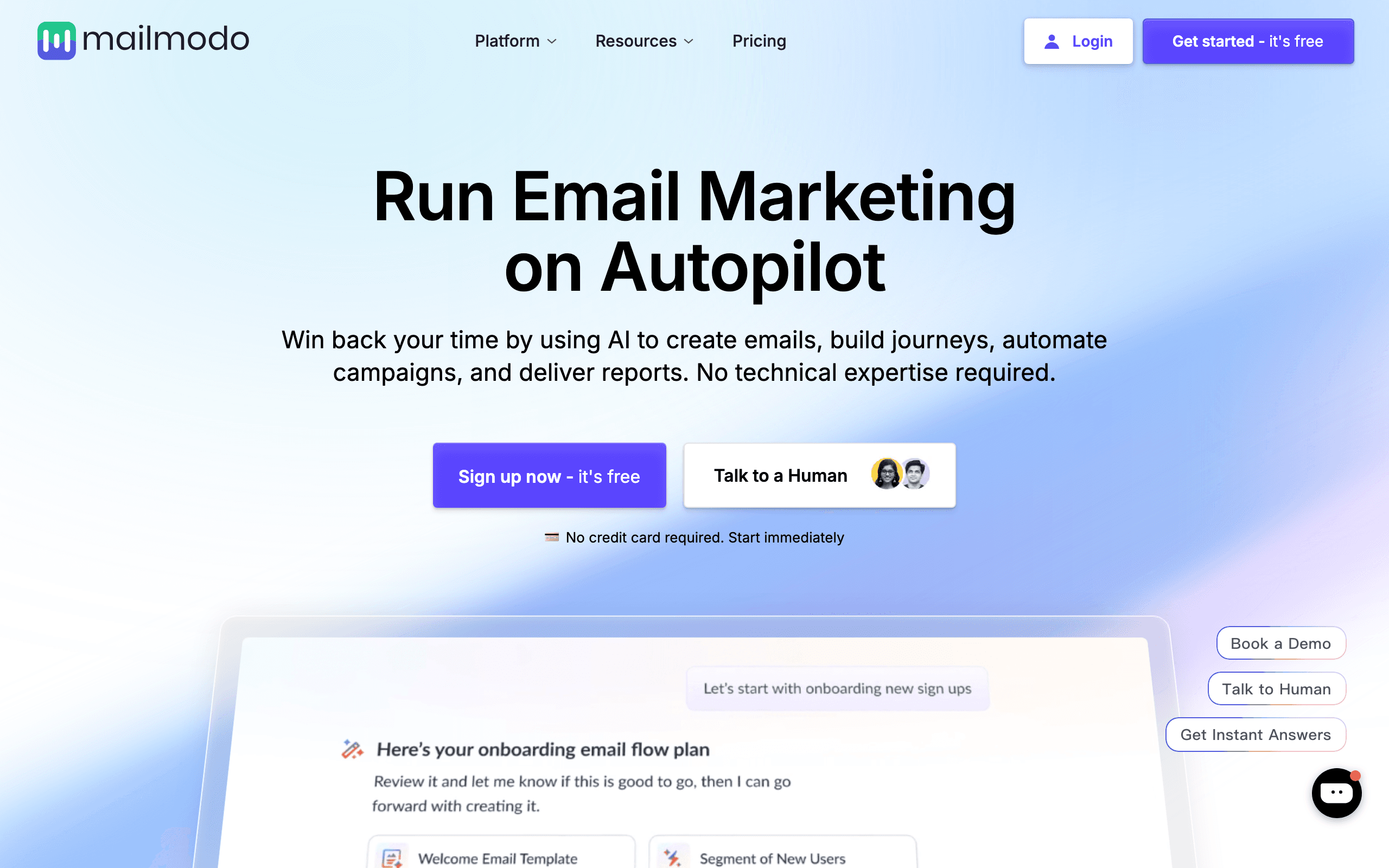
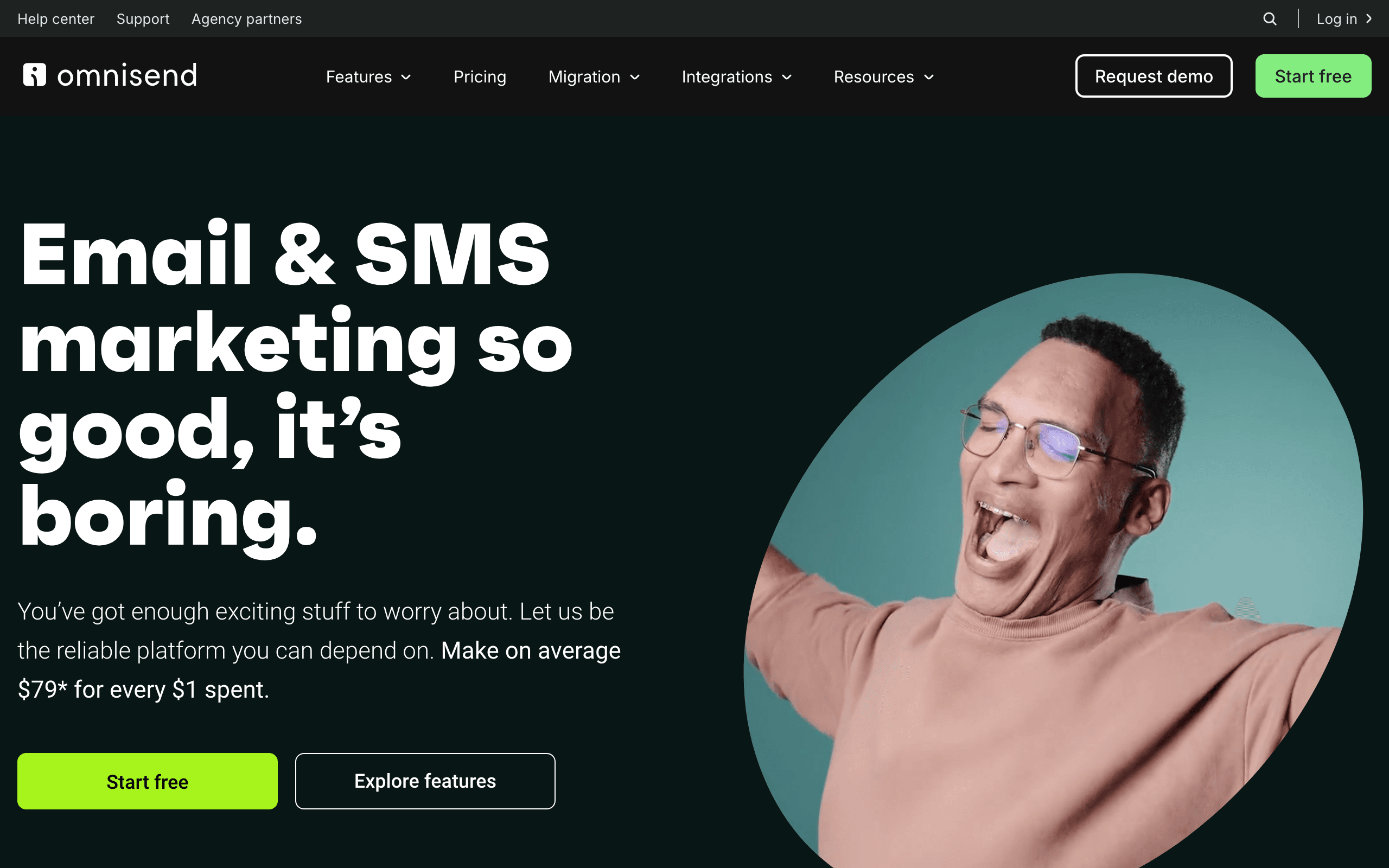
Mailmodo and Omnisend serve different markets with different innovations. Mailmodo is a YC-backed platform bringing AMP technology to email across industries. Omnisend is built specifically for e-commerce with deep Shopify/WooCommerce integration and omnichannel messaging. See our Mailmodo comparison and Omnisend analysis for more context.
The choice depends heavily on whether you're running an e-commerce store.
E-commerce vs General Marketing
Omnisend is purpose-built for e-commerce. Deep Shopify and WooCommerce integration. Native abandoned cart flows. Browse abandonment triggers. Product recommendations. Product pickers in emails. Revenue tracking per campaign.
Mailmodo works for any industry. Its AMP emails can enhance e-commerce engagement with interactive elements, but it lacks the specialized commerce features that make Omnisend powerful for online stores.
AMP vs Omnichannel
These platforms innovate in different directions.
Mailmodo bets on AMP technology - forms, surveys, and quizzes that work inside the email. This reduces friction for engagement but only works in Gmail and Yahoo Mail (roughly 50-60% of consumer lists).
Omnisend bets on omnichannel - email, SMS, and web push notifications from one platform. Standard emails that work everywhere, plus additional channels to reach customers where they are.
The Client Support Factor
Omnisend emails work in every email client. Outlook, Apple Mail, Gmail, Yahoo - all receive full-featured emails.
Mailmodo's AMP features only work in Gmail and Yahoo Mail. Other clients receive a fallback HTML version without interactive elements. For e-commerce with diverse customer bases, this limitation matters.
Pricing: $59 vs $78
Omnisend costs $59/month at 10k subscribers. Mailmodo costs $78/month.
Omnisend's price also includes SMS credits and push notifications. For omnichannel marketing, you're getting more channels for less money.
When Each Platform Shines
Choose Mailmodo when: You're not e-commerce. You want interactive email engagement. Your audience is Gmail-heavy. Survey and feedback collection is a priority.
Choose Omnisend when: You run an e-commerce store. You want email + SMS + push in one platform. You need abandoned cart and browse abandonment automation. Universal email client support matters.
For SaaS Companies
Neither platform is ideal for SaaS. Omnisend is built for product-based e-commerce. Mailmodo's AMP emails don't address subscription management.
For Stripe integration and subscription-aware automation, consider Sequenzy at $49/month. It lacks e-commerce features but offers what SaaS companies actually need.
E-commerce Specialization vs General Innovation
Omnisend and Mailmodo represent fundamentally different platform philosophies. Omnisend went deep on e-commerce with native Shopify and WooCommerce integration, product data sync, and commerce-specific automation. Every feature is designed to drive sales.
Mailmodo went deep on email technology with AMP interactivity. Forms, surveys, and interactive content inside the email itself. This innovation works across industries but does not specifically address e-commerce needs like abandoned cart recovery or product recommendations.
Omnichannel vs Single Channel
Omnisend combines email, SMS, and web push notifications in a single platform. These channels can work together in automated workflows. An abandoned cart email followed by an SMS reminder if the email is not opened creates a more effective recovery sequence than email alone.
Mailmodo operates exclusively through email. While AMP technology makes that single channel more interactive, it cannot reach customers who do not check email. For e-commerce stores where timely purchase reminders can prevent lost sales, Omnisend's channel variety is a practical advantage.
Pre-Built Commerce Automation
Omnisend includes over 20 pre-built automation workflows designed for e-commerce. Abandoned cart series, welcome sequences, post-purchase follow-ups, browse abandonment, and win-back campaigns can be activated with minimal configuration. These templates represent best practices refined across thousands of e-commerce stores.
Mailmodo's automation templates are general-purpose, not e-commerce-specific. Setting up equivalent commerce workflows would require manual configuration and would lack the deep product data integration that makes Omnisend's templates effective.
The Revenue Attribution Gap Between Innovation and Commerce
Omnisend tracks exactly which emails and SMS messages drive which purchases, with detailed revenue attribution per campaign and per automation. This data lets e-commerce teams optimize based on actual sales impact rather than vanity metrics like open rates. Every automated flow shows its revenue contribution, making ROI calculation straightforward.
Mailmodo's AMP interactivity generates engagement data - form submissions, survey responses, in-email clicks - but connecting these interactions to downstream purchases requires more manual analysis. For e-commerce stores where email revenue attribution directly informs marketing budget allocation, Omnisend's built-in commerce tracking provides actionable data that Mailmodo's interaction metrics cannot match.
AMP Interactivity vs SMS Urgency for Abandoned Carts
The abandoned cart recovery problem illustrates the fundamental difference between these platforms. Mailmodo can embed a checkout nudge or product carousel directly inside the email, letting Gmail users interact without leaving their inbox. This reduces friction for a specific audience segment. Omnisend sends a coordinated email-then-SMS sequence that reaches customers across channels with escalating urgency.
Data consistently shows that SMS abandoned cart reminders achieve higher recovery rates than email alone, regardless of how interactive that email is. The immediacy of a text message captures attention that even the most engaging email cannot. For stores where cart recovery represents meaningful revenue, Omnisend's multichannel approach recovers more sales than Mailmodo's single-channel innovation.
When Neither E-Commerce Tool Serves Software Subscriptions
Both Omnisend and Mailmodo optimize for product commerce - physical goods, one-time purchases, and shopping cart workflows. Neither platform handles recurring subscription billing, trial management, or transactional email for SaaS applications. Software companies evaluating these tools for subscription lifecycle emails will find critical gaps in both.
Sequenzy at $49/month provides marketing campaigns and transactional email with native Stripe integration. Billing events like trial expiration, payment failure, and plan changes trigger email sequences automatically. For software businesses, the choice is not between e-commerce interactivity and e-commerce multichannel - it is finding a platform built for how subscription revenue actually works.
Use-case matchups
| Need | Better fit | Why |
|---|---|---|
| Interactive AMP campaigns and in-email forms | Mailmodo | Mailmodo is positioned around no-code AMP email and in-email interaction. |
| Ecommerce email, SMS, push, and prebuilt commerce automations | Omnisend | Omnisend reviews cite ecommerce focus, prebuilt automations, SMS, and push. |
| Cart recovery and product promotion across channels | Omnisend | Omnisend is built for ecommerce workflows, while Mailmodo is focused on interactive email. |
| SaaS billing and subscription lifecycle automation | Sequenzy | Sequenzy is listed with native Stripe integration and no ecommerce positioning. |
Best Fit by Ecommerce Campaign Format
Best email marketing tool for interactive AMP campaigns
Mailmodo is the better fit when the campaign strategy depends on in-email forms, surveys, bookings, feedback, or interactive AMP experiences. It suits teams that want to reduce landing-page friction and can manage AMP fallbacks, client support limits, and a learning curve around interactive email. The strongest reason to choose Mailmodo is interaction inside the inbox, not commerce channel breadth.
Best ecommerce email platform for SMS and store automations
Omnisend is stronger when the business needs store-connected revenue flows across email, SMS, push, forms, product data, and ecommerce automations. Choose it for cart recovery, product promotion, browse abandonment, post-purchase journeys, and repeat-purchase workflows. It is the better fit when purchase behavior and channel orchestration matter more than AMP interaction.
Best SaaS email platform for billing lifecycle automation
Sequenzy is the better fit when the company sells software subscriptions instead of ecommerce products. SaaS teams need Stripe-triggered emails, onboarding, trial conversion, payment failure recovery, renewal reminders, receipts, and transactional messages. That model is not served well by Mailmodo's interactivity focus or Omnisend's store-commerce workflow.
Pricing reality
Mailmodo is listed at $78/month for Pro with AMP emails and visual automation. Omnisend is listed at $59/month for the Standard plan with email, SMS credits, and ecommerce features. Sequenzy is listed at $49/month for SaaS-focused email with Stripe integration.
Omnisend is cheaper than Mailmodo in the cited pricing and includes ecommerce-oriented channels. Mailmodo should win only when the interactive email use case is more valuable than ecommerce automation breadth.
Review signals
Mailmodo reviews cited here emphasize interactive AMP email, no-code editing, and in-email forms and surveys. The limitations are AMP support varying by client and AMP learning curve.
Omnisend reviews cited here highlight ecommerce focus, prebuilt automations, SMS, and push. The tradeoffs are ecommerce specialization and limited fit for non-retail businesses.
Migration checklist
- Export subscribers, segments, templates, forms, automations, product events, SMS settings, push settings, and suppression data.
- If moving to Omnisend, convert AMP interactions into ecommerce landing-page, SMS, push, or standard email flows.
- If moving to Mailmodo, decide how cart recovery, product events, SMS, and push notifications will be replaced.
- Rebuild cart abandonment, browse abandonment, welcome, post-purchase, win-back, and promotional flows before switching.
- Reconfigure sender authentication, tracking domains, SMS compliance settings, unsubscribe handling, and ecommerce integrations.
- Test AMP versions, fallback HTML, ecommerce events, SMS credits, and automation triggers before moving all sends.
Decision checklist
- Choose Mailmodo if AMP email interaction is the core strategy.
- Choose Omnisend if ecommerce automations, SMS, push, and product flows drive revenue.
- Avoid Mailmodo if commerce workflows depend on SMS, push, and product events.
- Avoid Omnisend if the business is not ecommerce and those channels add unnecessary complexity.
- Choose Sequenzy if the company sells software subscriptions rather than ecommerce products.









