Same name, different jobs
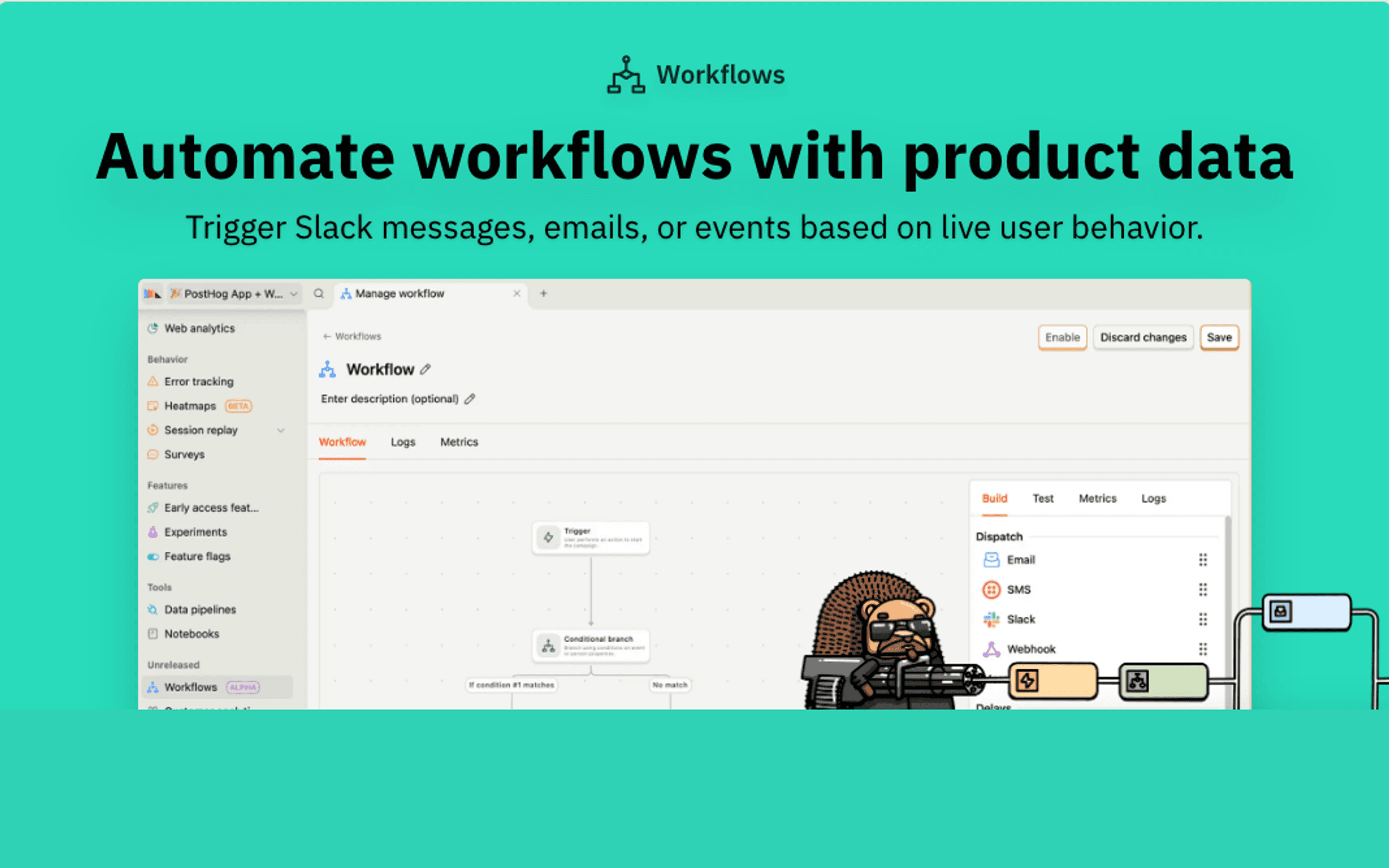
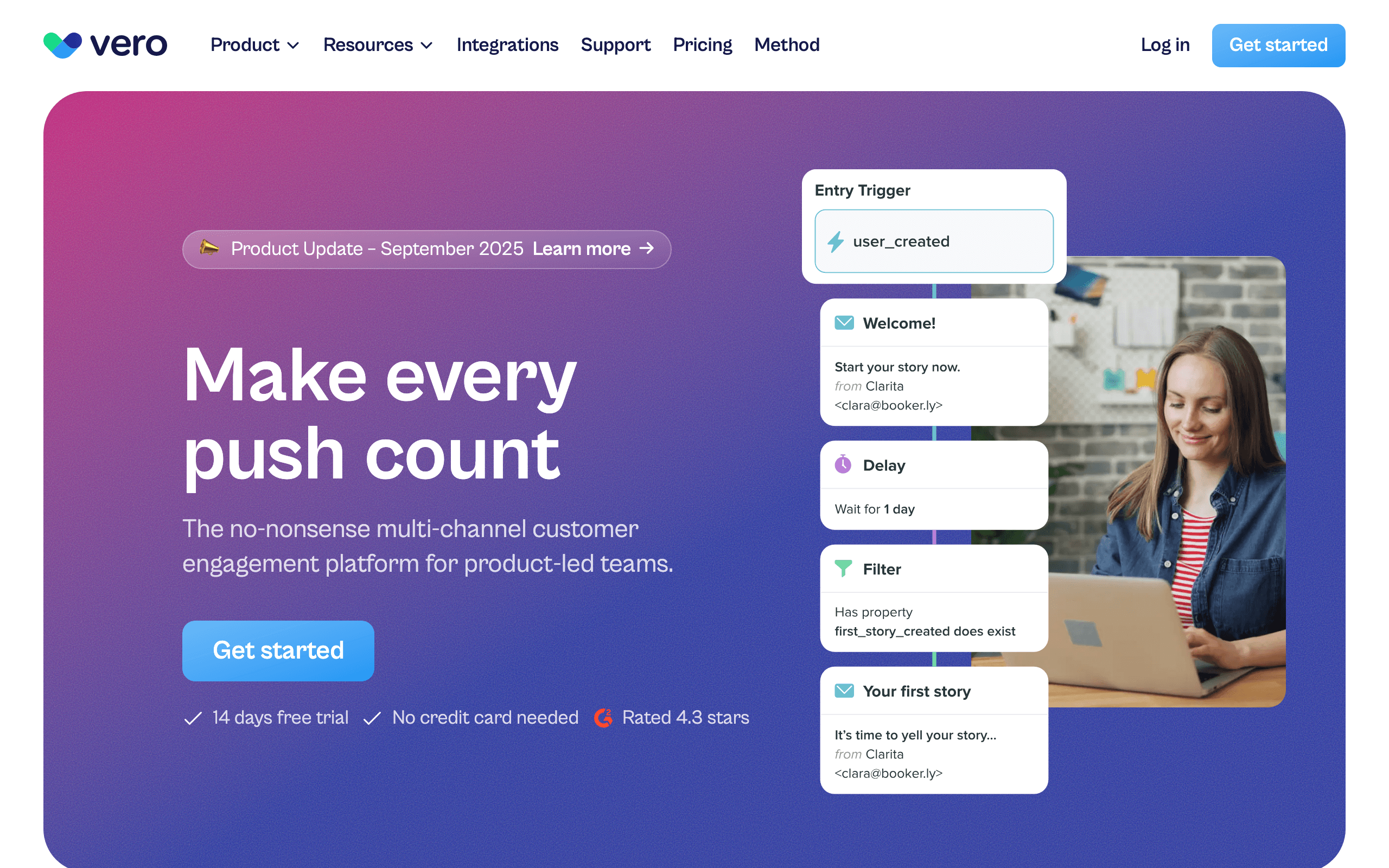
If you search for "workflows" in this space you will find both. Vero Workflows is the automation half of Vero's messaging platform; Vero Newsletters is the broadcast half. PostHog Workflows is the automation feature inside PostHog's product analytics suite.
The overlap is genuine. Both let you trigger a sequence of messages from a tracked event, wait, branch on user properties and send email. For many simple onboarding flows, you could build the same thing in either. The differences show up in what else you need to send, where your event data should live, and how your costs grow.
Channels: push is the dividing line
Vero's Starter plan includes 20,000 iOS and Android push messages a month next to 10,000 emails. Professional adds SMS. For a mobile or hybrid app, one tool can reach a user on their phone and in their inbox from the same workflow.
PostHog Workflows sends email, posts to Slack, sends SMS through a Twilio account you connect, calls webhooks and updates person properties. PostHog has been rolling out push notifications for Workflows as a beta. For a web app, PostHog's channel list covers you. For a mobile app, Vero's included push is a real reason to choose it.
Data: one event stream or two
Vero keeps its own record of users and events, organized for messaging. You send data through its API or SDKs, and every workflow and newsletter segment reads from it. PostHog Workflows reads the event stream you already send to PostHog for analytics. There is nothing to forward and no second schema to keep in sync.
A messaging tool's data model can be designed around what a lifecycle marketer needs: clean user attributes, message history, newsletter segments. An analytics tool's data model is designed for funnels and retention, with messaging layered on top. Teams with a dedicated lifecycle owner often prefer the former; product teams that already debate every event name in PostHog often prefer not to maintain a second tracking plan.
The 5,000-profile ceiling
The pricing tension in this pair is Vero Starter's limits. Starter includes 5,000 user profiles and 160,000 tracked events a month. Pass either and you move to Professional, which has unlimited profiles and custom volumes but is priced after a demo. There is no published middle step.
That matters for web SaaS products, which often accumulate signups faster than they send email. PostHog Workflows has no profile limit; users you do not email cost nothing in Workflows. If you choose Vero while keeping PostHog, forward only the events your workflows need, because sending your entire PostHog stream would consume the Starter event allowance quickly.
Pricing reality in three scenarios
| Scenario | PostHog Workflows | Vero | Sequenzy |
|---|---|---|---|
| Web SaaS, 4,000 users, 8,000 emails a month | Free (under 10,000 emails) | Starter $54 (annual billing) | $19 covers 15,000 emails |
| Mobile app, 4,000 users, 8,000 emails and 15,000 push | Emails free; push in beta | Starter $54 covers both | $19, push included |
| Web SaaS, 12,000 users, 30,000 emails a month | 20,000 x $0.003 = about $60 | Professional, custom quote | $29 covers 30,000 emails |
PostHog figures exclude your PostHog analytics bill. Vero's Starter price assumes annual prepayment with its 10% discount.
Push allowance and the mobile question
If you ship an iOS or Android app, count how many push messages your lifecycle program would send. Vero bundles 20,000 a month on Starter, which covers a meaningful onboarding and re-engagement program for a small app. In PostHog, push is newer and priced as a destination dispatch after 10,000 free, so it can work, but it has less history. A web-only SaaS can skip this section.
Workflows side by side
Vero: trigger on a "trial started" event sent from your backend, wait one day, check whether "project created" occurred, send an email or a push notification depending on whether the user has the app installed, then add engaged users to a newsletter segment for product updates.
PostHog: trigger on the "trial started" event PostHog already captured, wait one day, branch on whether the user is in the "created a project" cohort, send an email, and post to the sales Slack channel if the account matches your ideal customer profile.
Vero's version reaches more channels. PostHog's version needs no new tracking and includes an internal action.
Who each tool expects to run it
Vero assumes a lifecycle owner who spends time in the tool writing newsletters, adjusting workflow copy and checking message performance. PostHog assumes a product owner who lives in funnels and cohorts and adds an automation when the data shows a gap. If nobody on your team will open a messaging tool every week, PostHog's approach avoids a tool that goes unattended.
Review signals
On G2, Vero Cloud reviewers praise its interface for automation, its API, responsive and knowledgeable support, and pricing that lowered costs for some teams switching from other platforms. Criticisms include slowness with large data volumes, a UI some find clunky when setting up sends, and one reviewer's report of deliverability slightly below their previous platform. Independent reviews of PostHog Workflows specifically are still limited because it is newer.
Use-case matchups
| Need | Better fit | Why |
|---|---|---|
| Email and push from one workflow in a mobile app | Vero | Push is included on Starter |
| Regular newsletters for a lifecycle team | Vero | Dedicated Newsletters product |
| Nudges from PostHog funnels with no new tracking | PostHog Workflows | Uses existing events and cohorts |
| Slack alert when a target account activates | PostHog Workflows | Internal dispatches built in |
| Trial and renewal emails from Stripe | Sequenzy | Native billing sync |
Where Sequenzy fits
Sequenzy is an email platform for SaaS. Compared with Vero, it also sends web, iOS and Android push, but it has no native mobile SDKs, so mobile-first apps should weigh that. Compared with PostHog Workflows, it gives email a full workspace: campaigns, sequences, transactional templates and reporting.
Its specific additions are native Stripe sync for billing triggers, a PostHog integration that receives events through a PostHog destination with optional history import from PostHog Cloud, AI-drafted sequences, and unlimited contacts on every plan with published tiers. Pricing is by emails sent: free for 2,500 a month, $19 for 15,000, $29 for 30,000 and $49 for 60,000.
Migration checklist
| Workstream | PostHog Workflows to Vero | Vero to PostHog Workflows |
|---|---|---|
| Tracking | Install Vero tracking or forward selected PostHog events | Confirm the same events exist in PostHog |
| Users | Import users with properties; watch the 5,000-profile limit | Ensure users are identified PostHog persons |
| Workflows | Rebuild in Vero Workflows | Rebuild; push steps need a replacement channel |
| Newsletters | Set up in Vero Newsletters | Move to a broadcast-capable email tool |
| Unsubscribes | Import PostHog opt-outs | Import Vero unsubscribes into the suppression list |
| Domain | Verify your sending domain in Vero | Verify your domain in PostHog |
Keep Slack and webhook actions in PostHog in either direction.
Decision checklist
- Choose Vero if you want a dedicated messaging platform with newsletters and mobile push, and your audience fits Starter or you are ready for a Professional quote.
- Choose PostHog Workflows if you track everything in PostHog and want automated email, Slack and webhook actions at per-message prices.
- Avoid Vero Starter if your user base will pass 5,000 profiles soon and you need a published price.
- Avoid PostHog Workflows if push is central to your retention program today.
- Consider Sequenzy if you are a web SaaS team whose key emails depend on billing events and you want unlimited contacts.