


Updated 2026-01-11

12 Vero Alternatives Worth Considering

Vero pioneered event-driven email marketing. But when pricing gets unclear or you need more channels, here are 12 alternatives worth exploring.

TL;DR

Quick answer: For SaaS with AI and Stripe sync, Sequenzy ($19/mo) handles behavioral triggers with simpler pricing. Customer.io is the enterprise choice for multi-channel behavioral. For e-commerce behavioral, Klaviyo is the standard. For pure transactional, Postmark offers better deliverability.

12 Best Vero Alternatives

Our Pick for SaaS Companies
#1
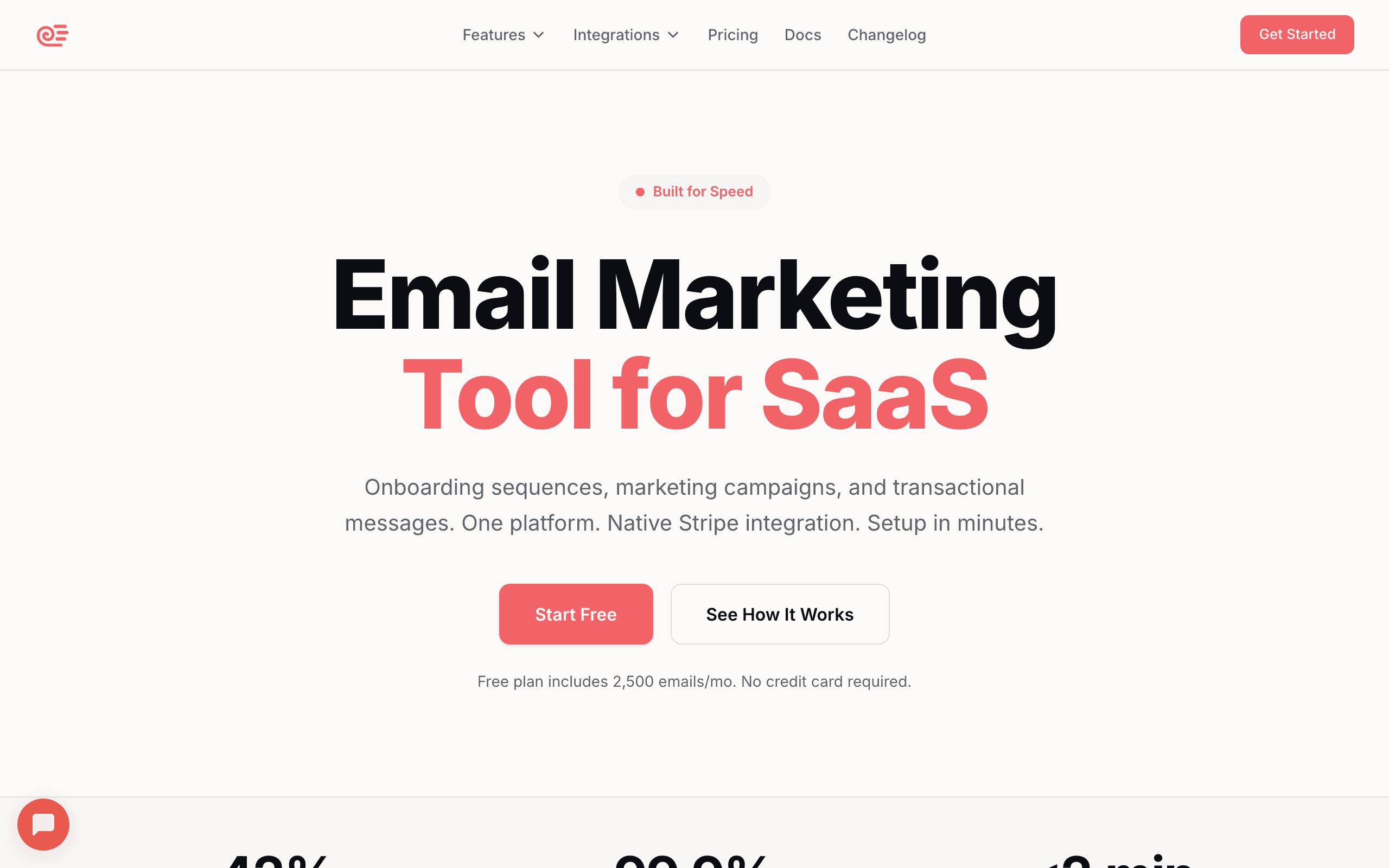
Sequenzy

SaaS-focused email with behavioral triggers, AI content generation, and native Stripe integration. Simpler pricing model than Vero with predictable costs.

Describe the automation you need — onboarding, re-engagement, churn prevention — and the AI writes the entire sequence, replacing the hours of copywriting that behavioral email setups usually demand. The native Stripe integration automatically syncs subscription events so billing changes trigger the right emails without building custom event pipelines. While Sequenzy's behavioral capabilities aren't as event-driven as Vero's real-time architecture, the per-subscriber pricing is completely predictable — no surprises when usage spikes. For SaaS teams that want behavioral email without the complexity of managing a custom event pipeline, Sequenzy offers a simpler path.

Visit
Best for
SaaS teams wanting behavioral email with AI and billing sync
Pricing
$49/month for 10k subscribers

Pros

  • AI generates complete email sequences
  • Native Stripe integration
  • Marketing + transactional together
  • Simple, predictable pricing
  • Behavioral triggers included

Cons

  • Less event-driven than Vero
  • No push notifications
  • No SMS
  • Newer platform
#2
Customer.io

The enterprise behavioral messaging platform. Multi-channel (email, push, SMS, in-app) with powerful event-driven automation.

Vero's closest competitor. Customer.io processes events in real time and triggers cross-channel messages with a workflow builder that handles complex branching logic, A/B testing, and conditional delays. The data model accepts any event or attribute through the API without predefined schemas, similar to Vero's flexible approach but with a larger ecosystem of native integrations. Multi-channel orchestration spans email, push, SMS, in-app, and webhooks from a single workflow. At $100/month for 5k profiles (Essentials), Customer.io costs more per contact than Vero, but the depth of behavioral automation, channel breadth, and enterprise-ready infrastructure make it the natural upgrade path for teams outgrowing Vero's capabilities.

Visit
Best for
Teams needing enterprise-grade behavioral multi-channel
Pricing
$100/month for 5,000 profiles (Essentials)

Pros

  • Most powerful behavioral automation
  • Multi-channel messaging
  • Excellent API for events
  • Real-time segmentation
  • Enterprise-ready

Cons

  • More expensive than Vero
  • Complex setup
  • Steep learning curve
  • Overkill for simple needs
#3
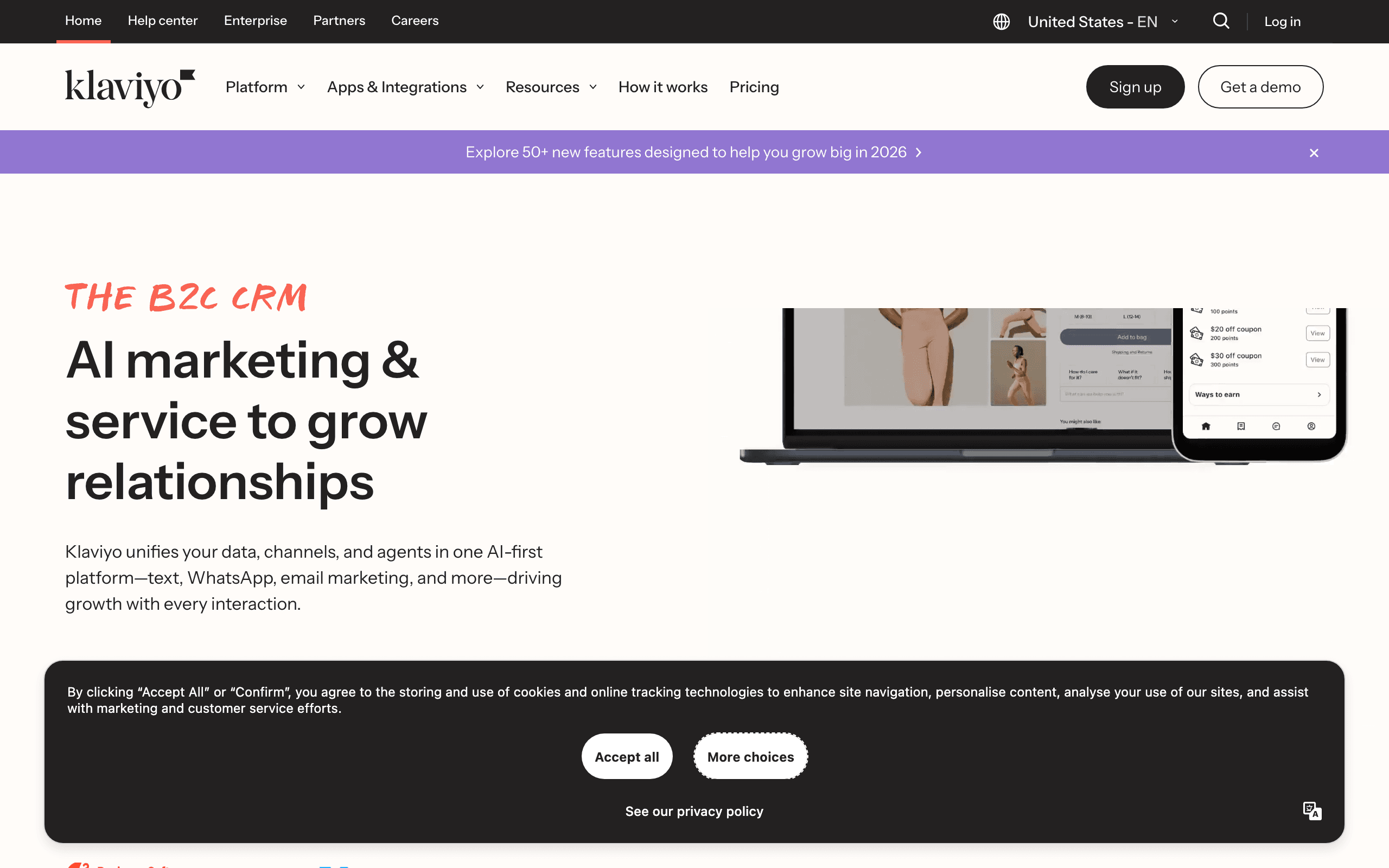
Klaviyo

E-commerce behavioral email with deep Shopify integration. Behavioral triggers for purchases, browses, and cart abandonment.

More e-commerce focused than Vero. Klaviyo's deep native integrations with Shopify, WooCommerce, BigCommerce, and Magento automatically pull in product catalog, order history, browsing behavior, and customer lifetime value data — the kind of behavioral data that Vero requires custom event tracking to access. Pre-built automation flows for abandoned carts, post-purchase sequences, browse abandonment, and win-back campaigns get you running in hours. Predictive analytics forecast customer churn risk and expected order date. At $150/month for 10k contacts with email + SMS included, Klaviyo is more expensive than Vero but delivers superior e-commerce behavioral capabilities out of the box.

Visit
Best for
E-commerce stores needing behavioral automation
Pricing
$150/month for 10,000 contacts

Pros

  • Best e-commerce behavioral triggers
  • Deep Shopify integration
  • Predictive analytics
  • Advanced segmentation
  • SMS included

Cons

  • E-commerce focused only
  • More expensive than Vero
  • Overkill for non-e-commerce
  • Complex pricing
#4
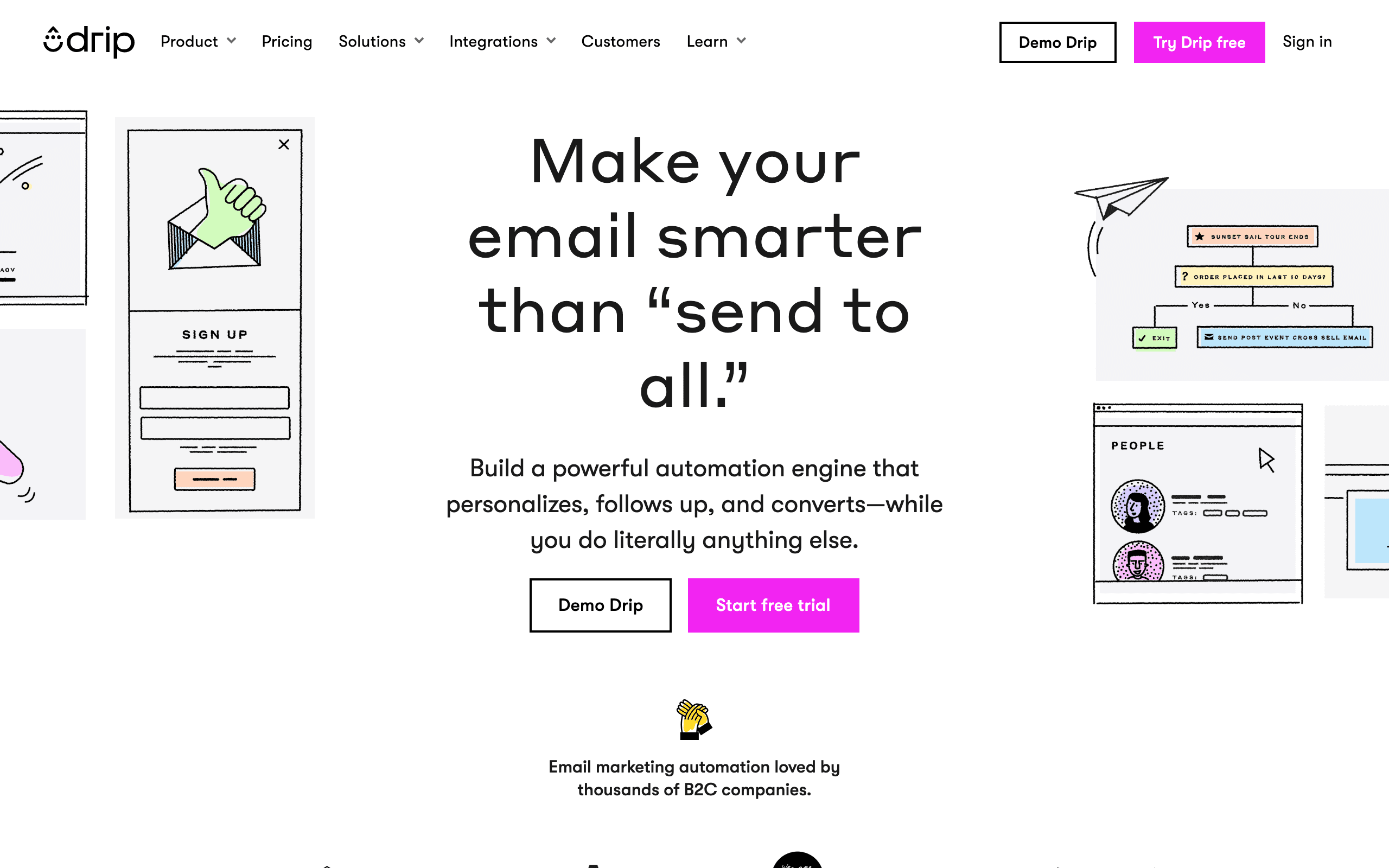
Drip

E-commerce behavioral email with visual workflow builder. Revenue attribution and event tracking similar to Vero's approach.

Drip's visual workflow builder lets you create sophisticated automation sequences with conditional branching, time delays, and multi-step flows triggered by user behavior. Revenue attribution tracks how each email and automation contributes to conversions, giving you clear ROI visibility that Vero's analytics don't emphasize as strongly. All features are included on every plan without tier gating. While Drip's positioning and integrations lean toward e-commerce, the underlying behavioral engine and event tracking capabilities make it usable for SaaS teams as well. At $184/month for 10k contacts, Drip is more expensive than Vero but includes everything without custom pricing negotiations.

Visit
Best for
E-commerce teams wanting visual behavioral automation
Pricing
$184/month for 10,000 contacts

Pros

  • Visual workflow builder
  • Revenue attribution
  • Event tracking
  • E-commerce focus
  • All features included

Cons

  • More expensive than Vero
  • E-commerce only focus
  • Limited non-e-commerce features
  • Expensive at scale
#5
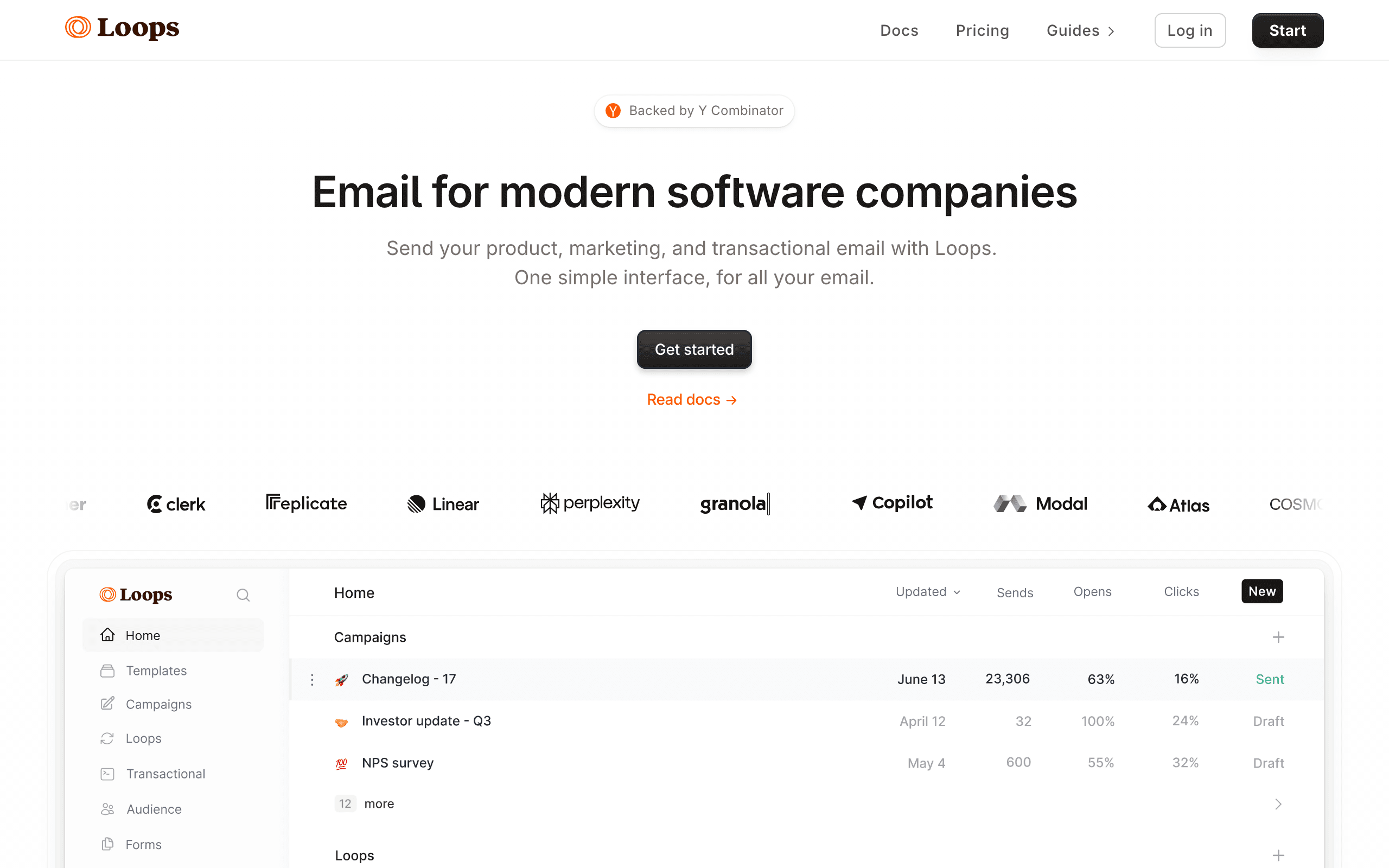
Loops

Modern SaaS email with transactional included. Event-based triggers but simpler than Vero.

Good for straightforward behavioral needs. Loops combines marketing campaigns, automation sequences, and transactional email in one clean interface with event-based triggers that fire on product actions. The developer experience is polished with good API docs and SDKs, and all features are included on every plan. Where Vero's power comes from deep event architecture and real-time processing, Loops takes a simpler approach to behavioral email that's faster to set up but less flexible for complex event-driven scenarios. At $99/month for 10k subscribers, Loops costs more than Vero's Starter but offers completely transparent pricing without the event-based cost variability that makes Vero's scaling unpredictable.

Visit
Best for
SaaS teams wanting clean behavioral + transactional
Pricing
$99/month for 10,000 subscribers

Pros

  • Built for SaaS
  • Transactional + marketing
  • Event-based triggers
  • Clean interface
  • Good deliverability

Cons

  • Less event power than Vero
  • No multi-channel
  • Newer platform
  • Limited advanced segmentation
#6
Braze

Enterprise mobile-first behavioral platform. Push, email, in-app, SMS with AI optimization.

Far more expensive than Vero but for enterprise scale. Braze's real-time data streaming architecture processes user events and triggers cross-channel messages in milliseconds, making it the gold standard for behavioral engagement at enterprise scale. The Canvas journey builder handles complex multi-step, multi-channel orchestration with AI-powered send time and channel optimization. Content Cards, in-app messages, and push notifications are first-class capabilities alongside email. At $50k+/year minimum with custom enterprise pricing, Braze is orders of magnitude more expensive than Vero, but for consumer brands with millions of users and mobile apps, the behavioral engagement capabilities are unmatched. Only consider Braze if you've outgrown tools like Vero and Customer.io.

Visit
Best for
Enterprise mobile apps needing behavioral engagement
Pricing
Custom enterprise pricing ($50k+/year minimum)

Pros

  • Most powerful mobile engagement
  • AI-driven optimization
  • Real-time behavioral triggers
  • Enterprise scale
  • Advanced personalization

Cons

  • Enterprise pricing only
  • Complex implementation
  • Overkill for email-only
  • Long sales cycle
#7
Iterable

Enterprise cross-channel behavioral marketing. Email, push, SMS, in-app with journey orchestration.

Competes with Braze for enterprise. Iterable's Workflow Studio handles cross-channel behavioral orchestration with a visual builder that's more intuitive than many enterprise tools. AI-powered Send Time Optimization and Channel Optimization automatically determine the best time and channel for each user based on their historical engagement patterns. The data model is flexible and event-driven, similar to Vero's approach but at enterprise scale with dedicated infrastructure and SLA guarantees. At $50k+/year minimum, Iterable is significantly more expensive than Vero, but for growth-stage companies that need cross-channel behavioral capabilities with enterprise reliability, it bridges the gap between Vero and Braze with a more accessible onboarding process.

Visit
Best for
Enterprise teams needing cross-channel behavioral
Pricing
Custom enterprise pricing ($50k+/year minimum)

Pros

  • Cross-channel behavioral
  • Advanced journey builder
  • AI recommendations
  • Enterprise features
  • Strong integrations

Cons

  • Enterprise pricing only
  • Complex to implement
  • Long sales cycles
  • Overkill for most teams
#8
ActiveCampaign

Powerful automation with event tracking. Less behavioral-native than Vero but more versatile for CRM + email needs.

ActiveCampaign's automation builder is one of the most flexible in the market, with conditional branching, lead scoring, site tracking, and CRM pipeline automation in a single platform. While not as event-driven as Vero at its core, ActiveCampaign can track website visits, email engagement, and custom events to trigger sophisticated multi-step workflows. The built-in CRM adds deal tracking and sales automation that Vero doesn't offer. At $79/month for 10k contacts (Plus), ActiveCampaign costs more than Vero's Starter but delivers broader marketing and sales automation capabilities. Best for teams that need behavioral triggers alongside CRM and sales workflow automation rather than pure event-driven messaging.

Visit
Best for
Teams needing CRM + behavioral email
Pricing
$79/month for 10,000 contacts (Plus)

Pros

  • Powerful automation builder
  • CRM included
  • Site tracking events
  • Conditional logic
  • Good deliverability

Cons

  • Not behavioral-first like Vero
  • Event tracking is add-on
  • Complex for simple needs
  • Less real-time than Vero
#9
Postmark

Best deliverability for transactional email. If Vero's transactional sending has issues, Postmark's strict sender policies ensure inbox placement.

Postmark maintains industry-leading delivery speeds (average under 10 seconds to inbox) by aggressively policing their sender base — sketchy senders get removed, keeping shared IP reputation pristine. Message Streams separate transactional and broadcast email with independent reputation tracking, so marketing sends can't impact your password reset deliverability. The API is clean with excellent error handling, and human support responds quickly. At $15/month for 10k emails, Postmark is laser-focused on transactional delivery. The tradeoff is that there's zero behavioral marketing — no segmentation, no automation, no event-driven campaigns. If you need both behavioral marketing and reliable transactional delivery, pair Postmark with a marketing tool rather than relying on Vero for both.

Visit
Best for
Teams needing guaranteed transactional delivery
Pricing
$15/month for 10,000 emails

Pros

  • Exceptional deliverability
  • Strict sender policies
  • Clean API
  • Message streams
  • Human support

Cons

  • Transactional only
  • No behavioral marketing
  • No automation
  • Just sending, no triggers
#10
Sendgrid

Email API with marketing add-on. Behavioral capabilities through Marketing Campaigns, but less sophisticated than Vero's event-driven approach.

SendGrid has processed billions of emails since 2009 with rock-solid infrastructure and global scale. The platform offers both a transactional email API and Marketing Campaigns for newsletters and basic automation. SDKs exist for every major programming language with extensive documentation. At $19.95/month for 50k emails, the pricing is volume-based and straightforward. Where SendGrid falls short compared to Vero is behavioral sophistication — the marketing features feel bolted onto the transactional core rather than built around event-driven messaging. For teams that primarily need reliable email delivery with some basic marketing automation, SendGrid handles the job at scale. For deep behavioral targeting, Vero or Customer.io are better suited.

Visit
Best for
Teams wanting API + basic marketing
Pricing
$19.95/month for 50,000 emails (Essentials)

Pros

  • Proven at scale
  • Transactional + marketing
  • API-first approach
  • Good documentation
  • Twilio ecosystem

Cons

  • Basic behavioral triggers
  • Marketing feels bolted on
  • DX is dated
  • Deliverability varies
#11
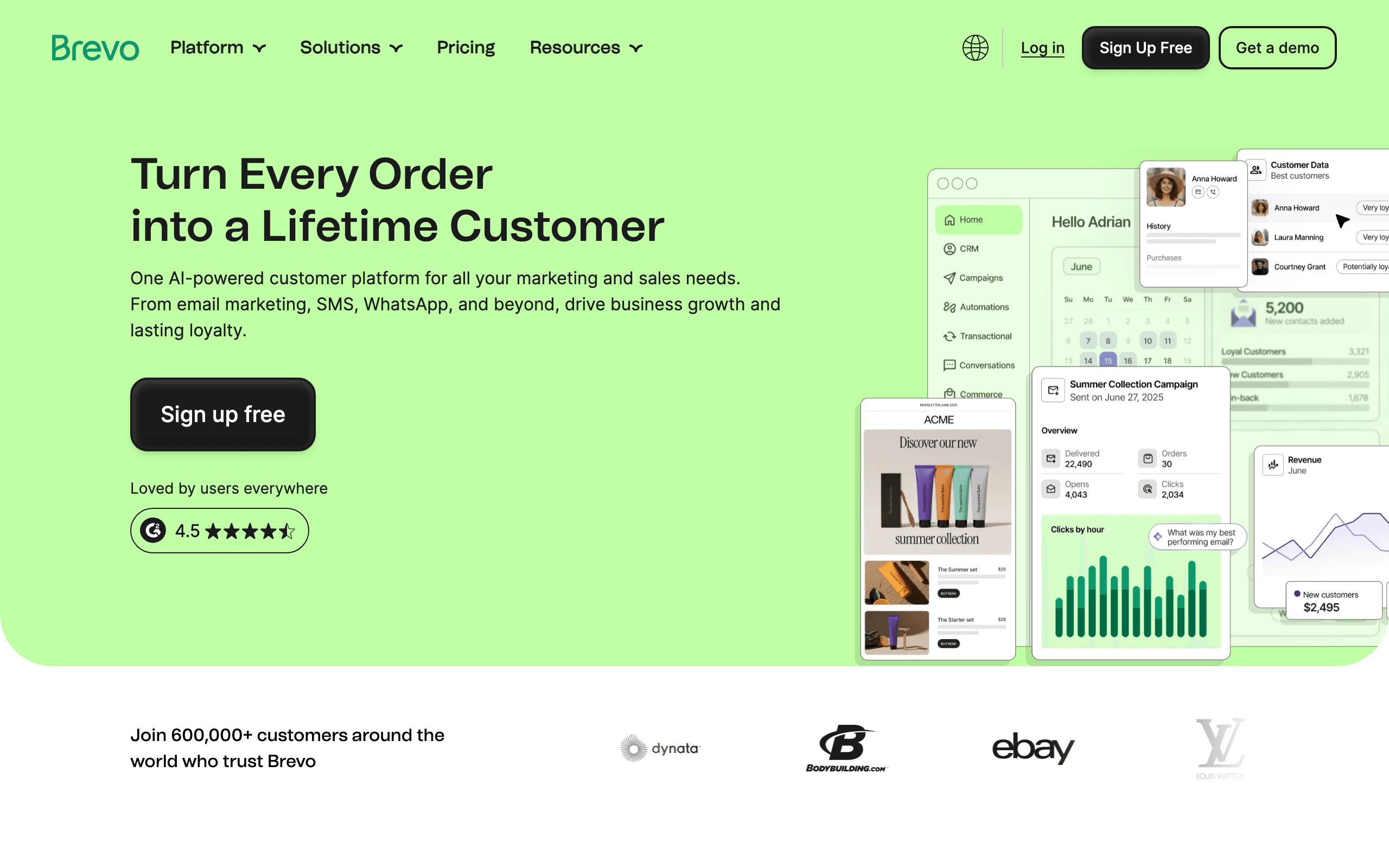
Brevo

Budget-friendly with unlimited contacts. Some behavioral triggers through automation, but less sophisticated than Vero's event architecture.

Brevo combines email marketing, transactional email, SMS, and a basic CRM with unlimited contacts and pay-per-email pricing starting at $25/month. The automation builder supports triggers based on email engagement, website visits, and some behavioral events, though it's nowhere near Vero's real-time event-driven sophistication. For teams whose behavioral needs are basic — "send email when user does X" without complex event pipelines — Brevo covers the essentials at a fraction of Vero's cost. The unlimited contacts model is particularly attractive for large databases with moderate sending volumes, avoiding the per-contact pricing that makes most behavioral platforms expensive at scale.

Visit
Best for
Budget-conscious teams
Pricing
$25/month for unlimited contacts (20k emails)

Pros

  • Unlimited contacts
  • Very affordable
  • SMS included
  • Transactional + marketing
  • Basic automation

Cons

  • Basic behavioral triggers
  • Not event-driven like Vero
  • Interface is dated
  • Less real-time
#12
Resend

Modern transactional email with best DX. No behavioral marketing but if Vero's transactional feels clunky, Resend is the modern alternative.

Resend's React Email library lets you build email templates using JSX components instead of HTML tables, and the API is arguably the cleanest in the email space with intuitive endpoints, excellent error messages, and modern TypeScript-first SDKs. The free tier includes 3,000 emails/month for testing, and paid plans start at $20/month for 50k emails. Like Postmark, Resend is purely transactional — no behavioral marketing, no automation, no event-driven campaigns. But if Vero's transactional sending experience feels dated and you want modern DX for your transactional emails while using another tool for behavioral marketing, Resend is the best developer experience available today.

Visit
Best for
Developers wanting modern transactional DX
Pricing
$20/month for 50,000 emails

Pros

  • Best developer experience
  • React Email integration
  • Modern SDKs
  • Clean API
  • Good deliverability

Cons

  • Transactional only
  • No behavioral marketing
  • No automation
  • Need second tool for marketing

Why Consider Alternatives to Vero

Pricing can be unpredictable at scale

Vero's pricing model based on events and channels can become unclear as you scale. Teams report surprise costs when usage spikes. Alternatives like Sequenzy offer simpler per-subscriber pricing.

Smaller company with less ecosystem

Vero is a smaller player compared to Customer.io or Klaviyo. Fewer integrations, smaller community, and less third-party content for learning best practices.

Multi-channel is limited

Vero added push and SMS but they're not as mature as dedicated multi-channel platforms. Customer.io, Braze, or Iterable offer deeper cross-channel behavioral orchestration.

Event architecture can be complex

Vero's event-driven approach is powerful but requires solid data engineering. If your team isn't ready to pipe events properly, simpler alternatives may work better.

Feature Comparison

FeatureVeroSequenzyCustomer.ioKlaviyoLoopsBraze
Price at 10k
$54+
$49
$100*
$150
$99
Enterprise
Event-driven
Basic
Basic
Transactional
Multi-channel
Email + Push + SMS
Email only
All channels
Email + SMS
Email only
All channels
AI content
Real-time
Good
Good
Ease of use
Medium
Easy
Complex
Medium
Easy
Complex

When to Use Each Platform

Choose Sequenzy if...
  • You want predictable pricing for SaaS
  • AI-generated email content appeals to you
  • Stripe billing sync is valuable
  • Simpler behavioral triggers are sufficient
Choose Stay with Vero if...
  • Event-driven architecture is core to your strategy
  • Current pricing works for your usage
  • You've invested in Vero's event pipeline
  • Multi-channel (push + SMS) matters
Choose Customer.io if...
  • You need enterprise-grade behavioral
  • Multi-channel orchestration is critical
  • Budget allows for premium tooling
  • Complex event-driven journeys are required
Choose Klaviyo if...
  • You run an e-commerce store
  • Behavioral triggers for shopping actions matter
  • Deep Shopify integration is essential
  • Revenue tracking is critical

Why people leave Vero

Vero pioneered event-driven email marketing, and their approach is genuinely powerful. Tracking customer behavior in real-time and triggering emails based on actual actions—not just time delays—is the future of email marketing. But Vero has tradeoffs. The pricing model based on events, channels, and data retention can become opaque at scale, with teams reporting surprise costs when usage spikes. As a smaller player compared to Customer.io or Klaviyo, Vero's integration ecosystem and community support are more limited, which means more custom development work for your team. For a deeper look at behavioral email tools, check our guide to best email marketing tools for SaaS.

The pricing unpredictability

Vero's pricing model based on events, channels, and data retention can become opaque as you scale. Teams report budget surprises when usage spikes. Alternatives like Sequenzy offer simpler per-subscriber pricing that's easier to budget.

Smaller ecosystem

Vero is excellent but smaller than competitors like Customer.io or Klaviyo. Fewer native integrations, smaller community for troubleshooting, and less third-party content for learning best practices. If you need extensive ecosystem support, larger players offer more.

Event architecture requires investment

Vero's power comes from its event-driven architecture—but that power requires investment. You need clean event tracking, proper data engineering, and a team that understands how to pipe events correctly. If that's not your strength, simpler tools may serve you better.

The alternatives, honestly

If you want simpler SaaS email: Sequenzy

Sequenzy offers behavioral triggers for SaaS without the complexity of Vero's event architecture. Describe what you want ("trigger an email when a user hasn't logged in for 7 days") and AI helps create the sequence. Stripe integration syncs billing events automatically.

At $49/mo, the pricing is simple and predictable. The tradeoff: less sophisticated event-driven architecture than Vero. But for many SaaS companies, Sequenzy's approach is sufficient.

If you need enterprise behavioral: Customer.io

Customer.io is Vero's closest competitor at enterprise scale. Multi-channel messaging (email, push, SMS, in-app, webhooks), powerful behavioral automation, and a larger ecosystem of integrations.

At $100/mo for 5,000 profiles (Essentials), it's more expensive than Vero per contact. But the power, multi-channel capabilities, and enterprise features justify it for teams who need them.

If you sell online: Klaviyo

Klaviyo is the behavioral email standard for e-commerce. Deep Shopify integration, behavioral triggers for browse/cart/purchase actions, and predictive analytics that understand shopping patterns.

Vero can do e-commerce behavioral, but Klaviyo's focus means better integrations and pre-built flows. At $150/mo for 10k contacts, you're paying for that focus.

If you need guaranteed delivery: Postmark

Vero includes transactional email, but if deliverability is critical, Postmark offers strict sender policies that ensure inbox placement. At $15/mo for 10k emails, it's affordable insurance for password resets and critical notifications.

The catch: Postmark is transactional only—no behavioral marketing. You'd need a second tool for campaigns.

The pricing reality

Behavioral email platform pricing comparison:

  • Vero Starter: ~$54/month (limits on events/retention)
  • Sequenzy: $49/month for 10,000 subscribers (120k emails) (simpler triggers)
  • Customer.io Essentials: $100/month for 5k profiles
  • Loops: $99/month for 10k subscribers
  • Klaviyo: $150/month for 10k contacts (e-commerce)
  • Braze/Iterable: $50k+/year (enterprise only)

See our pricing page for detailed Sequenzy comparison.

When Vero is still right

Vero wins if:

  • Event-driven architecture is core to your marketing strategy
  • You've invested in proper event tracking infrastructure
  • Multi-channel (email + push + SMS) in one platform matters
  • Current pricing is predictable for your usage
  • You value behavioral-first approach over features

Don't switch because alternatives look easier. Vero's event-driven approach is powerful if you're set up for it. But if pricing is unpredictable, you need simpler tooling, or your team isn't ready for event architecture, alternatives offer genuine improvements. Use our email validator to clean your list before migrating, and check your DMARC settings to maintain deliverability.

Frequently Asked Questions

Ready to try Sequenzy?

Start your free trial today. AI-generated sequences, Stripe integration, and direct founder support included.

Sequenzy vs Vero: Direct Comparison

See a detailed side-by-side comparison of features, pricing, and when to choose each platform.

Compare →

More Alternatives

Sequenzy - Complete Pricing Guide

Pricing Model

Sequenzy uses subscriber-based pricing. You only pay for subscribers active in sequences (automations). Inactive subscribers are free to store.

All Pricing Tiers

  • 0-100 subscribers: Free (Free annually) - 3k emails/month
  • 101-1,000 subscribers: $19/month ($205/year annually) - 15k emails/month
  • 1,001-5,000 subscribers: $29/month ($313/year annually) - 60k emails/month
  • 5,001-10,000 subscribers: $49/month ($529/year annually) - 120k emails/month
  • 10,001-25,000 subscribers: $99/month ($1069/year annually) - 300k emails/month
  • 25,001-50,000 subscribers: $199/month ($2149/year annually) - 600k emails/month
  • 50,001-100,000 subscribers: $349/month ($3769/year annually) - 1.2M emails/month
  • 100,000+ subscribers: Custom pricing (Custom annually) - Unlimited emails/month

Yearly billing: All plans offer a 10% discount when billed annually.

Free Plan Features (2,500 emails/month)

  • Visual automation builder
  • Transactional email API
  • Reply tracking & team inbox
  • Goal tracking & revenue attribution
  • Dynamic segments
  • Payment integrations
  • Full REST API access
  • Custom sending domain

Paid Plan Features (1,000 - 100,000 subscribers)

  • Visual automation builder
  • Transactional email API
  • Reply tracking & team inbox
  • Goal tracking & revenue attribution
  • Dynamic segments
  • Payment integrations (Stripe, Paddle, Lemon Squeezy)
  • Full REST API access
  • Custom sending domain

Enterprise Plan Features (100,000+ subscribers)

  • Visual automation builder
  • Transactional email API
  • Reply tracking & team inbox
  • Goal tracking & revenue attribution
  • Dynamic segments
  • Payment integrations
  • Full REST API access
  • Custom sending domain

Important Pricing Notes

  • You only pay for subscribers who are active in automations/sequences
  • Storing inactive subscribers is free
  • No hidden fees - all features included in the price
  • No credit card required for free tier

Contact

  • Pricing Page: https://sequenzy.com/pricing
  • Sales: hello@sequenzy.com