
Compare customer-led marketing analytics against simple email campaigns
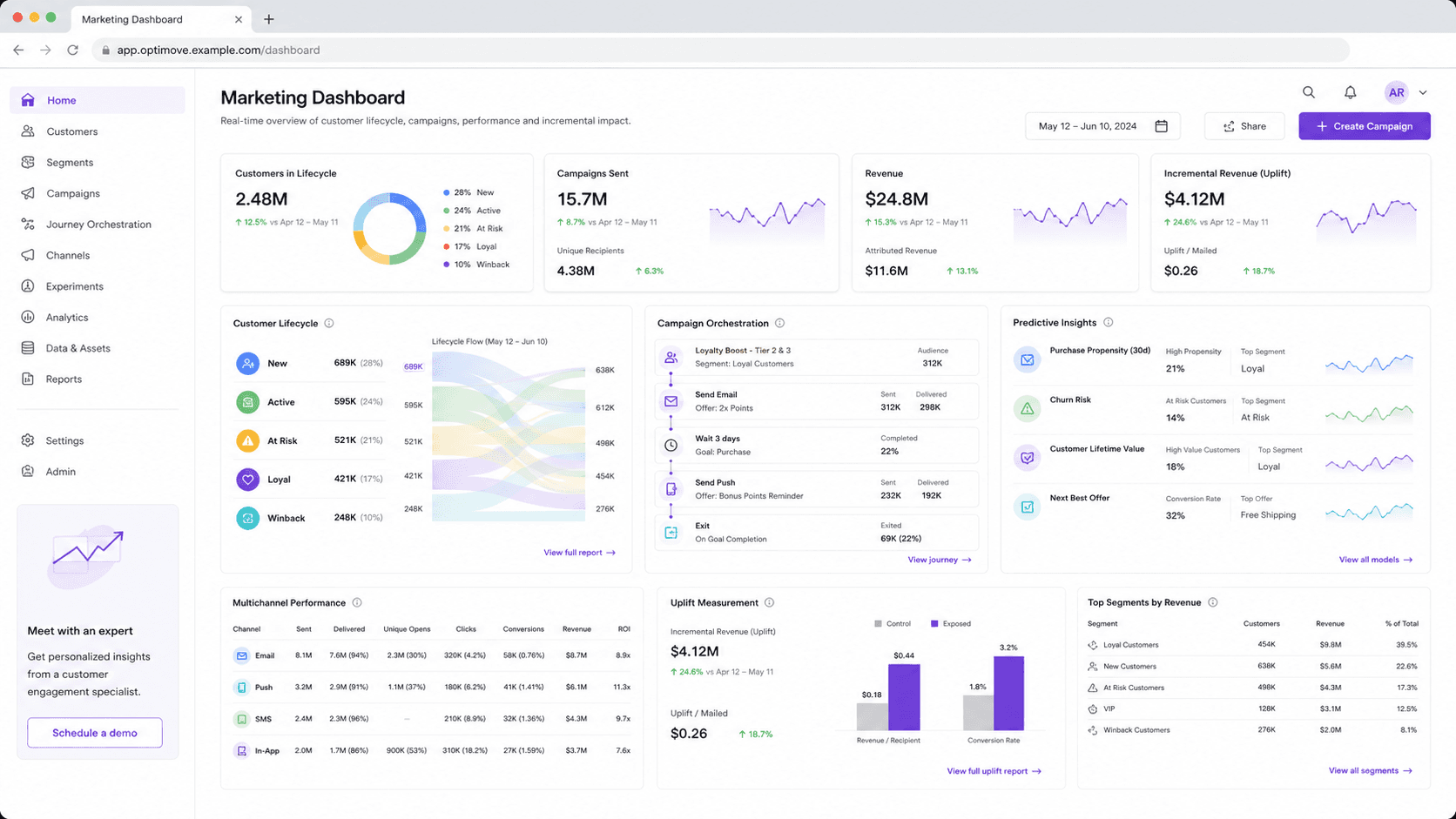
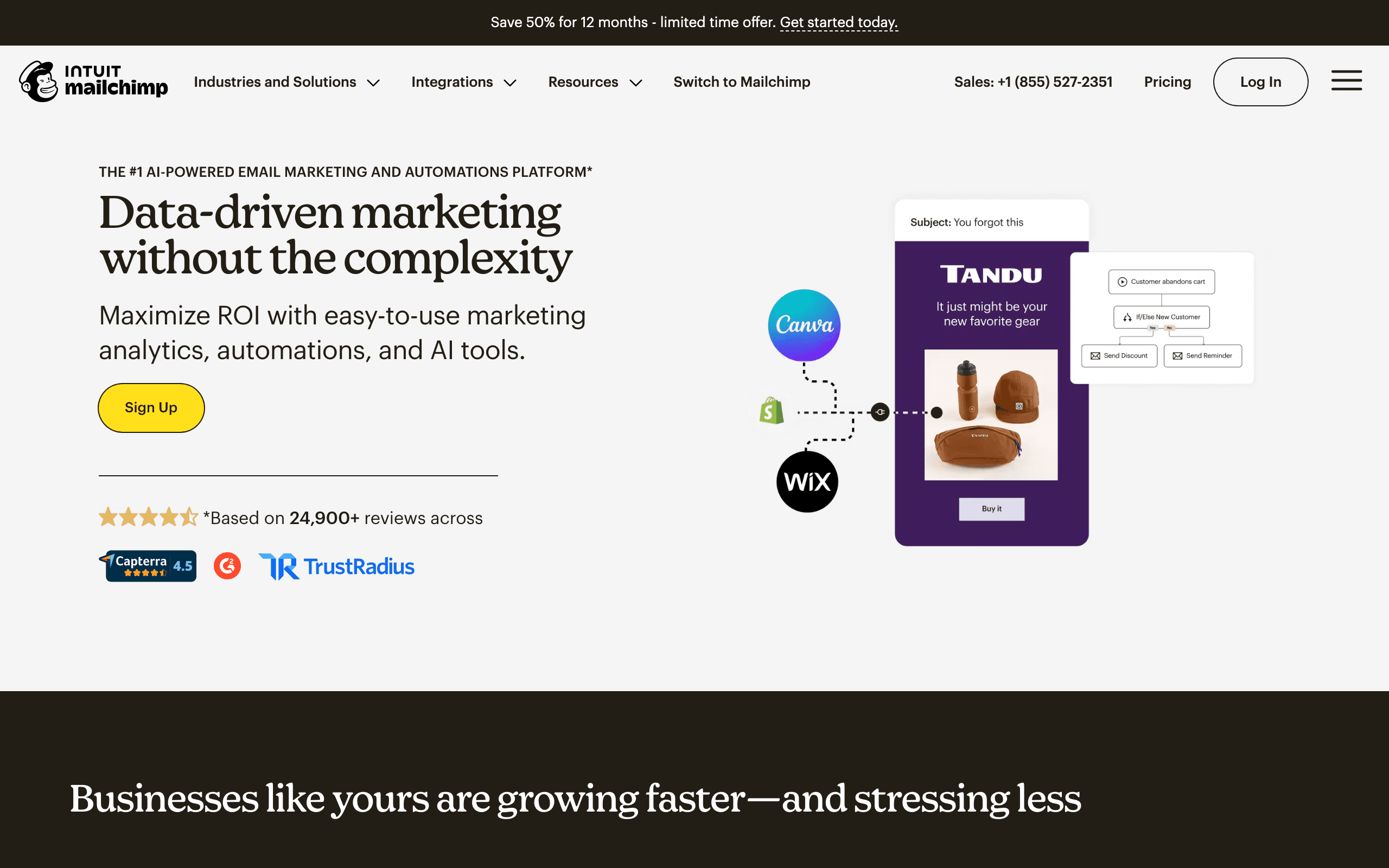
Optimove and Mailchimp usually serve different teams. Optimove is for customer-led marketing: predictive segments, journey orchestration, customer analytics, and campaign prioritization. Mailchimp is for accessible email marketing: newsletters, forms, templates, and basic automations.
The buying question is whether the team needs a retention decision engine or a simpler campaign tool.
Use-case table
| Use case | Better starting point | Why |
|---|---|---|
| Predictive segmentation and customer lifecycle strategy | Optimove | Optimove is more relevant when customer analytics guides campaign decisions. |
| Newsletters, simple automations, forms, and templates | Mailchimp | Mailchimp is easier to adopt when email needs are straightforward. |
| Retention team manages many customer states and offers | Optimove | Optimove is stronger when campaign prioritization and segmentation depth matter. |
| Small team wants familiar campaign creation | Mailchimp | A general email tool is enough when there is no advanced retention strategy. |
| Email automation plus transactionals | Sequenzy | Sequenzy fits when Mailchimp is too general but Optimove is too heavy. |
Where Optimove is stronger
Optimove is stronger when the business has enough customer data to segment by value, behavior, lifecycle state, risk, and opportunity. It is useful when marketers need to coordinate many campaigns and avoid treating every subscriber the same.
It is not the simplest tool for basic newsletters or owner-operated campaigns.
Where Mailchimp is stronger
Mailchimp is stronger when the team wants a familiar email marketing product. It is easier for smaller teams that need forms, newsletters, templates, and simple automations without a larger data project.
Before moving from Optimove to Mailchimp, confirm whether advanced segment logic, customer scores, or campaign-priority rules are actually needed.
Pricing reality
Optimove pricing should be justified by customer analytics and predictive retention strategy. Mailchimp pricing should be modeled around contacts, sends, plan gates, templates, forms, and whether the broader marketing suite is actually used.
Review signals
The cited Optimove review themes point to predictive segmentation, journey orchestration, customer analytics, multichannel campaigns, setup effort, and pricing clarity. The cited Mailchimp review themes should be read for campaign usability, templates, integrations, broad adoption, and pricing as contacts grow. The review split is predictive retention orchestration versus familiar general email marketing.
Migration checklist
- Identify which Optimove segments are strategic and which are just static lists.
- Export contacts, suppressions, templates, custom fields, and campaign history.
- Decide which customer scores or lifecycle states can be simplified.
- Rebuild core newsletters and automations before retiring advanced campaigns.
- Compare performance by customer segment, not only total sends.
Buying questions to ask
- Is the team using predictive customer analytics today?
- What segmentation depth must survive the migration?
- Can Mailchimp handle the real number of audiences, tags, and fields cleanly?
- Who decides campaign priority without Optimove?
- What reporting is required for retention strategy?
Use-case matchups
| Need | Better fit | Why |
|---|---|---|
| Enterprise retention analytics and campaign priority | Optimove | Optimove fits teams that need customer intelligence, not just campaign sending. |
| General email marketing and audience campaigns | Mailchimp | Mailchimp is easier to justify when the work is newsletters, templates, and standard automations. |
| Store and subscription email without broad marketing-suite overhead | Sequenzy | Sequenzy fits focused ecommerce and SaaS email workflows. |
Best Fit by Marketing Stack Maturity
Best retention platform for enterprise customer intelligence
Optimove fits teams that need customer analytics, scoring, and campaign priority rather than a general-purpose email marketing tool.
Best email marketing platform for newsletters and broad SMB campaigns
Mailchimp is the better fit when the team needs templates, audiences, campaigns, landing pages, and standard automations across many small-business use cases.
Best email platform for focused store and subscription lifecycle
Sequenzy fits when the team needs ecommerce or SaaS email workflows without Mailchimp's broader marketing-suite overhead or Optimove's enterprise layer.
Decision checklist
- Choose Optimove if retention strategy and customer prioritization justify an enterprise platform.
- Choose Mailchimp if the team mainly needs general email marketing.
- Avoid Optimove if predictive retention work is not happening.
- Avoid Mailchimp if audience tags and campaigns cannot represent the customer strategy.
- Consider Sequenzy if the buyer needs focused lifecycle and transactional email.
Where Sequenzy fits
Sequenzy is the focused alternative when the team needs ecommerce and subscription email automation, newsletters, transactionals, and Stripe lifecycle messages without Optimove-level analytics or Mailchimp's broader marketing suite.
How to make the Optimove vs Mailchimp decision
| Decision area | Pick Optimove when... | Pick Mailchimp when... |
|---|---|---|
| Primary workflow | Its core strength matches the campaign you need next. | Its core strength matches the campaign you need next. |
| Data model | Your customer data already fits its segments and triggers. | Your customer data already fits its segments and triggers. |
| Team ownership | Someone can own setup, testing, and reporting inside the tool. | Someone can own setup, testing, and reporting inside the tool. |
| Budget | The price is justified by workflows you will use now. | The price is justified by workflows you will use now. |








