Enterprise ecommerce platform or familiar marketing tool
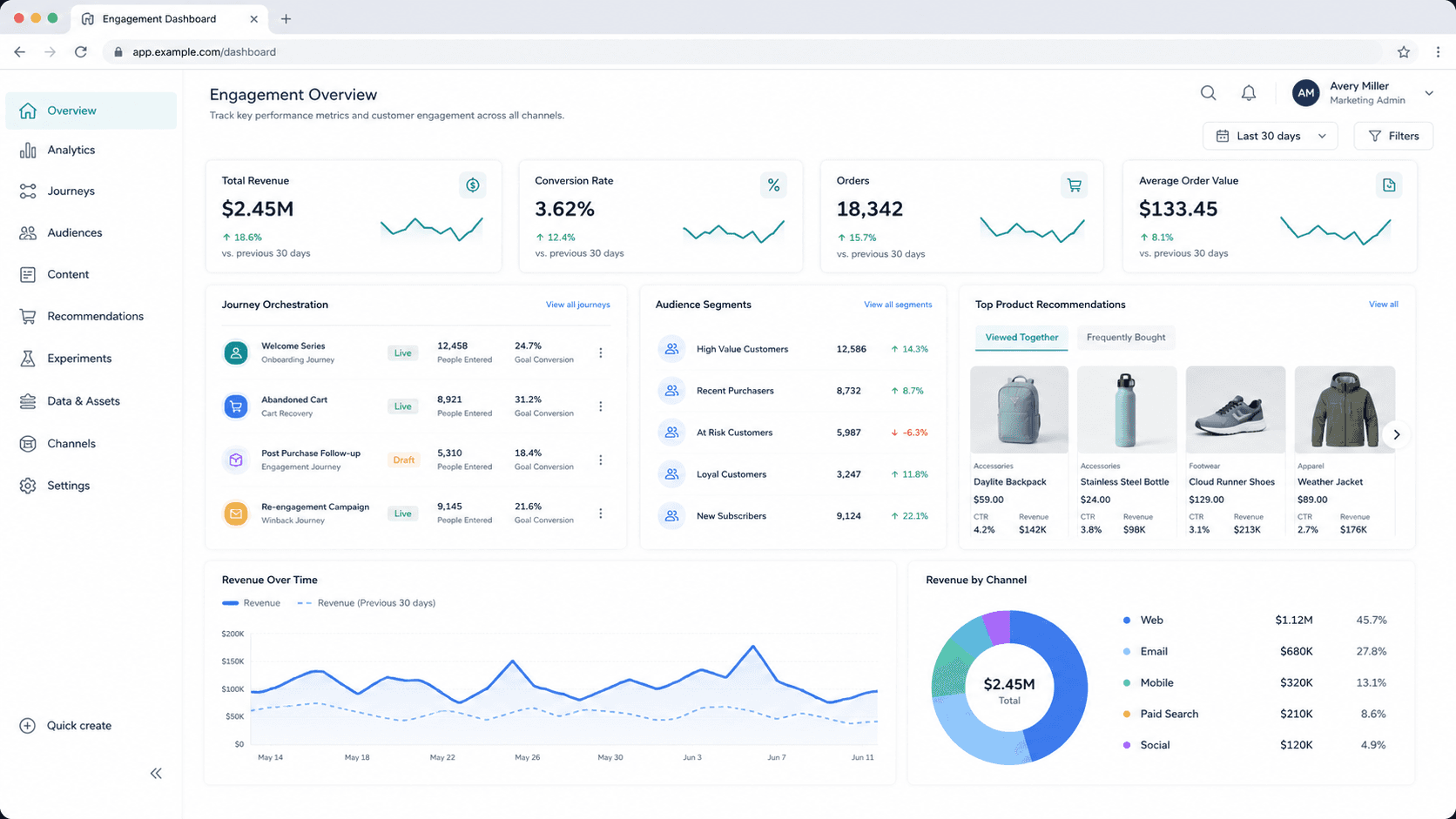
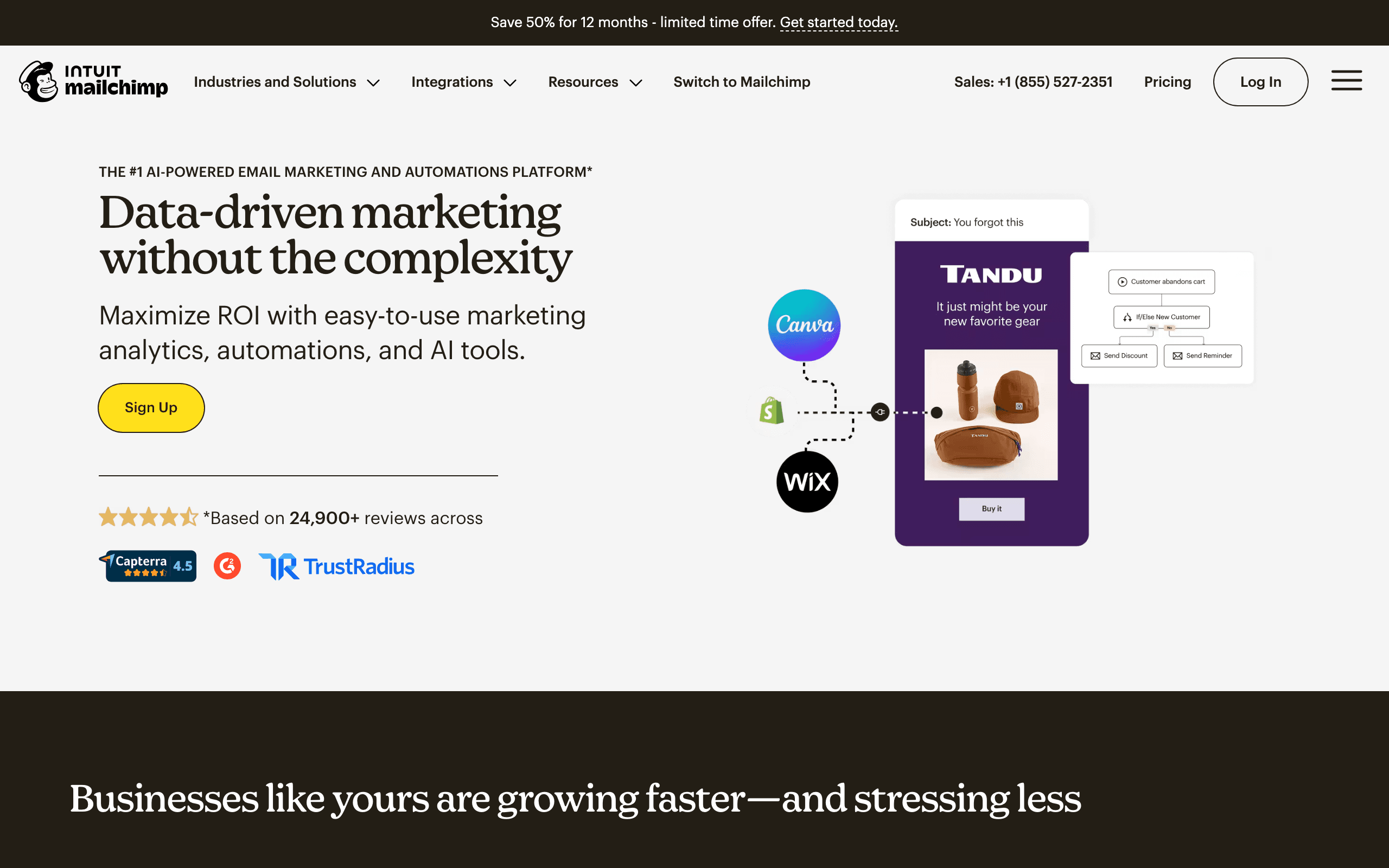
Bloomreach and Mailchimp are not close substitutes for most teams. Bloomreach belongs in the conversation when the company wants enterprise ecommerce personalization, customer data activation, and more advanced journey orchestration. Mailchimp belongs in the conversation when the team wants a familiar marketing platform for newsletters, basic automations, templates, landing pages, and broad small-business marketing workflows.
That means Mailchimp can be the better choice even when Bloomreach is more powerful. If the team does not have the data complexity, implementation capacity, or personalization roadmap to use Bloomreach well, the extra platform depth can become overhead. If the team has already outgrown basic campaign tooling and needs personalization tied to ecommerce behavior and product data, Mailchimp will likely feel too general.
Pricing reality
Bloomreach pricing needs direct procurement modeling around modules, data volume, ecommerce events, channels, implementation services, support, and contract terms. Mailchimp pricing needs modeling around contacts, send volume, plan tier, add-ons, transactional email, SMS if used, and how unsubscribed contacts are handled. Do not compare these tools on advertised entry prices alone; compare the team, data, and operating cost required to run each stack.
Use-case matchups
| Need | Better fit | Why |
|---|---|---|
| Enterprise ecommerce personalization | Bloomreach | Bloomreach is built for data-rich ecommerce programs and cross-channel personalization. |
| Simple newsletters and basic marketing campaigns | Mailchimp | Mailchimp is easier for teams that value familiarity, templates, and broad marketing basics. |
| Product and behavioral segmentation at scale | Bloomreach | Bloomreach is stronger when segmentation depends on deeper commerce data. |
| Non-technical marketing team with lighter automation needs | Mailchimp | Mailchimp usually asks less from the team during setup and daily operation. |
| Focused Shopify/WooCommerce email automation | Sequenzy | Sequenzy is narrower than Mailchimp and much lighter than Bloomreach for ecommerce email workflows. |
Best Fit by Ecommerce Depth and Marketing Simplicity
Best enterprise platform for ecommerce personalization
Bloomreach is the better fit when product and behavioral segmentation, customer data, catalog intelligence, recommendations, and cross-channel personalization are central. It should be evaluated when the team is ready for an enterprise ecommerce data project.
Best email marketing tool for simple newsletters and campaigns
Mailchimp is the better fit when the team wants familiar templates, basic campaigns, landing pages, audience management, and lighter automation without deep commerce data work. It is strongest when marketing simplicity matters more than personalization depth.
Best email tool for focused Shopify and WooCommerce automation
Sequenzy is the better fit when ecommerce email needs to stay focused on Shopify, WooCommerce, Stripe lifecycle, transactional messages, and newsletters. It is lighter than Bloomreach and more lifecycle-specific than a general marketing suite.
How to avoid the wrong purchase
Choose Bloomreach only if the buyer can name the personalization use cases, data sources, implementation owner, and success metrics. A vague desire for "more advanced marketing" is not enough. Choose Mailchimp only if the team is comfortable with a generalist platform and does not need Bloomreach-level ecommerce data activation.
For ecommerce teams, the middle ground is important. Some stores do not need a full enterprise personalization stack, but they also need more commerce-aware automation than a broad newsletter platform provides. That is where evaluating dedicated ecommerce email tools makes sense.
Review signals
The structured reviews on this page are intentionally summarized as review themes rather than individual verified quotes. Bloomreach review themes point to CDP depth, ecommerce reporting, and fit for mature retention teams, with setup effort and pricing clarity as cautions. Mailchimp review themes point to easier campaign work, integrations, and day-to-day usability, with pricing and advanced feature access as the main cautions.
Decision checklist
- Price both tools against your projected contacts, email volume, stores, users, and any SMS or add-on needs.
- List which ecommerce events must trigger automations: signup, browse, cart, checkout, purchase, refund, subscription, and winback.
- Confirm whether product recommendations, on-site personalization, and deep identity resolution are actual requirements.
- Ask the marketing team to rebuild one current campaign and one automation in each tool during evaluation.
- Check how each platform handles transactional messages, suppression lists, consent, unsubscribes, and deliverability controls.
- Review data export, API, and reporting limitations before moving historical data.
Migration checklist
- Export active lists, segments, tags, signup forms, templates, reports, and suppression data.
- Rebuild only the must-have automations first: welcome, cart recovery, post-purchase, newsletter, winback, and VIP.
- Preserve unsubscribe and consent state before importing contacts into the new system.
- Run seed tests across templates and automations before enabling live sends.
- Compare baseline revenue, open/click trends, unsubscribes, and bounce rates after migration.
Where Sequenzy fits
Sequenzy fits when Mailchimp is too general and Bloomreach is too heavy. It focuses on Shopify and WooCommerce email automation, transactional email, newsletters, and Stripe-aware lifecycle messages. It is not trying to replace Bloomreach CDP depth or Mailchimp's broad small-business toolkit; it is for stores that want practical ecommerce email without the suite.
How to make the Bloomreach vs Mailchimp decision
Bloomreach is the better fit when you need enterprise personalization and customer engagement. Mailchimp is the better fit when your team prefers its approach to email marketing and automation.
Look hardest at these differences: Bloomreach is stronger when CDP depth matters; Mailchimp may be easier for a different operating model; Sequenzy is the simpler email path. Those are the areas most likely to affect daily work after the demo is over.
| Decision area | Pick Bloomreach when... | Pick Mailchimp when... |
|---|---|---|
| Primary workflow | Its core strength matches the campaign you need next. | Its core strength matches the campaign you need next. |
| Data model | Your customer data already fits its segments and triggers. | Your customer data already fits its segments and triggers. |
| Team ownership | Someone can own setup, testing, and reporting inside the tool. | Someone can own setup, testing, and reporting inside the tool. |
| Budget | The price is justified by workflows you will use now. | The price is justified by workflows you will use now. |
My read: Choose Bloomreach if enterprise personalization and customer engagement is the main reason you are buying. Choose Mailchimp if its ecosystem, workflow, or pricing better matches how your team runs campaigns. Choose Sequenzy if you want a simpler email-first setup for Shopify, WooCommerce, or subscription lifecycle messages.