Compare customer-led retention intelligence against Salesforce-centered governance
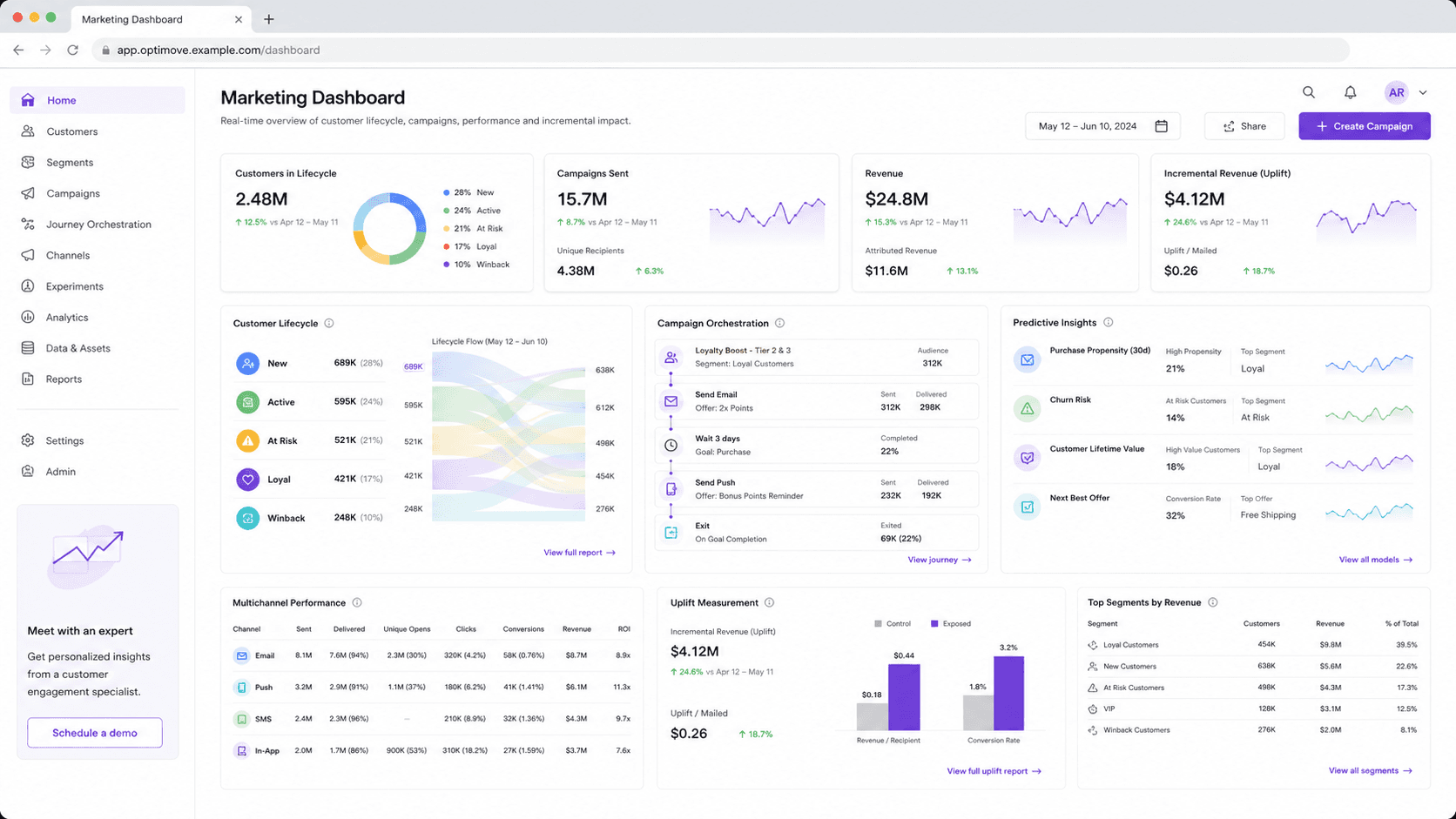
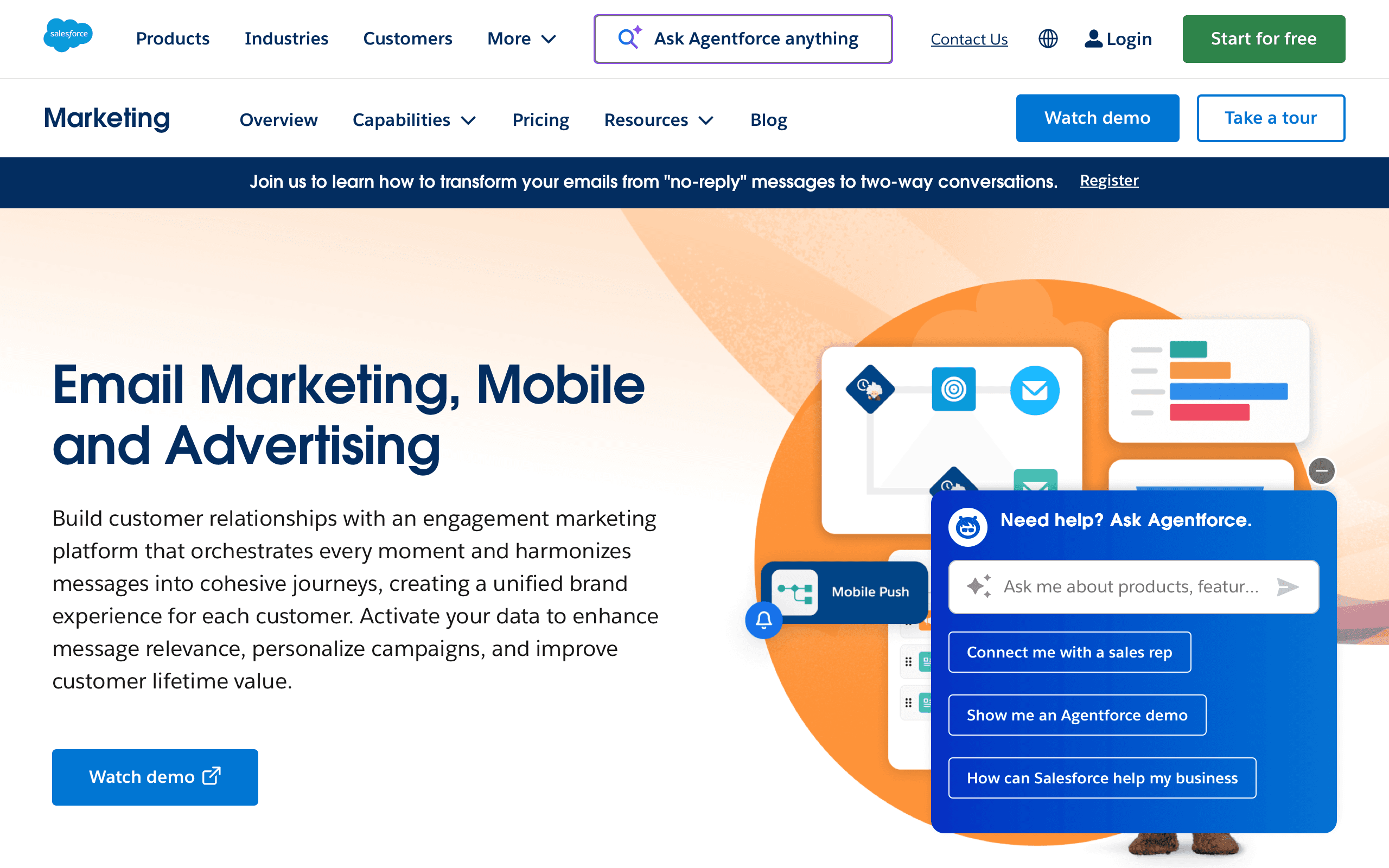
Optimove and Salesforce Marketing Cloud both fit larger marketing teams, but they answer different operating questions. Optimove focuses on customer-led retention: predictive segmentation, lifecycle states, campaign prioritization, and customer analytics. Salesforce Marketing Cloud focuses on enterprise marketing-cloud architecture: CRM-connected journeys, permissions, data extensions, business units, and governance.
The choice depends on whether the organization needs a retention intelligence layer or a Salesforce-centered engagement platform.
Use-case table
| Buying situation | Better starting point | Reason |
|---|---|---|
| Retention team wants predictive customer strategy | Optimove | Optimove is more directly aligned with customer states, value, and next-best campaigns. |
| Enterprise standardizes around Salesforce CRM | Salesforce Marketing Cloud | SFMC is more relevant when CRM architecture and governance are decisive. |
| Campaign priority and customer segmentation are the main challenges | Optimove | Optimove helps decide which campaign each customer should receive. |
| Multiple teams need shared data, permissions, and business units | Salesforce Marketing Cloud | Enterprise controls may matter more than retention modeling. |
| Email-first storefront and subscription lifecycle | Sequenzy | Sequenzy fits when the team does not need either enterprise system. |
Where Optimove is stronger
Optimove is stronger when marketing is organized around customer lifecycle strategy. It is useful for teams that need predictive segmentation, churn-risk thinking, campaign arbitration, and retention measurement by customer group.
It is less natural if the organization already runs marketing operations around Salesforce data structures and governance.
Where Salesforce Marketing Cloud is stronger
Salesforce Marketing Cloud is stronger when the business needs CRM-connected journeys, permissioning, business-unit separation, partner-led implementation, and a Salesforce-centered source of customer truth.
Before replacing Optimove, decide how predictive segments and campaign-priority logic will be represented inside the Salesforce model.
Pricing reality
Optimove pricing should be justified by customer lifecycle strategy and predictive retention orchestration. Salesforce Marketing Cloud pricing should be scoped around Salesforce data, selected modules, business units, contacts, implementation partner work, and admin ownership.
Review signals
The cited Optimove review themes point to predictive segmentation, journey orchestration, customer analytics, multichannel campaigns, setup effort, and pricing clarity. The cited Salesforce Marketing Cloud review themes should be read for enterprise journey management, Salesforce integration, governance, implementation effort, and module complexity. The review split is retention decisioning versus Salesforce-native enterprise orchestration.
Migration checklist
- Inventory Optimove customer models, lifecycle states, campaign priorities, and suppression logic.
- Map Salesforce data extensions, CRM fields, consent records, business units, and preference centers.
- Export templates, segments, performance baselines, and campaign history.
- Pilot one retention journey before migrating the full program.
- Compare reporting by customer state, not only by campaign send.
Buying questions to ask
- Is the goal customer-led retention intelligence or Salesforce governance?
- Which SFMC modules and implementation services are required?
- Who owns data extensions, permissions, QA, and preference management?
- How will customer scores and lifecycle states be maintained?
- What reporting proves retention lift after migration?
Use-case matchups
| Need | Better fit | Why |
|---|---|---|
| Customer-led retention intelligence | Optimove | Optimove is stronger when the main need is customer scoring and campaign priority. |
| Salesforce-governed enterprise marketing operations | Salesforce Marketing Cloud | SFMC is stronger when Salesforce governance, data extensions, and enterprise operations are required. |
| Focused ecommerce and subscription email | Sequenzy | Sequenzy fits when neither predictive orchestration nor SFMC complexity is needed. |
Best Fit by Enterprise Governance
Best CRM marketing platform for customer scoring and campaign priority
Optimove fits teams that need a retention-focused layer for customer intelligence, treatment decisions, and lifecycle campaign prioritization.
Best marketing cloud for Salesforce-governed enterprise operations
Salesforce Marketing Cloud is the better fit when Salesforce alignment, data extensions, governance, and complex enterprise marketing operations are required.
Best email platform for focused ecommerce and subscription workflows
Sequenzy fits when neither predictive orchestration nor Salesforce Marketing Cloud complexity is needed for the actual email program.
Decision checklist
- Choose Optimove if retention strategy and customer decisioning matter most.
- Choose Salesforce Marketing Cloud if Salesforce ecosystem governance is the core requirement.
- Avoid Optimove if enterprise Salesforce alignment is non-negotiable.
- Avoid Salesforce Marketing Cloud if its implementation complexity outweighs the need.
- Consider Sequenzy if focused email automation and transactionals are enough.
Where Sequenzy fits
Sequenzy is the pragmatic email-first option for Shopify/WooCommerce automations, newsletters, transactional email, and Stripe lifecycle messages when neither predictive orchestration nor Salesforce Marketing Cloud complexity is needed.
How to make the Optimove vs Salesforce Marketing Cloud decision
Optimove is the better fit when you need CRM marketing orchestration. Salesforce Marketing Cloud is the better fit when your team prefers its approach to email marketing and automation.
| Decision area | Pick Optimove when... | Pick Salesforce Marketing Cloud when... |
|---|---|---|
| Primary workflow | Its core strength matches the campaign you need next. | Its core strength matches the campaign you need next. |
| Data model | Your customer data already fits its segments and triggers. | Your customer data already fits its segments and triggers. |
| Team ownership | Someone can own setup, testing, and reporting inside the tool. | Someone can own setup, testing, and reporting inside the tool. |
| Budget | The price is justified by workflows you will use now. | The price is justified by workflows you will use now. |