
Overview
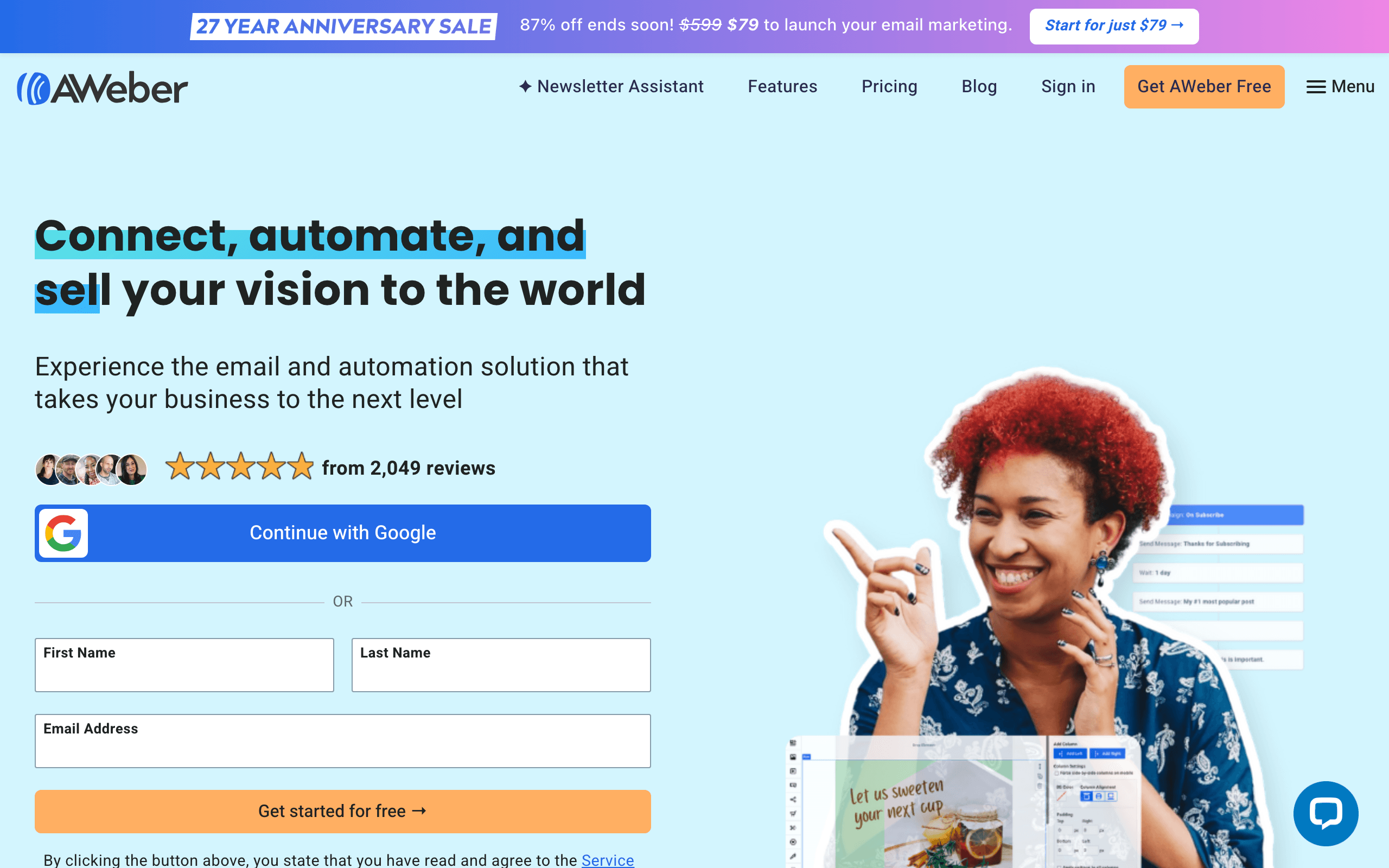
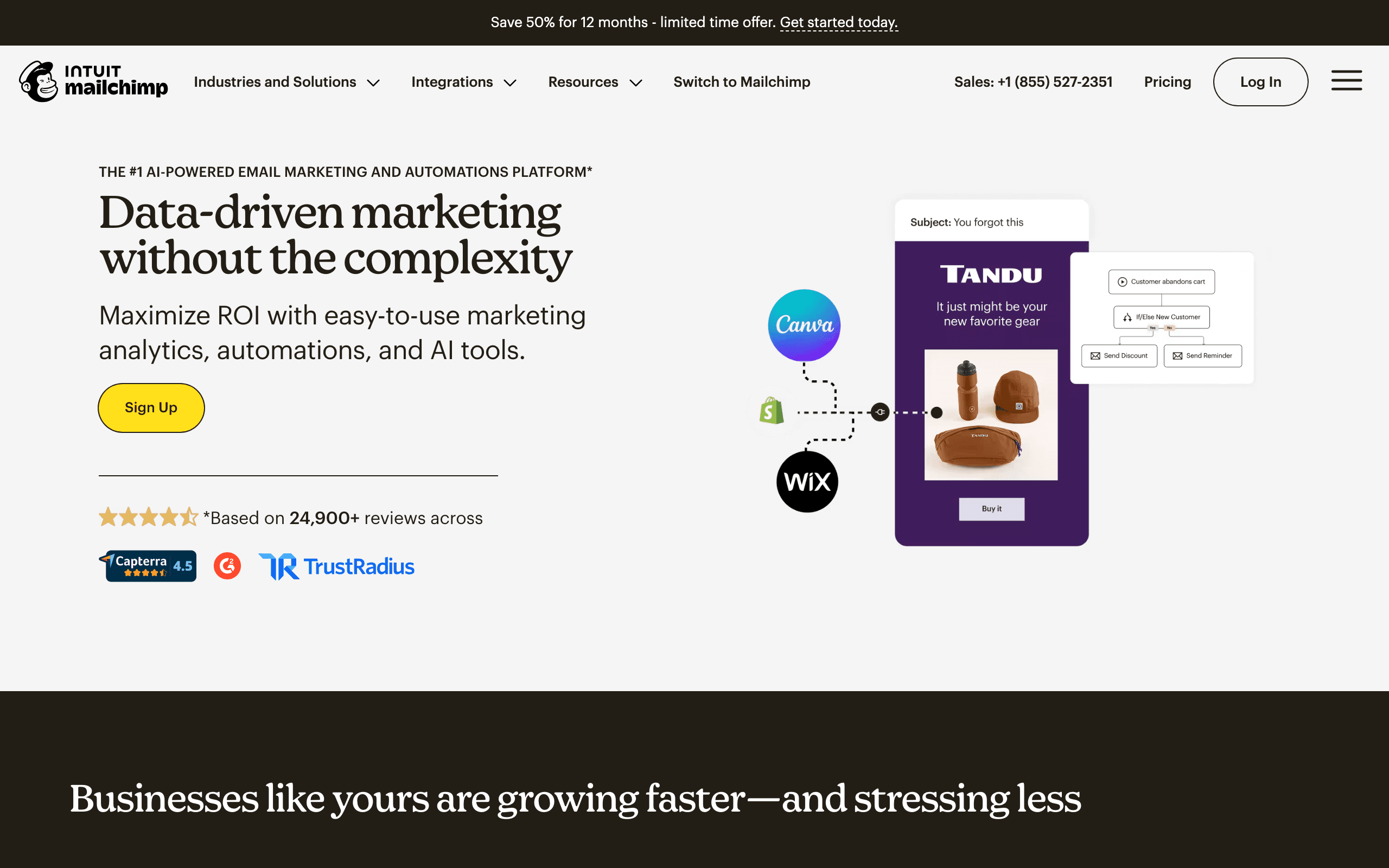
AWeber and Mailchimp are both email marketing veterans. AWeber invented the autoresponder in 1998. Mailchimp launched in 2001 and became the most recognized email marketing brand globally. Check our Mailchimp comparison for more detailed analysis.
The choice often comes down to what you value: AWeber's reliability and support or Mailchimp's features and ecosystem.
The Core Difference
AWeber has stayed focused on classic email marketing: reliable delivery, list management, templates, autoresponders, and support. It has built much of its reputation around inbox placement and direct help for smaller teams.
Mailchimp evolved from email marketing into a broader marketing platform. They've added landing pages, CRM features, social ads, and advanced automation. The feature set is larger, but so is the complexity.
Pricing reality
Do not make the decision from one old 10,000-contact price example. Compare current plans by active subscribers, all-contact billing, send limits, support access, automations, ecommerce features, and whether unsubscribed or non-marketing contacts count.
The value difference is still clear: AWeber is more focused on support and classic email operations, while Mailchimp offers broader marketing features.
Billing rules can change, so verify how each platform treats unsubscribed, archived, cleaned, non-subscribed, and inactive contacts before importing a list.
Where AWeber Wins
Deliverability: AWeber has a strong deliverability reputation, but your results still depend on authentication, list quality, content, and sending behavior.
Customer Support: AWeber is often stronger when direct support access matters. Confirm current support channels by plan before buying.
Template Library: AWeber emphasizes quick template creation and classic newsletter workflows.
Simplicity: Fewer features means less complexity. AWeber is easier to learn and use for straightforward email marketing.
Where Mailchimp Wins
Automation: Mailchimp is stronger for broader customer journeys and small-business marketing workflows.
E-commerce: Deeper integrations with Shopify and WooCommerce. Product recommendations, revenue tracking, and e-commerce analytics are more mature.
Ecosystem: Mailchimp is a household name. This matters for agencies, enterprise procurement, and stakeholder buy-in.
Advanced Features: Predictive analytics, send time optimization, and behavioral targeting. Mailchimp has invested heavily in AI and machine learning.
For SaaS Companies
Neither AWeber nor Mailchimp is built for SaaS. Both are general email marketing tools without subscription billing awareness.
If you're running a SaaS company and want automation that triggers based on Stripe events - trial expiry, failed payments, plan upgrades - consider Sequenzy. It's designed specifically for software businesses with transactional email and billing integration built in.
Sequenzy is narrower than both, but more directly aligned with ecommerce and subscription lifecycle email.
The Contact Billing Controversy
One of the most important practical differences to verify is how each platform counts contacts. Check whether unsubscribed, cleaned, archived, non-subscribed, or inactive contacts count toward billing. This can materially change total cost after migration.
For businesses with significant list churn, billing rules can matter as much as the advertised monthly plan. Use an email validator to keep your list clean regardless of which platform you choose.
Brand Recognition vs Product Quality
Mailchimp's brand recognition is unmatched in email marketing. The Freddie logo, the Super Bowl ads, and the podcast sponsorships have made Mailchimp synonymous with email marketing for many people. This brand power matters for agency recommendations, enterprise procurement, and stakeholder buy-in. Choosing Mailchimp is a safe, defensible decision.
AWeber lacks this brand cachet but has quietly maintained a reputation for excellent deliverability and support among long-time users. The question is whether brand recognition should influence your platform decision. If you need to justify your choice to non-marketing stakeholders, Mailchimp's name carries weight. If you are evaluating purely on merit, AWeber competes effectively on deliverability and support quality.
The Support Quality Divide
AWeber's support positioning is one reason long-time users stay. For small businesses that depend on their email platform and cannot afford extended downtime, direct support access can be genuinely valuable.
Mailchimp support access depends on plan and account type, so verify the current support channels you will actually receive before choosing it for a business-critical list.
Use-case matchups
| Use case | Better fit | Why |
|---|---|---|
| Classic newsletter sending and direct support | AWeber | It is easier when list communication and support access are the core job. |
| Ecommerce and broader campaign ecosystem | Mailchimp | It is stronger when store data and general marketing tools matter. |
| Teams sensitive to contact billing rules | AWeber | The page positions active-subscriber billing as a practical advantage to verify. |
| Small-business journeys and predictive marketing | Mailchimp | Mailchimp has broader automation and marketing ecosystem depth. |
| SaaS lifecycle and transactional email | Sequenzy | Both are general marketing tools without native subscription billing awareness. |
Review signals
The AWeber reviews on this page praise deliverability, support, Smart Designer, simplicity, and the ability to call for help. That is a strong signal for lean teams that value direct support over ecosystem breadth.
The Mailchimp reviews highlight ecommerce journeys and Shopify fit, while warning about pricing, all-contact billing, and support access. That makes Mailchimp better for broader marketing only when the extra ecosystem is worth those tradeoffs.
Migration checklist
Before moving between AWeber and Mailchimp, export contacts, tags, segments, suppression lists, forms, templates, automations, campaign history, and signup sources. Confirm sender authentication, unsubscribe handling, contact billing rules, and first campaign reporting before shutting off the old account. Rebuild only the active welcome, newsletter, reactivation, ecommerce, and lead magnet workflows first.
Best Fit by Email Marketing Maturity
Best email marketing tool for classic newsletters
Choose AWeber when the team wants dependable newsletters, simple automation, direct support, and fewer moving parts. It is a strong fit for businesses that value inbox reliability and help access over a broad marketing ecosystem.
Best email marketing tool for beginner ecommerce campaigns
Choose Mailchimp when ecommerce integrations, product blocks, audience growth tools, and broader campaign options matter more than simplicity. The tradeoff is that contact billing and support access need to be checked before committing.
Best email marketing tool for support-sensitive small businesses
Choose the platform based on how often the team will need hands-on help. AWeber's support advantage can matter more than feature count when a small team depends on campaigns going out correctly every week.
Decision checklist
- Choose AWeber if deliverability support, simpler email operations, and classic newsletters matter most.
- Choose Mailchimp if ecommerce integrations, broader campaigns, and general marketing tools matter most.
- Avoid AWeber if advanced marketing journeys and ecommerce automation are the main requirements.
- Avoid Mailchimp if support access, billing rules, or feature bloat are likely to frustrate the team.
- Consider Sequenzy if subscription lifecycle, transactional email, and Stripe-triggered automations are the real need.









