Updated 2026-06-05
Bluecore
HubSpot

Bluecore vs HubSpot

retail product intelligence versus email marketing and automation

11
Features Compared
3
Key Differences
2
User Reviews
5
FAQs Answered
TL;DR

Bluecore is the better fit when you need retail product intelligence. HubSpot is the better fit when your team prefers its approach to email marketing and automation. Choose Bluecore when shopper identity and product catalog intelligence matter most. Choose HubSpot when its workflow, ecosystem, or pricing fits your team better. Choose Sequenzy if you mainly need affordable Shopify/WooCommerce email automation without a heavier ecommerce suite.

Platform Overview

See how each platform looks

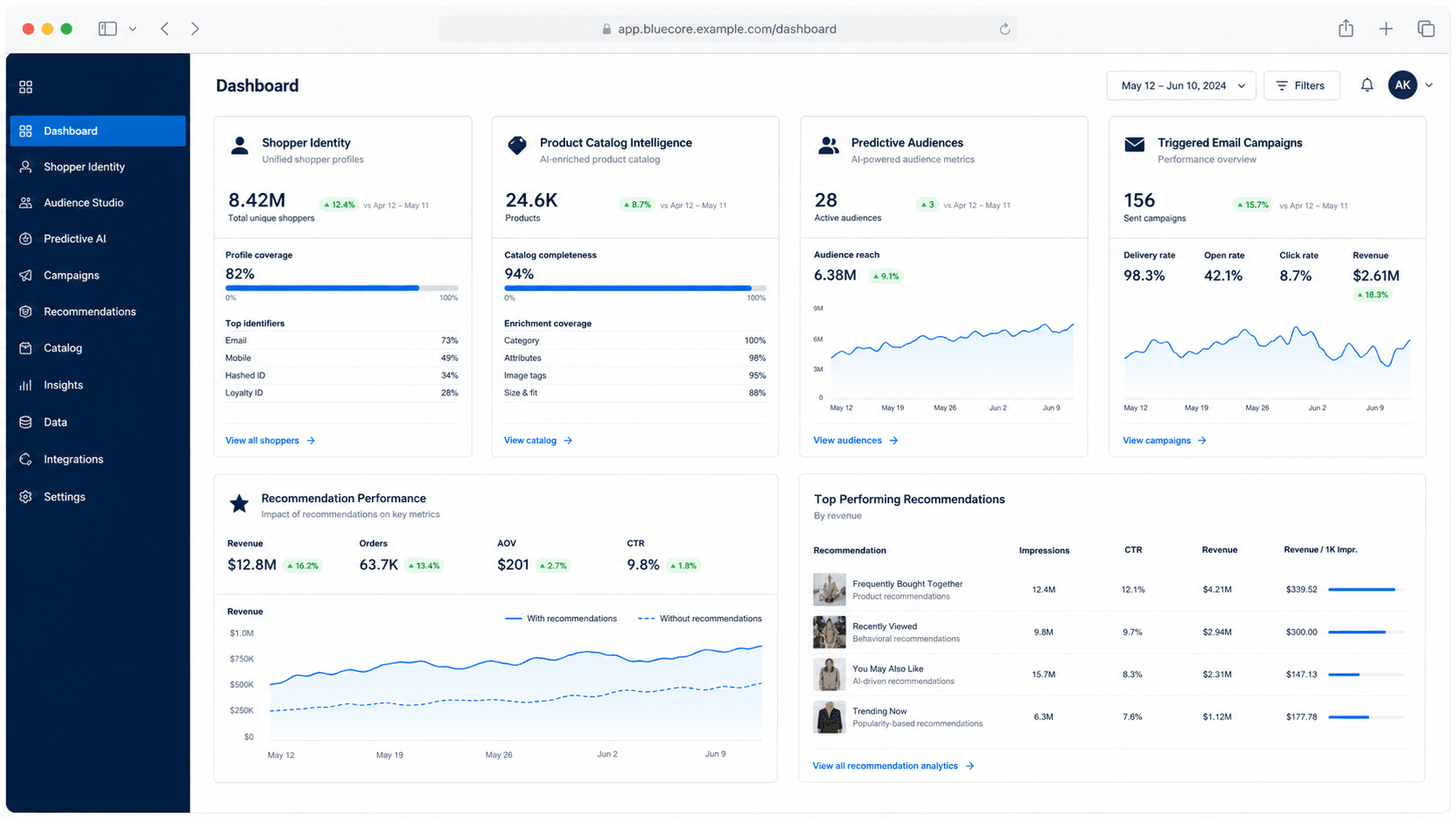
Bluecore

Bluecore dashboard screenshot

Retail marketing platform focused on shopper identity, product data, predictive audiences, and personalized email/mobile campaigns.

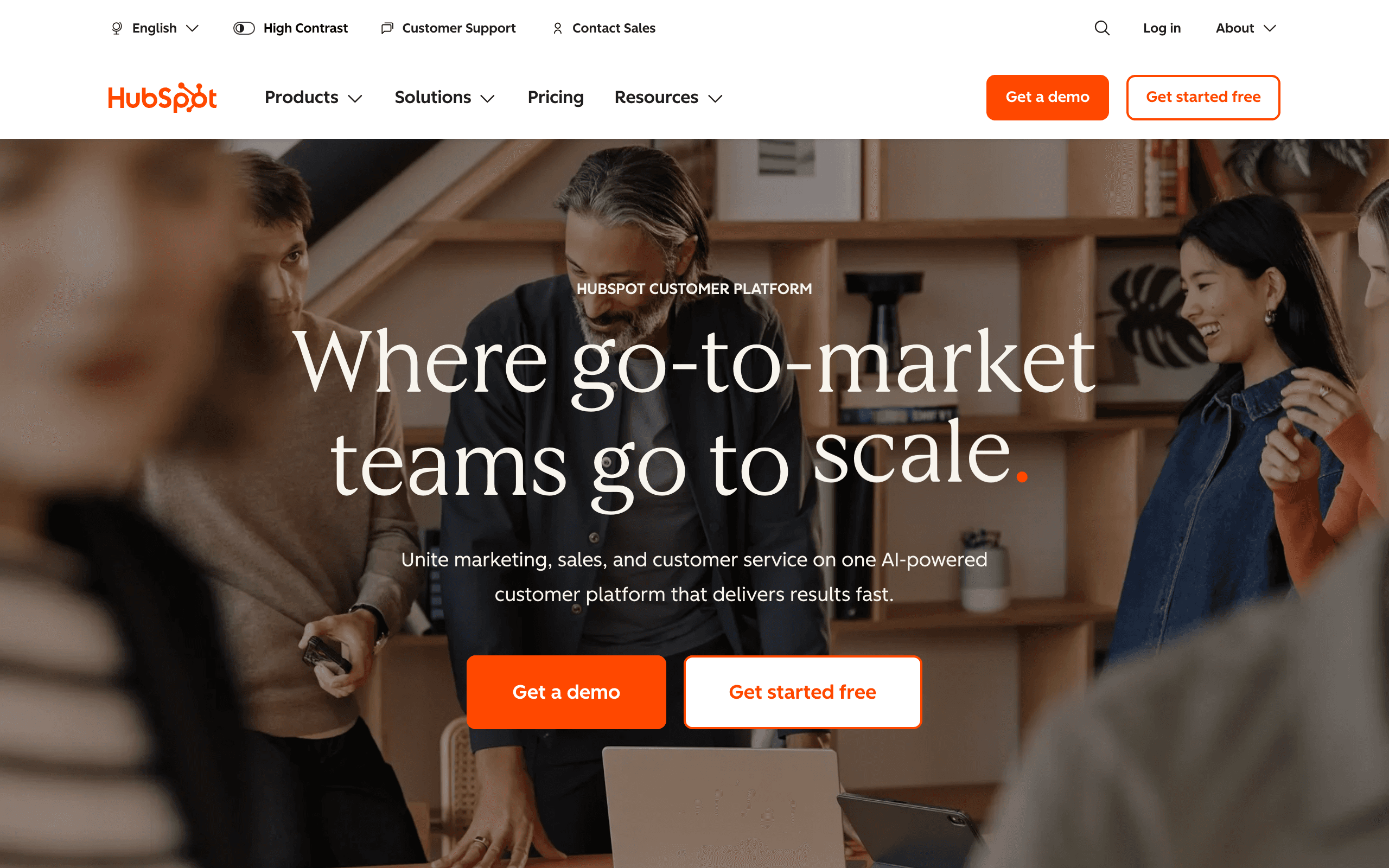
HubSpot

HubSpot dashboard screenshot

Enterprise all-in-one CRM, marketing, sales, and service platform.

Key Differences

The main things that set these tools apart

Bluecore is stronger when shopper identity matters
Bluecore wins

Bluecore is easier to justify when the buying reason is retail product intelligence, especially if your team will use shopper identity, product catalog intelligence, predictive audiences.

HubSpot may be easier for a different operating model
HubSpot wins

HubSpot can be the better fit when your team already knows the product, prefers its ecosystem, or needs a different balance of channels and marketing features.

Sequenzy is the simpler email path
Tie

If the real need is Shopify or WooCommerce email automation, Sequenzy avoids the extra complexity of SMS, enterprise personalization, and large-suite implementation.

Pricing Comparison

Comparable ecommerce scale

Bluecore
Custom/month

Enterprise retail pricing based on data, channels, modules, and contract

Visit Bluecore
HubSpot
Varies/month

Pricing depends on plan, contacts, usage, and selected features

Visit HubSpot
Best for SaaS
Sequenzy
$29/month

60,000 emails, unlimited subscribers, Shopify + WooCommerce + Stripe. No SMS or product recommendations.

Start Free Trial

Feature Comparison

11 features compared side-by-side

Feature
Bluecore
HubSpot
Sequenzy
Ecommerce Fit
Shopify support
Native integration
WooCommerce support
Varies by setup
Varies by setup
Native integration
Abandoned cart
Strong fit
Available
Email recovery
Product recommendations
Strong fit
Varies by plan
Channels and Automation
Marketing email
SMS
Available or partner-based
Varies by plan
Segmentation
Strong fit
Available
Basic
Transactional email
Limited
Limited
Team Fit
Enterprise fit
Strong fit
Varies by team size
Limited
Simple setup
Can require planning
Depends on implementation
Strong fit
Best for email-only teams
too much for simple email programs
Depends on plan
Strong fit

Pros & Cons

Honest strengths and weaknesses of each platform

Bluecore

Pros
  • Strong shopper identity
  • Strong product catalog intelligence
  • Strong predictive audiences
  • Strong retail personalization
Cons
  • too much for simple email programs
  • Pricing can be hard to compare from public pages
  • May require more setup than simple email tools

HubSpot

Pros
  • Useful alternative workflow for ecommerce teams
  • Familiar campaign and automation patterns
  • Can fit teams already invested in its ecosystem
  • Worth comparing on pricing and support
Cons
  • Feature depth depends on plan and implementation
  • May not match Bluecore's strongest ecommerce use case
  • Can become expensive as contacts or channels grow

What Users Say

Real reviews from Bluecore and HubSpot users

Bluecore Reviews

Public review themes from G2, Capterra, Shopify App Store, and vendor case studies

Review themes for Bluecore often mention strong shopper identity, useful reporting, and good fit for teams that know exactly what they want from ecommerce retention. The common caution is setup effort and pricing clarity.

Ecommerce marketing team2026-06-05

HubSpot Reviews

Public review themes from G2, Capterra, Shopify App Store, and vendor case studies

Review themes for HubSpot usually focus on ease of campaign work, integrations, and day-to-day usability. The common caution is that pricing and advanced features need to be checked against real usage.

Lifecycle marketing team2026-06-05

Best For

When to choose each tool

Choose Bluecore if you...
  • Teams that need retail product intelligence
  • Stores that care most about shopper identity
  • Brands that want product catalog intelligence
  • Marketers with enough volume to justify a specialized tool
Choose HubSpot if you...
  • Teams already using the HubSpot ecosystem
  • Stores that prefer HubSpot's workflow or pricing model
  • Marketers comparing multiple ecommerce marketing platforms
  • Businesses that want a familiar alternative to Bluecore
Choose Sequenzy if you...
  • Shopify or WooCommerce stores that mainly need email
  • Teams that do not need SMS or product recommendations
  • Businesses that want transactional and marketing email together
  • Subscription teams that need Stripe-aware lifecycle email
Start Free Trial

When Sequenzy Is the Better Alternative

You only need email automation

If SMS, retail intelligence, reviews, loyalty, or enterprise personalization are not part of the plan, Sequenzy keeps the stack lighter.

You want Shopify and WooCommerce support

Sequenzy focuses on practical ecommerce email flows for both Shopify and WooCommerce, including welcome, cart recovery, and post-purchase messages.

You also send transactional email

Sequenzy combines marketing and transactional email, which is helpful when product, billing, and lifecycle messages should live together.

Retail intelligence layer or CRM suite

Bluecore is built for retail personalization from shopper identity and product catalog data. HubSpot is built as a CRM suite for marketing, sales, service, forms, contacts, reporting, and lifecycle stages. The comparison should start with where the business wants its customer system of record to live.

If the buyer is solving ecommerce product personalization, Bluecore is the sharper tool. If the buyer needs sales, service, CRM, and marketing tied together, HubSpot is the more realistic organizational platform.

Use-case matchups

Need Better fit Why
Retail product intelligence and shopper identity Bluecore Bluecore is focused on catalog and behavior signals for ecommerce personalization.
CRM, sales, service, and marketing in one system HubSpot HubSpot is built around shared contact records and revenue workflows.
Price-drop, product affinity, and retail recommendations Bluecore Those are product-led retail marketing use cases.
B2B ecommerce, wholesale, or sales handoff HubSpot CRM context matters more when sales and service teams own the customer relationship.
Store lifecycle and transactional email Sequenzy It is narrower when neither CRM suite nor retail intelligence is needed.

Best Fit by Product Intelligence and CRM Scope

Best retail personalization platform for catalog-driven campaigns

Bluecore is the better fit when shopper identity, product catalog intelligence, product affinity, predictive audiences, and recommendation-driven campaigns are the core use cases. It is strongest for retail teams that need product-led personalization.

Best CRM platform for sales and service handoff

HubSpot is the better fit when ecommerce is connected to CRM, sales follow-up, service context, forms, reporting, and revenue workflows. It should be evaluated when the team needs one customer record across marketing, sales, and service.

Best email tool for store lifecycle and transactional messages

Sequenzy is the better fit when the team needs Shopify or WooCommerce lifecycle email, newsletters, Stripe triggers, and transactional messages without a CRM suite or retail intelligence layer.

Pricing reality

The existing pricing data is directional: Bluecore is custom-priced around retail data, channels, modules, and contract scope, while HubSpot varies by plan, contacts, usage, and selected features. Bluecore pricing should be scoped around retail feeds, product intelligence, personalization modules, activation channels, and services. HubSpot pricing should be modeled by hubs, seats, marketing contacts, automation features, reporting needs, and whether CRM adoption already exists across the company.

Review signals

Existing review themes for Bluecore mention shopper identity, reporting, ecommerce retention fit, setup effort, and pricing clarity. Existing HubSpot review themes focus on campaign work, integrations, usability, pricing, and advanced features. Read reviews from teams with similar CRM adoption, ecommerce complexity, seat count, reporting needs, and support expectations.

Why Bluecore can be the better fit

Bluecore is stronger when the customer is primarily a shopper and the marketing opportunity depends on catalog and behavior signals. It fits retail use cases like product affinity, recommendations, price-drop audiences, and predictive segmentation.

It is not intended to be a CRM suite for sales pipelines, service tickets, and RevOps ownership.

Why HubSpot can be the better fit

HubSpot is stronger when marketing needs CRM context: forms, deals, lifecycle stages, service history, sales activity, and reporting across teams. It can make sense for ecommerce businesses with B2B sales, wholesale programs, partner funnels, or content-led acquisition.

The tradeoff is retail intelligence depth. HubSpot is broader operationally, but less specialized around product catalog personalization than Bluecore.

Where Sequenzy fits

Sequenzy fits when the company does not need a CRM suite or enterprise retail intelligence. It focuses on ecommerce lifecycle email, transactional messages, newsletters, and Stripe-aware flows.

CRM suite versus retail intelligence

Decision point Bluecore HubSpot Sequenzy
Retail product intelligence drives the project Stronger fit Not the center No.
CRM, sales, service, and marketing need one shared system No Stronger fit No.
Ecommerce product catalog personalization is the main use case Stronger fit Partial No recommendations.
B2B-style lead lifecycle and sales handoff matter Weak Stronger fit Partial for email only.
Shopify/WooCommerce lifecycle email is the near-term need Too heavy Often more suite than needed Stronger fit.
RevOps already owns HubSpot data External retail layer Stronger adoption path Separate email workspace.

When HubSpot is the more realistic choice

HubSpot becomes more realistic when ecommerce marketing is not isolated from sales, service, CRM, and RevOps. If the business needs lead forms, sales pipeline visibility, support history, and marketing automation in one customer system, HubSpot's suite model can be the point.

Bluecore becomes more realistic when the buyer is a retail or ecommerce team trying to activate product data and shopper identity. It is not a CRM replacement; it is closer to a retail intelligence layer for personalization and campaign relevance.

Sequenzy fits when neither suite-level CRM nor enterprise retail intelligence is needed. If the actual problem is that store emails and transactional messages are missing or shallow, keep the scope narrow.

Migration checklist

Area Moving toward Bluecore Moving toward HubSpot Moving toward Sequenzy
Data model Prepare shopper identity, product catalog, behavior events, and predictive audience rules. Prepare CRM properties, lifecycle stages, marketing contacts, ecommerce events, and sales/service ownership. Map subscribers, consent, tags, attributes, ecommerce events, and billing triggers.
Ownership Align ecommerce, merchandising, data, and retention teams. Align marketing, sales, service, RevOps, and ecommerce stakeholders. Assign email lifecycle and deliverability ownership.
Automation Define product-led personalization and retail campaign use cases. Rebuild lead nurture, ecommerce follow-up, CRM-triggered campaigns, and sales handoff flows. Rebuild welcome, cart, post-purchase, winback, and transactional flows.
Reporting Measure audience lift, campaign revenue, and product-personalization impact. Measure lifecycle stage movement, campaign contribution, revenue attribution, and sales/service context. Measure flow revenue, campaign performance, deliverability, and transactional reliability.
Implementation risk Plan feeds, identity matching, and enterprise rollout. Plan contact cleanup, property mapping, hub permissions, and automation governance. Keep implementation focused on email data and templates.

Decision checklist

Choose When
Bluecore You need shopper identity, product catalog intelligence, predictive audiences, and retail personalization.
HubSpot You need CRM-connected marketing, sales handoff, service context, forms, reporting, and revenue workflows.
Sequenzy You need Shopify/WooCommerce lifecycle email, newsletters, Stripe triggers, and transactional email.
Re-check pricing Retail feeds, modules, hubs, seats, marketing contacts, reporting, CRM adoption, and implementation can change the real cost materially.

Frequently Asked Questions

5 questions answered about Bluecore vs HubSpot

Testimonials

Sequenzy Testimonials

Max Eccles

Max Eccles

Founder, InstantInterior AI

$600 revenue in 30d from email automations. Very happy I migrated to Sequenzy. Before I was making zero from email automations.

Leo

Leo

Maintainer, Email SDK

I get to talk to my users 1:1 and help them set it up for their use case.

Jim

Jim

Founder

I run a SaaS, and found Nic on X where I kept seeing posts about his email marketing tool, Sequenzy. I decided to try it for email marketing. Literally on the first day, I used it to send a marketing campaign and I got 5 sales. What I like most is the ai assistant because it actually writes emails that feel real instead of the usual ai slop chatgpt returns, so they do not end up in spam. It also has a 2.5k free email limit which is way better than most tools that only give you around 1k. The best part though is that it handles everything for me, tags, subscribers, sequences and all of it. Without it i would probably be managing a database and a bunch of cron jobs just to make email automation work. Sequenzy just makes my life a lot easier. it can also be set up with 2-3 clicks! Give it a try!!

Mar 10, 2026

Dhiva Logu

Dhiva Logu

Founder

I love everything about Sequenzy and also the kind of support I get from Nic. It's already the best choice for campaigns & Sequences. Specially the integrations with payment providers, auth providers & analytics etc.. is really spot on. Best in terms of features & pricing in the email segment 100% recommend it for SaaS emails :)

Mar 10, 2026

Petros

Petros

Shopify App Store review

The setup was fast and simple. It synced customer, product, and order data quickly. Generating automated flows was simple, and it improved my monthly bottom line by about 7%.

Elvis Sun

Elvis Sun

Founder, PressPulse & Medialyst

Codex basically one-shotted the migration for syncing our audience from SendGrid to Sequenzy. Sequenzy is fully observable, so agents can just set everything up. The net impact is saving $45/mo, plus 2 hours of my time every time I need to repurpose a newsletter. That's 8 hours a month. My consulting rate is $550/hr, so every hour automated is super valuable.

Louis

Louis

Founder

Easy migration from another tool. Premium customer service and easy to set everything up

Apr 9, 2026

Jim

Jim

Founder, FixMyLanding

It helped me grow to $100 MRR, get #1 on Uneed, make more sales, get acquired.

King Killers

King Killers

Shopify App Store review

Loving the Sequenzy app so far due to the affordability and large subscriber limits. Planning on this becoming my main email app. Campaign + flows setup with the help of their AI took less than 30 minutes.

Verified User

Verified User

Computer Software

SaaS-focused feedback, fast processing, and plenty of integrations. It is very SaaS-focused, supports a wide range of integrations, and processes feedback right away.

Jun 17, 2026

G2

Not sure which to pick?

If you're a SaaS founder who needs Stripe integration and unified email, try Sequenzy free. No credit card required.

Related Comparisons

Sequenzy pricing reference

Sequenzy - Complete Pricing Guide

Pricing Model

Sequenzy uses email-volume-based pricing. You only pay for emails you send. Unlimited contacts on all plans — storing subscribers is always free.

All Pricing Tiers

  • 2.5k emails/month: Free (Free annually)
  • 15k emails/month: $19/month ($205/year annually)
  • 30k emails/month: $29/month ($313/year annually)
  • 60k emails/month: $49/month ($529/year annually)
  • 120k emails/month: $99/month ($1069/year annually)
  • 300k emails/month: $199/month ($2149/year annually)
  • 600k emails/month: $399/month ($4309/year annually)
  • 900k emails/month: $599/month ($6469/year annually)
  • 1.2M emails/month: $799/month ($8629/year annually)
  • 2M emails/month: $1299/month ($14029/year annually)
  • 3M emails/month: $1999/month ($21589/year annually)
  • 4M emails/month: $2499/month ($26989/year annually)
  • 5M emails/month: $2999/month ($32389/year annually)
  • Unlimited emails/month: Custom pricing (Custom annually)

Yearly billing: All plans offer a 10% discount when billed annually.

Free Plan Features (2,500 emails/month)

  • Visual automation builder
  • Transactional email API
  • Reply tracking & team inbox
  • Landing pages
  • Unlimited team members
  • Goal tracking & revenue attribution
  • Unlimited lists and segments
  • Payment integrations
  • API, MCP, and CLI access
  • Unlimited sending domains
  • SPF, DKIM, and DMARC
  • Deliverability monitoring
  • Send time optimization
  • A/B testing

Paid Plan Features (15k - 5M emails/month)

  • Visual automation builder
  • Transactional email API
  • Reply tracking & team inbox
  • Landing pages (Create hosted signup pages and attach a custom domain.)
  • Unlimited team members
  • Goal tracking & revenue attribution
  • Unlimited lists and segments
  • Payment integrations (Stripe, Paddle, Lemon Squeezy)
  • API, MCP, and CLI access
  • Unlimited sending domains
  • SPF, DKIM, and DMARC
  • Deliverability monitoring
  • Send time optimization
  • A/B testing

Enterprise Plan Features (Unlimited emails)

  • Visual automation builder
  • Transactional email API
  • Reply tracking & team inbox
  • Landing pages
  • Unlimited team members
  • Goal tracking & revenue attribution
  • Unlimited lists and segments
  • Payment integrations
  • API, MCP, and CLI access
  • Unlimited sending domains
  • SPF, DKIM, and DMARC
  • Deliverability monitoring
  • Send time optimization
  • A/B testing

Important Pricing Notes

  • You only pay for emails you send — unlimited contacts on all plans
  • No hidden fees - all features included in the price
  • No credit card required for free tier

Contact

  • Pricing Page: https://sequenzy.com/pricing
  • Sales: hello@sequenzy.com



