Retail product intelligence or cross-channel engagement
Bluecore and Braze are both enterprise-grade choices, but they solve different enterprise problems. Bluecore is strongest when retail product data, shopper identity, predictive audiences, and catalog-led personalization are the core challenge. Braze is strongest when the challenge is orchestrating customer engagement across email, push, in-app, SMS, web, and event-driven journeys.
If the retailer's hardest question is "which product should this shopper see next?", Bluecore is more directly aligned. If the hardest question is "which channel and journey should this customer enter?", Braze is more aligned.
Use-case matchups
| Need | Better fit | Why |
|---|---|---|
| Product catalog intelligence and shopper identity | Bluecore | Bluecore is more directly aligned with retail product-led personalization. |
| Cross-channel engagement across app, web, push, SMS, and email | Braze | Braze is built for event-driven journey orchestration across channels. |
| Predictive product audiences and recommendations | Bluecore | Those are retail-specific product intelligence use cases. |
| Mobile push or in-app messaging in phase one | Braze | Those channels are core to Braze and not the main Bluecore buying reason. |
| Email-first Shopify/WooCommerce lifecycle work | Sequenzy | It avoids enterprise retail intelligence and cross-channel engagement scope. |
Best Fit by Retail Product Data and Cross-Channel Journeys
Best retail personalization platform for predictive product audiences
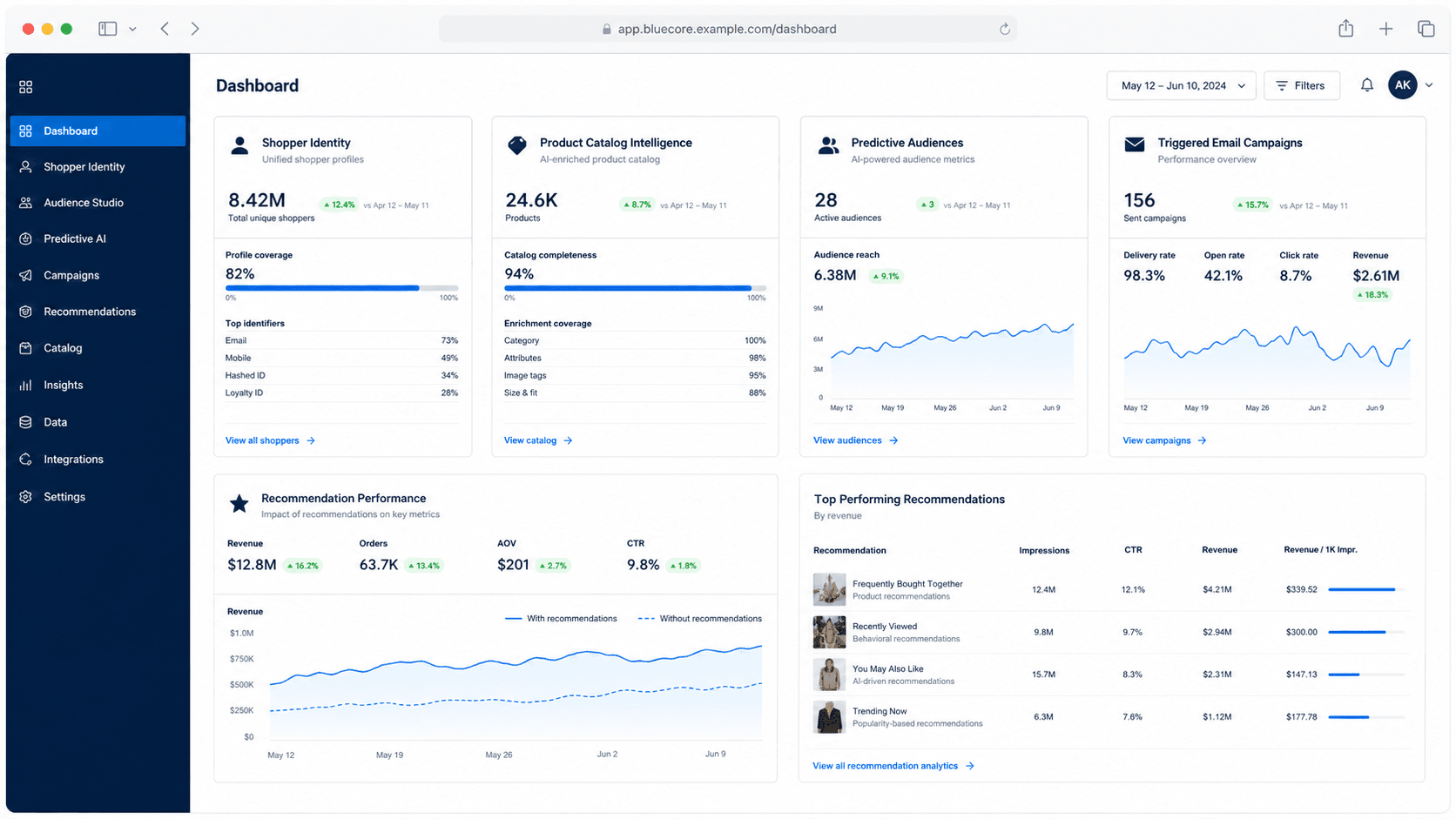
Bluecore is the better fit when shopper identity, product catalog intelligence, price-drop or back-in-stock triggers, and predictive product audiences drive the retention strategy. It is strongest when retail product signals matter more than broad channel orchestration.
Best customer engagement platform for app and web journeys
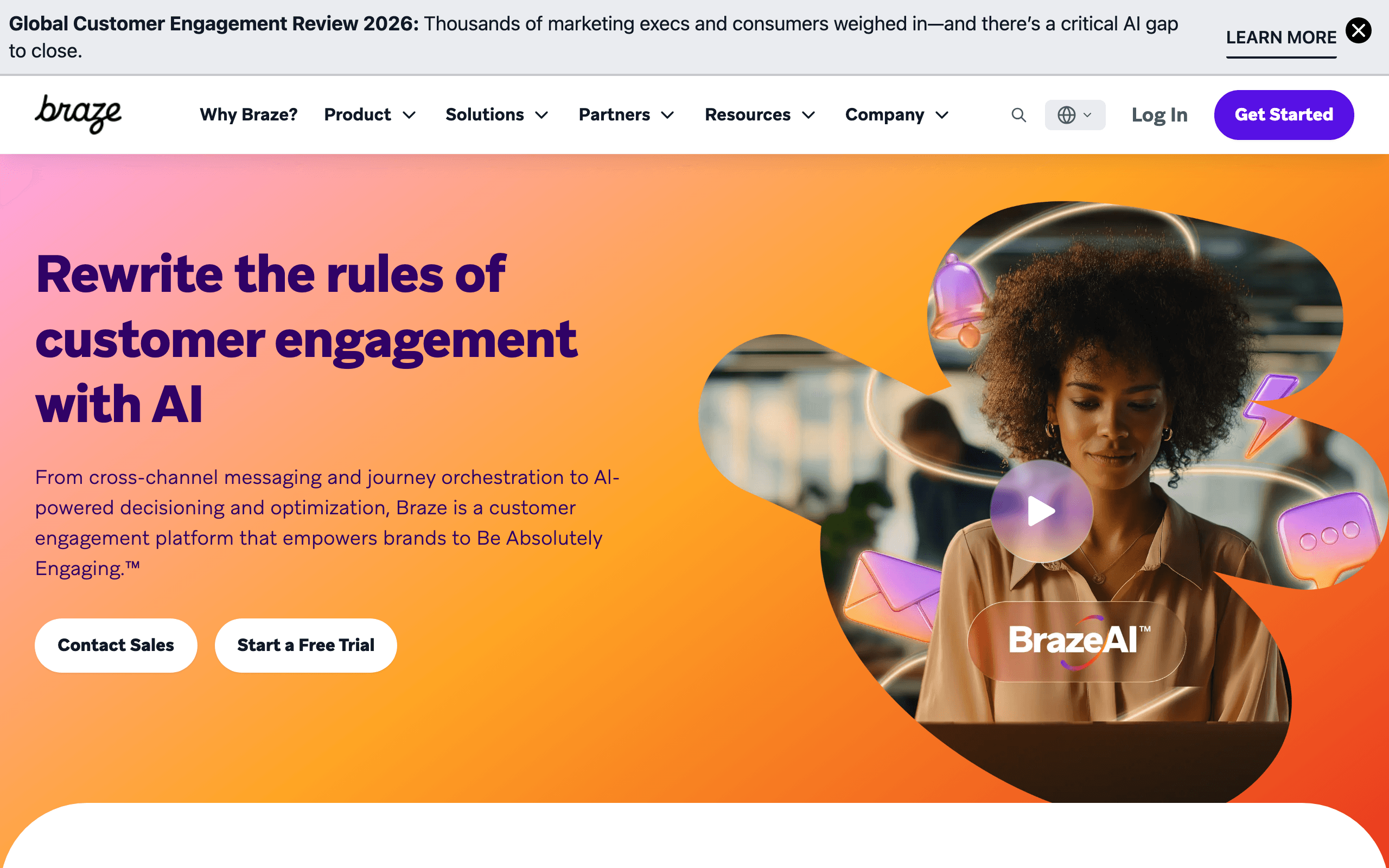
Braze is the better fit when the project spans app, web, push, in-app, SMS, email, webhooks, and event-driven journeys. It should be chosen when cross-channel lifecycle orchestration is the center of the work.
Best email tool for ecommerce lifecycle and transactional messages
Sequenzy is the better fit when the team wants Shopify or WooCommerce lifecycle email, transactional messages, Stripe triggers, and newsletters without enterprise retail intelligence or mobile engagement scope. It is the simpler email-first option.
Pricing reality
The existing pricing data is directional: Bluecore is custom-priced around retail data, channels, modules, and contract scope, while Braze varies by plan, contacts or audience size, usage, and selected features. Bluecore pricing should be scoped around catalog feeds, identity, predictive audiences, recommendation use cases, channels, and enterprise implementation. Braze pricing should be scoped around profiles or active users, channel mix, event volume, data integrations, and whether mobile/web/app messaging is actually in phase one.
Review signals
Existing review themes for Bluecore mention shopper identity, reporting, ecommerce retention fit, setup effort, and pricing clarity. Existing Braze review themes focus on campaign work, integrations, usability, pricing, and advanced features. Read reviews from teams with similar retail catalog complexity, mobile/app footprint, event volume, and channel mix.
Why Bluecore can be the better fit
Bluecore fits retail teams with large catalogs, frequent shopper behavior, and a need to activate product intelligence in campaigns. It is built around the connection between shopper identity and catalog signals.
It is less convincing when the company mainly needs app messaging, mobile push, or broad customer engagement orchestration across non-retail events.
Why Braze can be the better fit
Braze is stronger when lifecycle messaging spans several channels and customer touchpoints. It is a better fit for teams with mobile apps, web events, push, in-app messages, SMS, and sophisticated journey governance.
The tradeoff is retail specificity. Braze can serve retailers, but product catalog intelligence is not the same buying reason as it is with Bluecore.
Where Sequenzy fits
Sequenzy is appropriate only when the enterprise question is over-scoped. If the real need is ecommerce email automation, transactional email, newsletters, and Stripe-aware lifecycle flows, it avoids both Bluecore's retail intelligence layer and Braze's cross-channel engagement stack.
Cross-channel engagement table
| Decision point | Bluecore | Braze | Sequenzy |
|---|---|---|---|
| Product catalog intelligence is central | Stronger fit | Useful but not the center | No. |
| Mobile push, in-app, email, SMS, and cross-channel journeys are central | Not the main reason to buy | Stronger fit | Email-first, with web and mobile push. No in-app. |
| Retail shopper identity and predictive audiences drive personalization | Stronger fit | Strong customer engagement data, less retail-specific | Basic subscriber profiles. |
| App-first or mobile-heavy customer engagement matters | Limited | Stronger fit | Web and mobile push, no in-app or native SDK. |
| Ecommerce team needs marketer-run flows only | Heavier | Strong but enterprise | Stronger if email-only. |
| Transactional and marketing email together | No | Depends on implementation | Stronger fit. |
When Braze is the real alternative
Braze is the real alternative when the customer journey spans more than ecommerce email: app sessions, push notifications, in-app messages, SMS, web, and real-time event-triggered journeys. The buying reason is cross-channel engagement, not just retail product intelligence.
Bluecore is stronger when the company is retail-led and the hard problem is using product catalog and shopper behavior to create better audiences and recommendations.
Sequenzy belongs only when the cross-channel question is not real. If the roadmap is mostly email campaigns, flows, and transactional messages, Braze and Bluecore are both heavier than needed.
Migration checklist
| Area | Moving toward Bluecore | Moving toward Braze | Moving toward Sequenzy |
|---|---|---|---|
| Data readiness | Prepare product catalog, shopper identity, behavior events, and audience rules. | Prepare event taxonomy, user identifiers, channel permissions, app/web SDK needs, and campaign data. | Map subscribers, consent, tags, attributes, ecommerce events, and billing triggers. |
| Channel plan | Define retail campaign and recommendation activations. | Define email, SMS, push, in-app, web, and cross-channel journey ownership. | Keep scope email-first unless another system owns other channels. |
| Team ownership | Align ecommerce, merchandising, data, and retention teams. | Align lifecycle, mobile, product, data, and engineering stakeholders. | Assign email owners for templates, segments, and deliverability. |
| Automation | Build product-led audiences and personalization tests. | Build event-triggered journeys across channels with frequency controls. | Build lifecycle flows, campaigns, and transactional messages. |
| Metrics | Measure audience lift, recommendation revenue, and retail campaign impact. | Measure cross-channel engagement, conversion, opt-outs, and journey revenue. | Measure flow revenue, campaign performance, deliverability, and transactional reliability. |
Decision checklist
| Choose | When |
|---|---|
| Bluecore | You need shopper identity, product catalog intelligence, predictive audiences, and product-led retail personalization. |
| Braze | You need cross-channel lifecycle journeys across app, web, push, in-app, SMS, email, and events. |
| Sequenzy | You need Shopify/WooCommerce lifecycle email, newsletters, Stripe triggers, and transactional email. |
| Re-check pricing | Catalog feeds, channels, profile volume, event volume, SDK work, data integrations, and support can change the real cost materially. |