
19 Best Lifecycle Marketing Email Tools in 2026

Lifecycle marketing email is different from newsletters. A newsletter asks, "What do we want to send this week?" Lifecycle email asks, "What does this customer need next?"
That difference changes the tool you need. A good lifecycle marketing email platform should know whether a subscriber is new, activated, trialing, paying, expansion-ready, at risk, past due, or churned. It should trigger emails from behavior and billing events, not just dates on a calendar.
This guide compares the best email tools for lifecycle marketing, with a bias toward tools that can actually run onboarding, activation, retention, expansion, dunning, and win-back programs.
Use the complete lifecycle marketing guide to define your stages and metrics before buying software. The 19 lifecycle marketing examples provide a practical proof-of-concept library for vendor trials.
Quick Comparison
| Tool | Best for | Lifecycle strength | Main limitation |
|---|---|---|---|
| Sequenzy | SaaS teams and startups | Product events, AI sequences, billing context, transactional + marketing | Newer platform |
| Customer.io | Technical product teams | Flexible event-driven journeys | Requires setup and data discipline |
| Userlist | B2B SaaS | Company-level lifecycle stages | Smaller ecosystem |
| ActiveCampaign | CRM-heavy teams | Mature automation plus CRM | Heavier if you only need email |
| HubSpot | Sales-led lifecycle | CRM, content, and sales workflows | Costs rise quickly |
| Klaviyo | Ecommerce lifecycle | Catalog and purchase-triggered flows | Less natural for SaaS |
| Intercom | Product-led messaging | In-app, support, and lifecycle messaging | Not email-first |
| Braze | Enterprise apps | Cross-channel orchestration | Enterprise cost and complexity |
| Iterable | Mature lifecycle teams | Multi-channel testing and journeys | Needs marketing ops |
| Loops | Simple SaaS email | Clean startup-focused workflows | Less depth for complex lifecycle programs |
| Encharge | B2B lifecycle automation | Visual flow builder | Less unified around transactional email |
| Mailchimp | Basic lifecycle campaigns | Easy campaigns and simple automation | Limited event-driven depth |
| Drip | Email-first ecommerce | Behavioral purchase journeys | No serious cross-channel depth |
| Omnisend | Growing online stores | Fast email and SMS commerce automations | Less flexible outside ecommerce |
| Brevo | Budget-conscious teams | Multichannel automation on send-based plans | Shallower lifecycle decisioning |
| Ortto | Teams wanting CDP + email | Unified profiles, analytics, and journeys | Smaller ecosystem |
| Vero | Technical email teams | Flexible event data and message workflows | More implementation work |
| CleverTap | Mobile subscription apps | Real-time lifecycle decisioning across channels | Enterprise platform scope |
| Optimove | Retention-led enterprises | Predictive lifecycle models and next-best-action decisioning | Requires mature data and operations |
What to Look For in a Lifecycle Marketing Email Tool
Use this checklist before comparing platforms:
- Lifecycle stage tracking: Can you model trial, customer, at-risk, churned, and past-due states?
- Event-based triggers: Can product behavior start, branch, or stop a sequence?
- Billing context: Can plan, MRR, trial date, renewal date, and failed payment status affect email?
- Sequence exits: Does a user leave the trial sequence when they convert?
- Suppressions: Can dunning emails pause newsletters and promos?
- Segmentation: Can non-technical users create dynamic segments?
- Transactional plus marketing history: Can you see every email in one subscriber profile?
- Deliverability controls: Does the platform handle authentication, bounce handling, complaints, and sending health?
- Reporting by stage: Can you see activation, conversion, retention, and recovery impact?
- AI assistance: Can the platform help draft real lifecycle sequences, not just subject lines?
If a tool cannot trigger from behavior or suppress conflicting messages, it is probably a campaign tool with automation bolted on, not a lifecycle marketing email tool.
How We Evaluated the Tools
This is an editorial fit ranking, not a universal score. We evaluated each platform against seven lifecycle jobs:
- State and data model: Can it represent the customer, account, product, purchase, or billing state that defines the lifecycle?
- Behavioral entry: Can a meaningful event or absence of an event start a journey?
- Control: Can the journey branch, suppress conflicts, and exit immediately after success or ineligibility?
- Message operations: Can a team create, personalize, test, approve, and maintain lifecycle email without fragile workarounds?
- Outcome measurement: Can reporting connect the eligible audience with activation, conversion, retention, recovery, or revenue?
- Deliverability and consent: Does the platform provide the sending, authentication, suppression, bounce, and complaint controls needed for email operations?
- Fit: Does the implementation effort, channel breadth, and data model make sense for the team named in the verdict?
Capabilities were checked against current official product information in August 2026. We do not pretend every platform serves the same buyer: a technical SaaS team, Shopify store, sales-led business, and global mobile app should reach different conclusions.
Disclosure: Sequenzy is our product. It ranks first for the narrow use case stated here—lean SaaS teams that want product, billing, marketing, and transactional email in one system. It is not the best fit for every category; the individual verdicts explicitly name where another platform is stronger.
The Best Lifecycle Marketing Email Tools
1. Sequenzy
Best for: SaaS teams that want lifecycle email without stitching together five tools
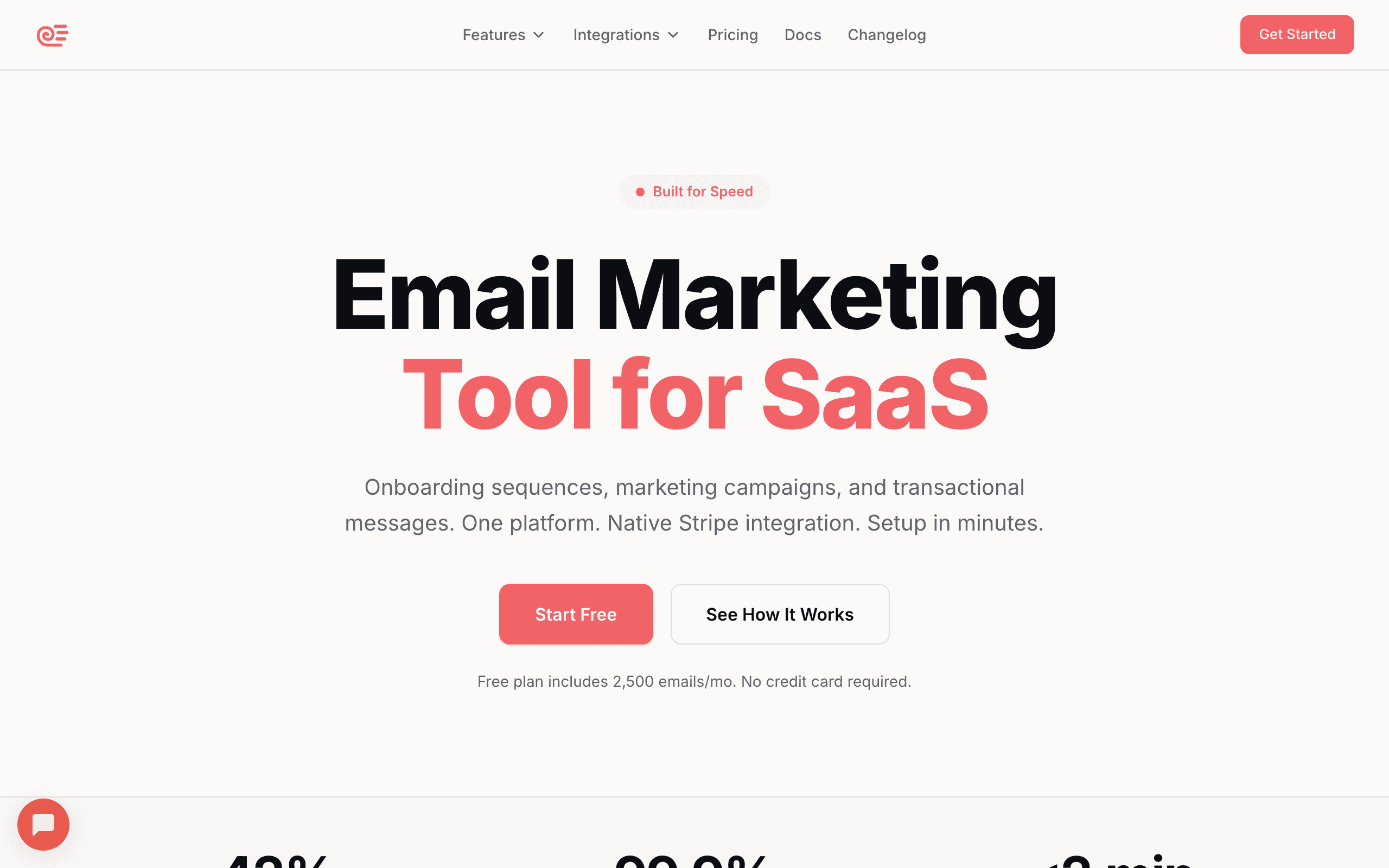
Sequenzy is built for the shape of modern SaaS email: onboarding, trial conversion, customer education, feature adoption, dunning, retention, expansion, transactional messages, and campaigns in one subscriber system.
The biggest advantage is that lifecycle context lives inside the email platform. Product events can trigger sequences. Billing integrations can update lifecycle stage. Smart segments can target by behavior, plan, tags, and attributes. AI sequences can turn a lifecycle goal into a first draft with subject lines, timing, and body copy.
That combination matters because lifecycle email is mostly coordination. A customer should not receive "your trial is ending" after upgrading. A past-due customer should not receive an upsell campaign before the payment issue is resolved. A churn-risk customer should receive useful help, not a generic newsletter.
Sequenzy is especially strong for:
- SaaS onboarding
- Trial-to-paid conversion
- Dunning and payment recovery
- Product-event-based automation
- Stripe, Paddle, Polar, and subscription billing workflows
- Combining transactional email with marketing sequences
- AI-generated lifecycle email drafts
- Revenue-aware segmentation and attribution
Where it falls short: Sequenzy is not the deepest enterprise cross-channel suite. If you need in-app messaging, native mobile SDKs, push-led mobile orchestration, and a large experimentation organization, compare Braze or Iterable.
Use Sequenzy when: You want the fastest path from "we need lifecycle marketing" to actual automated email sequences.
2. Customer.io
Best for: Technical teams building flexible event-driven journeys
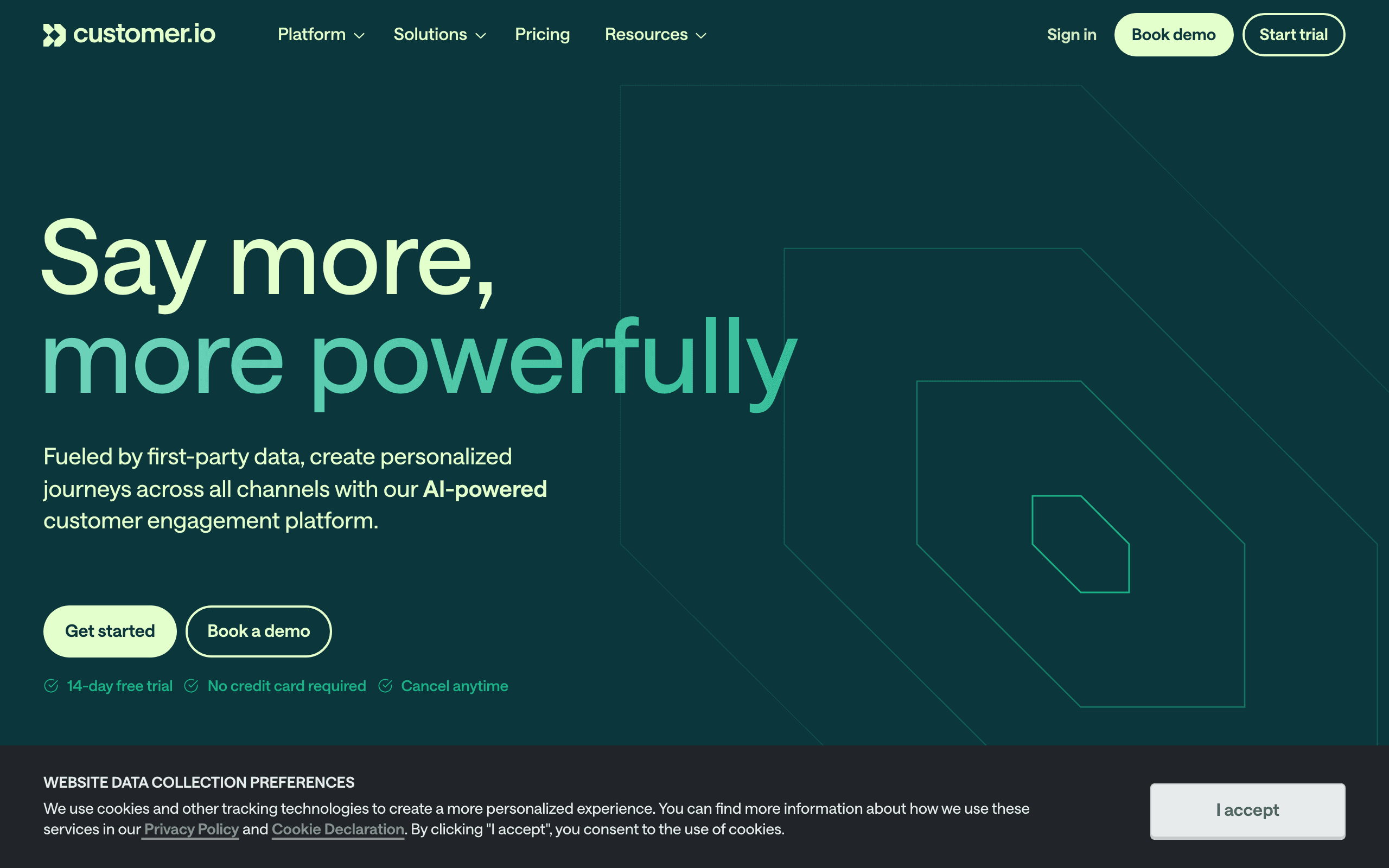
Customer.io is one of the most capable lifecycle email platforms for teams with engineering support. It is strong at event-based triggers, behavioral segmentation, branching journeys, and flexible customer data.
It works well when your lifecycle program needs careful orchestration:
- New-user onboarding based on product events
- Trial conversion based on activation milestones
- Feature adoption based on usage gaps
- Retention flows based on declining activity
- Customer marketing based on attributes and events
Where it falls short: Customer.io is powerful because it is flexible. That also means someone has to own the implementation. If your team does not have a clean event taxonomy, data ownership, and a lifecycle marketing operator, setup can take longer.
Use Customer.io when: You have technical support and need highly customized lifecycle logic.
3. Userlist
Best for: B2B SaaS companies with account-level lifecycle stages
Userlist is built around SaaS lifecycle email and is especially useful for B2B products. It supports both users and companies, which matters when an account has admins, buyers, champions, and end users.
For B2B lifecycle marketing, company context is not optional. A company may be healthy even if one user is inactive. Or a company may be at risk even if one champion is still engaged. Userlist helps model that account-level state.
Where it falls short: It is more focused than broad enterprise suites, and its ecosystem is smaller than larger marketing platforms.
Use Userlist when: Your lifecycle stages belong to companies, not just individual users.
4. ActiveCampaign
Best for: Lifecycle email mixed with CRM and sales automation
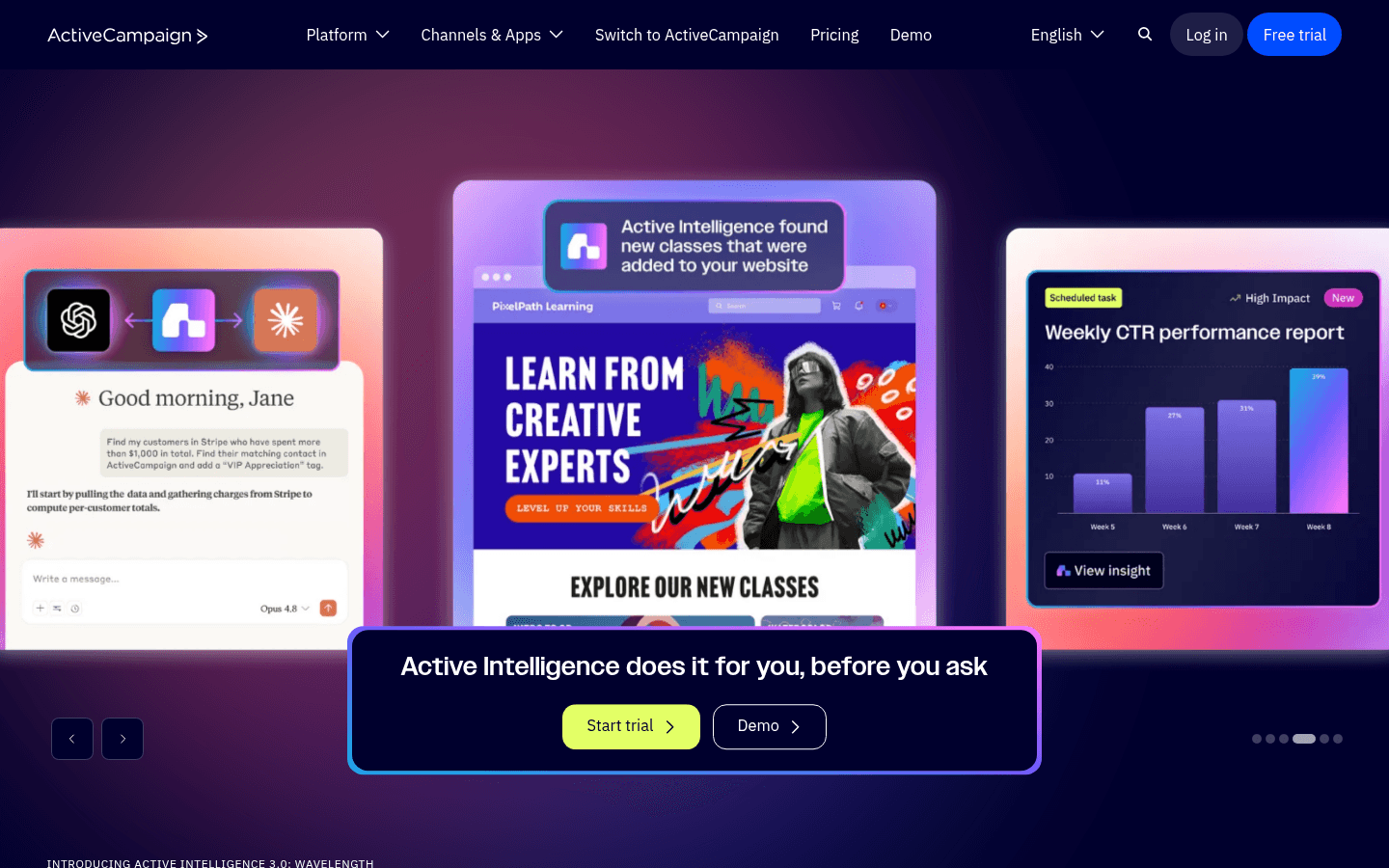
ActiveCampaign is a mature automation platform with CRM features. It fits teams where lifecycle marketing and sales follow-up overlap: lead scoring, deals, pipeline stages, nurture sequences, and customer follow-up.
It can handle complex automations, conditional logic, tagging, and CRM-triggered messaging. For service businesses and sales-assisted SaaS, that combination can be useful.
Where it falls short: If you mainly need product-event-driven email, billing-aware automation, and transactional plus marketing in one place, ActiveCampaign may feel broader than necessary.
Use ActiveCampaign when: CRM context is as important as product behavior.
5. HubSpot
Best for: Sales-led companies already standardized on HubSpot
HubSpot is strongest when your lifecycle stages already live in the CRM: subscriber, lead, MQL, SQL, opportunity, customer, evangelist. It combines CRM, forms, landing pages, campaigns, automation, content, and reporting.
For sales-led lifecycle marketing, that is convenient. Marketing and sales can operate from the same customer record.
Where it falls short: HubSpot becomes expensive as you add contacts, seats, and advanced automation. For SaaS teams whose lifecycle depends on product events and subscription state, HubSpot often needs extra integration work.
Use HubSpot when: The CRM is the source of truth and your lifecycle is sales-led.
6. Klaviyo
Best for: Ecommerce lifecycle email
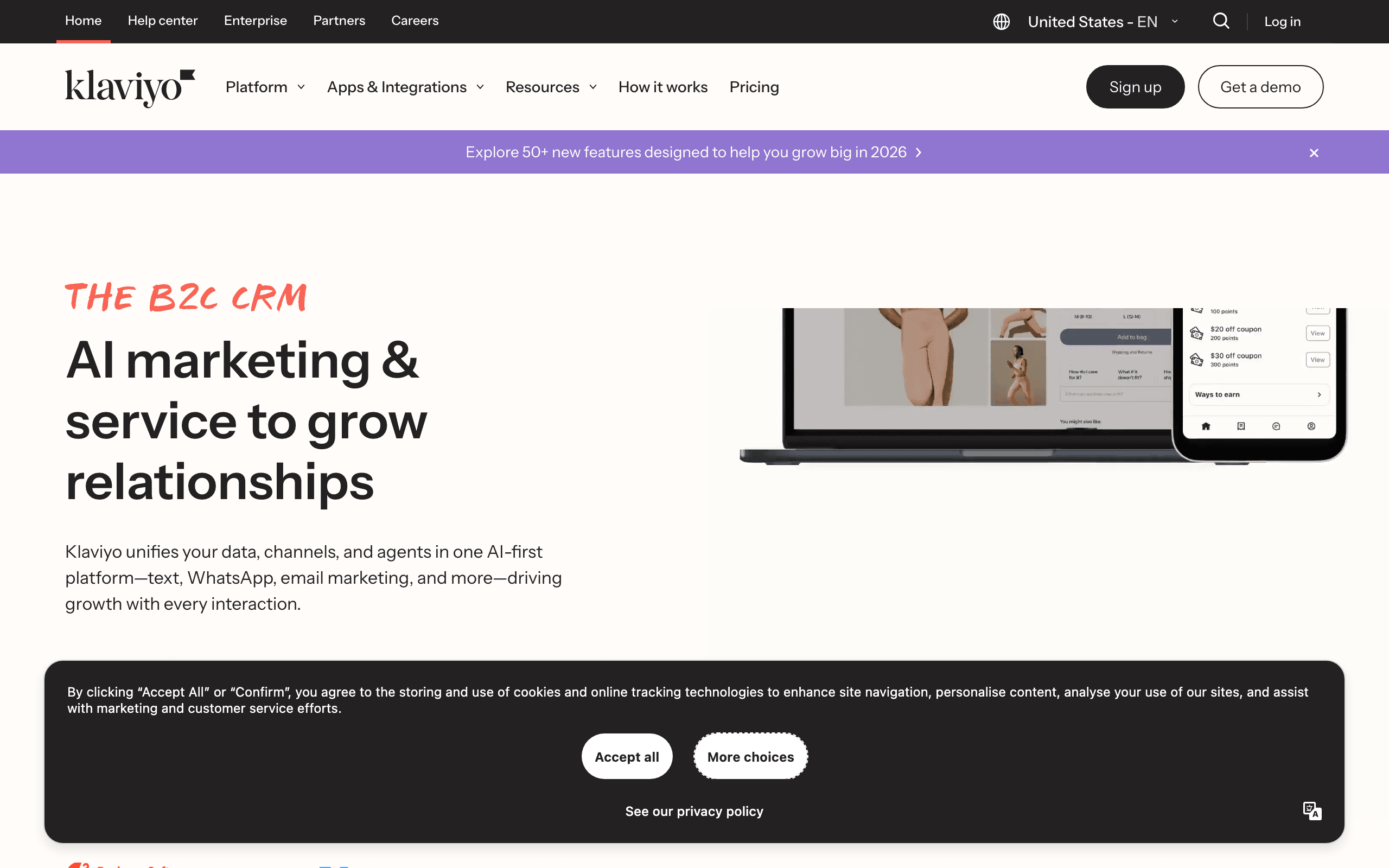
Klaviyo is excellent for ecommerce lifecycle marketing because it understands products, carts, orders, catalogs, customer value, and purchase history.
It is strong for:
- Welcome series
- Browse abandonment
- Cart abandonment
- Post-purchase flows
- Product recommendations
- Win-back campaigns
- Customer lifetime value segmentation
Where it falls short: SaaS lifecycle email is a different data model. If your lifecycle is based on product activation, trial conversion, MRR, and subscription status, a SaaS-shaped tool will usually be easier.
Use Klaviyo when: Your lifecycle is ecommerce-first.
7. Intercom
Best for: Product-led teams combining support, chat, and messaging
Intercom is useful when lifecycle communication happens across email, in-app messages, chat, help content, and support conversations. It gives customer-facing teams more context than a pure email tool.
This can be powerful for onboarding and activation, especially when users need help inside the product.
Where it falls short: Intercom is not built primarily as a lifecycle email marketing platform. Email campaigns, deliverability, newsletter workflows, and revenue attribution may not be the main strength.
Use Intercom when: In-app guidance and support context matter as much as email.
8. Braze
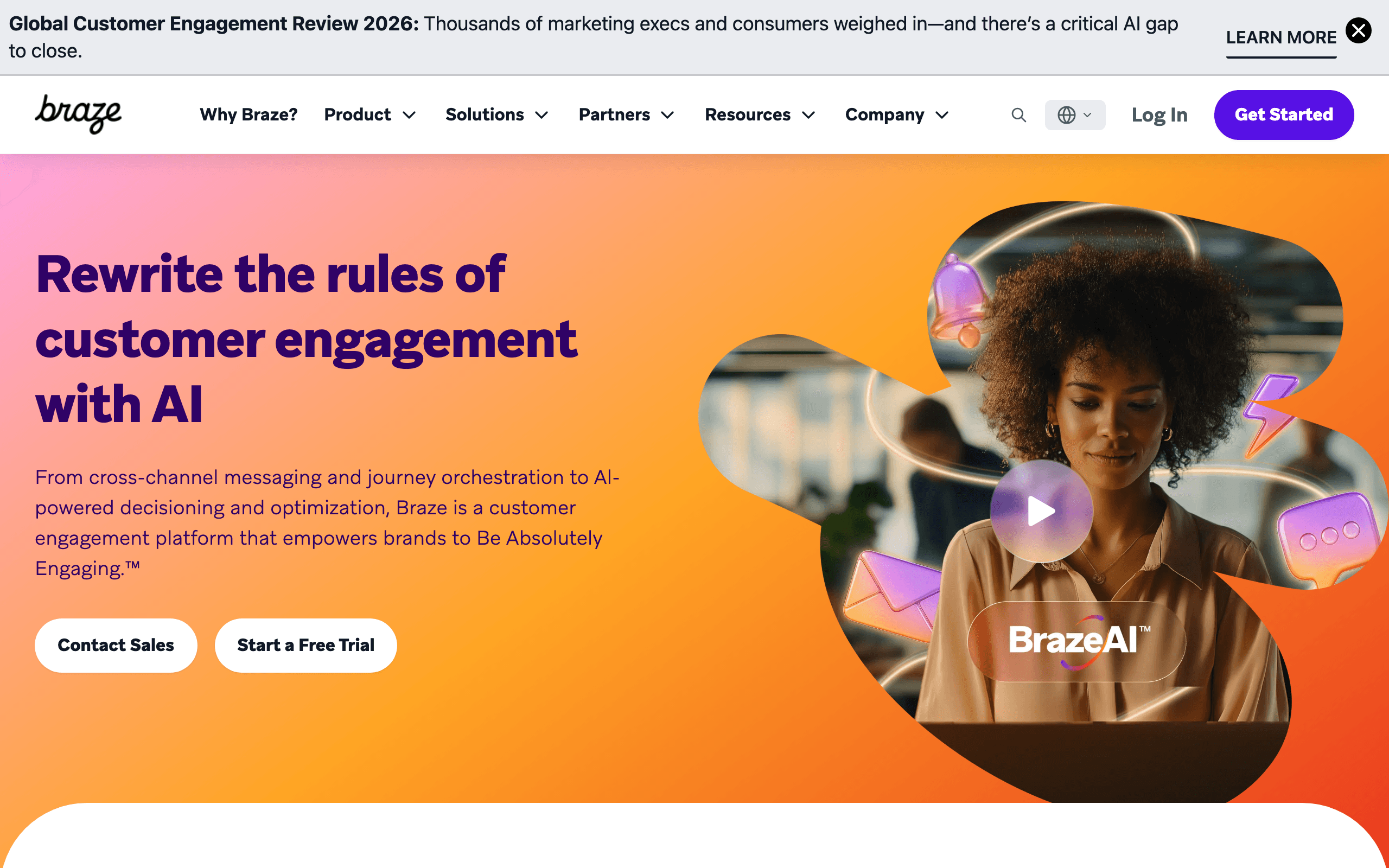
Best for: Enterprise consumer apps with cross-channel lifecycle needs
Braze is built for large-scale customer engagement across email, push, in-app, SMS, and more. It fits consumer apps, marketplaces, fintech, media, and enterprise teams where lifecycle marketing is multi-channel and high-volume.
Its lifecycle strength is orchestration: choosing the right message, channel, and timing for many users across many journeys.
Where it falls short: It is more platform than most small teams need. Implementation, cost, and operations can be significant.
Use Braze when: Lifecycle marketing spans multiple channels at enterprise scale.
9. Iterable
Best for: Mature lifecycle teams running many journeys
Iterable is another strong enterprise option for lifecycle marketing. It fits teams running complex segmentation, experimentation, and campaigns across multiple channels.
It is especially relevant when lifecycle marketing has dedicated operators who can manage testing, data, journey design, and performance analysis.
Where it falls short: It is not the quickest way to build your first onboarding or retention sequence.
Use Iterable when: You have a mature lifecycle program and need broad orchestration.
10. Loops
Best for: Startups that want simple SaaS lifecycle email
Loops is focused, modern, and easy to understand. It fits SaaS teams that want clean product-triggered email without the weight of an enterprise marketing suite.
It can be a good option for basic onboarding, product updates, and simple lifecycle messages.
Where it falls short: It is less broad than tools that combine advanced segmentation, transactional email, AI sequence generation, and deep billing-aware lifecycle automation.
Use Loops when: You want a simple SaaS email tool and your lifecycle needs are still relatively light.
Compare it directly in Sequenzy vs Loops.
11. Encharge
Best for: B2B SaaS teams that like visual workflows
Encharge gives B2B teams a visual way to build lifecycle flows. It is a good fit for lead nurture, onboarding, activation, and behavior-based automation.
Where it falls short: It is not as unified around transactional plus marketing email, billing context, and AI-generated sequences as Sequenzy.
Use Encharge when: Visual workflow building is the priority.
12. Mailchimp
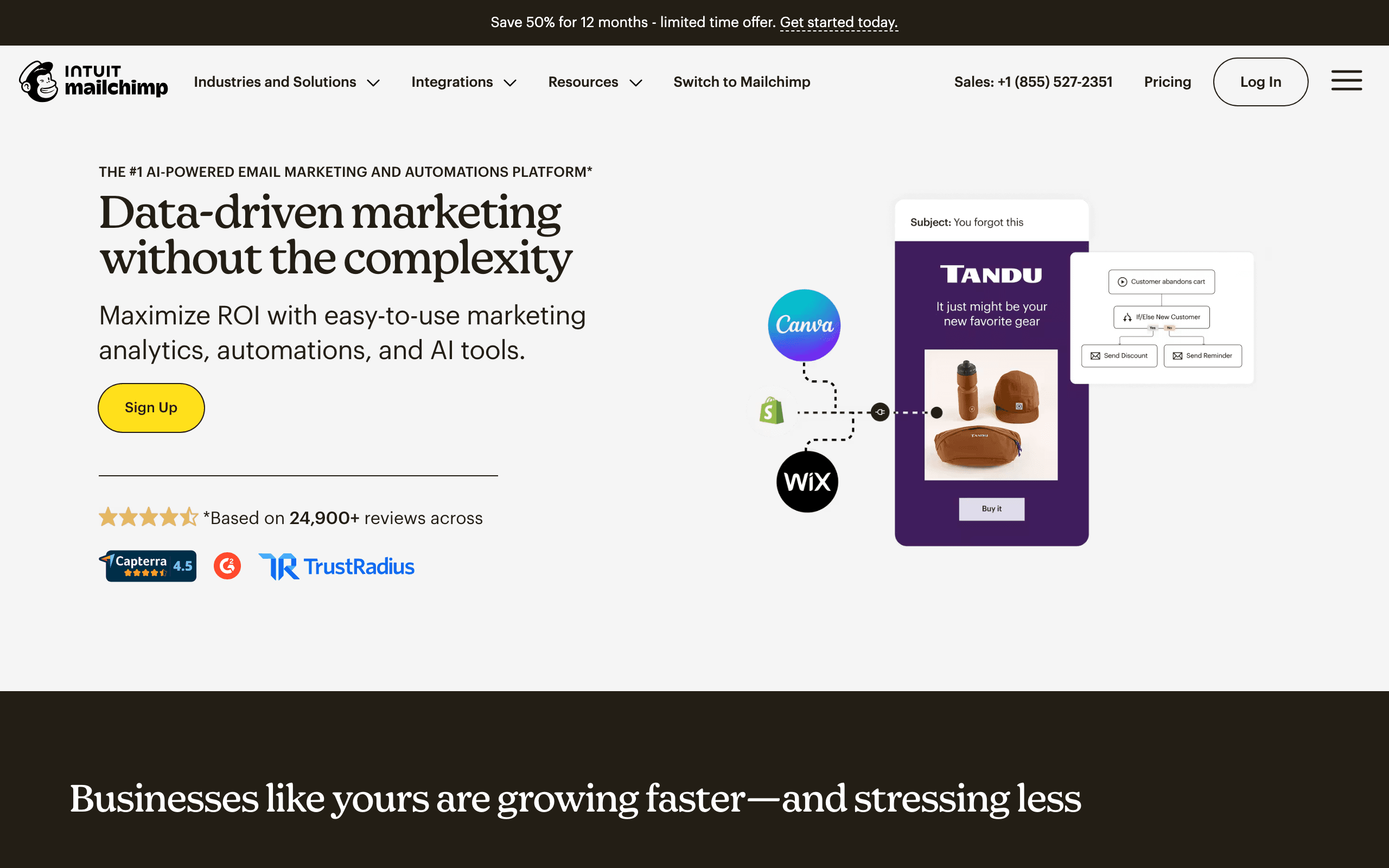
Best for: Basic lifecycle campaigns for small businesses
Mailchimp can handle simple lifecycle email: welcome sequences, re-engagement, basic ecommerce automations, and audience segments. It is approachable and familiar.
For many small businesses, that is enough.
Where it falls short: It is not ideal for advanced event-driven lifecycle marketing, subscription billing workflows, or product-led SaaS automation.
Use Mailchimp when: You need simple lifecycle emails and value ease of use over depth.
13. Drip
Best for: Email-first ecommerce brands that want behavioral automation
Drip focuses on purchase behavior, customer segments, and revenue-oriented email workflows. It is a useful middle ground for stores that have outgrown a basic newsletter tool but do not need a large omnichannel engagement suite.
Its visual workflows can respond to purchases, browsing, tags, and customer activity. That makes it a reasonable fit for welcome, post-purchase, replenishment, cross-sell, and win-back email.
Where it falls short: The platform is email-first. If SMS, push, in-app, or advanced product recommendations are core to the lifecycle, other commerce platforms offer more channel depth.
Use Drip when: Ecommerce behavior drives the lifecycle and sophisticated email matters more than a broad channel suite.
14. Omnisend
Best for: Growing ecommerce brands that want email and SMS live quickly
Omnisend packages prebuilt commerce automations, product data, email, SMS, and push into an approachable workflow builder. Welcome, abandoned checkout, post-purchase, and win-back flows can be launched without designing the entire lifecycle system from scratch.
Its advantage is time to value. Smaller commerce teams can coordinate useful lifecycle messages across channels without taking on an enterprise implementation.
Where it falls short: Segmentation, experimentation, and custom event orchestration have a lower ceiling than the enterprise platforms. The data model is also much more natural for stores than SaaS products.
Use Omnisend when: You run an online store and want practical email and SMS automation with a manageable learning curve.
15. Brevo
Best for: Budget-conscious teams that need email, SMS, WhatsApp, and transactional messages
Brevo combines campaigns, automation, transactional email, SMS, WhatsApp, CRM features, and send-based pricing. That mix makes it useful for organizations with a large database but a relatively modest sending cadence.
Its Aura AI assistant can help with campaign generation, audience suggestions, content, translation, product recommendations, and send-time optimization. The automation layer handles common lifecycle workflows such as welcome, page-visit follow-up, purchase follow-up, and abandoned cart.
Where it falls short: The platform covers many jobs, but its lifecycle data model and decisioning are not as deep as Customer.io, Klaviyo, Braze, or Optimove.
Use Brevo when: Channel breadth, transactional email, and cost control matter more than the most advanced journey logic.
16. Ortto
Best for: Teams that want customer data, analytics, and journeys in one product
Ortto combines a customer data platform, visual journeys, segmentation, messaging, and analytics. It can unify attributes and activity before using that context in lifecycle automations.
That is useful for a lean team whose main problem is fragmented customer context. Instead of connecting a separate CDP, analytics tool, and email platform, Ortto offers a more consolidated operating model.
Where it falls short: Its ecosystem and specialist community are smaller than those of HubSpot, Klaviyo, or ActiveCampaign. Teams should validate the exact integrations and event volume they need.
Use Ortto when: Unifying customer data and lifecycle analytics is the priority and an all-in-one approach fits your stack.
17. Vero
Best for: Technical teams that want flexible event-driven email
Vero is designed around customer data and behavioral messaging. Product teams can send events and attributes, create segments, and build workflows without forcing lifecycle state into a traditional CRM model.
It is a credible choice for onboarding, activation, feature adoption, and retention programs where developers own the event contract and marketers own the messages.
Where it falls short: It asks more of the implementation team than a template-led SMB platform, and it has less market and services coverage than larger competitors.
Use Vero when: You want an event-driven email platform and are comfortable owning the data model.
18. CleverTap
Best for: Mobile apps and subscription products with real-time lifecycle signals
CleverTap combines product analytics, customer engagement, experimentation, and cross-channel journeys. CleverAI can help generate content, build segments and journeys, and optimize timing, channel, path, audience, and variants.
That makes it especially relevant for mobile subscriptions, streaming, fintech, marketplaces, and apps where retention depends on behavior that happens in real time. Email can participate in the journey alongside push, in-app, WhatsApp, SMS, and other channels.
Where it falls short: It is an enterprise engagement platform, not the simplest route to a handful of lifecycle email sequences. Implementation and governance need real ownership.
Use CleverTap when: Mobile behavior and product analytics are central to lifecycle engagement.
19. Optimove
Best for: Retention-led enterprises that want AI decisioning across the customer lifecycle
Optimove is built around customer models, lifecycle stages, campaigns, and next-best-action decisioning. Its AI can identify audiences, recommend overlooked opportunities, choose among journey actions, optimize offers, and measure uplift against controls.
The platform is strongest when a mature retention team has many possible audiences, offers, and campaigns competing for each customer. Instead of adding another fixed journey, Optimove can help decide which action deserves priority.
Where it falls short: Predictive decisioning needs clean history, enough volume, and operators who can define strategy and guardrails. It is far more infrastructure than a new lifecycle program needs.
Use Optimove when: Retention is a core organizational function and the hard problem is coordinating the next-best action across many campaigns.
Best Lifecycle Email Tool by Use Case
Best for SaaS lifecycle marketing
Choose Sequenzy when your lifecycle stages depend on product events, subscription status, activation, usage, payment state, and customer revenue. It gives you automation builder, AI sequences, smart segments, transactional email, and revenue attribution in one platform.
Best for technical lifecycle teams
Choose Customer.io when you have engineering support, clean product events, and complex journey logic.
Best for B2B account-based lifecycle
Choose Userlist when the company account is the lifecycle unit, not just the individual user.
Best for ecommerce lifecycle
Choose Klaviyo when purchase history, product catalogs, and predicted customer value drive the lifecycle.
Best for sales-led lifecycle
Choose HubSpot or ActiveCampaign when CRM stages, deals, and sales follow-up define the customer journey.
Best for enterprise cross-channel lifecycle
Choose Braze or Iterable when lifecycle marketing spans email, push, SMS, in-app, and large-scale experimentation.
Lifecycle Email Stack Examples
Lean SaaS stack
- Sequenzy for lifecycle email, campaigns, transactional, AI sequences, and Stripe-aware automation
- Product events from your app
- Stripe or Paddle for billing state
- PostHog or similar for deeper product analytics
Technical SaaS stack
- Customer.io for event-driven journeys
- Segment or warehouse sync for events
- Separate transactional provider if needed
- Dedicated lifecycle owner
Ecommerce stack
- Klaviyo for email flows and revenue attribution
- Shopify or WooCommerce for product and order data
- SMS provider if text messaging is central
Sales-led B2B stack
- HubSpot or ActiveCampaign for CRM and nurture
- Sequenzy or Customer.io if product-event lifecycle email needs to be separated from the CRM
- Clear handoff between sales sequences and customer lifecycle sequences
Common Lifecycle Tool Mistakes
Picking a newsletter tool for lifecycle automation
Newsletter tools are good at broadcasts. Lifecycle marketing needs triggers, exits, suppressions, and stage awareness.
Letting every automation run independently
Lifecycle programs fail when onboarding, campaigns, dunning, and retention all ignore each other. Choose a tool that can pause, exit, and prioritize sequences.
Ignoring transactional email
Lifecycle marketing does not happen separately from transactional messages. Password resets, receipts, usage alerts, billing emails, and product notifications all shape the customer's experience.
Buying an enterprise platform too early
Enterprise tools are powerful, but they do not create strategy for you. If you do not yet have onboarding, conversion, and retention basics in place, a focused platform may produce results faster.
Using AI only for subject lines
Subject lines help, but lifecycle marketing needs full sequence generation, segment suggestions, timing support, and performance analysis. For the AI-specific workflow, read how to use AI for lifecycle marketing.
FAQ
What is a lifecycle marketing email tool? A lifecycle marketing email tool sends messages based on where someone is in the customer journey: onboarding, activation, conversion, retention, expansion, payment recovery, or win-back.
Can any email platform do lifecycle marketing? Any platform with automation can do basic lifecycle email. Advanced lifecycle marketing needs product events, billing data, segmentation, sequence exits, suppressions, and reporting by stage.
What is the best lifecycle marketing email tool for SaaS? Sequenzy is the best fit for SaaS teams that want product-event automation, billing-aware segments, AI-generated sequences, campaigns, and transactional email in one place. Customer.io and Userlist are also strong depending on technical needs and B2B account complexity.
What is the best lifecycle marketing email tool for ecommerce? Klaviyo is the strongest fit when lifecycle email is driven by product catalog, purchase history, cart behavior, and predicted customer value.
Do lifecycle marketing tools replace CRMs? Usually no. Lifecycle email tools handle customer messaging. CRMs handle sales pipeline, account ownership, and sales follow-up. Some platforms combine both, but many teams keep them separate.
How many lifecycle sequences should I start with? Start with onboarding, trial conversion, payment recovery, and re-engagement. These usually cover the highest-impact lifecycle moments.
Product Sources Checked
Features, packaging, and limits change. This comparison was checked against current official product information in August 2026:
- Customer.io messaging overview
- Userlist SaaS email automation
- ActiveCampaign marketing automation
- HubSpot Marketing Hub
- Klaviyo AI and B2C CRM
- Intercom Outbound
- Braze customer engagement
- Iterable product overview
- Loops lifecycle email
- Encharge behavior emails
- Mailchimp Customer Journey Builder
- Drip marketing automation
- Omnisend automation
- Brevo marketing automation
- Ortto AI marketing software
- Vero product-event email guidance
- CleverTap Agent Hub
- Optimove AI decisioning
Confirm current plan availability, profile limits, sending costs, implementation requirements, and channel coverage directly with each vendor before committing.
Related Resources
- Lifecycle marketing strategy, stages, and metrics
- Lifecycle marketing strategy template
- 19 lifecycle marketing segments
- Lifecycle marketing metrics, formulas, and dashboard
- 19 lifecycle marketing examples
- How to use AI for lifecycle marketing
- Best AI tools for lifecycle marketing
- SaaS lifecycle marketing strategy
- Best email tools for SaaS lifecycle marketing