
Overview
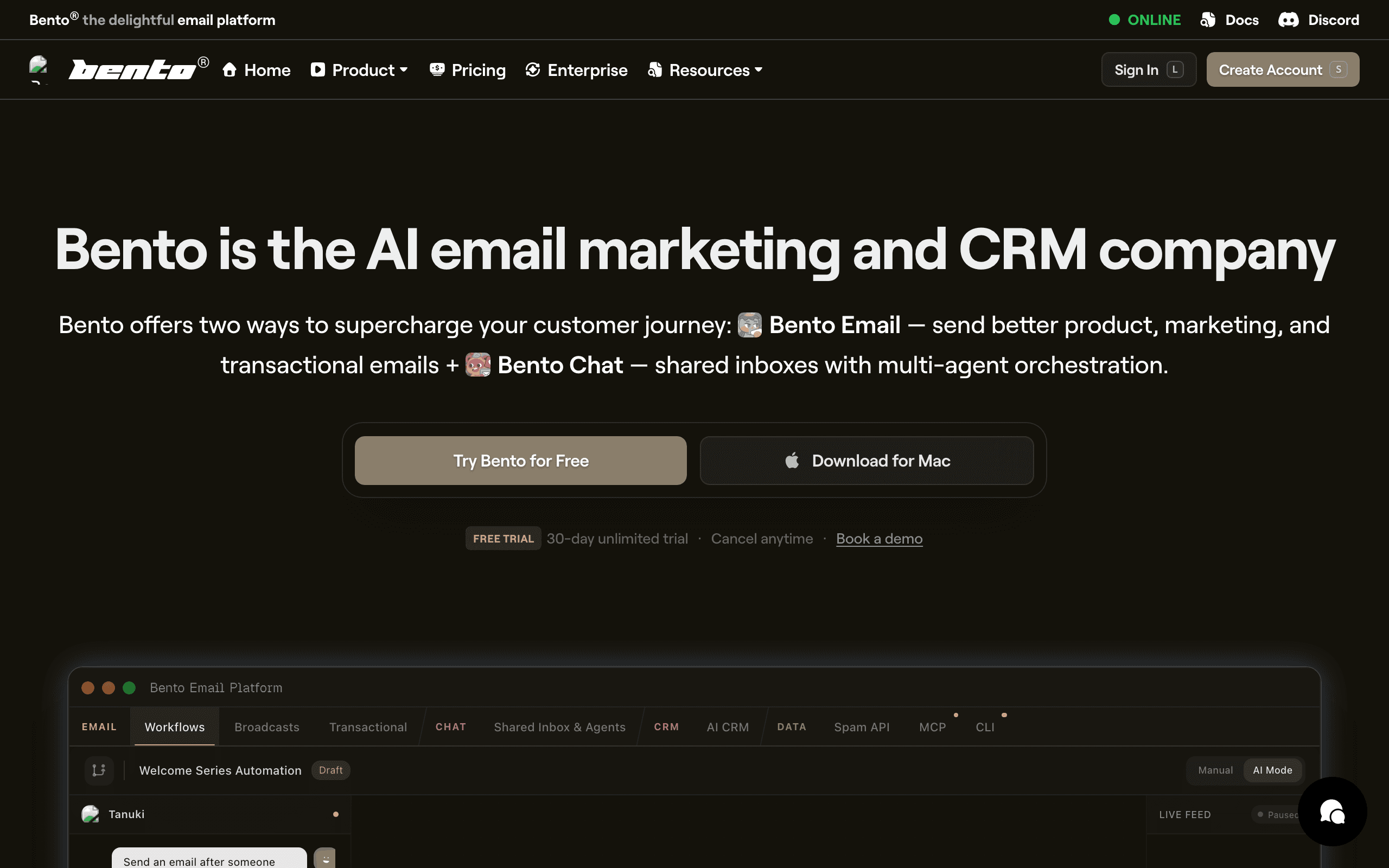
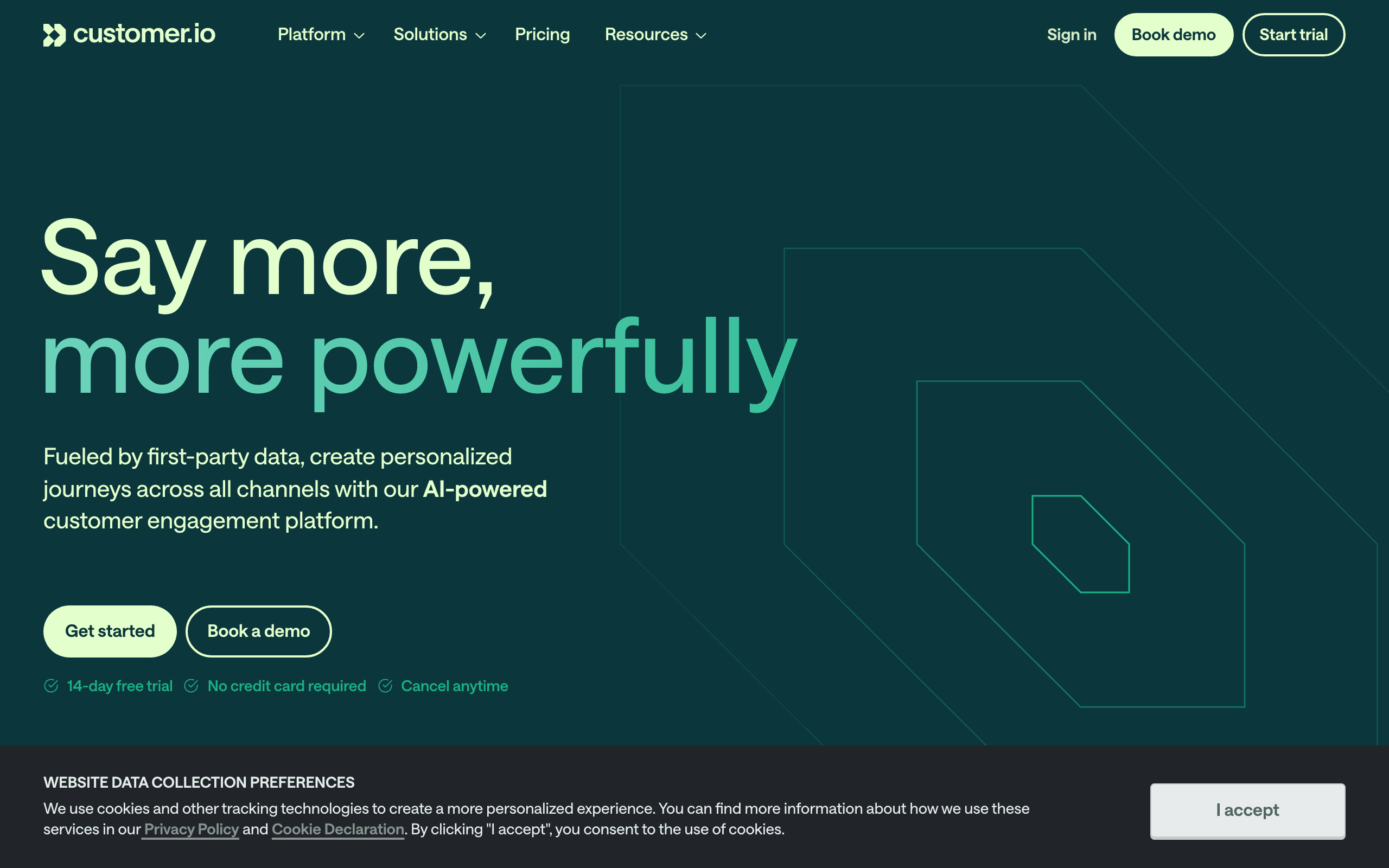
Bento and Customer.io both focus on behavioral email marketing, but they serve different market segments. Bento is the modern, simple option targeting smaller companies with transparent pricing. Customer.io is the enterprise-grade platform with years of development and features for complex use cases. See our Customer.io comparison for more details.
Multi-Channel vs Email Focus
The biggest feature difference is channels. Customer.io supports email, push notifications, SMS, and in-app messaging from one platform. Bento is email-only. If you need to reach users across multiple channels, Customer.io is the choice. If email is enough, Bento is simpler. For campaign management, both work well.
Pricing reality
Bento charges $0.01 per tracked user - simple and predictable. At 10,000 users, that's $100/month. Customer.io's Essentials starts at $100/month for 5,000 profiles. Add 5,000 more and you're paying extra. Customer.io's pricing is harder to predict as you scale. Use our pricing calculator to compare.
Behavioral Automation & Segmentation
Both platforms excel at event-triggered behavioral automations and user segmentation. Customer.io has more advanced triggers and conditions. Bento has simpler workflows but still covers most email campaign needs.
Enterprise Features
Customer.io has HIPAA compliance, SSO, and enterprise support tiers. Bento is more suited for smaller teams without complex compliance requirements. If enterprise features matter, Customer.io is the safer choice.
Making the Decision
Choose Bento for simple, affordable email marketing with quick setup and transparent pricing. Choose Customer.io for multi-channel messaging, advanced behavioral features, or enterprise compliance. For SaaS with Stripe integration, consider Sequenzy as a third option.
The Sequenzy Alternative
If you're a SaaS with Stripe billing, Sequenzy combines email campaigns, smart segmentation, AI sequences, and native Stripe integration at one simple price per contact.
Multi-Channel: When Email Is Not Enough
Customer.io's support for push notifications, SMS, and in-app messages creates a significant advantage for companies whose users are not always reachable by email. Mobile app users may respond better to push notifications. Urgent messages like security alerts benefit from SMS. Contextual onboarding tips are most effective as in-app messages displayed while users are actively using the product.
Bento's email-only approach works for many SaaS companies, especially those with web-based products where email is the primary communication channel. But as products develop mobile apps or need real-time user communication, the single-channel limitation becomes a bottleneck. Consider your product roadmap when choosing between these platforms.
Implementation Effort and Engineering Cost
Both platforms require engineering involvement for setup, but the scope differs significantly. Bento's JavaScript snippet and simple API can be implemented by a single developer in a day. Defining events and user properties is straightforward, and you can start sending behavioral emails quickly.
Customer.io's full implementation takes longer. Setting up the SDK, defining a comprehensive event taxonomy, implementing multi-channel messaging, and configuring advanced segmentation requires dedicated engineering time. For companies with limited engineering resources, this implementation cost should be factored into the platform decision alongside the subscription price.
Scaling Considerations
As your user base grows from thousands to hundreds of thousands, pricing and feature requirements change. Bento's tracked-user model can scale predictably, but email-only functionality may become limiting as lifecycle needs broaden. Customer.io's higher tiers can include more support and enterprise controls, but pricing needs a real usage model.
For rapid-growth SaaS companies, the platform that works at 5,000 users may not be the right choice at 50,000 users. Bento's simplicity may become limiting as your marketing needs grow more sophisticated. Customer.io's complexity may be overkill early on but becomes justified as your team and requirements expand.
Use-case matchups
| Use case | Better fit | Why |
|---|---|---|
| Simple behavioral email with predictable pricing | Bento | It is easier when email is the only active lifecycle channel. |
| Multi-channel journeys across email, push, SMS, and in-app | Customer.io | It coordinates multiple channels from one workflow. |
| Small SaaS team with limited implementation bandwidth | Bento | Setup and concepts are lighter. |
| Enterprise behavioral messaging and compliance | Customer.io | SSO, HIPAA, advanced controls, and deeper segmentation matter here. |
| Stripe-triggered lifecycle email | Sequenzy | Billing events are the native focus. |
Review signals
The Bento reviews on this page praise low cost and simple behavioral email, while noting that teams can outgrow email-only workflows. That makes Bento a fit for focused early lifecycle messaging.
The Customer.io reviews praise multi-channel journeys, segmentation, and API quality, while warning about implementation time and profile-cost growth. That makes it a stronger fit when messaging complexity is already real.
Migration checklist
Before moving between Bento and Customer.io, export people, attributes, events, suppression lists, templates, transactional messages, campaign history, and workflows. If moving to Customer.io, define channels, event taxonomy, message types, SDK/API ownership, and permissions. If moving to Bento, simplify multi-channel journeys into email-only product-event workflows.
Best Fit by SaaS Messaging Complexity
Best email marketing tool for simple SaaS behavioral email
Choose Bento when the product needs event-triggered email, fast setup, and a lighter operating model. It is a good fit when email is the main channel and the team does not need enterprise journey orchestration.
Best email marketing tool for multi-channel lifecycle messaging
Choose Customer.io when email, push, SMS, in-app, and advanced segmentation need to work from the same event data. Customer.io is the better fit when messaging complexity is already real and engineering can support the data model.
Best email marketing tool for Stripe-triggered SaaS lifecycle email
Choose Sequenzy when billing events, subscription states, transactional messages, and lifecycle campaigns are the core jobs. It is more focused than Customer.io and more SaaS-specific than Bento for Stripe-led workflows.
Decision checklist
- Choose Bento if behavioral email is enough and fast implementation matters.
- Choose Customer.io if lifecycle messaging must span email, push, SMS, and in-app with advanced segmentation.
- Avoid Customer.io if the team cannot support the implementation and data operations work.
- Avoid Bento if push, SMS, in-app, or enterprise controls are required soon.
- Consider Sequenzy if subscription billing events should directly drive lifecycle email.









