
Compare performance identity against configurable customer engagement
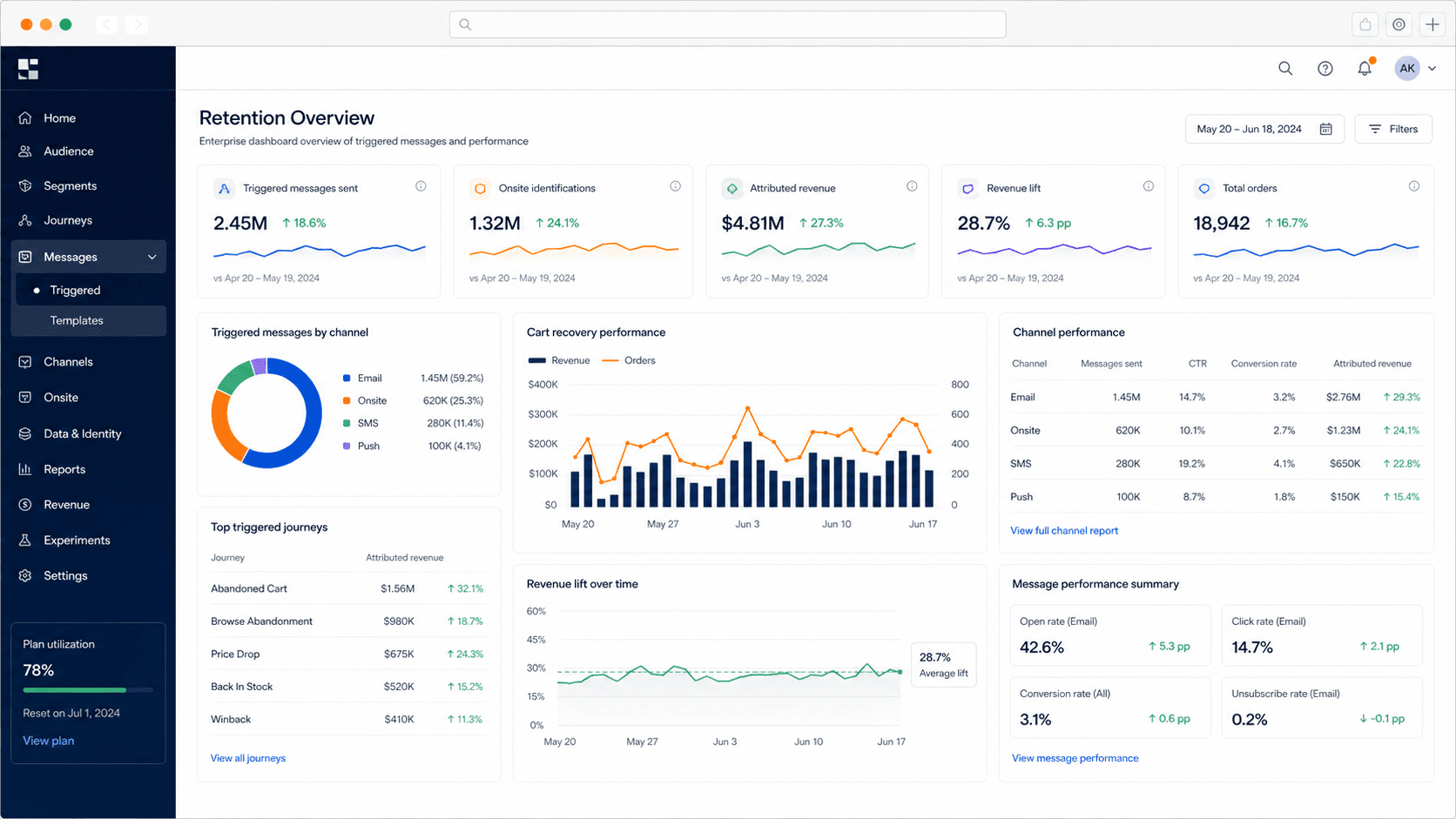
Wunderkind is about recovering revenue from site behavior through visitor identification and triggered messages. Dotdigital is broader customer engagement software for teams that want configurable email marketing, automation, segmentation, and commerce-connected campaigns.
The decision depends on whether the team wants a specialist recovery layer or a wider engagement platform it can operate internally.
Use-case table
| Use case | Better starting point | What to verify |
|---|---|---|
| Identity-led triggered recovery from site traffic | Wunderkind | Check identity, consent, trigger logic, performance measurement, and managed support. |
| Configurable email automation and commerce engagement | Dotdigital | Check integration depth, segments, channels, automation builder, and reporting. |
| Brand wants incremental revenue from onsite intent | Wunderkind | Wunderkind is stronger when recovered revenue is the main KPI. |
| Team wants to build campaigns directly in a broader platform | Dotdigital | Dotdigital fits when internal marketing operations own campaign setup and iteration. |
| Simple email lifecycle and transactionals | Sequenzy | Sequenzy fits when neither broad engagement software nor identity recovery is required. |
Where Wunderkind is stronger
Wunderkind is stronger when site behavior and visitor identification are the revenue opportunity. Evaluate it on incrementality, consent, triggered-message reach, and performance support.
It is less compelling when the team mainly wants a configurable email platform for ordinary campaigns and flows.
Where Dotdigital is stronger
Dotdigital is stronger when the organization wants a broader customer engagement system that internal marketers can configure. It can fit teams with commerce integrations, segments, and campaign workflows that go beyond identity-triggered recovery.
Before replacing Wunderkind, confirm whether Dotdigital will cover the identity-led triggers or simply become the system for regular lifecycle messaging.
Migration checklist
- Split identity-triggered recovery from ordinary engagement campaigns.
- Export consent fields, suppressions, templates, custom fields, segments, and revenue baselines.
- Confirm the ecommerce integration provides required product, order, and behavior data.
- Rebuild normal lifecycle journeys before replacing revenue-critical triggers.
- Compare recovered revenue with controlled measurement after migration.
Buying questions to ask
- Is the goal recovered site revenue or broader campaign control?
- Can Dotdigital access equivalent identity and onsite behavior signals?
- Which channels and commerce features are included?
- Who owns campaign QA, reporting, and optimization?
- How is incremental lift proven?
Where Sequenzy fits
Sequenzy is the lighter email-first choice for Shopify/WooCommerce automations, newsletters, transactional email, and Stripe lifecycle messages without identity-led recovery or a broad engagement suite.
Pricing reality
Ask both vendors for quotes tied to your actual contact count, channels, integrations, and implementation scope. Public comparison text is not enough for a final budget call.
Review signals
Feedback on Wunderkind tends to center on its onsite identification technology and how well its identity-led, triggered email and text programs fit ecommerce retention, alongside notes on setup effort and the need to check enterprise pricing carefully. Feedback on Dotdigital focuses more on everyday campaign work, its integrations, and general usability, with the same caution to confirm pricing and advanced features against how your team will actually use them.
Use-case matchups
| Situation | Best first look | Why |
|---|---|---|
| Enterprise ecommerce brand wants identity capture and triggered revenue programs | Wunderkind | Wunderkind is the baseline here when anonymous visitor identification, onsite capture, triggered email, and managed ecommerce revenue programs are central. |
| Team wants enterprise ecommerce marketing operations | Dotdigital | Dotdigital deserves the first demo when that specialist capability matters more than Wunderkind's identity-led ecommerce model. |
| Store or SaaS team wants simpler lifecycle and transactional email | Sequenzy | Sequenzy is more relevant when email automation and transactional messages matter more than enterprise identity resolution. |
| Team needs a managed service motion | Wunderkind | Wunderkind should be evaluated when services, strategy, and performance programs are part of the buying case. |
| Team wants software-first control | Dotdigital | Dotdigital is usually the better first look if the team wants to own configuration and day-to-day execution internally. |
Best Fit by Ecommerce Marketing Scope
Best identity-led revenue partner for managed ecommerce programs
Wunderkind fits brands that want onsite identification, capture, triggered revenue, and services tied closely to ecommerce performance. It is strongest when the buyer wants a managed growth motion, not just software configuration.
Best ecommerce marketing platform for configurable campaign operations
Dotdigital is the better fit when the team wants to own commerce campaigns, segmentation, automations, and multichannel execution inside a configurable platform.
Best email platform for focused lifecycle and transactional workflows
Sequenzy fits when the team needs practical store, subscription, newsletter, and transactional email without identity-led managed services. It is relevant when teams want control over email workflows without adding onsite identification programs.
Decision checklist
- Does the team want identity-led managed ecommerce growth, or a configurable marketing platform it can run itself?
- Does Dotdigital's strength in enterprise ecommerce marketing operations matter more than Wunderkind's onsite identity and triggered revenue model?
- Which vendor can demonstrate incrementality and attribution using your own ecommerce data?
- Before you sign, pin down what Wunderkind's custom pricing covers, which services are in scope, and who handles implementation on each side.
- Could a simpler lifecycle and transactional email product cover what you need today without enterprise identity tooling? If so, Sequenzy may be the lighter option to test first.








