
Enterprise personalization or engagement marketing operations
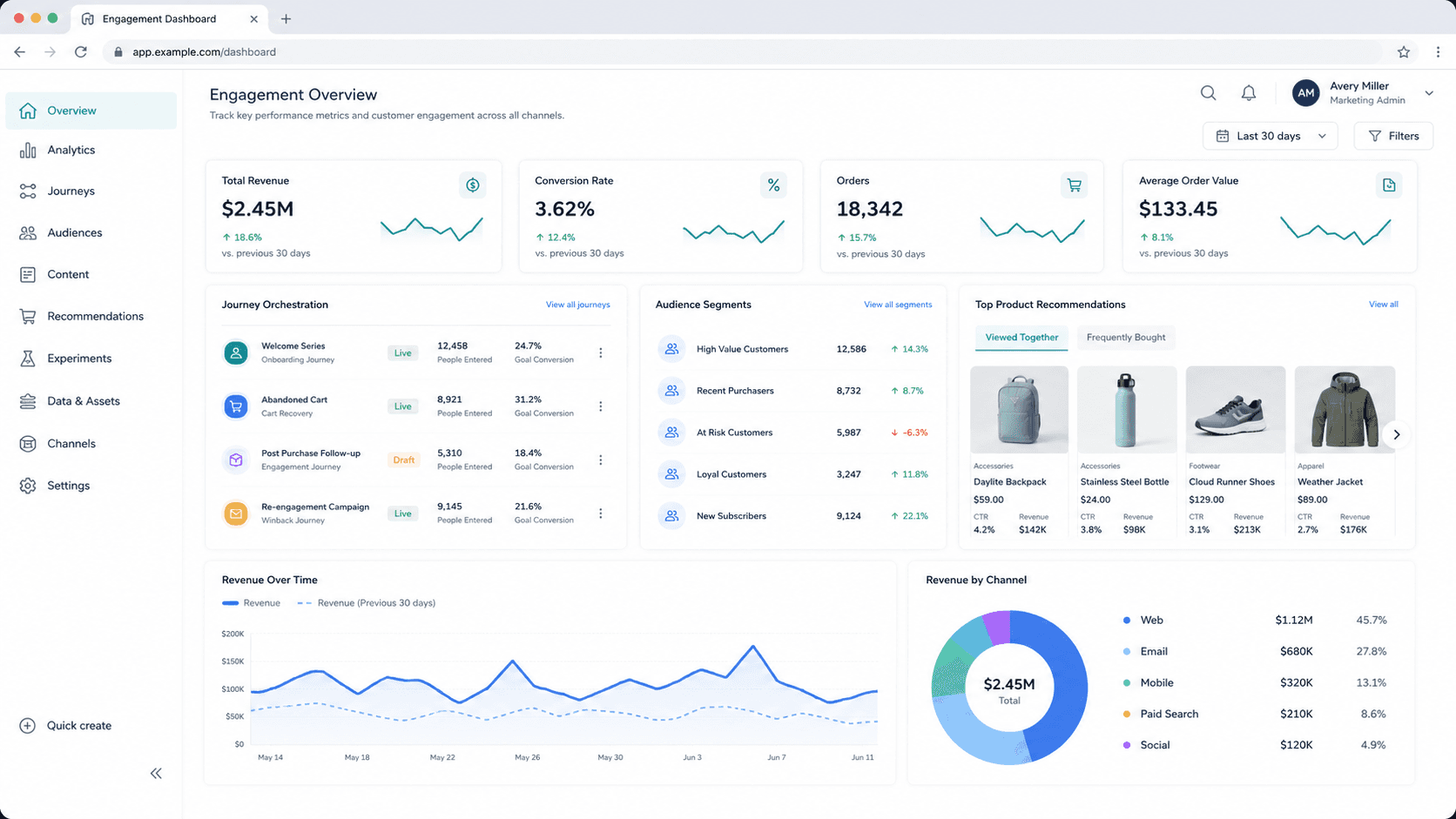
Bloomreach and Dotdigital can both support ecommerce marketing, but they usually enter the conversation from different angles. Bloomreach is the stronger candidate when the company wants a customer data and personalization layer that can connect browsing behavior, catalog data, segmentation, search, recommendations, and journeys. Dotdigital is easier to evaluate when the main need is campaign execution, email automation, SMS or cross-channel engagement, and a marketing team that wants to operate without a large data-platform project.
That distinction matters because a team can outgrow a basic email tool without needing Bloomreach. If the pressure is better campaign workflows, stronger automation, and cleaner engagement reporting, Dotdigital may be the more direct upgrade. If the pressure is using deeper product, customer, and behavioral data across experiences, Bloomreach is the more natural fit.
Pricing reality
Both tools need pricing modeled against real ecommerce usage. For Bloomreach, verify modules, customer data volume, product catalog feeds, web personalization, SMS or WhatsApp needs, implementation services, support, and contract terms. For Dotdigital, verify contacts, send volume, SMS, ecommerce integrations, users, automation depth, and any plan gates. The useful comparison is total operating cost, not a single headline subscription number.
Use-case matchups
| Need | Better fit | Why |
|---|---|---|
| Personalizing ecommerce experiences from customer and product data | Bloomreach | Bloomreach is built around enterprise data activation and personalization, not only campaign sending. |
| Running marketer-owned engagement campaigns | Dotdigital | Dotdigital is more naturally positioned around campaign building, automations, and day-to-day marketing execution. |
| Connecting email to broader ecommerce personalization | Bloomreach | Bloomreach makes more sense when email is one output of a larger personalization strategy. |
| Improving an email/SMS program without rebuilding the data stack | Dotdigital | Dotdigital can be a cleaner choice when the team needs execution tooling more than CDP depth. |
| Keeping a small ecommerce email stack simple | Sequenzy | Sequenzy is narrower: email automation for Shopify, WooCommerce, Stripe-aware lifecycle messaging, and transactional email. |
Best Fit by Data Activation and Campaign Operations
Best commerce platform for ecommerce personalization
Bloomreach is the better fit when the real problem is activating customer, product, catalog, order, and behavior data across site personalization, recommendations, and campaigns. It is strongest when email is one output of a larger commerce-personalization strategy.
Best engagement platform for marketer-owned campaigns
Dotdigital is the better fit when marketers mainly need campaign building, automations, SMS, reporting, and day-to-day engagement execution without rebuilding the data stack. It is more practical when the team wants campaign operations depth rather than CDP depth.
Best email tool for a simpler ecommerce lifecycle stack
Sequenzy is the better fit when the team wants Shopify, WooCommerce, Stripe-aware lifecycle email, transactional messages, and newsletters without operating a broader enterprise personalization platform. It is a narrower tool for email-first teams.
Buying questions to ask
Ask Bloomreach how much implementation work is required before marketers can launch the first revenue-driving journeys, and which modules are actually needed for your use case. Ask Dotdigital how segmentation, ecommerce events, SMS, and reporting behave at your real contact and send volume. For both, check what is native, what requires services, and what depends on your ecommerce platform.
The risky purchase is choosing Bloomreach for ordinary campaign work or choosing Dotdigital when the real problem is enterprise data activation. The right choice should match the operating burden your team is ready to carry.
Where Sequenzy fits
Sequenzy fits when the comparison is happening because both options feel heavier than the job. If the store mainly needs welcome flows, cart recovery, post-purchase email, newsletters, transactional messages, and Shopify or WooCommerce support, Sequenzy keeps the stack focused instead of adding a larger engagement or personalization suite.
Review signals
The structured reviews on this page are review-theme summaries rather than individual sourced quotes. Bloomreach themes point to CDP depth, reporting, and mature ecommerce retention fit, with setup effort and pricing clarity as cautions. Dotdigital themes point to campaign workflow, integrations, and day-to-day usability, with current pricing and advanced feature access as the cautions.
Decision checklist
| Question | Why it matters |
|---|---|
| Is the real problem data activation or campaign execution? | Bloomreach fits data and personalization depth; Dotdigital fits marketer-owned engagement operations. |
| Which ecommerce events are required? | Cart, browse, order, refund, consent, and catalog events determine implementation scope. |
| Are SMS and cross-channel journeys actually needed? | If not, a simpler email-first tool may be easier to operate. |
| Who owns setup and reporting? | Enterprise personalization needs data and marketing ops ownership, not only campaign copy. |
| Is Stripe lifecycle email central? | Sequenzy is more focused when billing events drive messaging. |
Migration checklist
Before moving between Bloomreach and Dotdigital, export contacts, suppressions, consent state, custom fields, segments, templates, campaign history, automations, ecommerce events, product catalog feeds, SMS settings, and reporting history. If moving to Bloomreach, define identity resolution, catalog feeds, recommendations, personalization rules, and data ownership. If moving to Dotdigital, simplify enterprise personalization into campaign journeys, ecommerce events, segments, and reporting that marketers can maintain.








