Start with the workflow
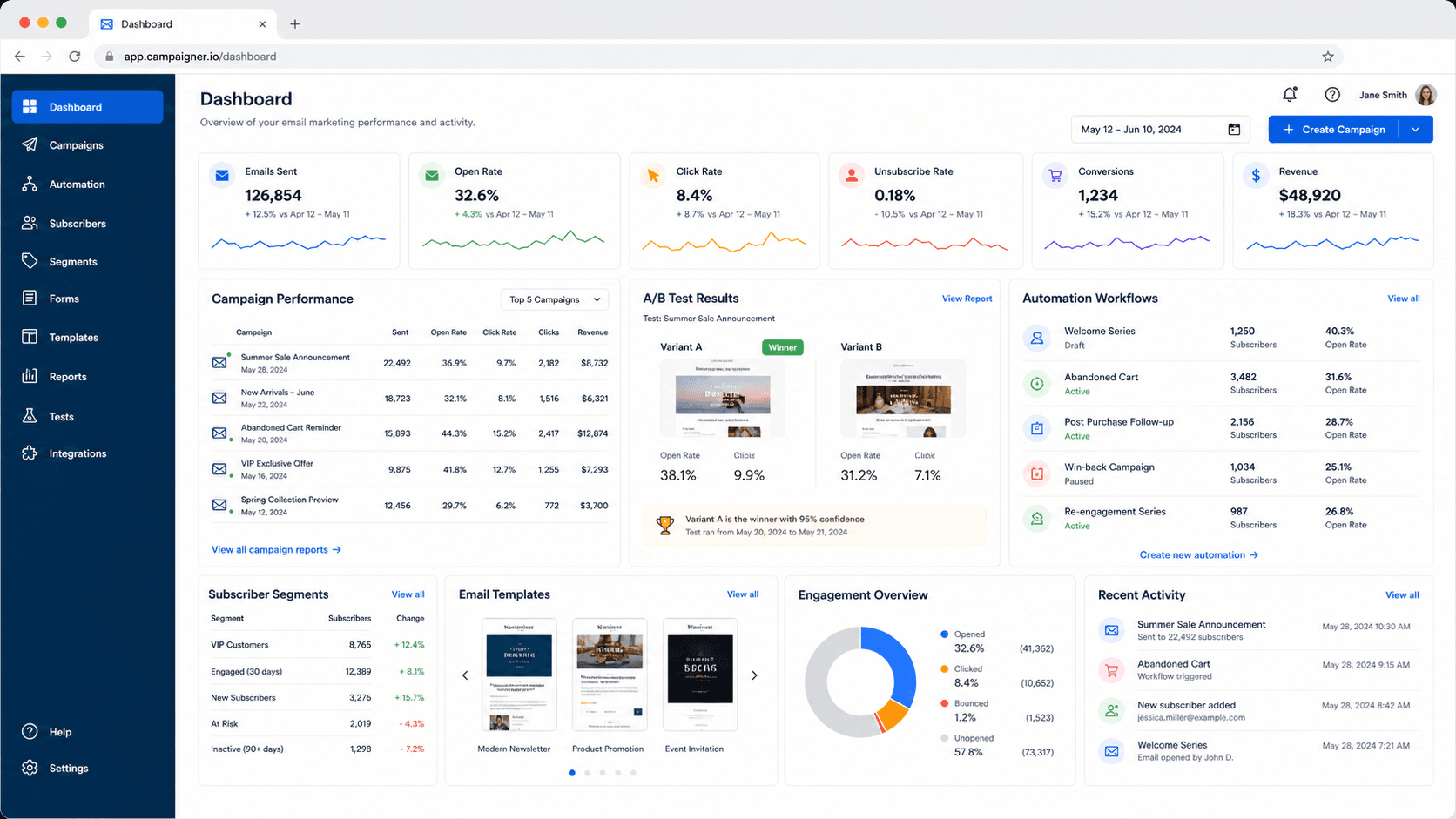
Campaigner and Drip both cover core ecommerce email, so the deciding factor is usually workflow fit rather than a feature list. Campaigner's strengths are multivariate testing, campaign building, automation workflows, and its template library, which suit teams that test messaging often. Drip fits teams already comfortable with its editor and reporting, even where individual features run shallower. Neither is as ecommerce-native as tools built specifically for that job, so weigh setup effort and plan pricing before committing.
Where Campaigner wins
Campaigner earns its place when your team will genuinely use multivariate testing alongside its campaign builder and automation workflows. Those strengths pay off fastest when tied directly to revenue recovery or repeat purchase campaigns rather than sitting unused. Keep in mind Campaigner is less ecommerce-native than specialists like Klaviyo or Omnisend, and its pricing and plan limits need checking before signing up, since setup can take more effort than a simple email tool requires.
Where Drip wins
Drip makes more sense when your team already knows its editor and reporting, since that familiarity often ships campaigns faster than chasing deeper features elsewhere. Its feature depth still depends on the plan you choose, and it may not match Campaigner's testing tools or template library. Weigh that against support quality and total cost, because pricing can climb as contacts or channels grow, and Drip was not built to replace a full ecommerce suite.
Use-case matchups
| Use case | Better fit | What to verify |
|---|---|---|
| Email optimization and testing | Campaigner | Confirm multivariate testing, template workflow, ecommerce triggers, reporting, and current plan limits. |
| Ecommerce lifecycle campaigns | Drip | Verify Shopify/WooCommerce integration, product data, segmentation, automation workflow, and pricing at your contact volume. |
| Repeat-purchase email programs | Drip | Drip is stronger when the daily workflow is ecommerce lifecycle messaging rather than broad template production. |
| Advanced campaign experimentation | Campaigner | Campaigner fits better if test sophistication is used every week and revenue lift can justify complexity. |
| Simpler commerce email plus transactional | Sequenzy | Compare if the team mostly needs Shopify/WooCommerce email, Stripe lifecycle triggers, and transactional email together. |
Best Fit by Ecommerce Email Need
Best email marketing tool for advanced campaign experimentation
Campaigner fits teams that run frequent tests across templates, segments, dynamic content, and campaign variants outside a purely ecommerce workflow. It is strongest when experimentation cadence and reporting depth matter more than store-native purchase triggers.
Best ecommerce email platform for repeat-purchase flows
Drip is the better fit when Shopify or WooCommerce behavior, purchase data, segments, and repeat-purchase lifecycle campaigns drive the daily work. Choose it when cart, order, and product signals should shape every major automation.
Best email platform for commerce lifecycle and transactionals
Sequenzy fits when the team mostly needs Shopify, WooCommerce, Stripe lifecycle triggers, and transactional email in one simpler stack. It is more direct when campaigns and transactionals need to share customer state.
Pricing reality
Campaigner and Drip both require a current-plan check because the useful cost depends on contacts, ecommerce integration depth, plan limits, automation needs, support, and usage. Campaigner is easier to justify when advanced testing is the buying reason. Drip is easier to justify when ecommerce workflow fit, integrations, and day-to-day usability are more important than multivariate testing.
Review signals
The structured review data on this page keeps public review-theme summaries for Campaigner and Drip. Treat those as directional only: Campaigner's signal is about multivariate testing and reporting; Drip's signal is about workflow, integrations, and usability. The buying step is still to verify reviews from teams with comparable ecommerce stack and contact volume.
Migration checklist
| Step | What to confirm |
|---|---|
| Audience data | Export contacts, lists, tags, custom fields, segments, unsubscribes, bounces, consent, and ecommerce identifiers. |
| Ecommerce events | Preserve cart, order, browse, product, coupon, and customer lifecycle events before rebuilding flows. |
| Testing assets | If leaving Campaigner, save multivariate test results, winning variants, templates, dynamic content, and reports. |
| Automations | Rebuild welcome, abandoned-cart, post-purchase, win-back, reactivation, repeat-purchase, and suppression workflows. |
| Integrations | Reconnect Shopify, WooCommerce, CRM, analytics, ads, reviews, loyalty, support, and payment tools. |
| Reporting | Export campaign, flow, revenue, test, deliverability, and contact-history reports for before/after comparison. |
Decision checklist
- Is multivariate testing central enough to justify Campaigner?
- Does Drip's ecommerce workflow make campaigns easier to ship and report on?
- Which platform fits your Shopify/WooCommerce data and segmentation model better?
- What happens to transactional email, Stripe lifecycle messages, SMS, reviews, or loyalty if they are outside the tool?
- Would Sequenzy be simpler if the real need is commerce email plus transactional messages?
How to make the Campaigner vs Drip decision
Campaigner is stronger when you need email marketing with advanced testing. Drip is better when its ecosystem, workflow, or pricing is a closer match for your team.
| Decision area | Pick Campaigner when... | Pick Drip when... |
|---|---|---|
| Primary workflow | Its core strength matches the campaign you need next. | Its core strength matches the campaign you need next. |
| Data model | Your customer data already fits its segments and triggers. | Your customer data already fits its segments and triggers. |
| Team ownership | Someone can own setup, testing, and reporting inside the tool. | Someone can own setup, testing, and reporting inside the tool. |
| Budget | The price is justified by workflows you will use now. | The price is justified by workflows you will use now. |