
20 Best Value Email Nurture Sequence Software (2026): Price-per-Feature Compared

Searching for the best value automated email nurture sequence software usually means one thing: you want real automation depth (behavioral triggers, branching logic, multi-step sequences) without paying enterprise prices for it. Sticker price alone is a bad way to compare, since a $9/month plan that can't build a real branching sequence isn't actually cheap once you factor in what it can't do.
This guide compares what nurture automation costs at 1,000, 10,000, and 25,000 contacts across 20 platforms, scores each on automation depth per dollar, and reviews every tool individually. It also links to two example resources - the nurture sequence frameworks guide and 17 real nurture sequence examples - so the "best value automated email nurture sequence examples" side of this question is covered too, not just pricing.
This guide is part of our best email automation software comparison.
Short Answer
If you want the conclusion before the tables:
- Best overall value for SaaS and AI teams: Sequenzy. Event triggers, behavioral segments, and send-time optimization are on every paid plan from $19/month, with no automation add-on to unlock branching.
- Best value on the tightest budget: Moosend or Zoho Campaigns, accepting that automation depth is shallower than a dedicated tool.
- Best value for creators: Kit (ConvertKit), whose free plan is generous on list size, though automation is limited until Creator Pro.
- Best value for ecommerce: Klaviyo, which costs more but is purpose-built for commerce flows.
- Best value when you need CRM and automation together: ActiveCampaign, provided you can absorb a cost curve that climbs steeply with contact count.
The single most expensive mistake in this category is buying on sticker price and discovering that branching logic sits one tier up. A $9/month plan that can only send a fixed schedule is not cheaper than a $19/month plan that can branch; it is a different product. The tables below are ordered to make that difference visible.
What "Value" Means for Nurture Automation
Cheapest isn't automatically best value. For a nurture sequence specifically, look at:
- Automation depth: Can it branch on behavior (opens, clicks, events), not just send on a fixed schedule?
- Trigger variety: Does it support event-based triggers beyond basic email engagement (site visits, purchases, custom API events)?
- Included features: Are landing pages, forms, and segmentation included, or do they cost extra?
- Contact-based cost curve: How steeply does price rise as your list grows, since a nurture sequence that works at 1,000 contacts needs to still be affordable at 10,000 and 25,000?
Cost Comparison at 1k / 10k / 25k Contacts
Prices reflect published 2026 rates and can shift between tiers depending on plan and billing frequency; check each provider's current pricing page before budgeting.
| Platform | ~1,000 contacts | ~10,000 contacts | ~25,000 contacts |
|---|---|---|---|
| Sequenzy | Free (up to 2,500 emails/mo) or from $19/mo | From $19/mo, scales with send volume | Check current pricing |
| Zoho Campaigns | Free (up to 2,000 contacts) | ~$30-45/mo | ~$75-110/mo |
| Moosend | ~$9-16/mo | ~$50-80/mo | Check current pricing |
| MailerLite | ~$10-20/mo | ~$50-90/mo | Check current pricing |
| Brevo | ~$9-18/mo (send-based) | ~$69/mo (Standard, 40k emails/mo) | ~$129/mo (Standard, 100k emails/mo) |
| Mailjet | ~$17/mo | ~$50-70/mo | Check current pricing |
| Constant Contact | ~$12/mo | ~$80-120/mo | Check current pricing |
| AWeber | Free or ~$15/mo | ~$60-90/mo | Check current pricing |
| GetResponse | ~$19/mo | ~$60-90/mo | Check current pricing |
| Kit (ConvertKit) | $0 (Free) or ~$39/mo (Creator) | $0 on Free plan (up to 10k subs, limited automation) or ~$100-150/mo (Creator) | ~$279/mo (Creator Pro) |
| ActiveCampaign | ~$49-59/mo (Plus, annual) | ~$189/mo (Plus, annual) | ~$449/mo (Plus, annual) |
| Drip | ~$39/mo | ~$100-150/mo | Check current pricing |
| Klaviyo | ~$20-45/mo | ~$150/mo (Email plan) | ~$400/mo (Email plan) |
| Encharge | ~$79/mo | ~$150-200/mo | Check current pricing |
| Userlist | ~$149/mo | ~$200-300/mo | Check current pricing |
| Customer.io | ~$100/mo | ~$300-400/mo | Check current pricing |
| Vero | ~$99/mo | ~$200-300/mo | Check current pricing |
| Ontraport | ~$79-147/mo | ~$200-300/mo | Check current pricing |
| Keap | $249-299/mo (flat, includes 1,500 contacts) | ~$350-450/mo | Check current pricing |
| HubSpot | $0-20/seat/mo (Starter) | ~$890/mo+ (Professional, contact overages apply) | ~$1,000+/mo more than the 10k tier |
Sequenzy's pricing is free up to 2,500 emails/month, then from $19/month, which makes it one of the least expensive options with full automation and behavioral segmentation included at every paid tier - there's no separate "automation add-on" to unlock branching logic.
Value Scoring: Automation Depth Per Dollar
How this table is built. "Value" here is not a composite score with hidden weights. It is a single judgment: at the lowest plan that can run a real branching nurture sequence, what does the platform cost, and what is it missing? Three rules produce the verdicts:
- The qualifying plan is the cheapest tier that supports conditional branching and behavioral triggers, not the cheapest tier overall. A plan that can only send fixed-delay sequences does not qualify, because it cannot run any of the nurture sequence examples on this site.
- Add-ons that are required for that qualifying capability count toward the price. If branching, automation, or event triggers are a paid unlock, the unlock is part of the cost.
- "Notable Gap" is the constraint most likely to force a migration later, not a minor feature complaint. That is the column that should worry you most, because switching platforms mid-program costs far more than the price difference between any two rows here.
Two disclosures. Sequenzy is our product, so treat its row as a vendor claim and verify it against a trial rather than taking it on faith. And this table covers 9 of the 20 platforms reviewed below, specifically the ones where the value verdict is clear enough to state; the rest are covered individually in the reviews. Published prices also move, so confirm current rates before budgeting.
| Platform | Automation Depth | Notable Gap | Value Verdict |
|---|---|---|---|
| Sequenzy | Event triggers, behavioral segments, send-time optimization on all paid plans | Newer platform, smaller template library | Strong value for SaaS and AI teams needing real branching logic at low list sizes |
| Zoho Campaigns | Basic automation on paid tiers | Automation depth well behind dedicated tools | Best value for very tight budgets with simple sequences |
| Moosend | Behavior-based triggers at a low price | Smaller integration ecosystem | Good value for budget-conscious small lists |
| MailerLite | Basic automation on Growing Business, more triggers on Advanced | Deeper automation gated behind a higher tier | Good value for simple sequences, weaker once you need complex branching |
| Brevo | Automation workflows included from Standard up | Send-based billing makes cost less predictable | Good value if send volume is low relative to list size |
| ActiveCampaign | Very deep automation and CRM-linked triggers | Price climbs fast with contact count | Best for teams that need CRM + automation together |
| Klaviyo | Deep ecommerce-specific flows | Pricing is ecommerce-shaped and rises quickly | Best value specifically for ecommerce |
| HubSpot | Full CRM-linked automation | Real depth gated behind Professional at $890/month+ | Weak value unless you already need the CRM |
| Kit (ConvertKit) | Basic sequences on Creator, more on Creator Pro | Free plan generous on list size, limited on automation | Good value for creators |
Not for you if: you need a built-in CRM with deal pipelines (look at ActiveCampaign or HubSpot instead), or your list is overwhelmingly ecommerce-driven with heavy SMS needs (Klaviyo is more purpose-built there, though it costs more at scale).
The 20 Best Value Options, Reviewed
1. Sequenzy
Best for: SaaS and AI teams wanting real automation depth without enterprise pricing
Sequenzy's automation builder, behavioral segments, and send-time optimization are included on every paid plan starting at $19/month, with no feature gate pushing you to a higher tier just to unlock branching logic. Pay-per-email pricing with unlimited contacts means a growing list doesn't inflate your bill the way contact-based pricing does.
- Pricing: Free up to 2,500 emails/month, then $19/month (unlimited contacts)
- Pros: Full automation on every plan, AI sequence generation, unified transactional + marketing
- Cons: Newer platform, smaller template library than established competitors
2. Zoho Campaigns
Best for: Extremely tight budgets needing basic nurture automation
Zoho Campaigns' free plan covers 2,000 contacts and 6,000 emails/month, with paid plans starting around $3/month for basic automation. It's part of the broader Zoho ecosystem, which is a plus if you already use Zoho CRM.
- Pricing: Free up to 2,000 contacts, paid from $3/month
- Pros: Cheapest entry point on this list, generous free tier, Zoho ecosystem integration
- Cons: Automation depth well behind dedicated nurture platforms, interface feels dated
3. Moosend
Best for: Budget-conscious teams wanting behavior-based triggers
Moosend offers automation workflows, landing pages, and basic behavioral triggers at one of the lowest price points among tools with real branching logic.
- Pricing: From $9/month for 500 subscribers
- Pros: Very affordable, decent automation for the price, responsive support
- Cons: Smaller integration ecosystem, less brand recognition
4. MailerLite
Best for: Simple nurture sequences on a budget
MailerLite's Growing Business and Advanced plans add more automation triggers as you scale, with a clean editor that handles most straightforward nurture sequences without complexity.
- Pricing: Free up to 250 subscribers, then from $10/month
- Pros: Very affordable, clean interface, good landing pages
- Cons: Deeper behavioral automation gated behind Advanced tier
5. Brevo
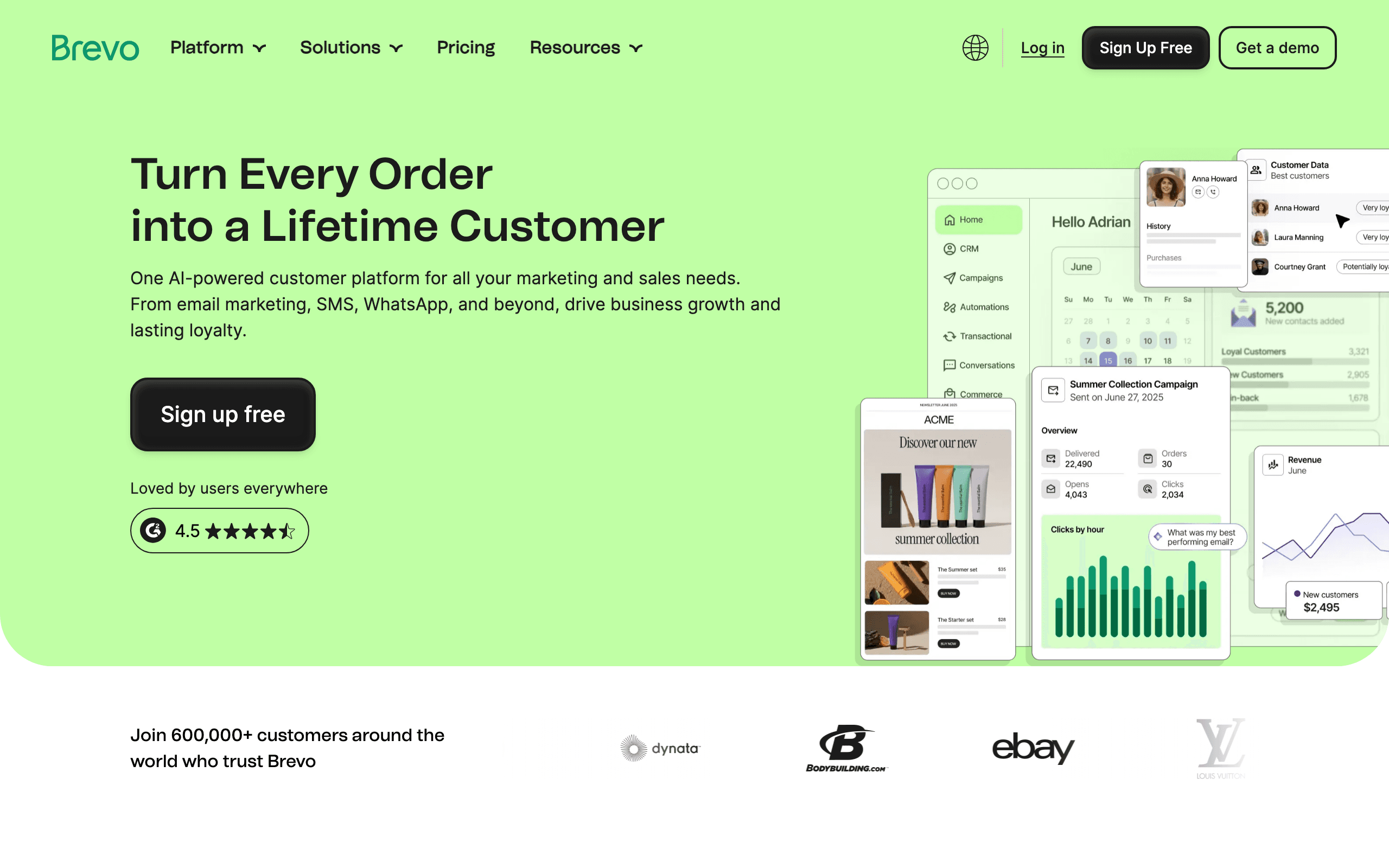
Best for: Teams wanting nurture automation plus SMS in one bundle
Brevo's automation workflows support multi-step nurture sequences with conditional branching, and SMS is included from the Standard tier up, useful for sequences that mix channels.
- Pricing: Free up to 300 emails/day, from $9/month
- Pros: SMS included, generous free tier, decent automation
- Cons: Send-based billing is less predictable than contact-based pricing
6. Mailjet
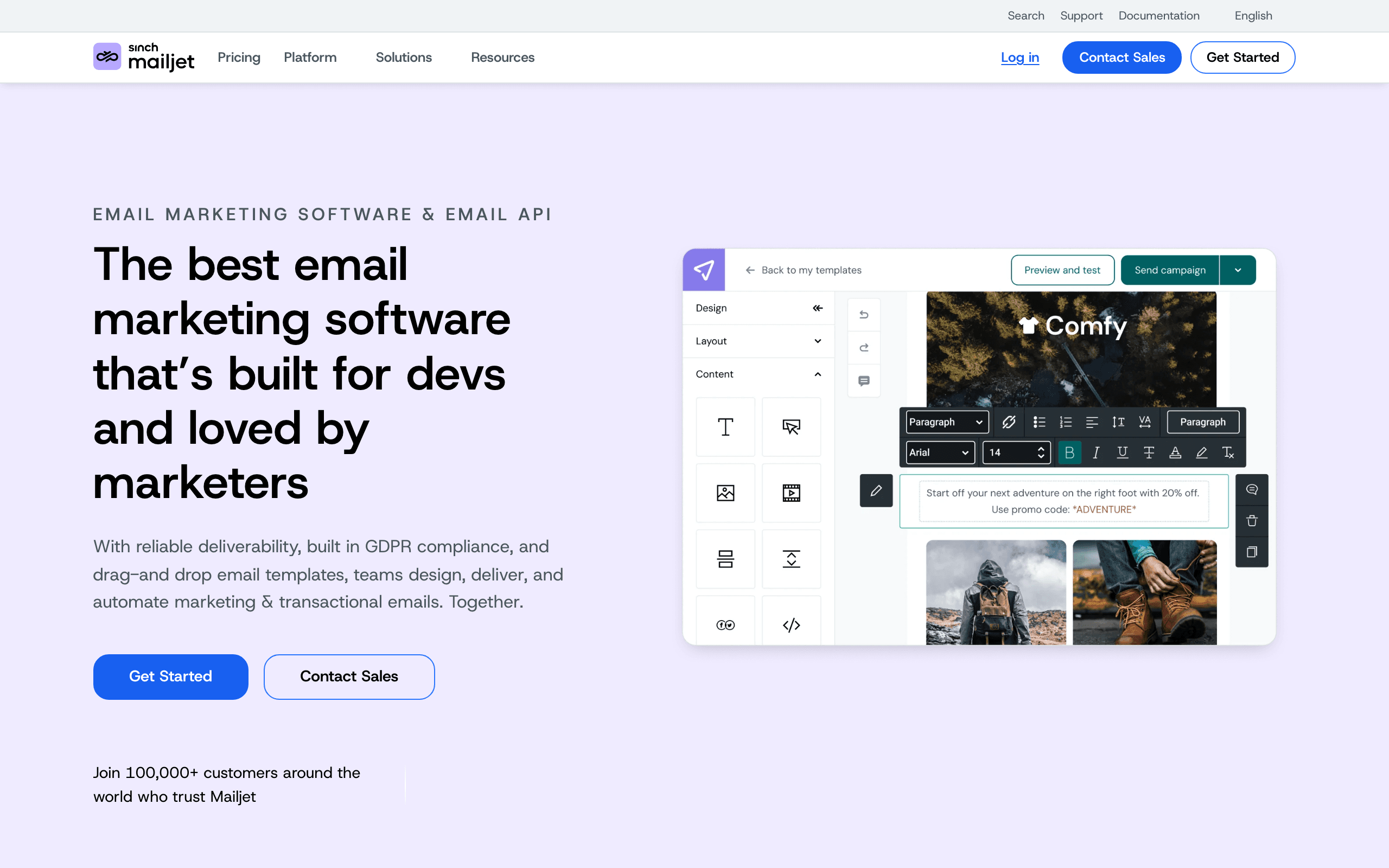
Best for: Teams wanting collaborative editing on nurture sequences
Mailjet's real-time collaborative template editor is distinctive among tools at this price point, letting multiple team members build a nurture sequence's emails simultaneously.
- Pricing: Free up to 200 emails/day, from $17/month
- Pros: Collaborative editing, solid automation basics, transactional support
- Cons: Smaller ecosystem and community than larger providers
7. Constant Contact
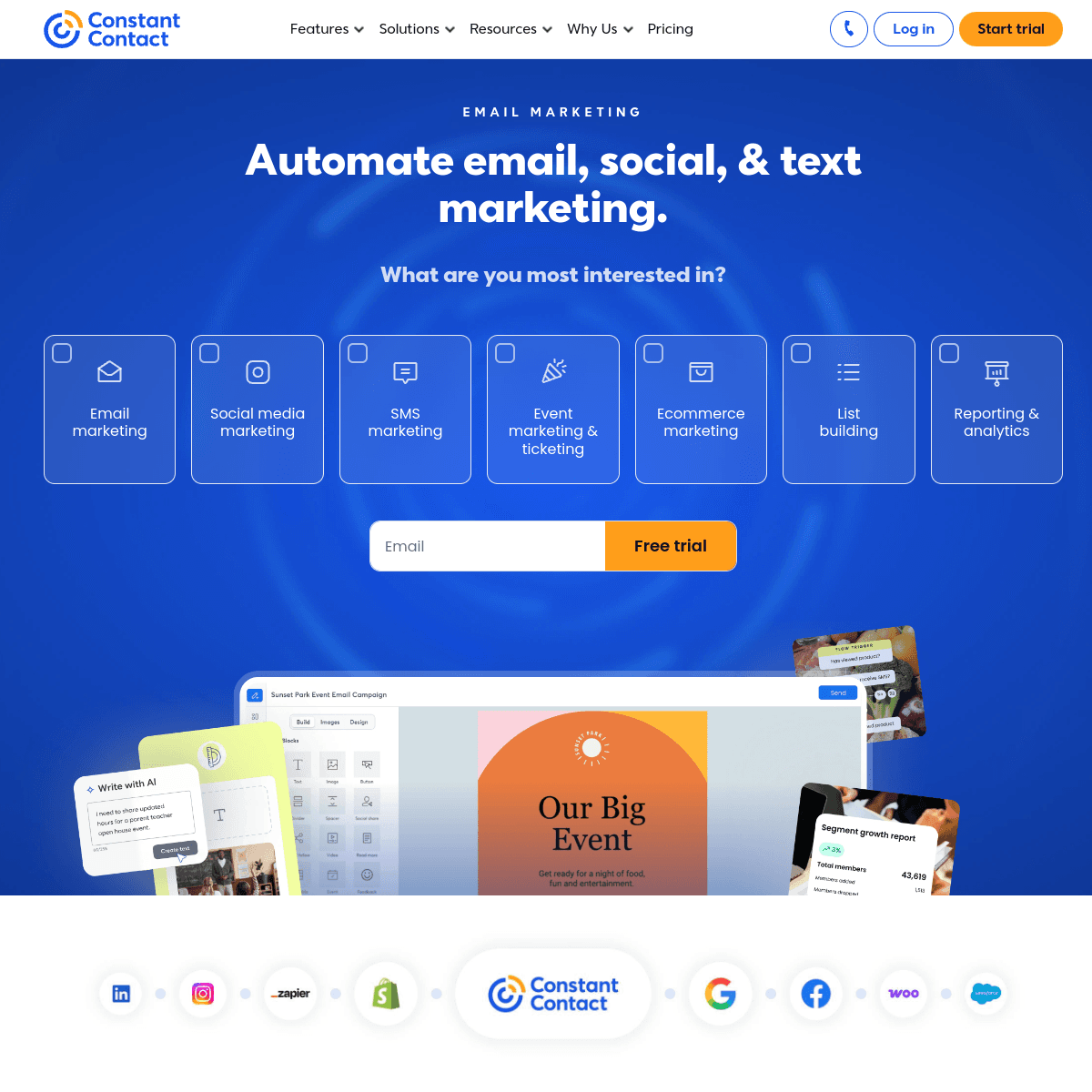
Best for: Teams wanting simple nurture sequences with phone support
Constant Contact's automation is lighter than dedicated nurture platforms, but its ease of use and excellent phone support suit teams without technical staff building their first sequences.
- Pricing: From $12/month for 500 contacts
- Pros: Very easy to use, excellent phone support, reliable delivery
- Cons: Limited automation depth, higher prices at scale
8. AWeber
Best for: Reliable, no-frills nurture sequences
AWeber is one of the oldest platforms in this category, with a dated interface but reliable deliverability and straightforward automation for basic nurture sequences.
- Pricing: Free up to 500 subscribers, then from $15/month
- Pros: Reliable deliverability, simple to use, long track record
- Cons: Feels dated, limited advanced automation
9. GetResponse
Best for: Teams wanting nurture automation plus webinars and landing pages
GetResponse bundles automation with webinar hosting and landing pages, giving nurture sequences a natural home alongside lead-generation funnels.
- Pricing: Free tier available, from $19/month
- Pros: All-in-one platform, competitive pricing, capable automation builder
- Cons: Busy interface, features can feel bolted on
10. Kit (ConvertKit)
Best for: Creators running nurture sequences for digital products
Kit's free plan covers up to 10,000 subscribers with unlimited sends, though automation is basic until you upgrade to Creator or Creator Pro for tag-based branching sequences.
- Pricing: Free up to 10,000 subscribers (limited automation), Creator from $39/month
- Pros: Generous free tier, simple tag-based automation, strong creator community
- Cons: Limited automation depth on the free plan, pricing climbs on Creator Pro
11. ActiveCampaign
Best for: Teams wanting the deepest automation and CRM combined
ActiveCampaign's automation builder is the most sophisticated on this list for branching logic, conditional splits, and CRM-linked lead scoring, at a price that climbs meaningfully with contact count.
- Pricing: From $29/month (Lite), Plus from $49/month
- Pros: Very deep automation, CRM included, strong deliverability
- Cons: Price jumps quickly at higher contact tiers, steeper learning curve
12. Drip
Best for: Ecommerce nurture sequences with revenue tracking
Drip's automation ties directly to purchase behavior and revenue attribution, which is valuable specifically for ecommerce nurture sequences (welcome, post-purchase, win-back).
- Pricing: From $39/month for 2,500 contacts
- Pros: Strong revenue tracking, ecommerce-native triggers, detailed analytics
- Cons: Purpose-built for ecommerce, less natural for SaaS nurture
13. Klaviyo
Best for: Ecommerce brands running behavior-rich nurture flows
Klaviyo's flow library is the deepest for ecommerce-specific nurture sequences (browse abandonment, cart recovery, post-purchase), though pricing rises steeply as your list grows.
- Pricing: Free up to 250 contacts, from $45/month
- Pros: Deepest ecommerce automation, strong analytics, mature integrations
- Cons: Pricing scales aggressively, less natural for SaaS
14. Encharge
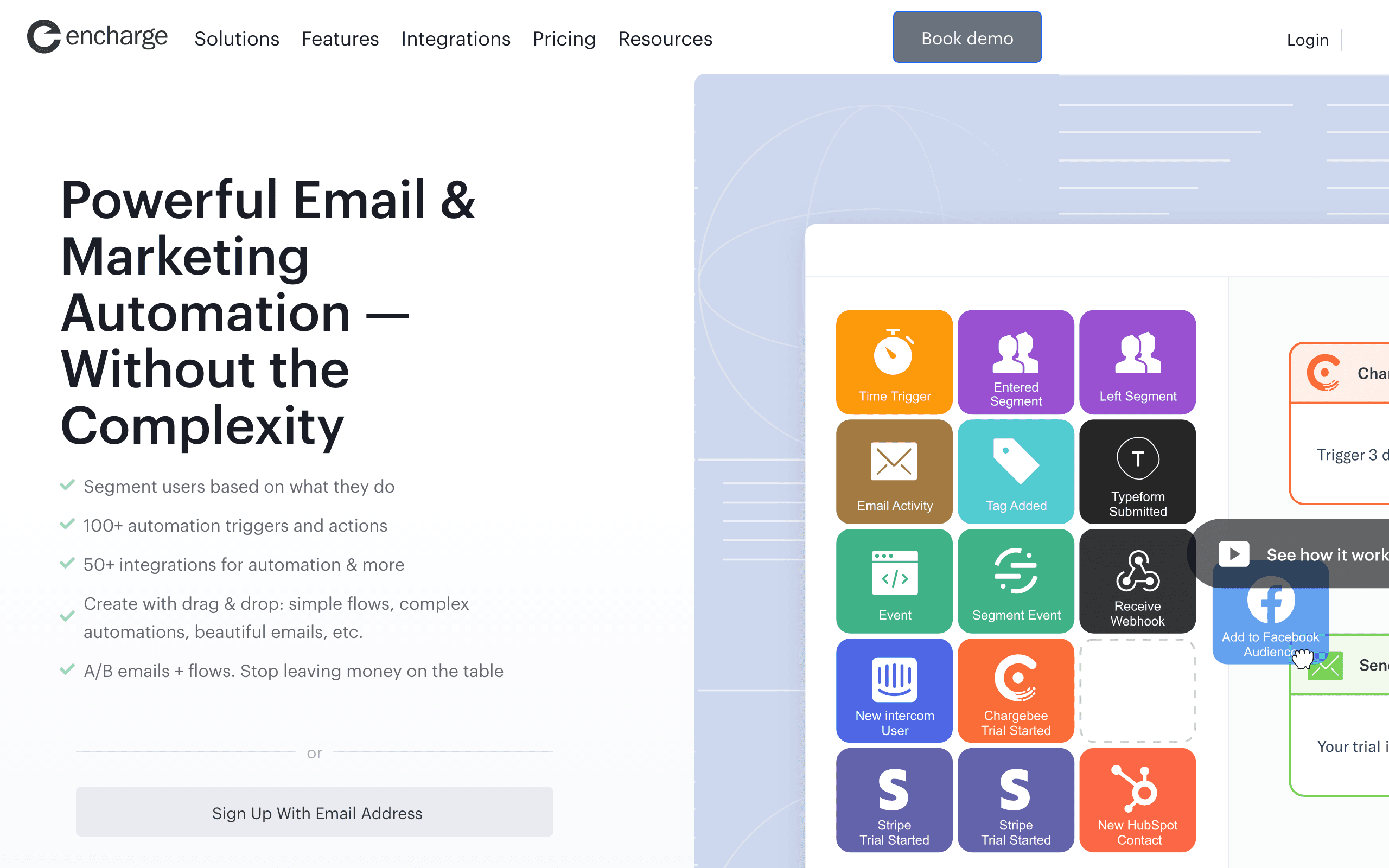
Best for: Visual nurture sequence building with lead scoring
Encharge's flow builder is fully visual, with behavior-based scoring that can branch a nurture sequence without writing any conditional logic manually.
- Pricing: From $79/month
- Pros: Visual builder, score-based branching, non-technical friendly
- Cons: Mid-range pricing for the feature set, smaller community
15. Userlist
Best for: B2B SaaS nurture sequences at the account level
Userlist's nurture sequences can branch based on both individual user behavior and aggregate company-level activity, a distinction that matters for B2B SaaS with multi-seat accounts.
- Pricing: From $149/month
- Pros: Account-aware nurture logic, B2B-native design
- Cons: Higher starting price, smaller ecosystem
16. Customer.io
Best for: Technical teams building highly specific nurture logic
Customer.io's workflow engine supports arbitrary event combinations and wait-for-event logic, the most flexible nurture-sequence engine on this list, at real setup cost.
- Pricing: From $100/month
- Pros: Extremely flexible logic, wait-for-event workflows, granular data model
- Cons: Expensive, requires engineering investment to set up well
17. Vero
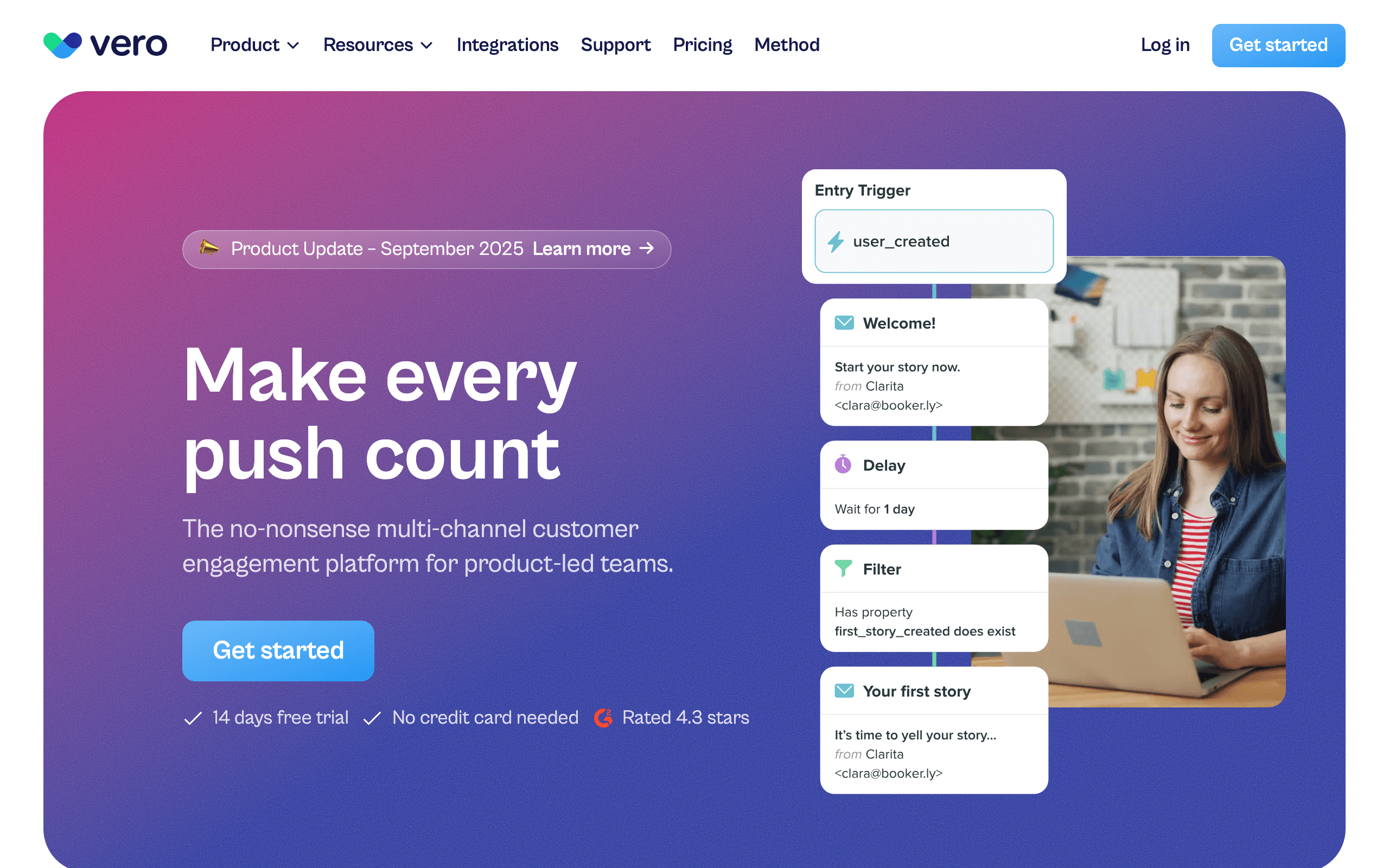
Best for: Engineering teams building nurture sequences as code
Vero's API-first design lets developers build and version-control nurture sequence logic programmatically rather than through a visual builder.
- Pricing: From $99/month
- Pros: Full API control, infrastructure-as-code workflow
- Cons: No visual builder, requires engineering resources
18. Ontraport
Best for: Small businesses wanting nurture automation plus CRM and memberships
Ontraport bundles nurture automation with CRM, membership site, and affiliate management features, useful if your nurture sequences tie into a broader business model beyond email.
- Pricing: Basic plan around $79/month, Plus around $147/month
- Pros: CRM and automation built together, strong membership/affiliate tools
- Cons: Dated interface, steeper learning curve for the price
19. Keap
Best for: Small businesses wanting one bundled plan with no tier confusion
Keap's single 2026 plan bundles CRM, automation, email, SMS, and invoicing at a flat rate, removing the tiered-plan decision fatigue of competitors, at the cost of a mandatory implementation fee.
- Pricing: $249-299/month (single plan), plus a mandatory implementation fee from $500
- Pros: One simple plan, bundles CRM and SMS, no tier confusion
- Cons: Mandatory implementation fee, highest starting price on this list
20. HubSpot
Best for: Teams that already need a full CRM alongside nurture automation
HubSpot's free CRM is genuinely useful, but the workflow automation needed for real nurture sequences sits behind Marketing Hub Professional at roughly $890/month, the weakest value on this list unless you need the CRM anyway.
- Pricing: Free CRM, Marketing Hub Starter from $20/month (real automation requires Professional, ~$890/month)
- Pros: Free CRM to start, huge ecosystem, strong reporting once on Professional
- Cons: Real automation depth is expensive, steep price jump from Starter to Professional
Example Nurture Sequences to Budget Around
Cost only matters relative to what you're actually trying to run. Two examples worth pricing your plan against:
- SaaS trial nurture (7 emails over 14 days): needs milestone-based triggers (activation events, inactivity, trial-ending date), not just a fixed calendar. See the full skeleton in our nurture examples guide.
- Lead magnet follow-up (5 emails over 12 days): needs a simple entry trigger (form fill or download) and doesn't require deep behavioral branching, making it affordable to run on almost any platform in this comparison.
For the frameworks behind sequences like these, see Automated Email Nurture Sequence Strategy, which breaks down four repeatable structures with email-by-email skeletons.
The Three Capabilities That Actually Decide the Bill
Every platform above will send a sequence of emails on a delay. The price differences come from three capabilities that entry-level plans routinely omit, and each one has a concrete failure mode when it's missing.
Branching
What it is: the sequence takes a different path based on what the contact did. A trial user who has activated gets feature-depth emails; one who hasn't gets setup help.
What it looks like in practice:
Entry: trial_started
  Day 0  Welcome + first setup step
  Day 2  Branch on event: project_created
           yes -> Day 2  "Invite your team" (activation path)
           no  -> Day 2  "Stuck on setup? 3-minute walkthrough"
  Day 5  Branch on property: plan_tier == "team"
           yes -> collaboration use cases
           no  -> single-user use cases
Failure mode without it: you send one flat sequence to everyone and pay for it in unsubscribes. The user who already invited their team gets an email asking them to invite their team, which reads as evidence that you aren't paying attention. Platforms that gate branching behind a higher tier are the most common upgrade trigger in this whole category.
Exit conditions
What it is: the rule that removes someone from the sequence the moment it stops being relevant, independent of where they are in the schedule.
What it looks like in practice:
Sequence: trial_nurture
  Exit when: subscription_created     (they converted; stop selling)
  Exit when: trial_cancelled          (they left; different sequence)
  Exit when: support_ticket_opened AND priority == "urgent"
  Exit when: contact enters "billing_recovery" sequence
Failure mode without it: a customer converts on day 3 and keeps receiving "your trial ends soon" emails through day 14. This is the single most damaging nurture bug because it hits your best-converting users at their most positive moment, and it is invisible in aggregate metrics. If a platform only offers "remove from list" rather than event-based exits, budget for the workaround.
Suppression
What it is: rules that prevent an otherwise-eligible send, applied across sequences rather than inside one.
What it looks like in practice:
Global suppression:
  - Contact has an open support ticket             -> hold marketing sends
  - Contact is past due on payment                 -> billing messages only
  - Contact received > 3 emails in last 7 days     -> frequency cap
  - Contact opted out of "product tips" topic      -> skip that block
  - Contact is enrolled in a higher-priority flow  -> defer this one
Failure mode without it: the contact enters three sequences at once and receives four emails in a day, or gets an upsell while a support escalation is open. Frequency capping and cross-sequence priority are the capabilities most likely to be missing on cheap plans, and they only reveal themselves once you're running more than two sequences at the same time, which is exactly when switching is most painful.
Budgeting rule: price the plan that has all three, not the plan that gets your first sequence live. Almost every migration in this category happens at the point where a second and third sequence start overlapping.
FAQ
What's the best value automated email nurture sequence software for a small list?
Under 2,500 contacts, Sequenzy's free tier, Zoho Campaigns' free tier, and Kit's free Newsletter plan all let you run sequences at no cost, though Zoho and Kit's free-tier automation is more limited. Once you need behavioral branching, Sequenzy's $19/month tier is the most automation-complete option at that price.
Does a higher price always mean better automation?
No. HubSpot and Klaviyo both charge premium prices, but the value only shows up if you need what they specialize in: HubSpot's CRM and Klaviyo's ecommerce flows. For a straightforward nurture sequence without those specific needs, cheaper platforms with strong core automation are better value.
Why does pricing vary so much between 10k and 25k contacts?
Most platforms price by contact tier, so growth from 10,000 to 25,000 contacts often crosses two or three pricing bands at once, not a gradual increase. This is most visible with Klaviyo and ActiveCampaign, where the jump between tiers can more than double the monthly cost.
Should I switch platforms as my list grows past 10,000 contacts?
Not automatically. Migrating automation logic and sequence history has real switching costs. It's usually worth staying on a platform through at least one pricing tier increase and re-evaluating value only when the cost genuinely stops matching what you're getting, not the moment a cheaper alternative appears.
Which platform bundles the most for the price?
Keap and Ontraport bundle CRM, automation, and extras (SMS, memberships, affiliate tools) into one price, which can be good value if you'd otherwise pay for those separately, but is poor value if you only need email nurture sequences.