
Compare native convenience against dedicated retention depth
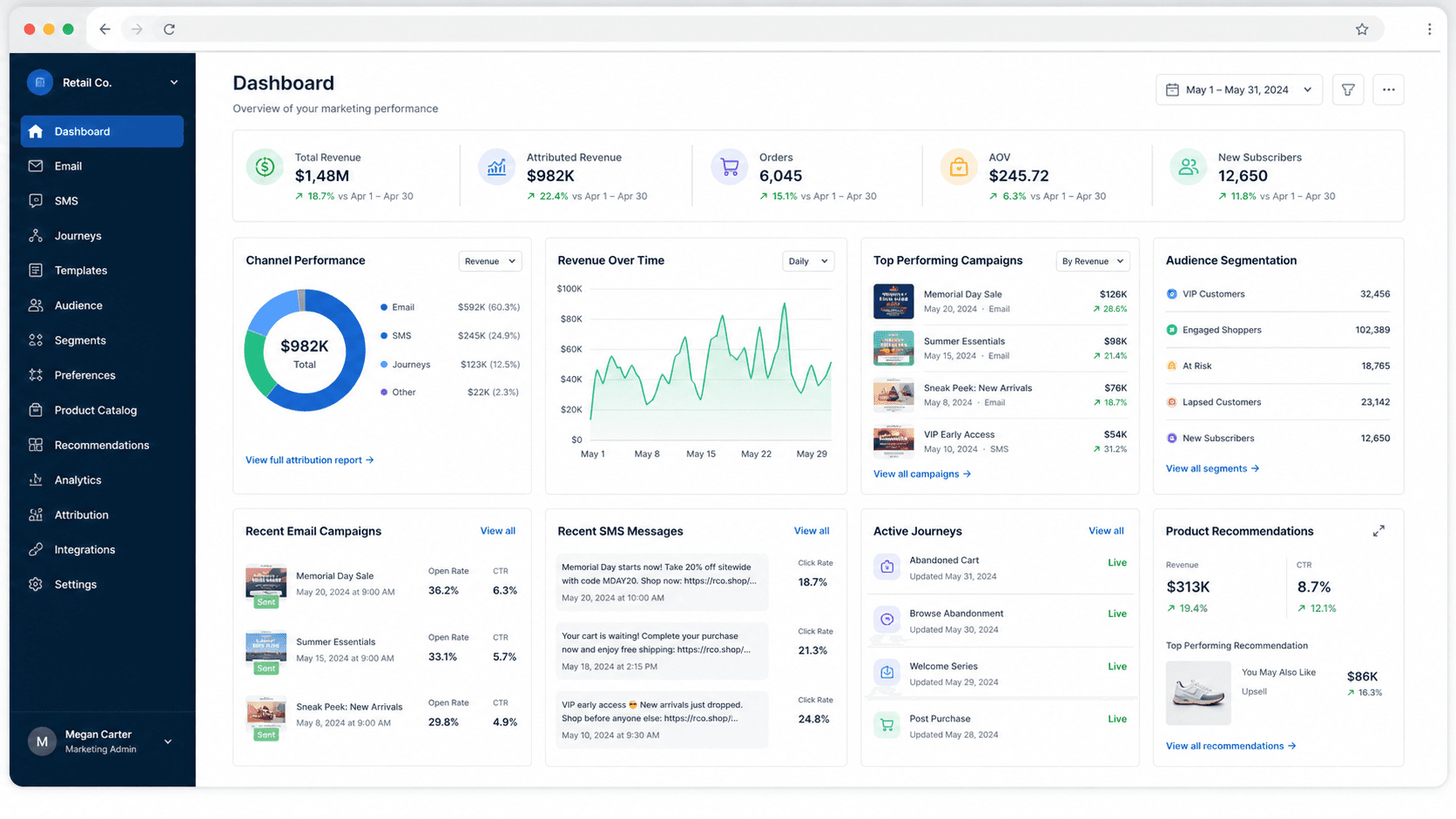
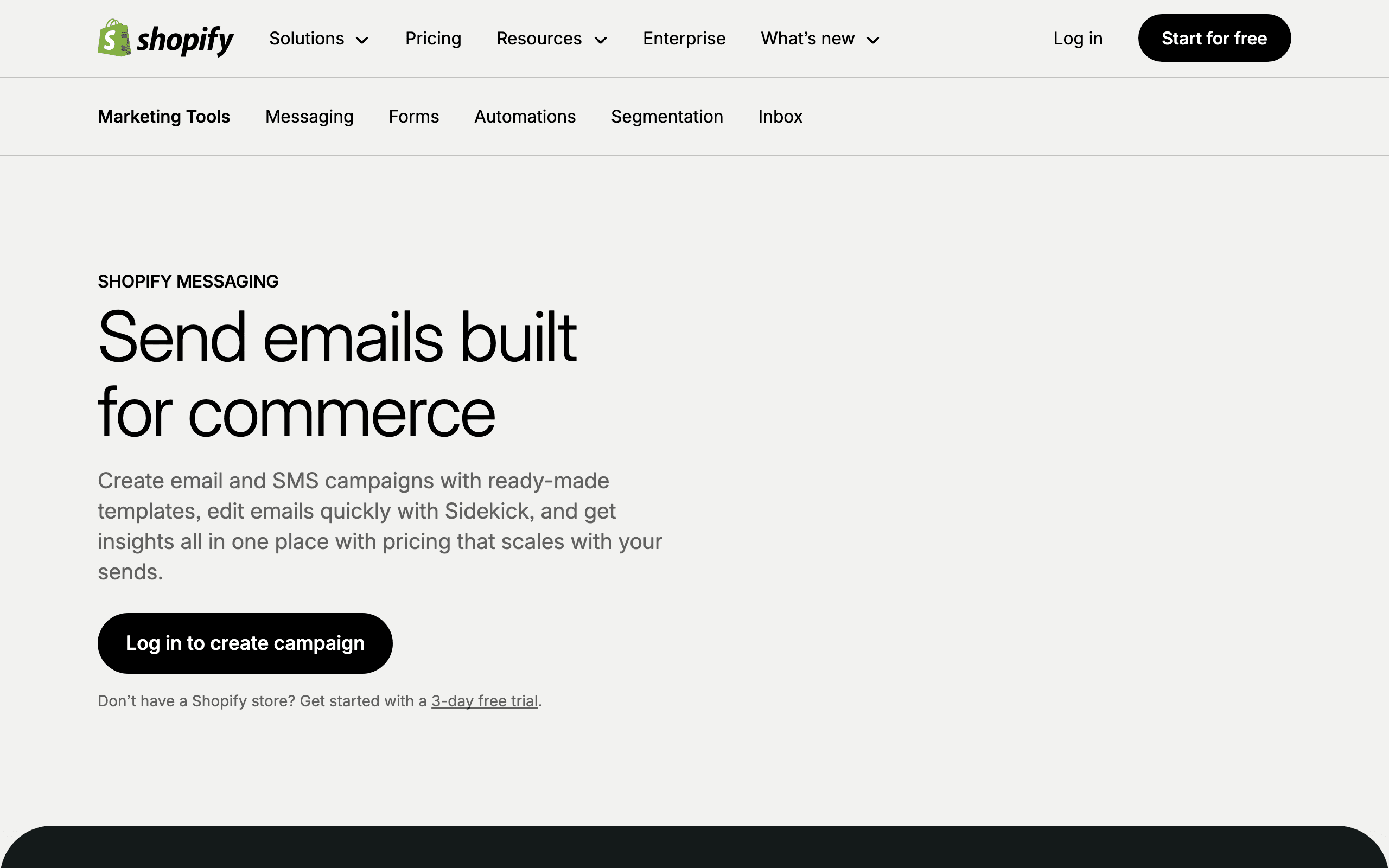
Listrak and Shopify Email are not trying to solve the same level of problem. Shopify Email is attractive because it is already inside Shopify and can be simple for a store owner to use. Listrak is attractive when email and SMS have become a major revenue channel that needs deeper segmentation, product-aware campaigns, services, and reporting.
The right choice depends on whether email is still a simple store communication channel or already a dedicated retention program.
Use-case matchups
| Use case | Better starting point | Why |
|---|---|---|
| Store owner wants to send simple newsletters from Shopify | Shopify Email | It keeps campaign creation close to products, customers, and the Shopify admin. |
| Retail team needs cart, browse, post-purchase, and product recommendation programs | Listrak | Listrak is built for dedicated ecommerce retention work, not just native store newsletters. |
| Team wants minimal setup and no separate marketing platform | Shopify Email | Native tooling can be enough when campaigns are occasional and segmentation needs are basic. |
| Brand needs email/SMS planning, stronger reporting, and campaign support | Listrak | A specialized platform makes more sense when retention revenue justifies more process and tooling. |
| Store needs Shopify email automation plus transactional and lifecycle messages | Sequenzy | Sequenzy is more focused than Listrak but broader than a native newsletter-only workflow. |
Best Fit by Shopify Email Maturity
Best Listrak vs Shopify Email choice for dedicated retention teams
Choose Listrak when the store has outgrown occasional campaigns and needs cart recovery, browse recovery, post-purchase flows, SMS coordination, product recommendations, services, and reporting that a retention marketer can operate every week.
Best Listrak vs Shopify Email choice for owner-operated stores
Choose Shopify Email when the team wants simple newsletters, product announcements, seasonal campaigns, and basic segments inside the Shopify admin. It is the better fit when fewer tools matter more than advanced lifecycle control.
Best Listrak or Shopify Email alternative for storefront lifecycle email
Choose Sequenzy when the store needs more automation depth than Shopify Email but less platform weight than Listrak. It fits Shopify and WooCommerce email automations, transactional email, newsletters, and Stripe-aware lifecycle messages.
When Shopify Email is enough
Shopify Email can be enough when the store mostly needs promotional sends, product announcements, seasonal campaigns, and basic customer segments inside Shopify. It is especially compelling when there is no separate marketing operations owner and the business wants fewer tools to maintain.
The ceiling appears when the team needs more advanced lifecycle orchestration, multi-step segmentation, SMS coordination, product recommendation logic, or reporting that a dedicated retention team can use every week.
When Listrak is justified
Listrak is justified when the marketing program has outgrown native store email. If the team is already planning cart recovery, browse recovery, post-purchase cross-sell, winback, SMS, product recommendations, and revenue reporting as a system, Listrak is the more serious option.
The tradeoff is cost and implementation effort. A store should not move from Shopify Email to Listrak just to send occasional newsletters. The move makes sense when retention revenue is material enough to support a specialist platform.
Pricing reality
The page's structured pricing lists Listrak as custom priced and Shopify Email as variable pricing. For Listrak, scope email/SMS channels, recommendations, services, integrations, send volume, and reporting. For Shopify Email, model campaign volume, Shopify plan context, template needs, segmentation limits, and whether native tooling is enough for the retention program.
Sequenzy's listed $49/month plan is relevant when the team wants more lifecycle and transactional email depth than native Shopify Email, but does not need Listrak's retail-suite implementation or SMS/recommendation scope.
Review signals
The cited Listrak review themes point to retail marketing workflows, reporting, ecommerce retention fit, setup effort, and pricing clarity. The cited Shopify Email review themes point to native convenience, campaign usability, Shopify integration, and the limits of advanced features. The practical review question is whether simplicity inside Shopify is enough or retention email has become a dedicated operating system.
Migration checklist
- Export active Shopify Email campaigns, templates, customer segments, and unsubscribe records.
- Identify which messages should stay native in Shopify and which belong in a dedicated lifecycle platform.
- Confirm how product data, customer tags, order history, and discount codes will sync.
- Rebuild welcome, cart, browse, post-purchase, and winback flows before moving the full campaign calendar.
- Compare reporting for campaigns sent before and after the migration so revenue changes are not misread.
Decision checklist
- Is the team constrained by Shopify Email features, or by lack of a campaign strategy?
- Who will own segmentation, QA, and reporting after a dedicated platform is added?
- Does the store need SMS, product recommendations, or services now, not just later?
- How will consent and unsubscribes stay consistent between Shopify and the marketing platform?
- What revenue threshold justifies moving away from the native Shopify workflow?
Where Sequenzy fits
Sequenzy is the practical middle path for stores that want more than Shopify Email but less than a full retail suite. It fits Shopify and WooCommerce teams that need email automations, newsletters, transactional email, and Stripe-aware lifecycle messages without adopting SMS or enterprise personalization.








