Start with the workflow
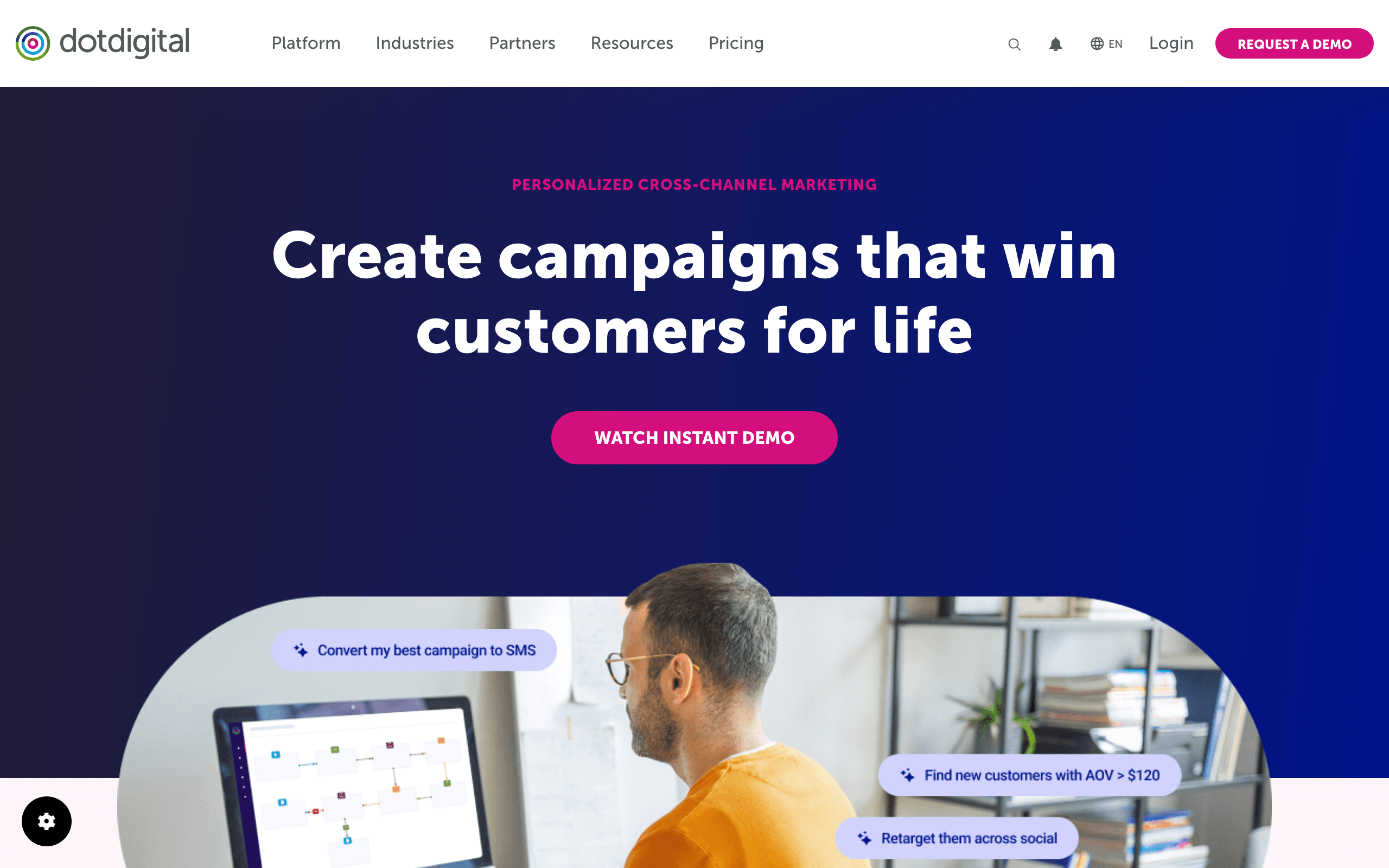
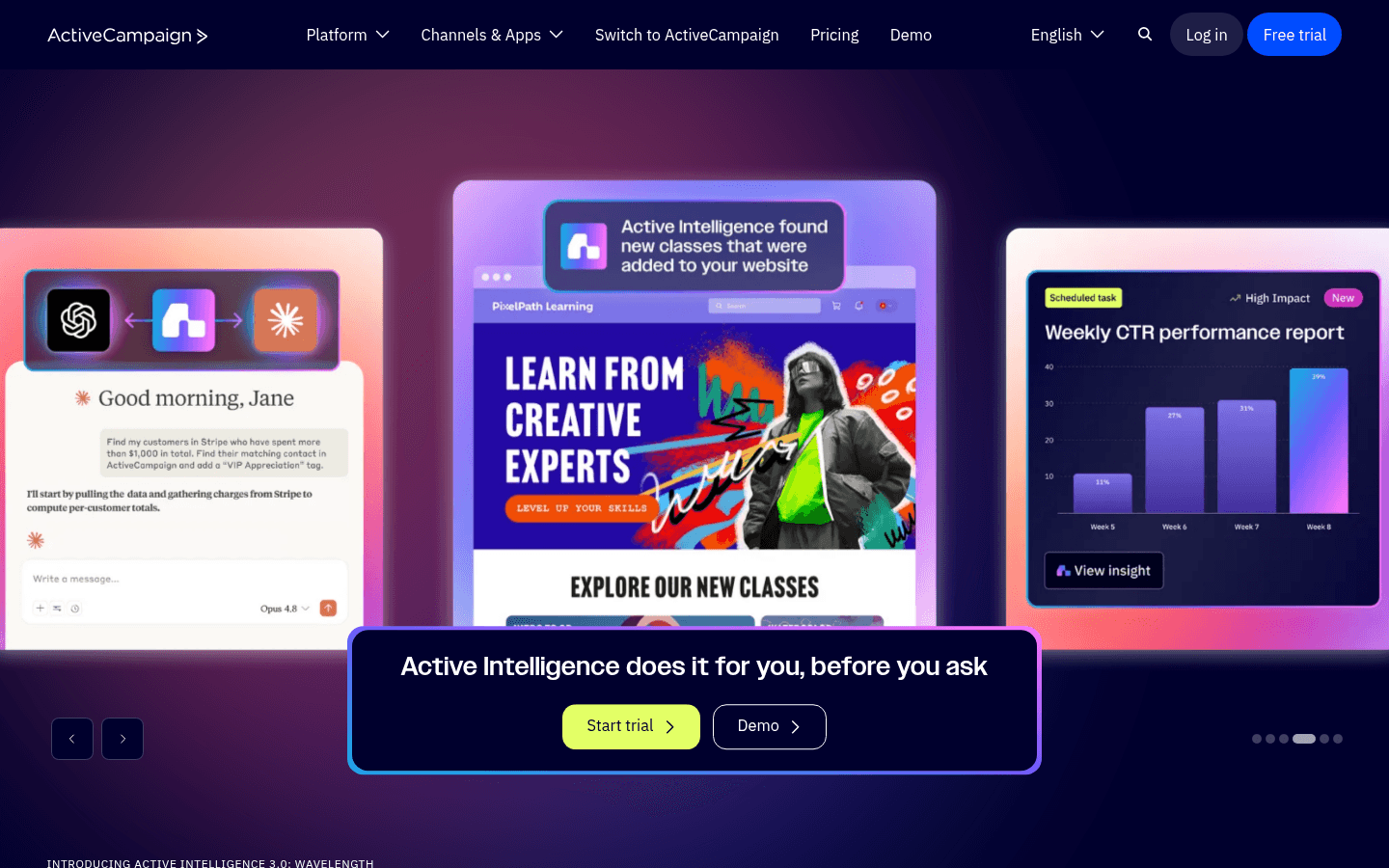
Dotdigital and ActiveCampaign both get pitched for ecommerce marketing, but they earn that comparison differently. Dotdigital's case rests on mid-market and enterprise strength: deep Shopify and Magento ecosystem support, combined email and SMS journeys, and stronger segmentation and customer data activation. ActiveCampaign's case is more about fit: familiar campaign workflows and better value if your team is already comfortable inside its automation builder and pricing structure.
Where Dotdigital wins
Dotdigital makes sense when your store depends on its Shopify and Magento integrations, layered email and SMS journeys, and segmentation that goes beyond basic list splitting. That depth is worth the extra setup when customer data activation is core to how you run campaigns, though it can be more platform than a smaller store actually needs, so check plan limits and contract scope before committing.
Where ActiveCampaign wins
ActiveCampaign fits better when your team wants a campaign workflow it already knows, without adopting Dotdigital's full ecommerce engagement stack. Its feature depth varies by plan and setup, and costs can rise as contacts or channels grow, but for teams that don't need Dotdigital's segmentation and customer data activation strength, that familiarity and simpler pricing often wins out.
Use-case matchups
| Use case | Better fit | Why |
|---|---|---|
| Mid-market ecommerce engagement | Dotdigital | Dotdigital is stronger when Shopify/Magento ecosystem, email/SMS journeys, segmentation, and customer data activation are central. |
| General automation and CRM workflows | ActiveCampaign | ActiveCampaign is stronger when sales CRM, broad automation, and many integrations matter beyond ecommerce. |
| Magento-heavy lifecycle marketing | Dotdigital | Dotdigital has a clearer fit when Magento and enterprise ecommerce data are the operating center. |
| Smaller team with broad automations | ActiveCampaign | ActiveCampaign can be easier when the team wants flexible workflows without a specialized ecommerce suite. |
| Email-only Shopify/WooCommerce flows | Sequenzy | Sequenzy is better when the store mainly needs practical email automation and transactional email. |
| Vendor diligence on plan limits | Tie | Both require checking current contract scope, ecommerce integrations, SMS needs, support, and implementation services. |
Pricing reality
The page's pricing data does not expose a simple public apples-to-apples price for Dotdigital or ActiveCampaign. Dotdigital is listed as custom pricing, and ActiveCampaign is listed as varying by plan, contacts, usage, and selected features.
That means this comparison should not pretend there is a universal cheaper vendor. The truthful buying step is to price the same contact count, ecommerce integrations, SMS usage, onboarding/support scope, and required automation features in both quotes before choosing.
Review signals
The available review block is intentionally theme-based rather than a single named testimonial. It says Dotdigital review themes often mention Shopify/Magento ecosystem, ecommerce workflows, and reporting, with cautions around plan limits, setup effort, and support expectations.
The ActiveCampaign review theme points to campaign workflow, integrations, and day-to-day usability, with cautions around pricing and advanced features. Treat those as diligence prompts: read current reviews from teams with similar store size and channel mix before committing.
Best Fit by Ecommerce Automation Need
Best email platform for ecommerce personalization at scale
Dotdigital fits ecommerce teams that need product data, customer segmentation, and retention campaigns built around store behavior. It is strongest when the marketing program depends on purchase history, product recommendations, and commerce-specific workflows.
Best marketing automation platform for CRM plus campaigns
ActiveCampaign is the better fit when email automation, sales pipelines, CRM tasks, and general campaign workflows matter more than deep ecommerce specialization. It works well for teams that sell online but still need a broader customer-management system.
Best ecommerce email fit for teams choosing depth vs flexibility
Choose Dotdigital when commerce data is the core of the email strategy. Choose ActiveCampaign when the team needs flexible automation across sales, services, forms, and email campaigns beyond a pure store-retention program.
Migration checklist
- Export contacts, consent records, suppression lists, segments, templates, campaigns, journeys, SMS data, ecommerce fields, CRM fields, and revenue reports.
- If moving to Dotdigital, map product, order, customer, segment, SMS, and Magento/Shopify data into lifecycle journeys before campaign rebuild.
- If moving to ActiveCampaign, map ecommerce fields, tags, deal stages, automations, forms, and event data into lists, segments, pipelines, and workflows.
- Rebuild welcome, browse recovery, cart recovery, post-purchase, replenishment, lead nurture, re-engagement, and promotional campaigns first.
- Reconnect Shopify, Magento, WooCommerce, CRM, analytics, SMS, forms, attribution, and suppression integrations before importing the full list.
- Authenticate sending domains, validate SMS consent, and test one ecommerce journey plus one CRM workflow with a small segment.
- Preserve old campaign, revenue, onboarding, support, and billing notes so the team can audit the reason for switching.
- Document any feature loss if moving to a simpler workflow, especially segmentation, SMS, CRM depth, and product recommendation needs.
Decision checklist
| Choose | When this is true |
|---|---|
| Dotdigital | Ecommerce specialization, Shopify/Magento data, email/SMS journeys, segmentation, and customer data activation matter most. |
| ActiveCampaign | Broader automation, CRM workflow, familiar campaign operations, and ecosystem fit matter more than specialized ecommerce depth. |
| Sequenzy | You mainly need Shopify/WooCommerce email plus transactional email without SMS, loyalty, or enterprise personalization. |
| Verify before buying | Get current quotes for contacts, SMS, integrations, onboarding, support, plan limits, and ecommerce automation requirements. |