Updated September 29, 2026
ActiveCampaign
ConvertKit

ActiveCampaign vs Kit (ConvertKit)

Automation and CRM for a business vs growth and monetization for a creator

15
Features Compared
5
Key Differences
10
FAQs Answered
TL;DR

Kit, formerly ConvertKit, is built for creators: a free plan up to 10,000 subscribers, tag-based lists, simple visual automations, paid newsletters and digital products, and recommendations through the Creator Network. ActiveCampaign is built for businesses: branching automations with site tracking, goals, lead scoring, and a CRM with deals. At 10,000 subscribers Kit Creator is about $119/month and ActiveCampaign Starter about $149. If your list is your audience and you sell content, choose Kit. If you run a business with a sales process, choose ActiveCampaign.

Platform Overview

See how each platform looks

ActiveCampaign

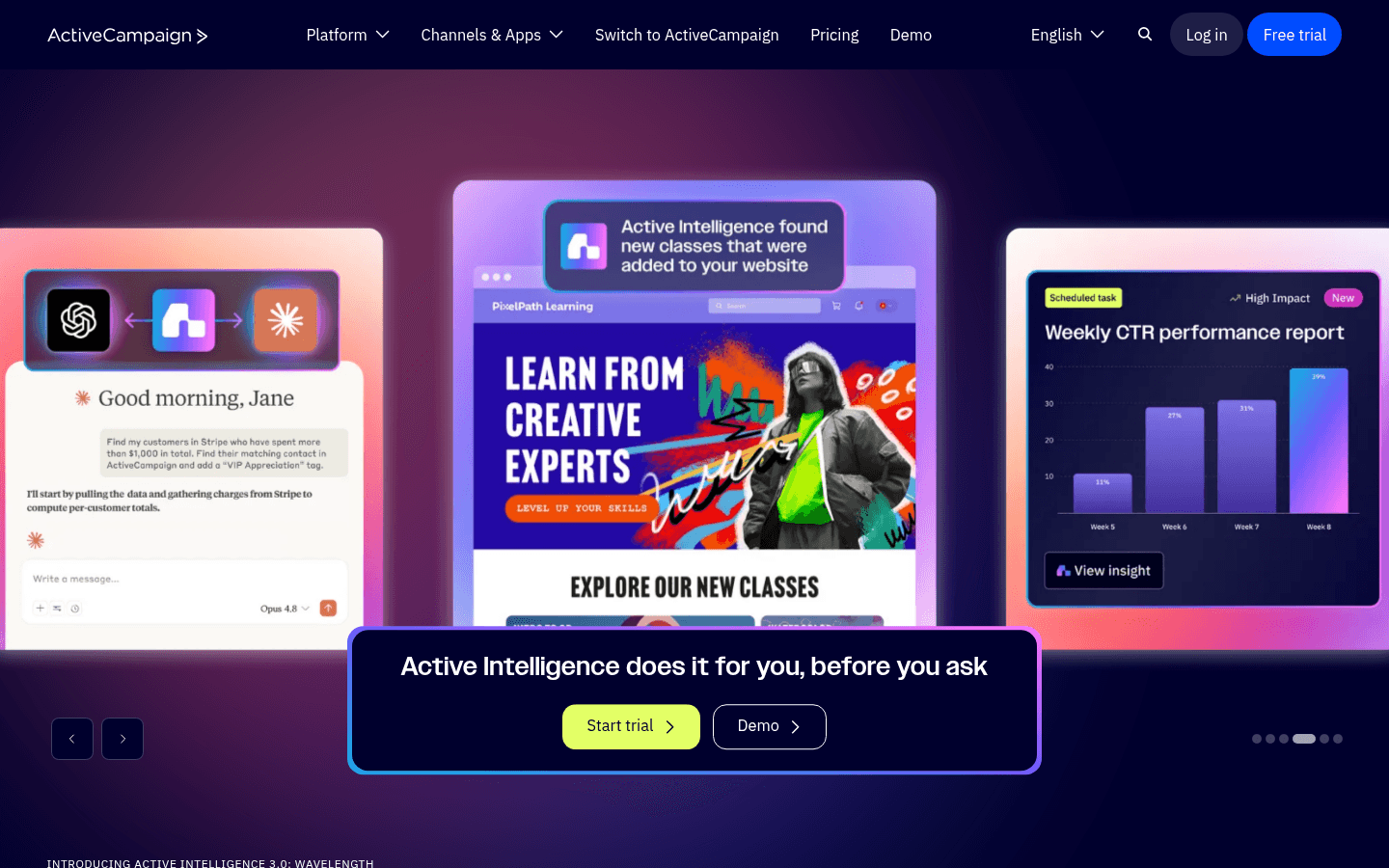
ActiveCampaign dashboard screenshot

Powerful marketing automation platform with advanced CRM and sales features.

ConvertKit

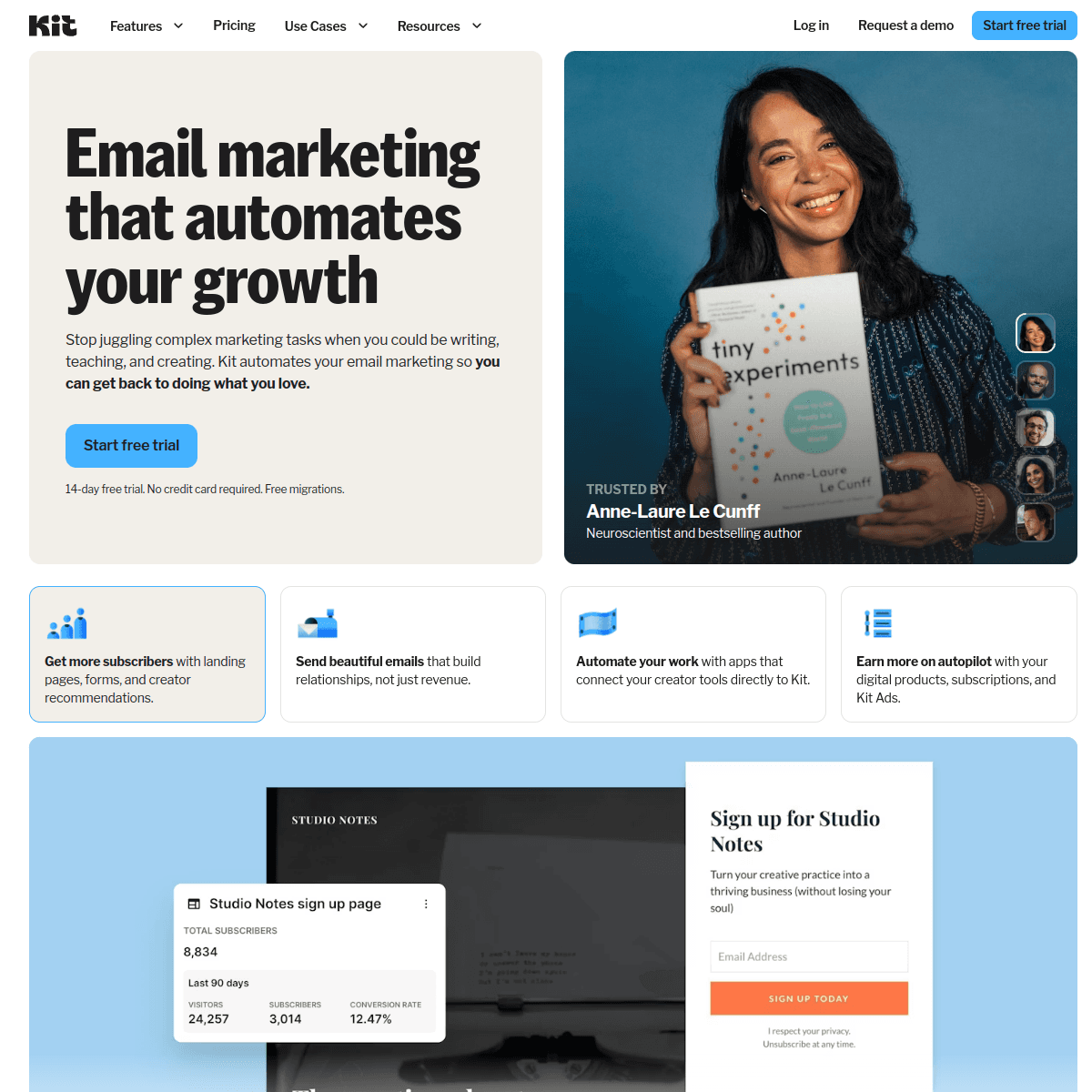
ConvertKit dashboard screenshot

Email marketing platform focused on creators and online businesses.

Key Differences

The main things that set these tools apart

Growing an audience vs converting leads
Tie

Kit's tools point at growth: landing pages, forms, the Creator Network for recommendations, and a referral program on Creator Pro. ActiveCampaign's point at conversion: site tracking, lead scores, goals, and deals that move a prospect toward a sale.

Automation depth
ActiveCampaign wins

ActiveCampaign automations can branch many ways on behavior, fields, tags, and deal stages, and exit on goals. Kit's visual automations handle sequences, tagging, and simple conditions clearly, which suits most creator funnels but runs out of room for multi-path logic.

Selling content directly
ConvertKit wins

Kit lets you sell paid newsletter subscriptions and digital products and accept tips from inside the platform. ActiveCampaign has no commerce features of its own and relies on integrations with your store or checkout.

Cost of getting started
ConvertKit wins

Kit's free plan covers up to 10,000 subscribers with one automation, and Creator is about $119/month at 10,000. ActiveCampaign has no free plan; Starter is about $149 at 10,000 contacts and limits automations to 5 actions, so most automation users need Plus.

A sales pipeline
ActiveCampaign wins

Coaches and consultants who sell high-ticket services get deals, tasks, and lead scoring in ActiveCampaign. Kit has no CRM, so sales calls are tracked elsewhere.

Pricing Comparison

At 10,000 subscribers

ActiveCampaign
$149/month

Starter at 10,000 contacts, annual billing. Plus, which removes the 5-action automation limit, is about $189 to $239.

Visit ActiveCampaign
ConvertKit
$119/month

Creator at 10,000 subscribers. Creator Pro is about $167. Free plan up to 10,000 subscribers with one automation.

Visit ConvertKit
Best for SaaS
Sequenzy
$49/month

At 10,000 subscribers

60,000 emails/mo (~6 per contact), unlimited contacts.

Free plan: up to 2,500 emails/month. Paid plans from $19/month (15,000 emails), unlimited contacts on every plan. See all plans

Start for free

Feature Comparison

15 features compared side-by-side

Feature
ActiveCampaign
ConvertKit
Sequenzy
Automation
Visual automation builder
Multi-branch with goals and waits
Visual automations, simpler logic
Site and event tracking
Built-in
Via integrations
Split testing inside automations
Pro and above
Subscriber scoring
Lead scoring
Creator Pro
Creator Tools
Paid newsletters
Digital product sales
Creator Network recommendations
Referral program
Creator Pro
CRM and Sales
Built-in CRM
Deals and pipelines
Sales automation
Deal stages, tasks, owner assignment
Email and Pages
Email design
Drag-and-drop templates
Text-focused, simple templates
Landing pages
Landing page builder on all plans
Landing pages and forms, including on the free plan
SMS and WhatsApp
Paid add-ons
Paid add-on (US/Canada)
Pricing
Price at 10k
About $149/month (Starter)
About $119/month (Creator)
$49/mo (60k emails)
Free tier
14-day trial
Up to 10,000 subscribers
Free plan (2.5k emails/mo)

API, CLI and MCP: How AI-Ready Is Each Tool?

What you, or an AI assistant like Claude or ChatGPT, can do in each tool without opening the dashboard. “MCP” means the vendor's own MCP server can do it. Each status links to the doc that confirms it.

ActiveCampaign
MCP server
Official, read and writeHosted

Remote MCP: contacts, tags, lists, deals, automation enrollment, campaign message edits. No campaign create/send tools.

MCP docs
CLINoneAPIREST
Through its MCP (5 of 14)

Create and update contacts, Add contacts to lists or tags, Trigger automations, Create and edit templates, Read campaign analytics

API only

Create segments, Create campaigns, Send or schedule campaigns, Create A/B tests, View or manage unsubscribes, Create forms or landing pages

Checked September 28, 2026
ConvertKit
MCP server
Official, read and writeHosted

app.kit.com/mcp, OAuth. Actions need paid plan. Sends, unsubscribes and deletes return a deep link confirmed in Kit.

MCP docs
CLINoneAPIREST
Through its MCP (9 of 14)

Create and update contacts, Add contacts to lists or tags, Create campaigns, Send or schedule campaigns, Build automations, Trigger automations, Create and edit templates, Read campaign analytics, View or manage unsubscribes

Checked September 28, 2026
Sequenzy
MCP server
Official, read and writeHosted or local

250+ tools. Hosted with OAuth or local with an API key.

MCP docs
CLIOfficialAPIREST
Through its MCP (14 of 14)

Create and update contacts, Add contacts to lists or tags, Create segments, Create campaigns, Send or schedule campaigns, Build automations, Trigger automations, Create A/B tests, Create and edit templates, Send transactional email, Read campaign analytics, View or manage unsubscribes, Set up sending domains, Create forms or landing pages

Checked September 28, 2026

If You Leave Later: What You Can Take With You

Switching is easier when your data comes with you. Unsubscribes matter most: without them, people who opted out get emailed again.

ActiveCampaign
Contacts and custom fields
Yes

Contacts > ellipsis > Export to CSV, choose fields; or API list contacts

ActiveCampaign docs
Unsubscribes and bounces
Yes

Contact export status filter: Unsubscribed or Bounced

ActiveCampaign docs
Templates as HTML
Yes

API list templates returns HTML content; UI share links only import into ActiveCampaign

ActiveCampaign docs
Automations
No

No portable file export found; API only lists automations and contact enrollments.

Open and click history
Yes

Campaign report export in UI; API lists opens, clicks, bounces and unsubscribes per campaign

ConvertKit
Contacts and custom fields
Yes

Subscribers > filter by status > select all > three dots > Export; CSV link emailed

ConvertKit docs
Unsubscribes and bounces
Yes

Filter subscribers by Status (e.g. Unsubscribed, Bounced) before bulk Export

ConvertKit docs
Templates as HTML
Yes

Custom HTML templates: copy HTML/CSS from template editor; no bulk file export found

ConvertKit docs
Automations
No

No portable export of visual automations found in Kit docs

Open and click history
Yes

API v4 GET /subscribers/{id}/stats returns per-subscriber sent/opened/clicked totals; CSV export lacks engagement

Sequenzy
Contacts and custom fields
Yes

Subscribers > Export downloads a CSV with status, tags and custom attributes, or page through GET /subscribers

Sequenzy docs
Unsubscribes and bounces
Yes

Unsubscribed and bounced contacts carry their status in the CSV export, and GET /suppressions lists them

Sequenzy docs
Templates as HTML
Yes

GET /templates/{id}/render returns the exact email-safe HTML that is sent

Sequenzy docs
Automations
Yes

GET /sequences/{id} returns each sequence's steps, delays and conditions as JSON; other tools cannot import it directly

Sequenzy docs
Open and click history
Yes, on request

Full per-contact open and click history is exported on request; opens and clicks also stream out through webhooks as they happen

Pros & Cons

Honest strengths and weaknesses of each platform

ActiveCampaign

Pros
  • Multi-branch automations with goals and waits
  • Built-in site and event tracking
  • Deals, pipelines, and lead scoring
  • Split testing inside automations on Pro
  • SMS and WhatsApp add-ons
Cons
  • No free plan
  • Starter limits automations to 5 actions
  • No creator commerce or recommendation network
  • More to learn than Kit

ConvertKit

Pros
  • Free plan up to 10,000 subscribers
  • Paid newsletters, digital products, and tips built in
  • Creator Network recommendations for list growth
  • Simple tag-based model and readable visual automations
  • About $119/month at 10,000 subscribers on Creator
Cons
  • Automation logic is simpler
  • No CRM or pipeline
  • Email design is deliberately minimal
  • Referrals and subscriber scoring require Creator Pro

What Users Say

Reviews from Trustpilot, linked to the source

Trustpilot

“I've just switched to ActiveCampaign and can't believe how it handles content management, email sequences, and a whole lot of other sophisticated features. The learning curve is a bit steeper than with some other options, but the personal onboarding support was a huge help.”

Michael HawkerView on Trustpilot
Trustpilot

“I signed up for AC and had to wait a week before I could get an integration/onboarding call. I emailed the salesperson who signed me up twice and then left him a voicemail the next day to see if he could help me get a few questions answered so I wouldn't have to wait a week. Guy ghosted me.”

June CamachoView on Trustpilot
Trustpilot

“Issue with subscribers not getting confirmation emails. Support on chat was pushed to a "senior" support agent who suggested a few things and then ghosted me not responding to any questions.”

Trustpilot

“This has been the worst email and webinar platform I have ever used. Their customer service is unresponsive and ineffective. I created my webinar so people could register, but the day of my event, they restricted my account without warning.”

Best For

When to choose each tool

Choose ActiveCampaign if you...
  • Consultants and agencies with a sales pipeline
  • Coaches selling high-ticket programs through calls
  • Businesses that want emails triggered by website behavior
  • Teams that also need SMS or WhatsApp
Choose ConvertKit if you...
  • Newsletter writers, podcasters, and YouTubers growing an audience
  • Creators selling digital products or paid subscriptions
  • New creators who want a free plan up to 10,000 subscribers
  • Anyone who wants recommendations from other creators to grow a list

If your product is software

Users are not subscribers or leads

Kit treats your list as an audience and ActiveCampaign as a pipeline. In a SaaS product your list is users with trials, plans, and billing states. Sequenzy syncs Stripe, Paddle, and Polar so those states trigger email directly.

Transactional email included

Neither Kit nor ActiveCampaign sends receipts or password resets from its core product. Sequenzy sends transactional and marketing email from one account.

No per-subscriber pricing

Both tools charge by list size. Sequenzy charges by emails sent with unlimited contacts, about $49/month for 60k emails (unlimited subscribers).

Where the two overlap

Kit, known as ConvertKit until its 2024 rebrand, and ActiveCampaign are rarely compared by large companies. They are compared by one- and two-person businesses: a coach, a course creator, a consultant, or a newsletter writer who is starting to sell. For that person the question is simple: is this an audience business or a sales business?

See our Kit comparison and ActiveCampaign comparison for more on each.

Kit: built around the audience

Kit starts from the idea that your subscribers are an audience you build and monetize.

  • Free up to 10,000 subscribers, with unlimited emails, forms, landing pages, and one automation.
  • Tags instead of lists. Every subscriber lives in one place and carries tags for interests, purchases, and sources.
  • Visual automations that are easy to read, even months later.
  • Monetization. Paid newsletter subscriptions, digital products, and tips.
  • Growth. The Creator Network lets other creators recommend your newsletter, and Creator Pro adds a referral program and subscriber scoring.

Emails are deliberately simple and text-focused, which suits newsletters and personal writing.

ActiveCampaign: built around the conversion

ActiveCampaign starts from the idea that a contact is moving toward a purchase or a sales conversation.

  • Site and event tracking turn page visits and custom events into triggers.
  • Multi-branch automations with waits, conditions, goals, and split testing on Pro.
  • Lead scoring and deals so a hot lead becomes a pipeline item with an owner and tasks.
  • More channels, with SMS and WhatsApp as paid add-ons.
  • A broad integration catalog for checkout, scheduling, and webinar tools.

A launch in each tool

Take a course launch with a free workshop, a cart-open week, and a follow-up for people who book a call.

In Kit, a landing page collects signups and tags them. A sequence delivers the workshop. A visual automation sends cart-open emails, tags buyers from your checkout integration or Kit's own product sales, and removes them from the launch. It is quick to build and easy for a team of one to understand.

In ActiveCampaign, the same launch can also watch who revisited the sales page, raise their lead score, route high scorers to a "book a call" branch, create a deal, and remind you to follow up. Non-buyers can flow into a longer nurture with different content based on which workshop session they attended. It takes more time to build and pays off when calls and high-ticket offers matter.

Price at 10,000 subscribers

ActiveCampaign (annual billing) Kit
Free 14-day trial Free plan up to 10,000 subscribers, one automation
Core paid plan Starter about $149; Plus about $189 to $239 Creator about $119
Advanced Pro and Enterprise, higher Creator Pro about $167
Entry at 1,000 Starter $15, Plus $49 Creator $39

Kit's annual billing saves around 16%. ActiveCampaign Starter's 5-action limit means most automation-focused users need Plus.

Worked example: a growing newsletter

A writer has 4,000 subscribers today and expects 12,000 within a year.

  • Kit: free until the list needs more than one automation. Moving to Creator costs $89/month at 5,000 subscribers and about $119 at 10,000, rising past that as the list grows.
  • ActiveCampaign: no free period. Plus starts at $49/month at 1,000 contacts on annual billing and rises with each contact tier, reaching about $189 to $239 at 10,000.

For a creator whose revenue comes from sponsorships, paid subscriptions, and digital products, Kit's lower cost and built-in monetization usually win. For a consultant whose revenue comes from calls booked through the list, ActiveCampaign's pipeline can justify the higher bill.

Tags, lists, and how contacts are counted

Kit keeps every subscriber in one list and organizes them with tags and custom fields. A subscriber who joins three forms is still one subscriber and is billed once. Segments are saved tag and field filters.

ActiveCampaign supports lists as well as tags, custom fields, deals, and accounts. Lists are useful for separating consent, such as a newsletter list and a customers list, while tags drive automations. That flexibility helps businesses with several audiences, but it is more structure to design. When migrating from Kit, most people keep one ActiveCampaign list and carry Kit tags across as tags, which keeps automations simple.

Creator monetization vs sales tracking

This is where the tools differ most in purpose. Kit can sell digital products and paid newsletter subscriptions, accept tips, and grow your list through recommendations from other creators in the Creator Network. The money flows through Kit and shows up next to subscriber data.

ActiveCampaign tracks revenue differently: purchases arrive from your store or checkout through integrations, and sales happen in deals that move through pipeline stages. It has no creator network and does not sell products itself. If your business sells knowledge products to an audience, Kit's model is the closer match. If it sells services through conversations, ActiveCampaign's is.

Email style and design

Kit's editor and templates are intentionally minimal. Most Kit emails look like a personal letter: text, a few images, a button. For newsletters, that style often feels more authentic and tends to render cleanly across clients. If you want heavily designed promotional emails with multi-column layouts and product grids, you will feel limited.

ActiveCampaign's drag-and-drop editor supports richer layouts, conditional content blocks that change per contact, and saved templates for a brand. That suits businesses sending promotions, event invitations, or client newsletters where design matters.

When one person runs everything

Kit's appeal for a solo creator is that the whole account stays understandable. Tags are visible, automations read top to bottom, and the free plan means there is no bill until the list is large. ActiveCampaign rewards someone willing to spend a few afternoons designing their funnel and pipeline, and then gives back time through automation and sales tracking. If you are not sure you will use branches, lead scores, or deals in the next six months, start with Kit and move when you outgrow it.

Moving between them

Kit to ActiveCampaign. Export subscribers with tags and custom fields, plus unsubscribed and bounced subscribers. Import into ActiveCampaign and keep tags as tags. Rebuild sequences as automations, recreate landing pages and forms, and move paid subscriptions and digital products to a checkout or store before cancelling Kit. Add ActiveCampaign's SPF and DKIM records to your domain.

ActiveCampaign to Kit. Export contacts with tags and fields and import them. Tag-based setups move cleanly. Multi-branch automations will need simplifying, and deals need a new home in a CRM. Kit offers migration help on paid plans.

Whichever direction you move, send first to subscribers who opened recently, then widen to the rest over a week or two so mailbox providers see steady engagement from the new platform.

Workstream Kit to ActiveCampaign ActiveCampaign to Kit
Subscribers Export with tags and custom fields Export contacts with tags and fields
Suppression Import unsubscribed and bounced as unsubscribed Import unsubscribes before the first broadcast
Structure One list; Kit tags become tags Lists become tags
Automations Rebuild sequences with branches and goals Flatten branches into visual automations
Commerce Move products and paid subscriptions to a checkout Set up Kit products and paid newsletters
Sales data Create pipelines if you sell through calls Move deals to a separate CRM
Growth Replace Creator Network referrals with other channels Join the Creator Network and set up recommendations

Use-case matchups

Situation Better fit Why
Newsletter writer under 10,000 subscribers Kit Free plan with forms and landing pages.
Creator selling templates or a paid newsletter Kit Products, paid subscriptions, and tips built in.
Coach selling high-ticket programs through calls ActiveCampaign Lead scores and deals track who is ready for a call.
Consultant nurturing leads from content ActiveCampaign Site tracking and branching automations.
Creator wanting SMS launch reminders ActiveCampaign SMS add-on; Kit is email only.
SaaS founder emailing product users Sequenzy Billing and product events drive the lifecycle.

Where Sequenzy fits

If your product is software, your list is neither an audience nor a pipeline. It is users with trials, plans, and payment status. Sequenzy connects to Stripe, Paddle, and Polar, triggers emails from those states, and sends transactional email from the same account, priced by emails sent. It has no creator commerce, recommendation network, or sales pipeline.

Decision guide

  • Kit if you are building and monetizing an audience.
  • ActiveCampaign if you are converting leads through complex funnels and sales calls.
  • Sequenzy if you are emailing the users of a subscription product.

Frequently Asked Questions

10 questions answered about ActiveCampaign vs ConvertKit

Testimonials

Sequenzy Testimonials

Yusuke

Yusuke

Founder, LandingBoost

It’s the first tool where I’m actually willing to keep working on email without it turning into one giant scary blast. Favorite part is still what I said, being able to split stuff. Drafts vs campaigns vs a single-person send. I can park a lot of “don’t send this yet” work with labels and not feel like it’s one click away from going to everyone. Sequences later. Consent / lists first. I’m slow on purpose.

Rakesh Reddy

Rakesh Reddy

Founder, CrawlRaven

We used Sequenzy to replace a generic onboarding flow with coordinated lifecycle journeys covering signup, connecting Google Search Console, discovering SEO opportunities, upgrading, and paid-customer retention. Event triggers, conditional branches, personalization, and enrollment cancellation gave us precise control over who receives each message - and when someone should exit a journey. We backfilled eligible users into the appropriate journeys. The initial emails went out without bounces, complaints, suppressions, or unexpected recipients. Future users now enter the relevant journeys automatically based on their activity in CrawlRaven.

Elvis Sun

Elvis Sun

Founder, PressPulse & Medialyst

Codex basically one-shotted the migration for syncing our audience from SendGrid to Sequenzy. Sequenzy is fully observable, so agents can just set everything up. The net impact is saving $45/mo, plus 2 hours of my time every time I need to repurpose a newsletter. That's 8 hours a month. My consulting rate is $550/hr, so every hour automated is super valuable.

Caden Sumner

Caden Sumner

Solo founder, Moxie Docs

Lifecycle email was the kind of thing I knew I would need eventually, but have never had to build it out myself and had no idea where to start. In literal hours I had a fully working (but basic) flow for onboarding new users, detecting churn, and re-engaging people who have trials lapsing to hopefully convert. Sequenzy let me offload the entire “keep users engaged and recover the ones who are slipping” workflow to something that just runs. Every hour I'd have spent building and babysitting lifecycle emails went into shipping the actual product instead.

Louis

Louis

Founder

Easy migration from another tool. Premium customer service and easy to set everything up

Apr 9, 2026

Jim

Jim

Founder, FixMyLanding

It helped me grow to $100 MRR, get #1 on Uneed, make more sales, get acquired. I literally love Sequenzy, it's so simple, I love the dashboard. I also saw the integrations and was shocked. 3 sales today, all thanks to Sequenzy. Honestly, thanks.

King Killers

King Killers

Shopify App Store review

Loving the Sequenzy app so far due to the affordability and large subscriber limits. Planning on this becoming my main email app. Campaign + flows setup with the help of their AI took less than 30 minutes.

Verified User

Verified User

Computer Software

SaaS-focused feedback, fast processing, and plenty of integrations. It is very SaaS-focused, supports a wide range of integrations, and processes feedback right away.

Jun 17, 2026

G2
Filip Panoski

Filip Panoski

Founder, Bazzly

I've used 2 other email marketing tools. They were supposedly "market leaders". Both were clunky, unnecessarily expensive and horrible support. When I tried Sequenzy I thought there'd be trade-offs compared to the others. But there weren't, it had everything I needed, there was no bloat, emails delivered extremely fast, and the founders shipped anything I asked in a day. The best part is that Sequenzy is AI native, I rarely do stuff in the dashboard, just use my AI to create campaigns, sequences and segment customers which saves me a ton of time. Never been happier with an email marketing tool.

Max Eccles

Max Eccles

Founder, InstantInterior AI

$600 revenue in 30d from email automations. Very happy I migrated to Sequenzy. Before I was making zero from email automations.

Leo

Leo

Maintainer, Email SDK

Sequenzy's most powerful feature is probably those campaigns. It seems useless at first but they are one of the most important things to send to your users. I get to talk to my users 1:1 and help them set it up for their use case. The owner is really active on X, really nice and helpful. He's the type of person to go out of his way to help you, so you get really good support!

Viraj

Viraj

Founder, SnapCount

After using Loops and Resend, I was looking for an email infrastructure service that had MCP support, Affonso and Dodo Payments integrations, and was affordable. Came across Sequenzy, and the support from Nic has been unbelievable. Migration was done in 24 hours without any issues, and I can run all of my products from a single account.

Jim

Jim

Founder

I run a SaaS, and found Nic on X where I kept seeing posts about his email marketing tool, Sequenzy. I decided to try it for email marketing. Literally on the first day, I used it to send a marketing campaign and I got 5 sales. What I like most is the ai assistant because it actually writes emails that feel real instead of the usual ai slop chatgpt returns, so they do not end up in spam. It also has a 2.5k free email limit which is way better than most tools that only give you around 1k. The best part though is that it handles everything for me, tags, subscribers, sequences and all of it. Without it i would probably be managing a database and a bunch of cron jobs just to make email automation work. Sequenzy just makes my life a lot easier. it can also be set up with 2-3 clicks! Give it a try!!

Mar 10, 2026

Dhiva Logu

Dhiva Logu

Founder

I love everything about Sequenzy and also the kind of support I get from Nic. It's already the best choice for campaigns & Sequences. Specially the integrations with payment providers, auth providers & analytics etc.. is really spot on. Best in terms of features & pricing in the email segment 100% recommend it for SaaS emails :)

Mar 10, 2026

Petros

Petros

Shopify App Store review

The setup was fast and simple. It synced customer, product, and order data quickly. Generating automated flows was simple, and it improved my monthly bottom line by about 7%.

Not sure which to pick?

If you're a SaaS founder who needs Stripe integration and unified email, try Sequenzy free. No credit card required.

Related Comparisons

Written by Sequenzy, which appears in this comparison. How we compare tools

Sequenzy pricing reference

Sequenzy - Complete Pricing Guide

Pricing Model

Sequenzy uses email-volume-based pricing. You only pay for emails you send. Unlimited contacts on all plans — storing subscribers is always free.

All Pricing Tiers

  • 2.5k emails/month: Free (Free annually)
  • 15k emails/month: $19/month ($205/year annually)
  • 30k emails/month: $29/month ($313/year annually)
  • 60k emails/month: $49/month ($529/year annually)
  • 120k emails/month: $99/month ($1069/year annually)
  • 300k emails/month: $199/month ($2149/year annually)
  • 600k emails/month: $399/month ($4309/year annually)
  • 900k emails/month: $599/month ($6469/year annually)
  • 1.2M emails/month: $799/month ($8629/year annually)
  • 2M emails/month: $1299/month ($14029/year annually)
  • 3M emails/month: $1999/month ($21589/year annually)
  • 4M emails/month: $2499/month ($26989/year annually)
  • 5M emails/month: $2999/month ($32389/year annually)
  • Unlimited emails/month: Custom pricing (Custom annually)

Yearly billing: All plans offer a 10% discount when billed annually.

Free Plan Features (2,500 emails/month)

  • Visual automation builder
  • Transactional email API
  • Team and agent inbox
  • Landing pages
  • Unlimited team members
  • Goal tracking & revenue attribution
  • Unlimited lists and segments
  • Payment integrations
  • API, MCP, and CLI access
  • Unlimited sending domains
  • SPF, DKIM, and DMARC
  • Deliverability monitoring
  • Send time optimization
  • A/B testing

Paid Plan Features (15k - 5M emails/month)

  • Visual automation builder
  • Transactional email API
  • Team and agent inbox
  • Landing pages (Create hosted signup pages and attach a custom domain.)
  • Unlimited team members
  • Goal tracking & revenue attribution
  • Unlimited lists and segments
  • Payment integrations (Stripe, Paddle, Lemon Squeezy)
  • API, MCP, and CLI access
  • Unlimited sending domains
  • SPF, DKIM, and DMARC
  • Deliverability monitoring
  • Send time optimization
  • A/B testing

Enterprise Plan Features (Unlimited emails)

  • Visual automation builder
  • Transactional email API
  • Team and agent inbox
  • Landing pages
  • Unlimited team members
  • Goal tracking & revenue attribution
  • Unlimited lists and segments
  • Payment integrations
  • API, MCP, and CLI access
  • Unlimited sending domains
  • SPF, DKIM, and DMARC
  • Deliverability monitoring
  • Send time optimization
  • A/B testing

Important Pricing Notes

  • You only pay for emails you send — unlimited contacts on all plans
  • No hidden fees - all features included in the price
  • No credit card required for free tier

Contact

  • Pricing Page: https://sequenzy.com/pricing
  • Sales: hello@sequenzy.com