
Start with the workflow
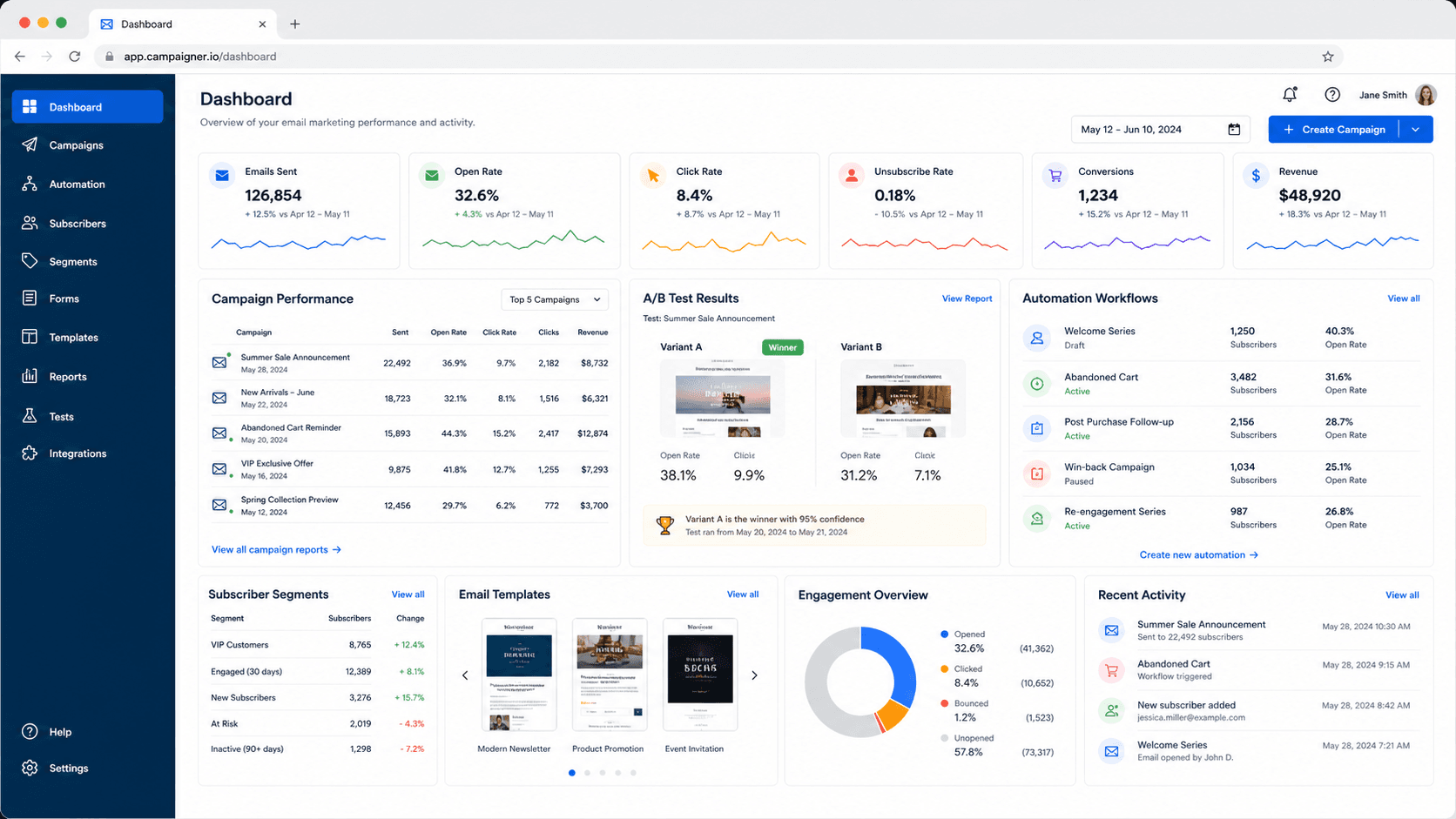
Campaigner and Shopify Email solve overlapping problems for different reasons. Campaigner's strength is multivariate testing, automation workflows and a deeper template library, which suits teams that treat testing as core to retention. Shopify Email offers a simpler, more familiar workflow for teams already running their store through Shopify, and that ecosystem fit can outweigh Campaigner's extra testing depth if your team just needs campaigns to ship quickly.
Where Campaigner wins
Choose Campaigner when your team will genuinely put multivariate testing, automation workflows and its template library to work every week. Those strengths pay off when campaigns are tied to recovering revenue or driving repeat purchases, but Campaigner is generally considered less ecommerce-native than tools like Klaviyo or Omnisend, so weigh that against how specialized your store's needs really are before committing to it.
Where Shopify Email wins
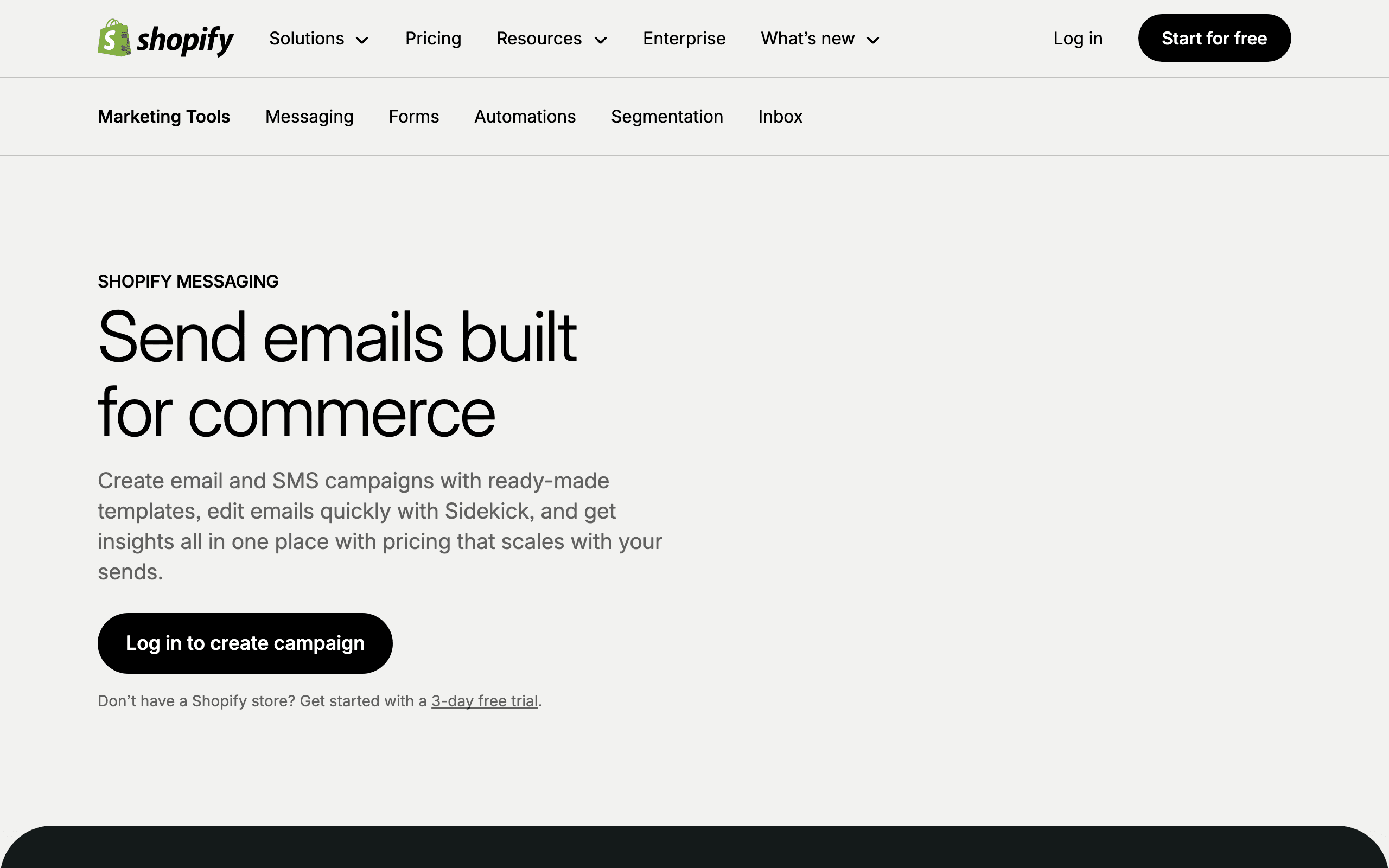
Shopify Email makes more sense when your team already lives inside the Shopify ecosystem and wants campaigns that feel like a natural extension of the store rather than a separate platform to learn. Its feature depth varies by plan and setup, and costs can climb as your contact list or channels grow, but for teams that value familiarity over Campaigner's testing depth, that tradeoff is often worth it.
Pricing reality
The pricing data on this page marks Campaigner and Shopify Email as variable at comparable ecommerce scale. Campaigner depends on contacts, plan, SMS add-ons, and feature tier. Shopify Email depends on the Shopify plan, send volume, and selected ecommerce features. Compare your actual campaign frequency and list size rather than assuming the native Shopify option is always cheaper.
Sequenzy is listed at $49/month for 60,000 emails, unlimited subscribers, Shopify, WooCommerce, and Stripe, with SMS as a paid add-on and rule-based (not AI) product recommendation blocks.
Review signals
The existing review summaries point to Campaigner for multivariate testing, ecommerce workflows, and reporting, while Shopify Email should be checked for native workflow fit, integrations, and ease of use inside Shopify. For both, verify pricing and feature limits against real send volume.
Use-case matchups
| Use case | Better fit | What to verify |
|---|---|---|
| Advanced testing and email campaign depth | Campaigner | Confirm multivariate testing, segmentation, templates, and dynamic content are worth the added setup. |
| Native Shopify campaign sending | Shopify Email | Verify Shopify customer segments, product blocks, discount usage, automation coverage, and pricing at send volume. |
| Very simple Shopify newsletters | Shopify Email | If the team only sends store announcements, native Shopify workflow can be enough. |
| Cross-platform ecommerce email | Sequenzy | Shopify Email is Shopify-native; Sequenzy is more relevant when WooCommerce or Stripe lifecycle email also matters. |
| Enterprise email optimization | Campaigner | More advanced testing matters when campaigns are large enough for the learning to pay off. |
Best Fit by Shopify Email Maturity
Best email marketing tool for enterprise campaign optimization
Campaigner fits teams that need advanced testing, segmentation, templates, dynamic content, and enough campaign volume for the learning to pay off.
Best native email tool for simple Shopify newsletters
Shopify Email is the better fit when the merchant only needs native Shopify segments, product blocks, discounts, and simple campaign sending.
Best email platform for cross-platform ecommerce lifecycle
Sequenzy fits when WooCommerce, Stripe lifecycle email, or transactional messages also matter beyond Shopify-native campaigns.
Migration checklist
| Step | What to confirm |
|---|---|
| Store data | Export customers, subscribers, tags, segments, consent status, suppressions, products, orders, and discount fields. |
| Shopify-native assets | If leaving Shopify Email, preserve product blocks, store templates, Shopify customer segments, and discount logic. |
| Campaigner assets | If leaving Campaigner, document multivariate tests, automations, templates, dynamic content, and segmentation rules. |
| Automations | Rebuild welcome, cart, browse, post-purchase, winback, VIP, and promotional campaign logic manually. |
| Reporting | Export campaign, ecommerce revenue, deliverability, test, and list-growth reports before switching. |
| Sender setup | Reverify domains, sender identities, branded links, SPF, DKIM, DMARC, and unsubscribe behavior. |
Decision checklist
| Question | Why it matters |
|---|---|
| Is Shopify the only commerce platform? | Shopify Email is strongest when the whole workflow lives inside Shopify. |
| Do you need testing depth beyond native campaign sending? | Campaigner is more relevant when multivariate testing, dynamic content, and complex segmentation are used. |
| What will the send volume cost? | Shopify-native email can still become expensive or limited depending on send volume and plan structure. |
| Will WooCommerce or Stripe lifecycle email matter? | Shopify Email is not built for cross-platform commerce or subscription lifecycle messaging. |
| Is Sequenzy enough? | If the job is simple commerce email plus transactional and Stripe-triggered messages, compare Sequenzy before buying a heavier setup. |
How to make the Campaigner vs Shopify Email decision
Campaigner is stronger when you need email marketing with advanced testing. Shopify Email is better when its ecosystem, workflow, or pricing is a closer match for your team.
| Decision area | Pick Campaigner when... | Pick Shopify Email when... |
|---|---|---|
| Primary workflow | Its core strength matches the campaign you need next. | Its core strength matches the campaign you need next. |
| Data model | Your customer data already fits its segments and triggers. | Your customer data already fits its segments and triggers. |
| Team ownership | Someone can own setup, testing, and reporting inside the tool. | Someone can own setup, testing, and reporting inside the tool. |
| Budget | The price is justified by workflows you will use now. | The price is justified by workflows you will use now. |








