
This comparison is mostly about scale
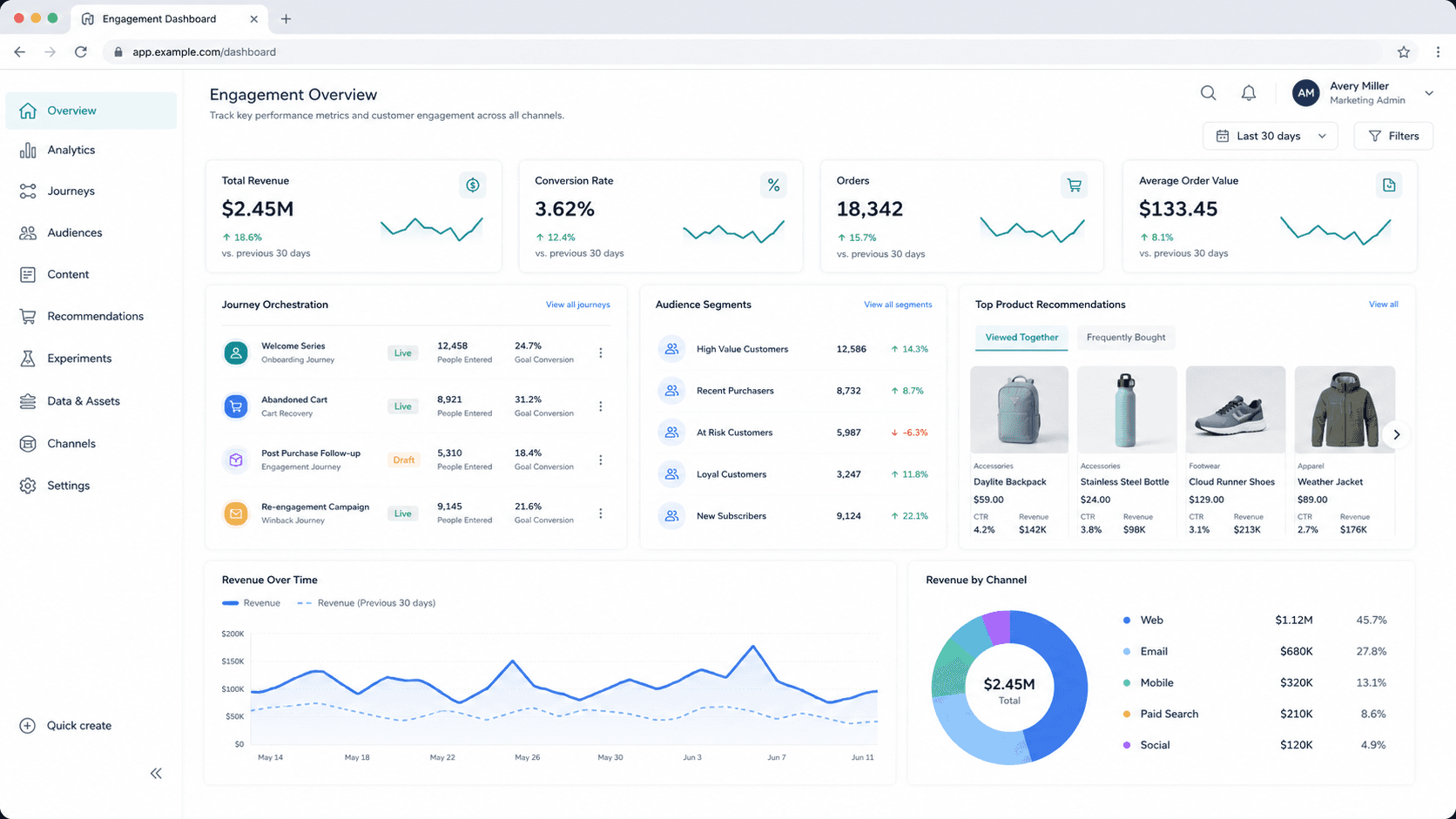
Bloomreach and Shopify Email sit at opposite ends of the maturity curve. Bloomreach is for enterprise personalization, data activation, segmentation, and omnichannel customer engagement. Shopify Email is a native Shopify campaign tool for simple sends from inside the admin.
Pricing reality
Shopify Email should be modeled around current Shopify email send pricing, store plan, monthly sends, product blocks, customer segments, and automation needs. Bloomreach should be modeled from a current quote covering modules, customer and catalog data, personalization, channels, services, support, and contract terms. The tools are so different that the correct comparison is operating maturity, not only price.
If a store only needs occasional product newsletters, Shopify Email is the honest answer. Bloomreach only makes sense when the business has enough data, traffic, and personalization use cases to justify an enterprise platform.
Why Bloomreach can be the better fit
Bloomreach is stronger when the team needs a deep customer view, product recommendations, segmentation, and journeys across more than basic Shopify campaigns. It should have named use cases before purchase: personalized browse recovery, churn risk, cross-channel lifecycle orchestration, or advanced merchandising logic.
Without those use cases, the platform is likely overkill.
Why Shopify Email can be the better fit
Shopify Email is useful because it is simple and native. It keeps campaign creation close to products and customers inside Shopify, which is enough for many small stores.
The limitation is lifecycle depth. It is not meant to be an enterprise engagement platform or a full transactional/lifecycle email system.
Use-case matchups
| Use case | Better fit | Why |
|---|---|---|
| Simple Shopify-native campaigns | Shopify Email | It keeps basic campaign creation inside Shopify admin. |
| Enterprise personalization and segmentation | Bloomreach | Bloomreach is stronger when customer and product data drive journeys. |
| Product recommendations and on-site personalization | Bloomreach | Shopify Email is not an enterprise engagement platform. |
| Lightweight store newsletters | Shopify Email | Shopify Email is enough for occasional product and promo sends. |
| Ecommerce and subscription lifecycle email | Sequenzy | Sequenzy sits between simple Shopify sends and enterprise suites. |
Best Fit by Store Stage and Personalization Scope
Best email tool for simple Shopify-native campaigns
Shopify Email is the better fit when the store only needs occasional product announcements, promo sends, lightweight newsletters, and campaign creation inside Shopify admin. It is strongest when the team wants minimum setup and does not need advanced automation.
Best enterprise platform for ecommerce personalization
Bloomreach is the better fit when customer and product data drive personalization, segmentation, recommendations, search, and enterprise journeys. It is appropriate when the store has enough scale and data maturity to justify a platform implementation.
Best email tool for ecommerce and subscription lifecycle
Sequenzy is the better fit when the team needs more than basic Shopify sends but less than an enterprise suite: Shopify/WooCommerce lifecycle email, Stripe-triggered messages, transactional email, and newsletters in one focused workflow.
Review signals
The structured reviews here are review-theme summaries rather than individual sourced quotes. Bloomreach themes point to CDP depth, reporting, and mature ecommerce retention fit, with setup effort and pricing clarity as cautions. Shopify Email themes point to native Shopify workflow and simple campaign creation, with lifecycle depth, reporting, and advanced automation as cautions.
Decision checklist
- Decide whether you need simple Shopify-native campaigns or enterprise personalization tied to customer and product data.
- For Bloomreach, validate catalog setup, identity resolution, product recommendations, segmentation, and on-site personalization.
- For Shopify Email, test campaign creation, product blocks, customer segments, automation fit, and reporting inside Shopify admin.
- Price Shopify Email against your projected monthly email sends and compare Bloomreach only from a current quote.
- Confirm how transactional messages, consent, unsubscribes, suppression, and deliverability are handled.
- Check whether the team needs SMS, advanced lifecycle flows, or cross-store reporting outside Shopify Email.
Migration checklist
- Export current customer segments, templates, campaign history, suppression data, and reporting baselines.
- Rebuild must-have emails first: newsletter, product launch, cart recovery, post-purchase, winback, and VIP.
- Preserve unsubscribe and consent state before importing or syncing contacts.
- Test emails across desktop and mobile inboxes before live sends.
- Monitor send cost, unsubscribe rate, bounce rate, spam complaints, and revenue attribution after launch.
Where Sequenzy fits
Sequenzy fits between the extremes when Shopify Email is too shallow but Bloomreach is too heavy. It provides focused ecommerce and subscription email automation, newsletters, transactional email, and Stripe-aware lifecycle messages.
How to make the Bloomreach vs Shopify Email decision
Bloomreach is the better fit when you need enterprise personalization and customer engagement. Shopify Email is the better fit when your team prefers its approach to email marketing and automation.
Look hardest at these differences: Bloomreach is stronger when CDP depth matters; Shopify Email may be easier for a different operating model; Sequenzy is the simpler email path. Those are the areas most likely to affect daily work after the demo is over.
| Decision area | Pick Bloomreach when... | Pick Shopify Email when... |
|---|---|---|
| Primary workflow | Its core strength matches the campaign you need next. | Its core strength matches the campaign you need next. |
| Data model | Your customer data already fits its segments and triggers. | Your customer data already fits its segments and triggers. |
| Team ownership | Someone can own setup, testing, and reporting inside the tool. | Someone can own setup, testing, and reporting inside the tool. |
| Budget | The price is justified by workflows you will use now. | The price is justified by workflows you will use now. |
My read: Choose Bloomreach if enterprise personalization and customer engagement is the main reason you are buying. Choose Shopify Email if its ecosystem, workflow, or pricing better matches how your team runs campaigns. Choose Sequenzy if you want a simpler email-first setup for Shopify, WooCommerce, or subscription lifecycle messages.








