Updated 2026-03-15

Best Email Marketing Tools for Food & Beverage DTC Brands

Food runs out. Email makes sure they reorder from you.

Food and beverage is one of the best categories for email marketing because the product literally gets consumed. Every bag of coffee, box of snacks, or bottle of hot sauce runs out and needs replacing. Email automates the reorder cycle and builds the kind of brand connection that keeps customers buying from you instead of grabbing a cheaper option at the grocery store. I reviewed 7 email marketing tools for food and beverage DTC brands, focusing on subscription management, reorder automation, recipe and content delivery, and the ability to handle seasonal campaigns for holidays and gifting.

TL;DR

Klaviyo is the best choice for established food brands with active subscription programs and Recharge integration. Sequenzy is the better pick for earlier-stage brands wanting AI-powered reorder sequences with pay-per-email pricing and a free tier up to 2,500 emails per month. If you use Stripe for subscription billing, Sequenzy's native integration handles the entire lifecycle automatically.

Why Food & Beverage Brands Need Email Marketing

Natural Reorder Cycles

Food and drinks get consumed on predictable schedules. A bag of coffee lasts 2-3 weeks, a hot sauce bottle lasts a month or two. Email reminders timed to consumption habits drive consistent repeat revenue.

Subscription Conversion

Subscriptions are the lifeblood of DTC food brands. Email converts one-time buyers into subscribers by highlighting convenience, savings, and never running out of their favorite products.

Recipe and Content Marketing

Food brands have a unique content advantage. Recipes, pairing suggestions, and usage tips keep subscribers engaged and help them get more value from your products.

Gifting and Seasonal Peaks

Food gifts spike around holidays, birthdays, and corporate gifting season. Email campaigns during these periods drive significant revenue from both repeat customers and new gift recipients.

Food & Beverage DTC Brands Email Marketing Benchmarks

Know these numbers before you start. They'll help you set realistic goals and pick the right tool.

22-30%
Average Open Rate

Food brand emails perform well because they are visually appealing and tied to consumable products people want to rebuy. Recipe emails tend to outperform promotional emails.

3-5%
Average Click Rate

One-click reorder links and recipe content drive the strongest click rates. Subscription conversion emails also perform well when timed to repeat purchases.

Tuesday-Thursday, 10 AM - 12 PM
Best Send Time

Late morning is when people are thinking about food and planning meals. Avoid sending food emails late at night when appetite cues are less effective.

8-15% of repeat buyers
Subscription Conversion Rate

Among customers who have purchased the same product at least twice, 8-15% will convert to a subscription when offered. This metric varies by product category and discount offered.

Important Tips Before You Choose

Lessons from food & beverage dtc brandswho've been doing this for years. Save yourself the trial and error.

Time Reorder Reminders to Consumption Cycles

Track how long each product typically lasts. Send the first reminder 3 days before they are likely to run out, not after. A bag of coffee that lasts 3 weeks should trigger a reorder email on day 18. A hot sauce that lasts 8 weeks should trigger on week 6. Getting this timing right dramatically improves reorder rates.

Convert Second-Time Buyers Into Subscribers

The moment someone buys the same product a second time, they are signaling loyalty. Trigger a subscription offer highlighting the savings (typically 10-15%), the convenience of never running out, and the flexibility to skip or cancel anytime. Most food subscription conversions happen between purchases 2 and 4.

Send Recipe Emails That Subtly Cross-Sell

Recipe emails have some of the highest engagement in food marketing. Include a recipe that uses your product plus one or two complementary products you also sell. The recipe provides genuine value while naturally introducing more of your catalog.

Build a Post-Gift Welcome Sequence

Every holiday gift box introduces a new person to your product. Build a specific welcome sequence for gift recipients that tells your brand story, explains the product, and offers a first-time buyer discount. This is one of the most overlooked revenue opportunities in food DTC.

Segment by Dietary Preference and Flavor Profile

Tag customers by dietary needs (vegan, gluten-free, keto) and flavor preferences based on purchase history. A customer who buys your mild salsa should not get emails about your ghost pepper edition, and vice versa.

Use Urgency for Seasonal and Limited Batches

Limited-edition seasonal flavors and small-batch products create natural urgency. Email these to your most engaged customers first as an exclusive early access, then to your broader list. Scarcity messaging works exceptionally well in food because customers understand that seasonal ingredients are genuinely limited.

19 Best Email Marketing Tools for Food & Beverage DTC Brands

#ToolDescriptionBest ForPricing
1KlaviyoLeading e-commerce email with subscription platform integrations.Established food brands with active subscription programsFree up to 250 contacts, then from $20/month
2SequenzyAI-powered email with Shopify and Stripe integration.DTC food brands wanting AI automation with flexible pricingFree up to 2,500 emails/mo, then $19/mo (unlimited contacts)
3DripE-commerce email with revenue attribution.Mid-size food brands wanting revenue-attributed email$39/month for 2,500 contacts
4OmnisendE-commerce marketing with email and SMS.Food brands wanting email plus SMS reorder alertsFree up to 250 contacts, then from $16/month
5ActiveCampaignAdvanced automation for complex food brand operations.Food brands with complex operations or corporate gifting$29/month for 1,000 contacts
6MailchimpPopular email with free tier and easy setup.Small food brands just starting outFree up to 500 contacts, then from $13/month
7BrevoBudget email with SMS and transactional capabilities.Budget-conscious food brandsFree up to 300 emails/day, then from $25/month
8OmnisendE-commerce email and SMS for food brand reorder alerts.Food brands wanting email and SMS reorder alerts at competitive pricingFree up to 250 contacts, from $16/month
9SendlaneE-commerce email and SMS with behavioral tracking for food brands.Food brands with diverse flavor or dietary ranges wanting behavioral targetingFrom $100/month
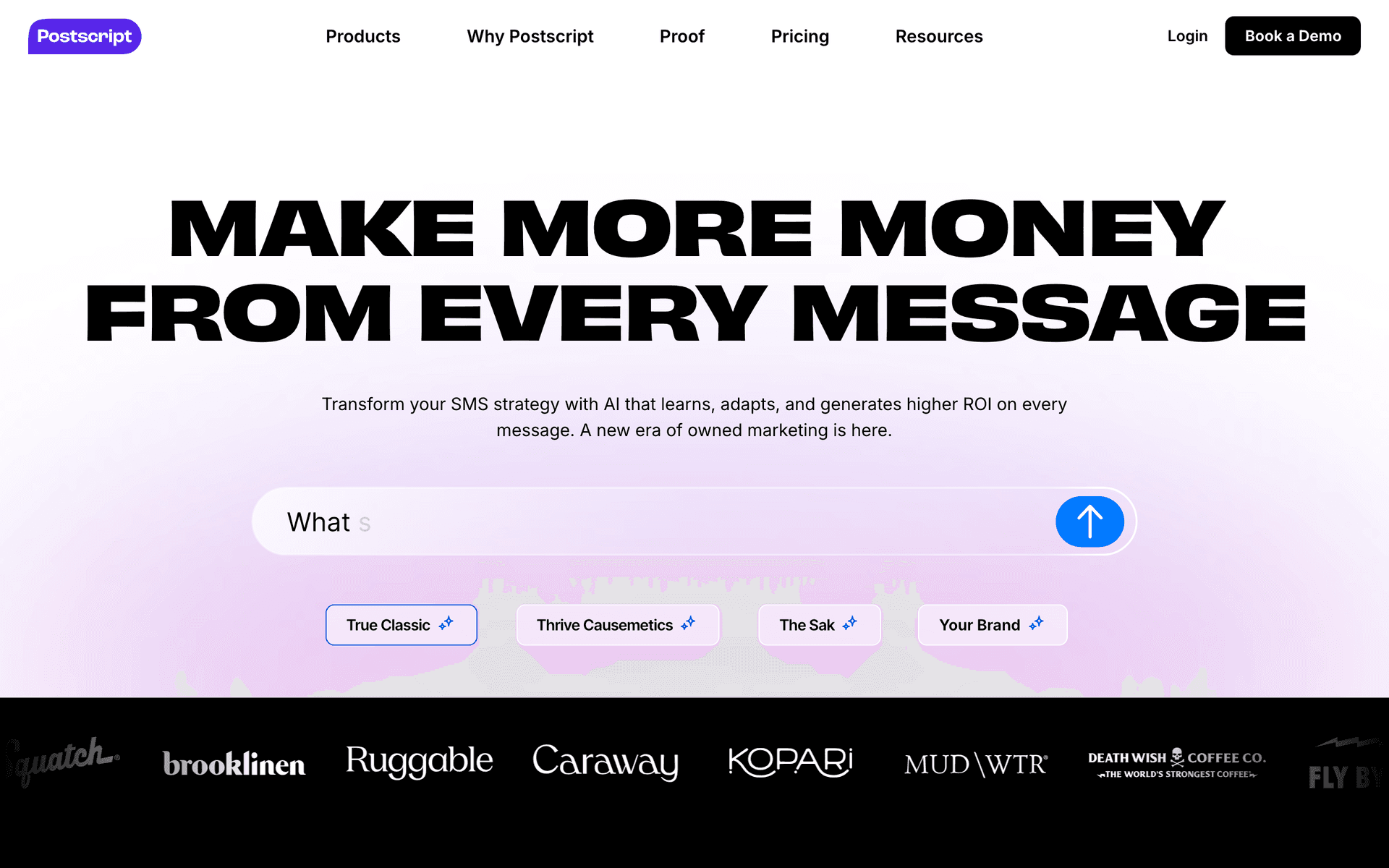
10PostscriptShopify-native SMS for food reorder and limited batch alerts.Food Shopify brands adding SMS reorder and limited-batch alerts to their email programFree up to 500 messages, from $25/month
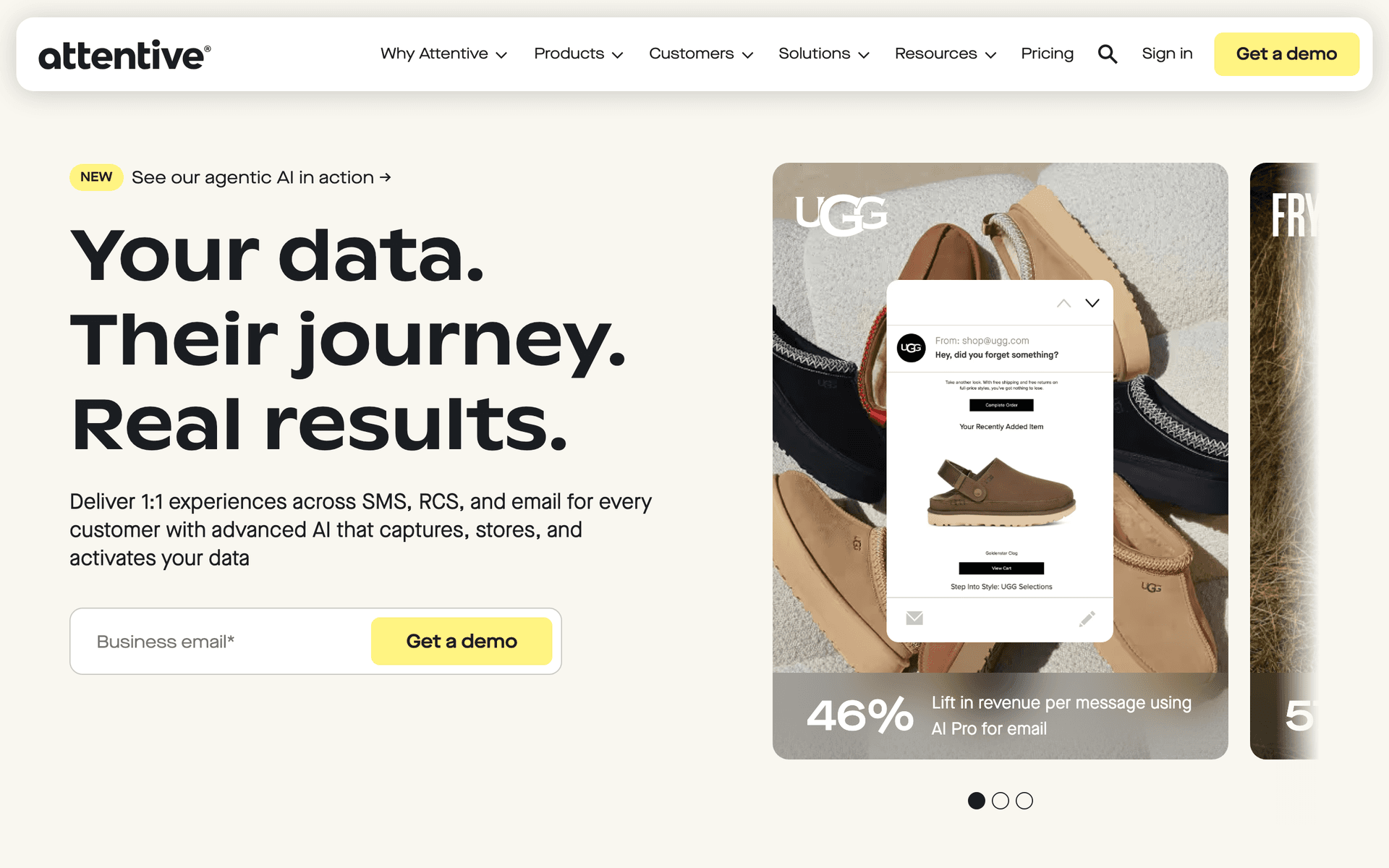
11AttentiveSMS and email for food brands with large reorder audiences.Established food brands with large reorder audiences wanting SMS and email in one platformCustom pricing based on usage
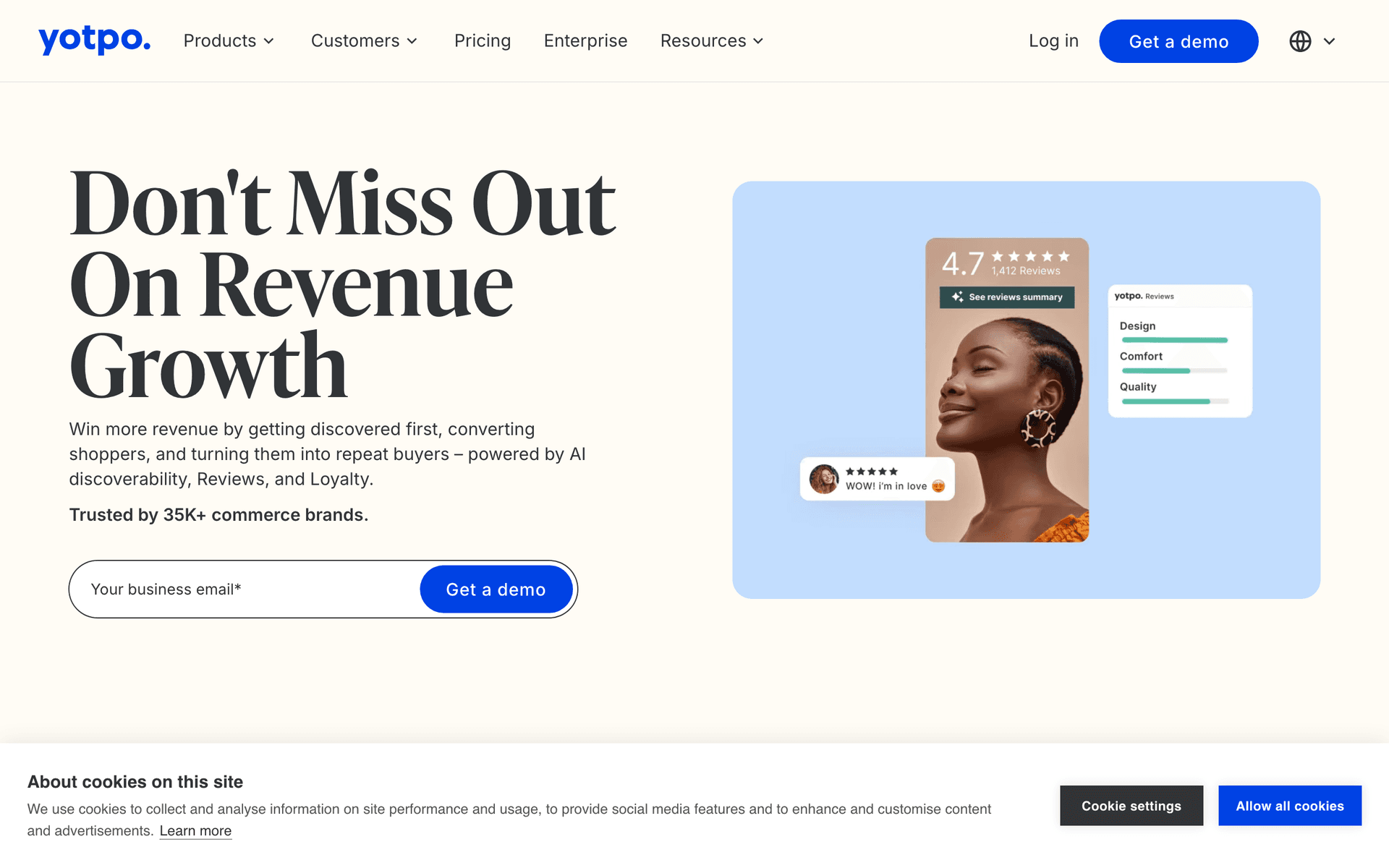
12YotpoReviews, loyalty, and SMS for food DTC brands.Food DTC brands building loyalty programs and collecting recipe-based reviewsFree plan available, from $19/month
13KlaviyoPremium e-commerce email with predictive food reorder timing.Established food brands with subscription programs wanting predictive replenishmentFree up to 250 contacts, from $20/month
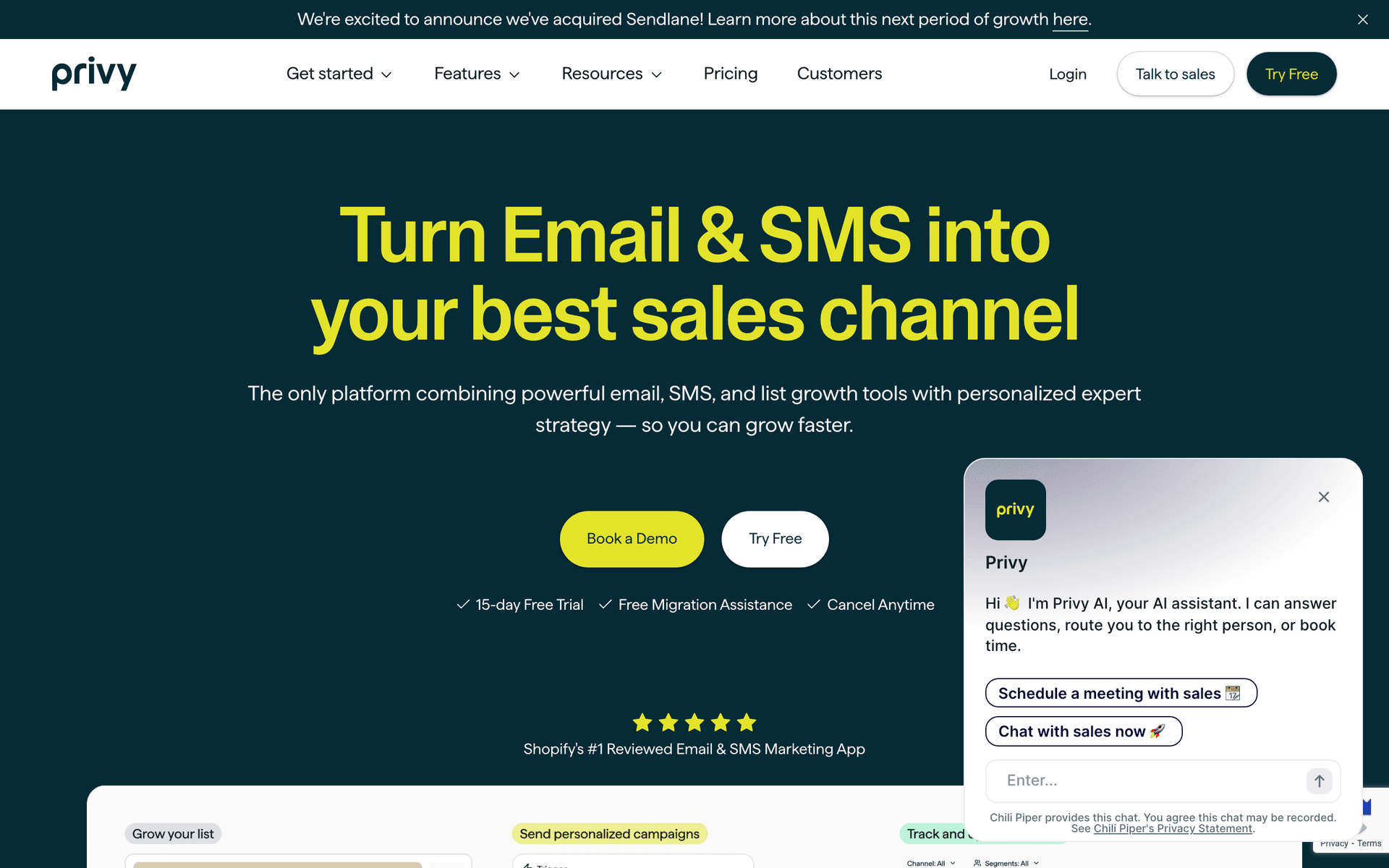
14PrivyEmail capture for food brand website and recipe traffic.Food brands with recipe content wanting to convert blog readers into email subscribersFree plan available, from $30/month
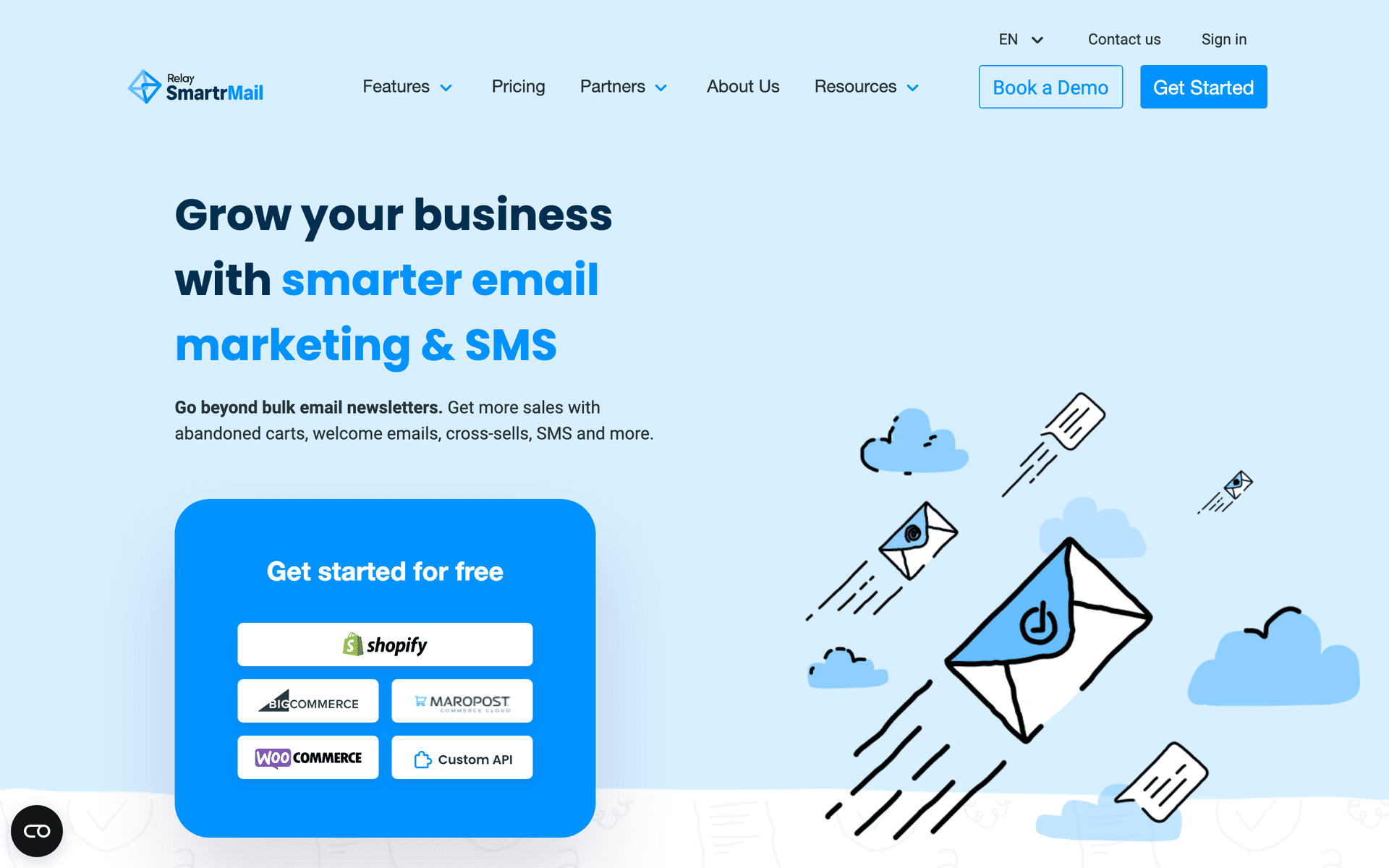
15SmartrMailAI product recommendations for food cross-sells.Food brands with expanding product catalogs wanting automated ingredient and product cross-sellsFree plan available, from $19/month
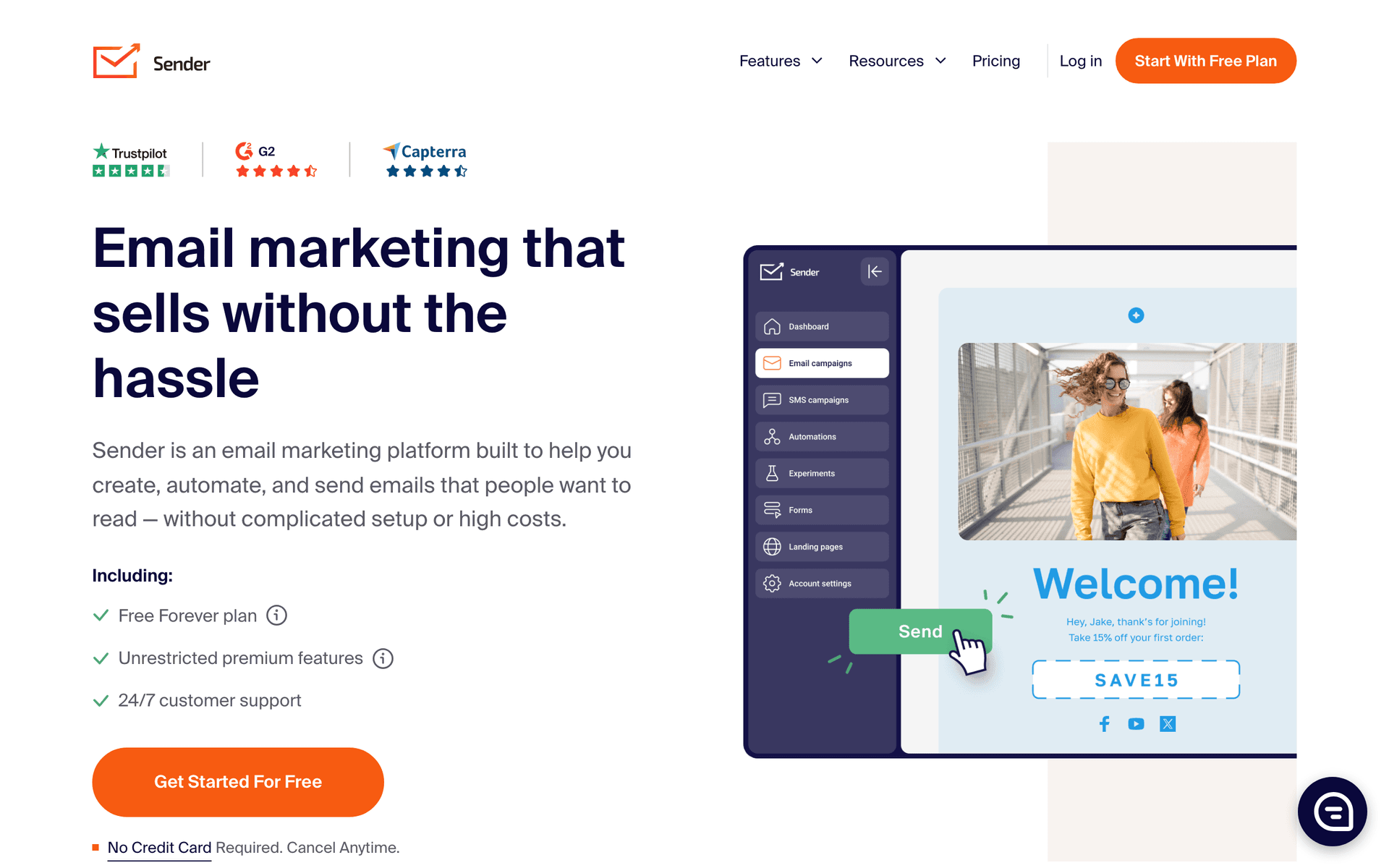
16SenderAffordable food brand email with generous free limits.Small food brands launching direct-to-consumer email at zero costFree up to 2,500 subscribers, from $15/month
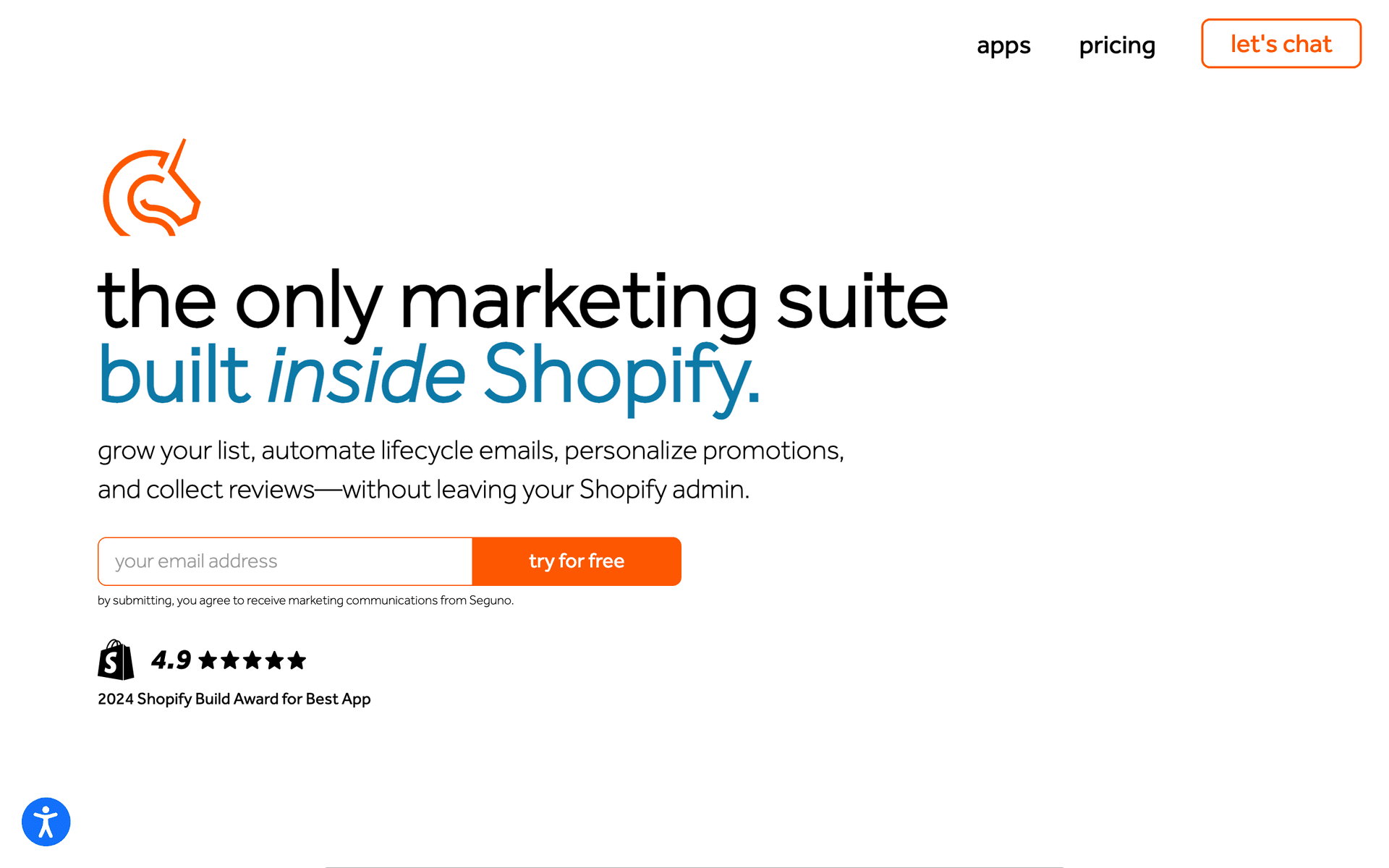
17SegunoShopify-native email inside Shopify admin for food brands.Small food brands on Shopify wanting email fully integrated into their store workflowFree up to 250 subscribers, from $10/month
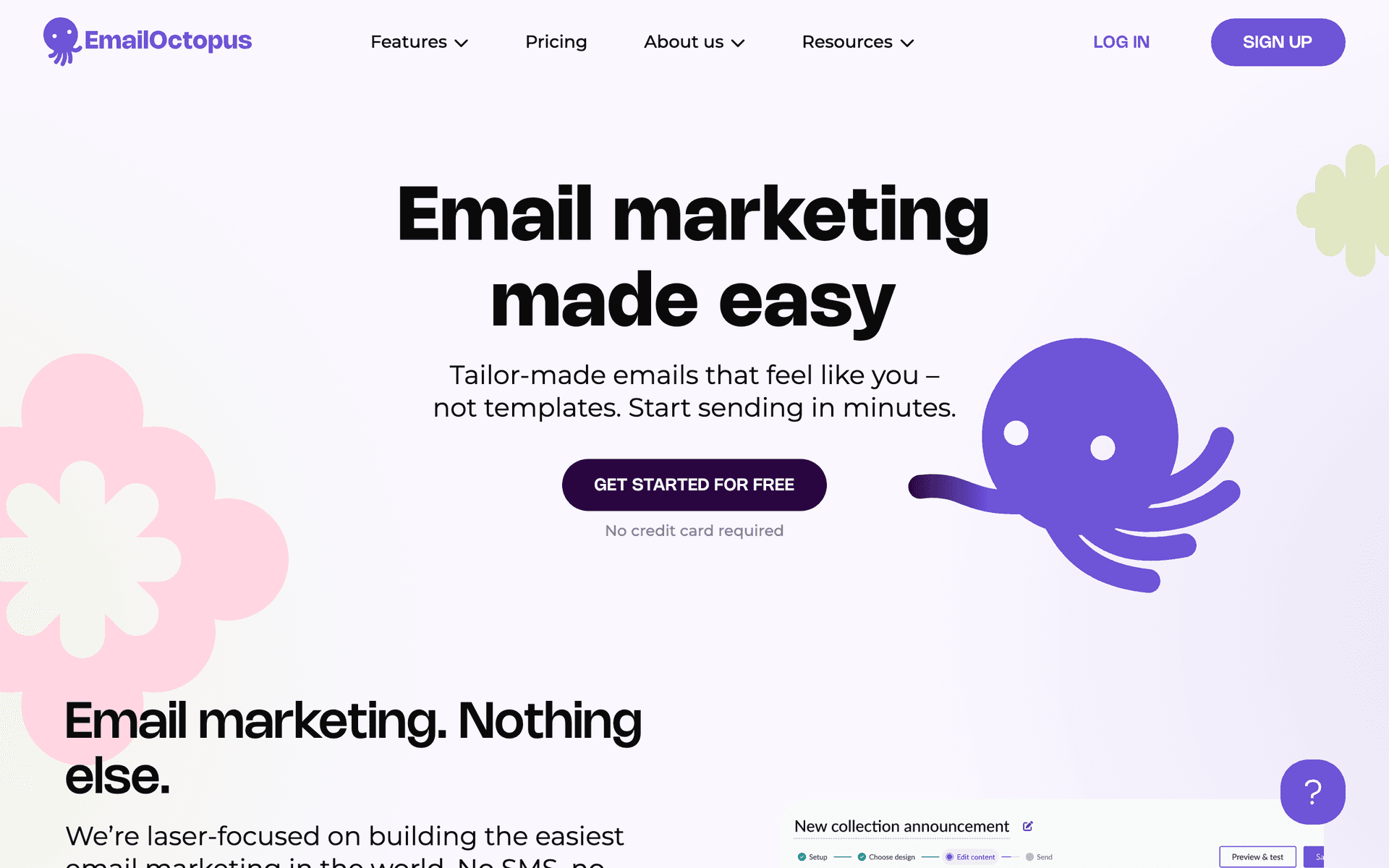
18EmailOctopusBudget food brand email with generous free limits.Small-batch food producers starting their email list at no costFree up to 2,500 subscribers, from $9/month
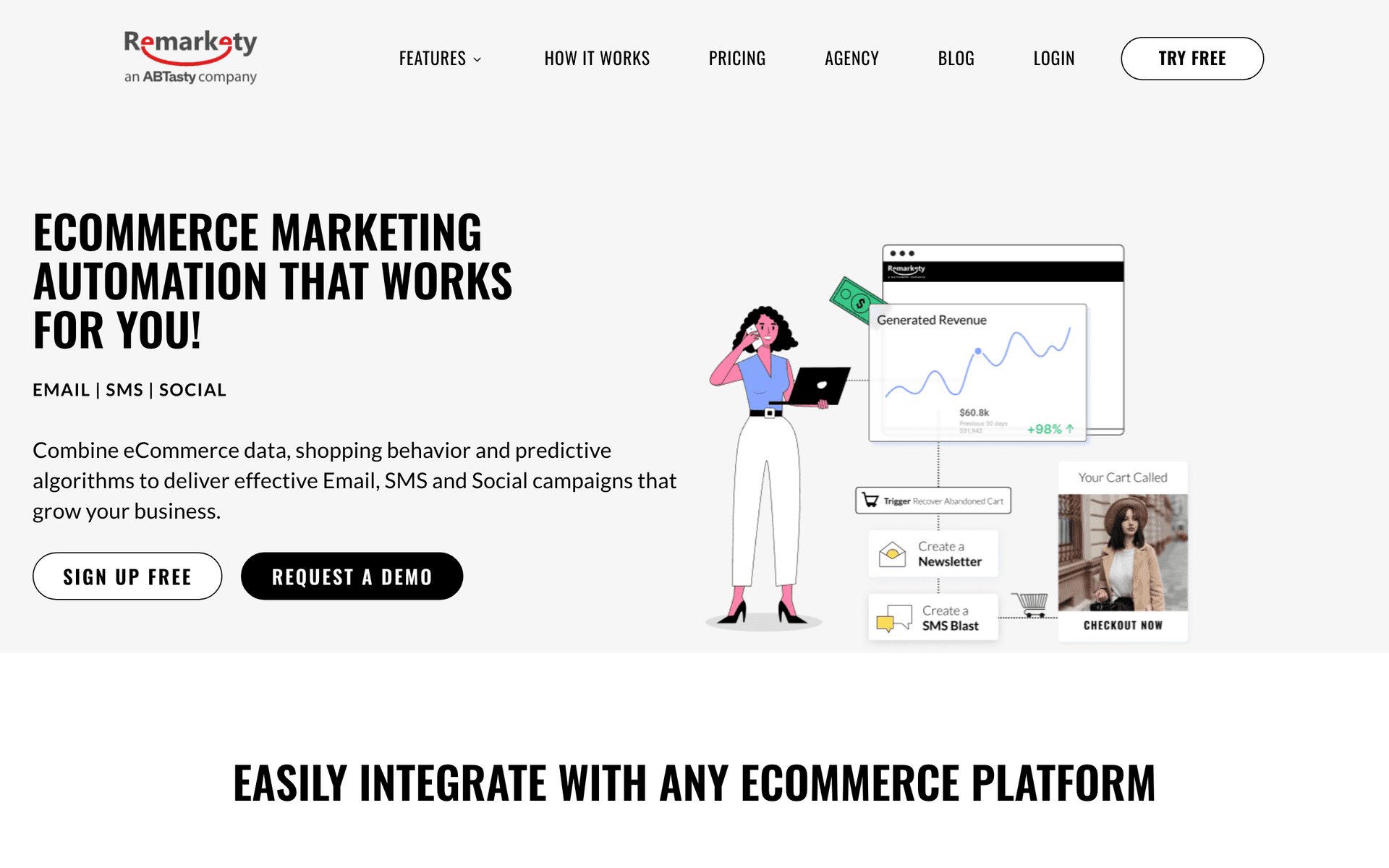
19RemarketyPurchase-triggered food reorder automation.Food brands wanting automated consumption-based reorder reminders and lapsed buyer recoveryFrom $25/month
#1
Klaviyo

Leading e-commerce email with subscription platform integrations.

Visit
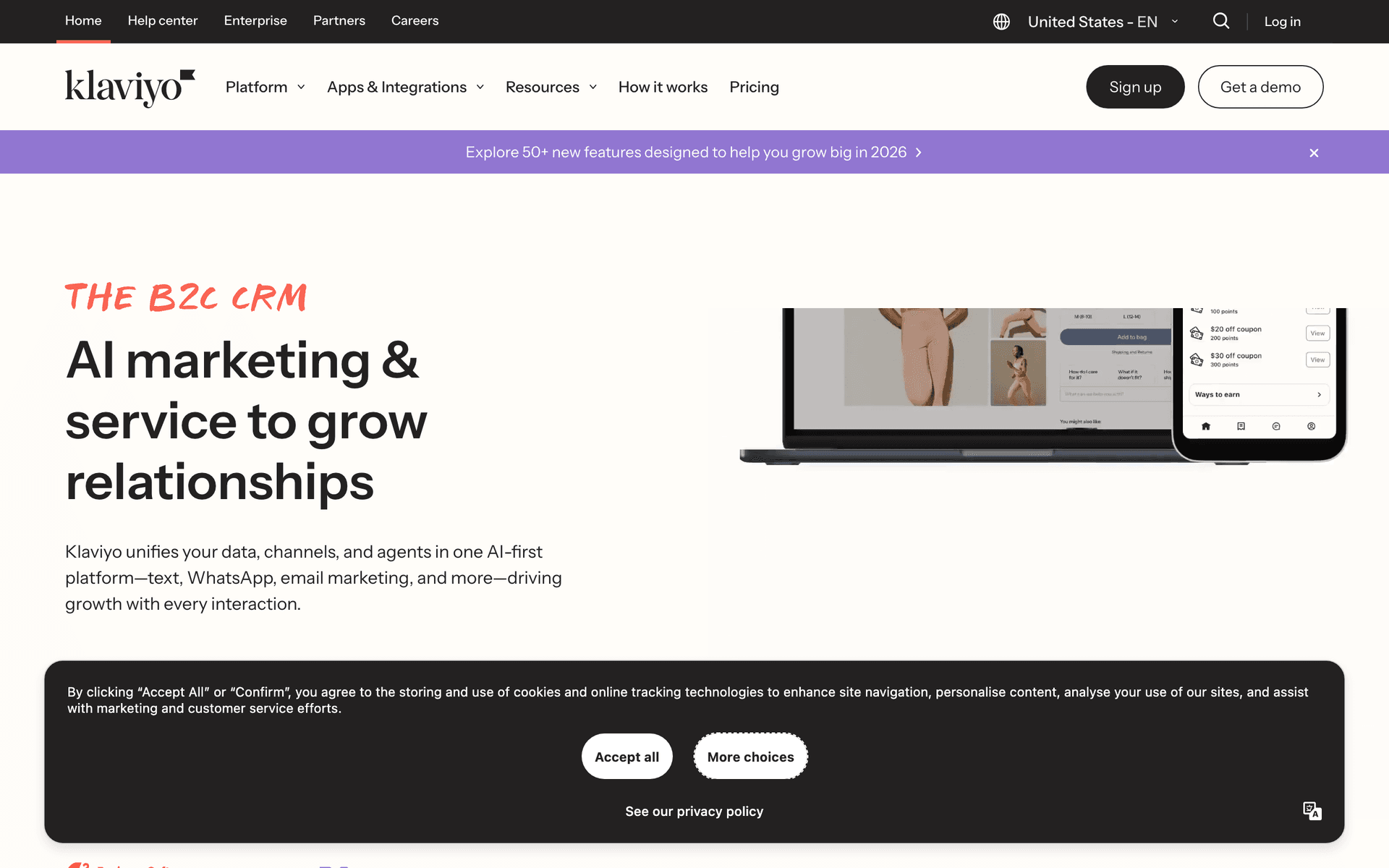
Klaviyo dashboard screenshot

Klaviyo is the top choice for food brands with serious subscription programs. It integrates directly with Recharge, Bold Subscriptions, and other subscription platforms to trigger emails based on subscription events like upcoming renewal, payment failure, or cancellation. The AI recommendation engine suggests complementary products based on past purchases - a customer who buys your coffee beans might see a recommendation for your mugs or grinders. Browse abandonment and cart recovery are well-tuned for food e-commerce. The predictive analytics can estimate when a customer is likely to reorder based on their purchase history, which is incredibly valuable for timing reorder reminders. The main issue is price - a 10,000 contact list runs about $150/month, which adds up fast for food brands operating on grocery-level margins.

Best for
Established food brands with active subscription programs
Pricing
Free up to 250 contacts, then from $20/month

Pros

  • Subscription platform integrations
  • AI product recommendations
  • SMS for reorder alerts
  • Deep Shopify integration

Cons

  • Expensive at scale
  • Complex for simple operations
  • Contact-based pricing
  • Overkill for small brands
Our Top Pick for Food & Beverage DTC Brands
#2
Sequenzy

AI-powered email with Shopify and Stripe integration.

Visit
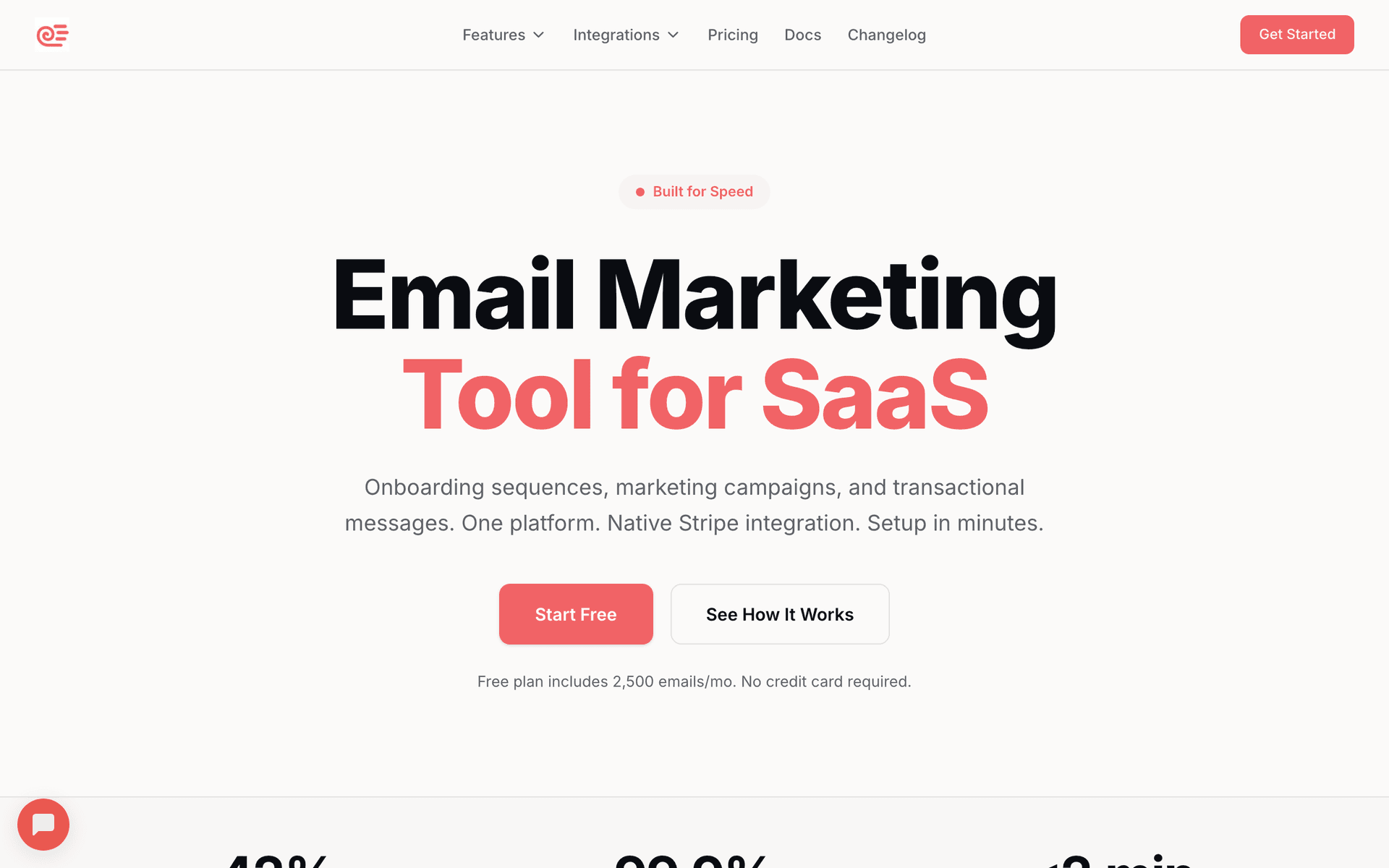
Sequenzy dashboard screenshot

Sequenzy works well for food brands using Shopify and Stripe for billing. The free tier gives you up to 2,500 emails per month, which is enough to test your reorder sequences before committing to a paid plan. The native Shopify integration syncs order data for automated reorder reminders timed to product consumption cycles. If you use Stripe for subscription billing, the Stripe integration handles subscription events automatically - trial starts, renewals, payment failures, and cancellations all trigger the right emails without manual setup. The AI sequence builder creates reorder campaigns, welcome series, and seasonal promotions quickly by analyzing your product catalog. On the paid plan at $29 for 50,000 emails, the pay-per-email pricing is friendly for food brands that send targeted campaigns rather than daily blasts. The main limitation is no integration with dedicated subscription platforms like Recharge.

Best for
DTC food brands wanting AI automation with flexible pricing
Pricing
Free up to 2,500 emails/mo, then $19/mo (unlimited contacts)

Pros

  • AI builds reorder sequences fast
  • Native Shopify integration
  • Stripe subscription events
  • Pay-per-email pricing

Cons

  • No Recharge integration
  • Newer platform
  • No built-in SMS
  • No recipe content templates
#3
Drip

E-commerce email with revenue attribution.

Visit
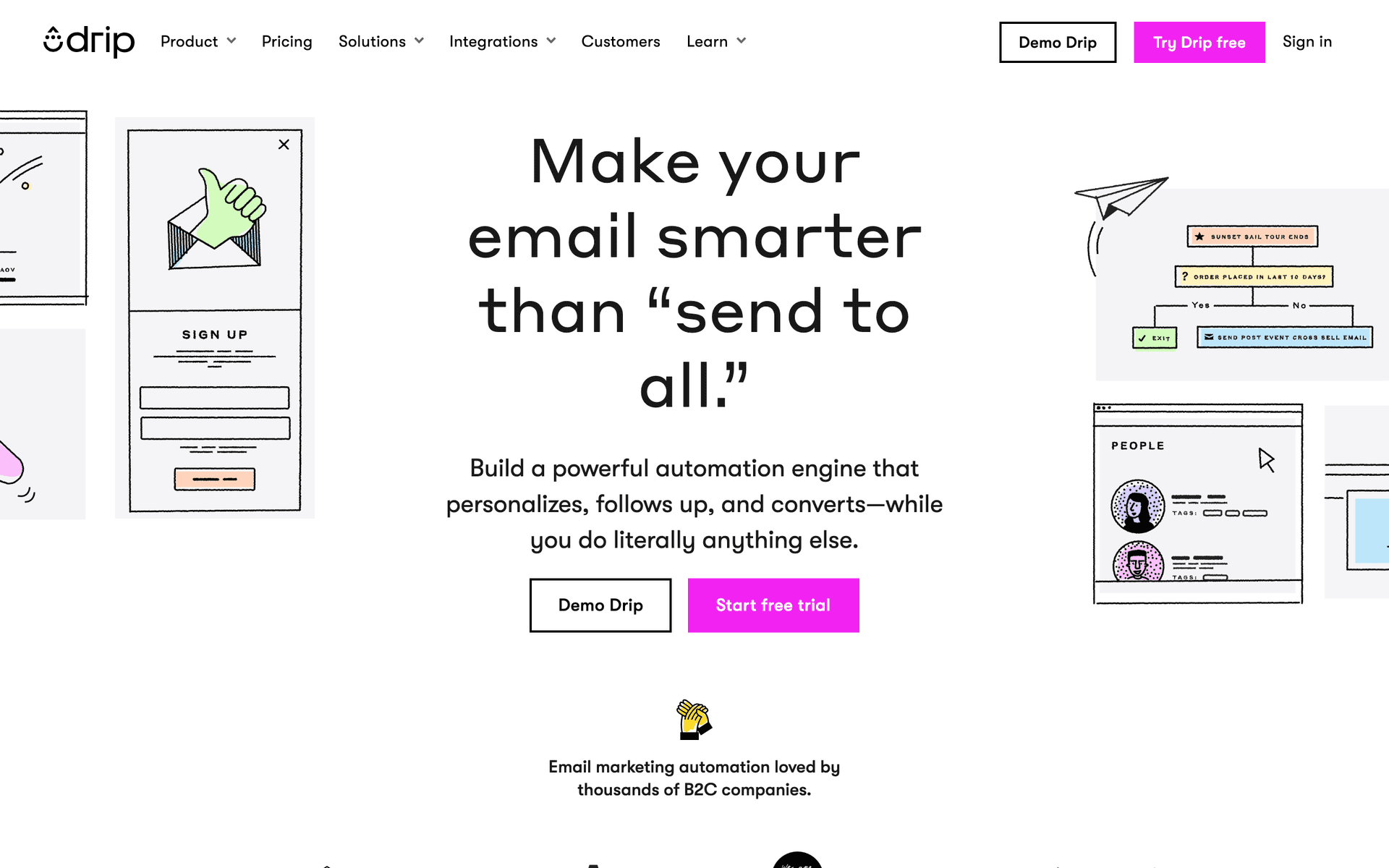
Drip dashboard screenshot

Drip tracks exactly which emails drive food reorders with precise revenue attribution. This is genuinely useful for understanding whether your recipe emails, reorder reminders, or promotional campaigns generate the most actual revenue. The visual workflow builder handles complex reorder sequences - you can branch based on product type, purchase frequency, and engagement level. For food brands that want data-driven decision making about their email strategy, Drip provides the clearest picture of what is actually working. The limitation is that it lacks native subscription platform integration and the starting price of $39/month for 2,500 contacts is higher than alternatives.

Best for
Mid-size food brands wanting revenue-attributed email
Pricing
$39/month for 2,500 contacts

Pros

  • Revenue attribution
  • Visual workflows
  • Good segmentation
  • E-commerce focused

Cons

  • No free tier
  • Contact-based pricing
  • No subscription platform integration
  • Higher starting price
#4
Omnisend

E-commerce marketing with email and SMS.

Visit
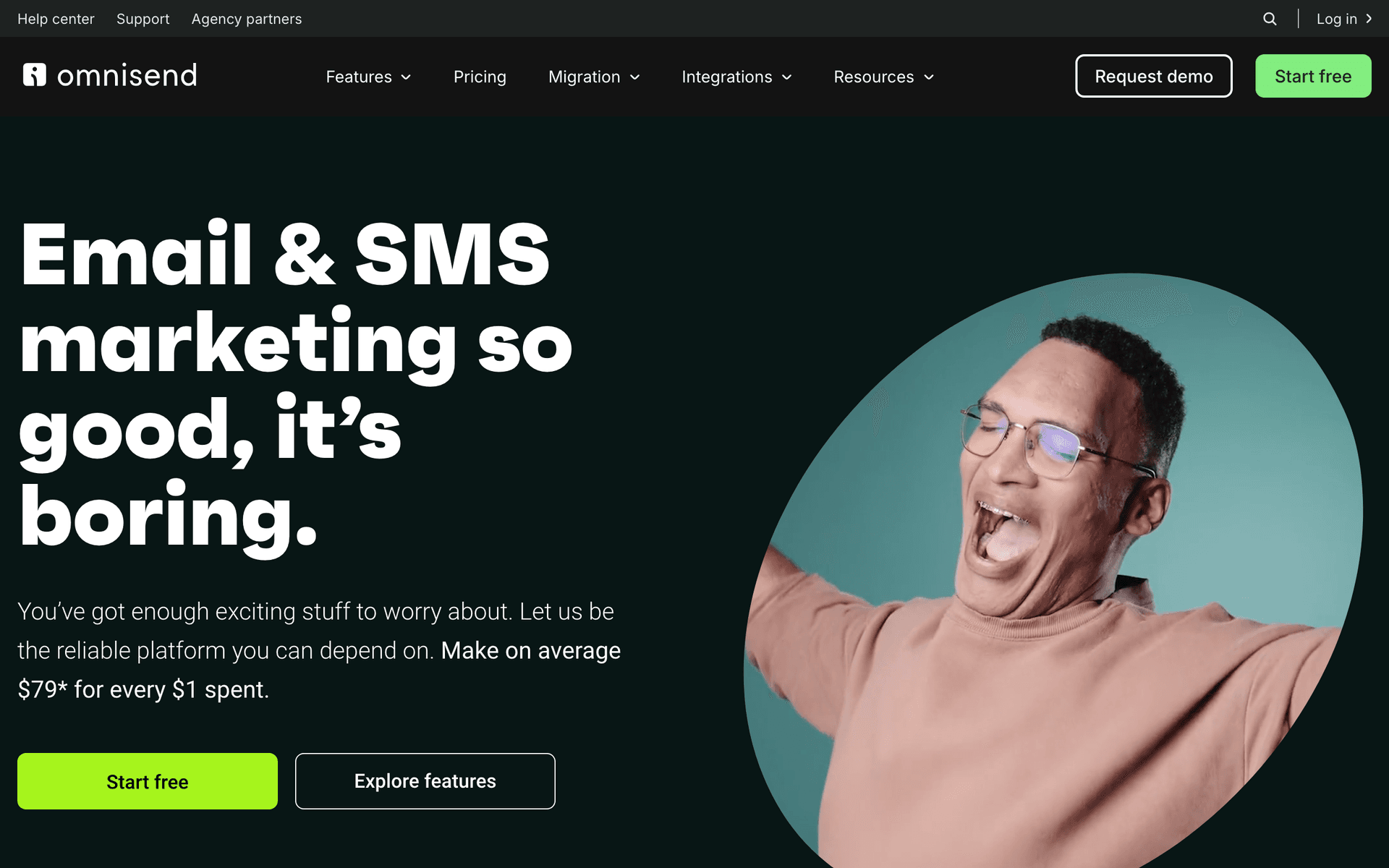
Omnisend dashboard screenshot

Omnisend covers the food brand essentials: cart recovery, welcome series, and reorder automation. SMS is genuinely useful for food brands because a well-timed text saying 'Running low on coffee? Reorder with free shipping' has a very high conversion rate - often 2-3x the conversion of the same message via email. The product picker simplifies building product showcase emails with photos pulled directly from your Shopify catalog. Pre-built automation workflows get you running faster than building from scratch. Pricing is reasonable and the free tier covers 250 contacts for testing. The trade-off is less sophisticated segmentation and reporting compared to Klaviyo.

Best for
Food brands wanting email plus SMS reorder alerts
Pricing
Free up to 250 contacts, then from $16/month

Pros

  • Email and SMS combined
  • Pre-built automations
  • Product picker
  • Good pricing

Cons

  • No subscription integrations
  • Basic segmentation
  • Limited reporting
  • Generic templates
#5
ActiveCampaign

Advanced automation for complex food brand operations.

Visit
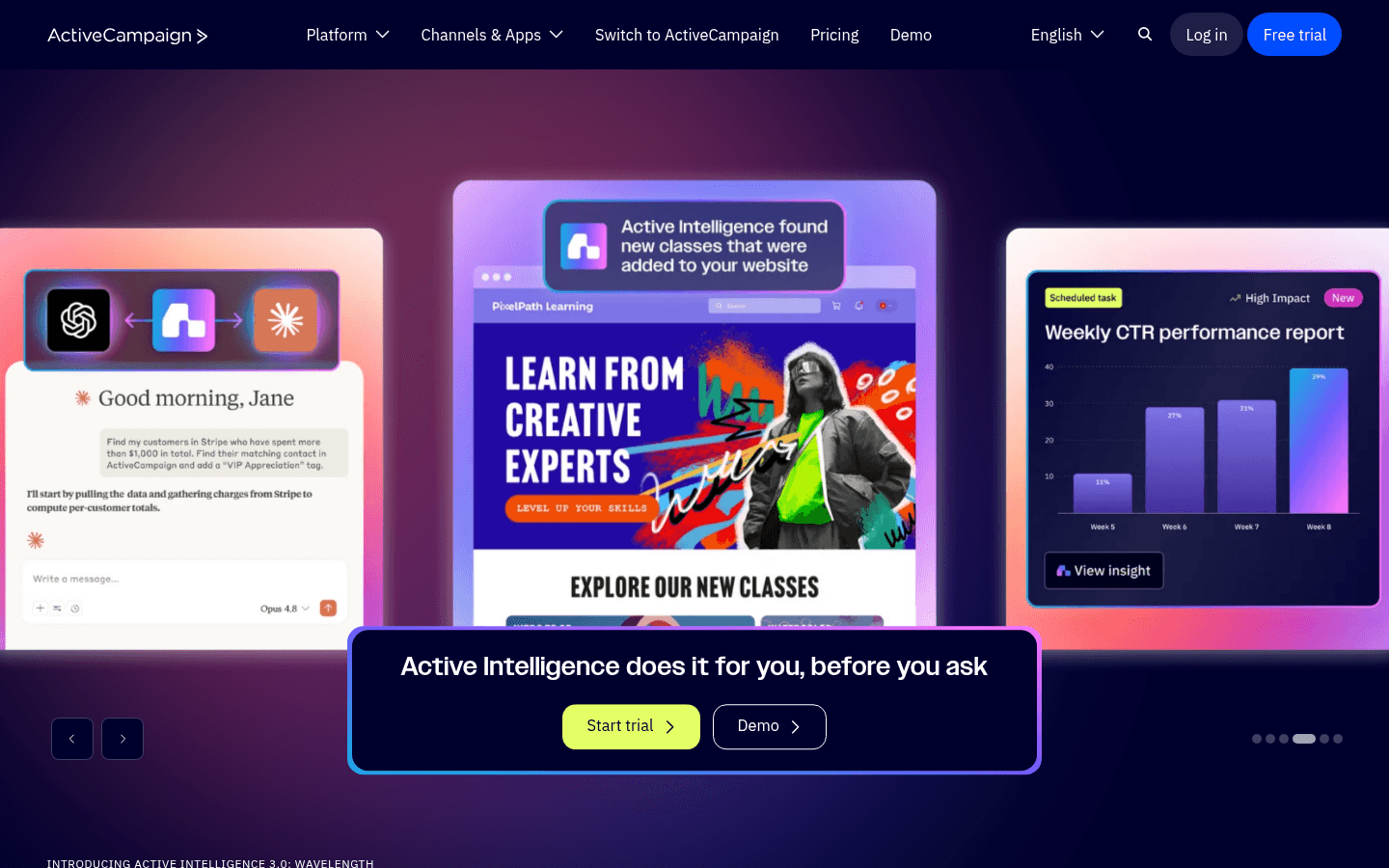
ActiveCampaign dashboard screenshot

ActiveCampaign handles complex food brand workflows that go beyond simple DTC. If you sell through multiple channels (website, Amazon, wholesale), manage corporate gifting programs, or need to segment by dietary preferences and flavor profiles, the automation builder can model all of it. The CRM tracks customer interactions across touchpoints over time, which is valuable for high-value corporate accounts. For a straightforward DTC food brand selling through Shopify, ActiveCampaign adds unnecessary complexity. But for food brands with diverse operations, the flexibility justifies the learning curve and per-contact pricing.

Best for
Food brands with complex operations or corporate gifting
Pricing
$29/month for 1,000 contacts

Pros

  • Powerful automation
  • CRM for corporate accounts
  • Advanced segmentation
  • Good deliverability

Cons

  • Not food specialized
  • Steep learning curve
  • No e-commerce templates
  • Setup takes time
#6
Mailchimp

Popular email with free tier and easy setup.

Visit
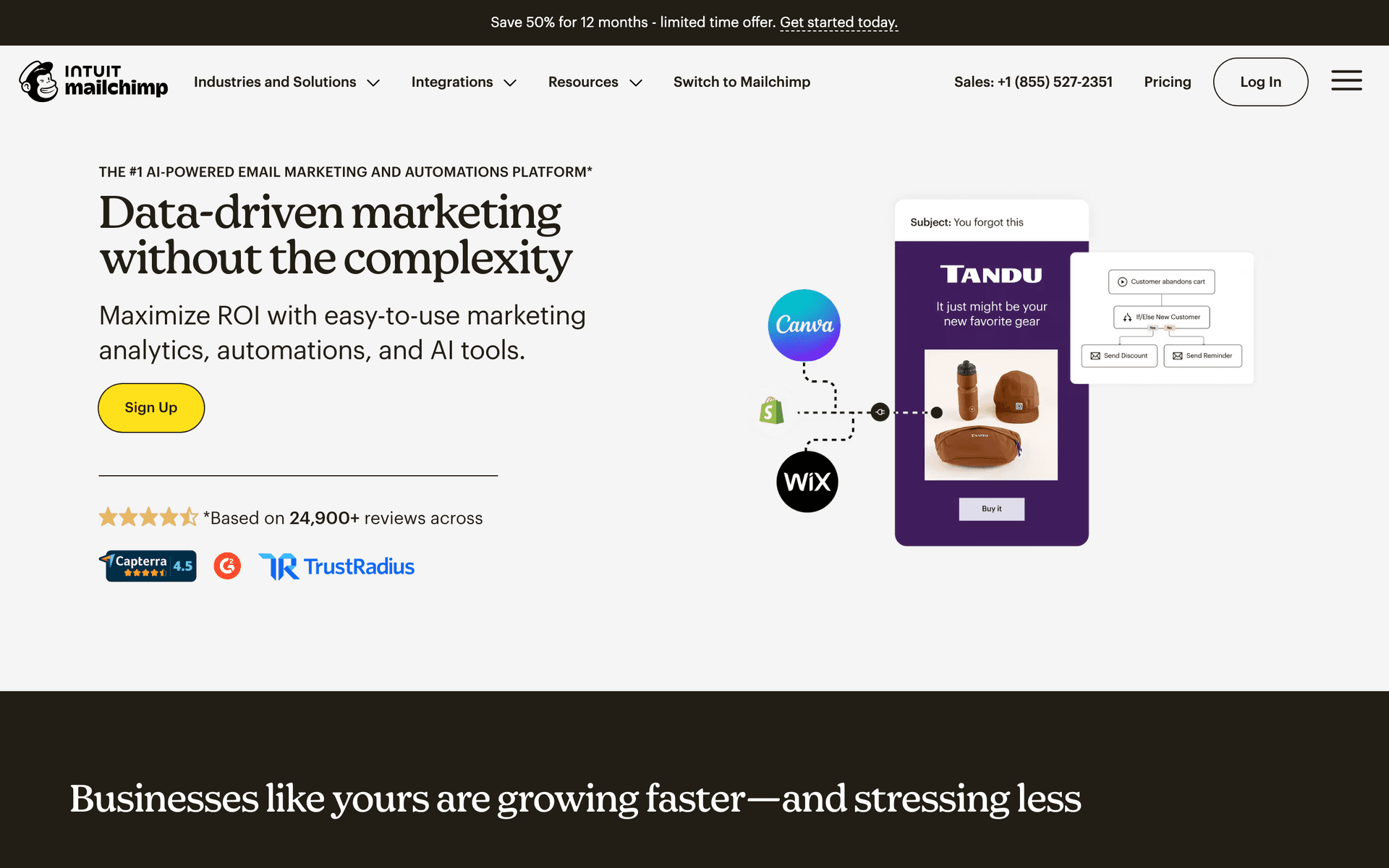
Mailchimp dashboard screenshot

Mailchimp works fine for small food brands getting started with email. The free tier handles 500 contacts, and the template library includes some food-friendly designs for product showcases and recipe content. The drag-and-drop editor makes building visually appealing product emails straightforward. Where Mailchimp falls short for food brands is automation depth - you can set up basic post-purchase sequences but building sophisticated reorder timing based on product consumption cycles or subscription conversion workflows requires more capable platforms. As your list grows past 2,500 contacts, the pricing also becomes less competitive.

Best for
Small food brands just starting out
Pricing
Free up to 500 contacts, then from $13/month

Pros

  • Free tier
  • Easy to use
  • Decent templates
  • Many integrations

Cons

  • Basic automation
  • No reorder predictions
  • Limited segmentation
  • Gets expensive
#7
Brevo

Budget email with SMS and transactional capabilities.

Visit
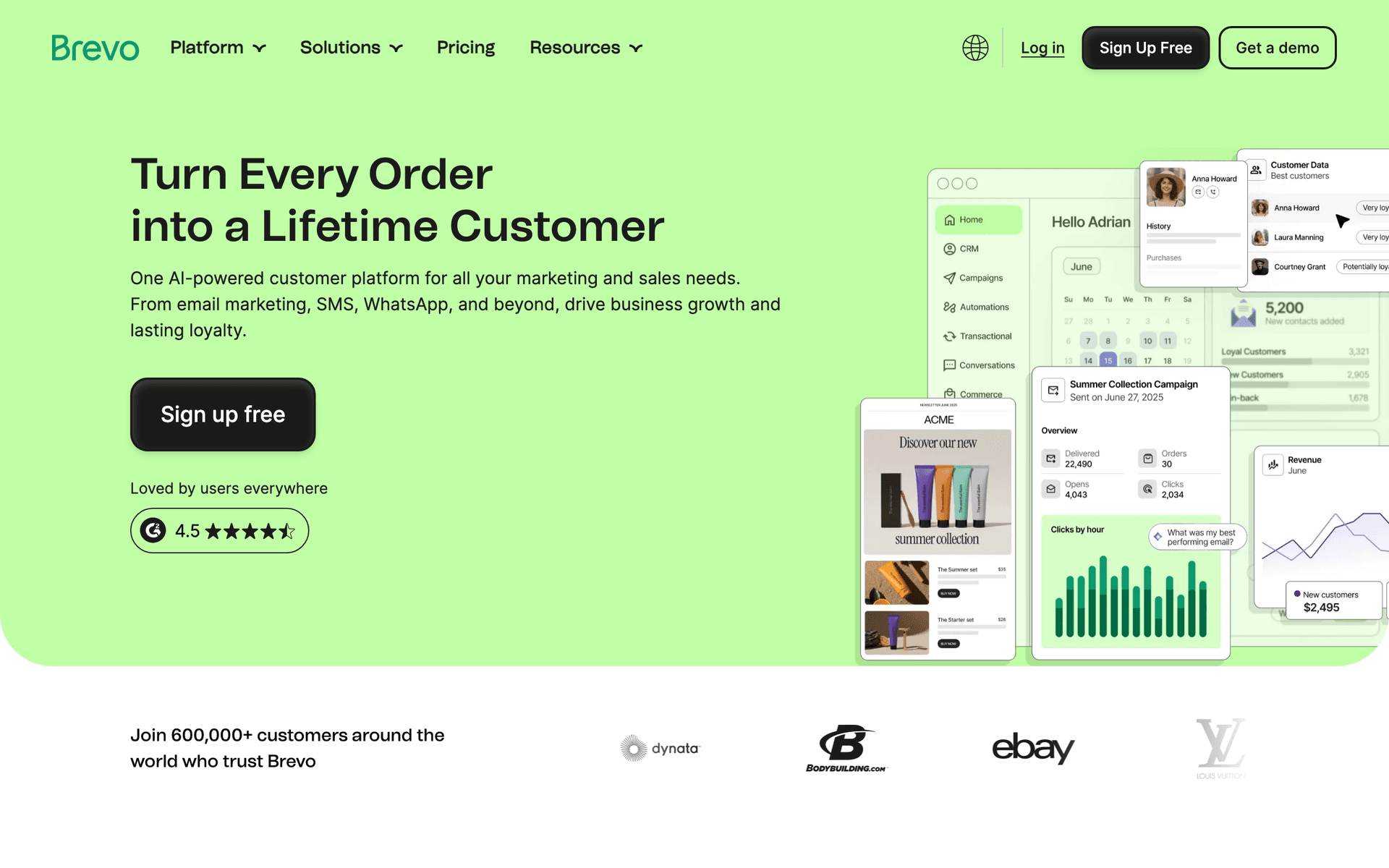
Brevo dashboard screenshot

Brevo is budget-friendly for food brands watching their margins closely, which is most food brands. Pay-by-email pricing works well for brands with large customer lists but targeted sending patterns. SMS is included for reorder reminders - a text message about restocking their favorite product converts surprisingly well. Transactional emails handle order confirmations and shipping updates. The automation builder covers basic reorder sequences and post-purchase follow-ups. The trade-off is less sophisticated segmentation, no product catalog sync, and generic templates that require more work to make your food products look appetizing.

Best for
Budget-conscious food brands
Pricing
Free up to 300 emails/day, then from $25/month

Pros

  • Budget-friendly
  • SMS included
  • Pay by email
  • Transactional email

Cons

  • Basic automation
  • No product catalog sync
  • Limited features
  • Generic templates
#8
Omnisend

E-commerce email and SMS for food brand reorder alerts.

Visit
Omnisend dashboard screenshot

Omnisend covers food brand email essentials with strong SMS integration for reorder reminders. A text message saying 'Running low on your morning coffee? Reorder with free shipping' converts at 2-3x the rate of the same message via email because it arrives when customers are near their kitchen noticing the near-empty bag. Pre-built cart recovery, welcome series, and post-purchase automation workflows reduce setup time for food brands wanting core sequences running quickly. The product picker pulls food product photos and descriptions directly from Shopify.

Best for
Food brands wanting email and SMS reorder alerts at competitive pricing
Pricing
Free up to 250 contacts, from $16/month

Pros

  • Email and SMS combined
  • Pre-built food e-commerce automations
  • Product picker from catalog
  • Good pricing

Cons

  • No subscription platform integration
  • Basic segmentation
  • No recipe content features
  • Generic templates
#9
Sendlane

E-commerce email and SMS with behavioral tracking for food brands.

Visit
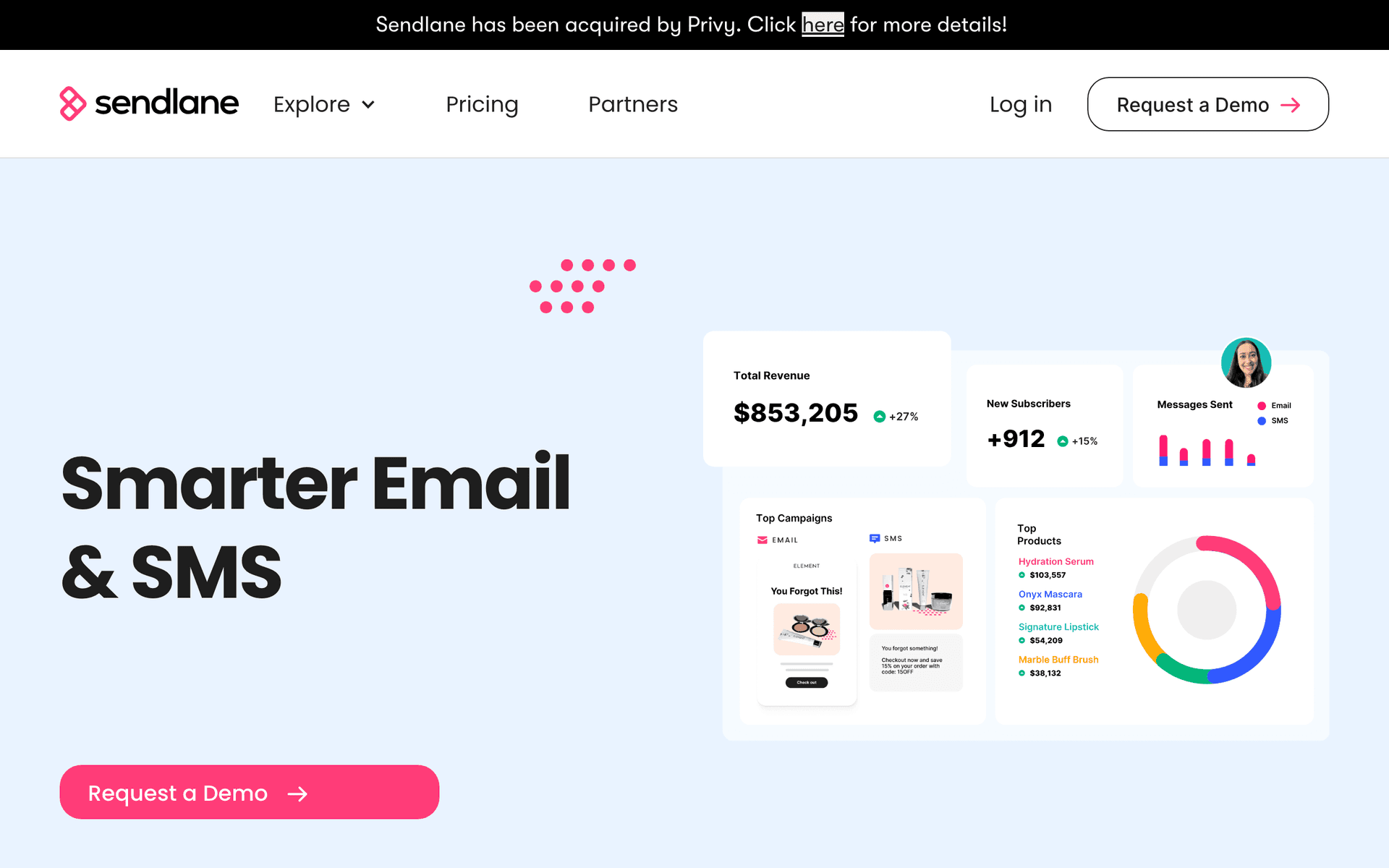
Sendlane dashboard screenshot

Sendlane tracks detailed behavior on food brand websites including which recipe pages subscribers visit, which flavor or variety pages they view, and how often they return before purchasing. This behavioral data builds precise segments - subscribers who consistently read your hot sauce recipes get different campaigns than those who browse your mild options. For food brands with broad product ranges spanning heat levels, dietary preferences, or flavor profiles, Sendlane's behavioral data enables genuinely targeted sending that improves conversion and reduces irrelevant email fatigue.

Best for
Food brands with diverse flavor or dietary ranges wanting behavioral targeting
Pricing
From $100/month

Pros

  • Deep behavioral tracking
  • Email and SMS
  • Strong segmentation
  • Good Shopify integration

Cons

  • Higher price point
  • No free tier
  • Overkill for simple brands
  • Learning curve
#10
Postscript

Shopify-native SMS for food reorder and limited batch alerts.

Visit
Postscript dashboard screenshot

Postscript adds Shopify-native SMS to food brands already using another email platform. For consumable food products where timing matters, a text message alert about a limited seasonal batch - pumpkin spice coffee in September, holiday hot chocolate in November - generates urgency that email cannot match. Restock notifications for sold-out popular products also perform well via SMS for food brands, where loyal customers want to be first to know when their favorite is available again.

Best for
Food Shopify brands adding SMS reorder and limited-batch alerts to their email program
Pricing
Free up to 500 messages, from $25/month

Pros

  • Shopify-native SMS
  • Limited batch and restock alerts
  • Reorder triggers
  • Simple to add to existing setup

Cons

  • SMS only, no email
  • Shopify required
  • Need separate email tool
  • Per-message costs add up
#11
Attentive

SMS and email for food brands with large reorder audiences.

Visit
Attentive dashboard screenshot

Attentive combines email and SMS in one platform for established food brands with large subscriber bases and active reorder programs. The two-tap SMS opt-in collects consent efficiently at checkout and through website flows, building a text subscriber list alongside the email list. For food brands where a meaningful portion of revenue comes from subscription and reorder customers, Attentive's coordinated multi-channel approach ensures reorder reminders reach customers through whichever channel they respond to most reliably.

Best for
Established food brands with large reorder audiences wanting SMS and email in one platform
Pricing
Custom pricing based on usage

Pros

  • Email and SMS combined
  • Strong reorder automation
  • High-volume sending capability
  • Good deliverability

Cons

  • Custom pricing only
  • No free tier
  • Complex setup
  • Not for early-stage brands
#12
Yotpo

Reviews, loyalty, and SMS for food DTC brands.

Visit
Yotpo dashboard screenshot

Yotpo's loyalty and review tools work well for food DTC brands where repeat purchasing and subscription conversion are key revenue drivers. The loyalty program sends automated email notifications when customers earn rewards, approach tier upgrades, or qualify for subscriber benefits - all creating touchpoints that bring food customers back to the store. Recipe-based reviews that ask customers how they used a product (not just how good it tastes) build richer social proof that inspires other customers to try the product in new ways.

Best for
Food DTC brands building loyalty programs and collecting recipe-based reviews
Pricing
Free plan available, from $19/month

Pros

  • Loyalty program with email notifications
  • Recipe review collection
  • SMS for loyalty alerts
  • Strong Shopify integration

Cons

  • Not a standalone email platform
  • Complex multi-product pricing
  • Best combined with separate email tool
  • More setup required
#13
Klaviyo

Premium e-commerce email with predictive food reorder timing.

Visit
Klaviyo dashboard screenshot

Klaviyo's predictive analytics estimate when each individual food customer will run out of a product based on their specific purchase history and serving patterns - not generic category averages. A customer who orders your hot sauce every six weeks gets a reminder timed to their actual consumption, not a generic 30-day interval. The Recharge integration makes Klaviyo the top choice for food brands with active subscription programs, enabling lifecycle emails that respond to subscription events, failed payments, and churn signals automatically.

Best for
Established food brands with subscription programs wanting predictive replenishment
Pricing
Free up to 250 contacts, from $20/month

Pros

  • Predictive reorder timing
  • Recharge subscription integration
  • AI product recommendations
  • Deep Shopify integration

Cons

  • Expensive at scale
  • Complex for simple brands
  • Contact-based pricing
  • Overkill for small brands
#14
Privy

Email capture for food brand website and recipe traffic.

Visit
Privy dashboard screenshot

Privy converts food blog readers and recipe page visitors into email subscribers before they leave. Food brands that publish recipes to drive SEO traffic benefit particularly from Privy's ability to convert that content engagement into email subscribers. A visitor who finds your hot sauce through a search for 'spicy pasta recipes' and reads the recipe is a high-affinity prospect - Privy captures their email with an offer like an exclusive recipe bundle or their first order discount before they close the tab.

Best for
Food brands with recipe content wanting to convert blog readers into email subscribers
Pricing
Free plan available, from $30/month

Pros

  • Converts recipe readers to subscribers
  • Shopify integration
  • Email and SMS
  • Good for content-driven traffic

Cons

  • Pop-up tools are the main value
  • Basic automation
  • Not a full email platform
  • Limited segmentation
#15
SmartrMail

AI product recommendations for food cross-sells.

Visit
SmartrMail dashboard screenshot

SmartrMail builds automated product recommendation emails for food stores using AI that learns what customers who buy one product also tend to buy next. For food brands with expanding product ranges - a hot sauce brand that also sells barbecue rubs, spice blends, and cookbooks - SmartrMail identifies natural cross-sell patterns and automates the recommendation emails that introduce new products to existing customers based on what similar buyers chose.

Best for
Food brands with expanding product catalogs wanting automated ingredient and product cross-sells
Pricing
Free plan available, from $19/month

Pros

  • AI cross-sell recommendations
  • Shopify and WooCommerce integration
  • Automated follow-up sequences
  • Free plan available

Cons

  • Less depth than Klaviyo
  • Basic behavioral triggers
  • Limited analytics
  • Smaller platform
#16
Sender

Affordable food brand email with generous free limits.

Visit
Sender dashboard screenshot

Sender provides food DTC brands with a cost-effective email option including a free tier supporting 2,500 subscribers and 15,000 monthly emails. For small food brands just launching direct sales - a local hot sauce maker going national, a specialty tea company starting DTC - Sender's free tier covers the welcome series, reorder reminders, and monthly recipe newsletter that are the foundation of a food brand email program. The clean templates work well for food photography-forward emails.

Best for
Small food brands launching direct-to-consumer email at zero cost
Pricing
Free up to 2,500 subscribers, from $15/month

Pros

  • Very generous free tier
  • Clean food-friendly templates
  • Affordable paid plans
  • Simple setup

Cons

  • No subscription platform integration
  • Basic automation
  • No recipe-specific features
  • Limited segmentation
#17
Seguno

Shopify-native email inside Shopify admin for food brands.

Visit
Seguno dashboard screenshot

Seguno lives inside Shopify admin for food brands that manage everything in Shopify and want their email workflow fully integrated. When you add a new limited seasonal flavor to your store, Seguno lets you create and send the announcement email without leaving Shopify. For small food brands where the owner handles Shopify product management and email marketing as part of the same workflow, this integrated approach eliminates the friction of switching between multiple platforms during busy holiday gifting seasons.

Best for
Small food brands on Shopify wanting email fully integrated into their store workflow
Pricing
Free up to 250 subscribers, from $10/month

Pros

  • Lives inside Shopify admin
  • No separate login
  • Product blocks from catalog
  • Affordable

Cons

  • Shopify only
  • Basic automation
  • No subscription integration
  • Limited advanced features
#18
EmailOctopus

Budget food brand email with generous free limits.

Visit
EmailOctopus dashboard screenshot

EmailOctopus offers food brands a free tier with 2,500 subscribers and 10,000 monthly emails - enough for a small artisan food producer to send a weekly recipe newsletter and monthly product announcement without paying anything. The simple template editor handles food photography well with clean image blocks. For cottage food operations, small batch producers, and food entrepreneurs just building their direct customer list, EmailOctopus provides a free professional starting point.

Best for
Small-batch food producers starting their email list at no cost
Pricing
Free up to 2,500 subscribers, from $9/month

Pros

  • Most generous free tier
  • Simple food-friendly templates
  • Very affordable
  • Reliable delivery

Cons

  • Basic automation
  • No e-commerce features
  • No reorder tracking
  • Limited segmentation
#19
Remarkety

Purchase-triggered food reorder automation.

Visit
Remarkety dashboard screenshot

Remarkety specializes in purchase-triggered e-commerce email automation, making it effective for food brand reorder campaigns and lapsed buyer reactivation. Reorder reminder timing is set per product based on typical consumption rates, so your coffee sends a reminder on day 18 while your olive oil reminds at day 50. Lapsed buyer sequences target customers who have not reordered within 1.5x their typical interval with emails featuring new flavors and subscriber-only discounts to bring them back.

Best for
Food brands wanting automated consumption-based reorder reminders and lapsed buyer recovery
Pricing
From $25/month

Pros

  • Consumption-based reorder timing
  • Lapsed buyer reactivation
  • E-commerce focused
  • Simple configuration

Cons

  • No subscription platform integration
  • Less visual design flexibility
  • No recipe content features
  • Fewer template options

Feature Comparison

FeatureKlaviyoSequenzyDripOmnisend
Reorder automation
Predictive
Time-based
Time-based
Time-based
Subscription platform integration
Recharge, Bold
Stripe
Via Zapier
No
SMS reorder alerts
Yes
No
Limited
Yes
Recipe content support
Via blocks
Via HTML
Via blocks
Via blocks
Pay-per-email pricing
No
Yes
No
No
Revenue attribution
Yes
Yes
Yes
Yes
Shopify integration
Deep
Native
Yes
Yes
Free tier
Yes
Yes
No
Yes

Common Mistakes to Avoid

We see these mistakes over and over. Skip the learning curve and avoid these from day one.

Sending Reorder Reminders After They Have Already Reordered

Nothing feels more automated (in a bad way) than getting a reorder reminder for something you bought yesterday. Ensure your email platform suppresses reorder emails when a new order has been placed. This requires proper e-commerce integration.

Ignoring Gift Recipients

Gift recipients are warm leads who have already tasted your product. Many food brands collect the gift giver's email but never capture the recipient's. Include a card in gift orders inviting the recipient to sign up for their own orders.

Only Sending Promotional Emails

Constant discount emails train customers to wait for sales. Mix in recipe content, behind-the-scenes farm or kitchen stories, and customer spotlights. Brands that balance content with promotions see better long-term customer value.

Using the Same Reorder Timing for All Products

A bag of coffee lasts 2-3 weeks. A bottle of olive oil lasts 2-3 months. Sending both reorder reminders on the same schedule means one arrives too early and the other too late. Calculate consumption cycles per product category.

Not AB Testing Subject Lines on Holiday Campaigns

Holiday campaigns are your highest-revenue sends. Even a small improvement in open rate translates to meaningful revenue. Test subject lines on a small segment before sending to your full list during peak gifting periods.

Email Sequences Every Food & Beverage DTC Brand Needs

These are the essential automated email sequences that will help you grow your business and keep clients coming back.

Reorder Reminder

Purchase of consumable product

Remind customers to reorder before they run out.

Day 18 (of 21-day supply)
Running low on {{product_name}}?

Friendly reminder they will run out soon. One-click reorder link. Subscribe-and-save offer.

Day 22
Do not go without your {{product_name}}

Urgency message. Free shipping on reorders. Subscription discount.

Day 30
We miss you (and so does your {{product_name}})

Winback angle. Check if they switched brands. Offer a discount to come back.

Recipe and Content Series

First purchase

Build brand loyalty through useful food content.

Day 3
3 ways to enjoy your {{product_name}}

Quick recipes or usage ideas. Help them get more value from their purchase.

Day 10
Our favorite {{product_name}} recipe this month

Featured recipe with photos. Subtle cross-sell of other ingredients.

Day 17
What our customers are making with {{product_name}}

Customer-submitted recipes and photos. Community angle.

Subscription Conversion

Second purchase of the same product

Convert repeat buyers into subscribers.

Immediately
You clearly love {{product_name}}. Save {{discount}}% with a subscription

Subscription offer with savings math. Highlight never running out.

Day 5
Why {{subscriber_count}} customers subscribe to {{product_name}}

Social proof from subscribers. Flexibility to skip, pause, or cancel.

Email Marketing for Food & Beverage DTC Brands

Food and beverage has a massive built-in advantage for email marketing: your product gets consumed. Unlike a shirt someone might wear for years, a bag of coffee, a jar of honey, or a case of sparkling water gets used up and needs replacing. This creates a natural, predictable reorder cycle that email automates beautifully.

The Food Brand Email Revenue Engine

  1. Reorder reminders timed to when customers run out keep repeat purchases flowing without requiring the customer to remember
  2. Recipe and content emails build loyalty and keep your brand top of mind between purchases
  3. Subscription conversion turns repeat buyers into predictable monthly revenue
  4. Holiday and gifting campaigns drive seasonal peaks and bring in new customers through gift recipients

Content Is Your Secret Weapon

Food brands can send emails people actually want to open. Recipes, pairing guides, behind-the-scenes farm or kitchen tours, and seasonal cooking tips are genuinely useful content that also drives sales. Brands that mix helpful content with promotional emails see much better engagement and lower unsubscribe rates than those who only send sale announcements.

Convert Gift Recipients Into Customers

Every holiday gift box you sell introduces a new person to your product. Build a post-gift sequence that welcomes gift recipients, tells your brand story, explains the product they received, and offers a first-time buyer discount. Some food brands report that gift-to-customer conversion sequences generate 20-30% of their post-holiday new customer acquisition.

Reorder Timing Strategy by Product Category

Getting reorder timing right is the difference between a helpful reminder and an annoying email. Here are realistic consumption windows for common food and beverage products:

  • Coffee (12 oz bag): 14-21 days. Send reminder on day 12-15.
  • Tea (loose leaf, 4 oz): 21-30 days. Send reminder on day 18-21.
  • Hot sauce (5 oz): 30-60 days. Send reminder on day 25-35.
  • Olive oil (500 ml): 45-90 days. Send reminder on day 40-50.
  • Snacks (multi-pack): 7-14 days. Send reminder on day 5-7.
  • Spice blends: 60-120 days. Send reminder on day 50-60.

Build product-specific reorder sequences rather than one generic reminder. Customers notice when you understand their consumption pattern.

Subscription Conversion Playbook

Subscriptions are the most valuable metric for DTC food brands because they create predictable recurring revenue. Here is the proven conversion path:

Identify the Right Moment

Do not push subscriptions on first-time buyers. Wait for the second purchase of the same product - this signals genuine product affinity. Between purchases 2 and 4 is the conversion sweet spot.

Show the Math

Calculate the per-unit savings and present it clearly: "You buy our coffee every 3 weeks for $18. Subscribe and save 15% - that is $2.70 per bag, or $47 per year."

Remove the Risk

The biggest objection to food subscriptions is commitment fear. Lead with flexibility: skip a delivery, change frequency, or cancel anytime with one click. Many brands see conversion rates double when they prominently feature these options.

Follow Up the Non-Converters

If a repeat buyer does not convert on the first subscription offer, wait for their next purchase and try again with a different angle - maybe emphasize the convenience of never running out, or share a testimonial from a happy subscriber.

Holiday and Gifting Campaign Calendar

  • October: Start planning holiday gift bundles and gift guide content
  • Early November: Launch pre-holiday gift guide to existing customers
  • Thanksgiving week: Gift bundle promotions for early shoppers
  • Early December: Peak gifting campaign with urgency messaging around shipping deadlines
  • Mid-December: Last-chance shipping deadline emails
  • Late December: Gift card promotions for last-minute shoppers
  • January: Welcome sequences for gift recipients with first-time buyer offers

Integration Recommendations

Shopify

Both Klaviyo and Sequenzy offer native Shopify integrations that sync order data, product catalogs, and customer information. This is essential for automated reorder reminders and purchase-triggered sequences.

Subscription Platforms

If you use Recharge or Bold Subscriptions, Klaviyo is the strongest integration option. If you use Stripe for subscription billing, Sequenzy's native Stripe integration handles the full lifecycle.

Review Platforms

Connect your email platform to a review tool like Yotpo or Judge.me. Post-purchase review request emails build social proof that supports all your other marketing efforts.

Getting Started

  1. Connect your Shopify store to your email platform for automatic order syncing
  2. Build reorder reminders for your top 3-5 products, timed to their consumption cycles
  3. Create a welcome series for new customers with product tips and brand story
  4. Plan your next holiday campaign starting 4-6 weeks out
  5. Set up subscription conversion triggered by repeat purchases of the same product
  6. Start a monthly recipe email to build engagement between purchases
How We Evaluated These Tools

We evaluated each platform by connecting to a Shopify test store with food and beverage products, building reorder reminder sequences timed to product consumption cycles, testing subscription conversion flows, and comparing pricing at 5,000 and 25,000 contacts to assess scalability for growing food brands.

Frequently Asked Questions

Ready to grow your food & beverage dtc brand practice?

Start your free trial today. Set up your first email sequence in minutes with AI-powered content generation.

Related Industries

Sequenzy - Complete Pricing Guide

Pricing Model

Sequenzy uses email-volume-based pricing. You only pay for emails you send. Unlimited contacts on all plans — storing subscribers is always free.

All Pricing Tiers

  • 2.5k emails/month: Free (Free annually)
  • 15k emails/month: $19/month ($205/year annually)
  • 60k emails/month: $29/month ($313/year annually)
  • 120k emails/month: $49/month ($529/year annually)
  • 300k emails/month: $99/month ($1069/year annually)
  • 600k emails/month: $199/month ($2149/year annually)
  • 1.2M emails/month: $349/month ($3769/year annually)
  • Unlimited emails/month: Custom pricing (Custom annually)

Yearly billing: All plans offer a 10% discount when billed annually.

Free Plan Features (2,500 emails/month)

  • Visual automation builder
  • Transactional email API
  • Reply tracking & team inbox
  • Goal tracking & revenue attribution
  • Dynamic segments
  • Payment integrations
  • Full REST API access
  • Custom sending domain

Paid Plan Features (15k - 1.2M emails/month)

  • Visual automation builder
  • Transactional email API
  • Reply tracking & team inbox
  • Goal tracking & revenue attribution
  • Dynamic segments
  • Payment integrations (Stripe, Paddle, Lemon Squeezy)
  • Full REST API access
  • Custom sending domain

Enterprise Plan Features (Unlimited emails)

  • Visual automation builder
  • Transactional email API
  • Reply tracking & team inbox
  • Goal tracking & revenue attribution
  • Dynamic segments
  • Payment integrations
  • Full REST API access
  • Custom sending domain

Important Pricing Notes

  • You only pay for emails you send — unlimited contacts on all plans
  • No hidden fees - all features included in the price
  • No credit card required for free tier

Contact

  • Pricing Page: https://sequenzy.com/pricing
  • Sales: hello@sequenzy.com