Updated 2026-03-15

Best Email Marketing Tools for DTC Brands

You sell directly to customers. Email is how you keep them.

DTC brands live and die by customer relationships. You do not have a retailer or marketplace between you and your customer, which means every interaction matters. Email marketing is the backbone of DTC retention strategy. It drives repeat purchases, builds brand loyalty, and provides a direct communication channel you own (unlike social media algorithms that can change overnight). I reviewed 9 email marketing tools for DTC brands, focusing on lifecycle automation, brand storytelling capability, customer segmentation, and integration with Shopify and other DTC platforms.

TL;DR

For established DTC brands on Shopify wanting the most advanced features, Klaviyo is the industry standard with deep integration and predictive analytics. For growing DTC brands wanting AI automation at a lower cost, Sequenzy offers pay-per-email pricing starting free with up to 2,500 emails/month. For mid-range brands wanting a Klaviyo alternative with revenue attribution, Drip delivers at a slightly lower price.

Why DTC Brands Need Email Marketing

Own the Customer Relationship

Social media platforms control your reach. Marketplaces control the customer data. Email is the one channel where you own the relationship directly. No algorithm changes, no platform fees on every sale.

Lifecycle Revenue

DTC profitability depends on customers buying more than once. Email automation handles the entire lifecycle: welcome, post-purchase, replenishment, cross-sell, win-back. Each stage drives incremental revenue.

Brand Storytelling

DTC brands compete on story, not just price. Email is the best channel for sharing your brand story, values, behind-the-scenes content, and founder perspective in a way that builds genuine connection.

Reducing CAC Dependency

As paid advertising costs rise, email becomes more valuable. Every dollar of email-driven revenue reduces your dependency on increasingly expensive ad channels.

DTC Brands Email Marketing Benchmarks

Know these numbers before you start. They'll help you set realistic goals and pick the right tool.

22-32%
Average Open Rate

DTC brand emails see 22-32% open rates. Welcome series and post-purchase emails outperform promotional blasts. Brands with strong storytelling content consistently see higher open rates because subscribers value the content beyond just product promotions.

2-5%
Average Click Rate

Click rates of 2-5% are typical for DTC brands. Product showcase emails and new launch announcements drive the highest clicks. Personalized product recommendations based on purchase history outperform generic product features.

Tuesday-Thursday, 10am-1pm
Best Send Time

DTC shoppers engage with brand emails during late morning through early afternoon. Tuesday through Thursday see the highest engagement. Flash sales and limited-time offers can perform well on Sunday evenings when shoppers are planning their week.

20-40% of total revenue
Email Revenue Contribution

A well-optimized DTC email program typically generates 20-40% of total revenue through automated flows and campaigns combined. Brands below 15% have significant room to improve their automation and segmentation.

Important Tips Before You Choose

Lessons from dtc brandswho've been doing this for years. Save yourself the trial and error.

Build a welcome series that tells your brand story, not just sells

DTC customers buy because they believe in your brand. Your welcome series should share your founding story, your values, and what makes you different before pushing for a sale. Brands that lead with story and follow with product convert at higher rates than those that lead with discounts.

Use post-purchase sequences to drive the crucial second order

The difference between a profitable DTC brand and a struggling one is repeat purchase rate. Automated post-purchase emails with usage tips, care instructions, and personalized recommendations 14-30 days after delivery drive the second purchase that makes the customer acquisition math work.

Reduce paid ad dependency with aggressive list building

Every subscriber on your email list is a customer you can reach without paying for an ad impression. Pop-ups with first-purchase incentives, content upgrades, and social-to-email campaigns build an audience you own. Every repeat purchase driven by email is revenue that did not require an ad dollar.

Segment by customer lifecycle stage

New subscribers need brand storytelling. First-time buyers need product education. Repeat customers need loyalty and exclusivity. Lapsed customers need win-back offers. Sending the same email to all four groups is the most common DTC email mistake.

Use email for brand storytelling that justifies your price

DTC brands often charge more than mass-market alternatives. Email is the channel where you reinforce why your price is justified - behind-the-scenes content, founder updates, material sourcing stories, and customer spotlights build emotional connection that reduces price sensitivity.

19 Best Email Marketing Tools for DTC Brands

#ToolDescriptionBest ForPricing
1KlaviyoThe dominant email and SMS platform for DTC brands on Shopify.Established DTC brands ($50K+/month) wanting the most advanced featuresFree up to 250 contacts, then from $20/month
2SequenzyAI-powered email marketing with Shopify integration and volume-friendly pricing.Growing DTC brands wanting AI automation with cost-efficient pricingFree up to 2,500 emails/mo, then $19/mo (unlimited contacts)
3DripE-commerce email and automation built for online brands.Mid-size DTC brands wanting revenue-attributed automation$39/month for 2,500 contacts
4OmnisendE-commerce email, SMS, and push notifications for online brands.DTC brands wanting email plus SMS at competitive pricingFree up to 250 contacts, then from $16/month
5ActiveCampaignAdvanced automation with CRM for complex DTC operations.DTC brands with complex journeys or wholesale channels$29/month for 1,000 contacts
6PostscriptSMS marketing built for Shopify DTC brands.DTC brands wanting dedicated SMS marketing alongside emailFrom $25/month plus per-message fees
7MailchimpThe most recognized email platform with broad features.Brand new DTC brands starting with email on a tight budgetFree up to 500 contacts, then from $13/month
8BrevoBudget email and SMS with transactional email.Budget-conscious DTC brandsFree up to 300 emails/day, then from $25/month
9MailerLiteSimple email marketing with a generous free tier.Very early-stage DTC brands wanting simplicityFree up to 1,000 subscribers, then from $10/month
10AttentiveEnterprise SMS + email for scaled DTC brands doing $5M+ annually.Scaled DTC brands doing $5M+/year unifying SMS and emailCustom, typically $500+/month
11Yotpo EmailEmail as part of the Yotpo reviews, loyalty, and SMS suite.DTC brands running Yotpo Reviews and LoyaltyFrom $19/month email, bundled suite pricing
12SendlaneKlaviyo alternative at 30-40% lower cost for mid-size DTC.Mid-size DTC brands priced out of KlaviyoFrom $100/month based on list size
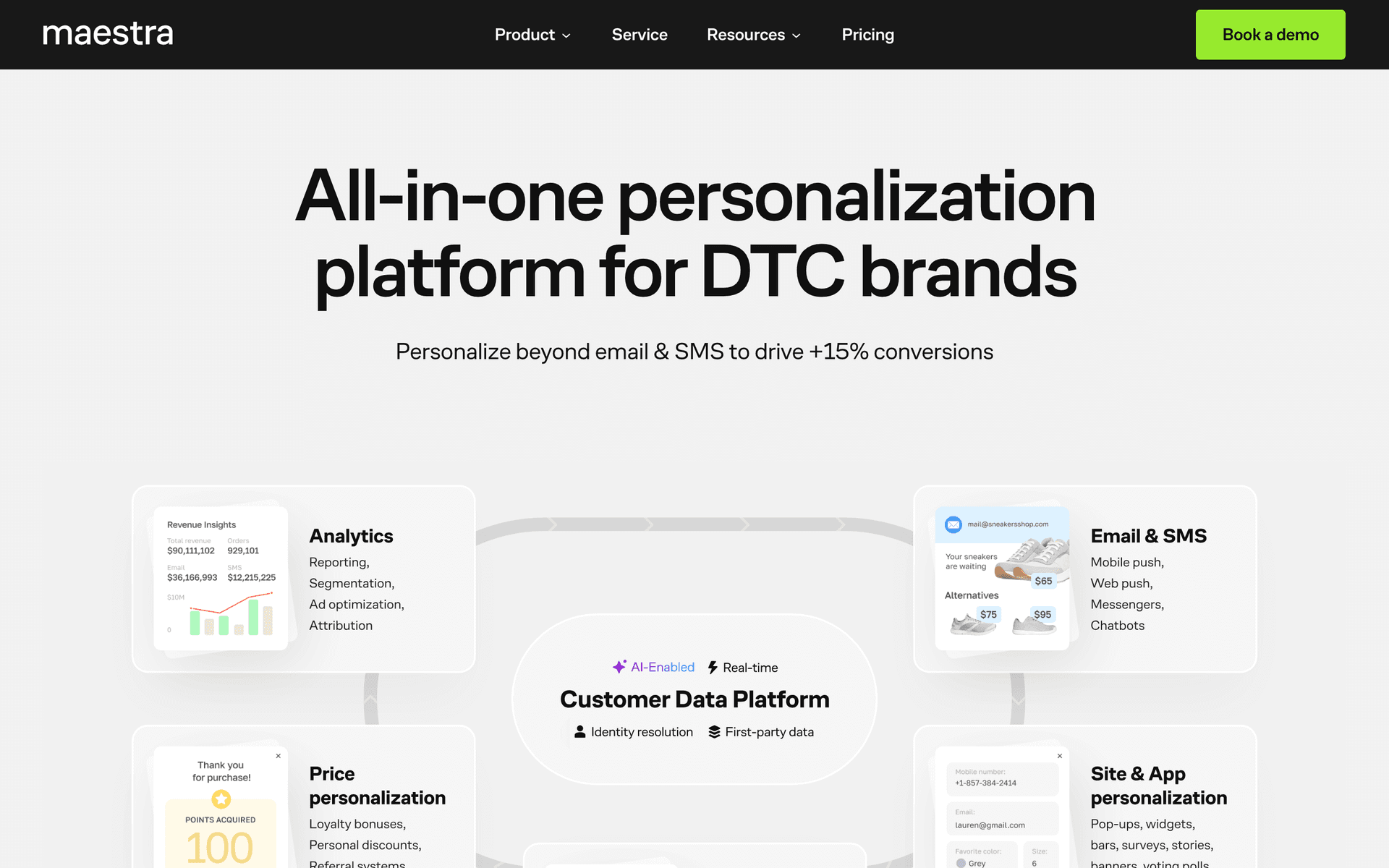
13MaestraAI-driven CDP and email for data-forward DTC brands.Data-forward DTC brands with marketing analyst supportCustom, typically $300+/month
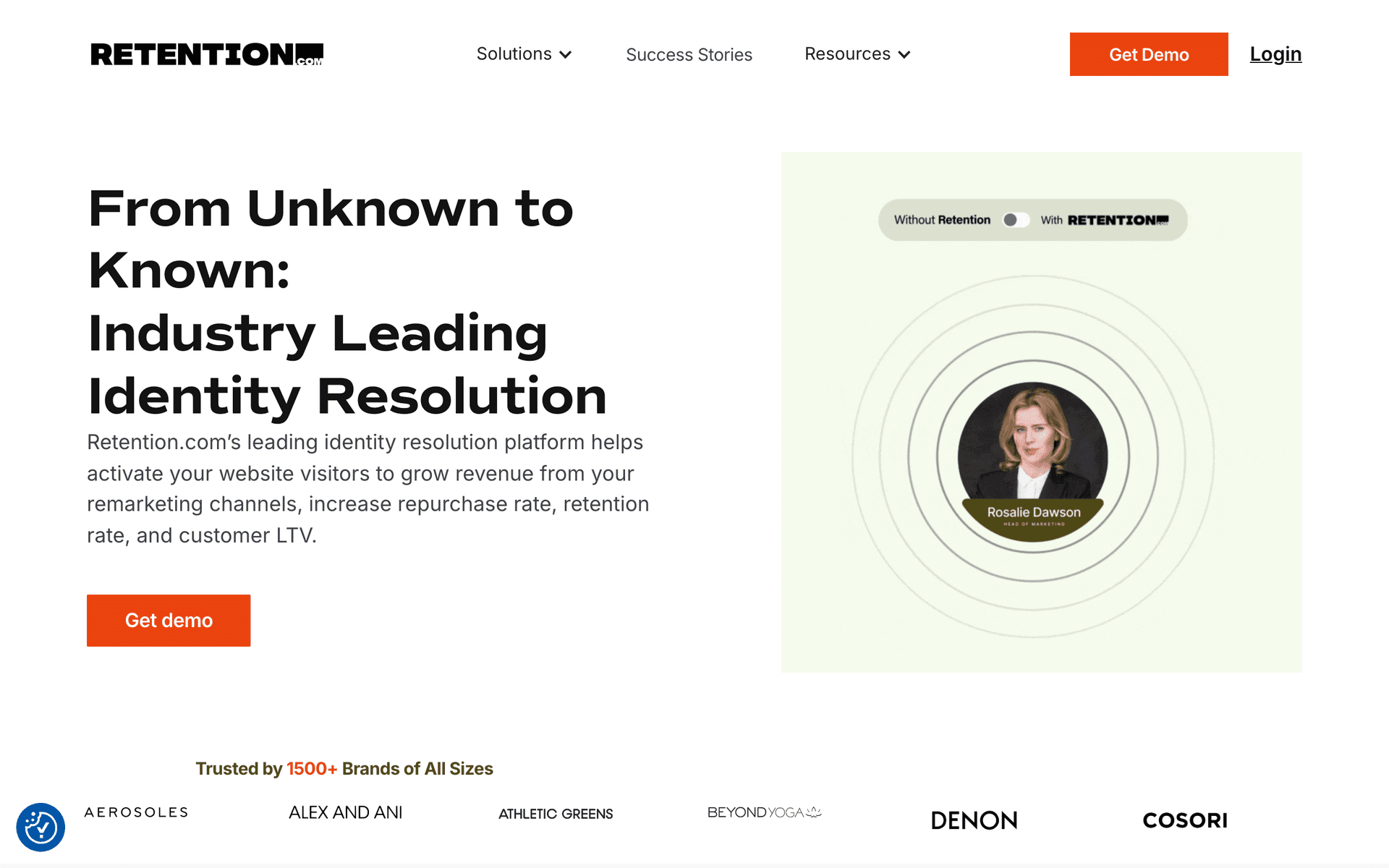
14Retention.comAnonymous-visitor-to-email identity resolution for high-traffic DTC.High-traffic DTC brands growing addressable email listFrom $1/identified contact, custom tiers
15PostscriptSMS-first platform with Shopify-native DTC integration.SMS-led Shopify DTC wanting unified emailFree up to 1,000 SMS, email from custom pricing
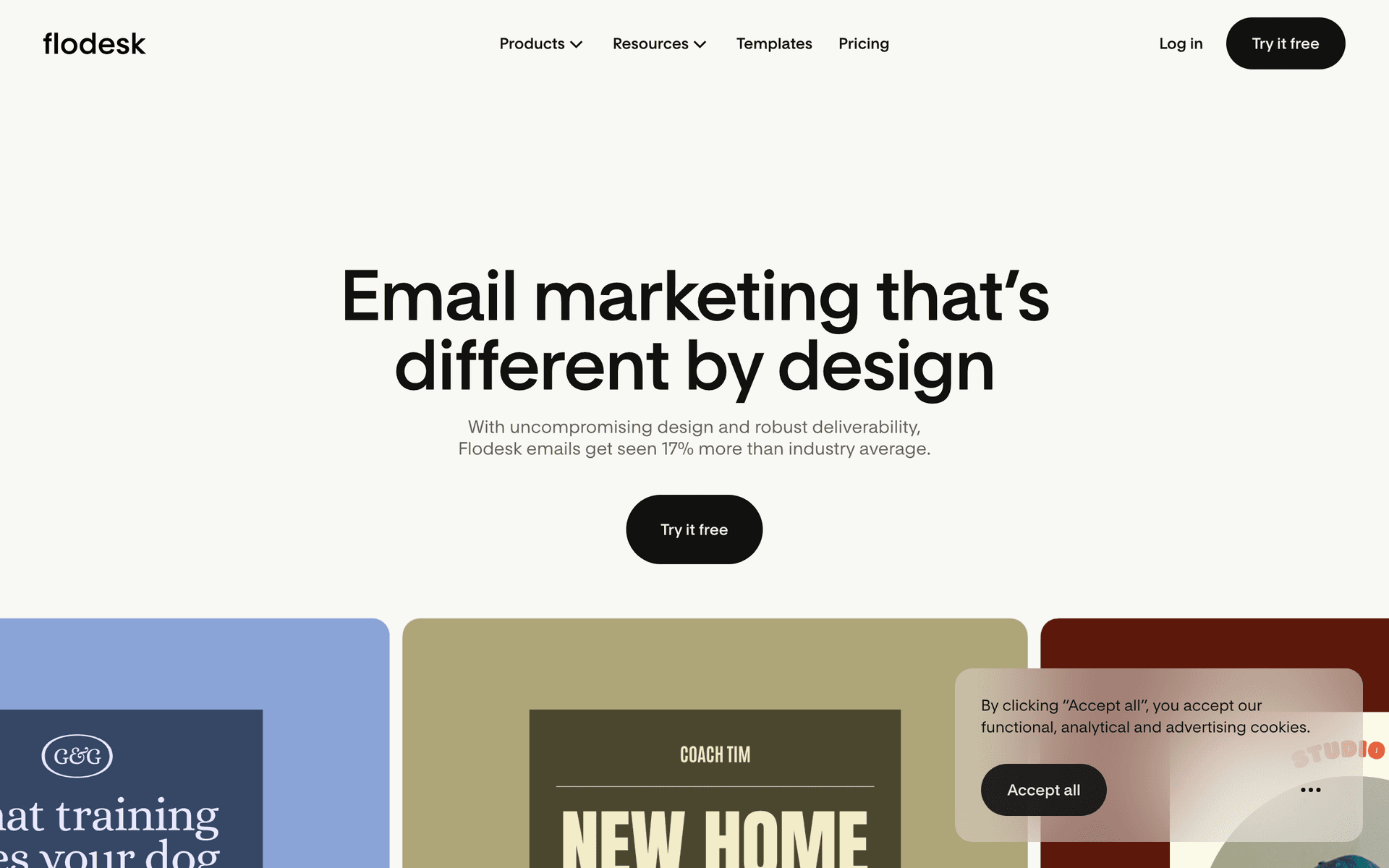
16FlodeskDesign-forward email for brand-first DTC competing on aesthetics.Brand-first DTC where storytelling drives positioningFlat $35/month unlimited subscribers
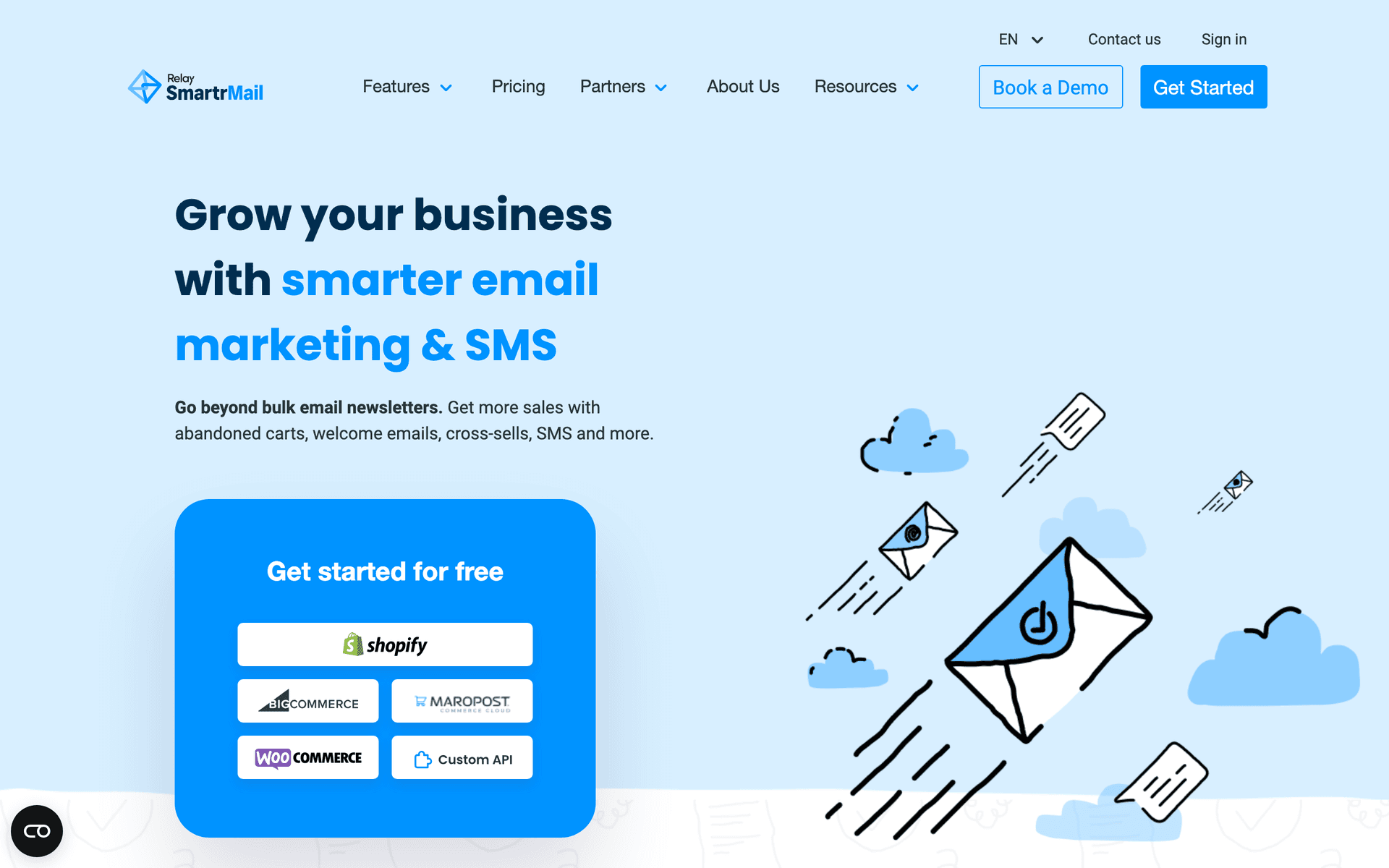
17SmartrMailShopify-focused Klaviyo alternative for budget-conscious DTC.Budget-conscious Shopify DTC wanting Klaviyo featuresFrom $29/month for 1,000 contacts
18RecartSMS-first abandoned cart recovery for Shopify DTC.Shopify DTC focused on abandoned-cart revenue recoveryFrom $299/month based on SMS volume
19SegunoShopify-exclusive email platform for single-platform DTC operators.Pure-Shopify DTC brands wanting fastest setupFree up to 250 subscribers, then from $10/month
#1
Klaviyo

The dominant email and SMS platform for DTC brands on Shopify.

Visit
Klaviyo dashboard screenshot

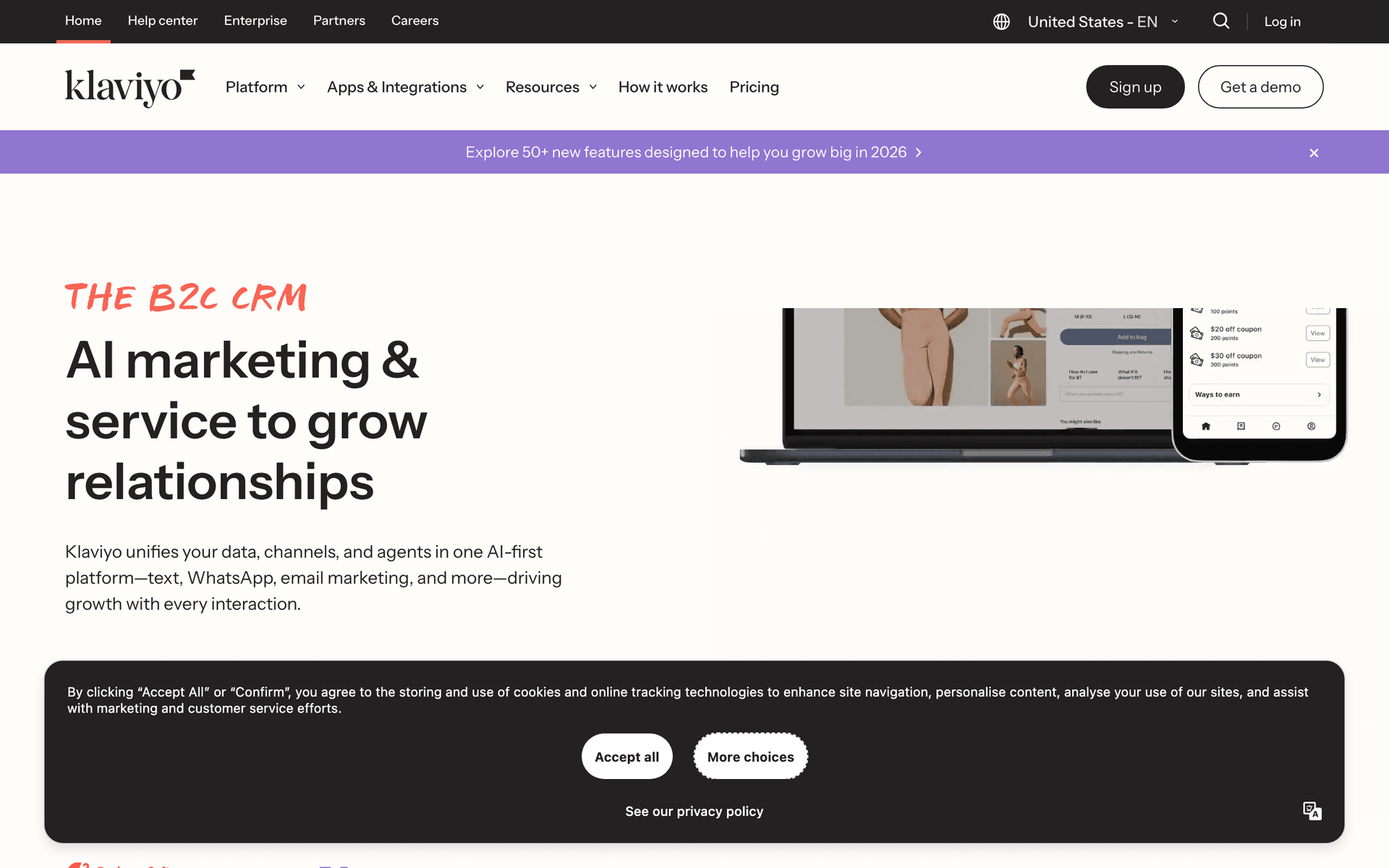
Klaviyo is the industry standard for DTC brands, especially those on Shopify. Deep integration syncs all customer data automatically - purchase history, browse behavior, customer profiles, and predictive lifetime value. AI product recommendations suggest items each customer is likely to buy based on their history and similar customer behavior. Predictive analytics flag customers at risk of churning before they lapse. For DTC brands doing $50K+ per month in revenue, the advanced features justify the cost because the incremental revenue from better segmentation and recommendation pays for the platform. For smaller brands, the price-to-value ratio starts to break down as contact-based pricing escalates with list growth.

Best for
Established DTC brands ($50K+/month) wanting the most advanced features
Pricing
Free up to 250 contacts, then from $20/month

Pros

  • Deep Shopify integration
  • Predictive analytics for CLV and churn
  • AI product recommendations
  • Built-in SMS

Cons

  • Expensive at scale
  • Complex interface
  • Contact-based pricing
  • Steep learning curve
Our Top Pick for DTC Brands
#2
Sequenzy

AI-powered email marketing with Shopify integration and volume-friendly pricing.

Visit
Sequenzy dashboard screenshot

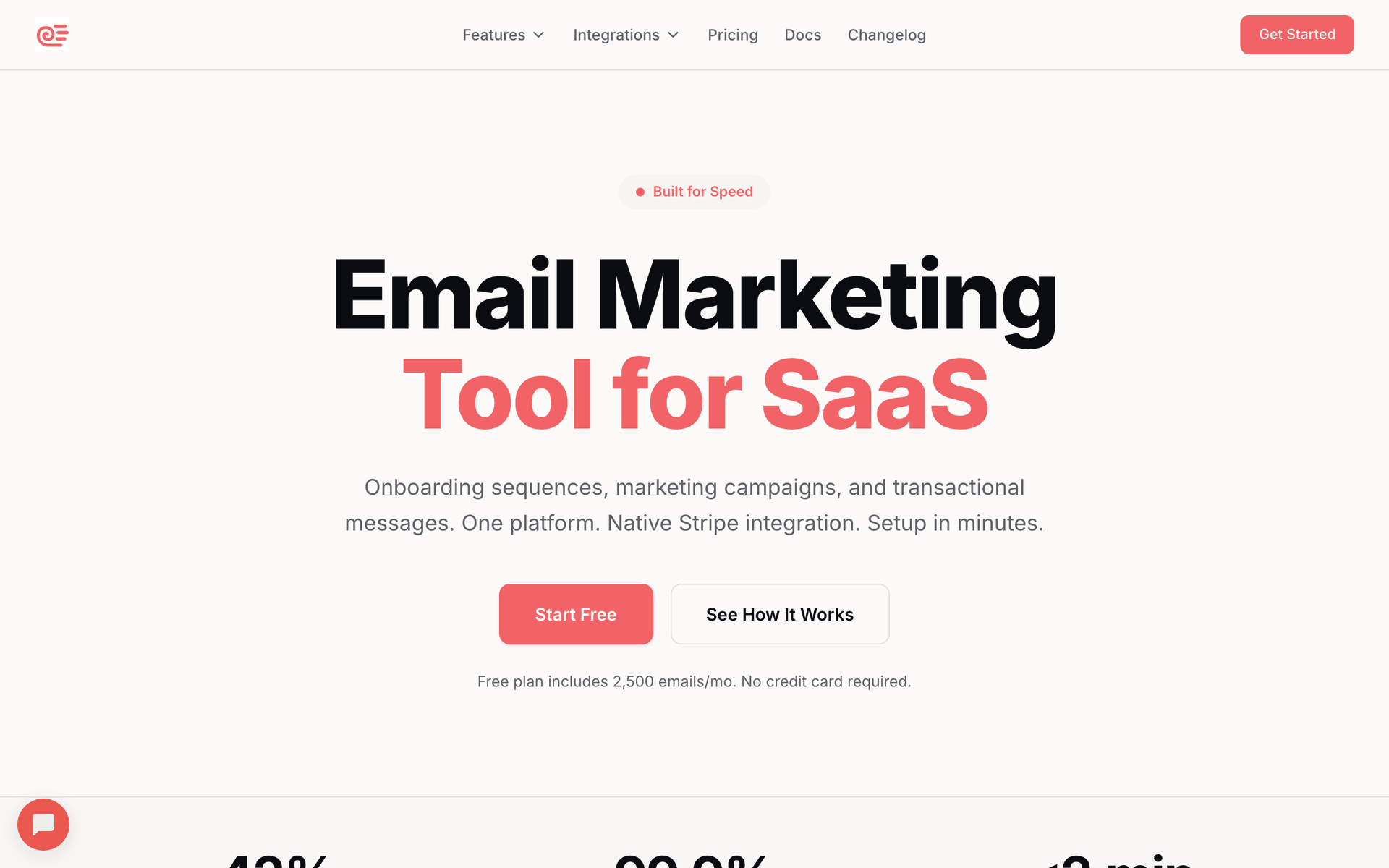
Sequenzy is gaining traction with DTC brands that want smart automation without Klaviyo's price tag. The native Shopify integration syncs customer and order data for purchase-triggered automation. The AI generates lifecycle sequences - welcome, post-purchase, win-back, cart recovery - in seconds, which saves hours of setup time compared to building them manually. The free tier covers up to 2,500 emails per month for brands just starting their email program. The $29/month paid plan with 50,000 emails and unlimited contacts means a growing subscriber list does not inflate your costs the way per-contact platforms do. Combined transactional and marketing email in one platform means one tool for everything. Being transparent: Sequenzy does not have Klaviyo's predictive analytics or AI product recommendation engine. For DTC brands where those specific features drive significant incremental revenue, Klaviyo may be worth the premium.

Best for
Growing DTC brands wanting AI automation with cost-efficient pricing
Pricing
Free up to 2,500 emails/mo, then $19/mo (unlimited contacts)

Pros

  • AI generates lifecycle sequences instantly
  • Pay-per-email pricing saves money while growing
  • Native Shopify integration
  • Free tier for starting brands
  • Combined transactional and marketing email

Cons

  • Newer platform
  • No predictive analytics
  • No built-in SMS
  • No AI product recommendations
#3
Drip

E-commerce email and automation built for online brands.

Visit
Drip dashboard screenshot

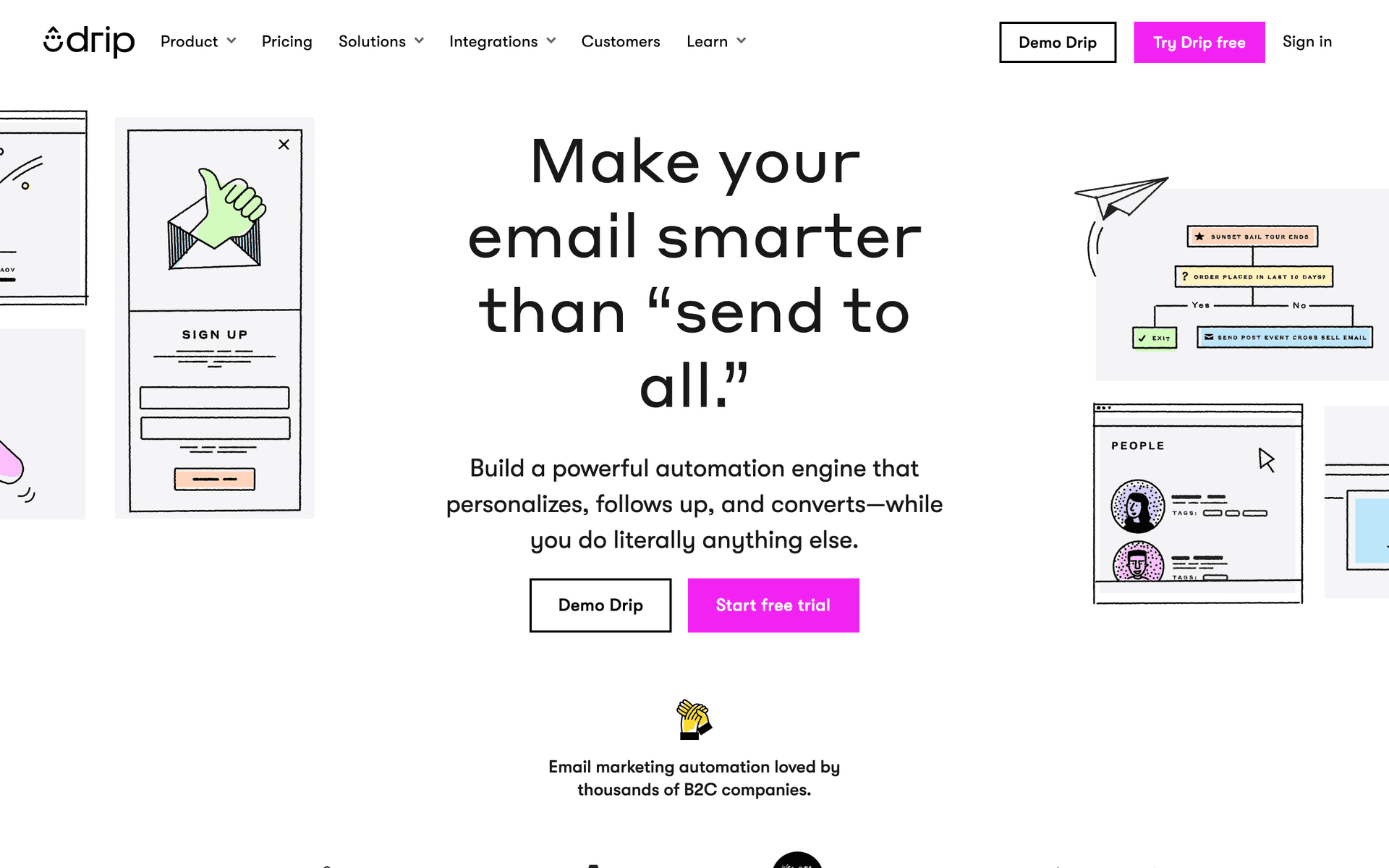
Drip is built for e-commerce with solid Shopify integration and revenue attribution that shows exactly which emails and sequences drive sales. The visual workflow builder handles complex DTC lifecycle flows with conditional branching based on purchase behavior and engagement. A credible Klaviyo alternative at a slightly lower price point for brands that want e-commerce-focused automation without the full Klaviyo price tag.

Best for
Mid-size DTC brands wanting revenue-attributed automation
Pricing
$39/month for 2,500 contacts

Pros

  • Built for e-commerce
  • Revenue attribution
  • Visual workflow builder
  • Good Shopify integration

Cons

  • No free tier
  • Contact-based pricing
  • Less advanced than Klaviyo
  • Higher starting price
#4
Omnisend

E-commerce email, SMS, and push notifications for online brands.

Visit
Omnisend dashboard screenshot

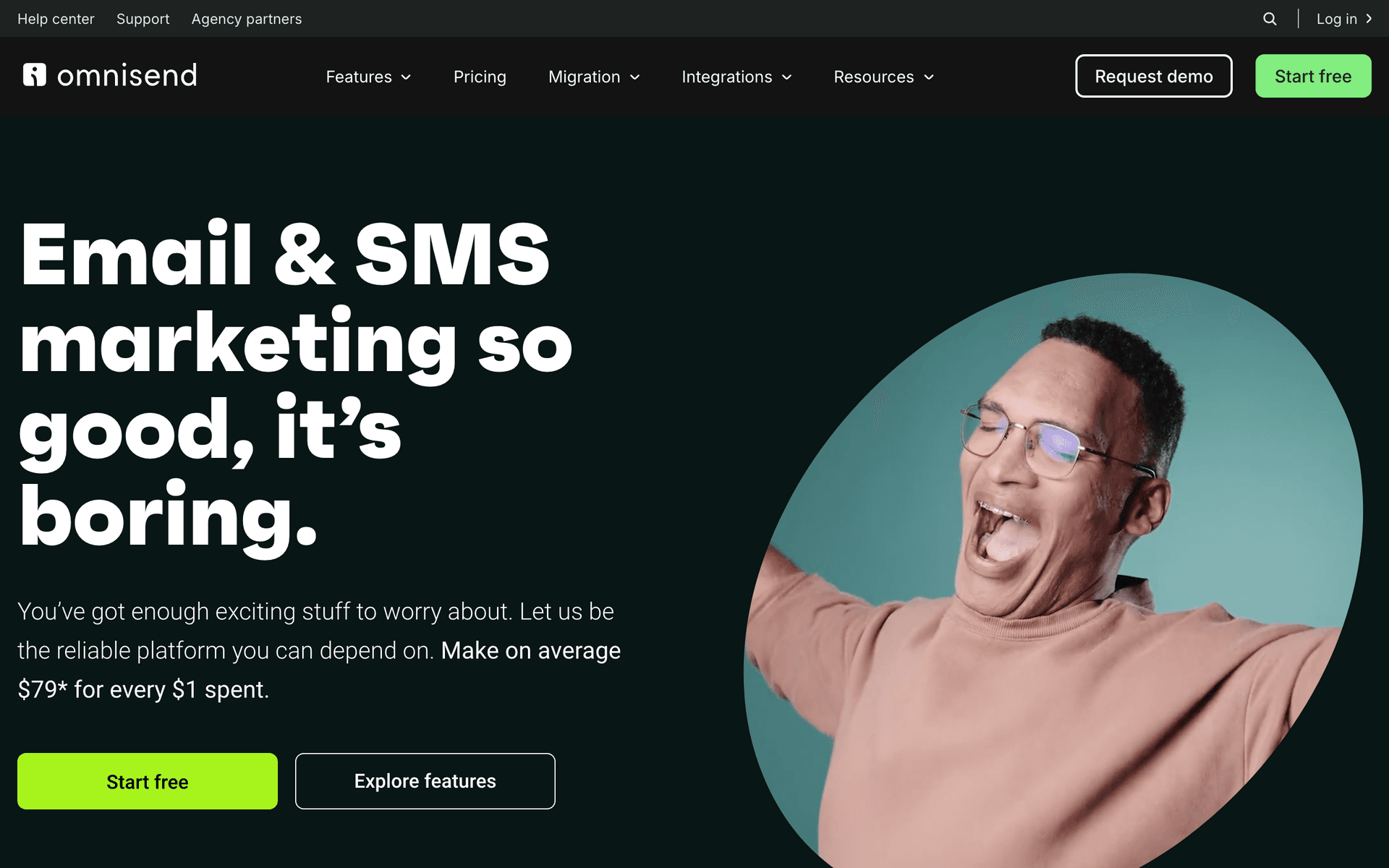
Omnisend offers a solid mid-range option for DTC brands that want email, SMS, and push notifications in one platform without Klaviyo's pricing. Pre-built automation workflows cover the DTC essentials - welcome, cart recovery, post-purchase, browse abandonment. Shopify integration syncs product and customer data. More affordable than Klaviyo with most of the core features DTC brands need at the growth stage.

Best for
DTC brands wanting email plus SMS at competitive pricing
Pricing
Free up to 250 contacts, then from $16/month

Pros

  • Email, SMS, and push combined
  • Pre-built automations
  • Shopify integration
  • Competitive pricing

Cons

  • Less advanced segmentation
  • Basic reporting
  • Fewer advanced features
  • Limited free tier
#5
ActiveCampaign

Advanced automation with CRM for complex DTC operations.

Visit
ActiveCampaign dashboard screenshot

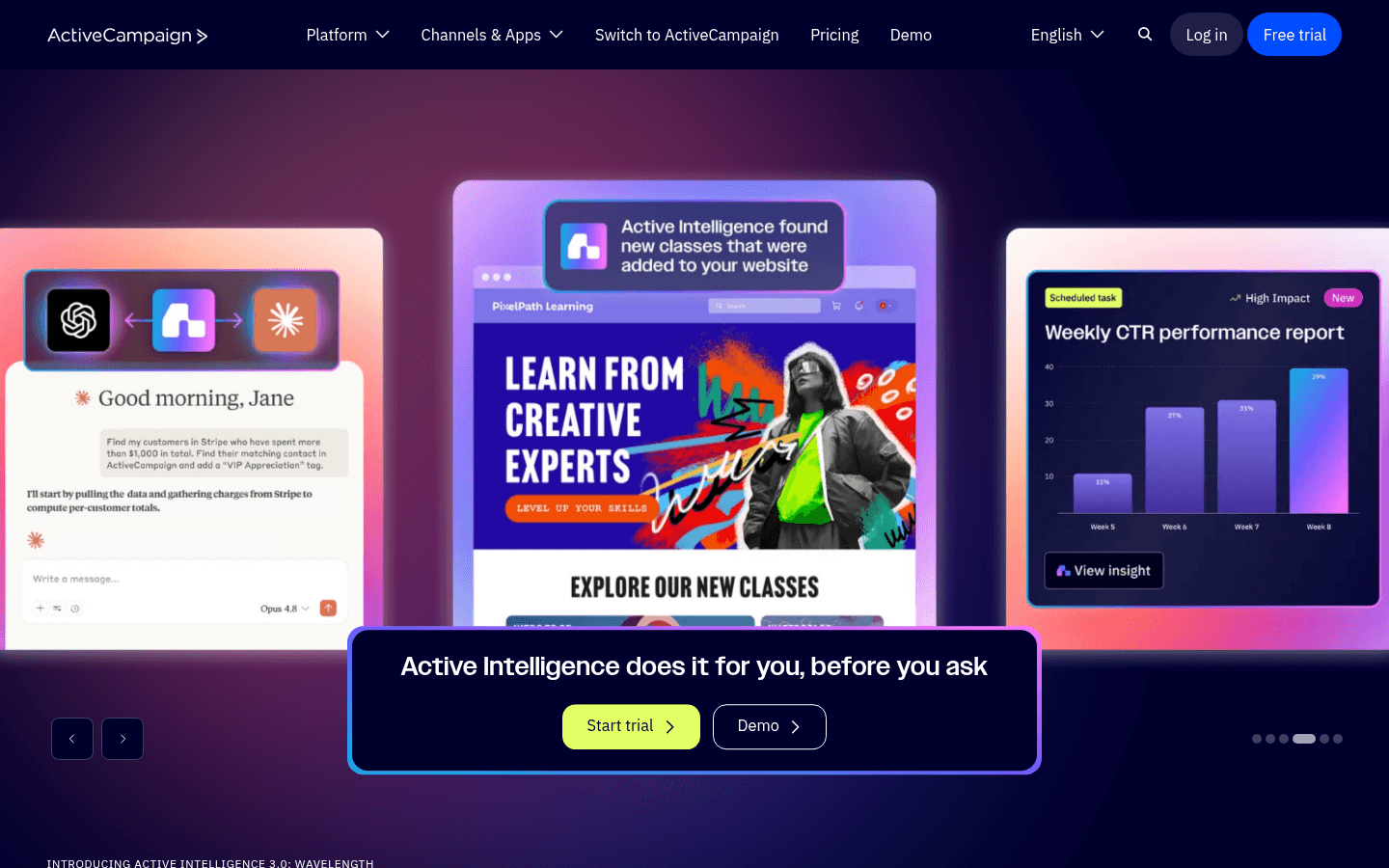
ActiveCampaign has the most powerful automation builder on this list, which suits DTC brands with complex customer journeys, wholesale alongside DTC, or sophisticated segmentation needs. The CRM tracks customer relationships across every touchpoint. For brands that need more than standard e-commerce flows, the flexibility is unmatched. The trade-off is complexity and a steeper learning curve.

Best for
DTC brands with complex journeys or wholesale channels
Pricing
$29/month for 1,000 contacts

Pros

  • Most powerful automation
  • CRM included
  • Excellent deliverability
  • Highly customizable

Cons

  • Not e-commerce specialized
  • Steep learning curve
  • Higher price for features
  • More setup required
#6
Postscript

SMS marketing built for Shopify DTC brands.

Visit
Postscript dashboard screenshot

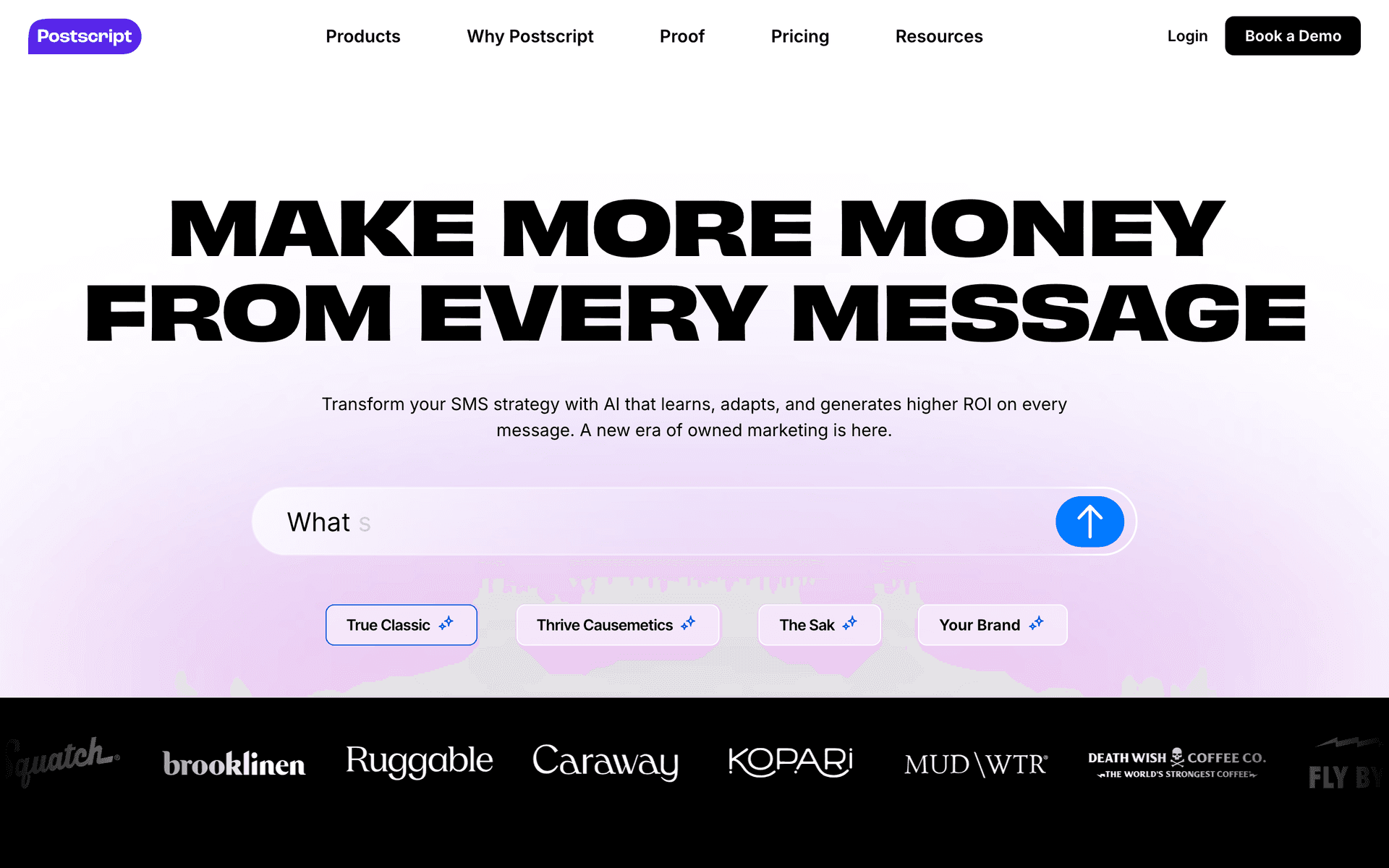
Postscript is SMS-only, not email. I include it because many DTC brands use it alongside their email platform for time-sensitive communication. The Shopify integration is excellent and SMS automation for cart recovery, shipping alerts, and flash sales drives real revenue. If you want dedicated SMS marketing for your DTC brand, Postscript is the category leader. You will need a separate email platform for lifecycle automation and brand storytelling.

Best for
DTC brands wanting dedicated SMS marketing alongside email
Pricing
From $25/month plus per-message fees

Pros

  • Best SMS platform for Shopify
  • Deep Shopify integration
  • SMS automation
  • Compliance built in

Cons

  • SMS only, not email
  • Per-message pricing adds up
  • Need separate email platform
  • US/Canada focused
#7
Mailchimp

The most recognized email platform with broad features.

Visit
Mailchimp dashboard screenshot

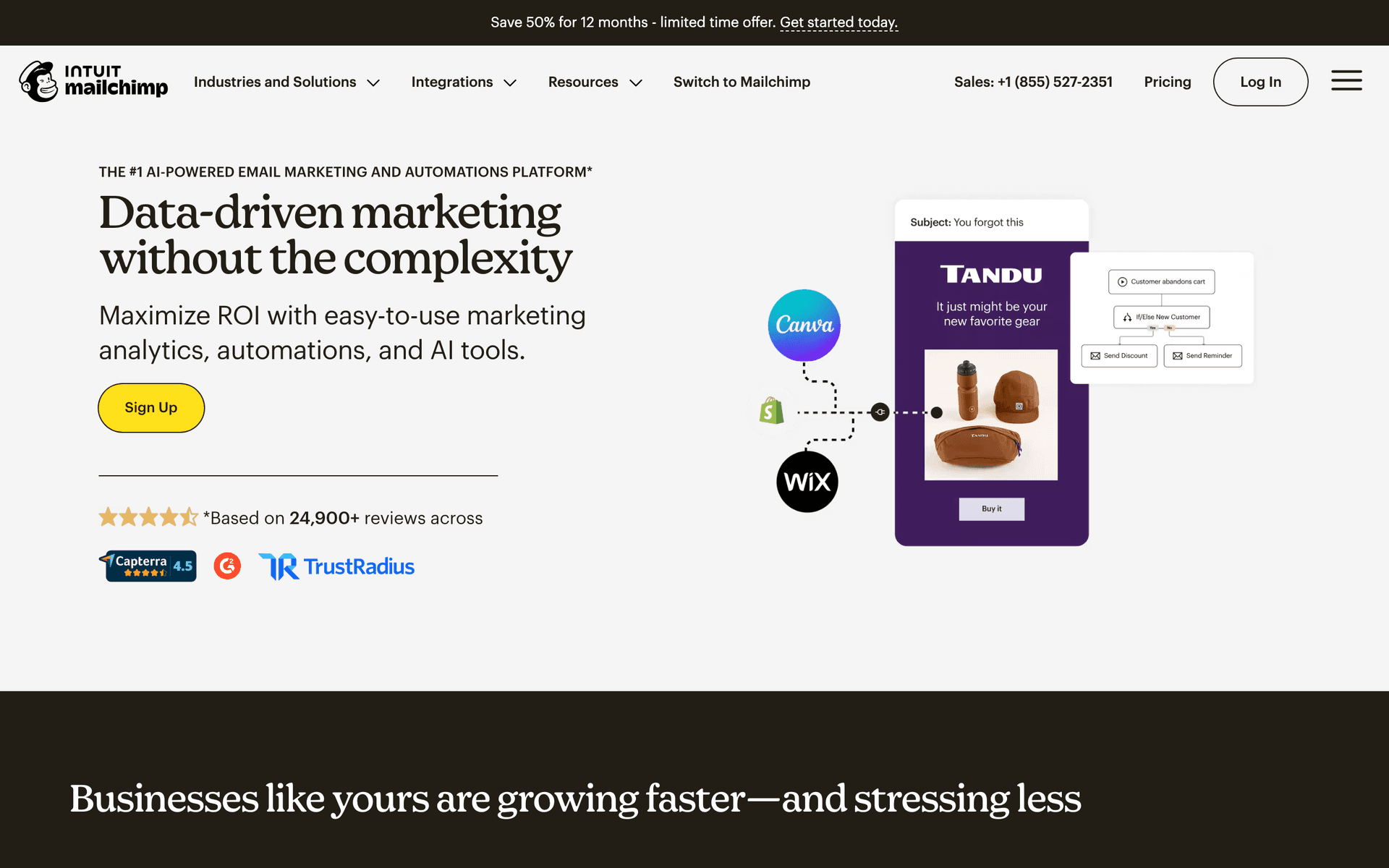
Mailchimp is a common starting point for DTC brands because of its free tier and brand recognition. The editor and template library are strong for creating branded emails. Basic automation covers welcome series and simple post-purchase flows. Most DTC brands outgrow Mailchimp once they need advanced lifecycle automation, sophisticated segmentation, and revenue attribution that dedicated e-commerce platforms provide.

Best for
Brand new DTC brands starting with email on a tight budget
Pricing
Free up to 500 contacts, then from $13/month

Pros

  • Free tier
  • Easy to use
  • Good design tools
  • Many integrations

Cons

  • Basic automation
  • No revenue attribution
  • Weak e-commerce features
  • Pricing climbs fast
#8
Brevo

Budget email and SMS with transactional email.

Visit
Brevo dashboard screenshot

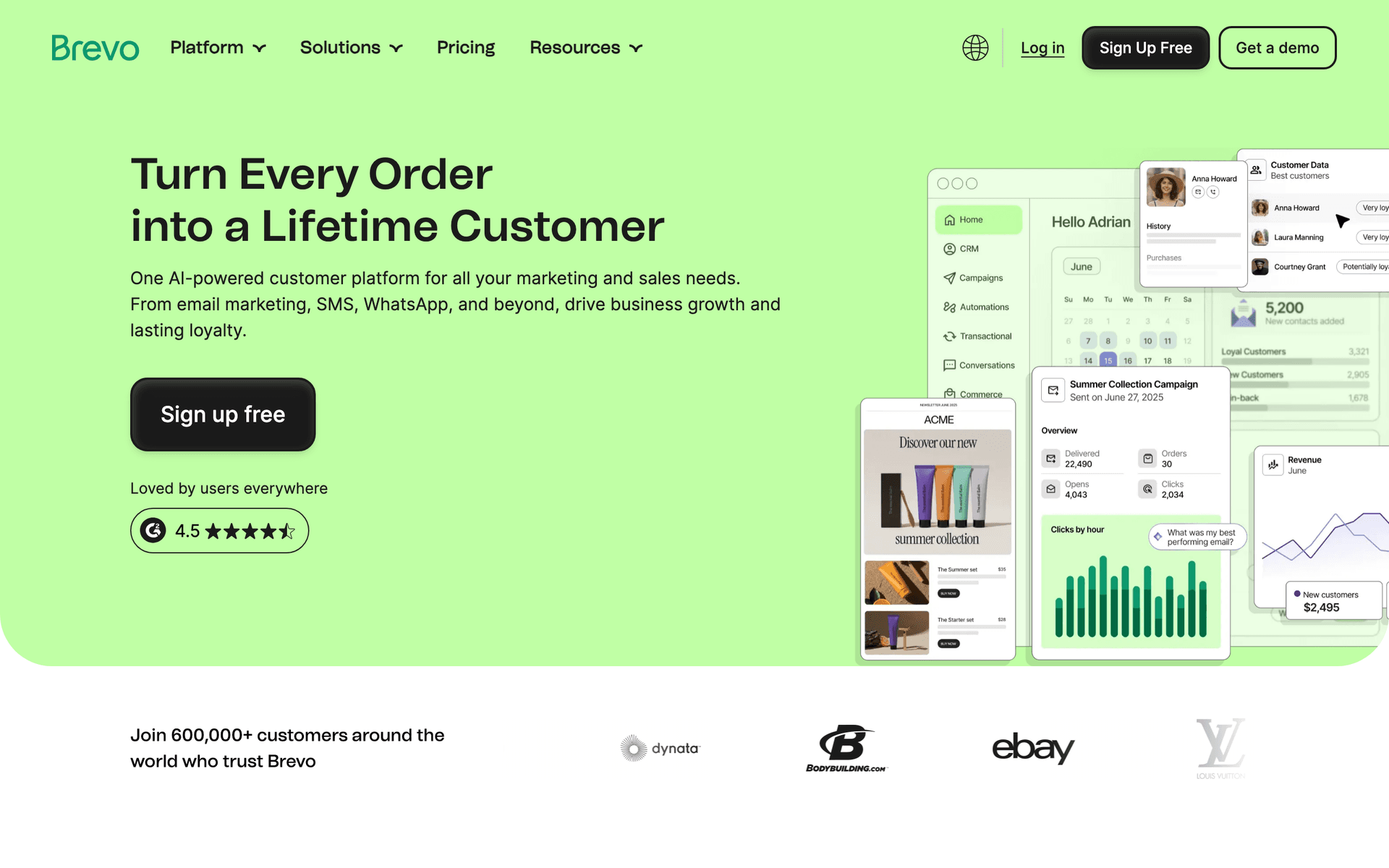
Brevo offers pay-by-email pricing that works for DTC brands watching their budget during early growth. Transactional emails and SMS are included for order confirmations and shipping updates. The automation is basic but covers the essentials. A functional budget option that many brands outgrow as their lifecycle marketing needs mature.

Best for
Budget-conscious DTC brands
Pricing
Free up to 300 emails/day, then from $25/month

Pros

  • Budget-friendly
  • Pay by email
  • SMS included
  • Transactional email

Cons

  • Basic automation
  • Limited DTC features
  • Basic segmentation
  • Basic integration
#9
MailerLite

Simple email marketing with a generous free tier.

Visit
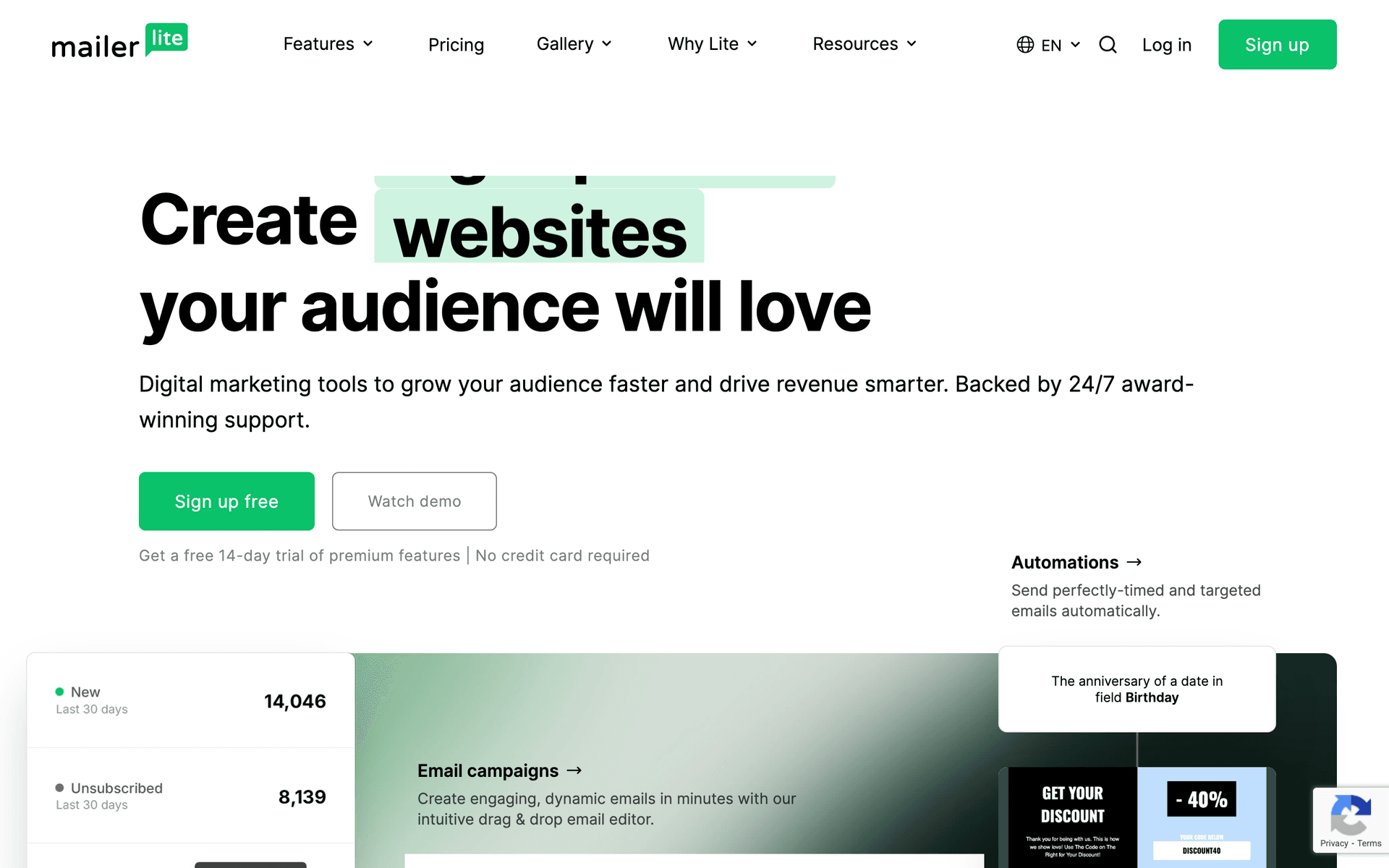
MailerLite dashboard screenshot

MailerLite is clean, simple, and affordable. The free tier and landing page builder make it a reasonable starting point for very early-stage DTC brands. For brands that prioritize simplicity over advanced e-commerce features, it works well until lifecycle marketing needs demand more sophisticated tools.

Best for
Very early-stage DTC brands wanting simplicity
Pricing
Free up to 1,000 subscribers, then from $10/month

Pros

  • Generous free tier
  • Clean interface
  • Landing pages
  • Affordable

Cons

  • Basic e-commerce features
  • Limited automation
  • Basic segmentation
  • May outgrow quickly
#10
Attentive

Enterprise SMS + email for scaled DTC brands doing $5M+ annually.

Visit
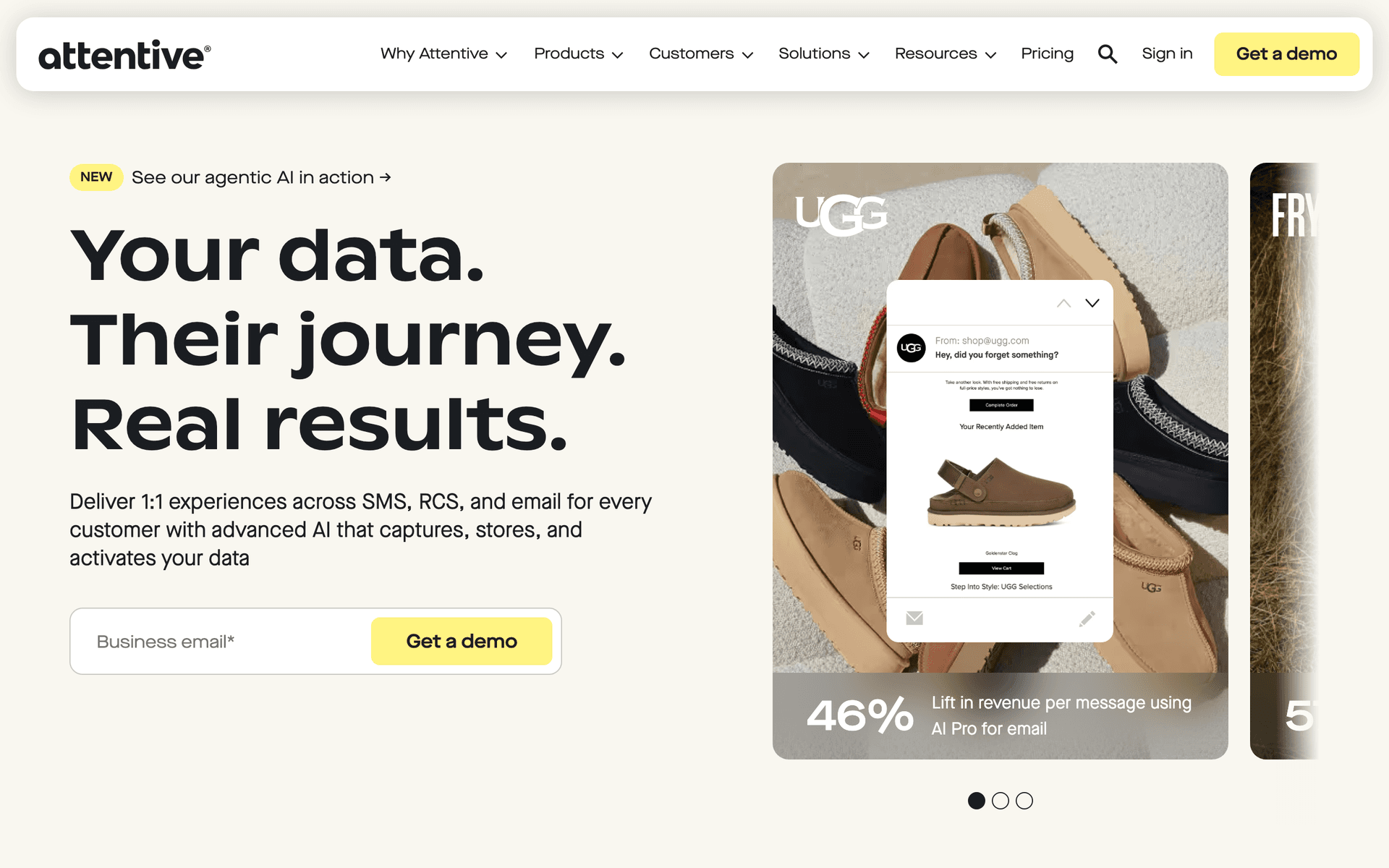
Attentive dashboard screenshot

Attentive is the SMS leader for scaled DTC and increasingly credible on email. For brands with 50k+ subscribers doing meaningful volume, unified SMS + email journeys outperform running channels separately on measurable revenue. Custom pricing starts around $500/month minimum, so this is not for small stores. The infrastructure, account management, and attribution tools justify the cost specifically for brands where SMS is a revenue pillar.

Best for
Scaled DTC brands doing $5M+/year unifying SMS and email
Pricing
Custom, typically $500+/month

Pros

  • Best-in-class DTC SMS
  • Unified SMS + email
  • Strong attribution
  • Dedicated account team

Cons

  • Expensive, sales-led
  • Minimum commitments
  • Overkill for small brands
  • Complex onboarding
#11
Yotpo Email

Email as part of the Yotpo reviews, loyalty, and SMS suite.

Visit
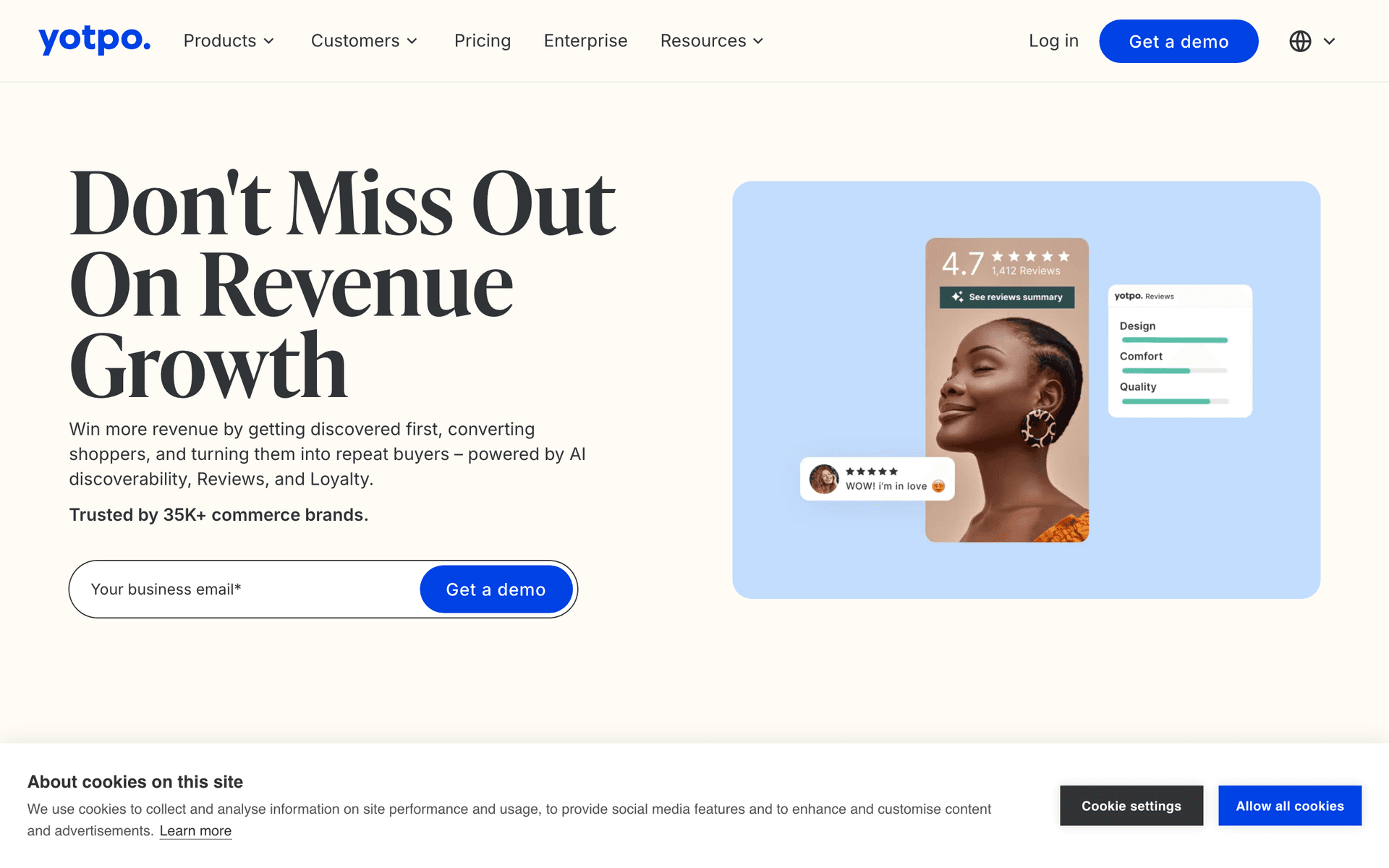
Yotpo Email dashboard screenshot

Yotpo's email only makes sense bundled with Reviews and Loyalty. For DTC brands already running Yotpo for reviews (very common), adding email lets you trigger flows off review submissions and loyalty tier changes - a level of integration rare elsewhere. Standalone email is average. The value is the unified data stack for review-and-loyalty-forward brands.

Best for
DTC brands running Yotpo Reviews and Loyalty
Pricing
From $19/month email, bundled suite pricing

Pros

  • Unified reviews + loyalty + email
  • Loyalty-triggered flows
  • Strong Shopify integration
  • Good for review-led brands

Cons

  • Standalone email average
  • Best only as bundle
  • Pricing complex
  • Overkill for email-only
#12
Sendlane

Klaviyo alternative at 30-40% lower cost for mid-size DTC.

Visit
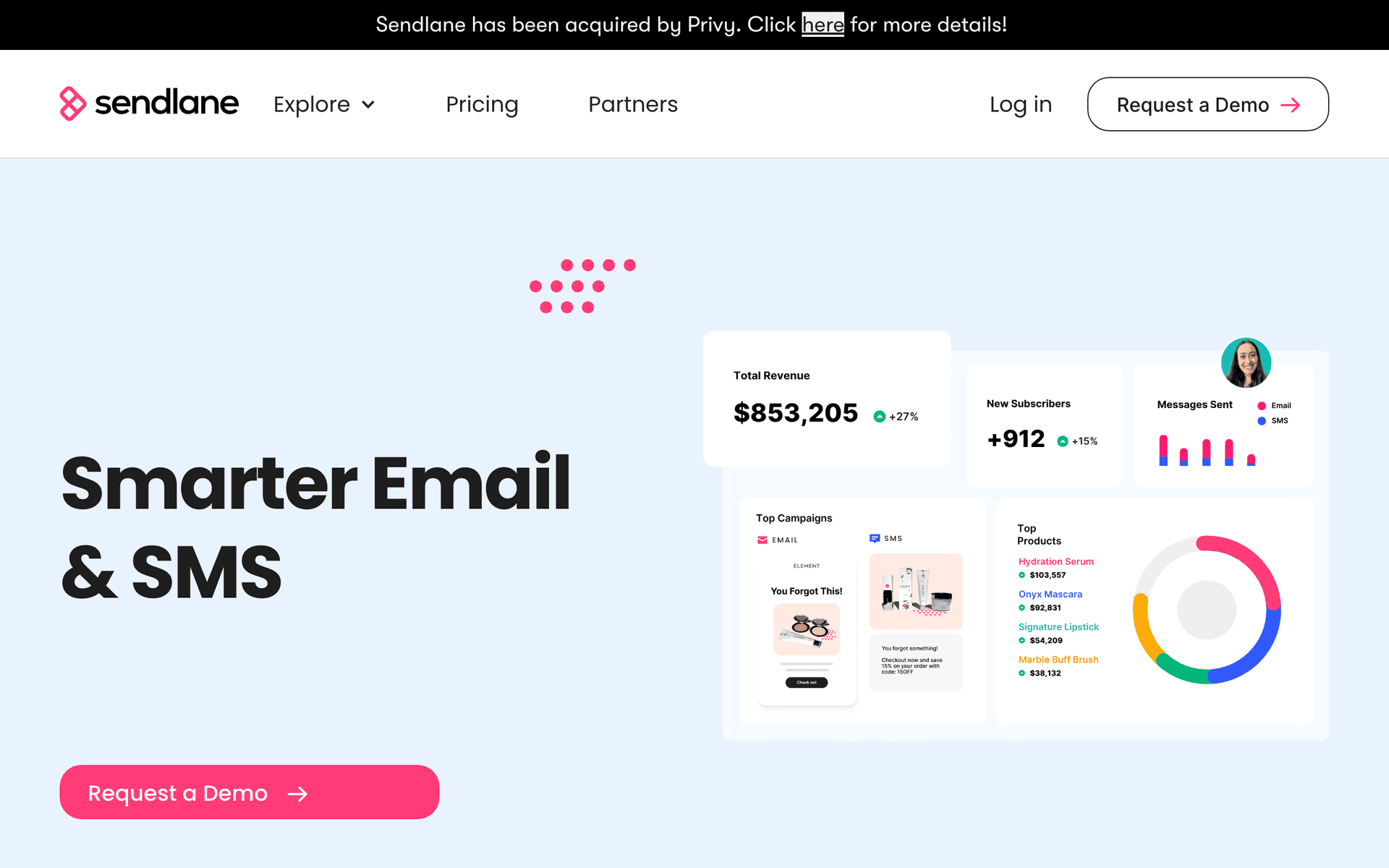
Sendlane dashboard screenshot

Sendlane targets DTC brands priced out of Klaviyo's pricing jump. Unified email + SMS + reviews, solid segmentation, Shopify integration at meaningfully lower cost. For brands doing $1M-$10M/year, worth evaluating seriously before defaulting to Klaviyo. Trade-offs are ecosystem size and reporting polish, but the core functionality is there.

Best for
Mid-size DTC brands priced out of Klaviyo
Pricing
From $100/month based on list size

Pros

  • Cheaper than Klaviyo at scale
  • Email + SMS + reviews unified
  • Strong segmentation
  • Good support

Cons

  • Higher floor than starter tools
  • Smaller ecosystem
  • Less mature reporting
  • Fewer integrations
#13
Maestra

AI-driven CDP and email for data-forward DTC brands.

Visit
Maestra dashboard screenshot

Maestra is for DTC brands investing in data-driven marketing - predictive churn, AI product recommendations, automated segment discovery. For brands with real customer data volume, the ML-driven personalization beats rules-based systems. Real setup investment required. Right for teams with a marketing analyst or ops person; wrong for small brands with a single marketer wearing 10 hats.

Best for
Data-forward DTC brands with marketing analyst support
Pricing
Custom, typically $300+/month

Pros

  • AI personalization
  • Predictive segmentation
  • Full CDP capabilities
  • Strong Shopify sync

Cons

  • Expensive
  • Setup investment real
  • Overkill for small brands
  • Steep learning curve
#14
Retention.com

Anonymous-visitor-to-email identity resolution for high-traffic DTC.

Visit
Retention.com dashboard screenshot

Retention.com isn't a traditional email tool - it identifies anonymous site visitors through a third-party identity graph and makes them addressable. For high-traffic DTC brands, it can meaningfully grow addressable list size. The opt-in model is debated (these are not your visitors opting in directly), so deliverability discipline matters. Used as a top-of-funnel supplement alongside Klaviyo, not a replacement.

Best for
High-traffic DTC brands growing addressable email list
Pricing
From $1/identified contact, custom tiers

Pros

  • Turns traffic into email contacts
  • Works with major ESPs
  • Meaningful list growth
  • Strong match rate

Cons

  • Controversial opt-in model
  • Deliverability risk if misused
  • Supplement, not platform
  • Needs real traffic
#15
Postscript

SMS-first platform with Shopify-native DTC integration.

Visit
Postscript dashboard screenshot

Postscript dominates DTC SMS on Shopify with segmentation depth (purchase behavior, LTV, order frequency) that's unmatched on the SMS side. Email product is newer but catching up. For Shopify DTC brands that lead with SMS and want email in the same subscriber view, Postscript is purpose-built. Email-only Shopify brands should stick with Klaviyo or Omnisend.

Best for
SMS-led Shopify DTC wanting unified email
Pricing
Free up to 1,000 SMS, email from custom pricing

Pros

  • Deepest Shopify SMS integration
  • Unified SMS + email view
  • Strong segmentation
  • Shopify-native

Cons

  • Email still maturing
  • Pricing opaque
  • Best with SMS volume
  • Less known for email-only
#16
Flodesk

Design-forward email for brand-first DTC competing on aesthetics.

Visit
Flodesk dashboard screenshot

Brand-first DTC - fashion, beauty, home goods, lifestyle - competes on editorial quality and storytelling. Flodesk's template quality matches that positioning in a way Klaviyo's functional templates don't. Flat-rate $35/month unlimited subscribers scales cost-effectively. Automation is limited - use Flodesk for brand-forward broadcasts (launch stories, founder updates, editorial content) and pair with Klaviyo for operational lifecycle flows.

Best for
Brand-first DTC where storytelling drives positioning
Pricing
Flat $35/month unlimited subscribers

Pros

  • Editorial template quality
  • Flat unlimited pricing
  • Strong for brand storytelling
  • Simple editor

Cons

  • Basic automation
  • Weak Shopify integration
  • Limited segmentation
  • Pair with ecom tool
#17
SmartrMail

Shopify-focused Klaviyo alternative for budget-conscious DTC.

Visit
SmartrMail dashboard screenshot

SmartrMail delivers Klaviyo-style product recommendations and segmentation at roughly a third of the price. For DTC brands running Shopify on a budget, it's a credible option without sacrificing core ecom features. Smaller ecosystem and less polished interface are trade-offs, but the Shopify integration is solid. Right specifically for budget-conscious Shopify operators.

Best for
Budget-conscious Shopify DTC wanting Klaviyo features
Pricing
From $29/month for 1,000 contacts

Pros

  • Shopify product recommendations
  • Much cheaper than Klaviyo
  • Ecom-specific templates
  • Fast setup

Cons

  • Smaller ecosystem
  • Less polished UI
  • Fewer integrations
  • Less brand recognition
#18
Recart

SMS-first abandoned cart recovery for Shopify DTC.

Visit
Recart dashboard screenshot

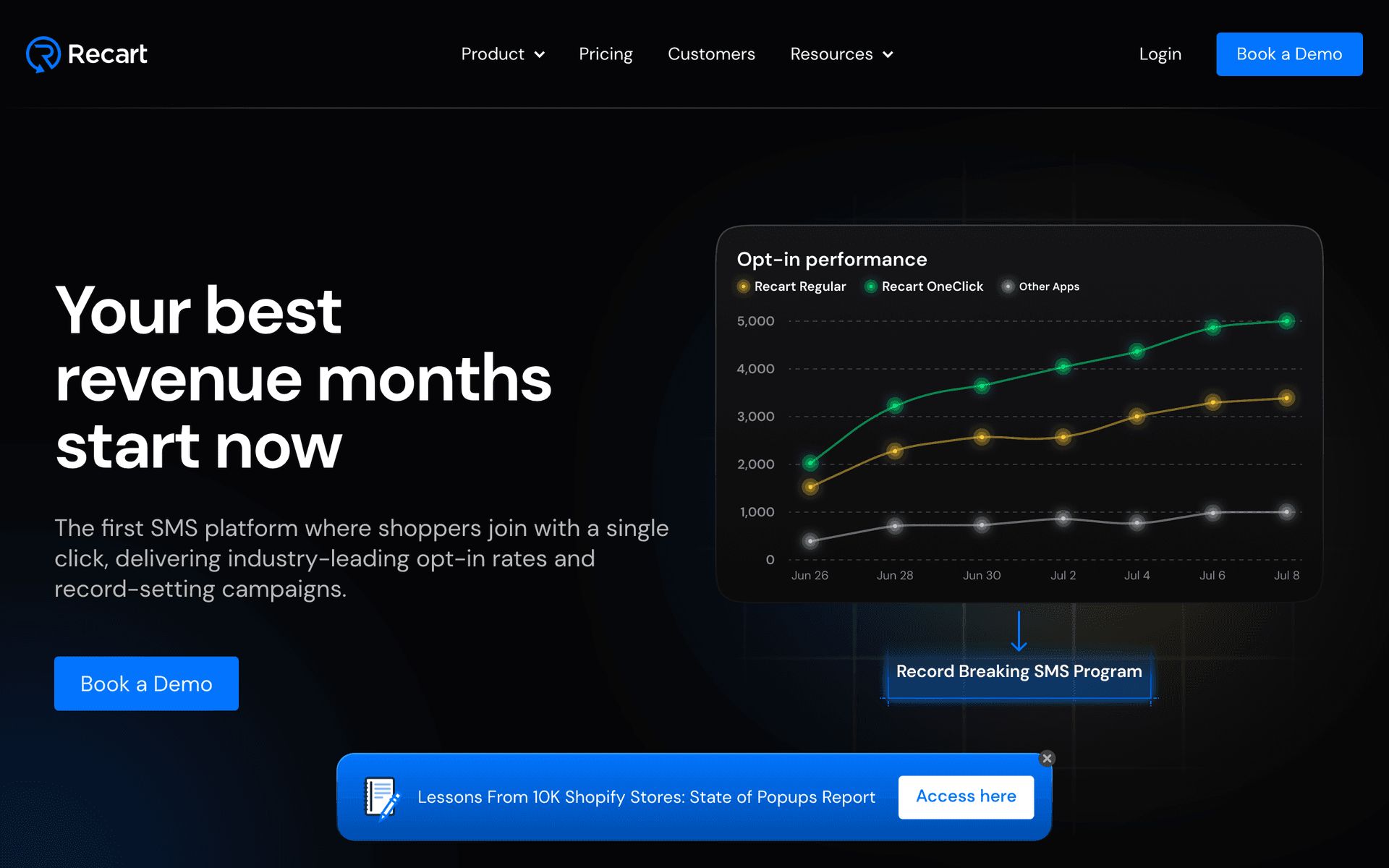
Recart dominates SMS abandoned cart recovery for Shopify DTC - pair it with Klaviyo, Sequenzy, or Omnisend for email, and let Recart run your SMS cart flows. Fast ROI for brands with cart abandonment volume. Narrow scope but strong in its specific lane.

Best for
Shopify DTC focused on abandoned-cart revenue recovery
Pricing
From $299/month based on SMS volume

Pros

  • Best-in-class cart SMS
  • Shopify-native install
  • Fast ROI on carts
  • Strong flow templates

Cons

  • SMS-focused only
  • Higher floor pricing
  • Pair with email tool
  • Narrower scope
#19
Seguno

Shopify-exclusive email platform for single-platform DTC operators.

Visit
Seguno dashboard screenshot

Seguno only works with Shopify, which is a feature for pure-Shopify DTC brands wanting minimum setup. Pre-configured for Shopify data, pre-built DTC flows, and fast onboarding. Can't handle multi-channel operations; perfect for brands committed to Shopify-only infrastructure.

Best for
Pure-Shopify DTC brands wanting fastest setup
Pricing
Free up to 250 subscribers, then from $10/month

Pros

  • Shopify-native, fast setup
  • Pre-built DTC flows
  • Good Shopify integration
  • Fair pricing

Cons

  • Shopify-only
  • No multi-channel support
  • Smaller feature surface
  • Limited for complex brands

Feature Comparison

FeatureKlaviyoSequenzyDripOmnisend
Shopify integration
Deep
Yes
Yes
Yes
Lifecycle automation
Advanced
AI-generated
Advanced
Pre-built
AI-powered sequences
No
Yes
No
No
Product recommendations
AI-powered
No
Yes
Yes
SMS marketing
Yes
No
Limited
Yes
Pay-per-email pricing
No
Yes
No
No
Revenue attribution
Built-in
Yes
Built-in
Yes
Free tier available

Common Mistakes to Avoid

We see these mistakes over and over. Skip the learning curve and avoid these from day one.

Leading every email with a discount

DTC brands that constantly discount train customers to wait for sales. This erodes margin and brand perception. Use discounts strategically - welcome offers, win-back campaigns, and loyalty rewards. Between promotions, focus on brand content, product education, and community building.

Treating email as a broadcast channel instead of a lifecycle tool

Blasting your entire list with the same promotional email wastes the most powerful aspect of email - personalization. Build lifecycle automation that sends different content based on where each customer is in their journey. The difference in revenue between broadcast and lifecycle email is dramatic.

Not investing in post-purchase experience

Many DTC brands focus all email effort on acquiring the first purchase and neglect what happens after. Post-purchase emails that add genuine value - usage guides, care tips, styling ideas - build the emotional connection that drives repeat purchases and referrals.

Over-investing in SMS before email is optimized

SMS is valuable for DTC brands, but it should complement a strong email foundation, not replace one. Email handles the storytelling, education, and relationship-building that drives long-term loyalty. SMS excels at time-sensitive notifications. Get email right first, then layer SMS on top.

Email Sequences Every DTC Brand Needs

These are the essential automated email sequences that will help you grow your business and keep clients coming back.

DTC Welcome Journey

New subscriber

Convert new subscribers into first-time buyers with brand storytelling.

Immediately
Welcome to {{brand_name}} - why we exist

Brand story, mission, and values. First-purchase incentive. Set email expectations.

Day 2
The story behind our bestseller

Deep dive into your hero product. Why it exists, how it is made, what makes it different.

Day 4
What our customers are saying

Social proof with reviews, testimonials, and customer photos.

Day 7
Your discount expires tomorrow

Urgency reminder for the welcome offer. Curated product recommendations.

Post-Purchase Lifecycle

First order delivered

Turn first-time DTC buyers into repeat customers and advocates.

Day 3
How to get the most from your {{product_name}}

Usage tips, care instructions, or styling ideas specific to the product.

Day 10
We would love your feedback

Review request with a direct link. Offer a small incentive.

Day 21
Based on what you bought, we think you will love these

Cross-sell recommendations based on purchase history.

Day 45
Time for a restock?

Replenishment reminder if the product is consumable. New arrival showcase if not.

Win-Back for DTC

No purchase in 90 days

Re-engage lapsed DTC customers before they become inactive.

90 days
It has been a while - see what is new

New products, collections, or improvements since their last purchase.

105 days
We would love to have you back - here is 15% off

Win-back discount with personalized product picks.

120 days
Last chance for your 15% off

Final urgency email. Reduce email frequency if no engagement.

Email Marketing for DTC Brands: The Playbook

DTC email marketing is about building a relationship that justifies your price. Customers who feel connected to your brand are willing to pay more and buy more frequently. Email is the primary channel for building that connection at scale because you control the message, timing, and audience.

The DTC email revenue breakdown:

A well-optimized DTC email program typically generates 20-40% of total revenue through a combination of:

  • Automated flows (40-60% of email revenue): Cart recovery, welcome series, post-purchase, win-back, and browse abandonment run on autopilot
  • Campaigns (40-60% of email revenue): New launches, seasonal promotions, brand content, and collection spotlights sent to segmented audiences

The Lifecycle Marketing Advantage

DTC brands have a unique advantage over marketplace sellers and retailers: you know exactly who your customer is, what they bought, when they are likely to buy again, and what they browse on your site. Use that data to make every email feel personal, not like a mass blast.

Why Brand Story Matters in Email

DTC brands that invest in storytelling through email see higher customer lifetime values and lower churn. Your founding story, production process, and brand values create emotional attachment that survives price comparisons. A customer who bought your product because they believe in your mission is far more resilient to competitor discounts than one who bought because you had the lowest price.

What Makes DTC Email Different from Generic E-Commerce

DTC brands have the luxury of a direct customer relationship. You own the customer data, control the brand experience, and can build genuine connection through every touchpoint. The brands that win at DTC email marketing are the ones that make customers feel like they are part of something bigger than a transaction.

The Second Purchase Problem

Most DTC brands lose money on the first customer acquisition through paid ads. Profitability comes from the second, third, and fourth purchase. Email is the most cost-effective channel for driving repeat purchases because you have already paid to acquire the customer. A strong post-purchase sequence that adds value, requests reviews, and recommends complementary products directly addresses the repeat purchase challenge.

Building Community Through Email

DTC brands that build community through their email program see higher engagement and loyalty. Customer spotlights, UGC features, and exclusive behind-the-scenes content make subscribers feel like insiders. This community feeling drives both purchases and word-of-mouth referrals.

Getting Started with DTC Email

Set up these automations in order of revenue impact:

  1. Cart recovery sequence to recapture abandoned purchases immediately
  2. Welcome journey that tells your brand story and converts new subscribers
  3. Post-purchase lifecycle to drive reviews, cross-sells, and the critical second order
  4. Win-back campaign to re-engage lapsed customers before they are lost

Once these four automations are running, layer in seasonal campaigns, new product launches, and content-driven brand emails to your segmented subscriber base.

How We Evaluated These Tools

Tools were evaluated based on their fit for DTC brand requirements - Shopify integration depth, lifecycle automation capabilities, brand storytelling tools, customer segmentation sophistication, pricing models that work during the list-building phase, and the ability to attribute revenue to email campaigns.

Frequently Asked Questions

Ready to grow your dtc brand practice?

Start your free trial today. Set up your first email sequence in minutes with AI-powered content generation.

Related Industries

Sequenzy - Complete Pricing Guide

Pricing Model

Sequenzy uses email-volume-based pricing. You only pay for emails you send. Unlimited contacts on all plans — storing subscribers is always free.

All Pricing Tiers

  • 2.5k emails/month: Free (Free annually)
  • 15k emails/month: $19/month ($205/year annually)
  • 60k emails/month: $29/month ($313/year annually)
  • 120k emails/month: $49/month ($529/year annually)
  • 300k emails/month: $99/month ($1069/year annually)
  • 600k emails/month: $199/month ($2149/year annually)
  • 1.2M emails/month: $349/month ($3769/year annually)
  • Unlimited emails/month: Custom pricing (Custom annually)

Yearly billing: All plans offer a 10% discount when billed annually.

Free Plan Features (2,500 emails/month)

  • Visual automation builder
  • Transactional email API
  • Reply tracking & team inbox
  • Goal tracking & revenue attribution
  • Dynamic segments
  • Payment integrations
  • Full REST API access
  • Custom sending domain

Paid Plan Features (15k - 1.2M emails/month)

  • Visual automation builder
  • Transactional email API
  • Reply tracking & team inbox
  • Goal tracking & revenue attribution
  • Dynamic segments
  • Payment integrations (Stripe, Paddle, Lemon Squeezy)
  • Full REST API access
  • Custom sending domain

Enterprise Plan Features (Unlimited emails)

  • Visual automation builder
  • Transactional email API
  • Reply tracking & team inbox
  • Goal tracking & revenue attribution
  • Dynamic segments
  • Payment integrations
  • Full REST API access
  • Custom sending domain

Important Pricing Notes

  • You only pay for emails you send — unlimited contacts on all plans
  • No hidden fees - all features included in the price
  • No credit card required for free tier

Contact

  • Pricing Page: https://sequenzy.com/pricing
  • Sales: hello@sequenzy.com