Updated 2026-03-15

Best Email Marketing Tools for Grocery and Meal Kit Delivery

Subscription retention, weekly ordering, and recipe engagement make email the lifeline of food delivery businesses.

Grocery delivery and meal kit services depend on email marketing more than almost any other e-commerce category. Subscribers make weekly or bi-weekly ordering decisions, retention directly impacts unit economics, and content (recipes, meal plans, nutrition tips) drives engagement between orders. The right email platform helps you reduce churn, increase order frequency, and turn subscribers into long-term customers. I reviewed 19 email marketing tools that work well for grocery and meal kit businesses.

TL;DR

Klaviyo is the most powerful option with predictive churn scoring and AI product recommendations, ideal for established meal kit services. Sequenzy is a strong alternative for Stripe-based subscription services wanting AI-powered retention at affordable pay-per-email pricing with a free tier to start. For budget-conscious startups, Brevo offers transactional email and SMS at the lowest cost.

Why Grocery and Meal Kit Services Need Email Marketing

Subscription Retention Is Everything

Meal kit services live and die by retention. Losing a subscriber who was paying $80/week means losing $4,160/year. Email campaigns that reduce churn by even 5% have massive revenue impact.

Weekly Ordering Decisions

Unlike most e-commerce, grocery and meal kit customers make purchase decisions weekly. Each week is an opportunity to win or lose an order. Timely emails with menu previews, ordering reminders, and personalized suggestions drive order rates.

Recipe Content Drives Engagement

Recipe emails consistently have some of the highest open and click rates in email marketing. Sharing recipes that use your products or meal kit ingredients keeps subscribers engaged and reduces the 'I do not know what to cook' friction.

Delivery Logistics Communication

Order cutoff reminders, delivery scheduling, and shipping notifications require reliable transactional email. Missing a delivery communication creates a bad customer experience.

Grocery and Meal Kit Delivery Email Marketing Benchmarks

Know these numbers before you start. They'll help you set realistic goals and pick the right tool.

30-40%
Average Open Rate

Grocery and meal kit emails have above-average open rates because they contain actionable content - menu choices, recipes, and delivery information that subscribers need.

5-8%
Average Click Rate

Recipe content and menu preview emails drive high click rates. Promotional-only emails average 3-4%, while recipe emails reach 7-8%.

Sunday 10am or Tuesday 7pm
Best Send Time

Sunday mornings for weekly menu planning, Tuesday evenings for mid-week ordering reminders. Timing depends on your specific order cutoff schedule.

Under 8%
Monthly Churn Rate Target

Healthy meal kit services maintain monthly churn below 8%. Email automation that reduces churn by even 2 percentage points translates to significant annual revenue retention.

Important Tips Before You Choose

Lessons from grocery and meal kit deliverywho've been doing this for years. Save yourself the trial and error.

Send Menu Previews 48 Hours Before the Order Cutoff

Give subscribers enough time to browse and customize their order, but close enough to the deadline to create urgency. Include personalized recommendations based on past choices and dietary preferences.

Intervene After the First Skip, Not the Third

The first skipped order is your best opportunity to prevent churn. Send a non-pushy email previewing next week's exciting options. By the third skip, the subscriber has already mentally checked out and is much harder to win back.

Use Recipe Content as Your Engagement Engine

Recipe emails consistently have the highest open and click rates in food e-commerce. Send weekly recipe content between orders - not just for your products, but genuinely useful cooking tips. This keeps subscribers engaged even during weeks they skip.

Automate the Subscribe-and-Save Pitch After the Third Order

One-time buyers who order three times have demonstrated consistent interest. This is the ideal moment to pitch a subscription with a discount incentive. Earlier feels pushy, later risks losing them to a competitor.

Segment by Dietary Preference from Day One

A vegetarian subscriber receiving emails featuring steak recipes will unsubscribe. Capture dietary preferences during signup or first order and use them to segment all content - menu previews, recipes, and promotions.

Send Delivery Day Reminders via SMS, Content via Email

Use SMS for time-sensitive logistics (order cutoff, delivery day, schedule changes) and email for content-rich communication (recipes, menu previews, nutrition tips). This dual-channel approach maximizes open rates for urgent messages and engagement for content.

19 Best Email Marketing Tools for Grocery and Meal Kit Delivery

#ToolDescriptionBest ForPricing
1SequenzyAI-powered email marketing with Stripe integration for subscription businesses.Subscription meal kits billing through Stripe wanting AI-powered retentionFree up to 2,500 emails/mo, then $19/mo (unlimited contacts)
2KlaviyoAdvanced e-commerce email platform with predictive analytics.Large grocery and meal kit services wanting predictive churn preventionFree up to 250 contacts, then from $20/month
3ActiveCampaignAdvanced automation and CRM for subscription businesses.Meal kit services with complex subscriber lifecycle management$29/month for 1,000 contacts
4OmnisendMulti-channel e-commerce marketing with email, SMS, and push.Grocery services wanting multi-channel ordering remindersFree up to 250 contacts, then from $16/month
5DripE-commerce automation with visual workflow builder.Grocery businesses wanting detailed automation and revenue tracking$39/month for 2,500 contacts
6MailchimpPopular email platform with a large template library.Small grocery businesses wanting easy recipe and promotion emailsFree up to 500 contacts, then from $13/month
7BrevoBudget email and SMS platform with transactional email.Budget-conscious meal kit startups wanting transactional + marketingFree up to 300 emails/day, then from $25/month
8SendlaneE-commerce email and SMS with real-time data.E-commerce grocery stores wanting pre-built funnels$104/month at 10,000 contacts
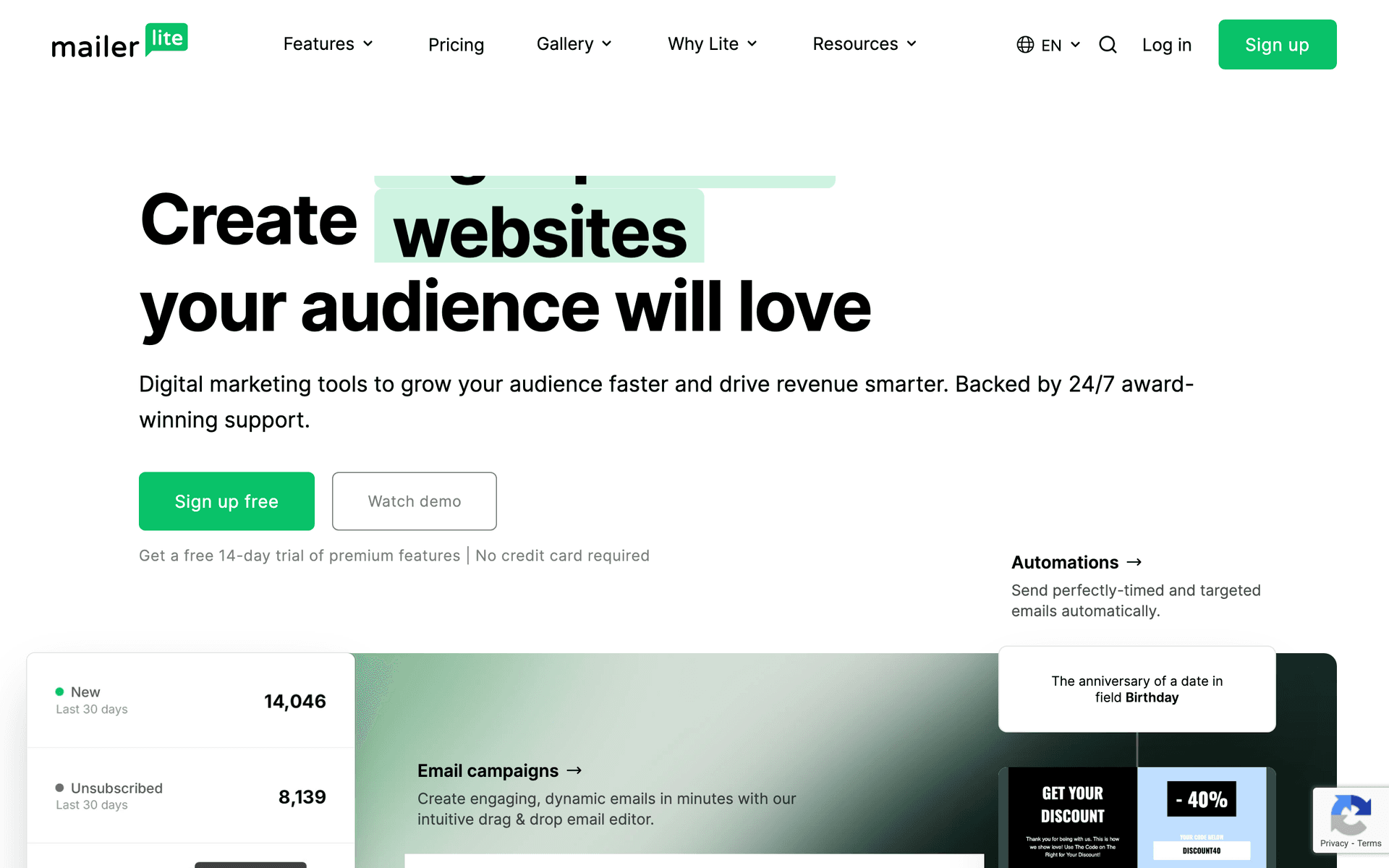
9MailerLiteSimple email marketing with a generous free tier.Small local grocery delivery services getting startedFree up to 1,000 subscribers, then from $10/month
10OmnisendE-commerce email and SMS for grocery and meal kit order notifications.Meal kit and grocery delivery businesses wanting order notifications and SMS remindersFree up to 250 contacts, then from $16/month
11KlaviyoAdvanced e-commerce email with predictive churn prevention for subscription food services.Meal kit subscription services wanting AI-powered churn preventionFree up to 250 contacts, then from $20/month
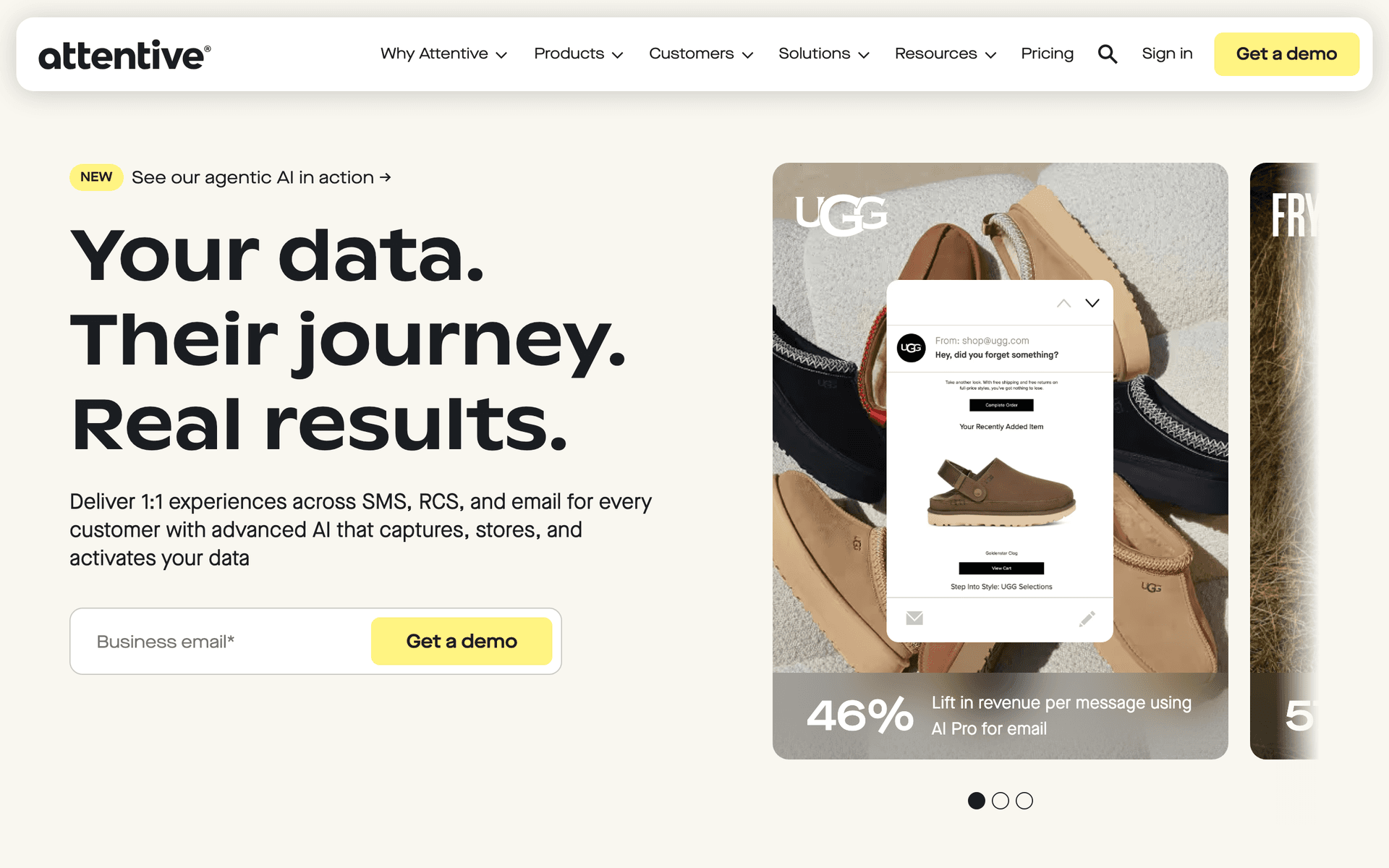
12AttentiveSMS marketing for grocery and meal kit weekly order reminders.Meal kit services wanting SMS-first weekly order reminders and retentionCustom pricing, typically from $500/month
13DripRevenue attribution email for grocery stores tracking repeat order value.Established grocery subscription services wanting revenue-attributed campaign optimization$39/month for 2,500 contacts
14SendlaneReal-time behavioral email for grocery subscription services.Subscription grocery services wanting real-time churn signals and interventionFrom $99/month
15ActiveCampaignCRM and automation for grocery delivery services with complex customer segments.Multi-segment food delivery businesses with complex dietary and geographic segmentation$29/month for 1,000 contacts
16BrevoAffordable multi-channel email for local grocery delivery services.Local grocery delivery services wanting affordable multi-channel order remindersFree plan (300 emails/day), then from $25/month
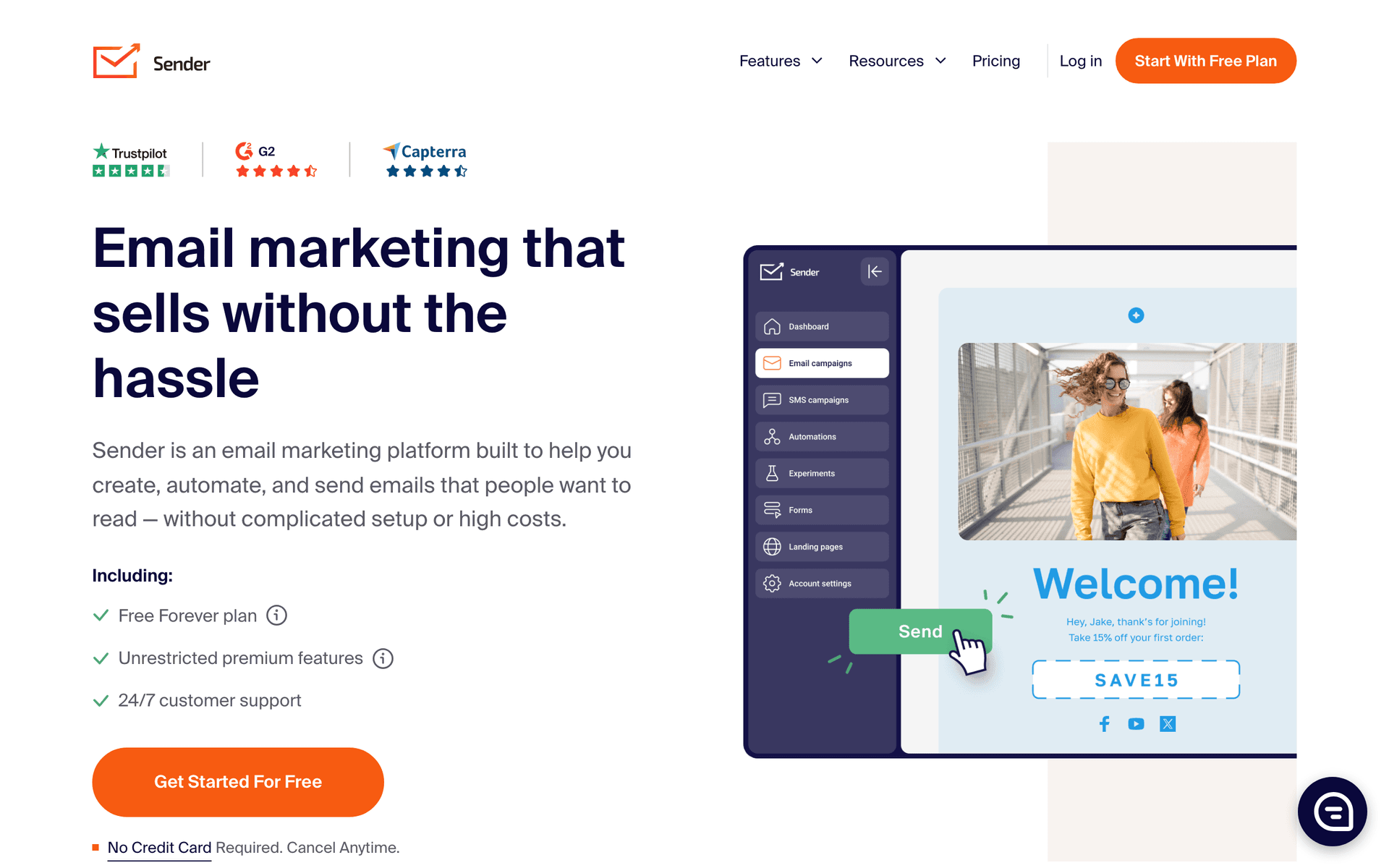
17SenderFree email with automation for small meal kit and grocery businesses.Early-stage meal kit and grocery delivery businesses starting email at zero costFree up to 2,500 subscribers and 15,000 emails/month, then from $15/month
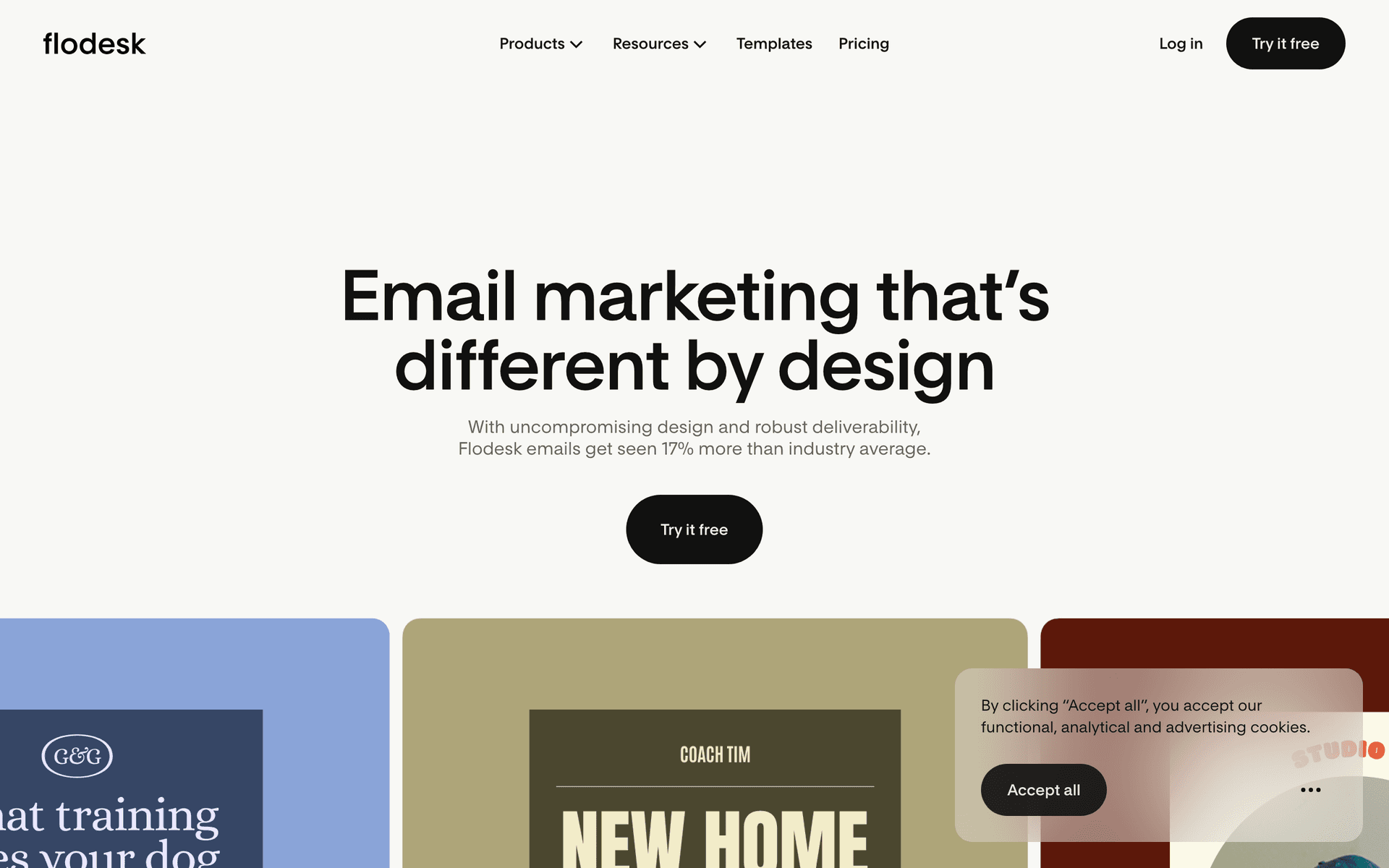
18FlodeskBeautiful email design for premium meal kit and artisan grocery brands.Premium meal kit services wanting beautiful recipe and menu reveal emails$38/month flat rate
19GetResponseAll-in-one platform for grocery and meal kit services with landing pages.Meal kit services wanting landing pages and automation for customer acquisitionFrom $19/month for 1,000 contacts
Our Top Pick for Grocery and Meal Kit Delivery
#1
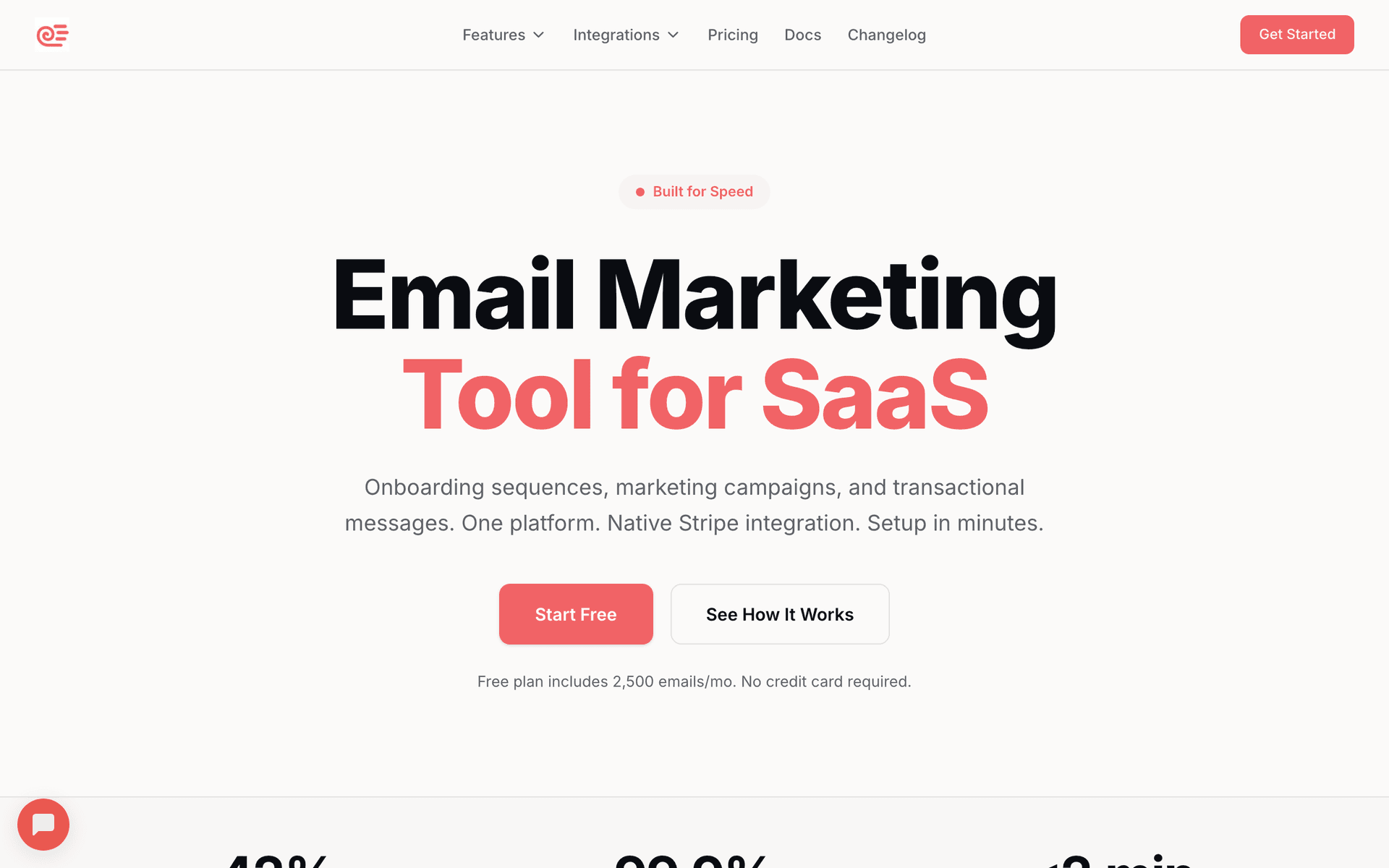
Sequenzy

AI-powered email marketing with Stripe integration for subscription businesses.

Visit
Sequenzy dashboard screenshot

Sequenzy is uniquely positioned for meal kit and grocery subscription services because of its native Stripe integration. If you bill through Stripe, Sequenzy automatically syncs subscription status, churn signals, and MRR data - you can trigger win-back sequences when a subscriber's payment fails or when they downgrade. The AI generates retention campaigns, win-back sequences, and onboarding flows from a simple goal description, saving hours of copywriting time. Transactional email handles order confirmations and delivery notifications from the same platform, so you do not need a separate service. The free tier gives you 2,500 emails per month to test your retention flows before committing. At $29/month for 50,000 emails, the pay-per-email pricing works well for high-frequency meal kit sending where you might email subscribers 2-3 times per week. No predictive churn scoring like Klaviyo, but Stripe-based signals provide actionable data.

Best for
Subscription meal kits billing through Stripe wanting AI-powered retention
Pricing
Free up to 2,500 emails/mo, then $19/mo (unlimited contacts)

Pros

  • Native Stripe integration for subscription data
  • AI generates retention and win-back campaigns
  • Transactional email for delivery notifications
  • Pay-per-email suits high-frequency senders

Cons

  • Newer platform
  • No built-in SMS
  • No recipe template library
  • No product recommendation engine
#2
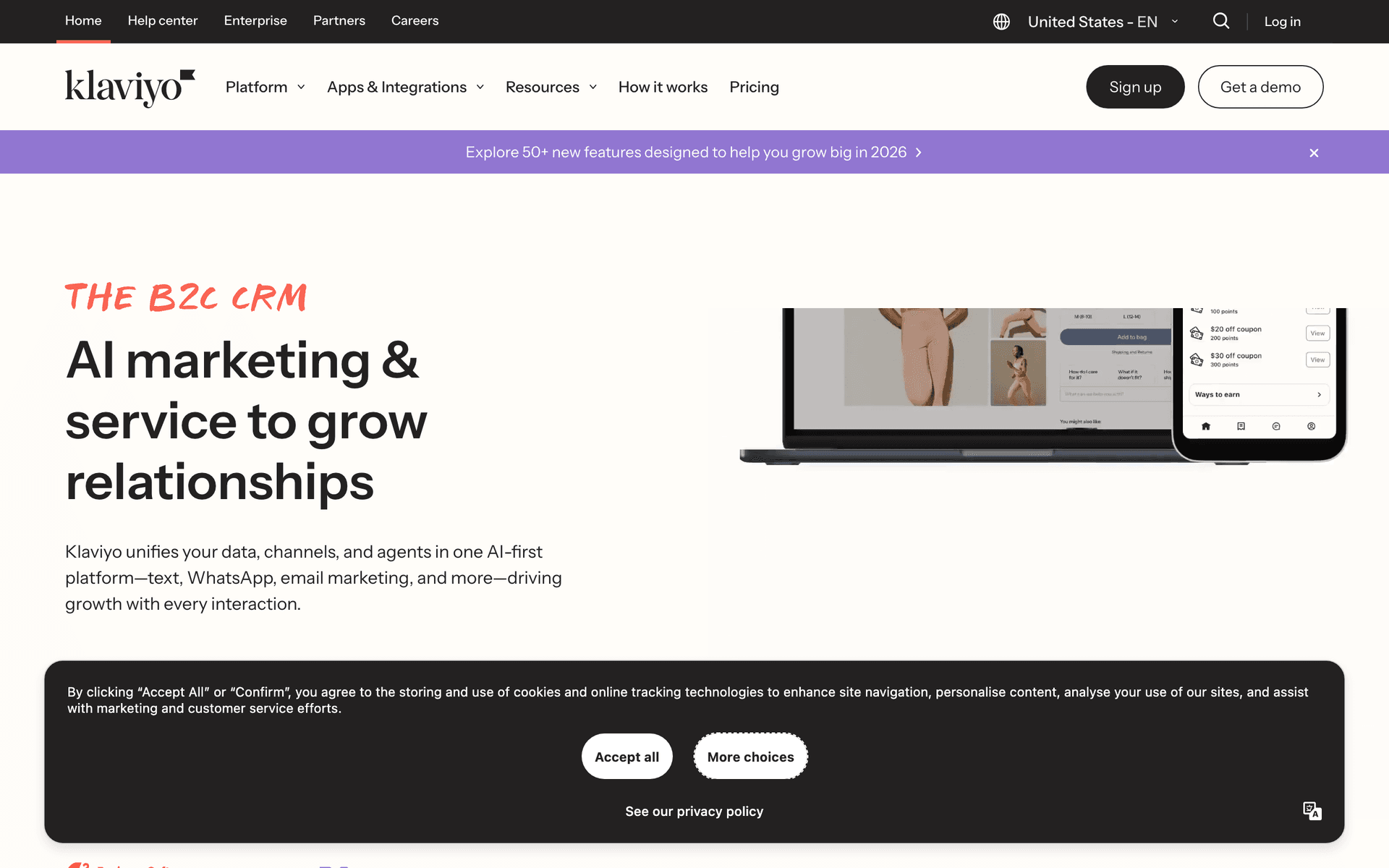
Klaviyo

Advanced e-commerce email platform with predictive analytics.

Visit
Klaviyo dashboard screenshot

Klaviyo's predictive analytics are the standout feature for meal kit services. The platform can forecast which subscribers are at risk of churning based on engagement patterns, order frequency changes, and browsing behavior, letting you intervene with targeted retention campaigns before the subscriber actively decides to cancel. AI product recommendations suggest menu items based on order history and preferences. Pre-built e-commerce flows handle cart recovery and post-order follow-ups with minimal setup. Deep Shopify integration works well for Shopify-based grocery stores. SMS is included for delivery notifications and order cutoff reminders. The per-contact pricing is the main drawback - at scale with thousands of active subscribers, costs climb quickly.

Best for
Large grocery and meal kit services wanting predictive churn prevention
Pricing
Free up to 250 contacts, then from $20/month

Pros

  • Predictive churn risk scoring
  • AI product recommendations
  • SMS for delivery alerts
  • Deep Shopify integration

Cons

  • Expensive at scale
  • Contact-based pricing
  • Complex interface
  • No native Stripe subscription tracking
#3
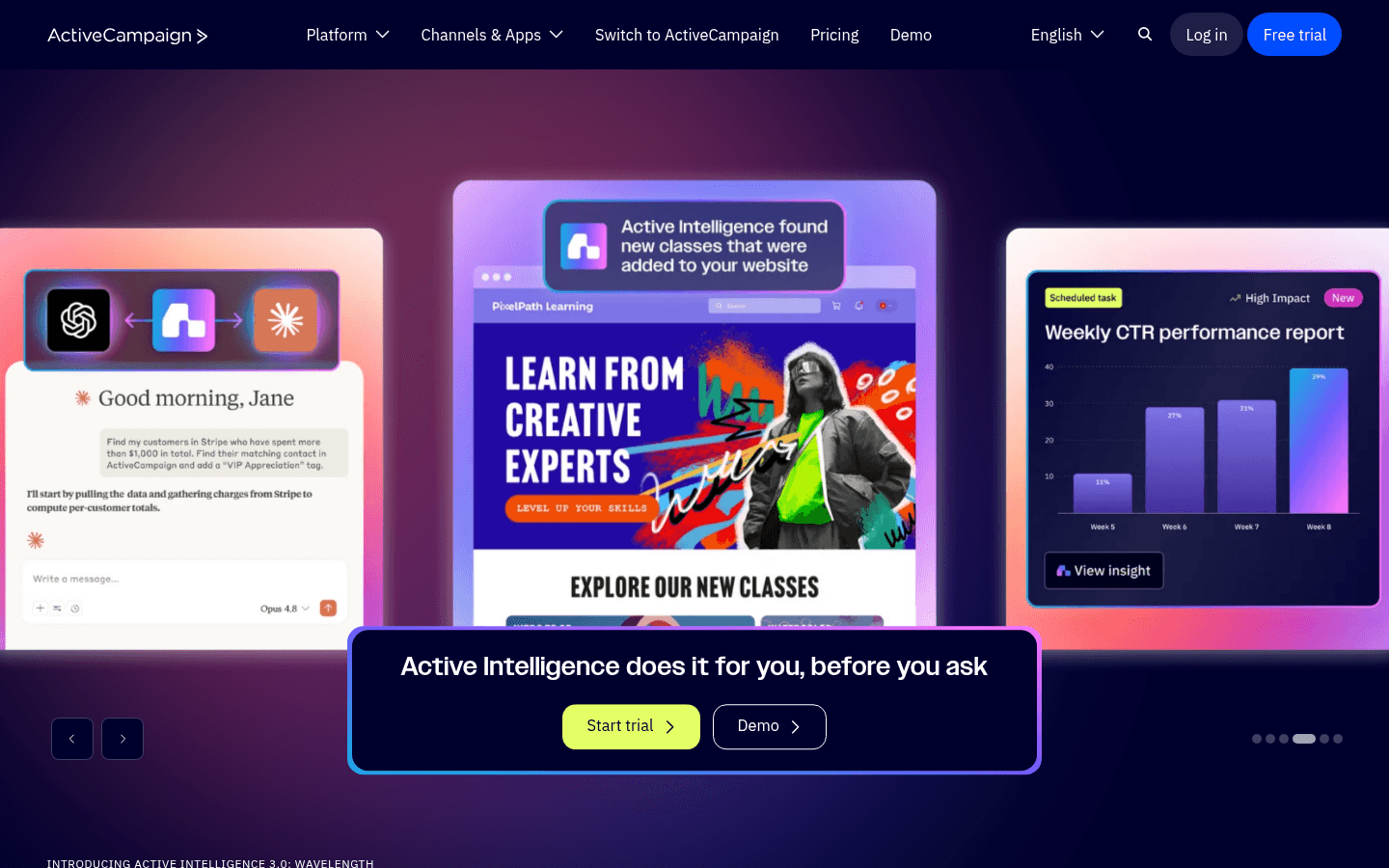
ActiveCampaign

Advanced automation and CRM for subscription businesses.

Visit
ActiveCampaign dashboard screenshot

ActiveCampaign's automation builder is the most powerful for creating complex subscriber lifecycle campaigns. You can model the entire meal kit journey from first order through loyal advocate with conditional branching at every stage. The CRM features track individual customer relationships, dietary preferences, and order patterns over time. Conditional automation routes subscribers into different paths based on behavior - vegetarian subscribers get different content than omnivore subscribers, weekly orderers get different touch frequency than bi-weekly. Lead scoring identifies engagement levels to prioritize retention efforts. The learning curve is real, but for mid-to-large meal kit operations with a marketing team, the depth is worth it.

Best for
Meal kit services with complex subscriber lifecycle management
Pricing
$29/month for 1,000 contacts

Pros

  • Most powerful automation builder
  • CRM for subscriber relationships
  • Lead scoring for engagement
  • Conditional lifecycle workflows

Cons

  • Not e-commerce specialized
  • Steep learning curve
  • Higher price at scale
  • No native Stripe integration
#4
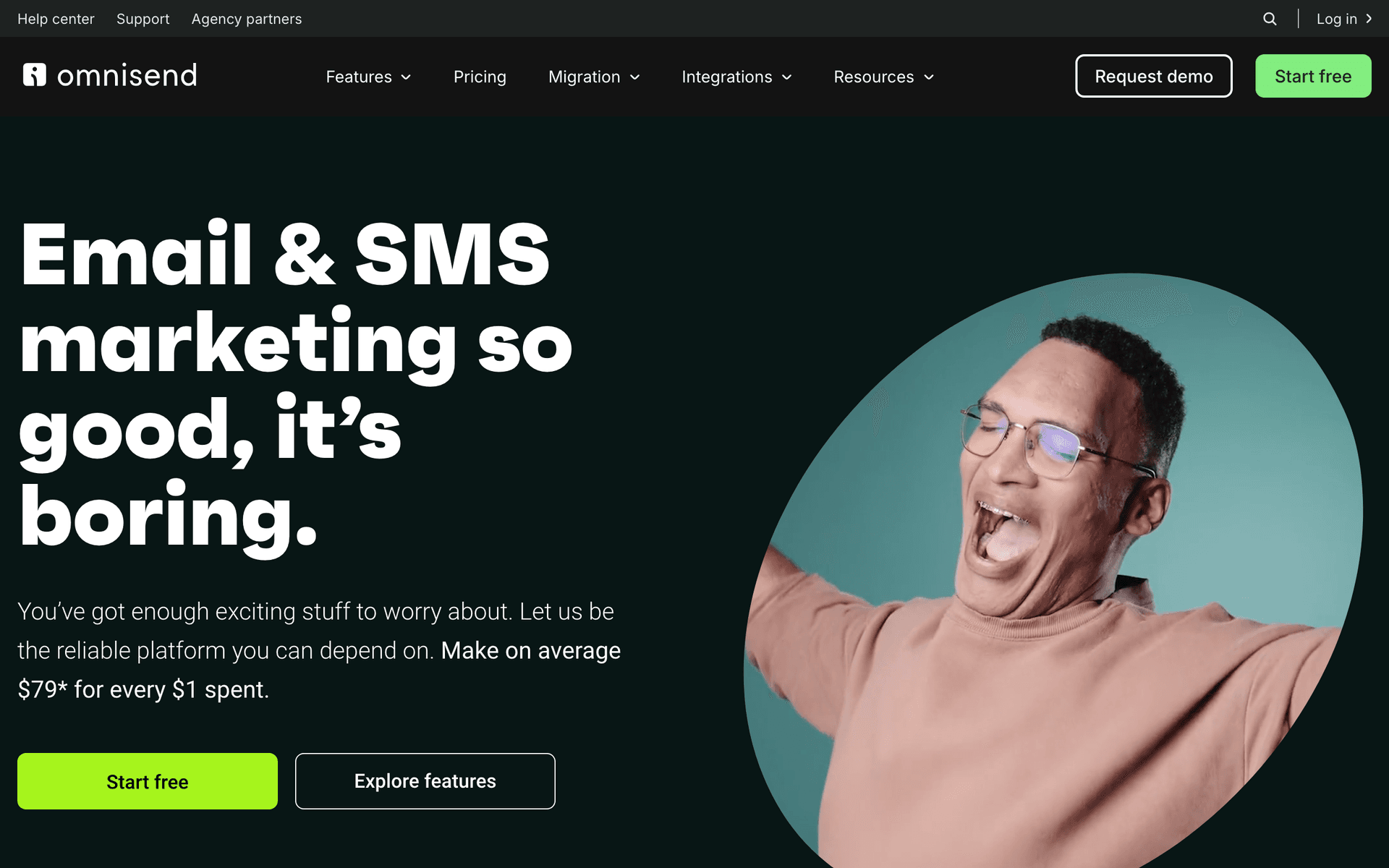
Omnisend

Multi-channel e-commerce marketing with email, SMS, and push.

Visit
Omnisend dashboard screenshot

Omnisend's multi-channel approach is particularly valuable for time-sensitive grocery operations. SMS reminders for order cutoffs, push notifications for flash deals on about-to-expire inventory, and email for weekly menus create multiple touchpoints that maximize order capture. Pre-built automations for welcome series, cart recovery, and re-engagement get you running quickly. The product picker makes building menu showcase emails straightforward. For grocery services that need multiple channels working together without complex setup, Omnisend hits the sweet spot between capability and ease of use.

Best for
Grocery services wanting multi-channel ordering reminders
Pricing
Free up to 250 contacts, then from $16/month

Pros

  • Email, SMS, and push for time-sensitive reminders
  • Pre-built automations
  • Good Shopify integration
  • Free tier

Cons

  • Less powerful than Klaviyo
  • No CRM
  • Basic reporting
  • No subscription lifecycle features
#5
Drip

E-commerce automation with visual workflow builder.

Visit
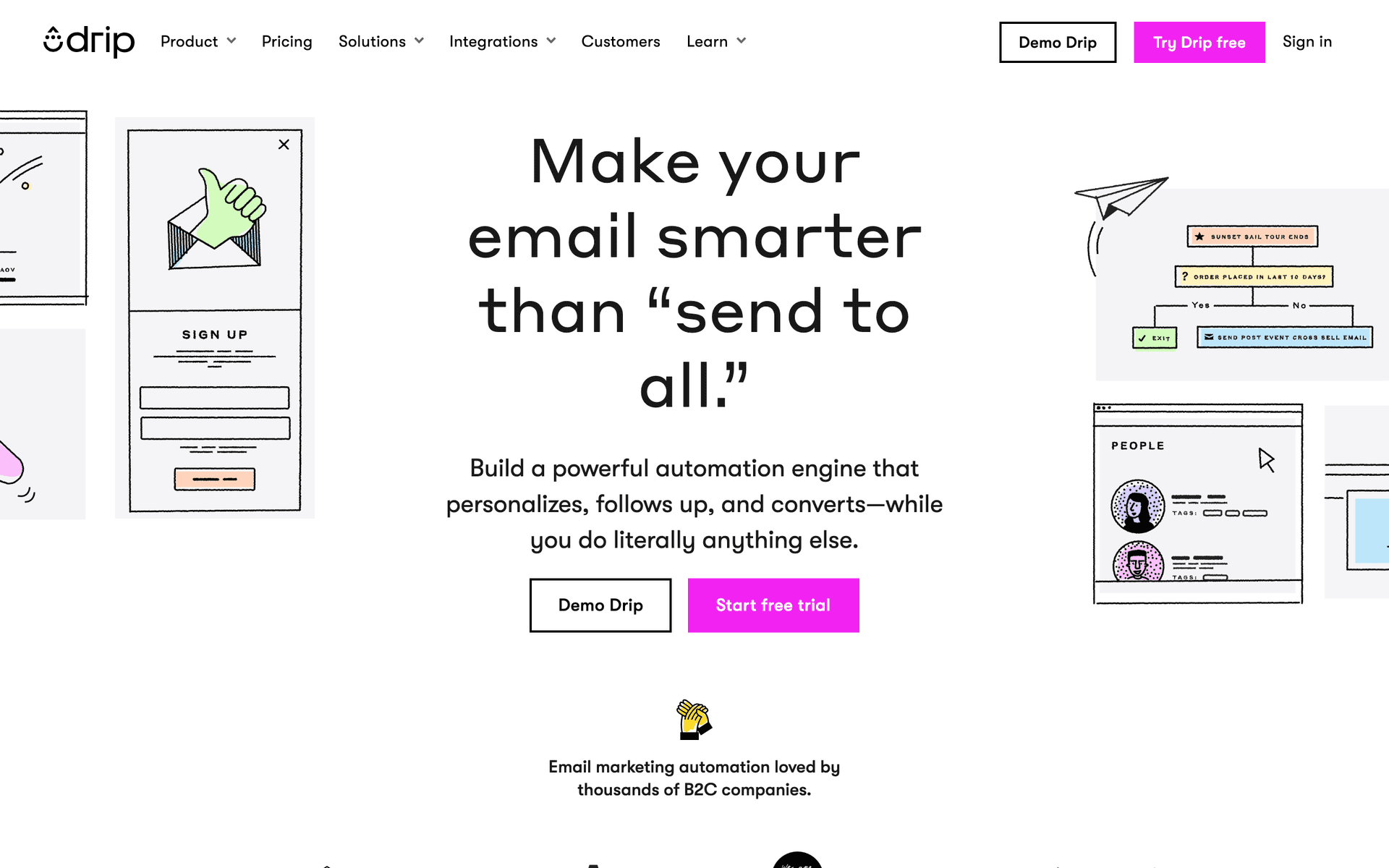
Drip dashboard screenshot

Drip's visual workflow builder creates complex ordering and retention campaigns that are easy to understand and modify. Revenue attribution shows exactly which campaigns drive the most orders, so you can double down on what works. Branching logic handles different subscriber segments - weekly vs bi-weekly orderers, vegetarian vs omnivore, families vs singles. Multi-store support works for brands with multiple product lines. If you want to know precisely which email generated which order and optimize accordingly, Drip provides the clearest revenue picture.

Best for
Grocery businesses wanting detailed automation and revenue tracking
Pricing
$39/month for 2,500 contacts

Pros

  • Advanced automation builder
  • Revenue attribution
  • Multi-store support
  • Behavior-based branching

Cons

  • Higher starting price
  • No free tier
  • No subscription management
  • Limited SMS
#6
Mailchimp

Popular email platform with a large template library.

Visit
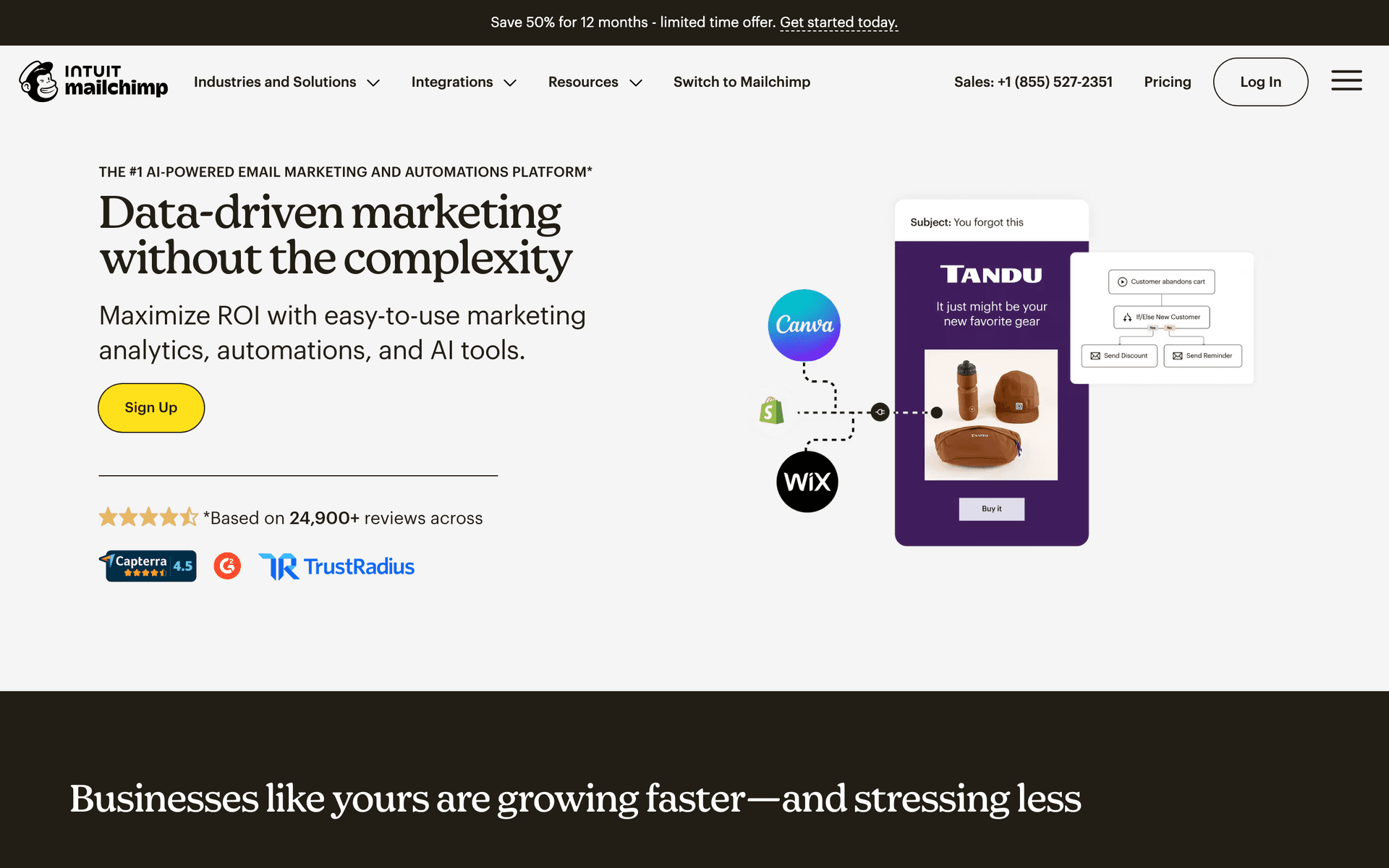
Mailchimp dashboard screenshot

Mailchimp's template library and content studio make creating visually appealing recipe and menu emails easy, even without a dedicated designer. The free tier works for very small operations just starting out. Customer journeys handle basic retention sequences. Content optimization suggests send times and subject lines. The limitations show when you need sophisticated churn prevention workflows or subscription lifecycle automation - Mailchimp's automation simply is not deep enough for a mature meal kit business. Fine for getting started, but plan to migrate as your subscriber base grows.

Best for
Small grocery businesses wanting easy recipe and promotion emails
Pricing
Free up to 500 contacts, then from $13/month

Pros

  • Large template library for food content
  • Content studio for visual emails
  • Free tier
  • Easy to learn

Cons

  • Basic automation
  • Gets expensive at scale
  • No subscription features
  • Not food industry specialized
#7
Brevo

Budget email and SMS platform with transactional email.

Visit
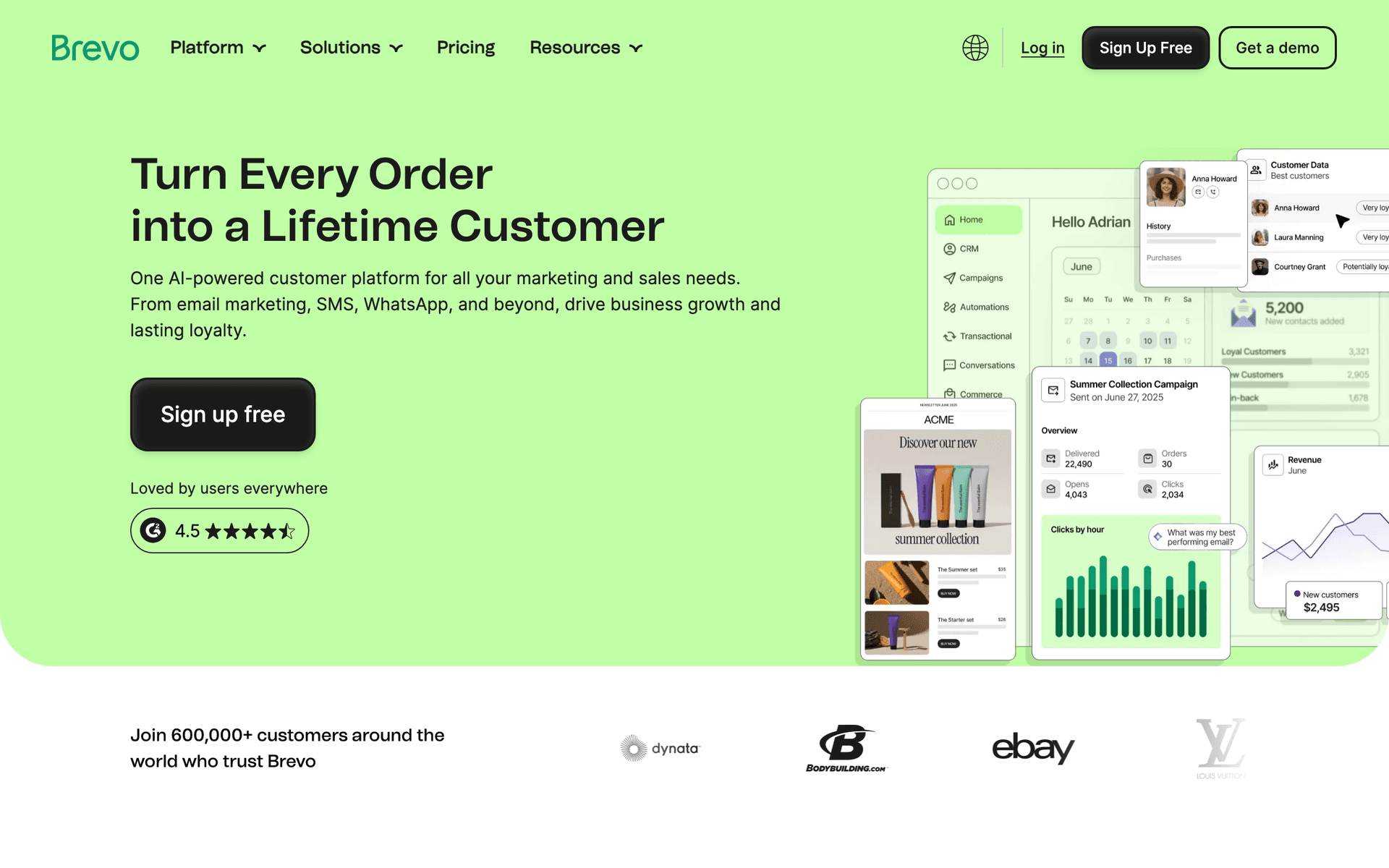
Brevo dashboard screenshot

Brevo's transactional email is battle-tested and handles order confirmations and delivery notifications reliably. SMS works well for order cutoff reminders and delivery-day alerts. The pay-by-email pricing keeps costs manageable even with high send frequency. The CRM tracks customer preferences and dietary requirements. For early-stage meal kit startups that need both transactional and marketing email plus SMS without paying for three separate tools, Brevo is the most cost-effective all-in-one option. The trade-off is basic automation - your churn prevention workflows will be simpler than what Klaviyo or ActiveCampaign can build.

Best for
Budget-conscious meal kit startups wanting transactional + marketing
Pricing
Free up to 300 emails/day, then from $25/month

Pros

  • Transactional email included
  • SMS for delivery alerts
  • Budget-friendly
  • Basic CRM

Cons

  • Basic automation
  • Limited e-commerce features
  • Daily limits on free plan
  • No subscription tracking
#8
Sendlane

E-commerce email and SMS with real-time data.

Visit
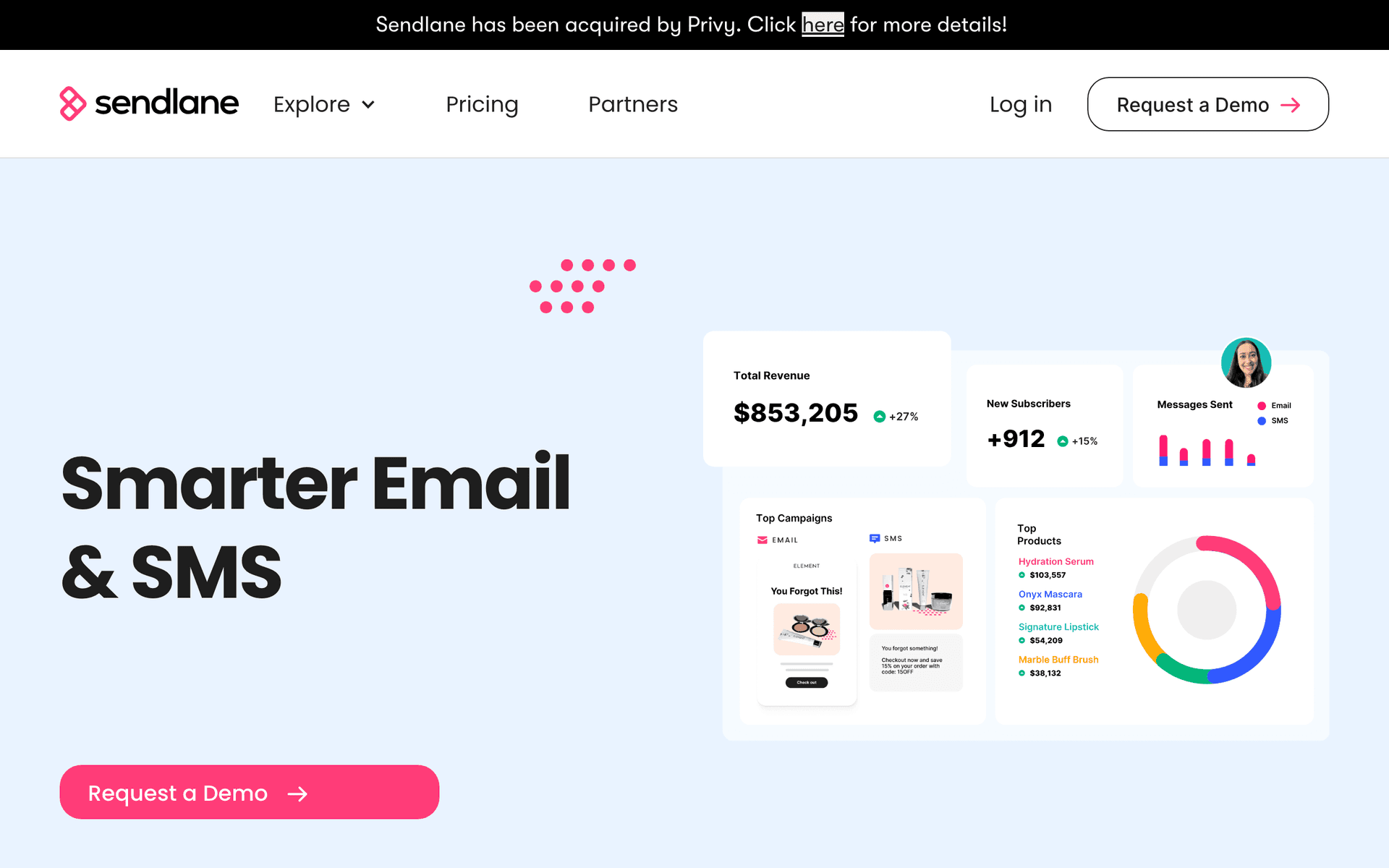
Sendlane dashboard screenshot

Sendlane's real-time data processing is valuable for time-sensitive grocery promotions where inventory or pricing changes rapidly. Pre-built funnels get retention campaigns running quickly without building from scratch. Email and SMS combined work well for delivery scheduling and flash sales on perishable items. Better suited for e-commerce grocery operations with an online store than subscription meal kits. The $104/month starting price at 10,000 contacts limits it to mid-size and larger operations.

Best for
E-commerce grocery stores wanting pre-built funnels
Pricing
$104/month at 10,000 contacts

Pros

  • Real-time data processing
  • Pre-built funnels
  • Email and SMS
  • Quick setup

Cons

  • Higher price
  • No free tier
  • No subscription management
  • Less suited for meal kits
#9
MailerLite

Simple email marketing with a generous free tier.

Visit
MailerLite dashboard screenshot

MailerLite's free tier covering 1,000 subscribers is a good starting point for small meal kit or local grocery delivery businesses testing email marketing. The clean interface makes creating recipe emails and menu newsletters straightforward without a designer. Basic automation handles welcome sequences and simple reorder reminders. Landing pages capture new subscribers from your website or social media. You will outgrow the automation capabilities quickly if you need sophisticated churn prevention, but for validating that email marketing works for your food business before investing in a premium tool, MailerLite is a low-risk starting point.

Best for
Small local grocery delivery services getting started
Pricing
Free up to 1,000 subscribers, then from $10/month

Pros

  • Generous free tier
  • Clean interface for content emails
  • Landing pages
  • Affordable

Cons

  • Limited automation
  • No e-commerce specialization
  • No SMS
  • No subscription features
#10
Omnisend

E-commerce email and SMS for grocery and meal kit order notifications.

Visit
Omnisend dashboard screenshot

Omnisend's pre-built e-commerce automations suit grocery and meal kit businesses that need reliable order confirmation, delivery updates, and replenishment reminder sequences. The SMS channel adds a text notification layer for time-sensitive delivery windows and weekly order reminders - critical for meal kit services where subscribers need to place orders by a specific cutoff time each week. Product catalog sync pulls items from your store for personalized reorder emails. The free tier (up to 250 contacts) works for small local grocery delivery businesses just getting started.

Best for
Meal kit and grocery delivery businesses wanting order notifications and SMS reminders
Pricing
Free up to 250 contacts, then from $16/month

Pros

  • SMS for order cutoff reminders
  • Pre-built delivery automations
  • Product catalog sync
  • Free tier available

Cons

  • No subscription churn prediction
  • Contact-based pricing
  • Not food-delivery specialized
  • Basic recipe content support
#11
Klaviyo

Advanced e-commerce email with predictive churn prevention for subscription food services.

Visit
Klaviyo dashboard screenshot

Klaviyo is the strongest option for meal kit services and grocery subscriptions that want predictive churn prevention. The AI identifies subscribers who are showing signs of declining engagement - fewer opens, reduced order frequency, skipped weeks - and triggers automated win-back campaigns before they cancel. For meal kit businesses where each churned subscriber represents significant lost LTV, catching and re-engaging at-risk subscribers early has enormous revenue impact. Custom properties store dietary preferences, household size, and cuisine preferences for hyper-relevant recipe recommendations. The pricing is premium but justified for services with high subscription revenue.

Best for
Meal kit subscription services wanting AI-powered churn prevention
Pricing
Free up to 250 contacts, then from $20/month

Pros

  • AI churn prediction
  • Dietary preference segmentation
  • Advanced behavioral triggers
  • Revenue attribution

Cons

  • Expensive for food subscriptions
  • Contact-based pricing
  • Complex setup
  • No native food delivery integrations
#12
Attentive

SMS marketing for grocery and meal kit weekly order reminders.

Visit
Attentive dashboard screenshot

Attentive specializes in SMS with email, making it well-suited for meal kit services where weekly text reminders to place orders before the cutoff are essential. SMS open rates above 90% ensure subscribers see the reminder even if they ignore emails. For grocery delivery and meal kit businesses where the weekly order habit is the product, consistent SMS reminders prevent the passive churn that happens when subscribers simply forget to order week after week. Personalized SMS flows can include menu previews and exclusive subscriber discounts to drive order completion.

Best for
Meal kit services wanting SMS-first weekly order reminders and retention
Pricing
Custom pricing, typically from $500/month

Pros

  • Best-in-class SMS for order reminders
  • High open rates
  • Personalized SMS flows
  • Reduces passive churn

Cons

  • Expensive for most meal kit services
  • SMS list building required
  • Not food-specific
  • Email is secondary
#13
Drip

Revenue attribution email for grocery stores tracking repeat order value.

Visit
Drip dashboard screenshot

Drip tracks which email campaigns drive the most repeat orders, which is useful for grocery and meal kit businesses trying to understand whether recipe content, menu reveals, or promotional offers generate the most ordering activity. For subscription food services that have reached consistent revenue and want to optimize campaign strategy based on data, Drip's revenue attribution provides the insight to shift budget toward what works. The e-commerce playbooks include win-back sequences and post-pause reactivation campaigns for subscription services.

Best for
Established grocery subscription services wanting revenue-attributed campaign optimization
Pricing
$39/month for 2,500 contacts

Pros

  • Revenue attribution
  • Win-back playbooks
  • Good segmentation
  • E-commerce focused

Cons

  • No free tier
  • Higher starting price
  • No food-specific features
  • Contact-based pricing
#14
Sendlane

Real-time behavioral email for grocery subscription services.

Visit
Sendlane dashboard screenshot

Sendlane's real-time data processing captures ordering behavior signals as they happen - a subscriber who skipped last week's order triggers a retention sequence immediately rather than waiting for a scheduled campaign. For meal kit services and grocery subscriptions where early intervention prevents churn, real-time triggers are more effective than scheduled campaigns. Revenue attribution shows the LTV of subscribers acquired through different channels so you can optimize acquisition spend. Email and SMS together create consistent touchpoints around weekly ordering cycles.

Best for
Subscription grocery services wanting real-time churn signals and intervention
Pricing
From $99/month

Pros

  • Real-time behavioral triggers
  • Email and SMS unified
  • Revenue attribution
  • Good for subscriptions

Cons

  • Expensive starting price
  • No free tier
  • No food-specific features
  • Complex setup
#15
ActiveCampaign

CRM and automation for grocery delivery services with complex customer segments.

Visit
ActiveCampaign dashboard screenshot

ActiveCampaign works well for grocery and food delivery businesses that have complex customer segments - urban meal kit subscribers, suburban family grocery delivery customers, and corporate catering clients all need different communication strategies. The CRM tracks individual customer relationships and preferences over time. Complex conditional automation can handle dietary restriction segments, delivery zone targeting, and order frequency-based retention flows. For food delivery businesses operating across multiple delivery zones with distinct customer profiles, ActiveCampaign provides the segmentation depth to serve each segment appropriately.

Best for
Multi-segment food delivery businesses with complex dietary and geographic segmentation
Pricing
$29/month for 1,000 contacts

Pros

  • Complex segmentation
  • CRM for relationship tracking
  • Multi-segment automation
  • Dietary preference workflows

Cons

  • Not food-delivery specialized
  • Complex interface
  • No food-specific integrations
  • Higher price per contact
#16
Brevo

Affordable multi-channel email for local grocery delivery services.

Visit
Brevo dashboard screenshot

Brevo's unlimited contacts free plan suits local grocery delivery services and small meal kit businesses with growing customer databases. The free plan covers 300 emails per day, enough for a small weekly newsletter to the customer base and order reminder sequences. Email, SMS, and WhatsApp in one platform provides multiple touchpoints for weekly order reminders without needing separate tools. For small local grocery delivery businesses where keeping operational costs minimal is critical, Brevo keeps email and SMS costs manageable.

Best for
Local grocery delivery services wanting affordable multi-channel order reminders
Pricing
Free plan (300 emails/day), then from $25/month

Pros

  • Unlimited contacts free
  • Email, SMS, and WhatsApp
  • Affordable scaling
  • Transactional included

Cons

  • No subscription churn features
  • Basic automation
  • No food-specific integrations
  • Limited segmentation
#17
Sender

Free email with automation for small meal kit and grocery businesses.

Visit
Sender dashboard screenshot

Sender's free tier covers 2,500 subscribers and 15,000 monthly emails with automation included - sufficient for a small meal kit business or local grocery delivery service to run weekly menu newsletters, order cutoff reminders, and recipe content campaigns at zero cost. The visual automation builder handles basic retention sequences without requiring technical setup. For food businesses in the early stages of building their subscriber base, Sender removes the cost barrier to getting email marketing running while the service grows.

Best for
Early-stage meal kit and grocery delivery businesses starting email at zero cost
Pricing
Free up to 2,500 subscribers and 15,000 emails/month, then from $15/month

Pros

  • Generous free tier with automation
  • Good for weekly newsletters
  • SMS on paid plans
  • Simple setup

Cons

  • No churn prediction
  • Basic e-commerce features
  • No food-specific integrations
  • Limited advanced automation
#18
Flodesk

Beautiful email design for premium meal kit and artisan grocery brands.

Visit
Flodesk dashboard screenshot

Flodesk creates visually stunning emails that suit premium meal kit services and artisan grocery brands where the visual presentation of food drives desire. Recipe emails with high-quality food photography, seasonal menu reveals, and farm-to-table producer spotlights all look exceptional in Flodesk's clean templates. Flat-rate pricing ($38/month) keeps costs predictable regardless of subscriber count. The limitation is minimal e-commerce automation - no order cutoff reminders, no cart recovery, and no subscription management integration. Best used for brand-building newsletters rather than operational email sequences.

Best for
Premium meal kit services wanting beautiful recipe and menu reveal emails
Pricing
$38/month flat rate

Pros

  • Beautiful food photography layouts
  • Great for recipe newsletters
  • Flat-rate pricing
  • Easy to use

Cons

  • No order reminder automation
  • No subscription integration
  • Very basic automation
  • Not e-commerce specialized
#19
GetResponse

All-in-one platform for grocery and meal kit services with landing pages.

Visit
GetResponse dashboard screenshot

GetResponse provides landing pages, email automation, and conversion funnels that suit grocery and meal kit businesses running customer acquisition campaigns. The landing page builder creates sign-up pages for free trial offers, first-box promotions, and referral campaigns. Webinar capability - while unusual for food businesses - can host live cooking demonstrations that convert viewers into subscribers. For meal kit services running multi-channel customer acquisition and needing one tool to handle landing pages, email capture, and nurture sequences, GetResponse simplifies the funnel.

Best for
Meal kit services wanting landing pages and automation for customer acquisition
Pricing
From $19/month for 1,000 contacts

Pros

  • Landing pages for trial offers
  • Conversion funnels
  • All-in-one platform
  • Competitive pricing

Cons

  • Interface feels dated
  • No food-specific integrations
  • Limited subscription management
  • Not e-commerce specialized

Feature Comparison

FeatureSequenzyKlaviyoActiveCampaignBrevo
Shopify integration
Yes
Deep
Via plugin
Via plugin
Stripe integration
Native
No
No
No
AI sequences
Yes
No
No
No
SMS marketing
No
Yes
Yes
Yes
Transactional email
Included
No
No
Included
Subscription tracking
Via Stripe
No
Via automation
No
Free tier available
Churn prediction
Via Stripe
Predictive
Via scoring
No

Common Mistakes to Avoid

We see these mistakes over and over. Skip the learning curve and avoid these from day one.

Over-Discounting to Prevent Churn

Offering a discount after every skipped order trains subscribers to skip before ordering. Instead, showcase menu variety, share new recipes, or offer customization options first. Reserve discounts for the final retention attempt, not the first.

Sending the Same Menu Email to Everyone

A family of four needs different menu suggestions than a single person cooking for one. Segment by household size, dietary preferences, and past order patterns to make menu previews feel personalized rather than generic.

Neglecting Post-Delivery Follow-Up

The experience between receiving the box and placing the next order determines retention. Send recipe tips for the current delivery, ask for feedback, and address common first-time issues proactively. Silence after delivery is a missed engagement opportunity.

Using Only Email for Time-Sensitive Deadlines

Order cutoff reminders buried in a full inbox get missed. Use SMS for the final 'order by midnight' reminder. Missed deadlines mean missed orders, which start the churn slide.

Weak Onboarding for New Subscribers

The first 2-3 deliveries make or break a subscription. Many services send a welcome email and then nothing until the next menu. A robust onboarding sequence with cooking tips, customization guidance, and community content dramatically reduces first-month churn.

Email Sequences Every Grocery and Meal Kit Delivery Needs

These are the essential automated email sequences that will help you grow your business and keep clients coming back.

New Subscriber Onboarding

First subscription or first order

Guide new meal kit subscribers through their first week to reduce early churn.

Immediately
Welcome - here is how to get the most from your first box

Explain what to expect, how to customize orders, and when the cutoff is. Set clear expectations.

Day 2
Your first recipes - tips from our chefs

Recipe cards with cooking tips for their first delivery. Video links if available. Build excitement.

After first delivery
How was your first box? We would love to hear

Feedback request with one-click rating. Address common first-time issues proactively.

Day 10
This week's menu is live - have you picked yours?

Menu preview with personalized suggestions based on first order preferences. Ordering deadline reminder.

Churn Prevention Sequence

Subscriber skips an order or shows disengagement

Intervene when subscribers show signs of leaving.

After first skip
We missed you this week - here is what is coming next

Preview next week's menu with new or exciting options. No pressure, just showcase value.

After second skip
Something not right? Let us fix it

Direct ask about what needs to change. Offer to customize (dietary preferences, portion sizes, delivery schedule).

After third skip
A special offer to keep things going

Discount on next order or free premium upgrade. Make the cost of staying lower than the cost of leaving.

Recipe Content Series

Weekly (ongoing)

Keep subscribers engaged between orders with recipe content.

Weekly
This week's recipe picks just for you

Personalized recipe suggestions based on dietary preferences and past orders. Include at least one easy weeknight option and one impressive weekend recipe.

Email Marketing Strategy for Grocery and Meal Kit Delivery

Grocery and meal kit businesses have one of the highest email engagement rates in e-commerce because customers make frequent, recurring purchase decisions. Email is not just a marketing channel for these businesses. It is an operational necessity.

Why email matters more for food delivery than other e-commerce:

  1. Weekly decision points. Unlike a shoe store where customers buy once every few months, grocery and meal kit customers decide to order (or not) every week. Each email is an opportunity to win that week's order.
  2. Retention economics. A subscriber paying $80/week for a meal kit generates $4,160/year. Reducing churn by 5% can mean hundreds of thousands in additional revenue for a growing service.
  3. Content is the product. Recipe emails, cooking tips, and meal planning content are not just engagement tools. They directly influence whether subscribers cook the meals, enjoy the experience, and continue subscribing.

The Three Essential Automations

Every food delivery service needs these three email automations running before anything else:

Onboarding Sequence (First 2 Weeks)

The first 2-3 deliveries determine whether a subscriber stays. Your onboarding sequence should:

  • Set expectations about what arrives, when, and how to customize
  • Build cooking confidence with tips specific to their first recipes
  • Proactively address common first-time issues (ingredient freshness, recipe difficulty)
  • Ask for feedback after the first delivery to catch problems early
  • Guide them through customizing their second order

Services with strong onboarding sequences see 20-30% lower first-month churn than those with a single welcome email.

Churn Prevention Workflow

Monitor skip behavior and engagement signals to intervene before cancellation:

  • First skip: Non-pushy menu preview highlighting exciting new options
  • Second skip: Direct question about what needs to change, with easy customization options
  • Third skip: Incentive offer (discount, free upgrade, bonus item)
  • Cancel attempt: Final retention offer with pause option as alternative to cancellation

The key is intervening early. After three consecutive skips, win-back rates drop dramatically.

Weekly Recipe Content

Recipe emails serve double duty as engagement content and order drivers:

  • Personalize based on dietary preferences and past orders
  • Include at least one easy weeknight meal and one weekend project
  • Feature customer-submitted recipe modifications and photos
  • Link to ordering with relevant menu items pre-selected

Advanced Strategies for Growing Services

Seasonal Campaign Calendar

Build your email calendar around natural food seasons:

  • January: Healthy eating, meal prep, New Year resolutions
  • Spring: Fresh ingredients, lighter meals, grilling season prep
  • Summer: Quick meals, BBQ recipes, no-cook options
  • Fall: Comfort food, holiday meal prep, entertaining
  • Holiday season: Gift subscriptions, party menus, special occasion boxes

Subscription Conversion Funnel

Convert one-time buyers into subscribers with a deliberate sequence:

  1. After first order: "How did you enjoy your box?"
  2. After second order: "Your taste profile is building - see your recommendations"
  3. After third order: "Save X% with subscribe-and-save - never miss your favorites"
  4. If they decline: Continue offering subscription at key moments (price increases, popular item restocks)

Win-Back Campaign for Canceled Subscribers

Canceled subscribers are not lost forever. A well-timed win-back campaign works:

  • 30 days after cancel: "Here is what is new since you left" (menu updates, new features)
  • 60 days after cancel: "We have made changes based on feedback like yours"
  • Seasonal timing: "Spring menus are here - come back and try them"
  • Anniversary: "It has been a year - here is a special welcome-back offer"

Integration Recommendations

For a complete meal kit email stack, consider these integrations:

  • Stripe or subscription platform (Recharge, Bold) for billing event triggers
  • Shopify or custom storefront for order data sync
  • SMS tool (built-in or Twilio) for time-sensitive logistics
  • Customer feedback tool for post-delivery satisfaction tracking
  • Analytics (Mixpanel, Amplitude) for engagement scoring

What a Healthy Subscriber Email Program Looks Like

For a meal kit service with 5,000 active subscribers:

  • Open rates above 30% for menu and recipe emails
  • Click rates above 5% for recipe content
  • Monthly churn below 8% with email intervention
  • Order rate above 70% among active subscribers per week
  • Subscription conversion of 15-25% from repeat one-time buyers
  • Win-back rate of 5-10% from canceled subscribers within 90 days

If your metrics fall below these benchmarks, focus on onboarding quality and churn intervention timing before investing in more advanced tools.

These automations directly impact retention, which is the metric that matters most. Use AI-generated sequences to create retention campaigns quickly. If you bill through Stripe, Stripe integration automates subscription lifecycle tracking. Check your deliverability with our DMARC checker to ensure order-related emails reach inboxes reliably.

How We Evaluated These Tools

Tools were evaluated for grocery and meal kit businesses based on subscription lifecycle management, churn prevention automation, recipe content delivery capabilities, transactional email reliability for order notifications, and SMS support for time-sensitive reminders. We prioritized platforms with proven e-commerce and subscription integrations.

Frequently Asked Questions

Ready to grow your grocery and meal kit delivery practice?

Start your free trial today. Set up your first email sequence in minutes with AI-powered content generation.

Related Industries

Sequenzy - Complete Pricing Guide

Pricing Model

Sequenzy uses email-volume-based pricing. You only pay for emails you send. Unlimited contacts on all plans — storing subscribers is always free.

All Pricing Tiers

  • 2.5k emails/month: Free (Free annually)
  • 15k emails/month: $19/month ($205/year annually)
  • 60k emails/month: $29/month ($313/year annually)
  • 120k emails/month: $49/month ($529/year annually)
  • 300k emails/month: $99/month ($1069/year annually)
  • 600k emails/month: $199/month ($2149/year annually)
  • 1.2M emails/month: $349/month ($3769/year annually)
  • Unlimited emails/month: Custom pricing (Custom annually)

Yearly billing: All plans offer a 10% discount when billed annually.

Free Plan Features (2,500 emails/month)

  • Visual automation builder
  • Transactional email API
  • Reply tracking & team inbox
  • Goal tracking & revenue attribution
  • Dynamic segments
  • Payment integrations
  • Full REST API access
  • Custom sending domain

Paid Plan Features (15k - 1.2M emails/month)

  • Visual automation builder
  • Transactional email API
  • Reply tracking & team inbox
  • Goal tracking & revenue attribution
  • Dynamic segments
  • Payment integrations (Stripe, Paddle, Lemon Squeezy)
  • Full REST API access
  • Custom sending domain

Enterprise Plan Features (Unlimited emails)

  • Visual automation builder
  • Transactional email API
  • Reply tracking & team inbox
  • Goal tracking & revenue attribution
  • Dynamic segments
  • Payment integrations
  • Full REST API access
  • Custom sending domain

Important Pricing Notes

  • You only pay for emails you send — unlimited contacts on all plans
  • No hidden fees - all features included in the price
  • No credit card required for free tier

Contact

  • Pricing Page: https://sequenzy.com/pricing
  • Sales: hello@sequenzy.com