
Overview
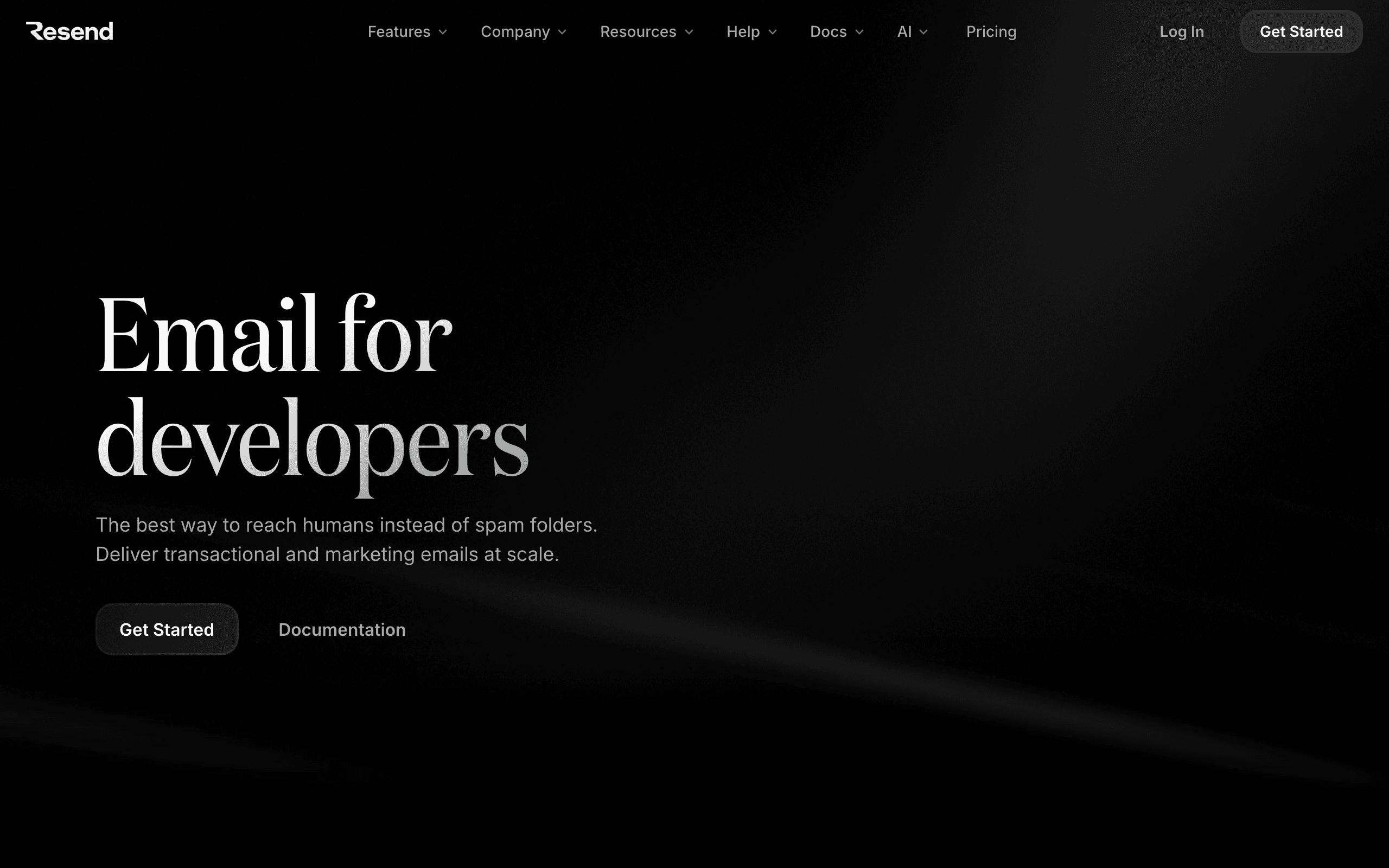
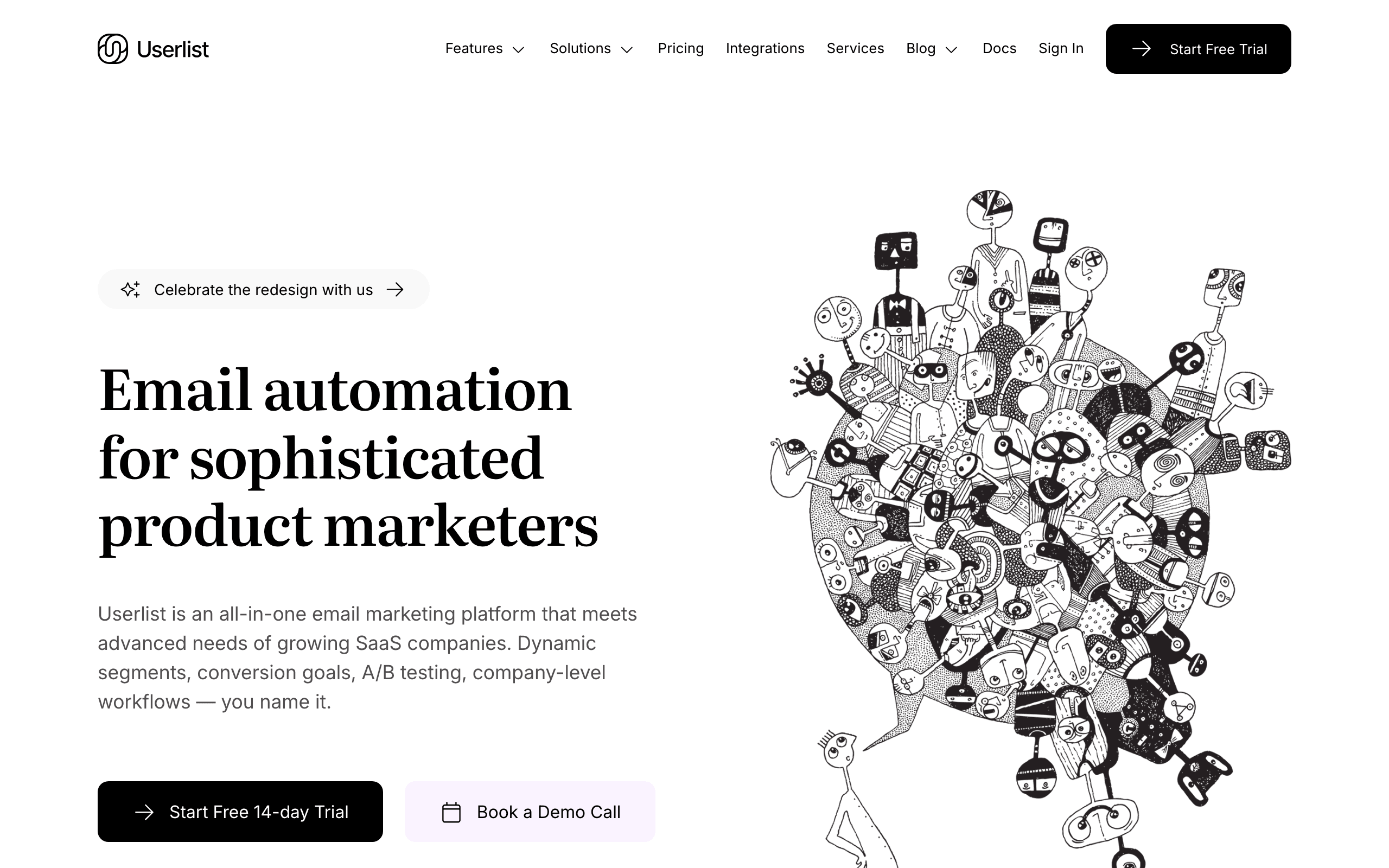
Resend and Userlist solve fundamentally different problems, which makes this comparison interesting. Resend is a transactional email API for sending individual emails when your code triggers them. Userlist is a SaaS marketing automation platform for managing customer journeys with behavior-triggered sequences. See our detailed Resend comparison and Userlist comparison.
Different Problems Entirely
Resend handles: password resets, order confirmations, notification emails, security alerts. Your code calls the API, email goes out. Clean, simple, developer-focused.
Userlist handles: onboarding sequences, trial-to-paid campaigns, lifecycle emails, in-app messages. You track user behavior, Userlist automates the communication based on what users do in your product.
Most SaaS companies need BOTH capabilities. The question is whether to use two specialized tools or one platform that combines both.
The Developer Experience Gap
Resend offers exceptional DX. The API is clean, React Email integration is first-party, TypeScript SDK is excellent. You can be sending emails in minutes.
Userlist requires more setup. You need to implement event tracking, define user properties, and build automation workflows. The payoff is powerful marketing automation, but it takes longer to realize value.
SaaS-Specific Features
Userlist wins here completely. Native company/account support for B2B SaaS, trial conversion workflows, behavioral segmentation, in-app messaging. It's built exclusively for SaaS.
Resend is a general-purpose transactional API. No SaaS-specific features, no behavioral tracking, no automation. It sends emails when you tell it to.
Pricing Reality
Using both tools gets expensive. At 10,000 users/emails: Resend $20/month + Userlist $99-149/month = $119-169/month. This is the cost of best-of-breed tools.
The Sequenzy Alternative
Instead of two tools, Sequenzy combines transactional and marketing email in one platform for $49/month for 60,000 emails, unlimited contacts. Native Stripe integration, AI-powered sequences, behavioral segmentation, AND transactional email. One bill, unified analytics, simpler stack for SaaS founders.
The B2B SaaS Consideration
Userlist's native company/account model is a significant advantage for B2B SaaS. It understands that users belong to companies, that companies have subscription plans, and that marketing decisions often happen at the company level rather than the individual level. This architecture lets you build automations like "when a company's trial ends and they have more than 5 active users, send the admin a personalized upgrade pitch."
Resend has no concept of companies or accounts. It sends individual emails to individual addresses. For B2B SaaS with complex organizational structures, Userlist's data model is more aligned with how your business actually works.
If your SaaS is B2C or has simple user structures, this advantage is less relevant. In that case, the Resend plus a simpler marketing tool approach (or a unified platform like Sequenzy) may be more cost-effective.
Time to Value Comparison
Resend delivers immediate value. Install the SDK, send a test email, deploy to production. You can go from zero to sending transactional emails in under an hour. The value is instant because transactional email is a clear, immediate need.
Userlist's value takes longer to realize. You need to implement event tracking, define user properties, build automation workflows, and wait for enough data to make segmentation meaningful. The full payoff comes weeks or months later when your onboarding sequences, lifecycle campaigns, and behavioral triggers are all running and optimizing.
This difference in time-to-value explains why many SaaS companies add Resend first (immediate need, fast setup) and add marketing automation later (strategic investment, longer setup). The question is whether to add Userlist separately or switch to a unified platform that handles both.
Cost of Two Tools vs One
At 10,000 users, running both tools costs $119-169/month (Resend $20 + Userlist $99-149). A unified platform like Sequenzy at $49/month with both transactional and marketing email saves $70-120/month. Over a year, that is $840-1,440 in savings.
Beyond direct cost savings, one platform means one set of analytics, one contact database, and one integration to maintain. The operational simplicity compounds over time as your team avoids context-switching between platforms and eliminates data synchronization concerns.
Use-case matchups
| Need | Better fit | Why |
|---|---|---|
| Developer-first transactional email API | Resend | Resend is stronger when React Email, clean APIs, and developer workflow are the main requirements. |
| user and company lifecycle messaging for SaaS | Userlist | Userlist is stronger when the buyer needs user and company lifecycle messaging for saas. |
| Unified SaaS marketing and transactional email | Sequenzy | Sequenzy fits when product lifecycle campaigns, newsletters, Stripe events, and transactionals should share one workflow. |
Best Fit by Transactional APIs and B2B SaaS Lifecycle Messaging
Best transactional email API for developer-owned product messages
Resend is the better fit when password resets, invites, receipts, alerts, React Email templates, and API-driven product messages are the main requirement.
Best customer messaging platform for user and company lifecycle stages
Userlist is the better fit when B2B SaaS teams need users, companies, roles, lifecycle stages, product events, and in-app plus email messaging.
Best email tool for Stripe-aware SaaS marketing and transactional email
Sequenzy is the better fit when billing events, lifecycle campaigns, newsletters, transactional messages, and subscriber profiles should share one workflow.
Pricing reality
The page data lists Resend at $20/month, Userlist at $99-149/month, and Sequenzy at $49/month for the cited comparison tier. Keep the original pricing context: Resend is usually priced around email volume and developer sending, while Userlist has its own pricing model and scope.
Review signals
For Resend, read reviews for developer experience, API quality, React Email workflow, deliverability, and production maturity. For Userlist, read reviews for user and company lifecycle messaging for saas, support, pricing, setup complexity, and operational fit.
Migration checklist
| Workstream | What to verify |
|---|---|
| Domains and authentication | Recreate SPF, DKIM, DMARC, tracking domains, bounce handling, and sender identities. |
| Templates | Move React Email components, dynamic templates, variables, layouts, localization, and test payloads. |
| Webhooks | Rebuild delivery, bounce, complaint, open, click, unsubscribe, and suppression handling. |
| Lists and users | Map contacts, users, companies, consent, unsubscribes, bounces, and suppressions if marketing is in scope. |
| Monitoring | Add alerts for API failures, latency, bounces, complaints, rate limits, and queue delays. |
| Reporting | Export delivery logs, campaign results, lifecycle performance, and support-relevant message history before cutover. |
Decision checklist
- Choose Resend if developer-first transactional sending is the main need.
- Choose Userlist if user and company lifecycle messaging for saas is the main requirement.
- Avoid Resend if marketers need a complete lifecycle platform without developer assembly.
- Avoid Userlist if the team mainly wants a clean transactional API and React Email workflow.
- Consider Sequenzy if one product for lifecycle sequences and transactional sends beats pairing Resend with Userlist.








