Specialist versus suite
Postmark has spent years refusing to become a marketing platform. It sends the email your application generates, tries to deliver it fast, and gives developers the history and tools to prove it arrived. It is now owned by ActiveCampaign, which sells marketing separately.
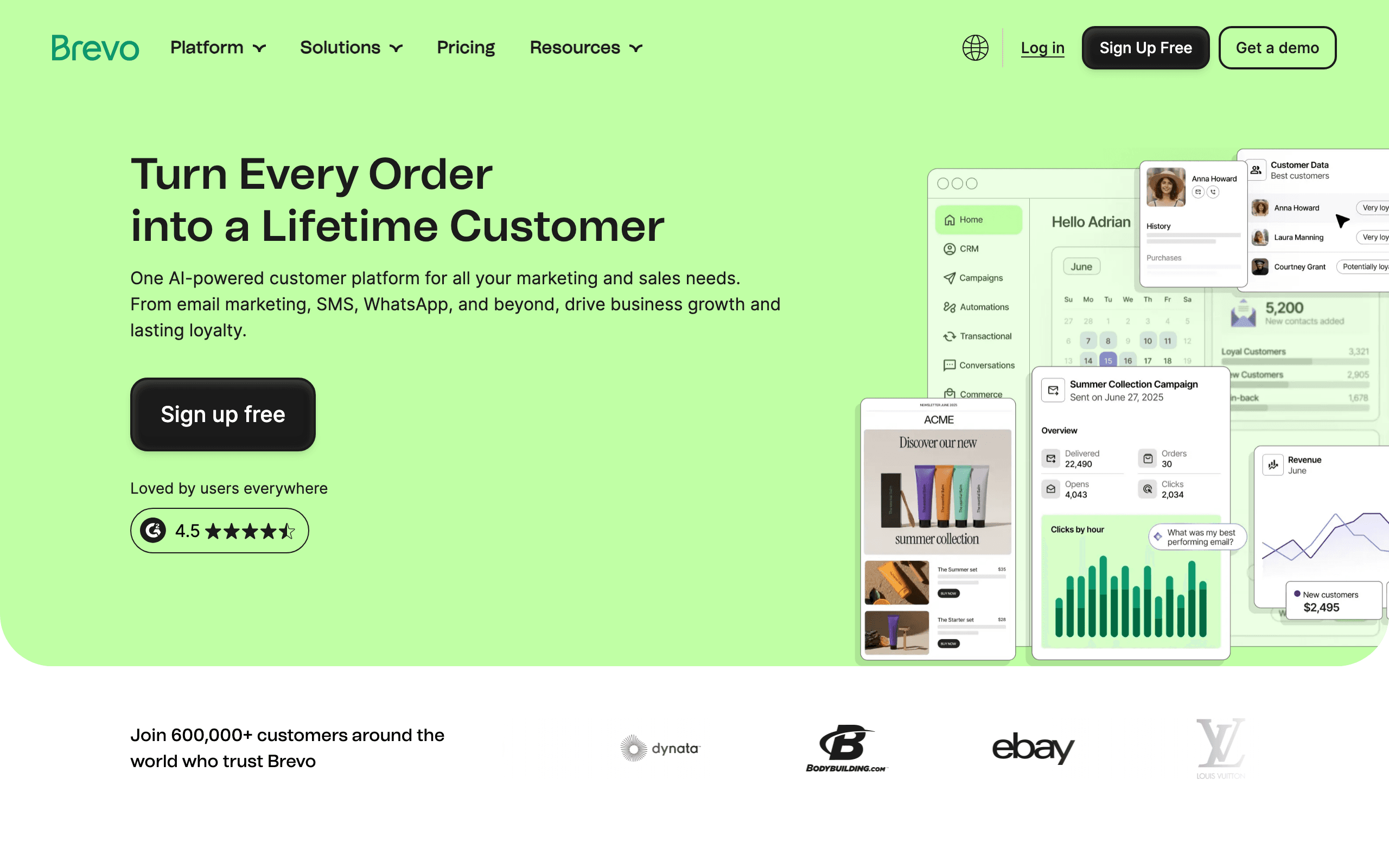
Brevo, formerly Sendinblue, went the other way. It started with email marketing and added transactional email, SMS, WhatsApp, a CRM, landing pages and meetings, all priced by email volume with unlimited contacts.
If you are comparing them, you probably send both kinds of email and are deciding whether to use one tool or two.
How each handles the password reset
Walk through the email your users care about most.
On Postmark, the reset goes through a server's transactional message stream. That stream is isolated from any broadcast stream, so a large announcement cannot affect its delivery. If a user says they never got it, support searches the activity feed and sees the message, the delivery event and the full content, going back 45 days on Basic or longer on Pro.
On Brevo, the reset goes through the transactional API or SMTP relay from the same account that sends your newsletters. Delivery is solid for most businesses, and logs show what happened. You get less separation between traffic types and less depth in the per-message tooling, but you do not need a second vendor.
How each handles the newsletter
On Brevo, a marketer builds the campaign in the drag-and-drop editor, picks a segment, schedules it and reviews opens and clicks. On Standard, the same contacts can enter automations, and on higher tiers you can add SMS or WhatsApp.
On Postmark, you can send opt-in announcements through a broadcast stream, but you manage lists, unsubscribes and scheduling in your own code. There is no campaign editor, segmentation or automation. Most Postmark customers pair it with a marketing tool.
Cost at 100,000 emails a month
| Postmark | Brevo | |
|---|---|---|
| Free | 100 emails a month, testing only | 300 emails a day |
| Listed entry | Basic $15 for 10,000, then $1.80 per 1,000 | Starter from $9 for 5,000 |
| At 100,000 emails | About $177 on Basic, about $134 on Pro (base plus overage) | Starter $69; Standard $129 |
| Included | Message streams, 45-day history; inbound and longer retention on Pro | Campaigns, transactional; automation and A/B tests on Standard |
| Extra channels | None | SMS and WhatsApp credits |
The Postmark figures are calculated from its published base prices and overage rates; Postmark also sells larger monthly volumes, which can come out lower. Either way, Brevo is cheaper per email and includes marketing tools. Postmark's price reflects its focus on transactional reliability and tooling.
Support and ownership
Postmark is known for responsive support that understands transactional delivery, and its documentation and status history are public. Brevo offers support across a much broader product, with higher tiers adding more help, such as the deliverability specialist support listed on Professional. If you expect to lean on the vendor during incidents, ask each what your plan includes before you sign.
Running both, or consolidating
Postmark plus Brevo is a reasonable setup: Postmark for application email, Brevo for newsletters, automation and SMS. The cost is two sets of DNS records, two suppression lists and two places to look when something goes wrong.
Brevo only makes sense for small businesses where transactional volume is modest and one bill matters more than traffic isolation.
Postmark only works for products that send almost no marketing email.
If you consolidate, plan the migration:
- Authenticate your domain on the remaining provider (DKIM, return-path or SPF, and DMARC).
- Move transactional templates and replace API calls or SMTP settings.
- Merge suppressions from both tools so nobody who bounced or complained gets email again.
- Replace inbound processing if you are leaving Postmark and used it.
- Watch bounce and complaint rates for the first weeks.
Templates and who maintains them
Postmark templates are code-first. You define layouts and templates with variables, often version them alongside your application, and send by template alias from the API. Developers own them, which keeps changes deliberate and reviewed.
Brevo templates are built in a drag-and-drop editor, so a marketer or support lead can edit the wording of a receipt without a deploy. The same editor builds newsletters, which keeps branding consistent across marketing and transactional email.
If your transactional emails rarely change and engineers own them, Postmark's approach is cleaner. If non-developers need to update them often, Brevo's editor removes a bottleneck.
The ActiveCampaign question
Since ActiveCampaign acquired Postmark in 2022, the vendor's own answer to Brevo's all-in-one suite is a pair: Postmark for transactional email and ActiveCampaign for marketing automation. That combination competes more directly with Brevo than Postmark alone does, but it is two products, two bills and two contact databases.
Brevo's answer is one account for campaigns, automation, CRM, SMS, WhatsApp and transactional email. If your team is small and values one login over specialist tooling, that simplicity is Brevo's strongest argument.
Account policies and deliverability
Postmark is known for strict sending policies. It reviews new accounts and restricts unsolicited or purchased-list email, which protects the shared reputation that its transactional customers depend on. Broadcast streams are for opt-in mail only.
Brevo also reviews accounts, including free plan approval, and enforces anti-spam rules, but it serves a much wider range of marketers. Its shared infrastructure carries more promotional traffic, which is one reason teams with critical transactional email often keep it separate.
Both require domain authentication, and Gmail and Yahoo's 2024 bulk sender rules apply to any marketing mail you send through either one: authenticated domains, one-click unsubscribe and low complaint rates.
A worked example: 30,000 receipts and 70,000 newsletter emails
A SaaS company sends 30,000 transactional emails and 70,000 newsletter and onboarding emails a month.
- Brevo only. 100,000 emails on Standard costs $129 a month and covers campaigns, automation and transactional sending in one account.
- Postmark for everything. Using a transactional stream and a broadcast stream, 100,000 emails come to roughly $134 on Pro at listed rates, but you still need a tool to build campaigns and sequences.
- Postmark plus a marketing tool. Postmark Pro for 30,000 transactional emails is about $42.50 at listed rates ($16.50 plus 20,000 extra at $1.30 per 1,000), plus whatever the marketing tool costs for 70,000 emails.
The split setup costs more but isolates the emails your product depends on.
Use-case matchups
| Situation | Better fit | Why |
|---|---|---|
| Fintech or health app with critical notifications | Postmark | Message streams, long history, strict policies |
| Small business sending newsletters, SMS and receipts | Brevo | One suite, one bill |
| Support team resolving delivery tickets weeks later | Postmark | 45 days of history, up to 365 on Pro |
| Agency managing many client domains | Postmark | Unlimited domains on Platform |
| Large contact list with occasional campaigns | Brevo | Unlimited contacts, priced by volume |
| App that parses replies from users | Postmark | Inbound processing on Pro |
| SaaS team wanting one focused tool | Sequenzy | Transactional and lifecycle email with billing triggers |
Where Sequenzy fits
Sequenzy sits between the two. Like Postmark, it sends transactional email over API and SMTP. Like Brevo, it runs campaigns, segments and visual sequences. Unlike both, it is built for SaaS: it connects to Stripe, Paddle and Polar so billing events trigger email, and it treats product events as sequence triggers.
It does not match Postmark's inbound parsing or dedicated message stream model, and it has no CRM, WhatsApp or sales tools like Brevo. Pricing is by emails sent with unlimited contacts; at 100,000 emails a month its closest plan is $99/month for 120k emails.
Decision by priority
Choose Postmark if transactional email is critical and you are comfortable adding a marketing tool. Choose Brevo if you want a single affordable suite and marketing is the priority. If you are a SaaS team trying to avoid two tools without adopting a broad suite, compare Sequenzy.
Decision checklist
- Choose Postmark if a missed transactional email is a support incident or worse.
- Choose Brevo if one account for marketing, SMS and transactional email matters most.
- Price Postmark from its base plus overage, and check its calculator for volume tiers.
- Budget Brevo Standard if you need automation or A/B tests.
- Keep transactional and marketing traffic separated, whichever tools you use.
- Confirm inbound processing needs before leaving Postmark.
- Consider Sequenzy if you want transactional and lifecycle email in one tool built for SaaS.