
Overview
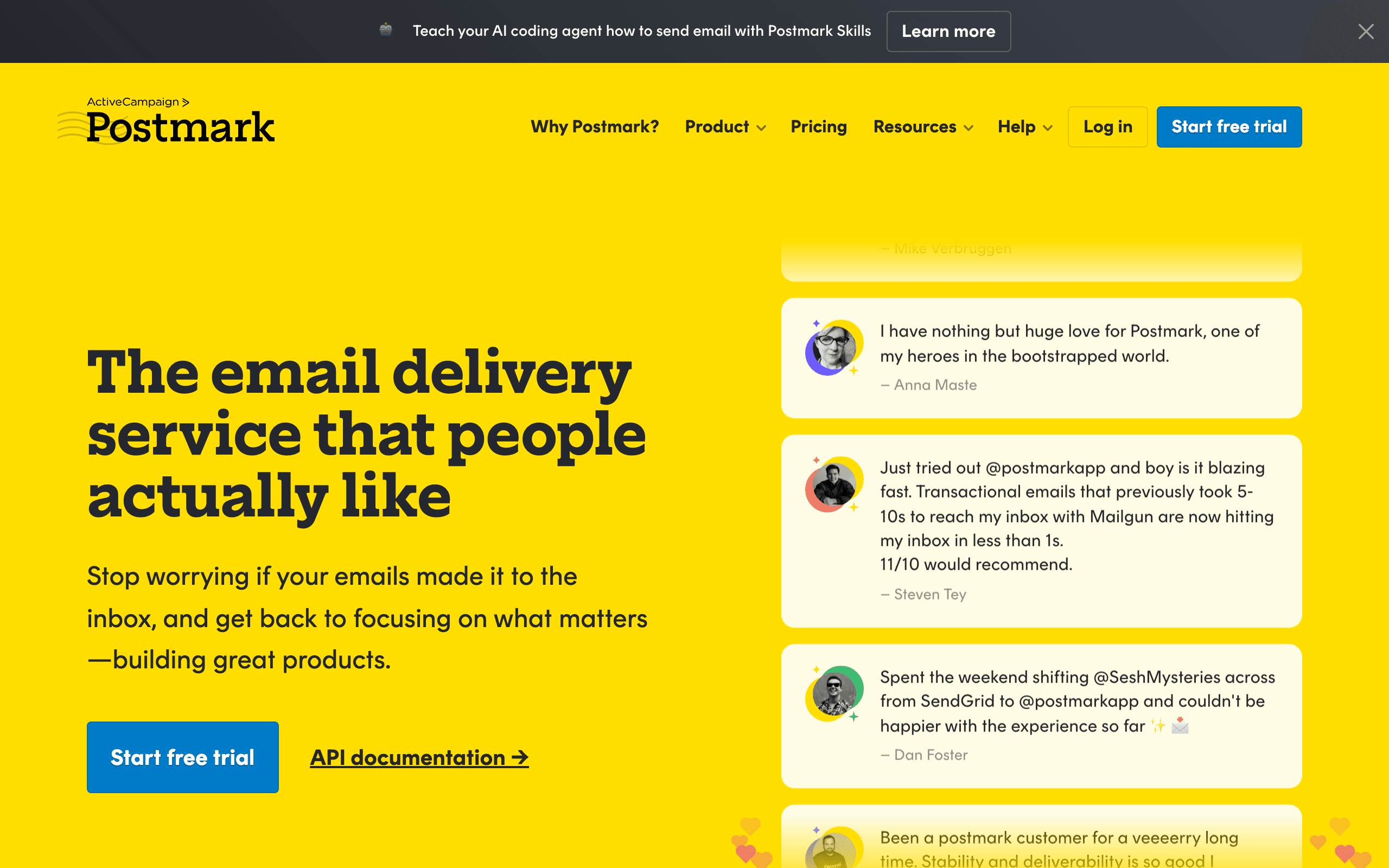
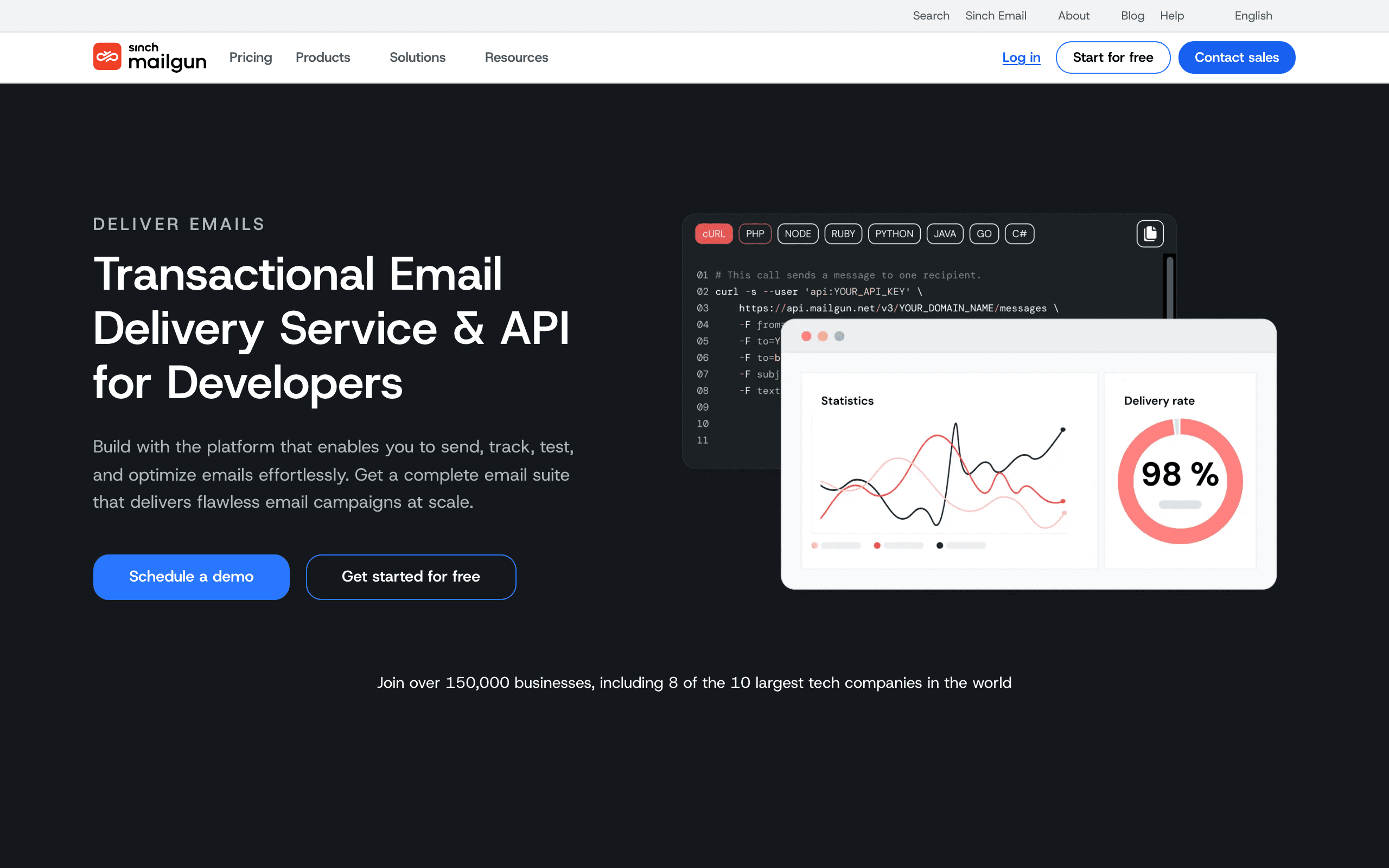
Postmark and Mailgun represent two different approaches to transactional email. Postmark has built its reputation on being the fastest, most reliable transactional email service by focusing exclusively on that use case. Mailgun offers a broader platform with additional features for optimization and validation.
Both are trusted by developers worldwide and offer robust APIs, but they serve different needs and priorities. For comparisons, check our Postmark and Mailgun pages.
Deliverability Comparison
Postmark's key differentiator is their transactional-only infrastructure. By refusing to send marketing emails, they maintain pristine IP reputation and achieve consistently high deliverability. Their emails typically arrive in seconds, not minutes.
Mailgun achieves good deliverability but handles both transactional and marketing email on the same infrastructure. This shared approach can occasionally impact delivery times and inbox placement during high marketing volume periods. Learn more in our deliverability guide.
Developer Experience
Both platforms offer excellent developer experiences with comprehensive APIs, multiple SDKs, and webhook support. Mailgun provides slightly more SDK options and additional features like email validation API. Postmark's API is clean and focused, with MailMason providing a solid templating system.
For inbound email processing, both platforms offer parsing capabilities, though Mailgun's is more feature-rich with routing rules and storage options. For automation, neither matches dedicated platforms.
Pricing Analysis
At 100,000 emails per month, Mailgun costs $75 compared to Postmark's $115 - a 35% savings. This gap increases at higher volumes. However, Postmark's longer message retention (45 days vs 5-7 days) and dedicated infrastructure may justify the premium for some teams. Compare with Sequenzy pricing for a different model.
Consider the total cost of ownership, including time spent on deliverability issues. Postmark's focus on reliability may reduce debugging time and support burden. Check our guides on email ops for more insights.
When Each Tool Shines
Choose Postmark when: You need the fastest possible delivery for password resets, two-factor auth codes, or order confirmations. Their transactional-only focus ensures your critical emails arrive instantly.
Choose Mailgun when: You want a comprehensive email platform with validation, optimization, and both transactional and marketing capabilities at a lower price point.
The Sequenzy Alternative
For SaaS companies, the real question might be whether you need separate transactional and marketing email providers at all. Sequenzy unifies both in a single platform with Stripe integration, behavioral automation, and simpler pricing.
Instead of paying per email and managing multiple providers, Sequenzy offers a flat monthly rate based on subscribers - making it easier to budget and scale your email operations.
Delivery Speed and Reliability
When a password reset or verification code needs to land in seconds, Postmark's transactional-only infrastructure is built precisely for that, with delivery speeds it measures and publishes in the seconds range. Mailgun still delivers quickly, typically within minutes, but its infrastructure is shared between transactional and marketing sends, which can add variability. If your product depends on time-sensitive receipts and codes, Postmark's dedicated approach and 45-day message retention give you more certainty than Mailgun's broader, shared setup.
API Design and Developer Experience
Both Postmark and Mailgun ship REST APIs, SMTP relay, and webhook support for developers, but they differ in breadth versus focus. Mailgun offers SDKs in 8 or more languages plus built-in email validation and inbound routing, useful if you want more tooling out of the box. Postmark keeps its surface narrower, with 7 official SDKs and MailMason templates, betting that a smaller, transactional-only feature set means less to configure and fewer places for something to break during integration.
Scaling and Cost at Volume
At 100,000 emails a month, Mailgun's Scale plan runs $75 versus Postmark's $115, and that gap tends to widen as volume grows, making Mailgun the cheaper option for high-volume senders on paper. That said, Mailgun's pricing has grown more complex with add-ons since its Sinch acquisition, and its Scale plan only retains logs for 5 to 7 days compared to Postmark's 45. Weigh the lower sticker price against how much you value longer message history and simpler, more predictable billing.
Use-case matchups
| Need | Better fit | Why |
|---|---|---|
| Premium transactional product experience | Postmark | Postmark is stronger when delivery speed, templates, streams, and readable logs are the priority. |
| Developer email infrastructure and routing flexibility | Mailgun | Mailgun is stronger when API depth, validation, routing, and infrastructure controls matter. |
| Unified SaaS marketing and transactional email | Sequenzy | Sequenzy fits when product lifecycle campaigns and transactionals should share one workflow. |
Best Fit by Transactional Product Experience and Email Infrastructure Control
Best transactional email service for delivery speed and readable logs
Postmark is the better fit when templates, streams, readable logs, fast delivery, and a clean transactional product experience are more important than broad infrastructure controls.
Best email API for routing, validation, and infrastructure flexibility
Mailgun is the better fit when developers need API depth, validation, routing, inbound handling, webhooks, suppression controls, and more configurable email infrastructure.
Best email tool for unified SaaS marketing and transactional email
Sequenzy is the better fit when product lifecycle campaigns, newsletters, Stripe triggers, and transactional messages should share one workflow.
Pricing reality
The page data lists Postmark at $115/month for dedicated transactional infrastructure with 45-day message retention, Mailgun at $75/month for Scale with 5-day log retention and email validation included, and Sequenzy at $49/month for 60k emails (unlimited subscribers) for unified transactional plus marketing with Stripe integration.
Postmark's higher price can be justified by retention, product UX, and transactional reliability. Mailgun's lower price can be justified by API flexibility and included validation, but log retention and add-ons need scrutiny. Sequenzy is relevant when marketing workflows and transactional email should be unified.
Review signals
No separate review frontmatter is present on this page, so do not claim sourced ratings here. Validate both vendors through current public reviews, real API tests, deliverability checks, support expectations, log retention needs, and pricing with add-ons.
Migration checklist
| Workstream | What to verify |
|---|---|
| Domains and authentication | Recreate SPF, DKIM, DMARC, tracking domains, inbound routes, and sender identities. |
| Templates and streams | Move templates, variables, message streams, routes, and test payloads. |
| Webhooks | Rebuild delivery, bounce, complaint, open, click, inbound, and suppression handling. |
| Logs and retention | Confirm how long logs must be searchable for support, compliance, and debugging. |
| Add-ons | Price validation, dedicated IPs, support, inbound parsing, and extra retention requirements. |
| Monitoring | Add alerts for delivery failures, latency, rate limits, bounces, and complaints. |
Decision checklist
- Choose Postmark if transactional deliverability and product clarity matter most.
- Choose Mailgun if API flexibility and infrastructure controls matter most.
- Avoid Postmark if Mailgun's routing and validation features are required.
- Avoid Mailgun if the team prioritizes simpler transactional operations and longer message retention.
- Consider Sequenzy if SaaS lifecycle campaigns and transactional email should be unified.









