
Overview
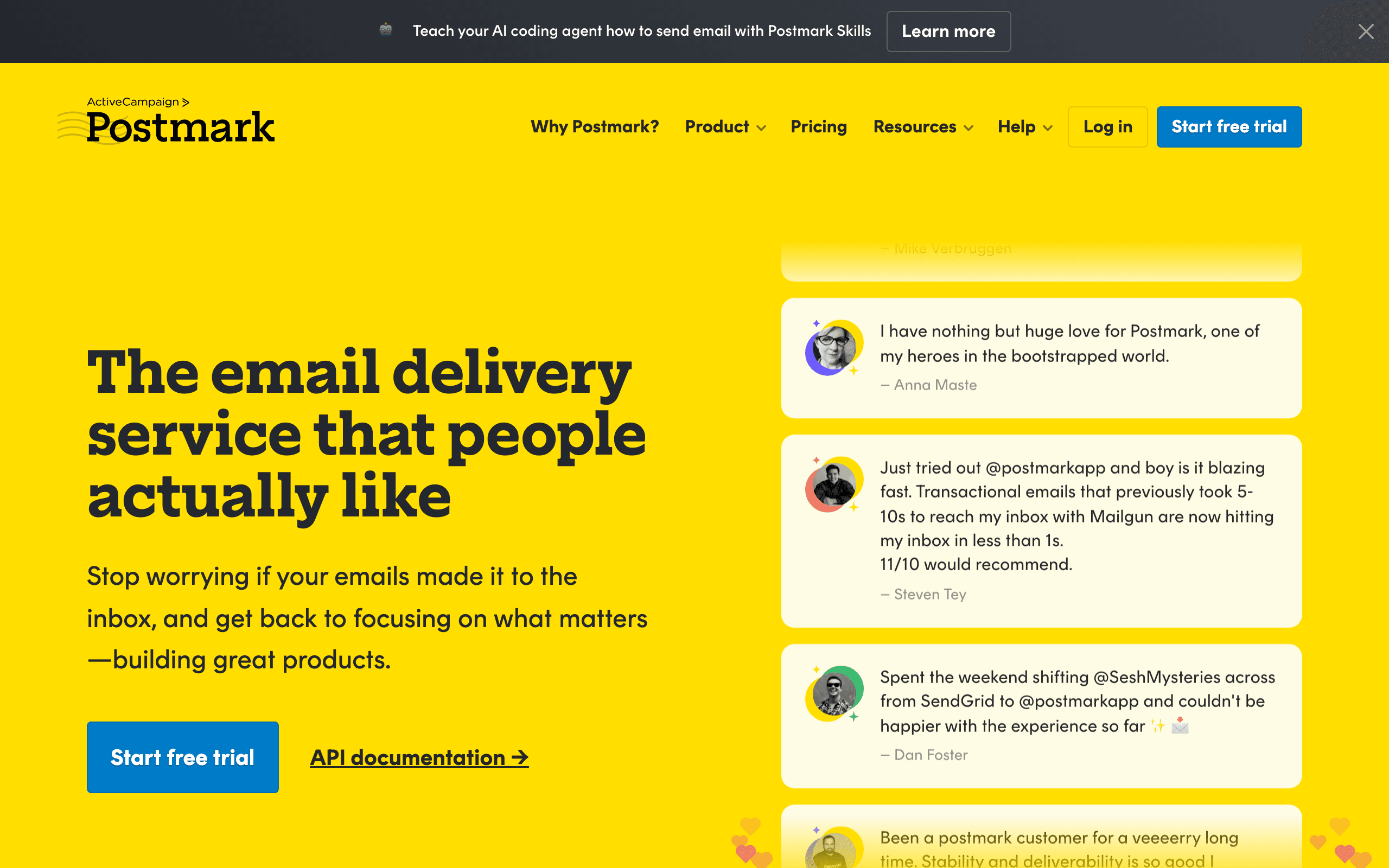
Messaged was a SaaS-focused email platform that promised lifecycle campaigns and billing integrations. Development appears to have stalled in March 2022, and the platform never launched. Postmark is the industry leader for transactional email with exceptional deliverability and $15/10k email pricing. See our Postmark comparison for more context.
The Critical Issue: Messaged Appears Abandoned
This comparison is asymmetric: only Postmark is a viable option. Messaged showed no development activity since early 2022. Promised features like Stripe integration and prebuilt campaigns were never delivered. Postmark has over a decade of reliable operation and is trusted by thousands of companies.
Postmark: The Deliverability Specialist
Postmark is laser-focused on transactional email. Password resets, order confirmations, account notifications - Postmark delivers these with industry-leading inbox placement. At $15 per 10,000 emails with no monthly minimum, it is cost-effective for transactional use cases.
What Messaged Promised vs Postmark Reality
Messaged promised SaaS lifecycle marketing with billing integrations at $80/month. Postmark does not compete in this space - it is a transactional email specialist. The marketing features Messaged promised do not exist in Postmark. These platforms were targeting different problems.
The Marketing Gap
Neither Messaged (abandoned) nor Postmark (transactional-focused) addresses SaaS marketing email well. Postmark has basic broadcast capabilities but is not a marketing platform. If you need combined transactional and marketing, neither is the answer.
When Postmark Makes Sense
Postmark is ideal when email deliverability is critical and you have separate marketing tools. Many companies use Postmark for transactional (password resets, receipts) and another platform for marketing. This works but requires managing multiple tools.
Our Recommendation
Do not use Messaged - it appears abandoned. For transactional email, Postmark is excellent. For combined transactional + marketing with the Stripe integration that Messaged promised, consider Sequenzy at $49/month for 10k contacts.
The Two-Provider Problem
Most SaaS companies using Postmark run a second service for marketing email. This creates real operational overhead: two sets of DNS records, two dashboards to monitor, two billing relationships, and potentially inconsistent sender reputation. Messaged recognized this pain and planned to unify both. Postmark intentionally maintains separation between transactional and broadcast to protect deliverability. Sequenzy takes the unified approach, handling both transactional and marketing under one platform while maintaining separate sending streams for deliverability. For teams tired of managing multiple email providers, consolidation eliminates complexity.
Deliverability as a Competitive Moat
Postmark publishes their deliverability statistics publicly, a rare level of transparency in the industry. Their inbox placement rates consistently exceed 99% for transactional email. This is achieved through strict anti-spam policies and refusing high-risk senders. Messaged never had the opportunity to build deliverability reputation. For mission-critical transactional emails like password resets and payment confirmations, Postmark's track record is hard to beat. Marketing email platforms typically have lower deliverability because marketing email inherently generates more complaints and bounces than transactional email.
When to Pair Postmark with a Marketing Tool
The best use case for Postmark is alongside a dedicated marketing platform. Use Postmark for transactional (password resets, receipts, notifications) and a marketing tool for campaigns, sequences, and automation. If your marketing needs are simple, this combination works well. If you need billing-aware automation where payment events trigger marketing sequences, the two-provider setup creates integration challenges. Payment webhooks need to reach your marketing tool, not just your transactional service. For this use case, a unified platform with native Stripe integration eliminates the middleware problem entirely.
Use-case matchups
| Situation | Best first look | Why |
|---|---|---|
| Team considering Messaged for unified SaaS email | Do not choose Messaged | The page says Messaged is abandoned and no transactional or marketing features shipped. |
| Developer team that needs best-in-class transactional deliverability | Postmark | Postmark is active and excellent for transactional email infrastructure. |
| SaaS team that wants marketing, transactional, and Stripe lifecycle email together | Sequenzy | Sequenzy is better aligned when one system should handle billing-aware lifecycle email. |
Pricing reality
Messaged's planned $80/month is not available. Postmark is listed at $15 per 10,000 emails and should be evaluated as transactional infrastructure, not full marketing automation. Sequenzy is listed at $49/month for combined transactional and marketing email with Stripe integration.
Review signals
There are no Messaged review signals in the page data. The Postmark snippets include G2 and Capterra feedback around deliverability, API quality, fast transactional delivery, and the need for a separate marketing tool.
Best Fit by Vendor Viability and Stack Scope
Best replacement path when Messaged is unavailable
Do not choose Messaged for a new production stack if the product remains abandoned and inaccessible. Treat the page as a vendor-risk check before trusting any email platform with billing, marketing, or transactional workflows.
Best transactional email service for deliverability-focused teams
Postmark fits developer teams that need fast delivery, strong transactional reputation, APIs, message streams, and debugging for app-triggered email. Choose it when the immediate requirement is reliable infrastructure and marketing can live elsewhere.
Best unified SaaS email platform for billing-aware lifecycle
Sequenzy fits teams that wanted a unified SaaS email product but need an active platform with campaigns, transactional email, and Stripe lifecycle automation. It is the focused option when a Postmark-plus-marketing-tool stack would recreate the same split Messaged was meant to avoid.
Migration checklist
| Workstream | Away from Messaged | Moving toward Postmark | Simplifying to Sequenzy |
|---|---|---|---|
| Platform access | Treat Messaged as unavailable. | Move transactional templates, API calls, domains, streams, and webhooks. | Import subscribers, tags, Stripe events, transactional templates, and lifecycle triggers. |
| Automation rebuild | Recreate promised unified SaaS flows elsewhere. | Pair Postmark with a marketing automation tool for campaigns and sequences. | Rebuild billing, lifecycle, marketing, and transactional email in one platform. |
| Risk check | Verify vendor viability before production use. | Validate two-provider architecture, branding consistency, and webhook routing. | Validate native Stripe coverage and email-only scope. |
Decision checklist
- Do you need transactional infrastructure only, or full lifecycle automation?
- Are you comfortable managing a separate marketing platform?
- Is Postmark's deliverability worth the two-provider setup?
- Would a unified Stripe-aware email platform remove middleware?









