
Overview
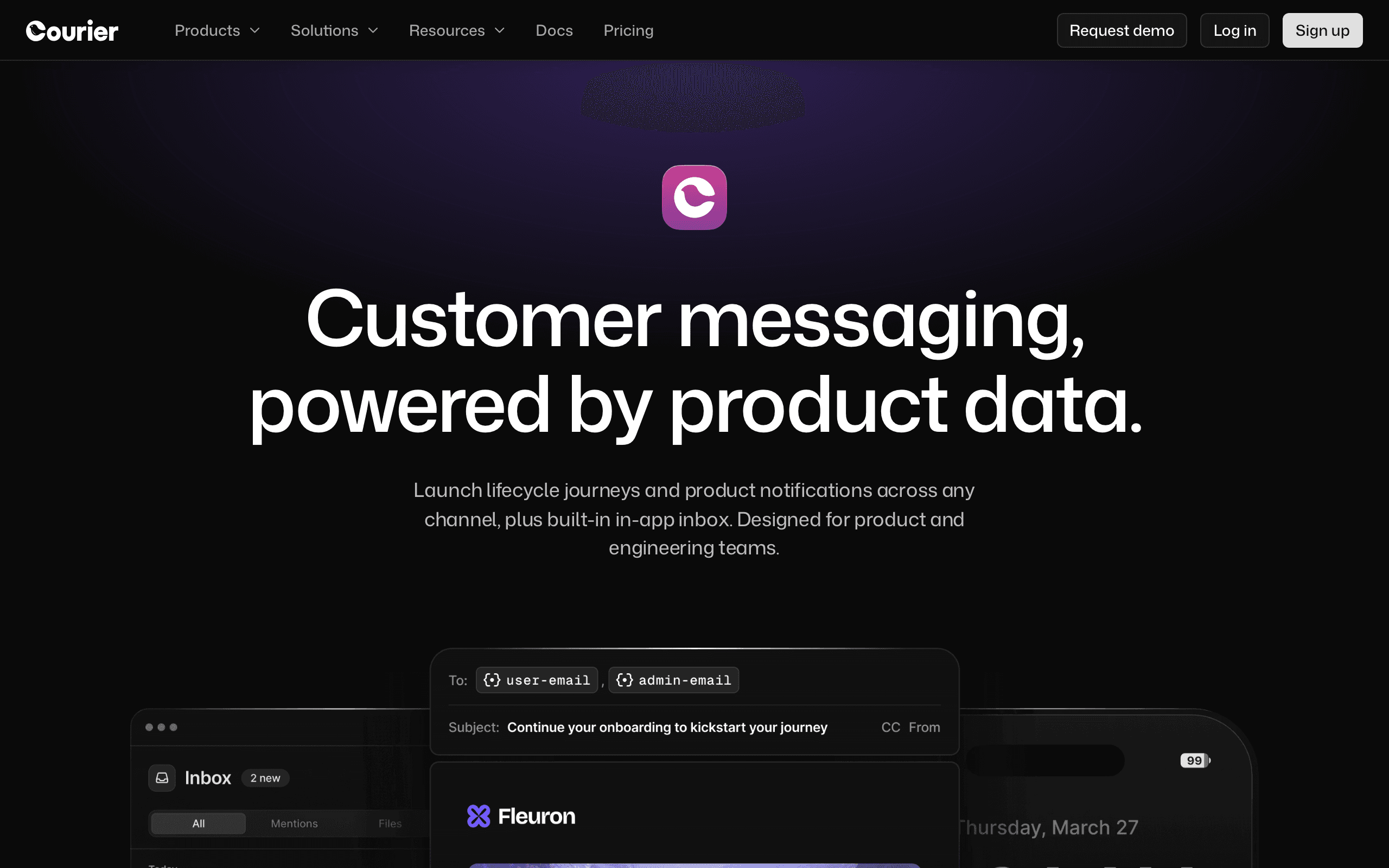
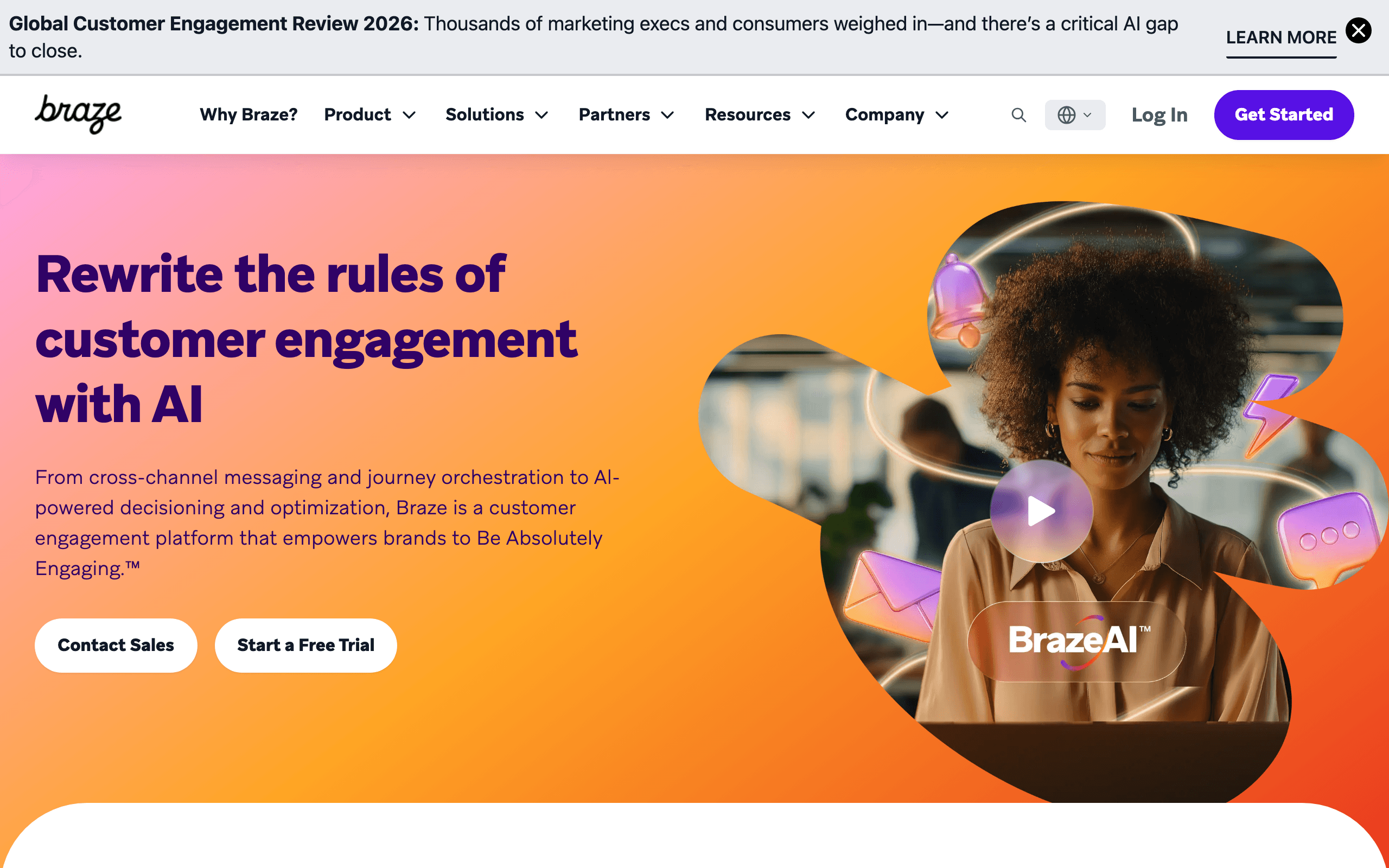
Courier and Braze operate at vastly different scales. Courier is developer notification infrastructure with a free tier. Braze is enterprise customer engagement with $50k+ annual contracts. For our take on each, see our Courier comparison.
Different Problems, Different Budgets
Courier answers: "How do I route this notification to the right provider?" Braze answers: "How do I engage millions of customers with AI-powered, personalized multi-channel campaigns?" Courier costs $0-99/month. Braze costs $50,000+/year. The tools match their ambitions.
Braze's Enterprise Power
Braze's Sage AI, Canvas journey builder, Content Cards, and real-time Currents analytics are enterprise-grade. Major brands use Braze for sophisticated engagement at scale. Nothing in Courier's notification routing competes with this level of capability.
Pricing reality
Courier is listed at $0-$99+/month, while Braze is listed at $50,000+/year. That is not a normal feature-tier comparison; it is startup notification infrastructure versus enterprise customer engagement.
Courier can be evaluated by engineering teams without a sales cycle. Braze requires enterprise budget, implementation planning, and a marketing/engagement team ready to use Canvas, AI, analytics, and mobile SDKs. Sequenzy is listed at $49/month when the real need is SaaS email tied to billing rather than notification routing or enterprise mobile engagement.
Review signals
The Courier reviews cited here praise fast notification routing setup, provider abstraction, and free-tier validation for startups. The Braze reviews praise Sage AI, Canvas, Content Cards, and enterprise-scale ROI, while explicitly calling out annual contracts around enterprise budgets.
The review signal is practical: Courier is useful when the problem is routing messages from an app; Braze is useful when the problem is optimizing engagement across a large customer base.
Use-case matchups
| Use case | Better fit | Why |
|---|---|---|
| Developer notification routing | Courier | Courier routes notifications across providers and channels without becoming a full marketing platform. |
| Enterprise customer engagement | Braze | Braze handles segmentation, journeys, AI personalization, analytics, and multi-channel campaign orchestration. |
| Startup notification infrastructure | Courier | Courier has self-serve access and a free tier, so teams can ship notifications without enterprise contracts. |
| Mobile-first lifecycle engagement | Braze | Braze's SDKs, push, in-app messaging, Content Cards, and Canvas journeys are built for large-scale mobile engagement. |
| Provider abstraction across channels | Courier | Courier is useful when the app needs one API over email, SMS, push, and chat providers. |
| SaaS email tied to billing | Sequenzy | Sequenzy is more focused when the need is transactional and marketing email driven by Stripe lifecycle events. |
Best Fit by Notification Routing and Enterprise Engagement
Best notification infrastructure for developer-owned routing
Choose Courier when engineering needs one API for product notifications, provider abstraction, channel preferences, fallback rules, and delivery routing. It is the better fit when the app already decides what should happen and only needs a reliable notification infrastructure layer.
Best customer engagement platform for enterprise mobile brands
Choose Braze when marketing and growth teams need journeys, segmentation, push, in-app messaging, Content Cards, AI optimization, experimentation, and enterprise analytics. It is stronger when the platform must decide who gets which campaign and how engagement improves over time.
Best SaaS email platform for Stripe-triggered lifecycle messages
Choose Sequenzy when the communication problem is mostly email around product and billing lifecycle. SaaS teams can manage transactional email, campaigns, and subscription-triggered sequences without buying notification routing or enterprise mobile engagement infrastructure.
The Sequenzy Alternative
For SaaS founders who need email at startup prices, Sequenzy combines transactional email and marketing campaigns with Stripe integration at $49/month - accessible without enterprise contracts.
Infrastructure vs Platform: A Critical Distinction
Courier is infrastructure - it routes individual notification messages through the right channel and provider. It does not manage audiences, build segments, create campaigns, or optimize engagement. Think of it as a smart router that sits between your application and delivery providers.
Braze is a platform - it manages the entire customer engagement lifecycle from audience segmentation through journey orchestration to delivery and analytics. It decides what to send, when to send it, who to send it to, and how to optimize over time. The comparison is like comparing a network switch to a complete telecommunications system.
The Startup to Enterprise Growth Path
Many companies start with Courier for notification infrastructure during their startup phase. The free tier and simple API make it easy to ship notification features quickly. As the company grows and needs marketing capabilities, they add a separate tool for campaigns and automation.
Some eventually graduate to Braze when their scale and budget justify enterprise engagement tools. But the transition is not a migration - it is a completely different product category. Companies running Courier do not upgrade to Braze; they add Braze (or a similar platform) alongside their existing notification infrastructure.
What SaaS Companies Actually Need
Most SaaS companies do not need either Courier's routing infrastructure or Braze's enterprise engagement. They need reliable email delivery for transactional messages, automated sequences for onboarding and lifecycle campaigns, and integration with their billing system. Neither Courier nor Braze is optimized for this specific combination of needs.
Sequenzy addresses this SaaS-specific gap with transactional email, marketing campaigns, and Stripe integration in one platform. At $49/month, it costs less than Courier's Business plan while providing capabilities that Courier cannot match for email marketing.
Enterprise Security and Compliance
Enterprise email platforms must meet strict security and compliance requirements. Courier and Braze offer different levels of SOC 2 compliance, GDPR support, SSO, and role-based access control.
Data residency, encryption standards, and audit logging requirements vary by industry. Compare how each platform addresses healthcare (HIPAA), financial services, and European data protection regulations. These compliance features often determine which platforms enterprises can even consider.
Multi-Team and Multi-Brand Management
Large organizations need email platforms that support multiple teams, brands, and business units. Courier and Braze handle multi-tenant scenarios differently, from shared templates to separate reporting.
Role-based access, approval workflows, and brand guidelines enforcement help enterprises maintain consistency while giving teams autonomy. Compare how each platform balances centralized control with team-level flexibility for email campaigns.
Integration Ecosystem and Data Architecture
Enterprise email marketing requires deep integration with existing tech stacks. Courier and Braze connect differently with CRMs, data warehouses, CDPs, and analytics platforms.
Evaluate webhook reliability, API rate limits, and native integrations with tools your organization already uses. The ability to sync data bidirectionally with your data warehouse and trigger emails from any data source creates the most flexible automation possibilities.
Migration checklist
- Decide whether this is a true migration or a stack addition: Courier often remains notification infrastructure while Braze is added for marketing engagement.
- Inventory every channel, provider, template, routing rule, audience segment, journey, webhook, and analytics destination currently involved in notifications.
- If moving to Courier, map each message type to a provider, channel preference rule, fallback rule, and template payload contract.
- If moving to Braze, prepare user profile data, event schemas, subscription groups, push tokens, SDK implementation, and campaign/journey ownership.
- Rebuild critical notification templates first: authentication, billing, alerts, lifecycle messages, marketing campaigns, and in-app messages.
- Reconnect warehouses, CDPs, CRMs, mobile SDKs, webhook consumers, and analytics destinations before production traffic moves.
- Run channel-by-channel tests for email, SMS, push, and in-app delivery because these platforms solve different parts of the messaging stack.
- Preserve historical delivery and engagement reports so engineering and marketing teams can compare the new system against prior baselines.
Decision checklist
| Question | Choose Courier when... | Choose Braze when... |
|---|---|---|
| What problem are you solving? | Provider routing, fallbacks, and product notifications. | Enterprise journeys, segmentation, AI optimization, and mobile engagement. |
| What budget is realistic? | Free/self-serve or $99+/month infrastructure fits. | $50k+/year plus implementation is already justified. |
| Who owns it? | Engineering owns notification APIs and providers. | Marketing/growth owns journeys, audiences, campaigns, and analytics. |
| What should you verify first? | Provider coverage, routing logic, fallback timing, and preference handling. | SDK effort, Canvas needs, AI use cases, compliance, and total contract scope. |









