
Enterprise personalization or ecommerce retention platform
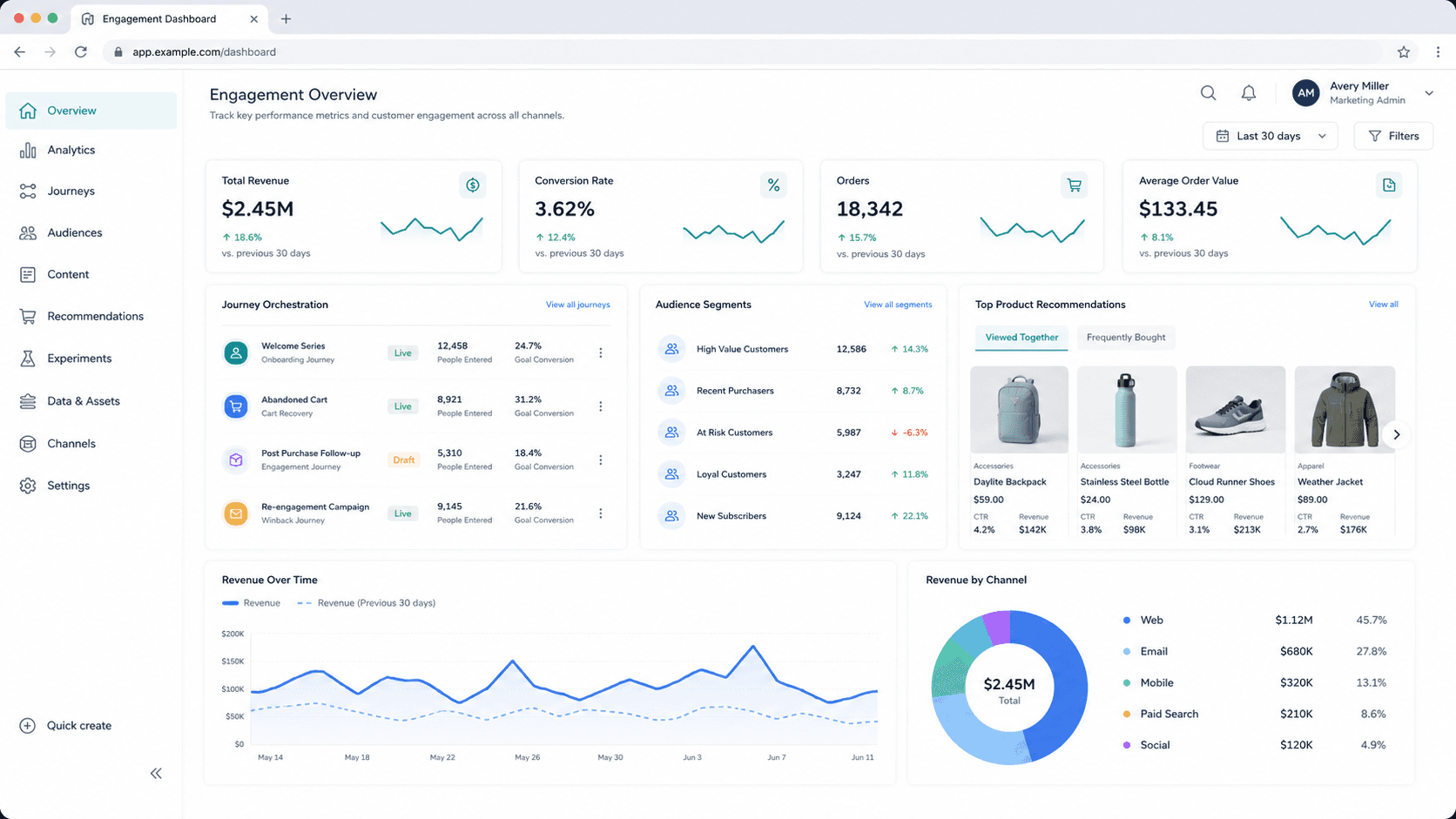
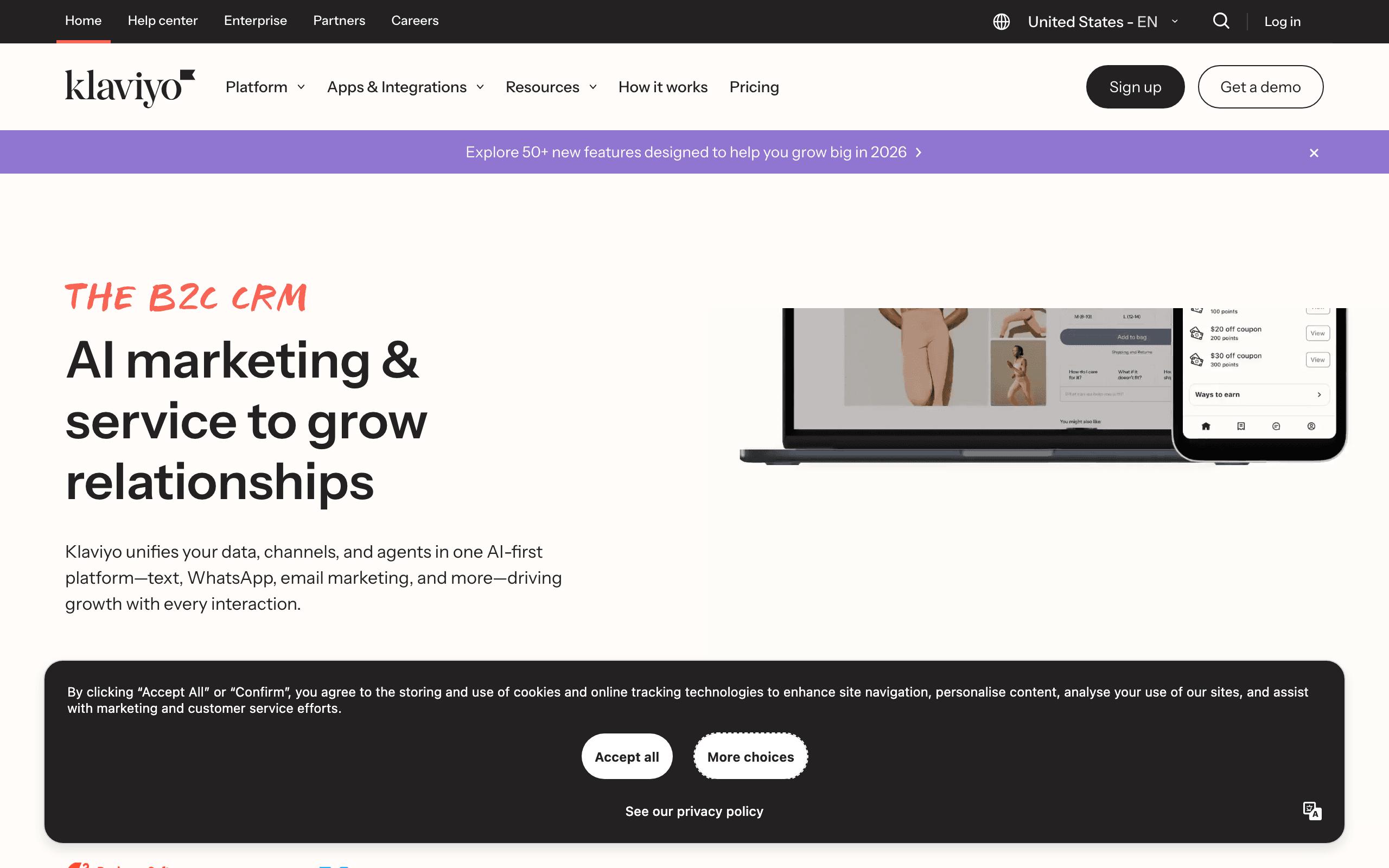
Bloomreach and Klaviyo overlap more than Bloomreach and many general email tools, but they still solve different levels of the stack. Bloomreach is stronger when the buyer wants enterprise personalization, customer data activation, product discovery, recommendations, and journeys connected to a broader commerce experience. Klaviyo is stronger when the buyer wants an ecommerce retention platform that marketers can use directly for segmentation, email, SMS, forms, and revenue-focused lifecycle flows.
The decision often comes down to where personalization needs to happen. If it needs to shape the storefront, product discovery, recommendations, and multiple commerce touchpoints, Bloomreach is more relevant. If it mainly needs to power owned-channel messaging and retention, Klaviyo is usually the more direct operating model.
Pricing reality
Both tools need pricing modeled against projected ecommerce usage. For Bloomreach, verify modules, data volume, catalog requirements, personalization scope, SMS or other channels, implementation services, support, and contract terms. For Klaviyo, verify contacts, send volume, SMS usage, forms, product data, store count, users, and feature access at the relevant tier. Compare what the marketing team can operate weekly, not just what the sales deck promises.
Use-case matchups
| Need | Better fit | Why |
|---|---|---|
| Enterprise customer data and commerce personalization | Bloomreach | Bloomreach is designed for deeper data activation across more than email and SMS. |
| Ecommerce email/SMS lifecycle marketing | Klaviyo | Klaviyo is built around marketer-owned retention flows, segmentation, forms, and campaign execution. |
| Product discovery or site personalization | Bloomreach | Bloomreach is the better fit when personalization extends into the shopping experience itself. |
| Faster owned-channel rollout for a store team | Klaviyo | Klaviyo is easier to evaluate when the near-term work is lifecycle messaging and revenue reporting. |
| Lean ecommerce email with transactional messages | Sequenzy | Sequenzy is narrower, with Shopify, WooCommerce, Stripe-aware lifecycle email, and transactional email. |
Best Fit by Commerce Personalization and Owned Channels
Best enterprise platform for commerce customer data
Bloomreach is the better fit when customer data, catalog feeds, product discovery, recommendations, and onsite personalization are part of the same funded project. It makes sense when the store needs deeper data activation than email and SMS flows alone.
Best ecommerce email platform for Shopify retention
Klaviyo is the better fit when the near-term job is owned-channel execution: forms, segmentation, campaigns, email, SMS, cart recovery, post-purchase flows, and revenue reporting. It is easier to evaluate when marketers need lifecycle messaging more than an enterprise CDP.
Best email tool for lean ecommerce and transactional messages
Sequenzy is the better fit when the team wants Shopify, WooCommerce, Stripe-aware lifecycle email, transactional messages, and newsletters without SMS or enterprise personalization overhead. It is a narrower route for ecommerce teams that want email-first execution.
What to pressure-test
For Bloomreach, pressure-test the implementation path: data sources, catalog setup, identity matching, services, modules, and who maintains the personalization logic. For Klaviyo, pressure-test the real cost and workflow at your projected contacts, email volume, SMS usage, segmentation complexity, and number of stores or brands. The better tool is the one your team can operate without slowing down the revenue program.
Klaviyo is not automatically the lightweight option for every store, and Bloomreach is not automatically overkill for every enterprise. The buying case should be specific: what customer data will be used, what messages or experiences will change, and who is responsible for improvement after launch.
Review signals
The structured reviews here are review-theme summaries rather than individual sourced quotes. Bloomreach themes point to CDP depth, reporting, and mature ecommerce retention fit, with setup effort and pricing clarity as cautions. Klaviyo themes point to campaign workflow, integrations, ecommerce usability, and day-to-day retention work, with pricing and advanced feature access needing current verification.
Decision checklist
- Price both tools against your projected contacts, email volume, SMS usage, number of stores, and required modules.
- List which customer events and catalog fields must be available inside campaigns before you migrate.
- Confirm whether product recommendations, on-site personalization, and identity resolution are core requirements or nice-to-have items.
- Ask marketers to rebuild one real lifecycle flow in each tool and time the work from segment creation to QA.
- Check how each platform handles consent, suppression, unsubscribes, and transactional messages.
- Review data export, webhook, and API limits before committing.
Migration checklist
- Export existing flows, templates, segments, suppression lists, signup forms, and reporting baselines.
- Rebuild the highest-revenue journeys first: welcome, cart abandonment, browse abandonment, post-purchase, replenishment, winback, and VIP.
- Keep naming conventions consistent for events, lists, tags, segments, and templates.
- Run test profiles through each important journey before enabling live sends.
- Monitor revenue attribution, unsubscribe rates, and deliverability during the first month after cutover.
Where Sequenzy fits
Sequenzy fits if the store does not need Bloomreach-level personalization or Klaviyo's broader retention suite. It is for teams that want ecommerce email automation, newsletters, cart recovery, post-purchase flows, subscription-aware lifecycle messages, and transactional email without adding SMS or a larger customer data platform.








