
20 Best Email Platforms for Dynamic, User-Specific Emails (2026)

Best email automation platforms dynamic personalized emails questions usually start from a specific frustration: a "personalized" email that just inserts a first name isn't actually personalized, it's templated. Real dynamic, user-specific email uses several layers of personalization together, and platforms differ a lot in how deep that stack goes.
This guide breaks the personalization stack into four layers, from simplest to most advanced, then compares 20 platforms in detail for automated email templates dynamic fields merge tags personalization options: Sequenzy, Klaviyo, Customer.io, Braze, ActiveCampaign, Mailchimp, Iterable, Ortto, Insider, MoEngage, CleverTap, Dotdigital, Listrak, Salesforce Marketing Cloud, Bloomreach, Optimove, Drip, Brevo, GetResponse, and HubSpot.
The Personalization Stack
Layer 1: Merge Tags and Dynamic Fields
The baseline: a placeholder like a first name or company name field gets replaced with real subscriber data at send time. See the merge tags glossary entry for syntax examples and fallback-value best practices. Every platform in this guide supports this layer.
Layer 2: Conditional Content
Showing or hiding entire blocks of an email based on a rule - a different CTA for trial users versus paying customers, or a different hero image for new versus returning customers. This requires the platform to evaluate subscriber attributes at render time, not just substitute text.
Layer 3: Dynamic Product Blocks
Rendering a set of products, articles, or items based on catalog data or behavior: cart contents, recently viewed items, or recommended products. This layer depends on a connected catalog or event stream, not just subscriber attributes stored on the contact record.
Layer 4: Event-Property Personalization
The deepest layer: personalizing content based on a specific event that triggered the email, such as referencing the exact page a subscriber viewed, the exact item they abandoned, or the specific milestone they hit. This requires the platform to pass event properties (not just static attributes) into the email at render time.
Which Layer Each Platform Reaches
Layers 1 and 2 are effectively table stakes. The buying decision is almost always about layers 3 and 4, and vendors describe both with the same marketing language, so this is where demos are worth insisting on.
| Platform | L1 Merge tags | L2 Conditional | L3 Product blocks | L4 Event properties |
|---|---|---|---|---|
| Sequenzy | Yes | Yes | Yes, catalog-driven | Yes, in event-triggered automations |
| Customer.io | Yes | Yes, deepest via Liquid | Via data sources | Yes, most granular |
| Klaviyo | Yes | Yes | Yes, purpose-built for ecommerce | Yes, commerce events |
| Braze | Yes | Yes | Yes, catalogs | Yes, cross-channel |
| ActiveCampaign | Yes | Yes, conditional blocks | Limited | Partial |
| Mailchimp | Yes | Yes, on higher tiers | Product recommendations | Limited |
| Iterable | Yes | Yes | Yes, catalog | Yes |
| Brevo | Yes | Yes | Basic | Limited |
| GetResponse | Yes | Yes | Basic | Limited |
| HubSpot | Yes | Yes, smart content | Limited | Partial, via workflows |
Verify the layer-4 column specifically against your own event payload during a trial. "Supports event data" often means the automation can trigger on an event while the email template can only read stored contact attributes, which is a materially different capability and the most common source of disappointment in this category.
Implementing Each Layer
Merge tag syntax and fallback values
Most platforms use one of two syntaxes. Handlebars or Liquid style is by far the most common:
Hi {{ first_name }}, your {{ plan_name }} plan renews on {{ renewal_date }}.Others use a percent or bracket notation, such as *|FNAME|* or %FIRSTNAME%. The syntax matters far less than the fallback behavior, which is where real emails break.
Always set a fallback on every tag that can be empty. A missing value should degrade to something neutral, never to a blank space, and never to the literal tag:
Hi {{ first_name | default: "there" }},          Liquid
Hi {{#if first_name}}{{first_name}}{{else}}there{{/if}},   Handlebars
Three rules that prevent most personalization incidents:
- Never put an un-fallbacked tag in a subject line. "Hi , your order shipped" is the most visible possible failure, and subject lines are not covered by most preview tools.
- Test the empty case explicitly, not just the populated one. A contact created by API or CSV import frequently has fewer fields than one created by a form.
- Decide whether a missing field should suppress the send entirely. A missing first name warrants a fallback. A missing payment amount or security detail warrants suppression, because a neutral fallback would make the email wrong rather than generic.
Conditional blocks
Conditional content shows or hides whole sections based on a rule. The typical shape:
{% if plan_tier == "trial" %}
  Your trial ends in {{ days_remaining }} days. [Choose a plan]
{% elsif plan_tier == "paid" %}
  Here's what's new in your plan this month.
{% else %}
  [Neutral content for contacts with no plan data]
{% endif %}
The else branch is the part teams skip and the part that causes incidents. Any contact whose attribute is missing, misspelled, or newly added falls through every named condition, and without a final else they receive an email with a hole in it. Write the neutral branch first, then add the specific ones.
Watch for conditions that can both be true. If a contact is past due and eligible for an upgrade offer, decide the precedence explicitly rather than relying on rule order, and let account or billing state win over promotional content.
Event-property personalization
This is the layer that separates genuinely dynamic email from templated email. The trigger event carries its own properties, and the template reads them directly:
{
  "event": "cart_abandoned",
  "email": "user@example.com",
  "properties": {
    "cart_total": 128.50,
    "item_count": 3,
    "top_item_name": "Merino Crew",
    "top_item_image": "https://cdn.example.com/merino-crew.jpg",
    "checkout_url": "https://shop.example.com/cart/recover/abc123"
  }
}
You left {{ event.item_count }} items ({{ event.cart_total | money }}) behind,
including the {{ event.top_item_name }}.
[Finish checking out]({{ event.checkout_url }})Two constraints to check before you design around this. First, how long the event properties stay available: some platforms make them readable only in the step immediately following the trigger, so a reminder sent two days later can no longer reference the cart. Second, whether properties survive a delay step at all, which determines whether a multi-step recovery sequence can stay specific or has to fall back to generic copy after the first email.
Volatile values need re-checking at render time rather than at trigger time. A price, stock level, or delivery estimate captured when the event fired may be wrong by the time a delayed email actually sends.
QA before you send
Personalization bugs are combinatorial, so testing one happy-path contact proves almost nothing. Run this matrix against every template with more than one dynamic element:
| Test contact | What it catches |
|---|---|
| All fields populated | Baseline render |
| Optional field empty (no first name) | Missing or broken fallbacks |
| Required field empty (no plan, no amount) | Whether suppression fires as intended |
| Attribute value not matching any condition | Missing else branch |
| Two conditions true at once (past due + upgrade eligible) | Precedence errors |
| Event fired, then delayed 48 hours | Whether event properties survive delays |
| Product now out of stock or price changed | Stale-data handling |
| Very long values (long company or product name) | Layout and subject-line truncation |
| Non-Latin and right-to-left values | Encoding and direction bugs |
| Images blocked | Whether the message still makes sense |
Check the rendered subject line and preheader separately from the body. They use the same tags, are the most visible on failure, and are the least likely to be included in a preview.
Best Platform by Use Case
Best for SaaS teams needing event-property personalization: Sequenzy
Sequenzy supports merge tags, conditional content, and dynamic product blocks, with event data available for personalization in automations triggered by product events. Its smart segments combine behavioral and attribute filters so conditional content rules can be precise.
Best for the deepest conditional logic: Customer.io
Customer.io's liquid templating gives the most granular control over conditional content and event-property personalization of any platform in this comparison, at the cost of a steeper setup process.
Best for ecommerce product personalization: Klaviyo
Klaviyo's product feed and dynamic blocks are purpose-built for ecommerce personalization: browse history, cart contents, and purchase-based recommendations render natively in emails.
Best for enterprise cross-channel personalization: Braze, Insider, or MoEngage
These three extend event-property personalization across email, push, SMS, and in-app messaging for large consumer apps and retail brands, connecting content directly to the specific event that triggered a message.
Quick Comparison
| Tool | Merge Tags | Conditional Content | Dynamic Product Blocks | Event-Property Personalization | Starting Price |
|---|---|---|---|---|---|
| Sequenzy | Yes | Yes | Yes (catalog-driven) | Yes, via automation event data | $19/mo |
| Klaviyo | Yes | Yes | Yes (ecommerce-tuned) | Yes, flow-based | $45/mo |
| Customer.io | Yes | Yes (most granular) | Limited native, DIY via API | Yes, deepest support | $100/mo |
| Braze | Yes | Yes | Yes, via Connected Content | Yes, cross-channel | Custom |
| ActiveCampaign | Yes | Yes | Limited | Limited | $29/mo |
| Mailchimp | Yes | Basic | Limited | Limited | $13/mo |
| Iterable | Yes | Yes | Yes | Yes, cross-channel | $500+/mo |
| Ortto | Yes | Yes | Partial | Yes | $99/mo |
| Insider | Yes | Yes | Yes, AI-driven | Yes, cross-channel | Custom, $4,800+/mo |
| MoEngage | Yes | Yes | Yes | Yes, cross-channel | $999/mo |
| CleverTap | Yes | Yes | Partial | Yes | $999/mo |
| Dotdigital | Yes | Yes | Yes | Partial | $500/mo |
| Listrak | Yes | Yes | Yes | Partial | Custom |
| Salesforce Marketing Cloud | Yes | Yes | Yes | Yes | $1,500/mo |
| Bloomreach | Yes | Yes | Yes, AI-driven | Yes | $19,020/year+ |
| Optimove | Yes | Yes | Partial | Yes, predictive | Custom |
| Drip | Yes | Partial | Yes (ecommerce) | Partial | $39/mo |
| Brevo | Yes | Basic | Limited | Limited | $9/mo |
| GetResponse | Yes | Basic | Limited | Limited | $19/mo |
| HubSpot | Yes | Yes (smart content) | Limited | Partial | $20/mo |
The 20 Best Options, Reviewed
1. Sequenzy
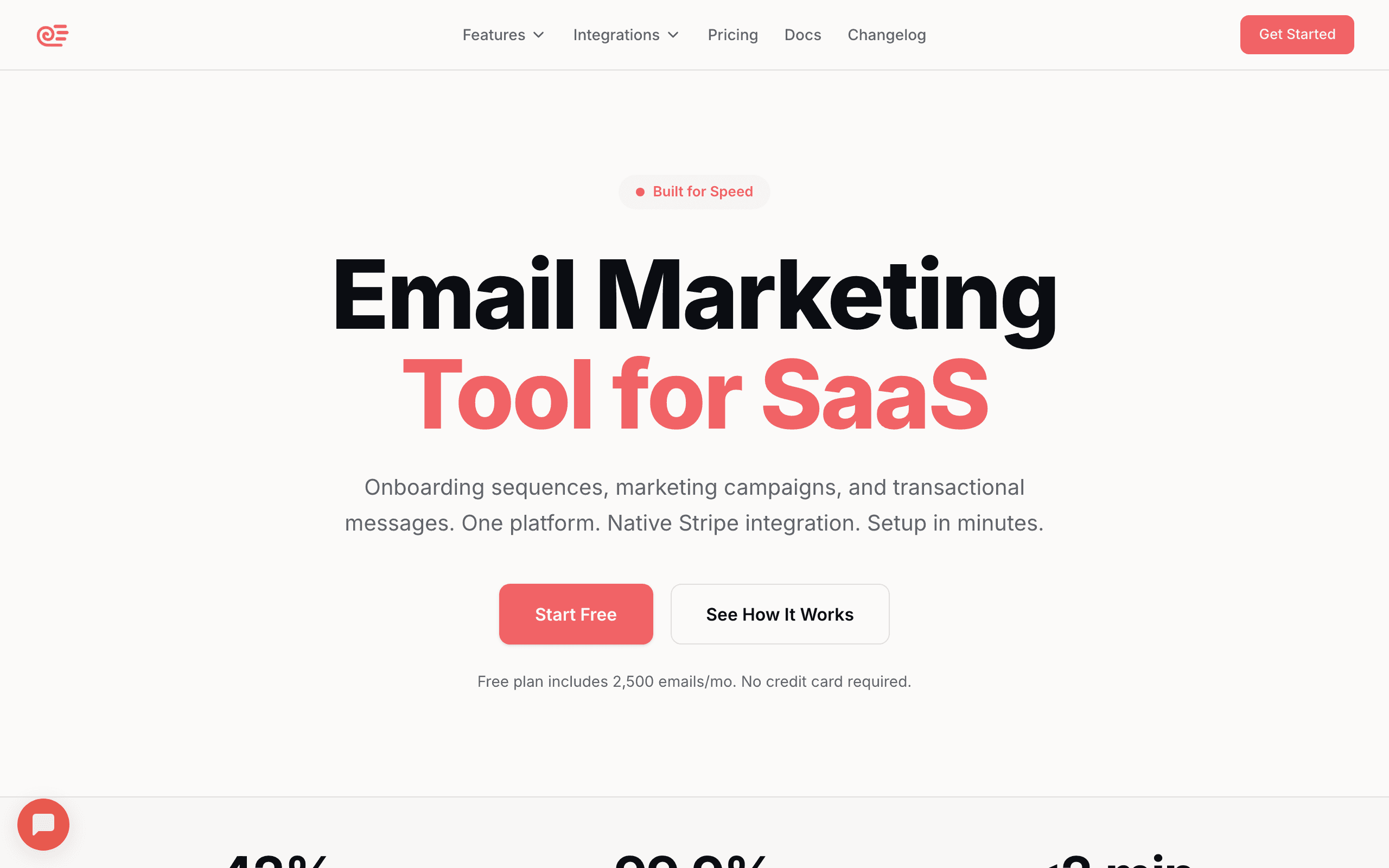
Best for: SaaS and AI teams wanting merge tags, conditional content, and catalog-driven product blocks without ecommerce-scale pricing
Sequenzy covers the first three layers of the personalization stack directly in the email editor: merge tags with fallback values, conditional content blocks scoped by segment or attribute, and dynamic product blocks for catalog-driven recommendations. Automations triggered by product events can reference event properties in the email content, covering layer four for teams using the developer API to pass event data.
- Pricing: Free up to 2,500 emails/month, paid plans from $19/month
- Pros: All four personalization layers available, native catalog sync, agent-native API/CLI/MCP for custom event data
- Cons: Smaller pre-built template library than long-established platforms
2. Klaviyo
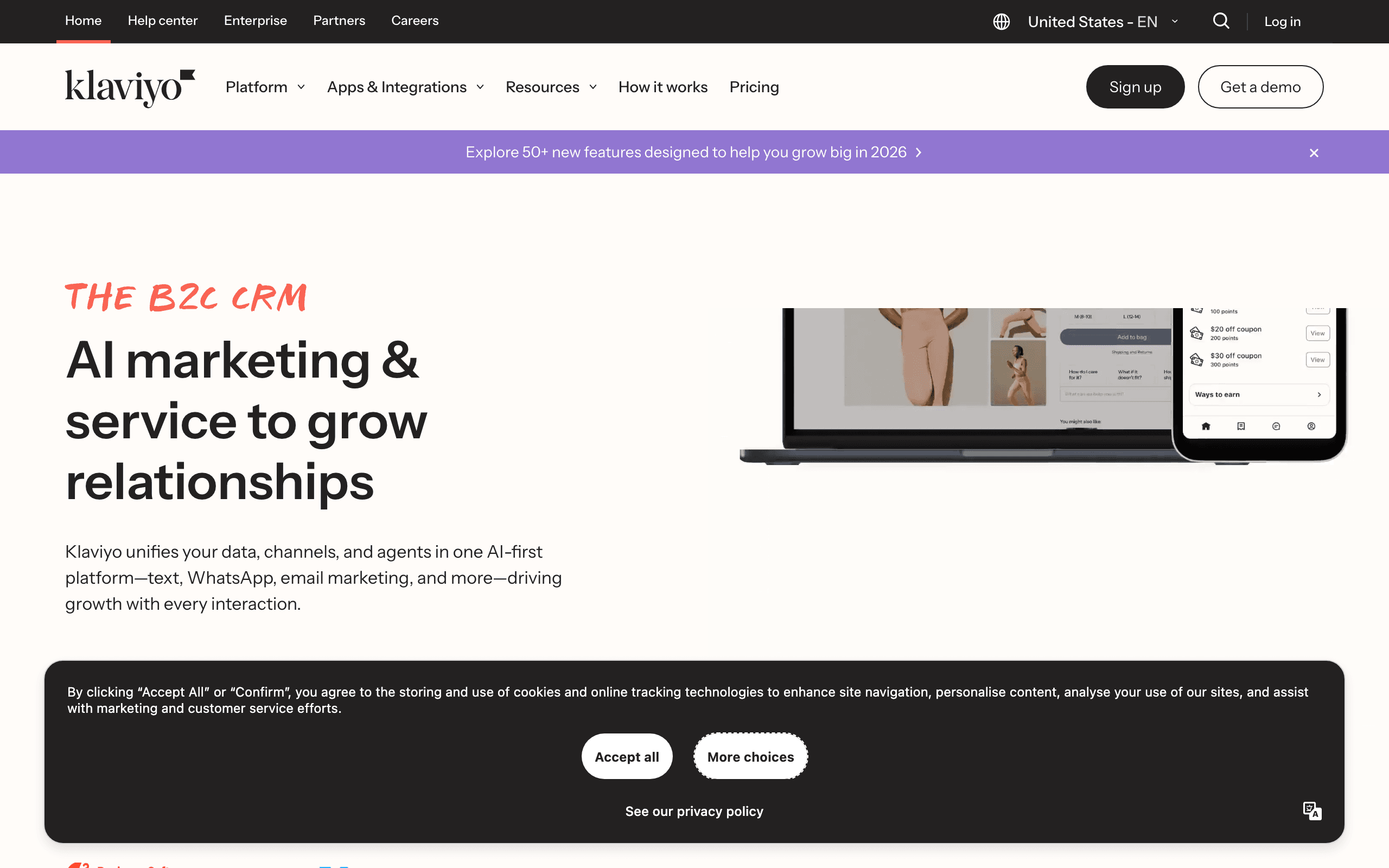
Best for: Ecommerce brands wanting deep product-level personalization
Klaviyo's product feed integration renders dynamic product recommendations, recently viewed items, and cart contents directly in emails, tuned specifically for ecommerce catalogs synced from Shopify and other platforms.
- Pricing: Free up to 250 contacts, from $45/month
- Pros: Best-in-class ecommerce product blocks, mature conditional content tools
- Cons: Pricing scales quickly, less natural fit outside ecommerce
3. Customer.io
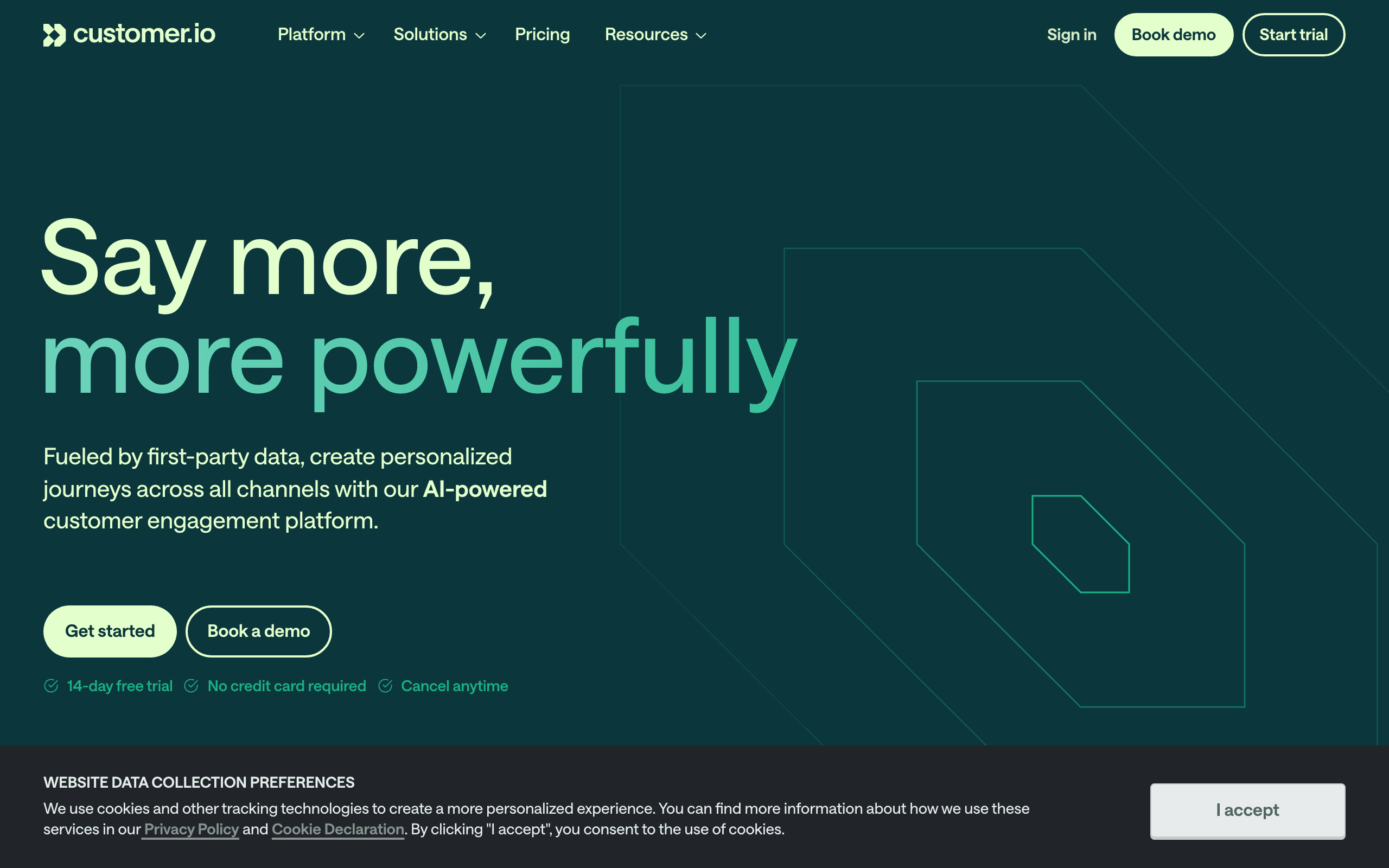
Best for: Technical teams needing the most granular conditional logic
Customer.io's liquid templating supports arbitrary conditional logic and event-property personalization, letting you reference any attribute or event property passed into a workflow. It requires real technical setup but has no real ceiling on personalization depth.
- Pricing: From $100/month
- Pros: Most flexible conditional logic and event personalization
- Cons: Steep learning curve, requires technical skill to use well
4. Braze
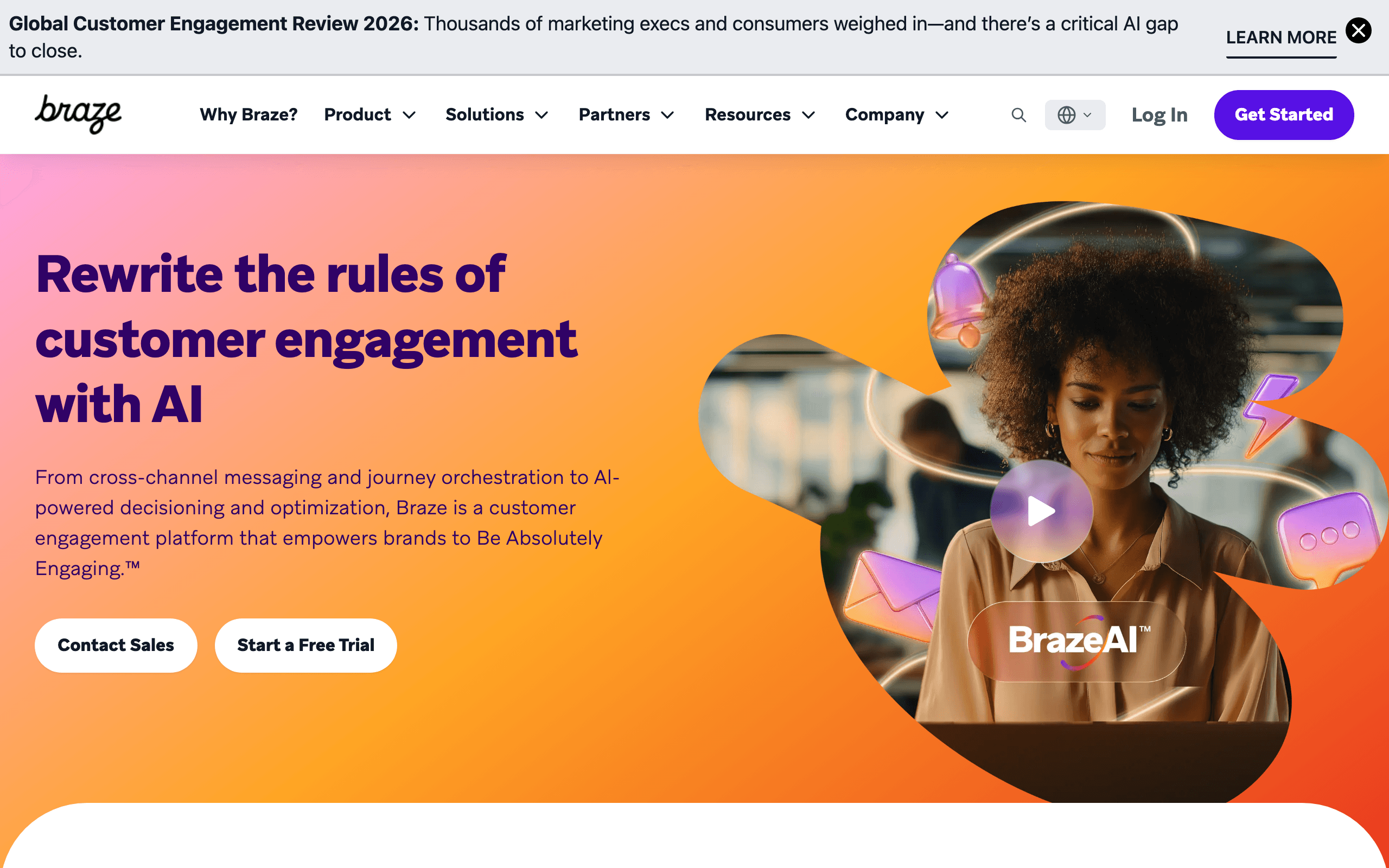
Best for: Enterprise consumer apps personalizing across channels
Braze's Connected Content and Liquid personalization pull live data (including from external APIs) into email, push, and in-app messages, tied to the specific event or user state that triggered the send.
- Pricing: Custom enterprise pricing
- Pros: Deep cross-channel event-property personalization, live external data pulls
- Cons: Enterprise-only pricing and implementation
5. ActiveCampaign
Best for: Small teams wanting conditional content tied to a CRM
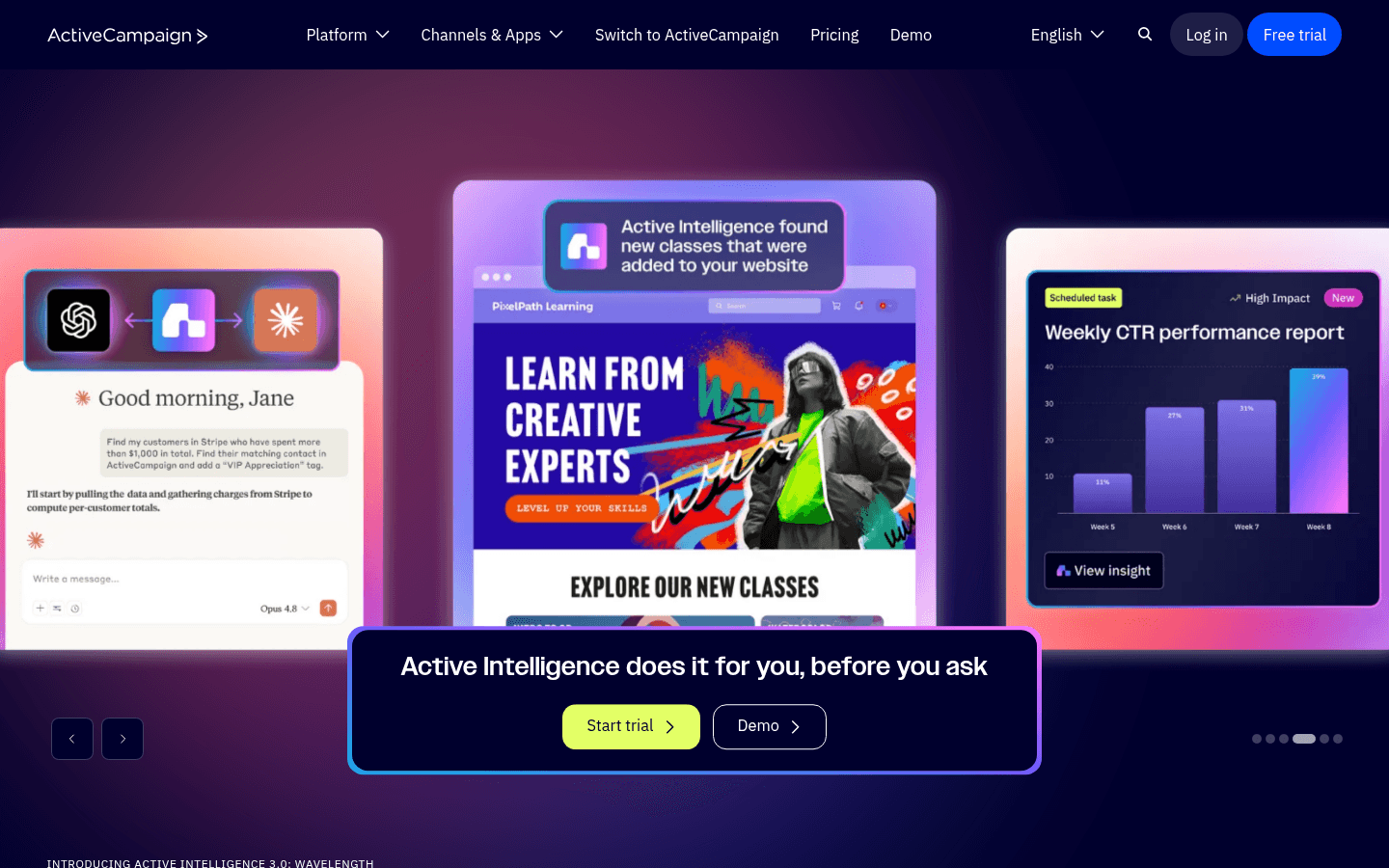
ActiveCampaign supports merge tags, conditional content blocks, and dynamic content based on CRM fields and deal data, making it a solid mid-tier option for teams that need personalization tied to sales data.
- Pricing: From $29/month
- Pros: CRM-linked personalization, solid conditional content tools
- Cons: No dedicated ecommerce product feed personalization
6. Mailchimp
Best for: Small businesses wanting basic dynamic content
Mailchimp supports merge tags and basic conditional content blocks (showing content based on audience fields or groups), covering the first two personalization layers well but with limited support for event-property personalization.
- Pricing: Free up to 500 contacts, from $13/month
- Pros: Easy to use, solid merge tag and basic conditional content support
- Cons: Limited dynamic product blocks and event-property personalization
7. Iterable
Best for: Growth teams personalizing across email, push, and SMS
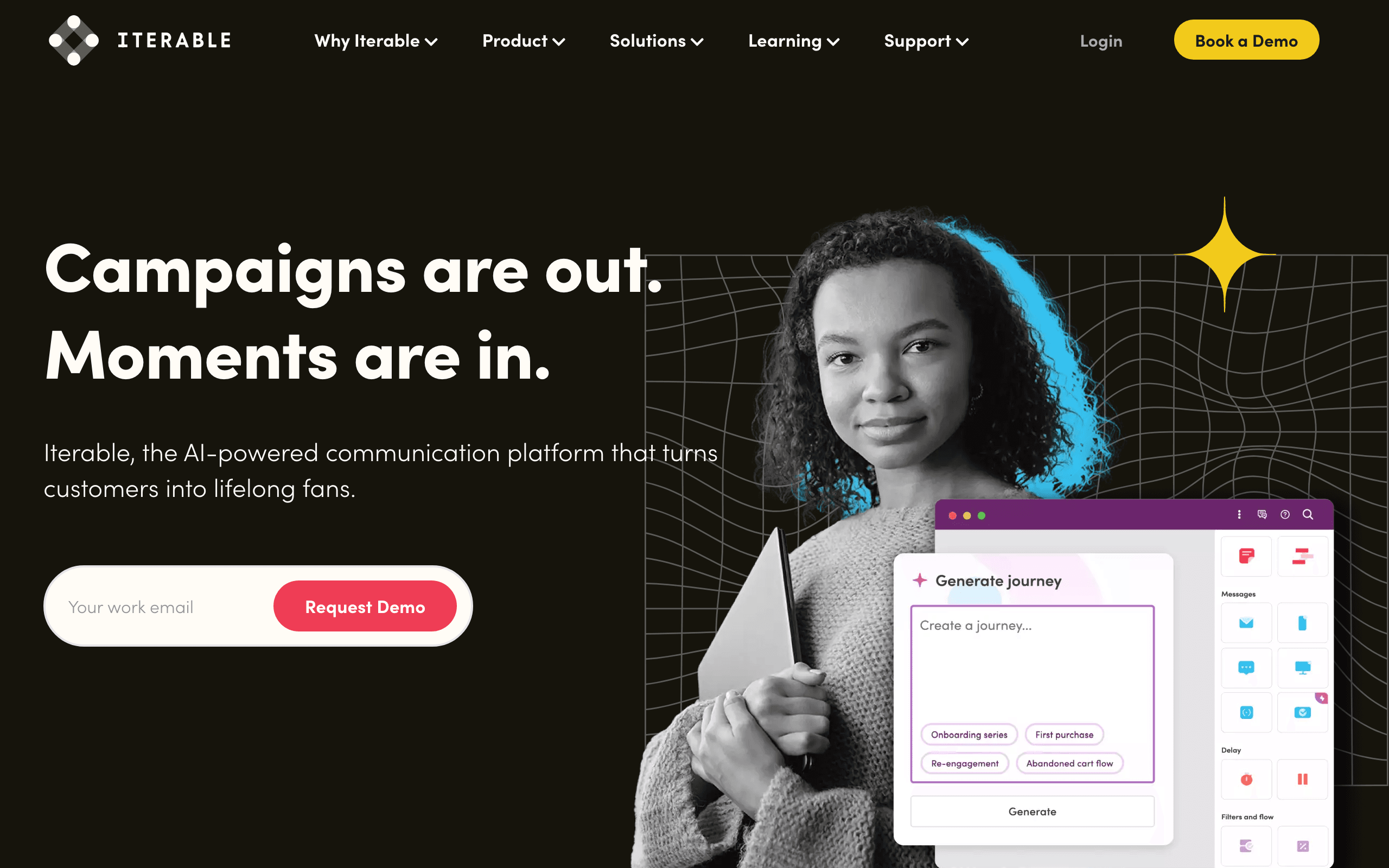
Iterable's Catalog feature powers dynamic product and content blocks across channels, with event-property personalization built into its journey builder.
- Pricing: Custom, typically $500+/month
- Pros: Cross-channel catalog-driven personalization, strong experimentation tools
- Cons: Expensive, long implementation timelines
8. Ortto
Best for: Teams wanting personalization unified across data sources
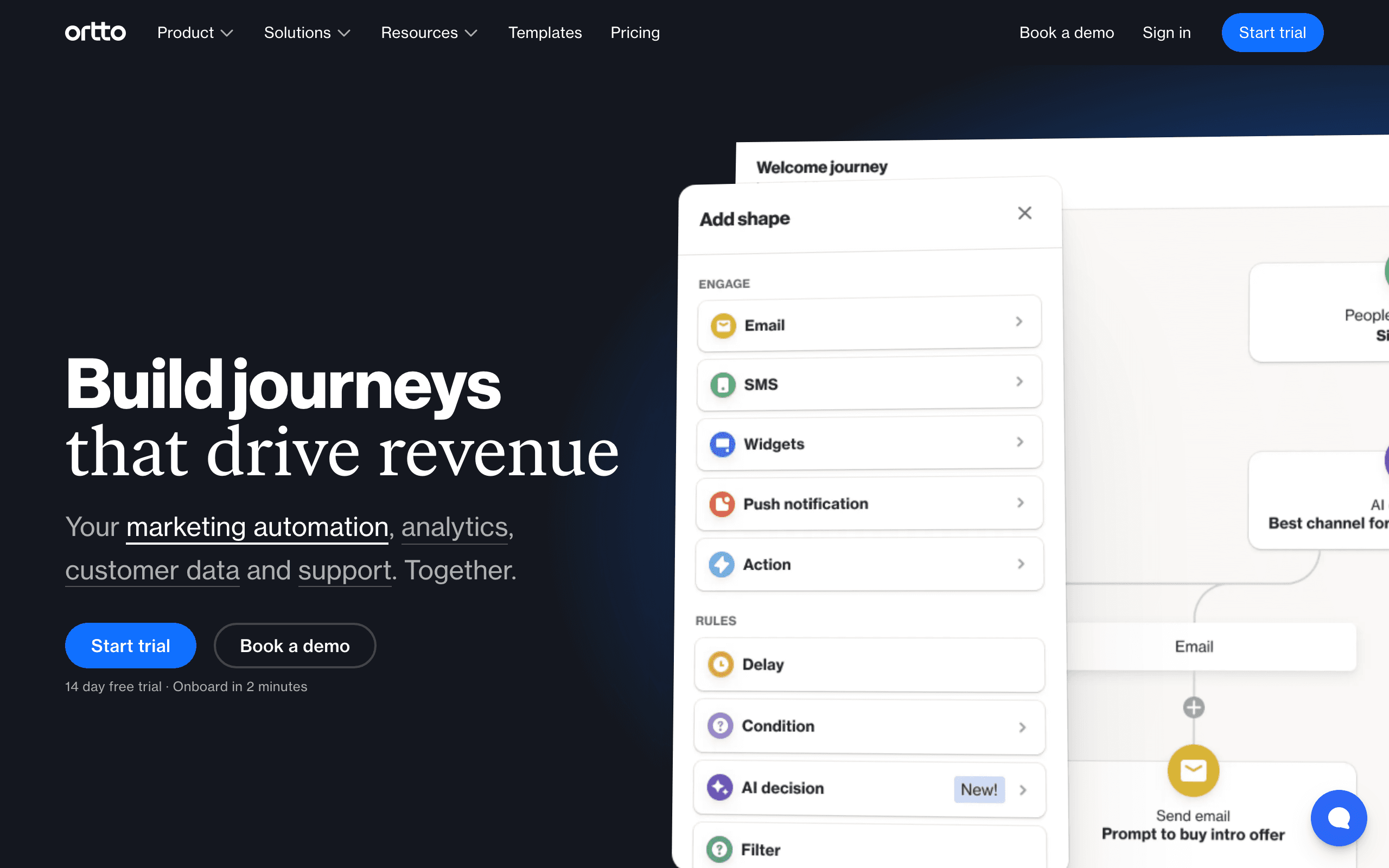
Ortto's CDP layer unifies product, CRM, and support data, so personalization rules can reference data from multiple systems rather than just email engagement history.
- Pricing: From $99/month
- Pros: Unified customer data for personalization, capable journey builder
- Cons: Expensive starting price, broad platform can feel complex
9. Insider
Best for: Enterprise brands wanting AI-driven personalization across web, app, and email
Insider's AI-native architecture personalizes web, in-app, and email content from one customer profile, with predictive product blocks that go beyond simple catalog rules for large-scale deployments.
- Pricing: Custom, commonly starting around $4,800/month
- Pros: True omnichannel AI personalization, predictive product blocks
- Cons: No published pricing, enterprise minimums out of reach for small teams
10. MoEngage
Best for: Mobile-first brands personalizing across push, in-app, and email
MoEngage's Growth and Enterprise tiers add predictive AI and real-time personalization across channels, with dynamic content blocks tied to mobile app behavior.
- Pricing: From $999/month for up to 10,000 monthly active users
- Pros: Strong mobile-linked personalization, predictive AI on higher tiers
- Cons: No free tier, overkill for email-only teams
11. CleverTap
Best for: Mobile app engagement teams wanting personalization tied to app behavior
CleverTap personalizes push, in-app, and email content from unified app engagement data, with segmentation and conditional content tied to mobile usage patterns.
- Pricing: From $999/month for 10,000 tracked profiles
- Pros: Deep mobile behavioral personalization, unified engagement data
- Cons: No free tier beyond trial, email personalization secondary to mobile focus
12. Dotdigital
Best for: Mid-market brands wanting dynamic content with CRM and ecommerce integrations
Dotdigital supports dynamic content blocks and conditional personalization with strong integrations into ecommerce and CRM platforms, positioned for mid-market retail and B2B brands.
- Pricing: From $500/month
- Pros: Solid dynamic content tools, deep platform integrations
- Cons: No published detailed pricing tiers, higher entry cost than SMB-focused tools
13. Listrak
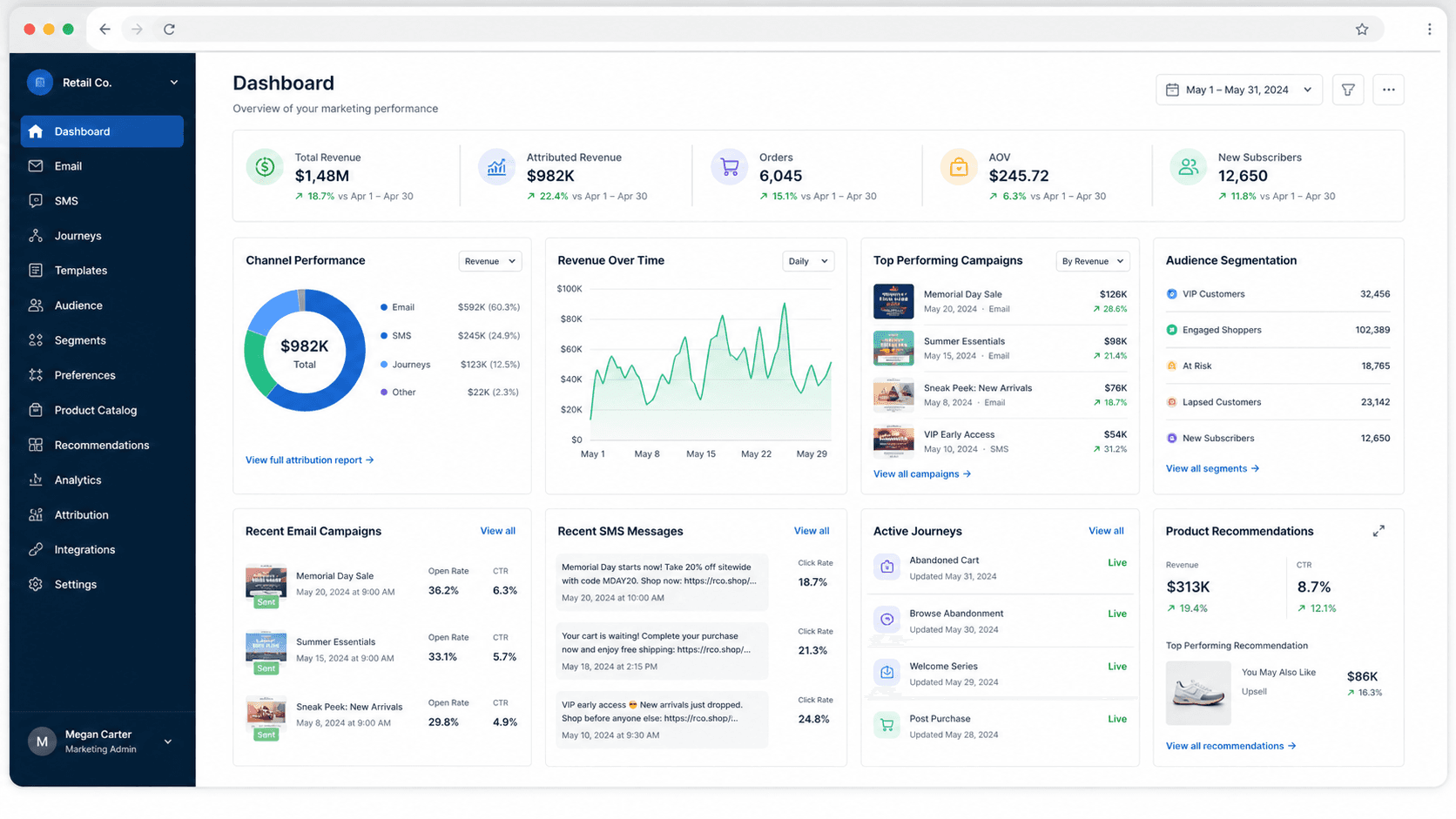
Best for: Retail brands wanting dynamic product personalization at scale
Listrak's personalization engine is built for retail, with dynamic product recommendations and conditional content tuned to purchase and browse behavior at scale.
- Pricing: Custom, not published
- Pros: Strong retail-focused personalization, mature product recommendation engine
- Cons: No public pricing, sales-led procurement
14. Salesforce Marketing Cloud
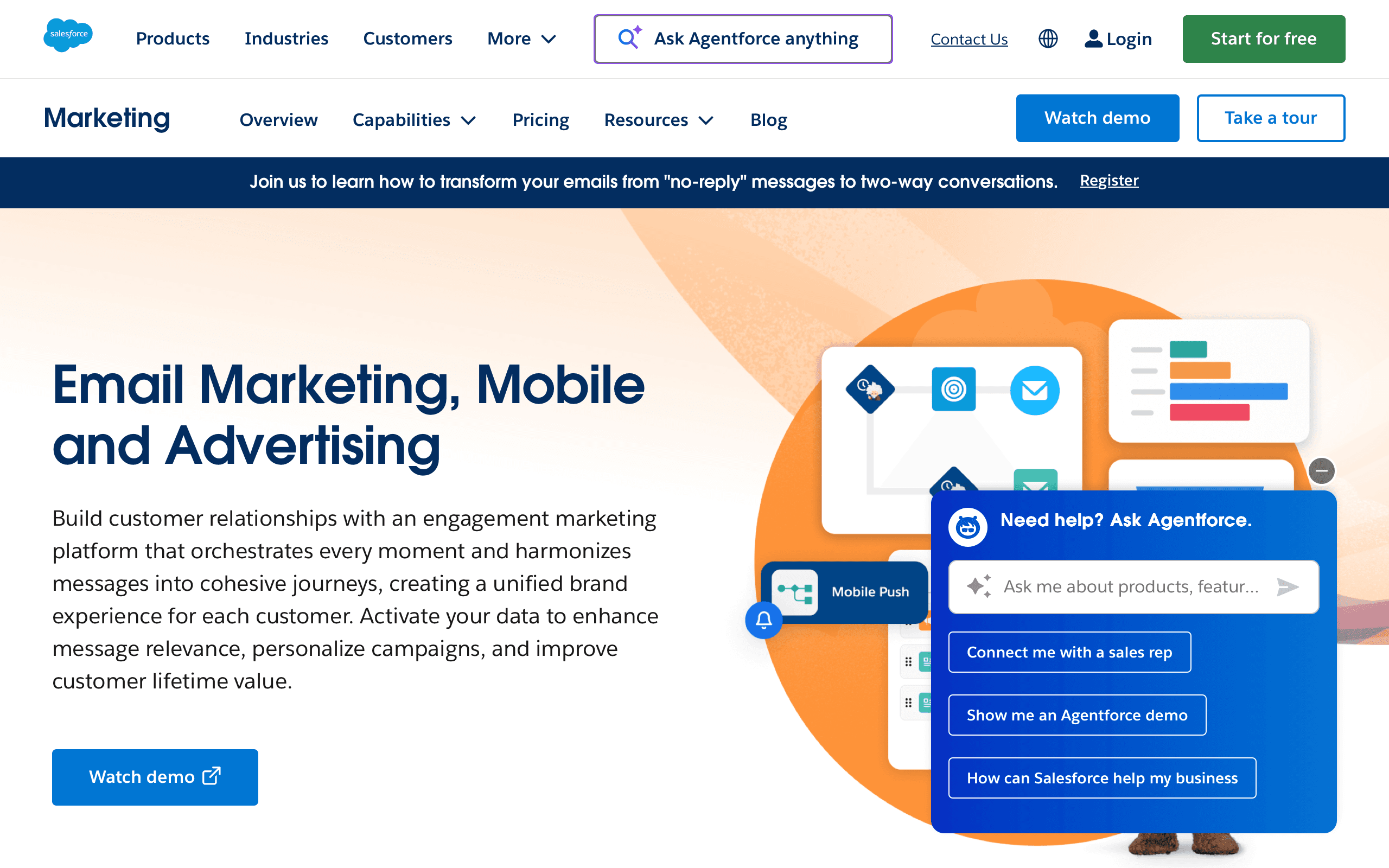
Best for: Enterprises already invested in the Salesforce ecosystem
Marketing Cloud's AMPscript and dynamic content blocks support deep personalization tied to Salesforce CRM data, with Agentforce AI features now built into every plan as of the 2025-2026 rebrand.
- Pricing: From $1,500/org/month (Growth Edition)
- Pros: Deepest CRM-tied personalization for Salesforce shops, AI features included
- Cons: Expensive, steep learning curve for AMPscript, overkill outside the Salesforce ecosystem
15. Bloomreach
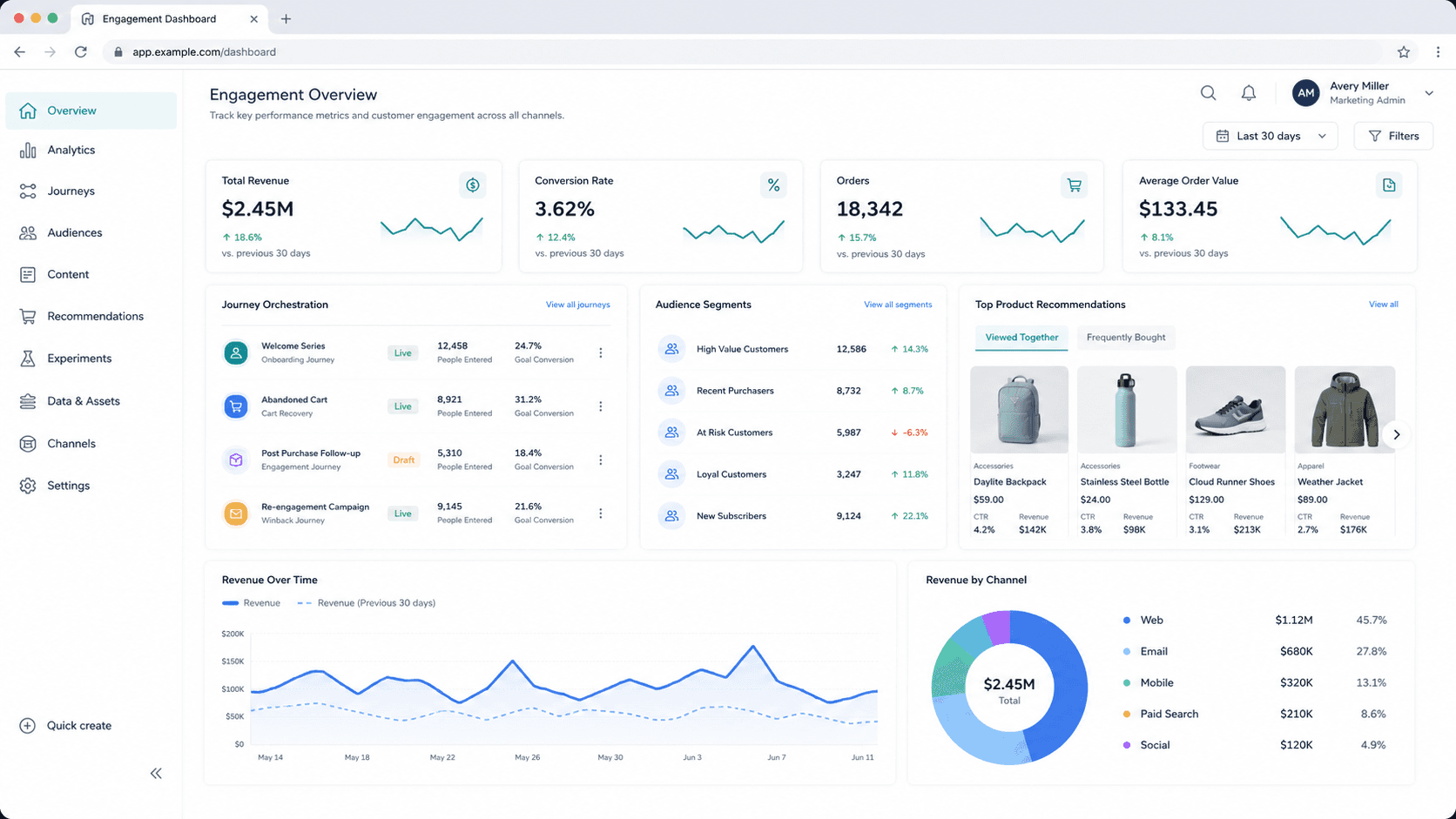
Best for: Enterprise ecommerce brands wanting AI-driven product personalization
Bloomreach Engagement combines a CDP with AI-driven product personalization, rendering highly specific dynamic product blocks based on predictive affinity models rather than simple rules.
- Pricing: Custom, typically $40,000-$250,000+ annually for non-Shopify deployments ($19,020/year for the Shopify app store version)
- Pros: Genuine AI-driven product personalization, deep CDP integration
- Cons: Enterprise-only pricing, sales-led procurement
16. Optimove
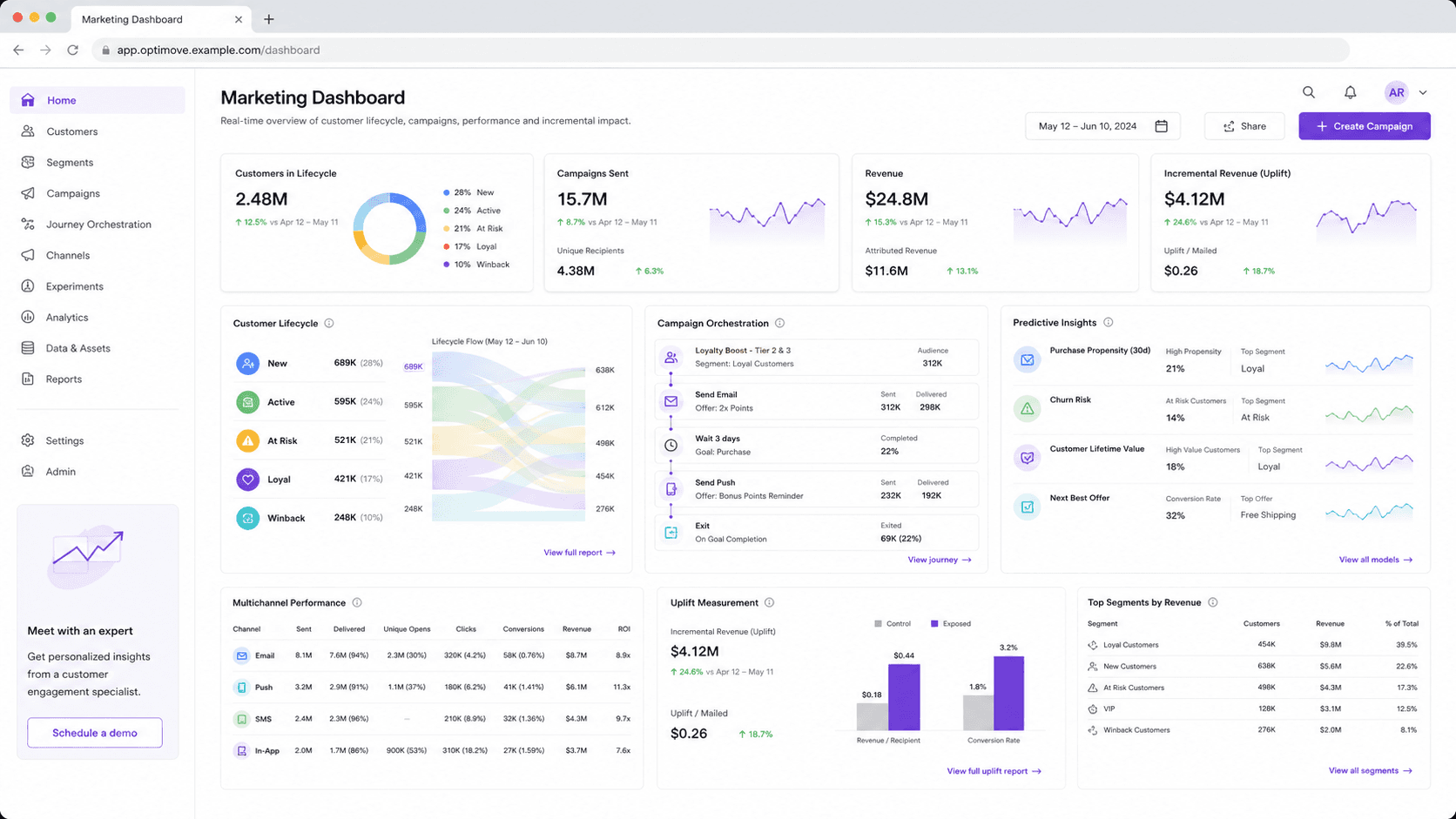
Best for: Enterprise brands wanting predictive personalization across campaigns
Optimove uses predictive modeling to personalize both content and timing, orchestrating dynamic messaging across email and other channels for larger retail and gaming operations.
- Pricing: Custom, typically several thousand dollars per month
- Pros: Genuine predictive personalization, strong cross-channel orchestration
- Cons: Enterprise pricing and implementation, not accessible for small teams
17. Drip
Best for: Ecommerce brands wanting straightforward product personalization
Drip's dynamic content blocks pull from purchase and browse behavior for ecommerce-specific personalization, with less depth than Klaviyo but a simpler setup.
- Pricing: From $39/month
- Pros: Straightforward ecommerce personalization, good segmentation
- Cons: Less event-property depth than Customer.io or Sequenzy
18. Brevo
Best for: Small businesses wanting basic dynamic content at a low price
Brevo supports merge tags and basic conditional content at one of the lowest price points in this comparison, without deep dynamic product blocks or event-property personalization.
- Pricing: Free up to 300 emails/day, from $9/month
- Pros: Very affordable, includes SMS, decent merge tag support
- Cons: Limited dynamic product blocks and event-property personalization
19. GetResponse
Best for: Teams wanting basic personalization alongside a broader marketing suite
GetResponse's dynamic content is limited to basic conditional blocks and merge tags, bundled alongside its landing page and webinar tools.
- Pricing: Free tier available, from $19/month
- Pros: Affordable, bundled with broader marketing tools
- Cons: Personalization depth well behind ecommerce and enterprise specialists
20. HubSpot
Best for: Teams wanting personalization tied to CRM lifecycle data
HubSpot's smart content shows different blocks based on CRM lifecycle stage, list membership, or device, though dynamic product blocks and event-property personalization require deeper (and pricier) configuration.
- Pricing: Free CRM, Marketing Hub from $20/month (real dynamic content depth requires Professional, ~$890/month)
- Pros: CRM-native smart content, huge integration ecosystem
- Cons: Real personalization depth gated behind Professional tier
FAQ
What's the difference between merge tags and dynamic fields?
Nothing functionally - they're two names for the same feature. See the merge tags glossary entry for a full breakdown of syntax and fallback values across platforms.
Do I need event-property personalization, or is conditional content enough?
Most marketing emails only need merge tags and conditional content. Event-property personalization matters specifically when the email is triggered by a behavior and should reference the details of that behavior, like a cart recovery email naming the exact abandoned item.
Can I combine dynamic product blocks with conditional content?
Yes, and this combination is common: a conditional rule decides which section of the email a subscriber sees, and a dynamic product block within that section renders the actual catalog items. See dynamic email content examples for real examples of this pattern.
Does deeper personalization always improve results?
Generally yes for relevance-driven metrics like click rate, but only if the underlying data is accurate. Poorly maintained subscriber attributes or catalog data can make "personalized" emails look broken (wrong product, stale price) rather than helpful. See personalized email examples for what good personalization looks like in practice.
What's the easiest way to start with dynamic personalization?
Start with merge tags and fallback values, since they require no additional setup beyond storing accurate subscriber attributes. Add conditional content once you have clear segments worth differentiating, and add dynamic product blocks only once you have a synced product catalog.
Which of these platforms offer genuine AI-driven (not just rule-based) personalization?
Insider, Bloomreach, and Optimove are the three on this list built around genuine predictive/AI personalization models rather than rule-based dynamic content, and all three are enterprise-priced and sales-led as a result.