Updated October 15, 2026

11 MailCheap Alternatives for Newsletters

MailCheap is one of the cheapest ways to send a newsletter. Here is what to use when you need automations, monetization, a free plan or a different self-hosted stack.

TL;DR

Quick answer: MailCheap is hard to beat on price for a plain weekly newsletter. Pick Sequenzy (free up to 2,500 emails/mo, then $19/mo for 15k emails) if you want the same pay-per-email model plus automations, segments and a free plan. Pick beehiiv or Kit if you monetize with ads, referrals or digital products, Substack if you want a reader network, Ghost for paid memberships on your own site, and Sendy or Listmonk if you want to self-host something more mature.

MailCheap Alternatives at a Glance

Every tool on this page, who it suits, what it costs to start and whether there is a free plan.

  1. 1.Sequenzy

    Newsletters that grew into welcome sequences, segments and product email

    Starting price:
    Free up to 2,500 emails/mo; paid from $19/mo (15,000 emails), unlimited contacts
    Free plan:
    Yes, 2,500 emails/mo with unlimited contacts
  2. 2.beehiiv

    Newsletters that earn from ads, sponsors and paid tiers

    Starting price:
    Free is $0 up to 2,500 subscribers; Lite starts at $49/month billed annually
    Free plan:
    Yes, Free is $0 up to 2,500 subscribers
  3. 3.Kit

    Creators selling products through their list

    Starting price:
    Free up to 10,000 subscribers, then Creator from $39/mo
    Free plan:
    Yes, up to 10,000 subscribers with meaningful creator tools and limits on advanced automation/support
  4. 4.Substack

    Writers who want discovery and paid subscriptions with no upfront cost

    Starting price:
    Free; 10% of paid subscription revenue
    Free plan:
    Not checked
  5. 5.Ghost

    Publishers who want a website, memberships and newsletter together

    Starting price:
    Publisher $29/mo at 1,000 members, $88/mo at 10k (yearly)
    Free plan:
    Not checked
  6. 6.Buttondown

    Technical writers who want Markdown and a mature API

    Starting price:
    Free for the first 100 subscribers, then from $9/mo (up to 1,000 subscribers)
    Free plan:
    Yes, first 100 subscribers are free
  7. 7.Sendy

    Self-hosters who want autoresponders and segments on SES

    Starting price:
    $69 one-time software license plus Amazon SES sending costs
    Free plan:
    No free plan
  8. 8.Listmonk

    Developers who want free, flexible self-hosted list management

    Starting price:
    Free open-source software
    Free plan:
    Yes, free and open source
  9. 9.EmailOctopus

    Small newsletters that want a free start and low cost

    Starting price:
    Free for 2,500 subscribers and 10,000 emails/month; Pro from $9/mo billed yearly ($10/mo monthly)
    Free plan:
    Yes, 2,500 subscribers and 10,000 emails/month
  10. 10.MailerLite

    Small businesses that want newsletters plus marketing automation

    Starting price:
    Free up to 250 subscribers and 2,500 monthly emails; Comfort starts at $12/month
    Free plan:
    Yes, up to 250 subscribers and 2,500 monthly emails
  11. 11.Brevo

    Large lists that want pay-per-email pricing with more channels

    Starting price:
    Free plan with up to 300 emails/day, then Starter from $9/month for 5,000 emails
    Free plan:
    Yes, with up to 300 emails/day after account approval

Prices checked against each vendor's pricing page, most recently on October 8, 2026. Plans change often, so confirm on the vendor's site before you buy.

11 Best MailCheap Alternatives

Our Pick for SaaS Companies
Sequenzy landing page screenshot
Sequenzy
Pay per emailAutomationsMCP + API + CLI

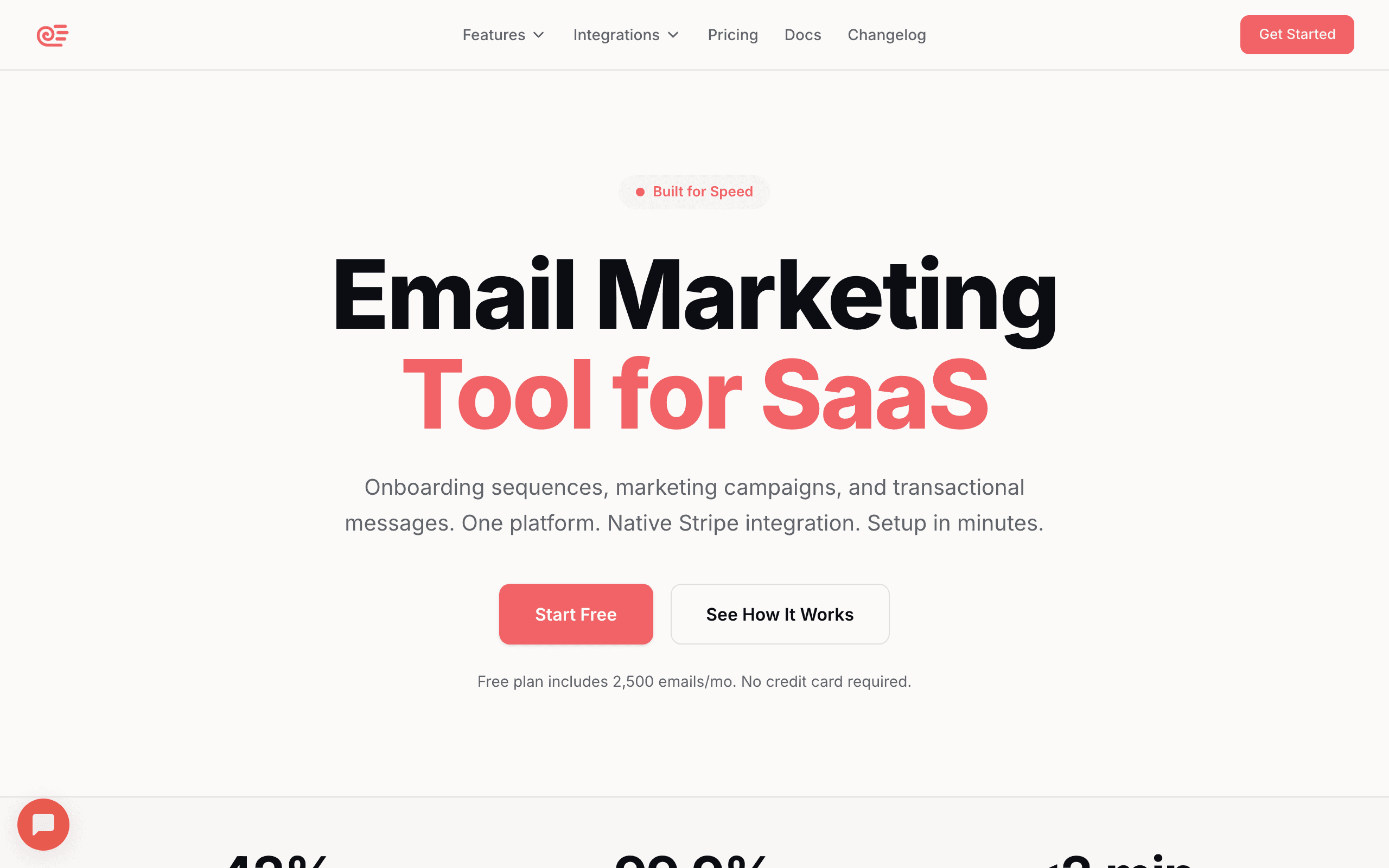
Sequenzy bills the same way MailCheap does: by emails sent, with unlimited contacts. The difference is everything around the send.

Sequenzy has visual automations and multi-step sequences, segments built from tags, custom attributes and behavior, A/B testing, transactional email and a free plan, where MailCheap has one welcome email and a send-to-everyone (or most-engaged-first) campaign flow. It also ships a remote MCP server, a REST API and a CLI, so the agent workflow MailCheap advertises carries over. It is built for SaaS and product companies, so it connects to Stripe, Paddle and Polar for billing-triggered email. What it lacks for pure publishers: a hosted public archive of past issues and paid newsletter subscriptions.

Visit
Best for
Newsletters that grew into welcome sequences, segments and product email
Pricing
Free up to 2,500 emails/mo; paid from $19/mo (15,000 emails), unlimited contacts

Pros

  • Priced by emails sent, contacts unlimited
  • Free plan, so you can test before paying
  • Visual automations, sequences and segments
  • Remote MCP server, API and CLI
  • Transactional and marketing email in one account

Cons

  • No hosted archive of past issues
  • No paid newsletter subscriptions
  • Slightly higher price than MailCheap at the same volume
  • Built for SaaS more than for publishers
beehiiv landing page screenshot
beehiiv
MonetizationAd networkReferrals

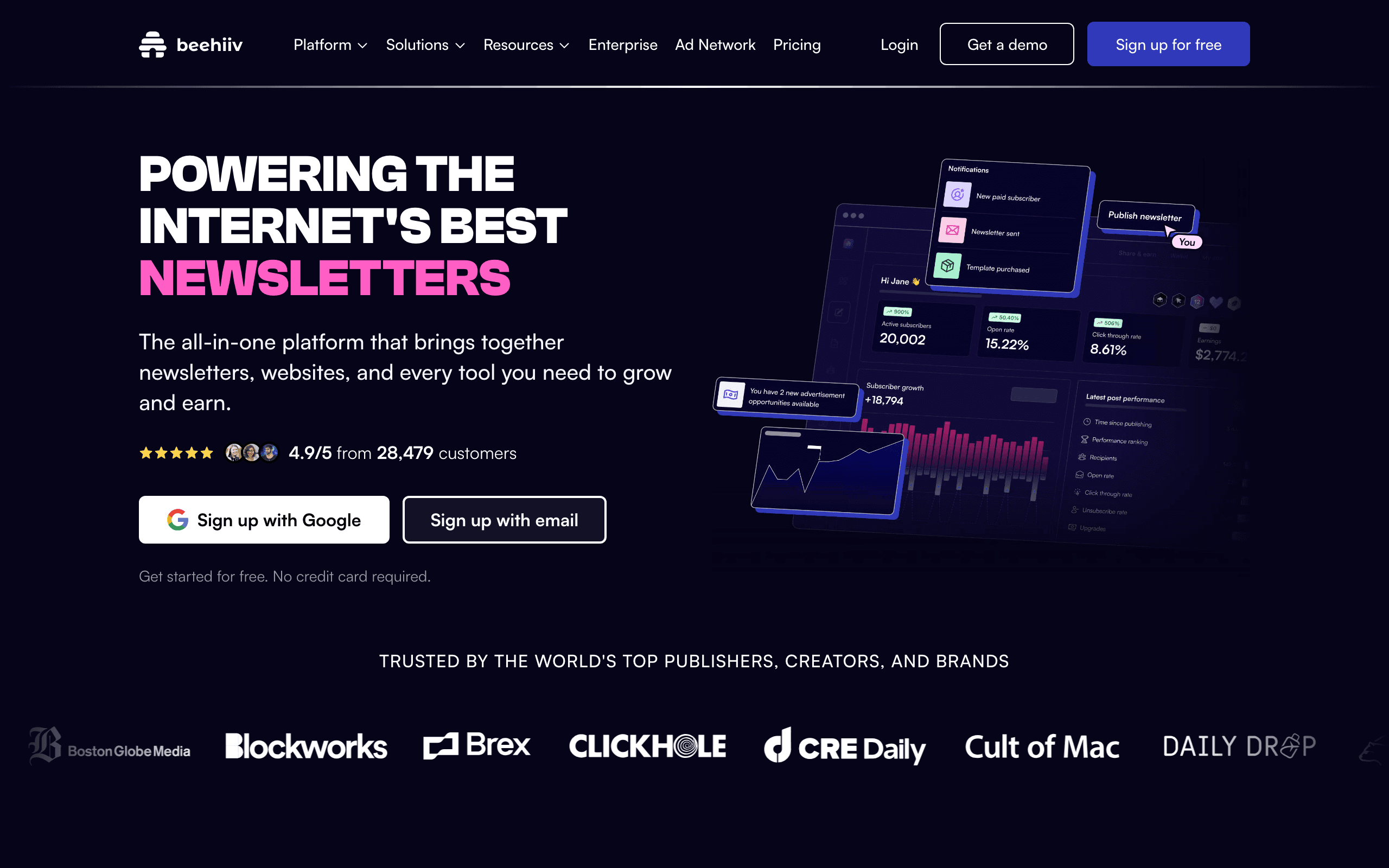
beehiiv is the tool MailCheap was built to replace, and it is still the stronger product if the newsletter is a business. Lite adds the Ad Network, paid subscriptions with a 0% take rate, a referral program, automations, polls and A/B testing; Pro adds a sponsorship storefront and removes beehiiv branding.

The catch is the bill: beehiiv charges by subscriber tier, so dormant readers cost the same as active ones. Lite is $119/month at 10,000 subscribers on yearly billing, against $39/month on MailCheap Growth for a weekly issue to the same list. The free plan covers 2,500 subscribers, which MailCheap has no equivalent for.

Visit
Best for
Newsletters that earn from ads, sponsors and paid tiers
Pricing
Free up to 2,500 subscribers; Lite $119/mo at 10k (yearly)

Pros

  • Ad Network, Boosts and sponsorship tools
  • Paid subscriptions with 0% platform fee
  • Built-in referral program
  • Free plan up to 2,500 subscribers
  • Automations and A/B testing on Lite

Cons

  • Priced by subscribers, including inactive ones
  • About 3x MailCheap's cost at 10,000 subscribers
  • MCP cannot publish or schedule posts
  • Branding removal needs Pro

What users say

View source reviews
Glenn · Trustpilot

“Made it easy to send my newsletter on a weekly basis! Love the platform, and I have tried several. It is awesome that all the published articles live on a website that can be referenced later, like a blog.”

Margaret · Trustpilot

“I've had a great experience sending my newsletter using beehiiv. The platform is easy to use and navigate, there are always new features being added, and the new website builder is awesome. Even with improvements, it doesn't feel overwhelming.”

Kit landing page screenshot
Kit
CreatorsDigital productsVisual automations

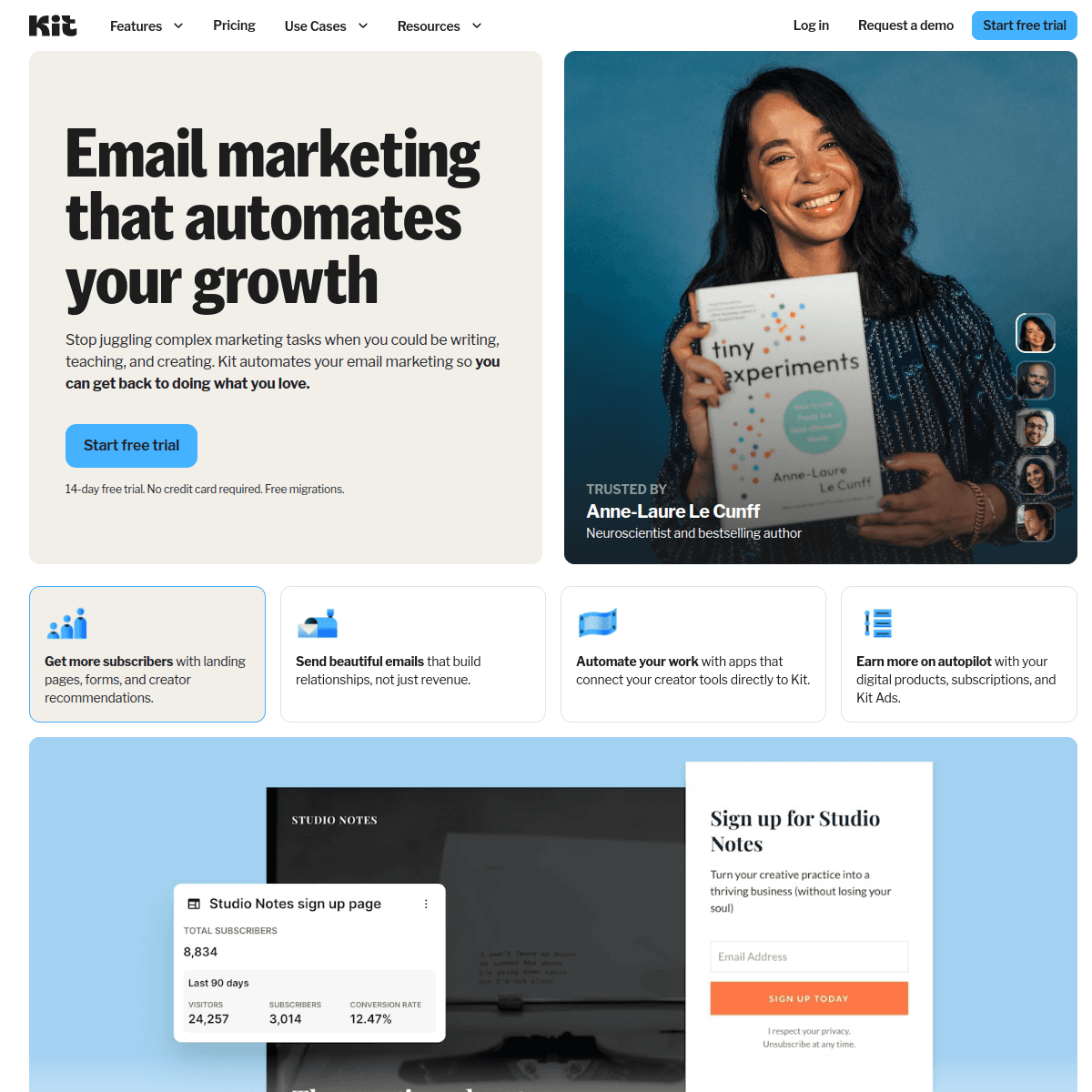
Kit (formerly ConvertKit) suits creators whose newsletter sells something: courses, downloads, coaching or paid newsletters. It has visual automations, sequences, tags, landing pages, a creator recommendations network and built-in commerce.

Its free plan is unusually generous at up to 10,000 subscribers, though it limits automations. Paid plans are priced by subscribers: Creator is $139/month at 10,000 subscribers on monthly billing. Compared with MailCheap you pay several times more, but you get the funnel tools MailCheap does not attempt.

Visit
Best for
Creators selling products through their list
Pricing
Free up to 10,000 subscribers; Creator $139/mo at 10k

Pros

  • Free plan up to 10,000 subscribers
  • Visual automations and sequences
  • Sell digital products and paid newsletters
  • Landing pages and forms
  • Official MCP server

Cons

  • Subscriber-based pricing climbs quickly
  • Free plan limits automations
  • More funnel tool than publishing tool
  • API and MCP actions need a paid plan

What users say

View source reviews
K.G. · Trustpilot

“This company now calls itself 'Kit.' This platform has more than a few issues. It doesn't have the basic functionality that other platforms such as Constant Contact and Mailchimp have had for years. And last year, they raised their prices 50% without telling customers.”

Paris · Trustpilot

“I signed up for ConvertKit Trial and the first thing I noticed is there are very limited capabilities so I immediately provided my card details for the full experience but was still limited. It was preventing me from creating what I needed.”

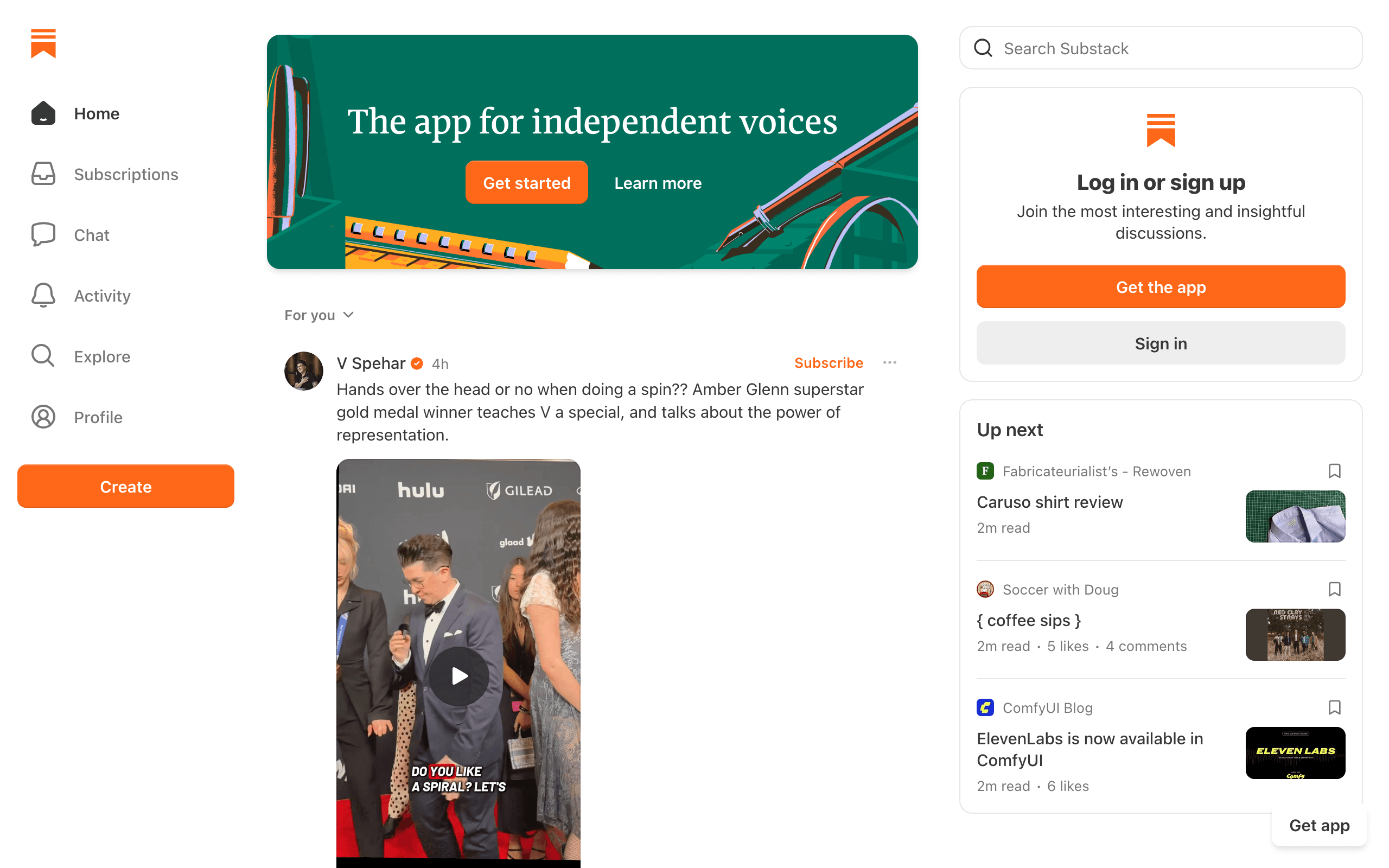
Substack landing page screenshot
Substack
FreeReader networkPaid subscriptions

Substack costs nothing until readers pay you, then takes 10% of paid subscription revenue plus Stripe fees. Its real advantage over MailCheap is distribution: the Substack app, Notes and recommendations from other writers can bring readers you would not find on your own.

The trade-off is ownership and branding. Your publication lives inside Substack's network and design, there is no API for sending, and the MCP is read-only. For a free newsletter that never charges, Substack is cheaper than MailCheap; once you charge, the 10% cut usually costs far more than MailCheap's flat plan.

Visit
Best for
Writers who want discovery and paid subscriptions with no upfront cost
Pricing
Free; 10% of paid subscription revenue

Pros

  • Free to start and to send
  • Reader network, app and Notes for discovery
  • Paid subscriptions built in
  • Podcasts, video and chat in one place

Cons

  • 10% of paid revenue, every month
  • Limited design and branding control
  • No sending API; MCP is read-only
  • You build on Substack's network, not your own
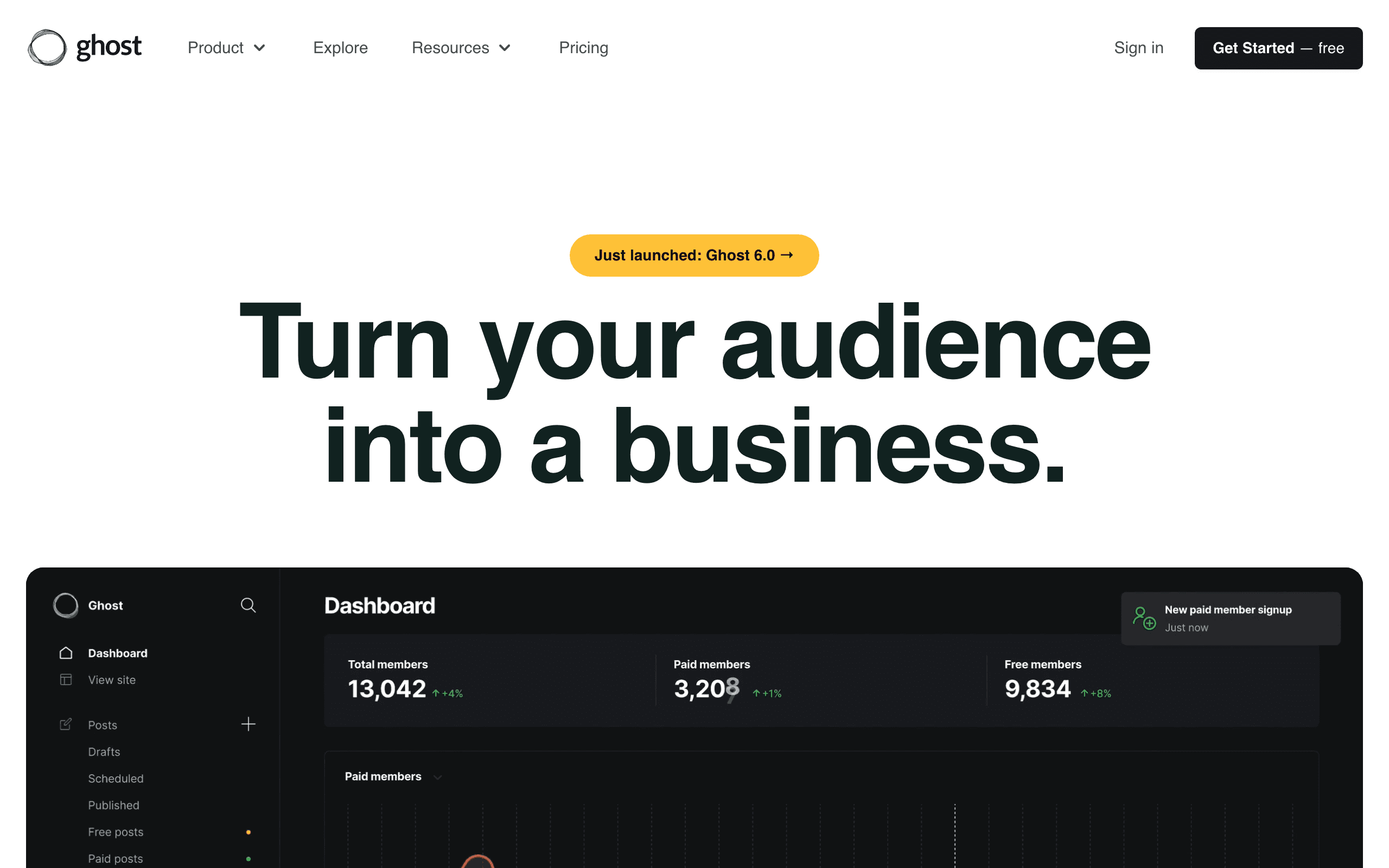
Ghost landing page screenshot
Ghost
Open sourceMembershipsPublishing site

Ghost is the open-source alternative for publishers who want a full website and paid memberships, not only a newsletter. Ghost(Pro) Publisher is $29/month at 1,000 members and $88/month at 10,000 members on yearly billing, with 0% fees on paid memberships and unlimited sends.

You can also self-host Ghost for free, but newsletters on a self-hosted install need Mailgun. MailCheap's issue pages are a lighter version of the same idea: archive, author page and sitemap, without themes, tiers or a CMS.

Visit
Best for
Publishers who want a website, memberships and newsletter together
Pricing
Publisher $29/mo at 1,000 members, $88/mo at 10k (yearly)

Pros

  • Open source, self-hostable
  • Paid memberships with 0% platform fee
  • Full CMS with themes and SEO controls
  • Unlimited email sends on Ghost(Pro)

Cons

  • Priced by members, free and paid
  • Self-hosted newsletters require Mailgun
  • Email automation is basic
  • More setup than MailCheap Cloud
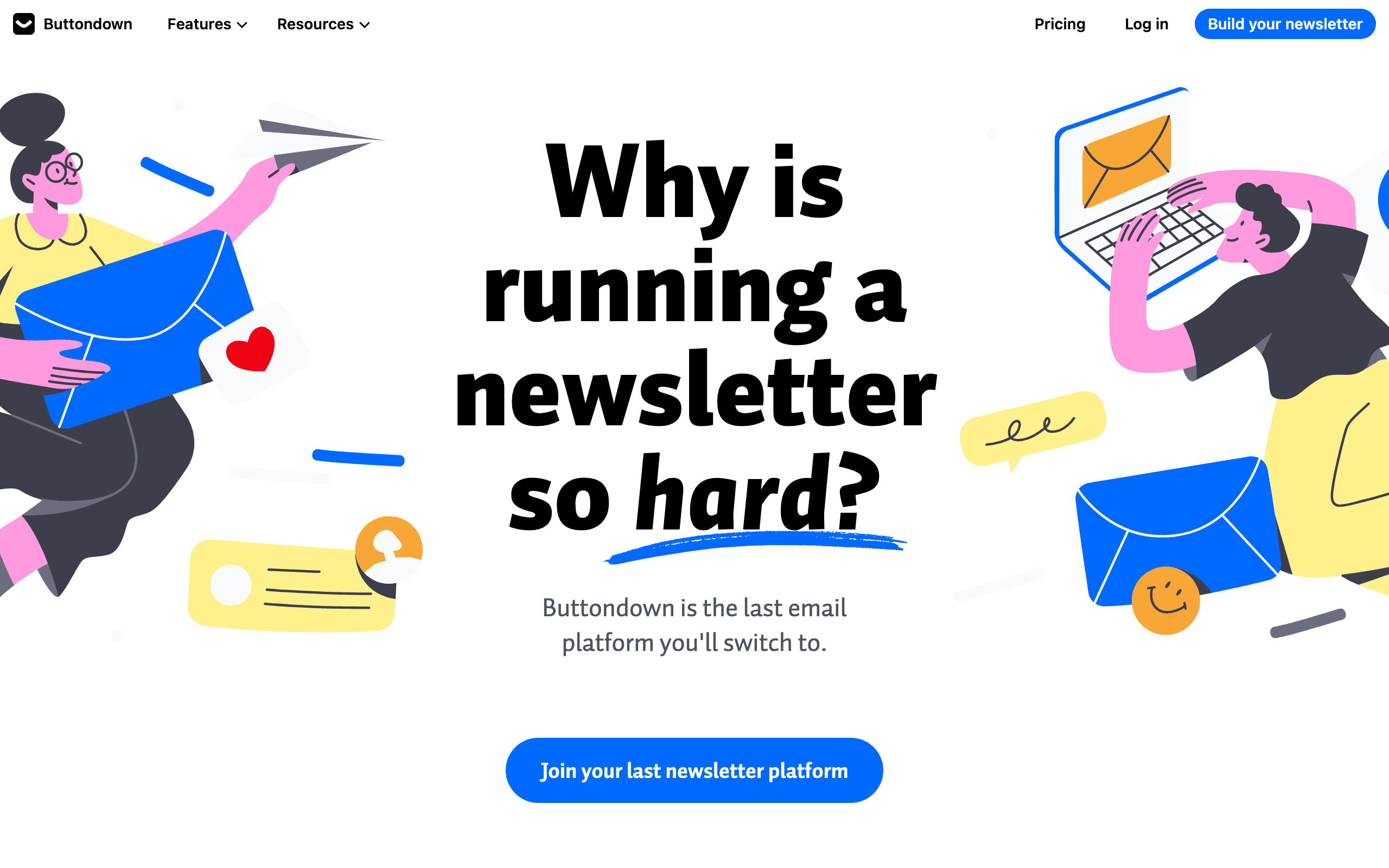
Buttondown landing page screenshot
Buttondown
MarkdownDeveloper APIIndie

Buttondown is the long-running indie option for writers and developers: Markdown-first writing, a well-documented API, RSS-to-email, paid newsletters and a public archive. It charges by active subscriber, $79/month for up to 10,000 on the Professional tier, and sells some features such as automations and analytics as add-ons.

Choose it over MailCheap when you want a tool with years of track record, paid subscriptions or RSS-to-email, and you are fine paying roughly twice as much for a weekly issue.

Visit
Best for
Technical writers who want Markdown and a mature API
Pricing
$79/mo for up to 10,000 subscribers, add-ons extra

Pros

  • Markdown-first editor
  • Mature, well-documented API
  • Paid newsletters and RSS-to-email
  • Independent and established

Cons

  • Add-ons raise the real price
  • No official MCP server
  • Priced by subscribers, not sends
  • Fewer deliverability guardrails documented than MailCheap
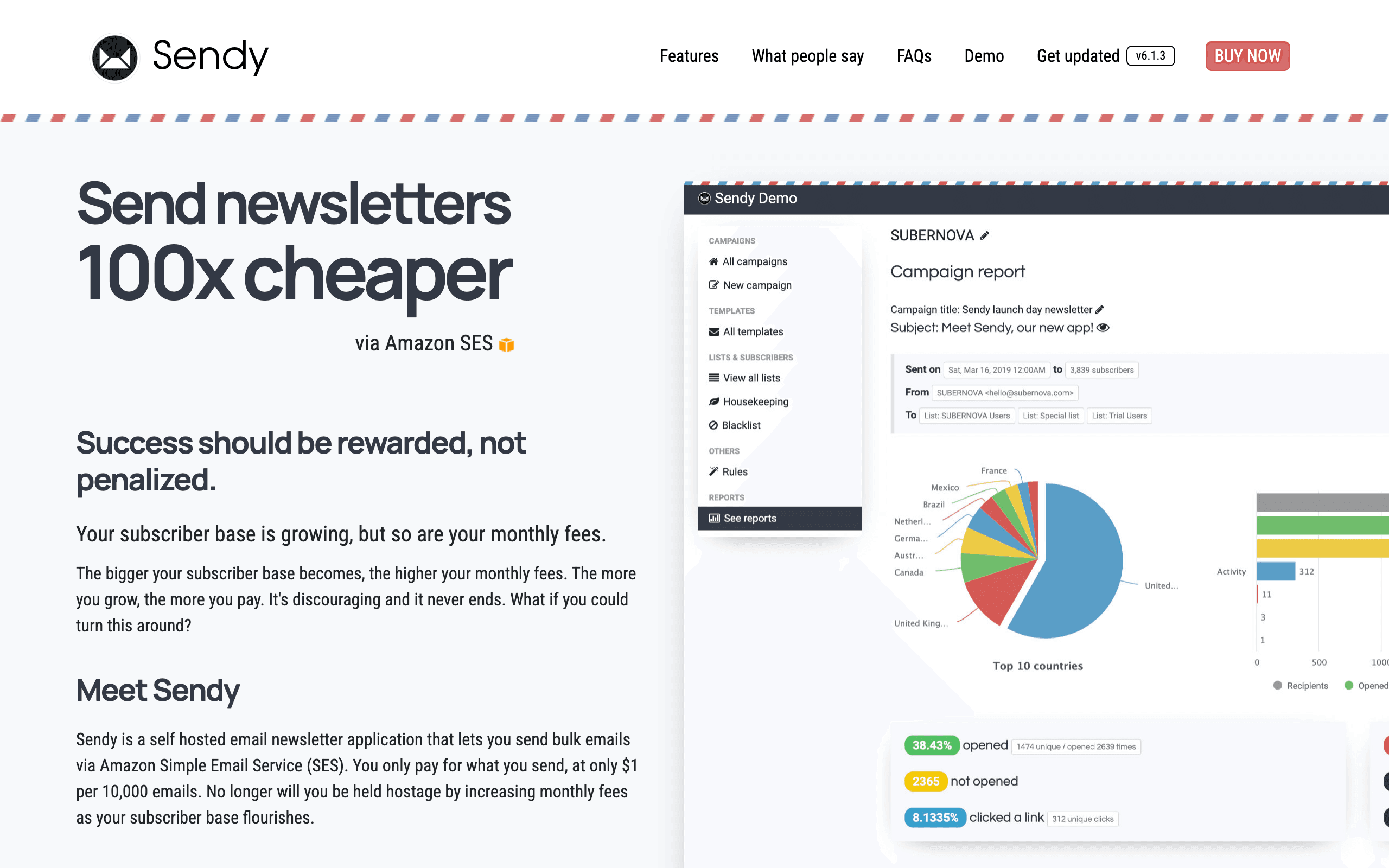
Sendy landing page screenshot
Sendy
Self-hostedAmazon SESOne-time license

Sendy is the original "self-hosted newsletter on Amazon SES" app, and the closest thing to self-hosted MailCheap. You pay $69 once, run it on any PHP and MySQL host, and send through SES for about $0.10 per 1,000 emails.

Over a decade it has added autoresponders, segments, custom fields, white-labeled client brands and rules with webhooks, none of which MailCheap has. What you give up is MailCheap's modern editor, automatic warm-up and bounce-rate pauses, hosted issue website and MCP server.

Visit
Best for
Self-hosters who want autoresponders and segments on SES
Pricing
$69 one-time license, plus Amazon SES sending

Pros

  • One-time license, no monthly fee
  • Autoresponders and segmentation
  • White-label brands for agencies
  • Proven on SES for over a decade

Cons

  • You run the server, updates and backups
  • Dated interface
  • No MCP server or hosted option
  • Major version upgrades cost extra

What users say

View source reviews
Tom Carter · Trustpilot

“Saves me a lot of money and works well for me. It requires a little bit of technical knowledge, but if you are good at that, you can't find a cheaper solution for sending marketing campaigns.”

Rachel Smith · Trustpilot

“After using Sendy for more than 10 years, we gave up due to the terrible/nonexistent customer service. Their latest update would not work on our platform.”

Listmonk landing page screenshot
Listmonk
Open sourceSelf-hostedAny SMTP

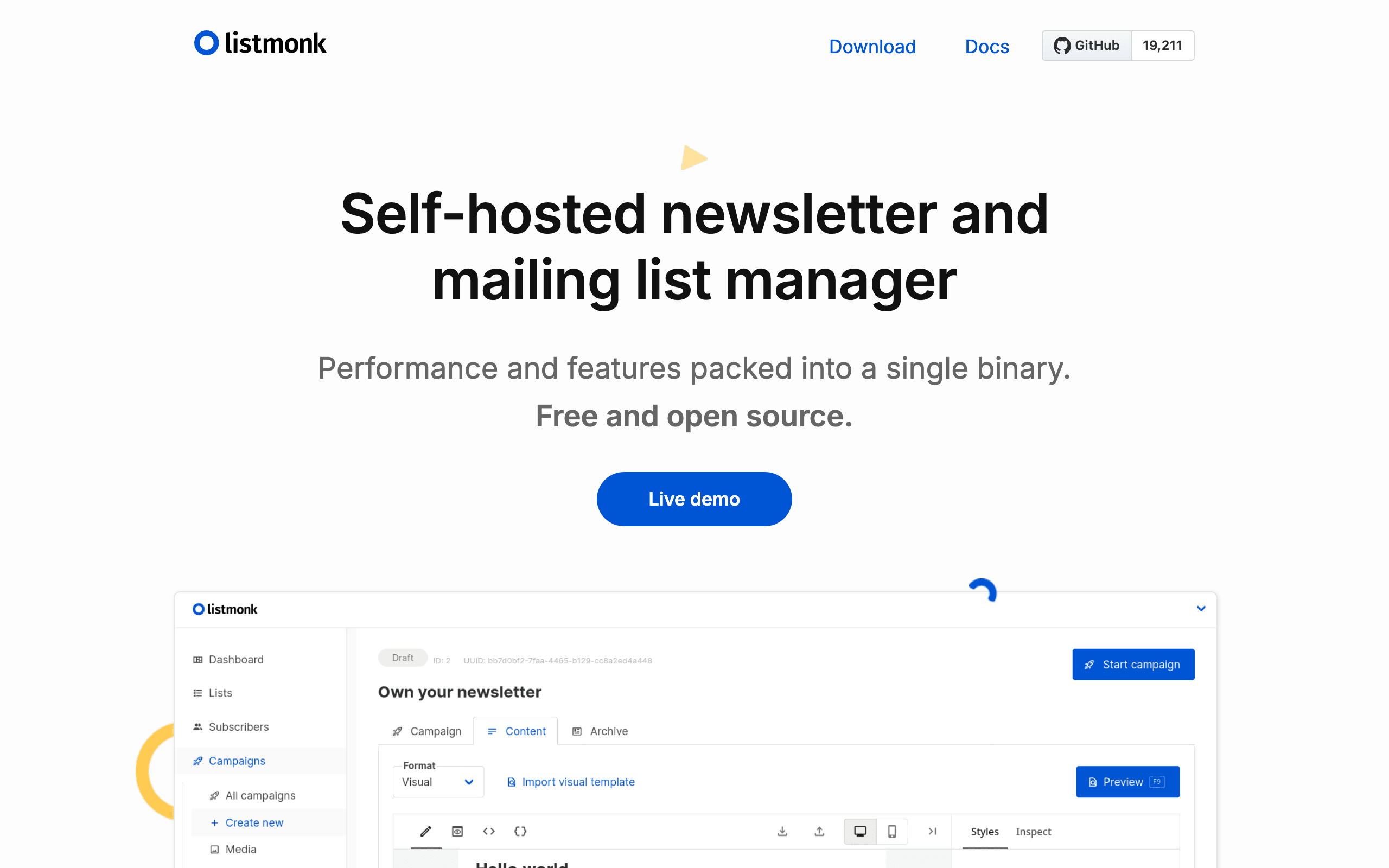
Listmonk is a free, open-source newsletter and mailing list manager that ships as a single binary with PostgreSQL. It works with any SMTP provider, handles millions of subscribers, and has lists, segments by SQL query, templates, transactional templates and a full API.

Compared with self-hosting MailCheap it is more mature and more flexible, and it does not need MongoDB or a hosted queue. It is also more of an admin tool: no hosted issue website, no automatic warm-up, and no drip automations.

Visit
Best for
Developers who want free, flexible self-hosted list management
Pricing
Free and open source; hosting and SMTP extra

Pros

  • Free, AGPL-licensed, single binary
  • Works with any SMTP provider
  • SQL-powered segments and a full API
  • Scales to very large lists

Cons

  • You run and secure the server
  • No drip automations
  • No public newsletter website
  • No official MCP server
EmailOctopus landing page screenshot
EmailOctopus
BudgetFree planSimple

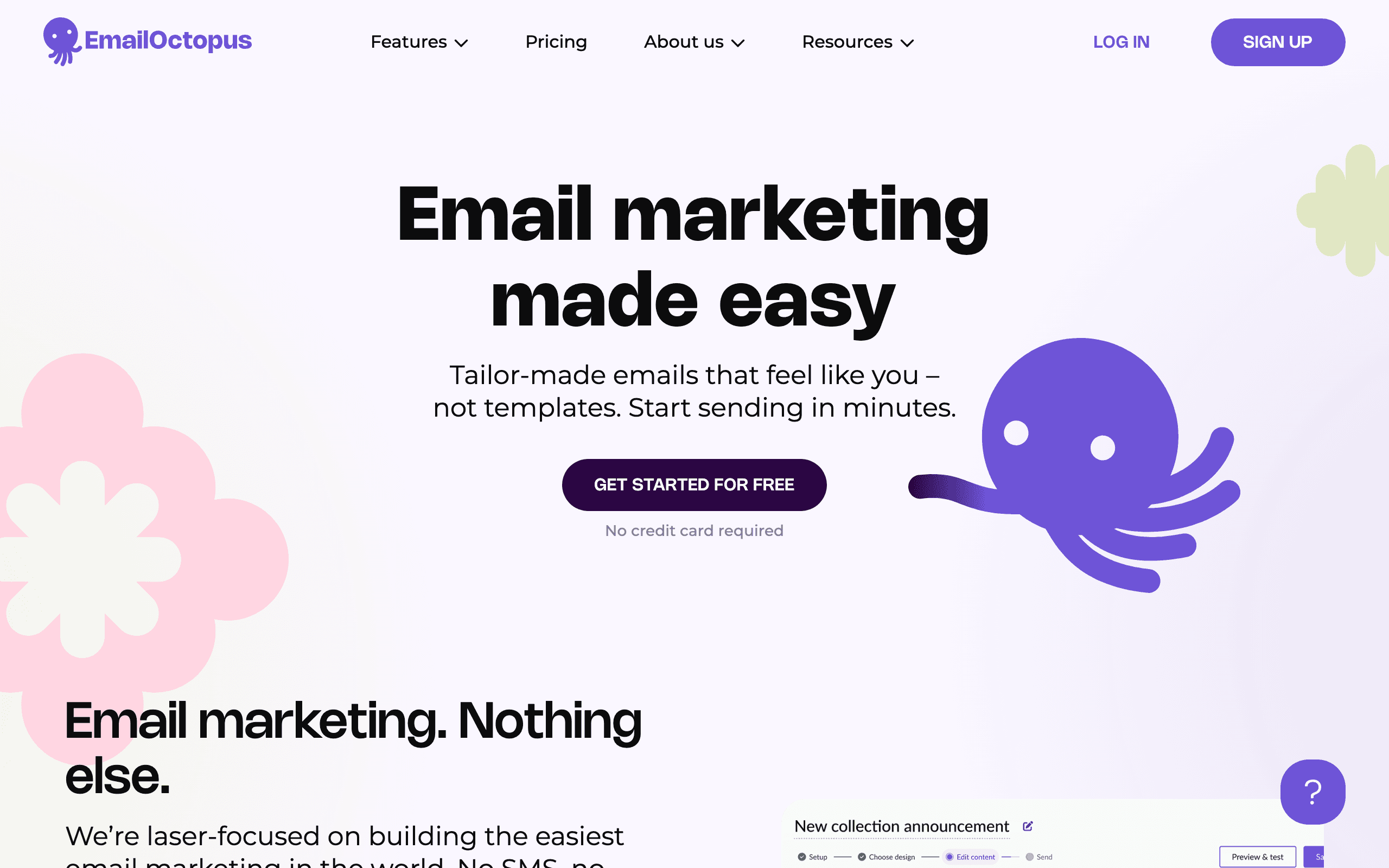
EmailOctopus is a low-cost hosted newsletter tool with a free plan for 2,500 subscribers and 10,000 emails a month. Pro is $40/month at 10,000 subscribers on yearly billing, removes EmailOctopus branding and unlocks unlimited landing pages and forms.

It costs about the same as MailCheap Growth for a weekly issue and adds simple automations and a free plan, in exchange for per-subscriber pricing, no hosted issue website and no MCP server.

Visit
Best for
Small newsletters that want a free start and low cost
Pricing
Free up to 2,500 subscribers; Pro $40/mo at 10k (yearly)

Pros

  • Free plan with 10,000 emails a month
  • Simple automations
  • Landing pages and forms included
  • Low price at mid-size lists

Cons

  • Priced by subscribers
  • No official MCP server
  • No public archive site like MailCheap's
  • Free plan shows EmailOctopus branding

What users say

View source reviews
Ali · Trustpilot

“EmailOctopus is very likely your best and most affordable option because it is designed specifically to be cheaper and simpler for beginners and small businesses.”

Konstantin Kitmanov · Trustpilot

“The email layout tool is powerful, flexible and convenient. The sign-up form is unobtrusive and easily customizable. Free automation on the free tier is exactly what I need.”

MailerLite landing page screenshot
#10
MailerLite
AutomationsWebsite builderPaid newsletters

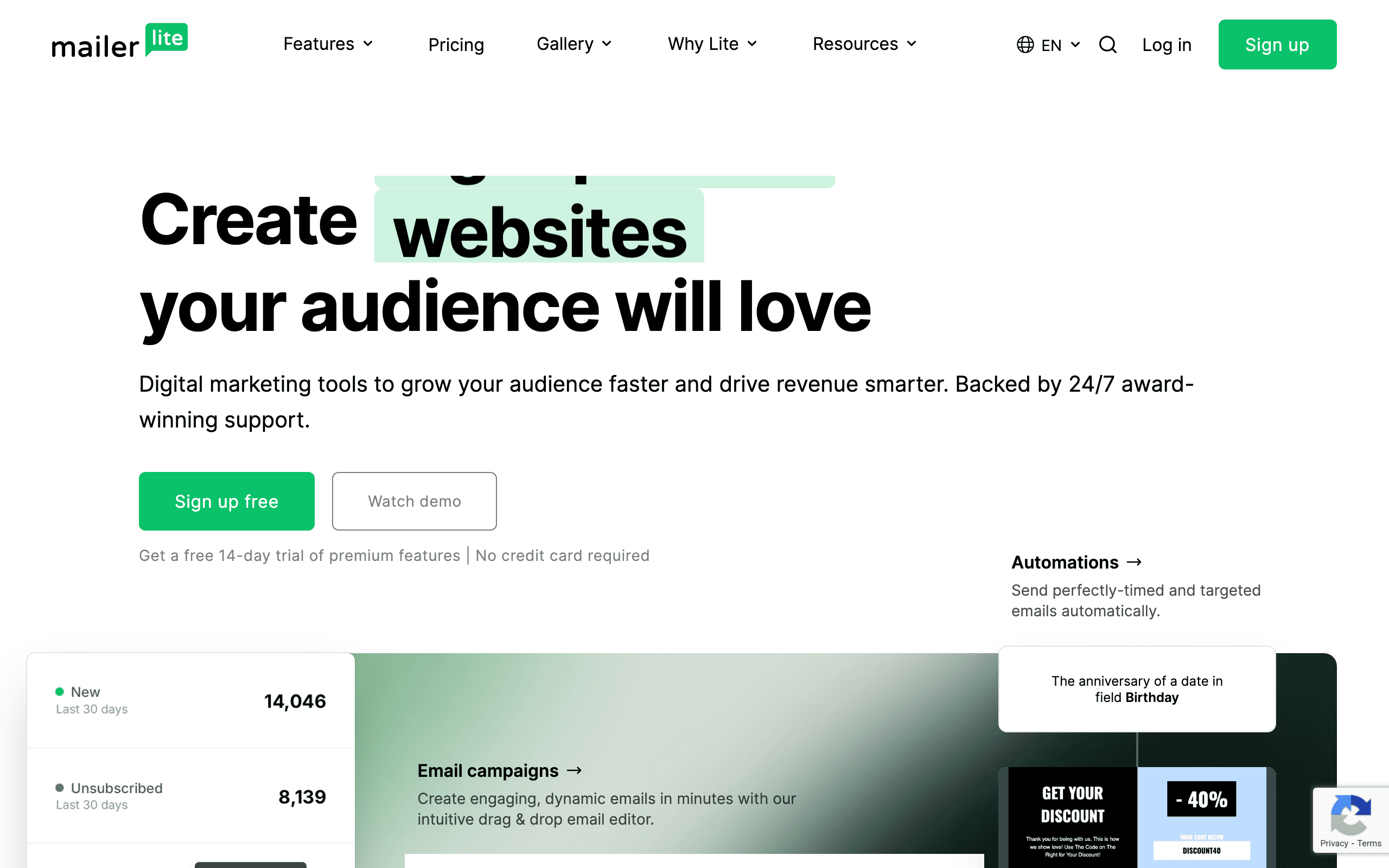
MailerLite is the all-round small-business option: automations, landing pages, a website builder, pop-ups, paid newsletters and digital product sales, plus an official remote MCP server. The free plan is small (250 subscribers), and Comfort is $89/month at 10,000 subscribers.

Use it instead of MailCheap when the newsletter is one part of a marketing setup that also needs forms, landing pages and automated journeys.

Visit
Best for
Small businesses that want newsletters plus marketing automation
Pricing
Free up to 250 subscribers; Comfort $89/mo at 10k

Pros

  • Visual automations and segments
  • Landing pages, website builder and pop-ups
  • Paid newsletters and digital products
  • Official remote MCP server

Cons

  • Free plan is only 250 subscribers
  • Roughly double MailCheap's price at 10,000 subscribers
  • Priced by subscribers
  • Strict account approval for new senders

What users say

View source reviews
Alpine Sport · Trustpilot

“Our company used MailerLite as a professional email tool for legitimate business communication. Then, without notice, the account was terminated. We received only a generic rejection with no meaningful explanation.”

Joseph Berk · Trustpilot

“MailerLite is a powerful platform once everything is set up, especially for landing pages and email automation. The editor is flexible, and support was responsive and helpful when I hit a confusing publishing issue.”

Brevo landing page screenshot
#11
Brevo
Pay per emailUnlimited contactsSMS and WhatsApp

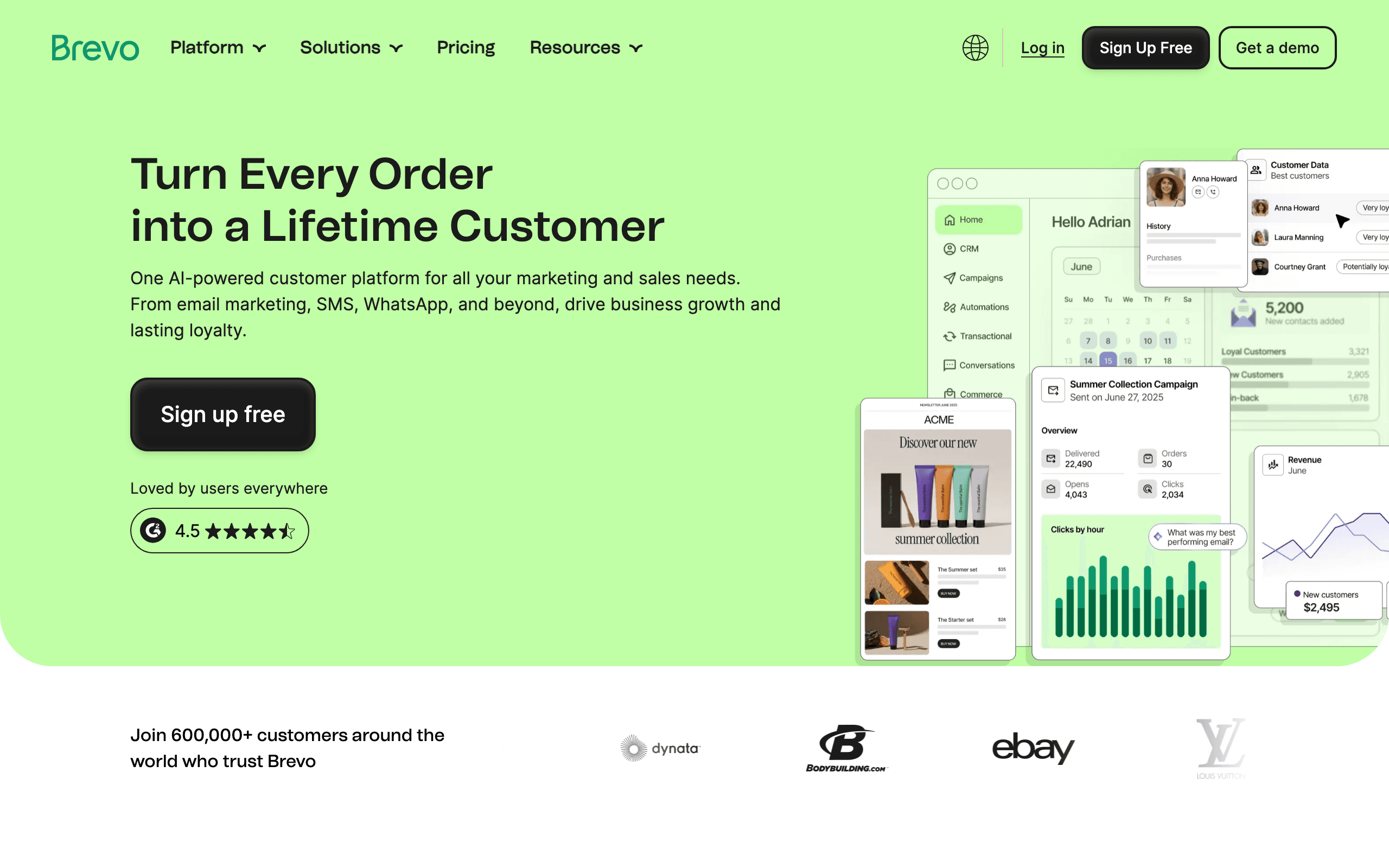
Brevo is the other big platform that prices by email volume with unlimited contacts, so dormant readers do not raise the bill there either. Starter begins at $9/month for 5,000 emails and scales with volume; the free plan allows 300 emails a day.

You get automations, transactional email, SMS, WhatsApp and a CRM, which makes it a broader tool than MailCheap with a busier interface. Brevo branding stays on emails unless you pay to remove it.

Visit
Best for
Large lists that want pay-per-email pricing with more channels
Pricing
Free (300 emails/day); Starter from $9/mo for 5,000 emails

Pros

  • Pay per email, unlimited contacts
  • Automations, transactional email and SMS
  • Built-in CRM
  • Official remote MCP server

Cons

  • Brevo branding unless you pay to remove it
  • Busier interface than a newsletter tool
  • Newsletter website features are limited
  • Some features gated to higher plans

What users say

View source reviews
Gary Curran · Trustpilot

“Disappointing experience with Brevo. Our account was initially suspended after a first campaign due to bounce rate. We followed the required self-service steps and successfully revalidated the account ourselves. After this, support took ages to respond.”

Larry Chin · Trustpilot

“Brevo is a solid service for handling your marketing emails and much more. The tech support is fast and good. Making a marketing email is fast and easy. I have used SendinBlue, now Brevo, for many years now.”

Why Look for a MailCheap Alternative

You need more than one welcome email

MailCheap sends campaigns and a single welcome email per newsletter. There are no drip sequences, tags, segments or A/B tests in its dashboard, API or MCP. If you want an onboarding series or different emails for different readers, you need another tool.

You want to charge readers

MailCheap has no paid subscriptions, ad network, referral program or sponsor tools. beehiiv, Substack, Ghost, Kit and Buttondown all let you earn from the list directly.

You want to try before paying

MailCheap Cloud has no free plan or trial, and it does not refund partial months. beehiiv, Kit, Substack, EmailOctopus and Sequenzy all let you start for free.

You want support for a self-hosted install

Self-hosting MailCheap needs MongoDB, Upstash QStash and Amazon SES production access, and the repository says self-hosters get no support. Sendy and Listmonk have years of documentation and community answers behind them.

Feature Comparison

FeatureMailCheapSequenzybeehiivKitSubstackGhostSendy
Price at 10k subs, weekly
$39/mo
$49/mo (60k emails)
$119/mo (yearly)
$139/mo
Free + 10% of paid
$88/mo (yearly)
$69 once + SES
Pricing basis
Emails sent
Per email sent
Subscribers
Subscribers
Revenue share
Members
License + sends
Free plan
Free plan (2.5k emails/mo)
2,500 subs
10,000 subs
Self-host
Automations
Welcome email only
Basic
Paid subscriptions
Self-host option
Official MCP
Read-only

API, CLI and MCP Access

How much of the day-to-day work you, or an AI assistant like Claude or ChatGPT, can do in each tool without the dashboard: 14 common actions, from creating segments and A/B tests to building automations.

When to Use Each Platform

Choose Stay with MailCheap if...
  • You send one newsletter to your whole list
  • Lowest monthly price matters most
  • You want agents to draft and schedule issues
  • Dormant subscribers are inflating your current bill
Choose Sequenzy if...
  • You want pay-per-email pricing plus automations
  • You need segments or a multi-email welcome series
  • The list belongs to a SaaS or product
  • You want a free plan before committing
Choose beehiiv if...
  • Ads and sponsorships pay for the newsletter
  • You run a referral program
  • You sell paid tiers
Choose Sendy or Listmonk if...
  • You want to self-host with a mature project
  • You already run servers and SES or SMTP
  • You need segments or autoresponders on your own stack

Honest take: is MailCheap right for you?

MailCheap started as Marc Lou's "bye bye beehiiv" project in October 2026: he had paid beehiiv for two years, rebuilt the parts he used, and open-sourced the result. It shows. The product is a focused newsletter sender with a clean editor, a public website for each issue, signup forms, imports from eight platforms, and unusually strict deliverability guardrails. A campaign pauses past 2% hard bounces or 0.08% spam complaints, new contacts get a small test batch first, and list cleanup stops mailing readers who ignore several issues.

The pricing is the headline. MailCheap charges for emails sent, and dormant readers marked by list cleanup do not count toward your plan. A weekly issue to 10,000 readers costs $39/month on Growth, a fraction of what beehiiv or Kit charge at that list size.

What it deliberately leaves out is everything after the send button: no automations beyond one welcome email, no tags or segments, no A/B tests, no paid subscriptions, no referral program, no free plan. If you need any of those, here is where to look.

What you need beyond MailCheap Best alternative Why
Same pay-per-email model + automations Sequenzy Sequences, segments, A/B tests and a free plan, billed by emails sent.
Ads, sponsors and referrals beehiiv Ad Network, Boosts, sponsorship storefront and a built-in referral program.
Selling courses or downloads Kit Creator commerce, visual automations and a 10,000-subscriber free plan.
Discovery and paid subs, no upfront Substack Reader network and app; 10% of paid revenue instead of a monthly fee.
A full site with memberships Ghost Open-source CMS with 0% fees on paid memberships.
Mature self-hosting on SES or SMTP Sendy or Listmonk Years of production use, segments and autoresponders or SQL queries.

Best MailCheap alternative with the same pricing model: Sequenzy

Sequenzy and MailCheap are two of the few hosted tools that bill by emails sent instead of contacts. Sequenzy is a little more expensive at the same volume ($49/month for 60k emails (unlimited subscribers) against MailCheap's $39 for 75,000), and in exchange you get a visual automation builder, segments, A/B testing, transactional email and a free plan. Agents can drive it through the Sequenzy MCP server, API and CLI, much like MailCheap's MCP. It does not host a public archive of your issues or sell paid subscriptions, so pure publishers may miss those.

Best MailCheap alternative for monetization: beehiiv

If sponsors or a paid tier pay for your newsletter, MailCheap has nothing to offer there. beehiiv Lite includes the Ad Network, paid subscriptions with a 0% take rate and a referral program. Read MailCheap vs beehiiv for the cost math at different list sizes.

Best MailCheap alternative for creators selling products: Kit

Kit turns a list into a sales funnel: landing pages, tagged sequences, product checkouts and recommendations from other creators. Its free plan covers up to 10,000 subscribers. See MailCheap vs Kit.

Best MailCheap alternative for reader discovery: Substack

Substack is free until you charge, and its app and Notes can introduce you to readers who would never find your signup form. The cost is control: limited design, no sending API, and 10% of paid revenue. See MailCheap vs Substack.

Best MailCheap alternative for a publishing website: Ghost

MailCheap's issue pages give you an archive and an author page. Ghost gives you a full CMS with themes, tags, member tiers and paywalls, and it is open source too. See MailCheap vs Ghost.

Best self-hosted MailCheap alternatives: Sendy and Listmonk

Self-hosted MailCheap is young, and its README says self-hosters get no support. Sendy does the same SES-backed job for a one-time $69 and adds autoresponders and segments. Listmonk is free, runs on PostgreSQL and works with any SMTP provider. See MailCheap vs Sendy.

What a weekly newsletter costs at 10,000 subscribers

Four issues a month to 10,000 readers is about 40,000 emails. Prices are list prices checked in October 2026.

Platform Monthly cost Notes
MailCheap $39 (Growth, 75,000 emails) $19 Starter covers 20,000 emails, enough for two issues.
Sequenzy $49/month for 60k emails (unlimited subscribers) Free plan up to 2,500 emails a month.
Sendy $69 once, then about $4 on SES Plus your own server.
EmailOctopus $40 (Pro, yearly) Priced by subscribers.
Buttondown $79 + add-ons Automations and some analytics cost extra.
Ghost(Pro) $88 (Publisher, yearly) About $105 on monthly billing.
MailerLite $89 (Comfort) Priced by subscribers.
beehiiv $119 (Lite, yearly) Includes Ad Network and paid subscriptions.
Kit $139 (Creator) Free plan covers 10,000 subscribers with limited automation.
Substack $0 + 10% of paid revenue Free if you never charge.

The per-subscriber tools look worse the more inactive readers you carry. MailCheap and Sequenzy both stop that from inflating the bill, in different ways: MailCheap does not count dormant readers, and Sequenzy does not count contacts at all.

When MailCheap is still the right choice

Stay with MailCheap when... Switch when...
You send one newsletter to everyone, on a schedule. You need welcome series, drips or emails per segment.
Price per issue is the deciding factor. You want to earn from ads, sponsors or paid tiers.
You want strict, automatic bounce and complaint protection. You need a free plan or a trial before paying.
Your agents draft and schedule issues through MCP. You want a self-hosted tool with a long support history.
You are leaving beehiiv, Substack or Kit and want a cheap, simple landing spot. Your list is a product's user base that needs lifecycle email.

MailCheap is new, so check its pricing page and GitHub repository for changes before you decide. For a broader view, see our best newsletter platforms guide.

Moving from MailCheap to Sequenzy

A step-by-step checklist, based on what MailCheap lets you export.

  1. 1

    Authenticate your sending domain

    Add Sequenzy's DKIM and DMARC records, or let Domain Connect add them for supported DNS hosts, before you send anything. Keep your old provider's records until the switch is done.

    Domain setup guide
  2. 2

    Export your contacts from MailCheap

    GET /api/v1/contacts/export returns a one-hour CSV link, filterable by newsletter and status. Then import the CSV into Sequenzy and map each column to a field.

    MailCheap export docs
  3. 3

    Bring your unsubscribes and bounces

    Contacts export with status=unsubscribed. Import these contacts with the unsubscribed or bounced status so nobody who opted out gets mailed again.

    MailCheap docs
  4. 4

    Move your best templates

    GET /campaigns/{id} returns each issue's content. Paste the HTML into Sequenzy, or rebuild it in the editor.

    MailCheap docs
  5. 5

    Set up automations in Sequenzy

    If your app sends follow-up emails through MailCheap on its own schedule, move that logic into Sequenzy sequences triggered by events, or describe the flow and let AI draft it.

  6. 6

    Switch sending, then cancel

    Point transactional email and signup forms at Sequenzy, run both tools side by side for a week, then cancel MailCheap. Engagement history (opens, clicks) does not move, so export any reports you want to keep.

    Sequenzy migration guide

Prefer not to do it yourself? Sequenzy moves subscribers, sequences and templates for you at no cost. Start free and ask for a migration, or talk it through with the founder. MailCheap export steps checked on October 15, 2026.

Frequently Asked Questions

Testimonials

Sequenzy Testimonials

Yusuke

Yusuke

Founder, LandingBoost

It’s the first tool where I’m actually willing to keep working on email without it turning into one giant scary blast. Favorite part is still what I said, being able to split stuff. Drafts vs campaigns vs a single-person send. I can park a lot of “don’t send this yet” work with labels and not feel like it’s one click away from going to everyone. Sequences later. Consent / lists first. I’m slow on purpose.

Rakesh Reddy

Rakesh Reddy

Founder, CrawlRaven

We used Sequenzy to replace a generic onboarding flow with coordinated lifecycle journeys covering signup, connecting Google Search Console, discovering SEO opportunities, upgrading, and paid-customer retention. Event triggers, conditional branches, personalization, and enrollment cancellation gave us precise control over who receives each message - and when someone should exit a journey. We backfilled eligible users into the appropriate journeys. The initial emails went out without bounces, complaints, suppressions, or unexpected recipients. Future users now enter the relevant journeys automatically based on their activity in CrawlRaven.

Elvis Sun

Elvis Sun

Founder, PressPulse & Medialyst

Codex basically one-shotted the migration for syncing our audience from SendGrid to Sequenzy. Sequenzy is fully observable, so agents can just set everything up. The net impact is saving $45/mo, plus 2 hours of my time every time I need to repurpose a newsletter. That's 8 hours a month. My consulting rate is $550/hr, so every hour automated is super valuable.

Caden Sumner

Caden Sumner

Solo founder, Moxie Docs

Lifecycle email was the kind of thing I knew I would need eventually, but have never had to build it out myself and had no idea where to start. In literal hours I had a fully working (but basic) flow for onboarding new users, detecting churn, and re-engaging people who have trials lapsing to hopefully convert. Sequenzy let me offload the entire “keep users engaged and recover the ones who are slipping” workflow to something that just runs. Every hour I'd have spent building and babysitting lifecycle emails went into shipping the actual product instead.

The Stand Comedy Club

The Stand Comedy Club

Edinburgh, Glasgow & Newcastle

I'd been looking for an alternative transactional and marketing email platform for some time, and I'm really glad I came across Sequenzy. The system is easy to configure and use, the email builder is excellent, and the API integration and documentation are first class. Best of all, the support is exceptional. Nic is always available, responds quickly, and is genuinely keen to improve the platform. We've had numerous feature requests implemented incredibly quickly, and any issues we've encountered have been resolved almost immediately. The AI integration is also genuinely useful, rather than feeling like it's been added simply for the sake of having AI. We've already seen improved open and click rates compared with our other providers, and the platform offers excellent value for money. Highly recommended - definitely worth trying. Anything I had disliked about the system has already been addressed. We had improvements made to the email builder and we had team/user access controls expanded just by asking. The turn around time for making these changes has been very impressive.

Oct 7, 2026

G2
Jim

Jim

Founder

I run a SaaS, and found Nic on X where I kept seeing posts about his email marketing tool, Sequenzy. I decided to try it for email marketing. Literally on the first day, I used it to send a marketing campaign and I got 5 sales. What I like most is the ai assistant because it actually writes emails that feel real instead of the usual ai slop chatgpt returns, so they do not end up in spam. It also has a 2.5k free email limit which is way better than most tools that only give you around 1k. The best part though is that it handles everything for me, tags, subscribers, sequences and all of it. Without it i would probably be managing a database and a bunch of cron jobs just to make email automation work. Sequenzy just makes my life a lot easier. it can also be set up with 2-3 clicks! Give it a try!!

Mar 10, 2026

Dhiva Logu

Dhiva Logu

Founder

I love everything about Sequenzy and also the kind of support I get from Nic. It's already the best choice for campaigns & Sequences. Specially the integrations with payment providers, auth providers & analytics etc.. is really spot on. Best in terms of features & pricing in the email segment 100% recommend it for SaaS emails :)

Mar 10, 2026

Petros

Petros

Shopify App Store review

The setup was fast and simple. It synced customer, product, and order data quickly. Generating automated flows was simple, and it improved my monthly bottom line by about 7%.

Filip Panoski

Filip Panoski

Founder, Bazzly

I've used 2 other email marketing tools. They were supposedly "market leaders". Both were clunky, unnecessarily expensive and horrible support. When I tried Sequenzy I thought there'd be trade-offs compared to the others. But there weren't, it had everything I needed, there was no bloat, emails delivered extremely fast, and the founders shipped anything I asked in a day. The best part is that Sequenzy is AI native, I rarely do stuff in the dashboard, just use my AI to create campaigns, sequences and segment customers which saves me a ton of time. Never been happier with an email marketing tool.

Max Eccles

Max Eccles

Founder, InstantInterior AI

$600 revenue in 30d from email automations. Very happy I migrated to Sequenzy. Before I was making zero from email automations.

Leo

Leo

Maintainer, Email SDK

Sequenzy's most powerful feature is probably those campaigns. It seems useless at first but they are one of the most important things to send to your users. I get to talk to my users 1:1 and help them set it up for their use case. The owner is really active on X, really nice and helpful. He's the type of person to go out of his way to help you, so you get really good support!

Viraj

Viraj

Founder, SnapCount

After using Loops and Resend, I was looking for an email infrastructure service that had MCP support, Affonso and Dodo Payments integrations, and was affordable. Came across Sequenzy, and the support from Nic has been unbelievable. Migration was done in 24 hours without any issues, and I can run all of my products from a single account.

Louis

Louis

Founder

Easy migration from another tool. Premium customer service and easy to set everything up

Apr 9, 2026

Jim

Jim

Founder, FixMyLanding

It helped me grow to $100 MRR, get #1 on Uneed, make more sales, get acquired. I literally love Sequenzy, it's so simple, I love the dashboard. I also saw the integrations and was shocked. 3 sales today, all thanks to Sequenzy. Honestly, thanks.

King Killers

King Killers

Shopify App Store review

Loving the Sequenzy app so far due to the affordability and large subscriber limits. Planning on this becoming my main email app. Campaign + flows setup with the help of their AI took less than 30 minutes.

Verified User

Verified User

Computer Software

SaaS-focused feedback, fast processing, and plenty of integrations. It is very SaaS-focused, supports a wide range of integrations, and processes feedback right away.

Jun 17, 2026

G2

Ready to try Sequenzy?

Start your free trial today. AI-generated sequences, Stripe integration, and direct founder support included.

Compare MailCheap head-to-head

Side-by-side comparisons of MailCheap with the tools people most often weigh it against.

More Alternatives

Written by Sequenzy, which appears in this comparison. How we compare tools

Sequenzy pricing reference

Sequenzy - Complete Pricing Guide

Pricing Model

Sequenzy uses email-volume-based pricing. You only pay for emails you send. Unlimited contacts on all plans — storing subscribers is always free.

All Pricing Tiers

  • 2.5k emails/month: Free (Free annually)
  • 15k emails/month: $19/month ($205/year annually)
  • 30k emails/month: $29/month ($313/year annually)
  • 60k emails/month: $49/month ($529/year annually)
  • 120k emails/month: $99/month ($1069/year annually)
  • 300k emails/month: $199/month ($2149/year annually)
  • 600k emails/month: $399/month ($4309/year annually)
  • 900k emails/month: $599/month ($6469/year annually)
  • 1.2M emails/month: $799/month ($8629/year annually)
  • 2M emails/month: $1299/month ($14029/year annually)
  • 3M emails/month: $1999/month ($21589/year annually)
  • 4M emails/month: $2499/month ($26989/year annually)
  • 5M emails/month: $2999/month ($32389/year annually)
  • Unlimited emails/month: Custom pricing (Custom annually)

Yearly billing: All plans offer a 10% discount when billed annually.

Free Plan Features (2,500 emails/month)

  • Visual automation builder
  • Transactional email API
  • Team and agent inbox
  • Landing pages
  • Unlimited team members
  • Goal tracking & revenue attribution
  • Unlimited lists and segments
  • Payment integrations
  • API, MCP, and CLI access
  • Unlimited sending domains
  • SPF, DKIM, and DMARC
  • Deliverability monitoring
  • Send time optimization
  • A/B testing

Paid Plan Features (15k - 5M emails/month)

  • Visual automation builder
  • Transactional email API
  • Team and agent inbox
  • Landing pages (Create hosted signup pages and attach a custom domain.)
  • Unlimited team members
  • Goal tracking & revenue attribution
  • Unlimited lists and segments
  • Payment integrations (Stripe, Paddle, Lemon Squeezy)
  • API, MCP, and CLI access
  • Unlimited sending domains
  • SPF, DKIM, and DMARC
  • Deliverability monitoring
  • Send time optimization
  • A/B testing

Enterprise Plan Features (Unlimited emails)

  • Visual automation builder
  • Transactional email API
  • Team and agent inbox
  • Landing pages
  • Unlimited team members
  • Goal tracking & revenue attribution
  • Unlimited lists and segments
  • Payment integrations
  • API, MCP, and CLI access
  • Unlimited sending domains
  • SPF, DKIM, and DMARC
  • Deliverability monitoring
  • Send time optimization
  • A/B testing

Important Pricing Notes

  • You only pay for emails you send — unlimited contacts on all plans
  • No hidden fees - all features included in the price
  • No credit card required for free tier

Contact

  • Pricing Page: https://sequenzy.com/pricing
  • Sales: hello@sequenzy.com