Updated 2026-03-15

Best Email Marketing Tools for Newsletter Writers

Grow your subscriber base, monetize your writing, and build a media business with the right email marketing platform.

Newsletters are the new media. Writers are building audiences, earning revenue, and creating sustainable careers through email. But the platform you choose matters. Some are built for newsletters, others fight against you. Here are 13 email marketing platforms that actually work for newsletter writers, ranked by writing experience, growth features, and monetization support.

TL;DR

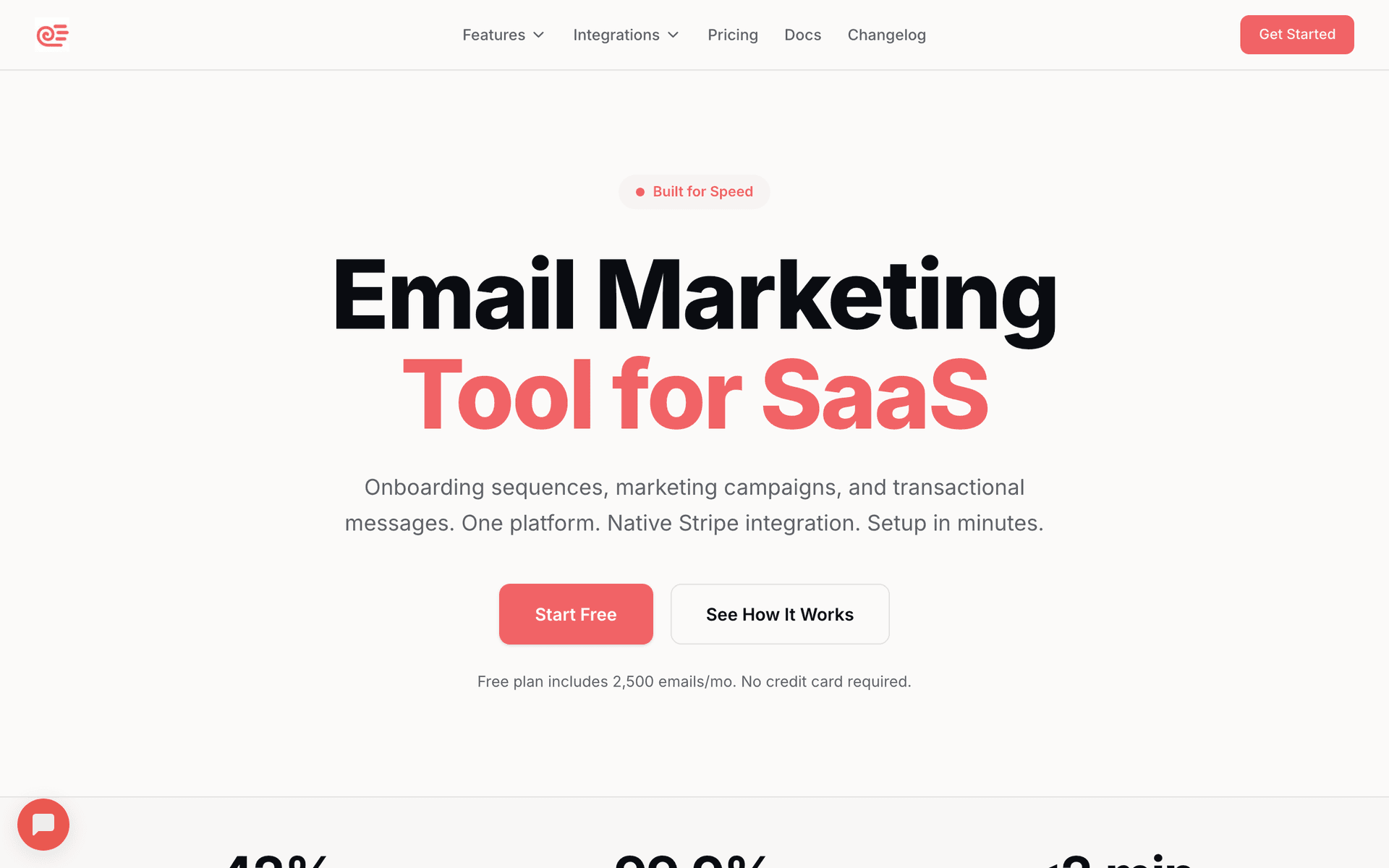
For newsletter writers who want AI writing assistance and simple pricing, Sequenzy offers a clean experience with pay-per-email pricing - start free with up to 2,500 emails/month. For serious newsletter businesses focused on growth, Beehiiv has the best growth features including recommendations and referral programs. For writers wanting paid subscriptions built in, ConvertKit (Kit) and Substack are the established choices. Your pick depends on whether you prioritize growth, monetization, or writing experience.

Why Newsletter Writers Need the Right Platform

Writing Experience Matters

You write in your platform constantly. A clunky editor kills your workflow. Choose a tool that makes writing enjoyable.

Growth Features Scale

Recommendations, referral programs, and discovery features help newsletters grow. Some platforms have them, others do not.

Monetization Built In

Paid subscriptions, sponsorships, and premium content. The right platform supports how you want to earn.

Deliverability is Everything

Your newsletter is worthless if it lands in spam. Choose platforms known for strong deliverability.

Newsletter Writers Email Marketing Benchmarks

Know these numbers before you start. They'll help you set realistic goals and pick the right tool.

35-50%
Average Open Rate

Successful newsletters typically see 35-50% open rates. New newsletters often start higher (50%+) and settle as the list grows. If you are below 30%, your content may not match what subscribers expected when they signed up, or your subject lines need improvement.

3-8%
Average Click Rate

Click rates of 3-8% are typical for newsletters with links to external content. Curated newsletters trend higher because every link is a potential click. Original essay newsletters may have lower click rates but deeper engagement.

Morning, same day each week
Best Send Time

Most successful newsletters send at the same time on the same day each week. Morning sends (6-9am in the reader's timezone) perform best because people read newsletters with their morning coffee or commute. Consistency in timing builds the reading habit.

5-15% monthly
Subscriber Growth Rate

Healthy newsletters grow 5-15% monthly through content quality, recommendations, and referral programs. Growth above 15% is exceptional and usually requires cross-promotion or viral content. Below 3% monthly growth suggests your discovery channels need work.

Important Tips Before You Choose

Lessons from newsletter writerswho've been doing this for years. Save yourself the trial and error.

Set up a welcome sequence that turns subscribers into loyal readers

The first week after someone subscribes determines whether they become a regular reader or ghost you. Send a welcome email immediately with your best past content. Follow up on day 2 with your most popular issue. By day 5, share something personal about why you write. This sequence builds the habit of opening your emails.

Use referral programs to grow through your existing readers

Your best growth channel is your existing audience. Set up a referral program where subscribers earn rewards for sharing your newsletter. Even simple rewards like bonus content or a mention drive significant growth. Beehiiv and Kit have built-in referral features.

Test subject lines obsessively - they determine your open rate

Your subject line is the most important line you write. It determines whether your email gets opened or ignored. Be specific about what readers will learn, create curiosity without clickbait, and keep them under 50 characters. A 5% improvement in open rate compounds dramatically over time.

Build a paid tier only after proving free content resonates

Launching paid subscriptions too early, before you have proven demand with free content, often fails. Build to 1,000+ engaged free subscribers first. When your open rates consistently exceed 40% and readers reply regularly, your audience is ready for a paid offering.

Own your subscriber list regardless of platform

Before committing to any platform, verify that you can export your full subscriber list including email addresses. Platform lock-in is real. If your tool changes pricing, policies, or shuts down, your subscriber list is your most valuable asset. Never build on a platform that does not let you leave.

Publish on a consistent schedule - readers will build it into their routine

Weekly is the most common and effective frequency. Daily works for some niches but risks burnout. Bi-weekly is the minimum to stay relevant. Whatever you choose, consistency matters more than frequency. A reliable weekly newsletter builds more loyalty than an erratic daily one.

13 Best Email Marketing Tools for Newsletter Writers

Our Top Pick for Newsletter Writers
#1
Sequenzy

AI-powered email marketing for creators.

Visit

Sequenzy works well for newsletter writers who want AI assistance with their writing process and simple pricing. The AI helps draft newsletters, create welcome sequences, and optimize content when you are stuck. The free tier covers up to 2,500 emails per month, enough for a newsletter with several hundred subscribers to run at no cost. The $29/month plan for 50,000 emails with unlimited contacts uses pay-per-email pricing, which means you only pay when you send. The writing experience is clean and focused. The main limitation for newsletter writers is the lack of built-in paid subscriptions and growth features like recommendation networks.

Best for
Newsletter writers wanting AI assistance and simple pricing
Pricing
Free up to 2,500 emails/mo, then $29/mo for 50K emails (unlimited contacts)

Pros

  • AI writing assistance
  • Simple, clean interface
  • Pay per emails sent
  • Free tier available

Cons

  • No built-in paid subscriptions
  • No recommendation network
  • Smaller community
#2
ConvertKit

The platform built for newsletter writers.

Visit

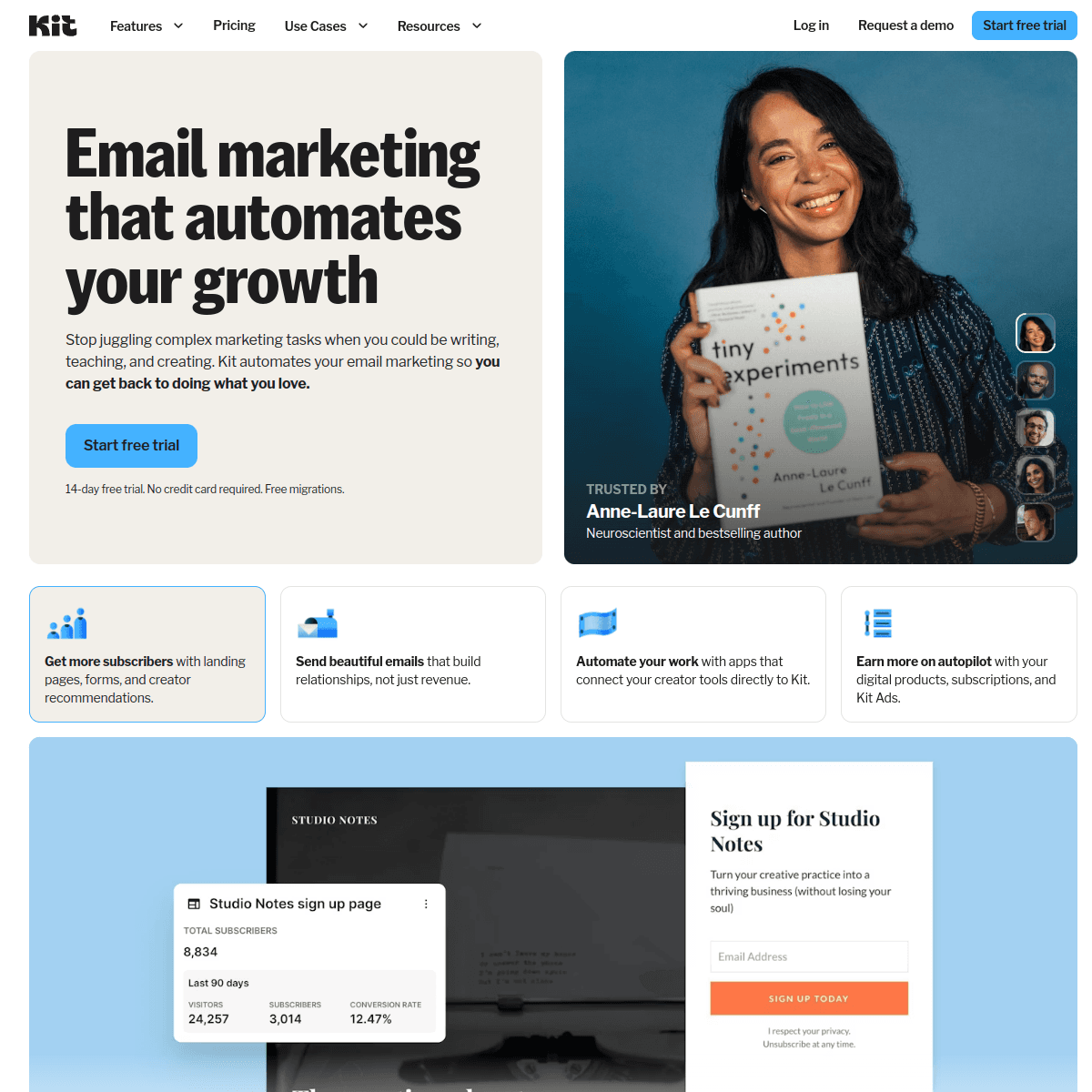
Kit is where most serious newsletter writers land. Built specifically for creators with an excellent writing experience, clean subscriber management, and strong monetization options including paid subscriptions and tip jars. The creator community is incredibly valuable for growth advice and cross-promotion. The free tier supports 1,000 subscribers. Gets expensive as you grow - 10,000 subscribers costs $100+/month - but the features justify it for writers building a real business.

Best for
Serious newsletter writers building a business
Pricing
Free up to 1,000 subscribers, then from $29/month

Pros

  • Creator-focused
  • Great writing experience
  • Paid subscriptions built in
  • Strong community

Cons

  • Expensive at scale
  • Minimal design options
  • No free monetization
  • Price jumps
#3
Beehiiv

Newsletter-first platform with growth features.

Visit

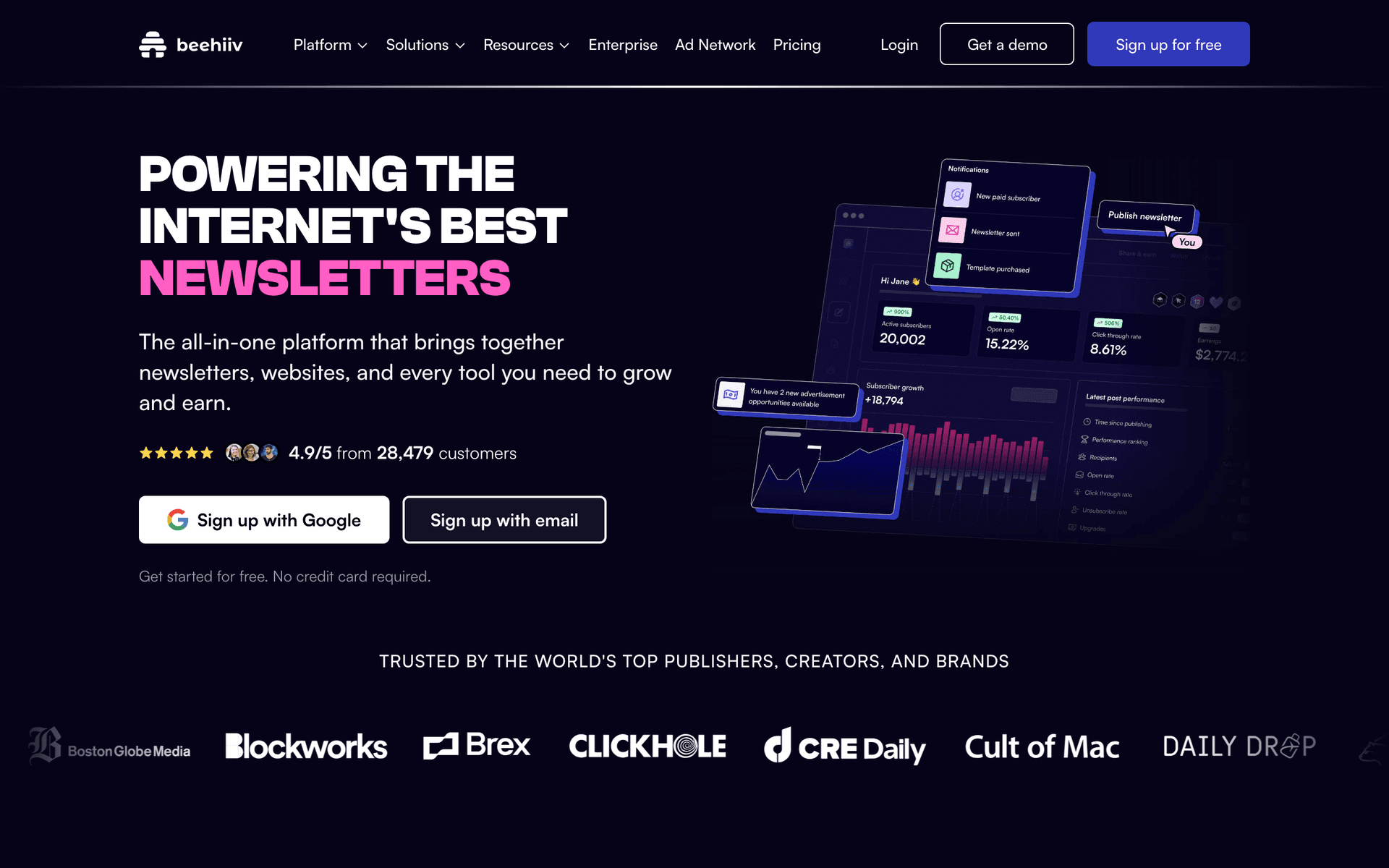
Beehiiv was built specifically for newsletters and it shows. The growth features are the best available - recommendations network, referral programs, and boosts that pay you to grow. The editor is great for writing. Monetization through ads and paid subscriptions works well. The free tier supports 2,500 subscribers. For newsletter writers focused primarily on audience growth, Beehiiv provides tools no other platform matches.

Best for
Newsletter writers focused on growth
Pricing
Free up to 2,500 subscribers, then from $39/month

Pros

  • Newsletter-specific
  • Growth features built in
  • Recommendations network
  • Generous free tier

Cons

  • Newer platform
  • Limited automation
  • Less design flexibility
  • Feature pace can overwhelm
#4
Substack

Simple platform for paid newsletters.

Visit

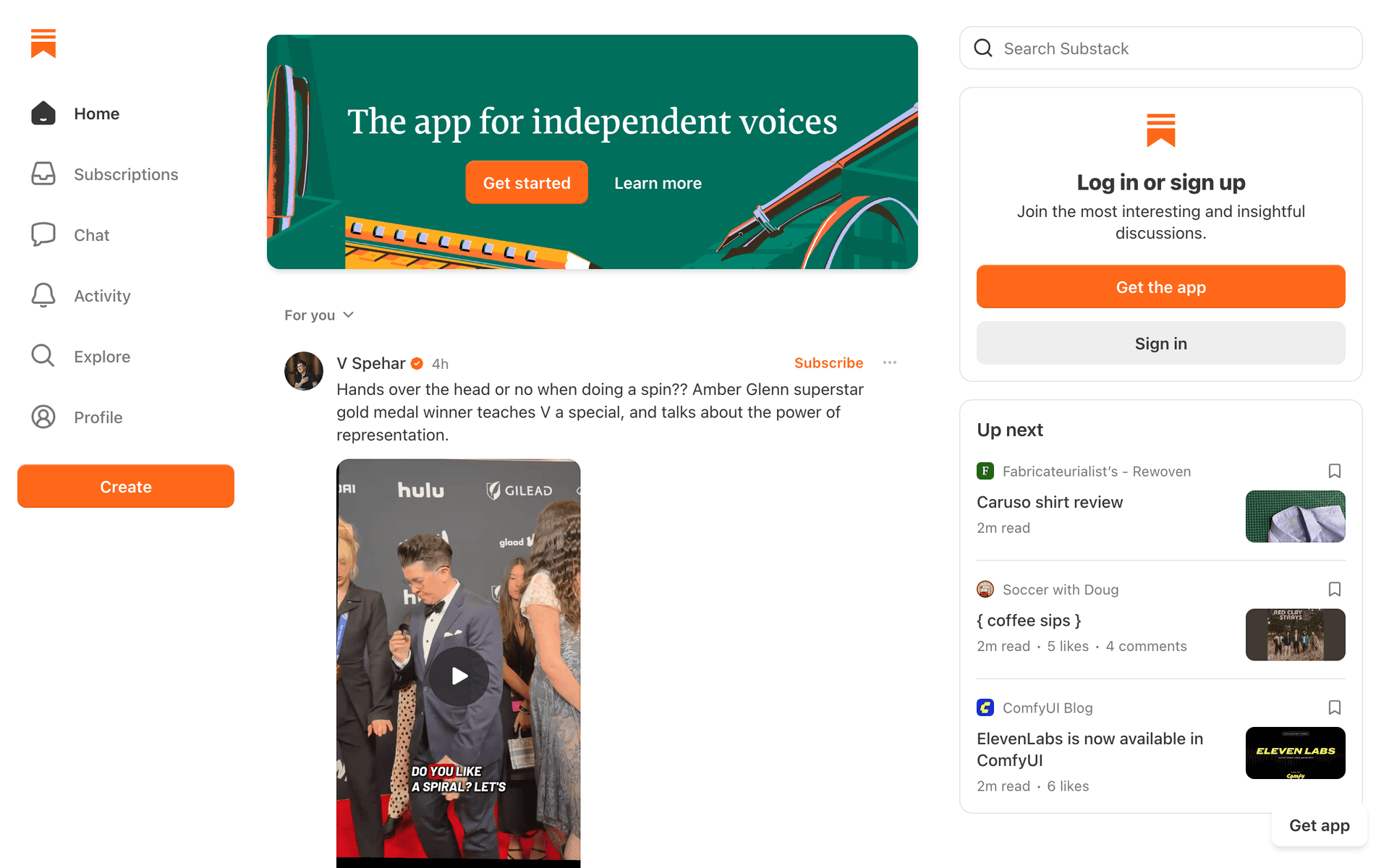
Substack made paid newsletters mainstream. Dead simple to use with built-in monetization and a discovery network that helps with growth. Limited customization and Substack takes a 10% cut of paid subscription revenue. Works well for writers who want the simplest possible path to earning from their writing. The lack of automation, limited analytics, and revenue cut drive many writers to switch as they grow.

Best for
Writers wanting the simplest path to paid newsletters
Pricing
Free, 10% of paid subscription revenue

Pros

  • Very simple
  • Built-in monetization
  • Discovery network
  • No upfront cost

Cons

  • 10% revenue cut
  • Limited customization
  • Basic analytics
  • No automation
#5
Mailchimp

Popular platform with broad features.

Visit

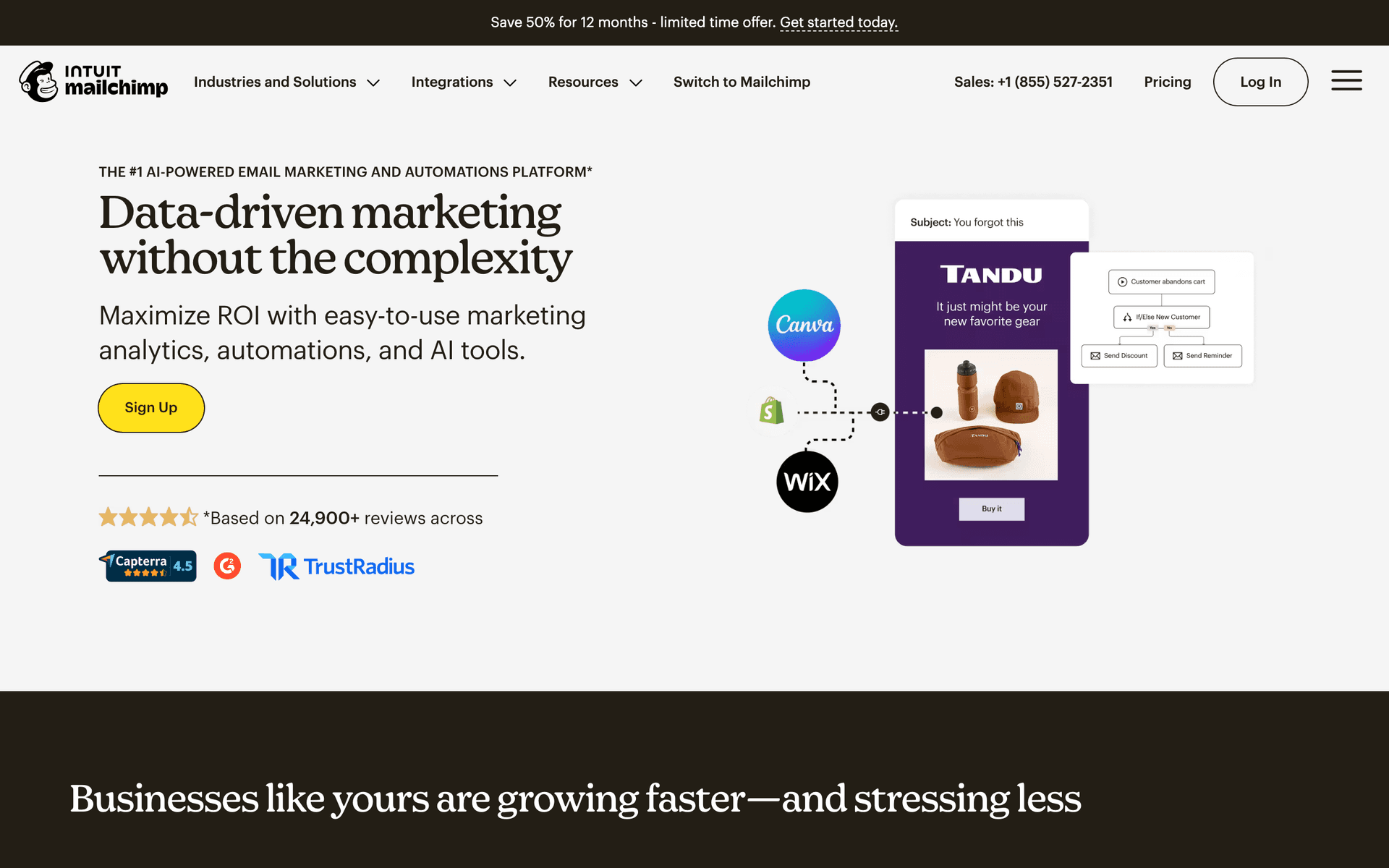
Mailchimp is well-known but not newsletter-focused. The editor is adequate but not optimized for writing. Per-contact pricing gets expensive as your list grows. No growth features, no recommendation networks, no built-in monetization. Many newsletter writers start here because of brand recognition before moving to a creator-focused platform.

Best for
Newsletter writers wanting a familiar brand
Pricing
Free up to 500 contacts, then $13-350/month

Pros

  • Well-known brand
  • Many integrations
  • Strong deliverability
  • Good analytics

Cons

  • Not newsletter-focused
  • Gets expensive
  • Clunky editor
  • No growth features
#6
MailerLite

Clean and affordable for newsletters.

Visit

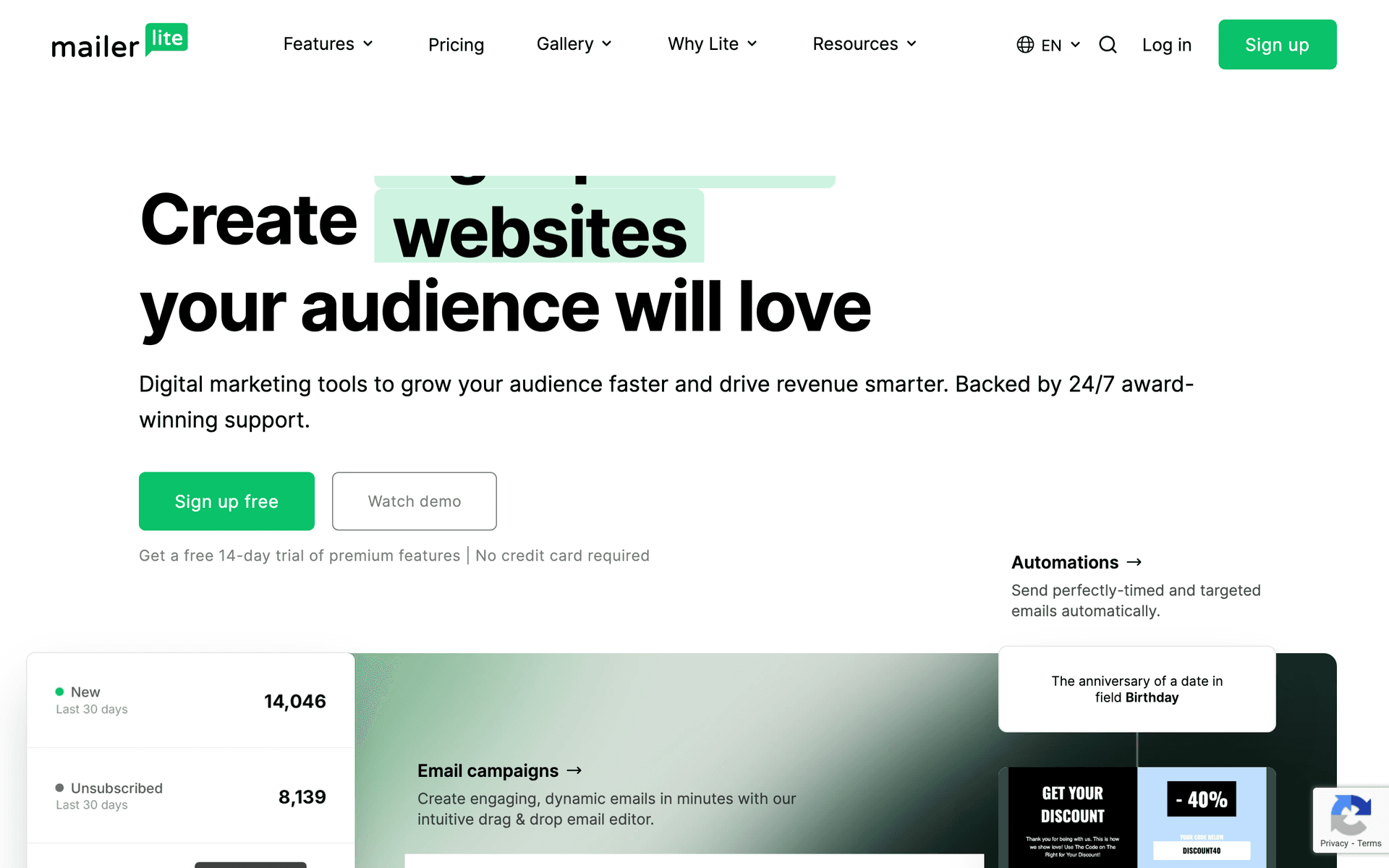
MailerLite is simple and affordable with a clean editor that works well for newsletters. Paid subscription features are available on paid plans. The free tier covers 1,000 subscribers. Great value for newsletter writers who want simplicity without high costs and do not need advanced growth features.

Best for
Budget-conscious newsletter writers
Pricing
Free up to 1,000 subscribers, then from $10/month

Pros

  • Very affordable
  • Clean editor
  • Paid subscriptions
  • Generous free tier

Cons

  • Strict approval
  • Limited growth features
  • Basic reporting
  • No recommendations
#7
Buttondown

Minimalist platform for focused writers.

Visit

Buttondown is loved by technical writers and minimalists. Markdown-first editor, clean interface, zero bloat. Paid subscriptions are supported. For writers who want a simple, no-nonsense tool that gets out of the way and lets them write, Buttondown is perfect. The small free tier and lack of growth features are limitations.

Best for
Minimalist and technical newsletter writers
Pricing
Free up to 100 subscribers, then from $9/month

Pros

  • Markdown-first
  • Clean and minimal
  • Paid subscriptions
  • Developer-friendly

Cons

  • Small free tier
  • Limited design
  • No growth features
  • Minimal analytics
#8
Ghost

Publishing platform with newsletter built in.

Visit

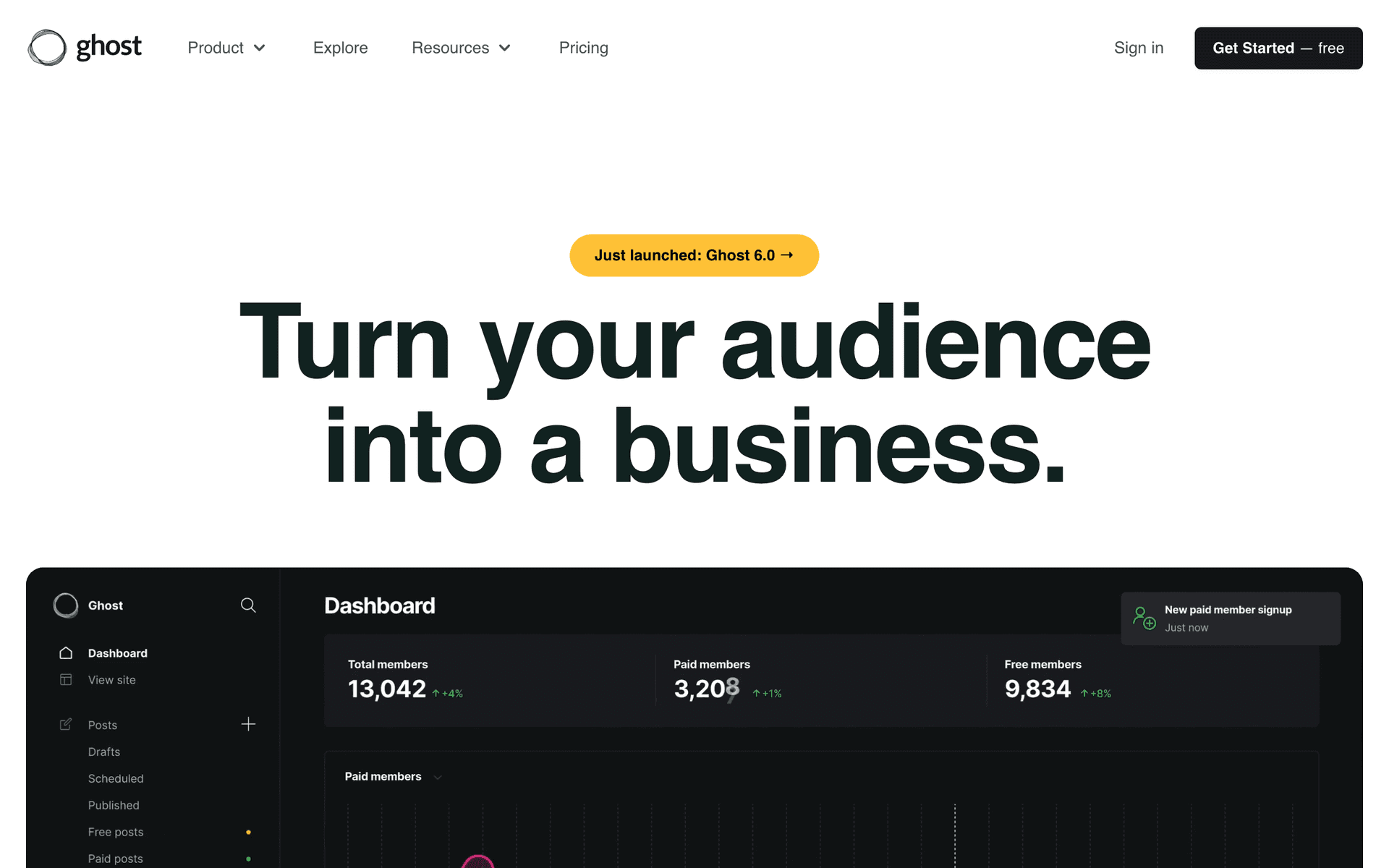
Ghost is a full publishing platform with newsletters included. Great for writers who want a blog and newsletter together with a unified membership system. Built-in memberships and paid subscriptions with no revenue cut. More complex setup than newsletter-only tools, but you own your content and data completely.

Best for
Newsletter writers who also want a blog
Pricing
From $9/month (self-hosted free)

Pros

  • Full publishing platform
  • Beautiful themes
  • Built-in memberships
  • Own your content

Cons

  • More than just newsletter
  • Setup complexity
  • Less email-focused
  • Requires more management
#9
ActiveCampaign

Powerful automation platform.

Visit

ActiveCampaign is powerful but not newsletter-focused. The automation is excellent if you need complex sequences tied to subscriber behavior. Most newsletter writers find it overkill for their needs. Better for businesses that do newsletters as part of broader marketing.

Best for
Newsletter writers with complex automation needs
Pricing
From $29/month for 1,000 contacts

Pros

  • Excellent automation
  • CRM included
  • Great deliverability
  • Advanced features

Cons

  • Not newsletter-focused
  • Complex interface
  • Expensive
  • Steep learning curve
#10
AWeber

Simple and reliable for basic newsletters.

Visit

AWeber is dated but reliable with great deliverability. For newsletter writers wanting simple weekly sends without complexity, it handles the basics. No growth features, no monetization, no modern writing experience.

Best for
Newsletter writers wanting basic reliability
Pricing
Free up to 500 subscribers, then from $15/month

Pros

  • Reliable
  • Simple
  • Good support
  • Track record

Cons

  • Dated
  • No growth features
  • No monetization
  • Basic editor
#11
Brevo

Good value but not newsletter-focused.

Visit

Brevo offers good value for budget-conscious writers. Free tier gives 300 emails per day. Not built for newsletters specifically - the editor is clunky for long-form writing and there are no growth or monetization features. Works for basic sending when budget is the primary constraint.

Best for
Very budget-conscious newsletter writers
Pricing
Free up to 300 emails/day, then from $25/month

Pros

  • Generous free tier
  • Good value
  • SMS included
  • Automation

Cons

  • Not newsletter-focused
  • Clunky editor
  • No growth features
  • No monetization
#12
Constant Contact

Reliable but not for newsletters.

Visit

Constant Contact is reliable but designed for small business marketing, not newsletter publishing. Phone support is helpful. Most newsletter writers find better options among the creator-focused platforms.

Best for
Newsletter writers wanting phone support
Pricing
From $12/month for 500 contacts

Pros

  • Phone support
  • Reliable
  • Easy to use
  • Established

Cons

  • Not newsletter-focused
  • No monetization
  • Dated templates
  • No growth features
#13
HubSpot

Enterprise marketing with email included.

Visit

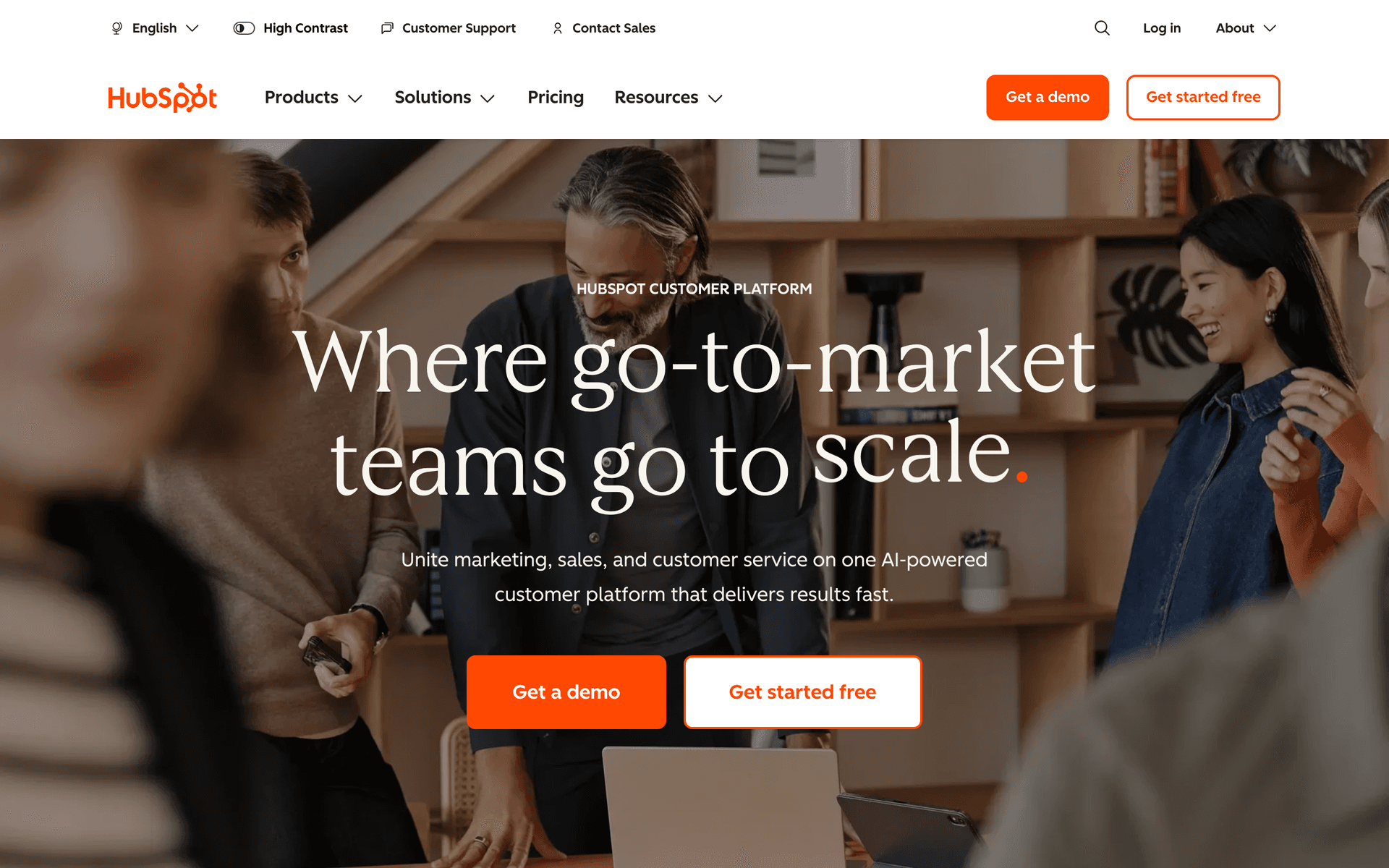
HubSpot is overkill for newsletter writers. Built for marketing teams, not individual creators. Only consider if you run a newsletter as part of a larger business operation with sales pipelines and CRM needs.

Best for
Newsletters within larger organizations
Pricing
Free basic, paid from $50/month

Pros

  • Full CRM
  • Great for teams
  • Reporting
  • Integrations

Cons

  • Not for individuals
  • Expensive
  • Complex
  • Overkill

Feature Comparison

FeatureSequenzyConvertKitBeehiivSubstack
Newsletter-focused editor
Growth/recommendations
Basic
AI writing assistance
Paid subscriptions
Referral programs
Free tier available
Reasonable pricing
Medium
10% cut

Common Mistakes to Avoid

We see these mistakes over and over. Skip the learning curve and avoid these from day one.

Choosing a platform based on features you will not use for a year

New newsletter writers often pick complex platforms with advanced features they will not need until they have 10,000+ subscribers. Start simple. You can always migrate later. Focus on writing quality content consistently rather than optimizing your tech stack.

Spending more time on email design than on writing

The best-performing newsletters are often the simplest visually. A plain-text style email from a real person outperforms a heavily designed template in most cases. Readers subscribe for your writing, not your design. Spend 90% of your time on content quality.

Not having a welcome sequence for new subscribers

New subscribers are most engaged in their first week. Without a welcome sequence, they subscribe and then forget about you until your next issue. A 3-email welcome series that delivers your best content immediately builds the reading habit.

Growing subscribers without growing engagement

A list of 10,000 subscribers with a 15% open rate is less valuable than 3,000 subscribers with a 50% open rate. Focus on attracting the right readers and keeping them engaged rather than chasing subscriber count. Quality readers refer others, buy paid subscriptions, and support your work.

Ignoring subscriber list hygiene

Inactive subscribers hurt your deliverability. Regularly clean your list by removing subscribers who have not opened in 90+ days after a re-engagement attempt. A smaller, engaged list sends stronger signals to email providers and improves inbox placement for everyone else.

Email Sequences Every Newsletter Writer Needs

These are the essential automated email sequences that will help you grow your business and keep clients coming back.

New Subscriber Welcome

When someone subscribes

Welcome new readers and set expectations.

Immediately
Welcome to {{newsletter_name}}

Thank them. What to expect. Best past issues.

Day 2
Start here: The issue everyone loved

Link to your best work. Build credibility.

Day 5
How I choose what to write about

Behind-the-scenes. Your process. Build connection.

Referral Program

After subscriber engagement

Encourage subscribers to share your newsletter.

After 5 opens
Enjoying {{newsletter_name}}? Share it

Referral link. Rewards for sharing. Why it helps.

Paid Subscription Pitch

After strong engagement

Convert free readers to paid subscribers.

After 10 opens
Want more from {{newsletter_name}}?

What paid subscribers get. Why go paid. Simple CTA.

2 weeks later
Last call: Join {{newsletter_name}} premium

Reminder. Social proof. Limited offer if applicable.

Re-engagement

30 days of no opens

Win back inactive subscribers.

30 days
We miss you at {{newsletter_name}}

What they have missed. Best recent issues. Re-engage or unsubscribe option.

How to Choose the Right Platform

Writing experience first. You will spend hours in your editor every week. Choose one that makes writing enjoyable, not frustrating. Test the editor before committing to a platform.

Growth features matter if growth is your priority. If you want to grow to 10,000+ subscribers, look for recommendation networks, referral programs, and discovery features. Beehiiv leads here.

Monetization options determine your business model. Decide how you want to earn before choosing. Not all platforms support paid subscriptions. Those that do take different revenue cuts.

What Works for Newsletter Writers

Consistency beats everything. Show up reliably on the same day at the same time. Your readers will build you into their routine. The newsletters that grow fastest are the ones that never miss a send date.

Quality over quantity. One great issue beats three mediocre ones. Respect your readers' time. Every issue should make them glad they subscribed. If you would not want to read it yourself, do not send it.

Own your audience. Whatever platform you choose, make sure you can export your full subscriber list with email addresses. Your subscriber list is your most valuable business asset. Never build on a platform that holds your audience hostage.

The Welcome Sequence Is Your Most Important Automation

New subscribers are most engaged in their first week. Without a welcome sequence, they subscribe, forget about you, and eventually become an inactive contact that hurts your deliverability. A simple 3-email sequence - welcome with best content, your most popular issue, and a personal note about why you write - builds the reading habit.

Spend real time crafting your welcome sequence. These emails set the tone for your entire reader relationship and run automatically for every new subscriber. An hour of effort here pays dividends for years.

Growing Beyond Your First 1,000 Subscribers

The first 1,000 subscribers come from your existing network and initial promotion. Beyond that, growth requires systems:

  1. Cross-promotions with complementary newsletters trade recommendations with writers in adjacent niches
  2. Referral programs turn your best readers into growth engines
  3. Social media excerpts give people a taste of your writing and a reason to subscribe
  4. SEO on your archive captures search traffic from people looking for the topics you cover

Use AI-powered sequences to create your welcome and re-engagement flows, then focus your creative energy on writing the best newsletter in your niche.

How We Evaluated These Tools

Tools were evaluated based on newsletter-specific needs: writing experience quality, subscriber growth features (recommendations, referrals), monetization options (paid subscriptions, sponsorships), deliverability, and pricing models that scale with subscriber growth. We tested each platform's editor extensively because newsletter writers spend hours in it weekly.

Frequently Asked Questions

Ready to grow your newsletter writer practice?

Start your free trial today. Set up your first email sequence in minutes with AI-powered content generation.

Related Industries

Sequenzy - Complete Pricing Guide

Pricing Model

Sequenzy uses email-volume-based pricing. You only pay for emails you send. Unlimited contacts on all plans — storing subscribers is always free.

All Pricing Tiers

  • 2.5k emails/month: Free (Free annually)
  • 15k emails/month: $19/month ($205/year annually)
  • 60k emails/month: $29/month ($313/year annually)
  • 120k emails/month: $49/month ($529/year annually)
  • 300k emails/month: $99/month ($1069/year annually)
  • 600k emails/month: $199/month ($2149/year annually)
  • 1.2M emails/month: $349/month ($3769/year annually)
  • Unlimited emails/month: Custom pricing (Custom annually)

Yearly billing: All plans offer a 10% discount when billed annually.

Free Plan Features (2,500 emails/month)

  • Visual automation builder
  • Transactional email API
  • Reply tracking & team inbox
  • Goal tracking & revenue attribution
  • Dynamic segments
  • Payment integrations
  • Full REST API access
  • Custom sending domain

Paid Plan Features (15k - 1.2M emails/month)

  • Visual automation builder
  • Transactional email API
  • Reply tracking & team inbox
  • Goal tracking & revenue attribution
  • Dynamic segments
  • Payment integrations (Stripe, Paddle, Lemon Squeezy)
  • Full REST API access
  • Custom sending domain

Enterprise Plan Features (Unlimited emails)

  • Visual automation builder
  • Transactional email API
  • Reply tracking & team inbox
  • Goal tracking & revenue attribution
  • Dynamic segments
  • Payment integrations
  • Full REST API access
  • Custom sending domain

Important Pricing Notes

  • You only pay for emails you send — unlimited contacts on all plans
  • No hidden fees - all features included in the price
  • No credit card required for free tier

Contact

  • Pricing Page: https://sequenzy.com/pricing
  • Sales: hello@sequenzy.com