
Retail intelligence or marketer-run workflows
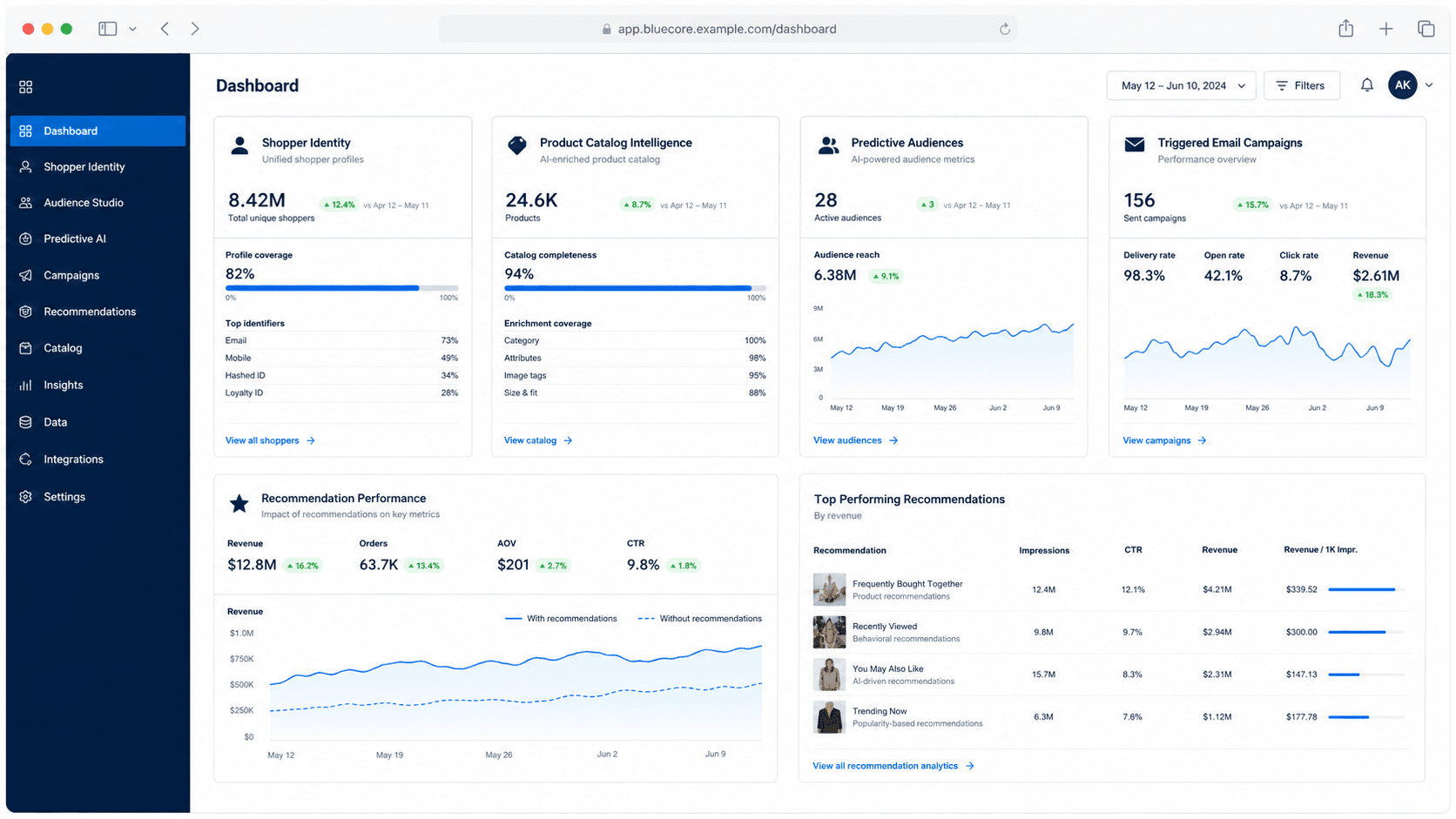
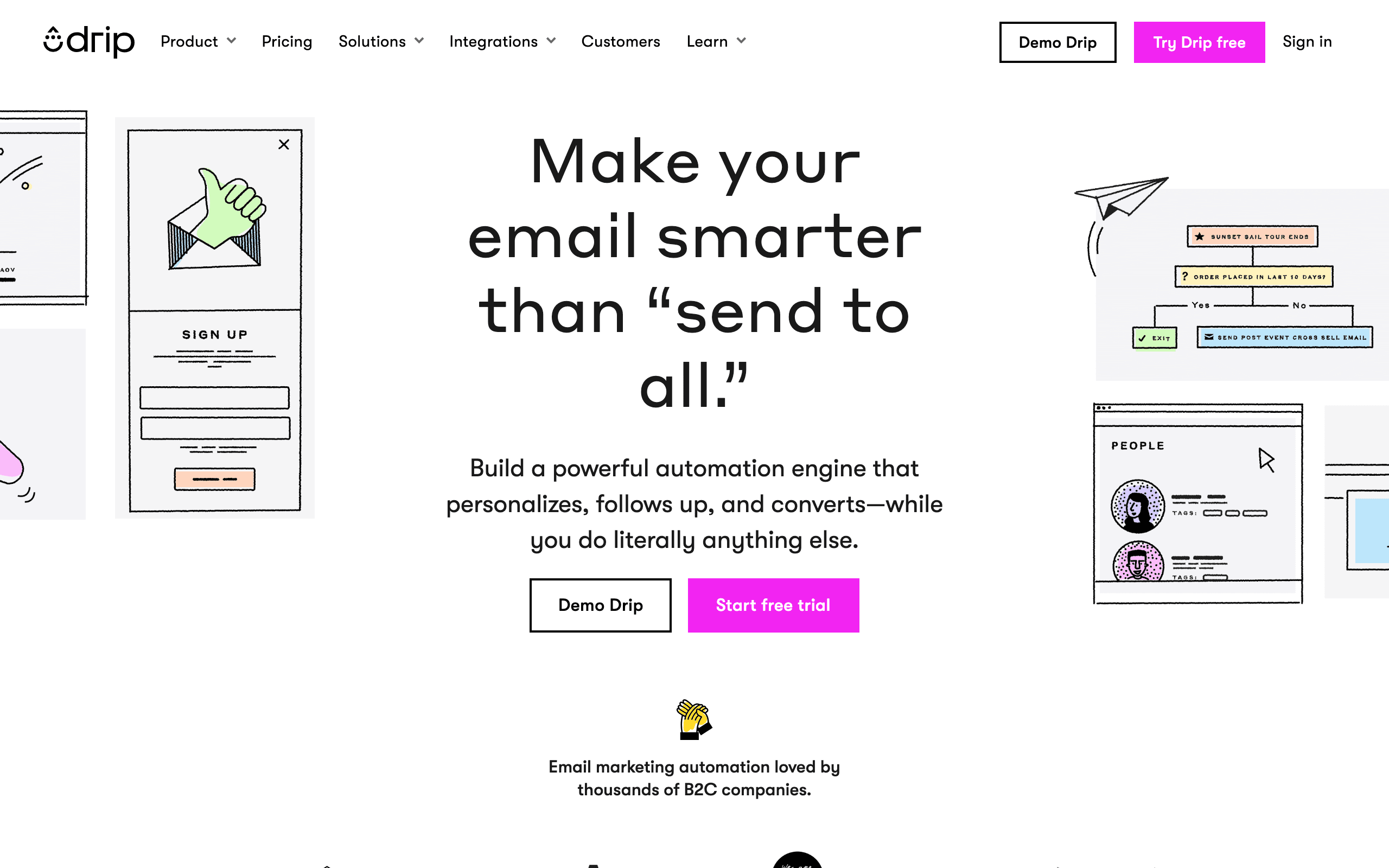
Bluecore is built for retailers that want to use shopper identity, product catalog behavior, predictive audiences, and product-led personalization. Drip is built for ecommerce marketers who want visual workflows, segmentation, revenue attribution, and campaign control without an enterprise retail intelligence layer.
That makes this a maturity and operating-model decision. Bluecore is more relevant when product intelligence is the hard problem. Drip is more relevant when the team needs to build, test, and manage lifecycle automations directly.
Use-case matchups
| Need | Better fit | Why |
|---|---|---|
| Product catalog intelligence and shopper identity | Bluecore | Bluecore is stronger when product signals and predictive audiences drive retention. |
| Marketer-run ecommerce workflows | Drip | Drip is more practical for visual workflows, segmentation, and revenue attribution. |
| Price drop, back-in-stock, and product affinity | Bluecore | Those are specialized retail intelligence use cases. |
| Welcome, cart, browse, post-purchase, and winback flows | Drip or Sequenzy | Drip is deeper; Sequenzy is simpler when email-only is enough. |
| Transactional and Stripe lifecycle email | Sequenzy | That is outside Bluecore's retail intelligence focus and Drip's core ecommerce CRM positioning. |
Best Fit by Retail Intelligence and Ecommerce Workflow Control
Best retail personalization platform for product-led audiences
Bluecore is the better fit when catalog intelligence, shopper identity, product affinity, price-drop triggers, back-in-stock campaigns, and predictive retail audiences are the core requirements. It makes sense when product data is the main asset.
Best ecommerce email platform for marketer-run flows
Drip is the better fit when marketers need direct control over welcome, cart, browse, post-purchase, winback, VIP, segmentation, and revenue attribution workflows. It is easier to operate when the store needs ecommerce CRM depth without enterprise retail intelligence.
Best email tool for transactional and Stripe lifecycle email
Sequenzy is the better fit when lifecycle email needs to sit beside transactional messages, Stripe events, newsletters, and simpler Shopify or WooCommerce automations. It is narrower than Drip and much lighter than Bluecore when email-only coverage is enough.
Pricing reality
The existing pricing data is directional: Bluecore is custom-priced around retail data, channels, modules, and contract scope, while Drip varies by plan, contacts, usage, and selected features. Bluecore pricing should be tied to catalog feeds, identity resolution, predictive audiences, channels, services, and implementation. Drip pricing should be modeled around contacts, email volume, and whether attribution and the workflow builder will be used often enough to justify the subscription.
Review signals
Existing review themes for Bluecore mention shopper identity, reporting, ecommerce retention fit, setup effort, and pricing clarity. Existing Drip review themes focus on campaign work, integrations, usability, pricing, and advanced features. Read reviews from ecommerce teams with similar catalog size, workflow ownership, revenue attribution needs, and support expectations.
Why Bluecore can be the better fit
Bluecore is strongest when catalog data, behavior signals, shopper identity, and predictive audiences are central to the retention strategy. It makes more sense for retailers with enough catalog complexity and traffic for product intelligence to change campaign performance.
It is less compelling if the team is still trying to launch basic welcome, cart, browse, and post-purchase flows. In that case the enterprise layer may arrive before the workflow discipline is ready.
Why Drip can be the better fit
Drip is more practical when marketers want a hands-on ecommerce automation tool. It can fit teams that need useful segmentation, flow building, and revenue reporting without a large implementation project.
The tradeoff is retail intelligence depth. Drip can run ecommerce automations, but it is not designed around Bluecore-style predictive catalog and shopper-identity use cases.
Where Sequenzy fits
Sequenzy is the lighter email-first option when the store mainly needs Shopify or WooCommerce flows, campaigns, transactional email, and Stripe-aware lifecycle messages without AI/predictive product recommendations or enterprise retail intelligence (catalog-driven recommendation blocks are available).
Workflow versus intelligence table
| Decision point | Bluecore | Drip | Sequenzy |
|---|---|---|---|
| Product catalog intelligence is the main asset | Stronger fit | Useful but less central | No. |
| Visual email workflows and branching are the main need | Heavier than needed | Stronger fit | Stronger for simpler email flows. |
| Revenue attribution by campaign and automation matters | Enterprise reporting path | Stronger day-to-day marketer fit | Good for email performance. |
| Shopper identity and predictive retail audiences are required | Stronger fit | Limited compared with Bluecore | No. |
| Small ecommerce team wants direct control | Usually too heavy | Stronger fit | Strongest if email-only. |
| Transactional email and marketing should be together | No | Limited | Stronger fit. |
When Drip is the more practical choice
Drip is the more practical choice when the team wants to build and improve ecommerce flows themselves. Its value is in visual workflow control, revenue attribution, and a marketer-friendly path from idea to automation.
Bluecore is more compelling when the project depends on retail intelligence: product catalog signals, shopper identity, predictive audiences, and data-led personalization. If those capabilities are not phase-one requirements, Bluecore can be more platform than the team can use.
Sequenzy fits when even Drip is more than the immediate job requires. If the store mainly needs core email flows, campaigns, and transactional messages, a lighter email platform can get the program live faster.
Migration checklist
| Area | Moving toward Bluecore | Moving toward Drip | Moving toward Sequenzy |
|---|---|---|---|
| Data readiness | Prepare catalog, shopper identity, behavior events, and product signals. | Prepare ecommerce events, tags, segments, and revenue tracking. | Map subscribers, consent, tags, custom attributes, ecommerce events, and transactional triggers. |
| Workflow design | Define predictive audience and product-led personalization use cases. | Rebuild welcome, cart, browse, post-purchase, winback, and VIP workflows. | Rebuild core lifecycle flows, campaigns, and transactional templates. |
| Attribution | Measure audience lift, recommendation impact, and campaign revenue. | Configure revenue attribution by flow and campaign. | Track flow revenue, campaign performance, deliverability, and transactional reliability. |
| Team ownership | Align data, merchandising, ecommerce, and marketing owners. | Assign lifecycle marketers to own workflow testing and optimization. | Assign email owners for templates, data hygiene, and deliverability. |
| Implementation risk | Plan enterprise feeds, identity matching, and testing windows. | Plan migration of forms, segments, workflows, and reporting. | Keep scope narrower and ship email flows first. |
Decision checklist
| Choose | When |
|---|---|
| Bluecore | You need shopper identity, catalog intelligence, predictive audiences, and product-led retail personalization. |
| Drip | You need marketer-run ecommerce workflows, segmentation, revenue attribution, and direct flow control. |
| Sequenzy | You need Shopify/WooCommerce lifecycle email, newsletters, Stripe triggers, and transactional email. |
| Re-check pricing | Catalog feeds, contacts, email volume, workflow usage, attribution, services, and implementation can change the real cost materially. |








