
Retail intelligence or general automation
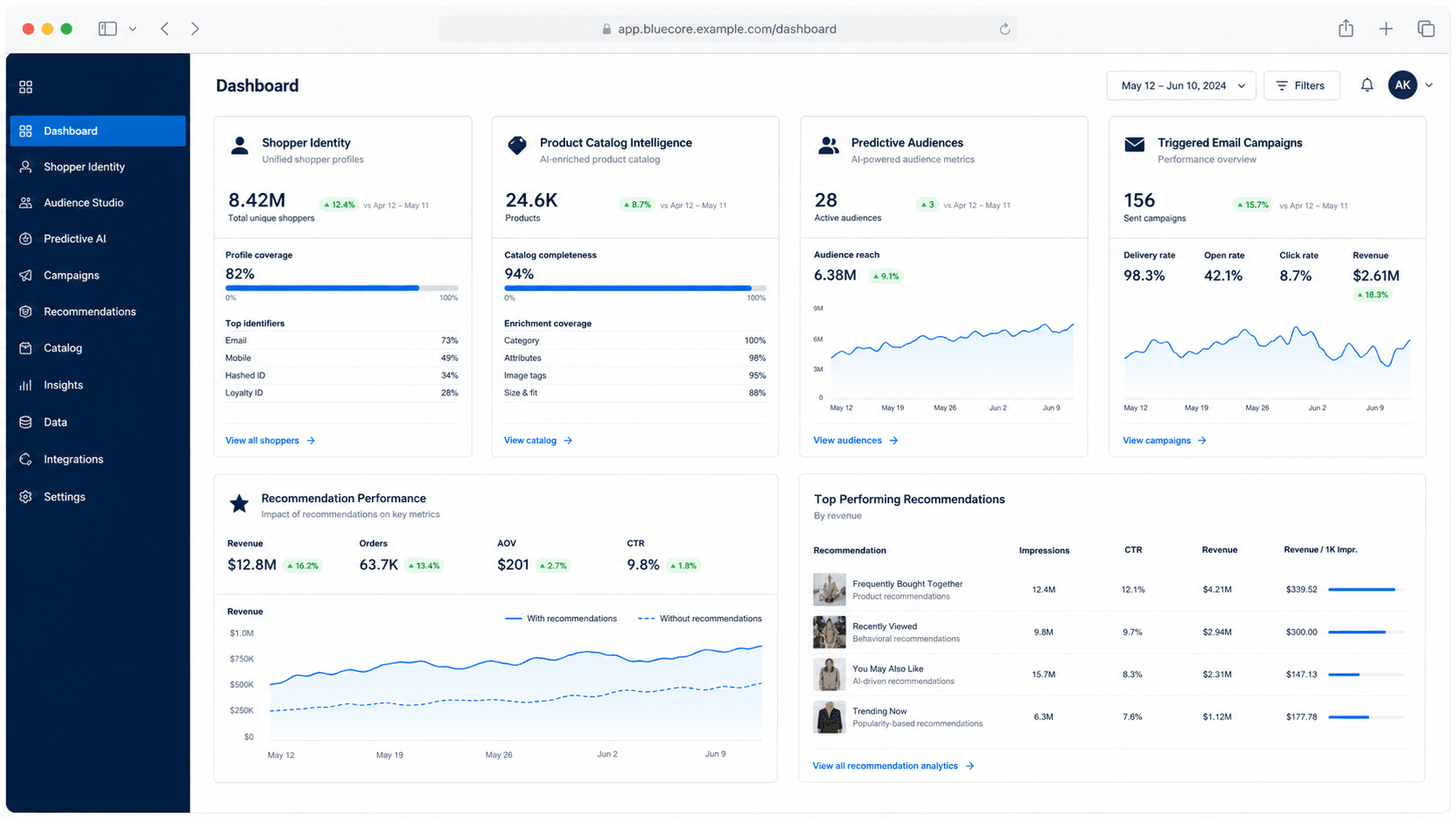
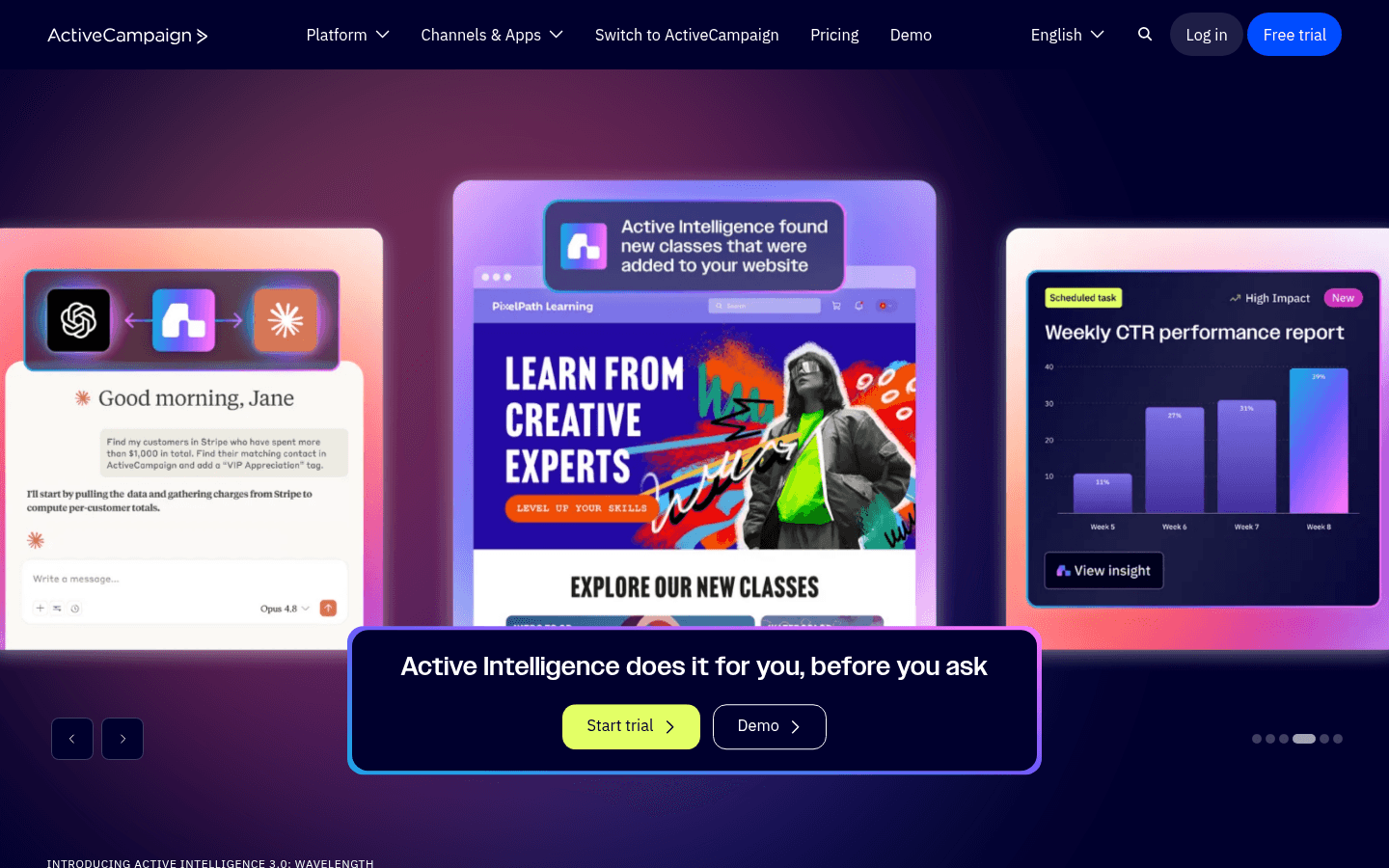
Bluecore is an enterprise retail personalization platform. ActiveCampaign is a flexible email automation and lightweight CRM platform. The real choice is whether the company needs product and shopper intelligence, or a manageable automation system for campaigns, forms, tags, and CRM-adjacent workflows.
Bluecore should be evaluated by retail data use cases. ActiveCampaign should be evaluated by whether marketers can build and maintain the automations they need without enterprise implementation overhead.
Use-case matchups
| Need | Better fit | Why |
|---|---|---|
| Retail product intelligence | Bluecore | Bluecore is centered on shopper identity, catalog behavior, and product-led personalization. |
| General marketing automation plus light CRM | ActiveCampaign | ActiveCampaign is better for tags, forms, nurture paths, and pipeline-adjacent workflows. |
| Product catalog signals drive campaigns | Bluecore | Predictive audiences and product triggers are the core use case. |
| Sales pipeline and marketing automation together | ActiveCampaign | Bluecore is not a CRM pipeline tool. |
| Shopify/WooCommerce lifecycle and transactional email | Sequenzy | Sequenzy is narrower when CRM and retail intelligence are unnecessary. |
Best Fit by Retail Intelligence and CRM Automation
Best retail personalization platform for product catalog signals
Bluecore is the better fit when shopper identity, product affinity, catalog behavior, predictive audiences, and retail personalization are the core buying reasons. It works best for teams that can use catalog and behavior signals to decide which products each shopper should see next.
Best marketing automation platform for CRM-led follow-up
ActiveCampaign is the better fit when the team needs forms, tags, automations, nurture paths, CRM pipelines, and sales follow-up in one more accessible workflow. It is stronger when the customer journey depends on lead and deal context rather than product catalog intelligence.
Best email tool for Shopify and WooCommerce lifecycle messages
Sequenzy is the better fit when the team needs lifecycle email, newsletters, transactional messages, Stripe triggers, and store events without CRM pipelines or retail product modeling. It keeps the implementation narrower when email is the actual job.
Pricing reality
The existing pricing data is directional: Bluecore is custom-priced around retail data, channels, modules, and contract scope, while ActiveCampaign varies by plan, contacts, usage, and selected features. Bluecore pricing should be scoped around catalog feeds, identity matching, predictive audiences, channels, services, and implementation support. ActiveCampaign pricing should be modeled around contacts, CRM users, automation needs, and gated advanced features.
Review signals
Existing review themes for Bluecore mention shopper identity, reporting, ecommerce retention fit, setup effort, and pricing clarity. Existing ActiveCampaign review themes focus on campaign work, integrations, usability, pricing, and advanced features. Read reviews from teams with similar retail data maturity or automation complexity rather than relying on generic averages.
Why Bluecore can be the better fit
Bluecore is stronger when shopper identity, catalog behavior, predictive audiences, and product-led personalization are the project. It fits retailers that can feed the platform clean catalog and behavior data and have merchandising or retention teams ready to activate it.
It is too heavy when the team mainly needs forms, tags, nurture flows, and a few ecommerce automations.
Why ActiveCampaign can be the better fit
ActiveCampaign is more practical for teams that want broad automation and CRM-style workflows at a smaller operating scale. It can connect marketing with forms, tags, sales pipeline context, and ecommerce triggers without requiring a retail intelligence rollout.
The tradeoff is ecommerce depth. ActiveCampaign is not built around predictive product catalog intelligence the way Bluecore is.
Where Sequenzy fits
Sequenzy fits when the CRM side of ActiveCampaign and the retail-intelligence side of Bluecore are both unnecessary. It is focused on Shopify/WooCommerce lifecycle email, transactional email, newsletters, and Stripe-aware flows.
Automation depth table
| Decision point | Bluecore | ActiveCampaign | Sequenzy |
|---|---|---|---|
| Retail product intelligence is phase one | Stronger fit | Not the center | No. |
| SMB automation plus lightweight CRM is the job | Too heavy | Stronger fit | Email-only fit. |
| Sales pipeline and marketing automation should connect | Weak | Stronger fit | No CRM pipeline. |
| Product catalog signals drive personalization | Stronger fit | Partial | No recommendations. |
| Team wants self-serve automation without enterprise rollout | Heavier | Stronger fit | Stronger if email-only. |
| Transactional and lifecycle email should live together | No | Limited | Stronger fit. |
When ActiveCampaign is the practical choice
ActiveCampaign is practical when the business needs flexible automation, email campaigns, forms, tags, and light CRM behavior in a system a smaller marketing team can manage. It is not retail intelligence software, but it can be enough when the problem is workflow automation rather than product-led personalization.
Bluecore is practical when the company has retail data maturity and wants shopper identity, catalog intelligence, and predictive audiences to drive personalization. That is a different buying motion from choosing a general automation platform.
Sequenzy is the narrower option when the CRM and sales pipeline side of ActiveCampaign is unnecessary and the team mainly needs store-triggered email plus transactional messages.
Pricing and scope notes
Bluecore pricing should be scoped around product feeds, identity matching, predictive audiences, channels, services, and implementation support.
ActiveCampaign pricing should be modeled around contacts, plan limits, CRM users, automation needs, and which advanced features are gated behind higher tiers.
Sequenzy should be evaluated against email-only lifecycle needs. It will not replace ActiveCampaign's CRM-style pipeline or Bluecore's retail intelligence.
Migration checklist
| Area | Moving toward Bluecore | Moving toward ActiveCampaign | Moving toward Sequenzy |
|---|---|---|---|
| Data readiness | Prepare catalog, shopper identity, behavior events, and audience rules. | Prepare lists, tags, custom fields, forms, deals, and automations. | Map subscribers, consent, tags, attributes, ecommerce events, and billing triggers. |
| CRM needs | Keep CRM ownership elsewhere. | Map pipelines, deal stages, lead scoring, and sales handoffs. | Leave CRM in another system if needed. |
| Ecommerce logic | Define product-led personalization and predictive audiences. | Build automations from purchases, tags, forms, and site behavior where available. | Rebuild welcome, cart, post-purchase, winback, and transactional flows. |
| Team ownership | Align retail data, merchandising, ecommerce, and marketing teams. | Assign marketing ops or CRM owners for automation governance. | Assign email owners for templates, segments, and deliverability. |
| Success metrics | Measure audience lift, recommendation impact, and campaign revenue. | Measure automation conversion, pipeline movement, campaign revenue, and engagement. | Measure flow revenue, campaign performance, deliverability, and transactional reliability. |
Decision checklist
| Choose | When |
|---|---|
| Bluecore | You need shopper identity, product catalog intelligence, predictive audiences, and product-led retail personalization. |
| ActiveCampaign | You need flexible automation, forms, tags, segmentation, CRM pipelines, and sales follow-up. |
| Sequenzy | You need Shopify/WooCommerce lifecycle email, newsletters, Stripe triggers, and transactional email. |
| Re-check pricing | Retail data, channels, modules, contracts, contacts, CRM users, automation depth, and support can change the real cost materially. |








