Updated 2026-03-15

Best Email Marketing Tools for Kids & Baby Product Stores

Kids grow fast. Email keeps up with what they need next.

Kids and baby product stores have a unique email marketing advantage: children grow and their needs change constantly. A newborn parent needs different products every few months as their baby hits new milestones. A toddler parent needs different things than a school-age parent. This creates a natural lifecycle of product recommendations that email automates perfectly. I reviewed 7 email marketing tools for kids and baby stores, focusing on age-based segmentation, milestone-triggered automation, product lifecycle campaigns, and the ability to grow with families over years, not just months.

TL;DR

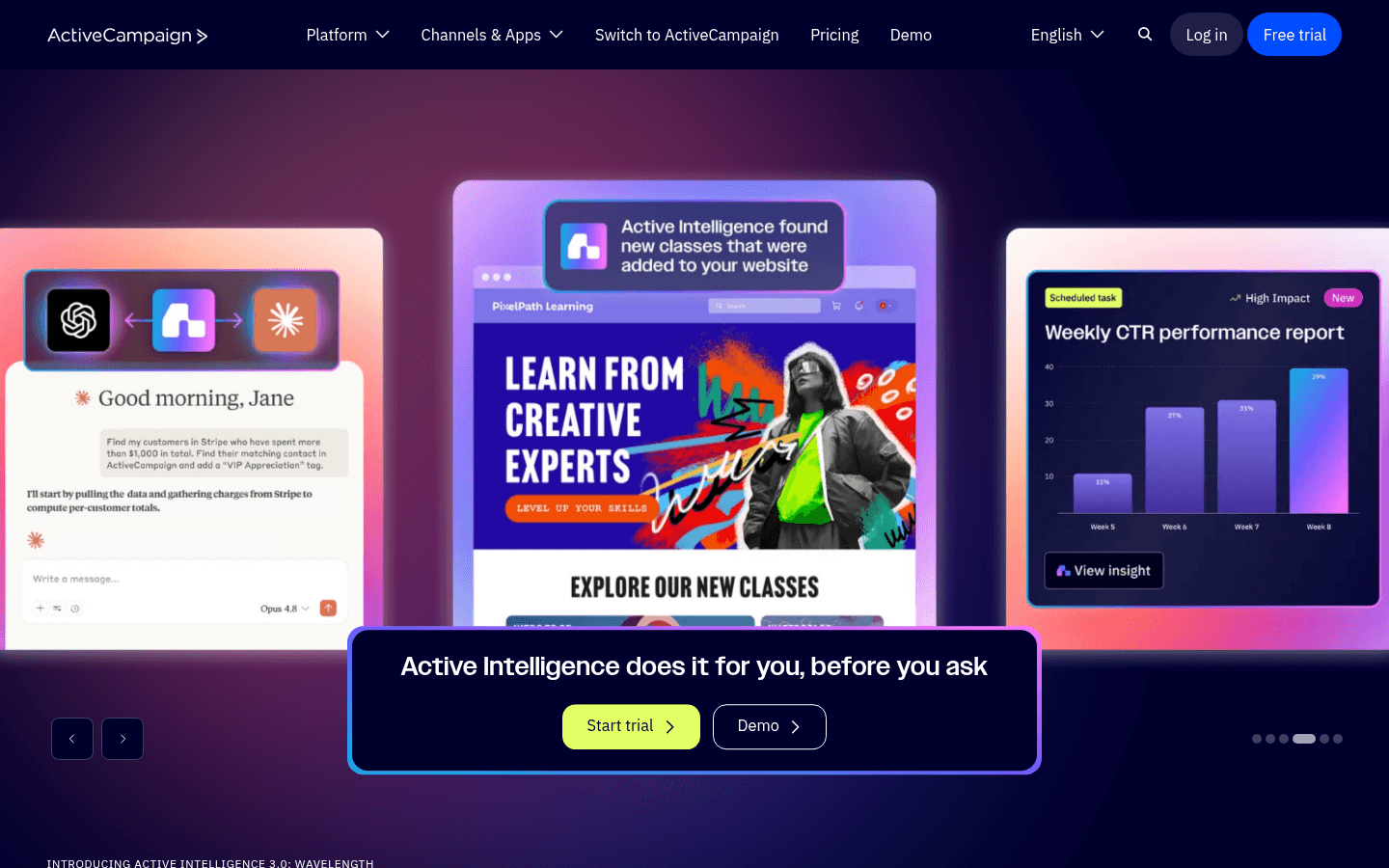
Klaviyo is the best choice for established kids stores with complex age-based lifecycle needs and AI product recommendations. Sequenzy is the best value option - its free tier gets you started, and subscriber attributes handle child age data for milestone campaigns at a fraction of Klaviyo's cost. Omnisend is worth considering if you want SMS alongside email for flash sales on seasonal items.

Why Kids & Baby Product Stores Need Email Marketing

Age-Based Product Lifecycle

Kids outgrow products fast. Diapers, clothing sizes, car seats, and toys all have age windows. Email campaigns triggered by the child's age recommend the right products at the right time, every time.

Milestone-Driven Purchasing

First steps, starting solids, potty training, first day of school. Every milestone means new products. Email timed to these milestones catches parents when they are actively shopping.

Trust and Safety

Parents are cautious about what they buy for their children. Email builds trust through safety certifications, ingredient transparency, and parent reviews. This trust keeps them buying from you.

Multi-Year Customer Value

A customer acquired during pregnancy can keep buying for 10+ years as their child grows. Email maintains that relationship year after year, making the lifetime value of kids store customers exceptionally high.

Kids & Baby Product Stores Email Marketing Benchmarks

Know these numbers before you start. They'll help you set realistic goals and pick the right tool.

28-35%
Average Open Rate

Kids and baby store emails see high open rates because product recommendations are genuinely useful and time-sensitive. Age-based milestone emails regularly exceed 40% open rates.

3.5-6%
Average Click Rate

Click rates are strong because parents actively need the recommended products. Personalized age-based recommendations drive the highest click rates.

Tuesday-Thursday, 8-9 PM
Best Send Time

Parents of young children are most likely to browse and shop after bedtime. Evening sends consistently outperform daytime for this audience.

3-10 years
Customer Lifetime Value

A customer acquired during pregnancy can purchase for a decade as their child grows. Multi-year email relationships drive exceptional lifetime value in this category.

Important Tips Before You Choose

Lessons from kids & baby product storeswho've been doing this for years. Save yourself the trial and error.

Collect the Birth Date at First Purchase

The child's birth date is the single most valuable data point for a kids store. With it, you can calculate their current age, predict size-ups, and time milestone emails automatically. Ask for it during checkout or signup with a simple date picker.

Build Age-Range Product Collections

Organize your catalog into age-range collections (0-3 months, 3-6 months, 6-12 months, 1-2 years, etc.) and map email campaigns to each range. When a child enters a new age window, automatically send the corresponding product collection.

Time Milestone Emails to Parenting Reality

First teeth, first steps, starting solids, potty training - these milestones drive urgent purchasing. Time your emails to when these milestones typically happen, not just arbitrary age markers. Parents actively search for products during milestone transitions.

Include Parent Reviews From Same-Age Children

Parents trust other parents more than product descriptions. In your age-based emails, include reviews specifically from parents of children the same age. A review saying 'my 8-month-old loves this' is more convincing than a generic five-star rating.

Plan for Multi-Child Families

When a family adds a second child, their needs overlap with hand-me-downs and new purchases. Ask if they have other children and adjust recommendations accordingly. Suggesting newborn essentials to a second-time parent who already owns them damages trust.

Create a Registry-to-Customer Pipeline

Parents who create registries at your store are pre-qualified customers for years. After the registry period ends, transition them to age-based product recommendation emails. The registry captures their due date, which gives you the birth date data you need.

19 Best Email Marketing Tools for Kids & Baby Product Stores

#ToolDescriptionBest ForPricing
1KlaviyoLeading e-commerce email with custom properties and predictive analytics.Established stores wanting age-based lifecycle automationFree up to 250 contacts, then from $20/month
2SequenzyAI-powered email with Shopify integration and affordable pricing.Kids stores wanting AI automation at affordable pricingFree up to 2,500 emails/mo, then $19/mo (unlimited contacts)
3DripE-commerce email with revenue attribution and custom fields.Mid-size kids stores focused on revenue optimization$39/month for 2,500 contacts
4OmnisendE-commerce marketing with email and SMS.Kids stores wanting email and SMS at a reasonable priceFree up to 250 contacts, then from $16/month
5ActiveCampaignAdvanced automation for complex customer lifecycles.Stores building multi-year family lifecycle campaigns$29/month for 1,000 contacts
6MailchimpPopular email with free tier and basic automation.Small kids stores just starting outFree up to 500 contacts, then from $13/month
7BrevoBudget email with SMS and transactional capabilities.Budget kids product storesFree up to 300 emails/day, then from $25/month
8OmnisendE-commerce email and SMS for kids and baby stores.Kids stores running multi-channel seasonal campaignsFree up to 500 emails/month, then from $16/month
9SendlaneBehavioral email for baby and kids product stores.Kids brands with complex lifecycle segmentation needsFrom $100/month
10AttentiveEnterprise SMS and email for kids and baby brands.Enterprise kids and baby brands at scaleCustom enterprise pricing
11PostscriptSMS for Shopify kids and baby stores.Shopify kids brands using SMS for product alertsFrom $100/month + SMS costs
12YotpoReviews, loyalty, and SMS for baby and kids brands.Baby and kids brands building trust through reviewsFrom $79/month
13FlodeskBeautiful email design for kids and baby brands.Design-forward kids and baby brandsFlat $38/month unlimited
14PrivyPopups and email for Shopify kids and baby stores.Shopify kids brands growing subscriber listsFree up to 100 contacts, from $30/month
15SmartrMailAI product recommendations for kids and baby stores.Kids stores with large age-segmented catalogsFrom $19/month
16RemarketyE-commerce email automation for kids product stores.Kids stores focused on repeat purchase optimizationFrom $25/month
17SenderAffordable email and SMS for kids and baby stores.Early-stage kids brands on tight budgetsFree up to 2,500 subscribers, from $8/month
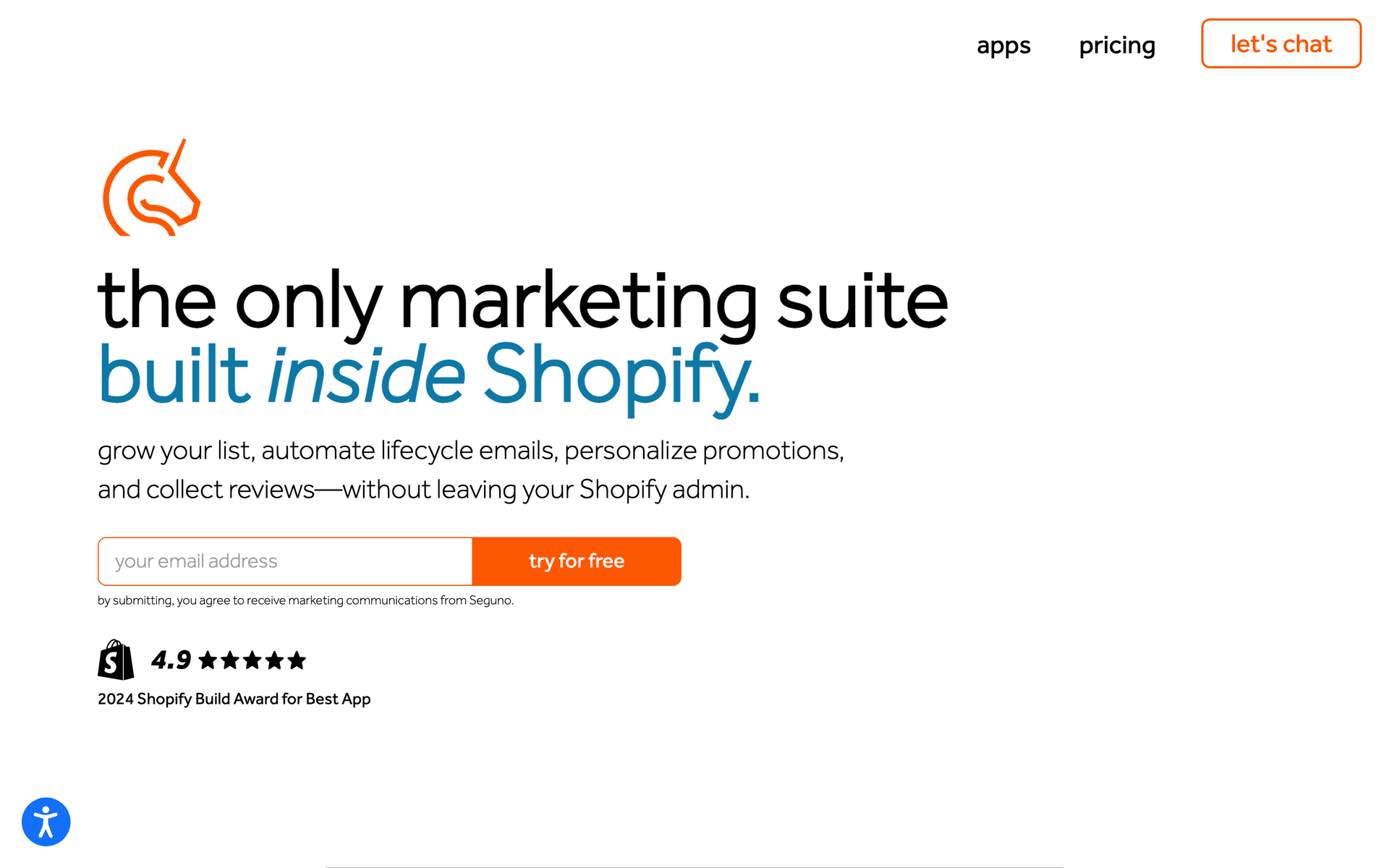
18SegunoShopify-native email for kids and baby stores.Shopify kids stores wanting integrated simplicityFree up to 250 subscribers, from $35/month
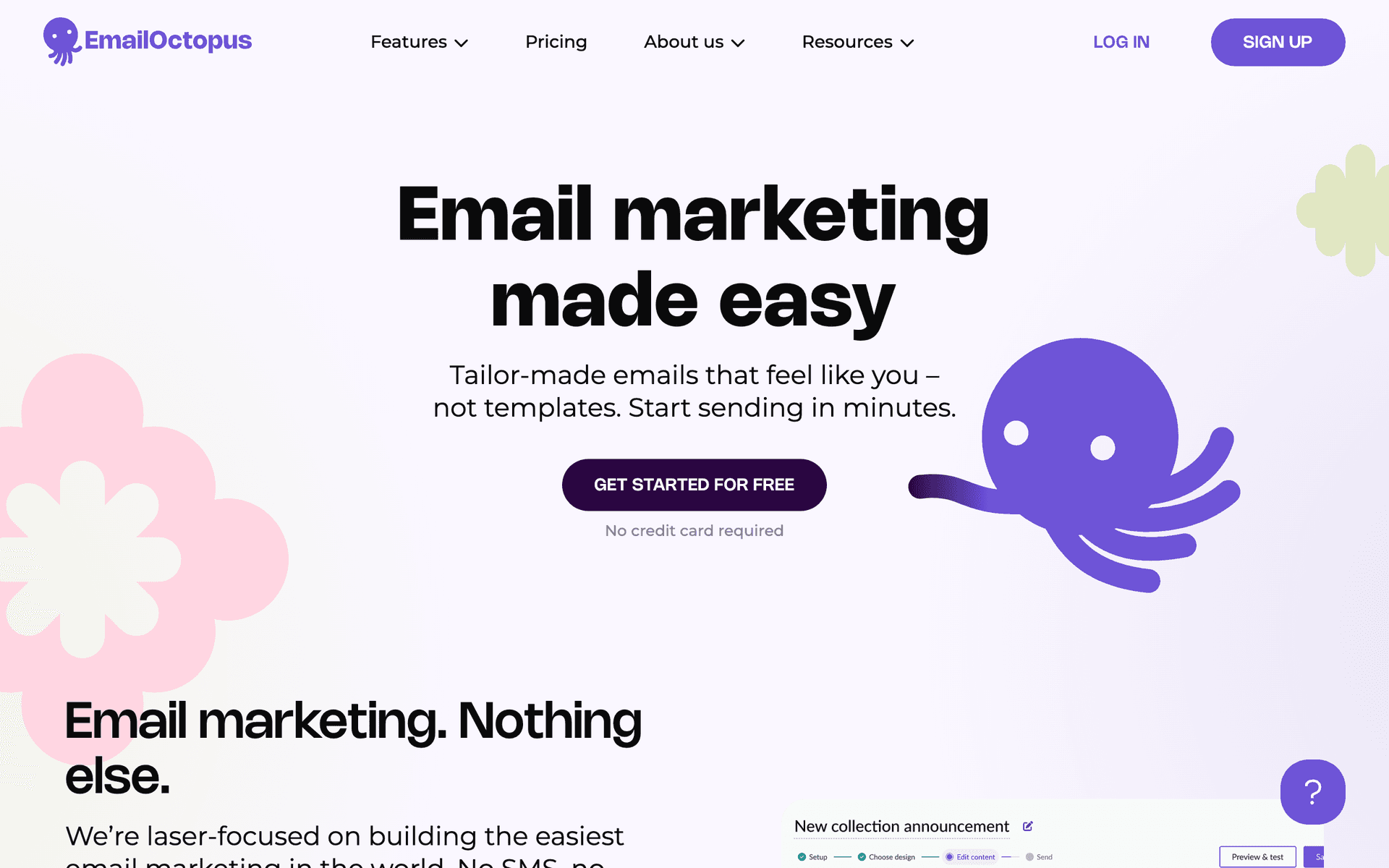
19EmailOctopusSimple affordable email for kids and baby stores.Budget-conscious kids stores needing basicsFree up to 2,500 subscribers, from $9/month
#1
Klaviyo

Leading e-commerce email with custom properties and predictive analytics.

Visit
Klaviyo dashboard screenshot

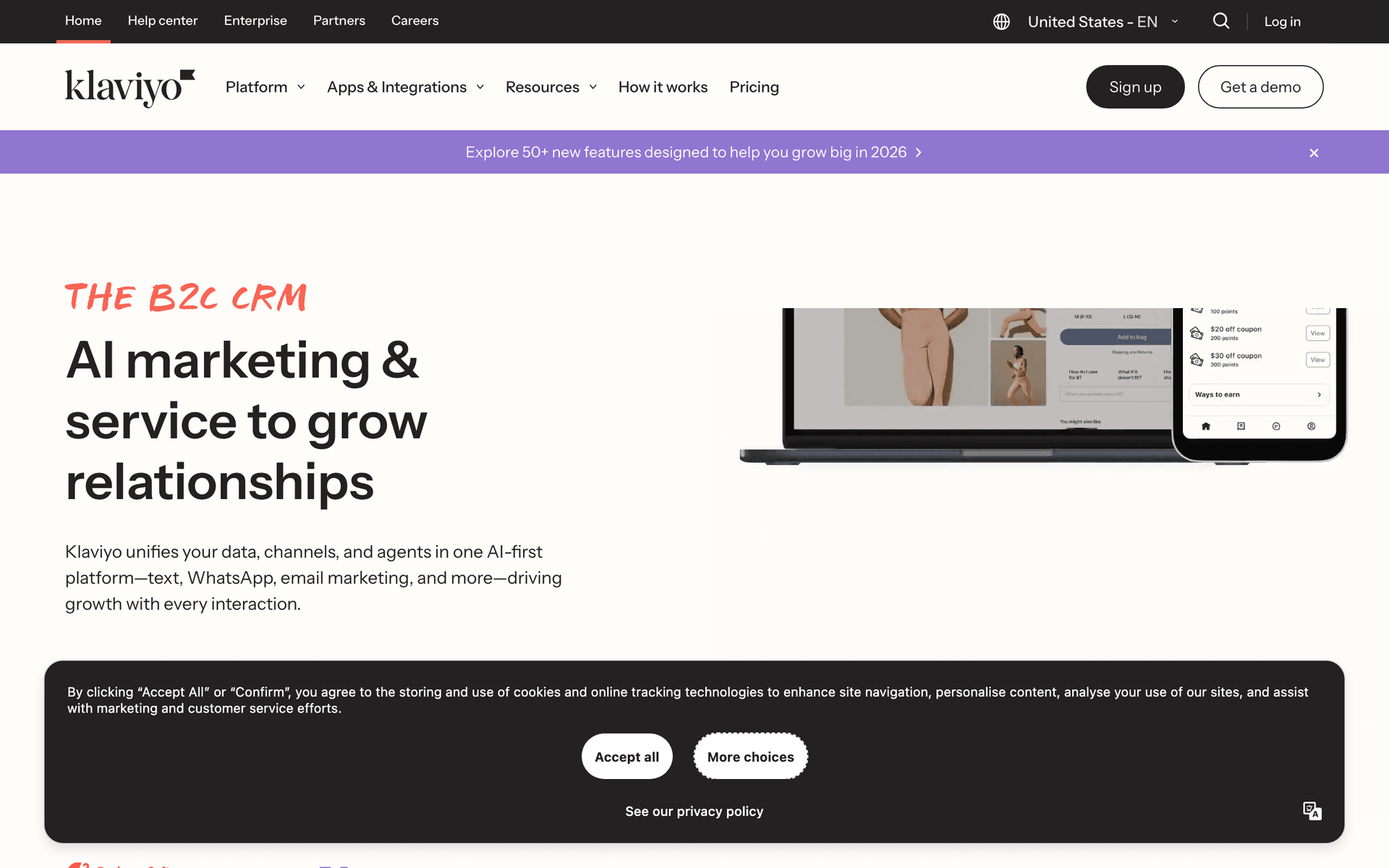
Klaviyo is the top choice for established kids and baby stores because of its custom property handling and predictive analytics. You can store the child's birth date as a custom property and automatically calculate their current age for dynamic segmentation - so when a child turns 6 months, their parent automatically enters your 6-month milestone flow. Product recommendations adjust as the child grows, pulling from your catalog's age-tagged products. Predictive analytics identify when parents are likely to need the next size up or the next stage product based on purchase patterns from similar customers. The deep Shopify integration syncs order history for purchase-based segmentation. Browse abandonment captures parents who looked at products but did not buy. The main downside is cost - at 5,000 contacts you are paying $100+/month, and the platform takes real time to configure properly for age-based lifecycle flows.

Best for
Established stores wanting age-based lifecycle automation
Pricing
Free up to 250 contacts, then from $20/month

Pros

  • Custom child age properties
  • AI product recommendations
  • Predictive analytics
  • Deep Shopify integration

Cons

  • Expensive at scale
  • Complex to set up lifecycle flows
  • Contact-based pricing
  • Steep learning curve
Our Top Pick for Kids & Baby Product Stores
#2
Sequenzy

AI-powered email with Shopify integration and affordable pricing.

Visit
Sequenzy dashboard screenshot

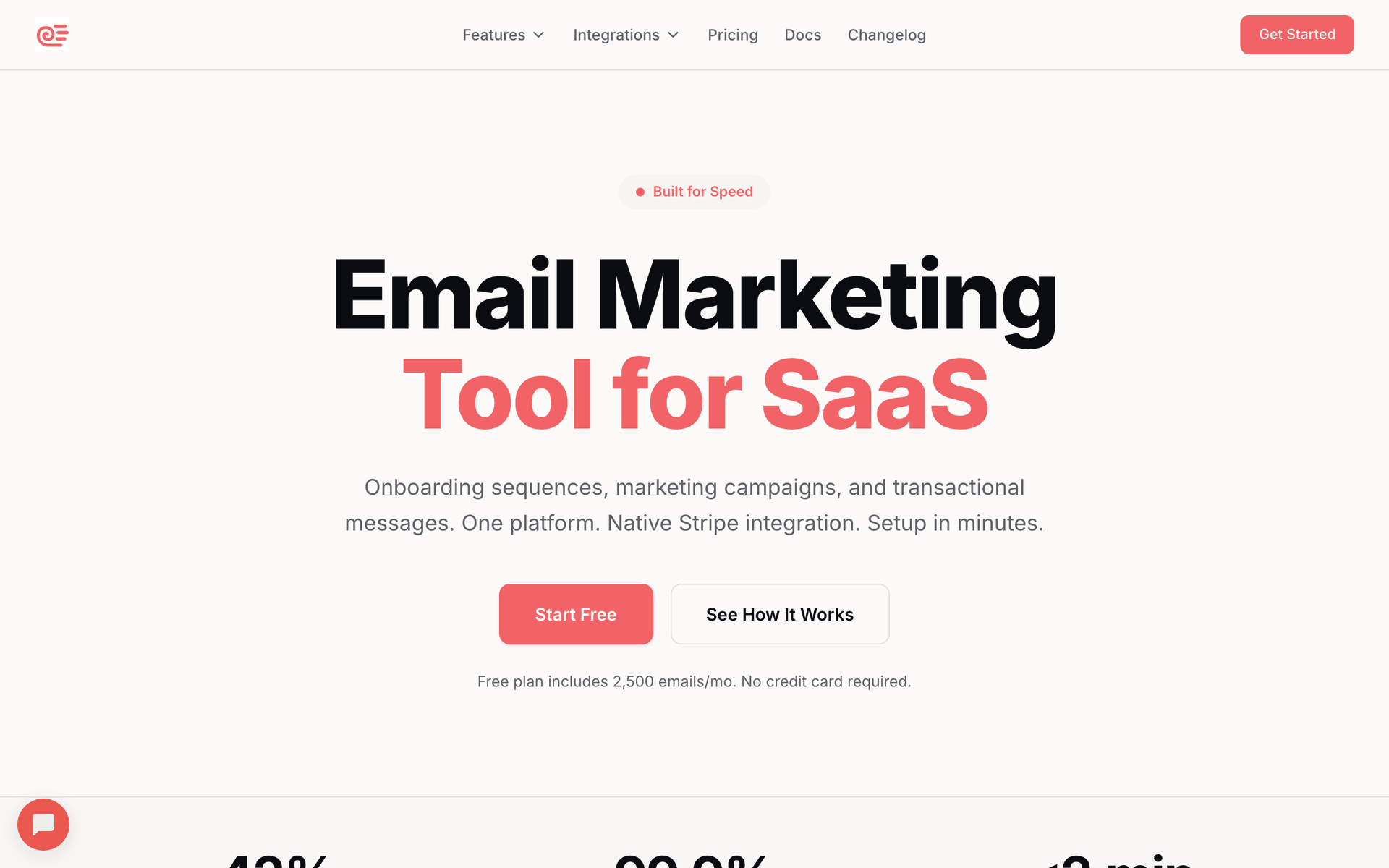
Sequenzy is a strong option for kids and baby stores that want age-based campaigns without Klaviyo's complexity or cost. The free tier lets you send up to 2,500 emails per month to get started. Store child birth dates as subscriber attributes and use them to power age-based campaign targeting. The AI sequence builder creates milestone campaigns, post-purchase cross-sells, and seasonal back-to-school promotions in seconds - describe your goal and get a working sequence. The native Shopify integration syncs order data for purchase-based segmentation. Pay-per-email pricing works especially well for kids stores because you send segmented campaigns by age group rather than blasting your entire list. At $29/month for 50,000 emails with unlimited contacts, it costs a fraction of what Klaviyo charges at similar scale. The trade-off is no predictive product recommendations or AI-powered age calculation - you set up the age-based targeting manually.

Best for
Kids stores wanting AI automation at affordable pricing
Pricing
Free up to 2,500 emails/mo, then $19/mo (unlimited contacts)

Pros

  • AI builds milestone sequences fast
  • Free tier to get started
  • Subscriber attributes for child data
  • Pay-per-email pricing saves money on segmented sends

Cons

  • No predictive age-based recommendations
  • Newer platform
  • No built-in SMS
  • No registry integration
#3
Drip

E-commerce email with revenue attribution and custom fields.

Visit
Drip dashboard screenshot

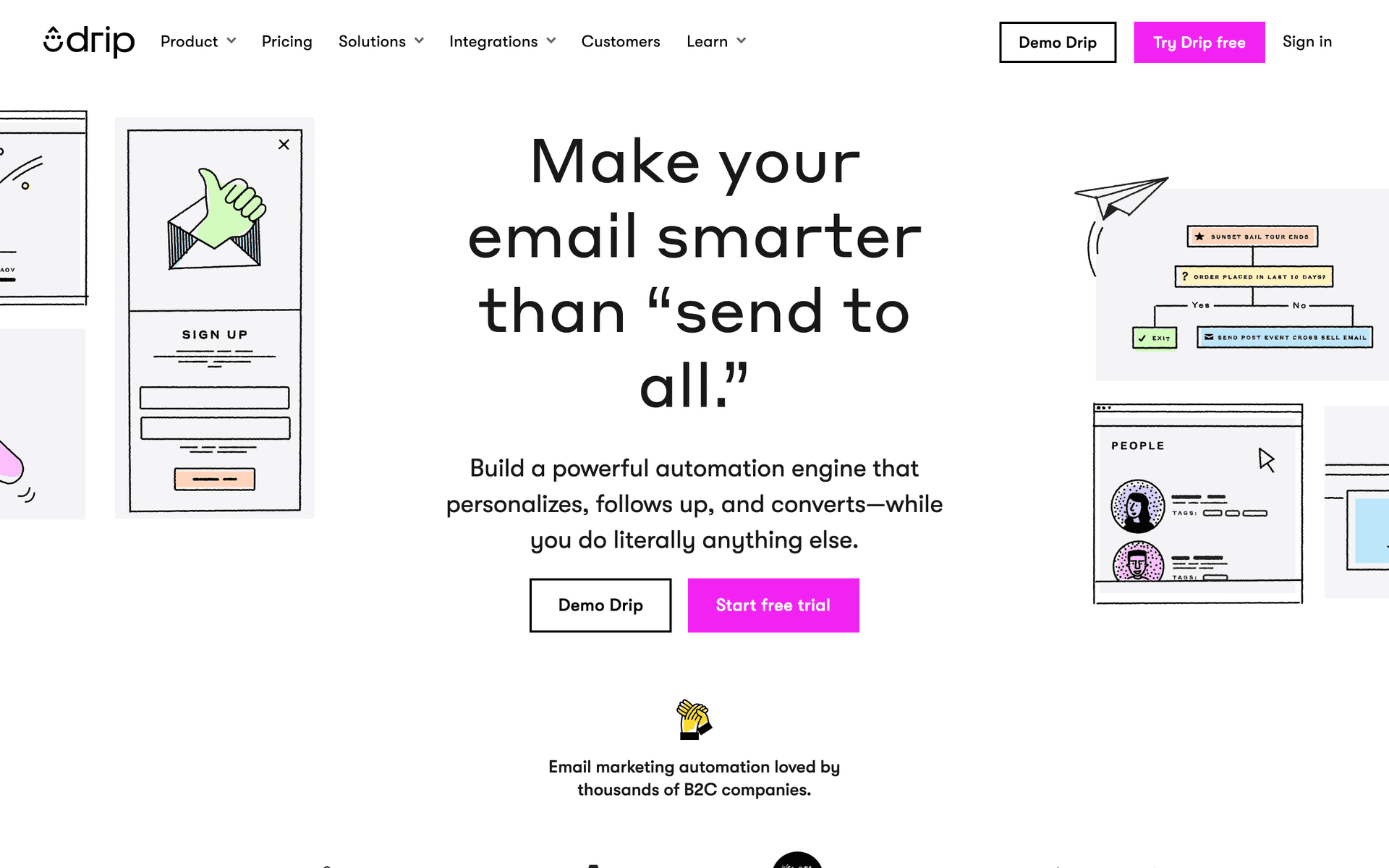
Drip handles age-based segmentation through custom fields and visual workflow builder. Store the child's birth date and build workflows that branch based on calculated age. Revenue attribution shows exactly which milestone campaigns and age-based emails drive the most sales, helping you optimize your highest-performing sequences. The visual workflow builder makes it straightforward to create complex conditional paths - different recommendations for boys vs girls, different product sets for first-time vs experienced parents. The downside is no free tier and contact-based pricing starting at $39/month, which makes it a pricier option for smaller stores.

Best for
Mid-size kids stores focused on revenue optimization
Pricing
$39/month for 2,500 contacts

Pros

  • Revenue attribution per campaign
  • Custom fields for child data
  • Visual workflows with branching
  • Good segmentation tools

Cons

  • No free tier
  • Contact-based pricing
  • Higher starting price
  • No age-based automation templates
#4
Omnisend

E-commerce marketing with email and SMS.

Visit
Omnisend dashboard screenshot

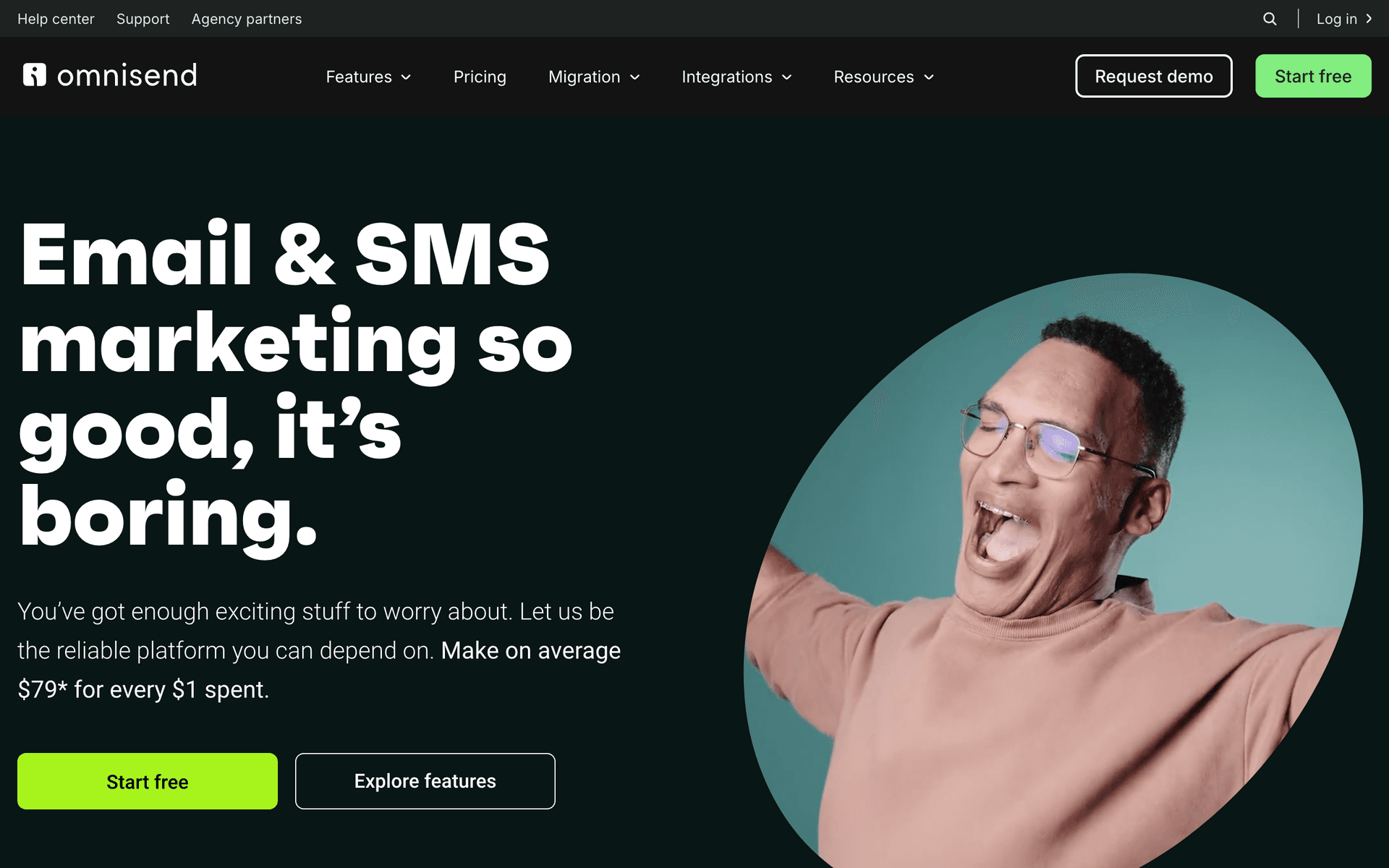
Omnisend covers the kids store basics well - cart recovery, welcome series, and post-purchase automation all work out of the box. Where it adds unique value is SMS for flash sales on seasonal items like back-to-school gear or holiday toys. Parents respond quickly to text messages about limited-time deals. The product picker makes building product showcase emails straightforward - drag products from your catalog into the email. Pre-built automation templates save setup time. The limitation is that Omnisend does not have sophisticated age-based lifecycle automation. You can tag subscribers by age range, but you will not get the automatic age calculation and milestone triggering that Klaviyo offers.

Best for
Kids stores wanting email and SMS at a reasonable price
Pricing
Free up to 250 contacts, then from $16/month

Pros

  • Email and SMS combined
  • Pre-built automations
  • Product picker in editor
  • Good pricing

Cons

  • No age-based segmentation
  • Basic custom fields
  • Limited lifecycle automation
  • Generic templates
#5
ActiveCampaign

Advanced automation for complex customer lifecycles.

Visit
ActiveCampaign dashboard screenshot

ActiveCampaign handles the complex, multi-year customer lifecycle that kids stores need better than almost any other platform. Build automation paths that evolve as the child ages - newborn essentials flow into infant gear recommendations, then toddler items, and so on for years. The CRM tracks family data including multiple children and their ages. Date-based automation triggers emails when a stored date (like a birth date) reaches a calculated threshold. This is the most flexible platform for building true lifecycle journeys spanning multiple years. The trade-off is significant setup time and a steep learning curve. It is not e-commerce-specialized, so you will not get product catalog sync or cart recovery without additional integrations.

Best for
Stores building multi-year family lifecycle campaigns
Pricing
$29/month for 1,000 contacts

Pros

  • Complex lifecycle automation
  • CRM for family data
  • Multi-year journey building
  • Good deliverability

Cons

  • Not kids specialized
  • Steep learning curve
  • No e-commerce templates
  • Significant setup time
#6
Mailchimp

Popular email with free tier and basic automation.

Visit
Mailchimp dashboard screenshot

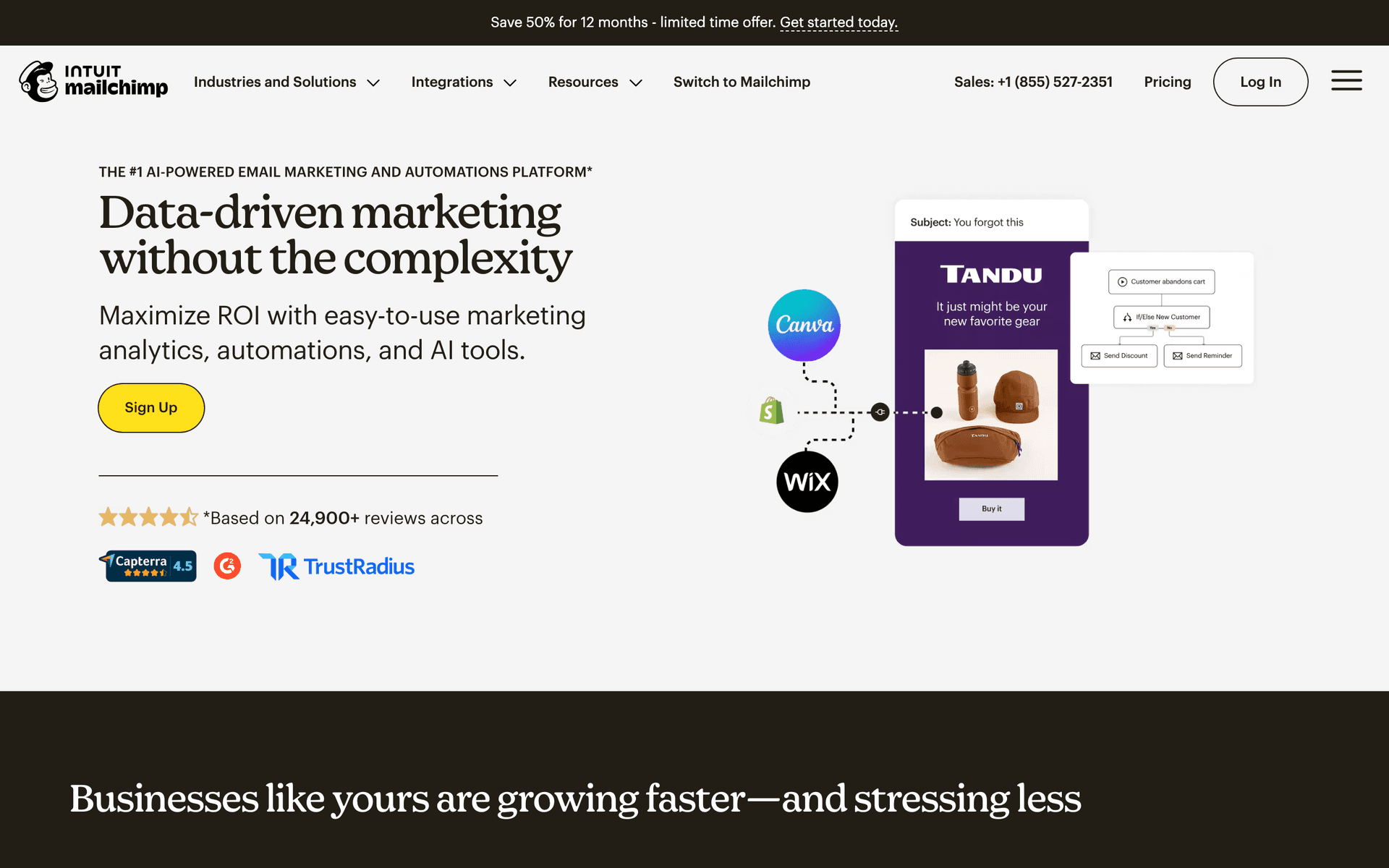
Mailchimp gets small kids stores started with email marketing at zero cost. The free tier supports 500 contacts, which works for new stores building their first customer base. Basic segmentation lets you tag subscribers by child age range for manual targeting. The drag-and-drop editor and template library make seasonal promotional emails (holiday gift guides, back-to-school) easy to create. Where Mailchimp falls short is lifecycle automation - you cannot build sophisticated age-based milestone campaigns that automatically evolve as children grow. You will be manually creating each seasonal campaign and managing age-range tags yourself.

Best for
Small kids stores just starting out
Pricing
Free up to 500 contacts, then from $13/month

Pros

  • Free tier to start
  • Easy to use
  • Decent templates
  • Many integrations

Cons

  • Basic automation
  • Limited lifecycle support
  • Gets expensive
  • No age-based segmentation
#7
Brevo

Budget email with SMS and transactional capabilities.

Visit
Brevo dashboard screenshot

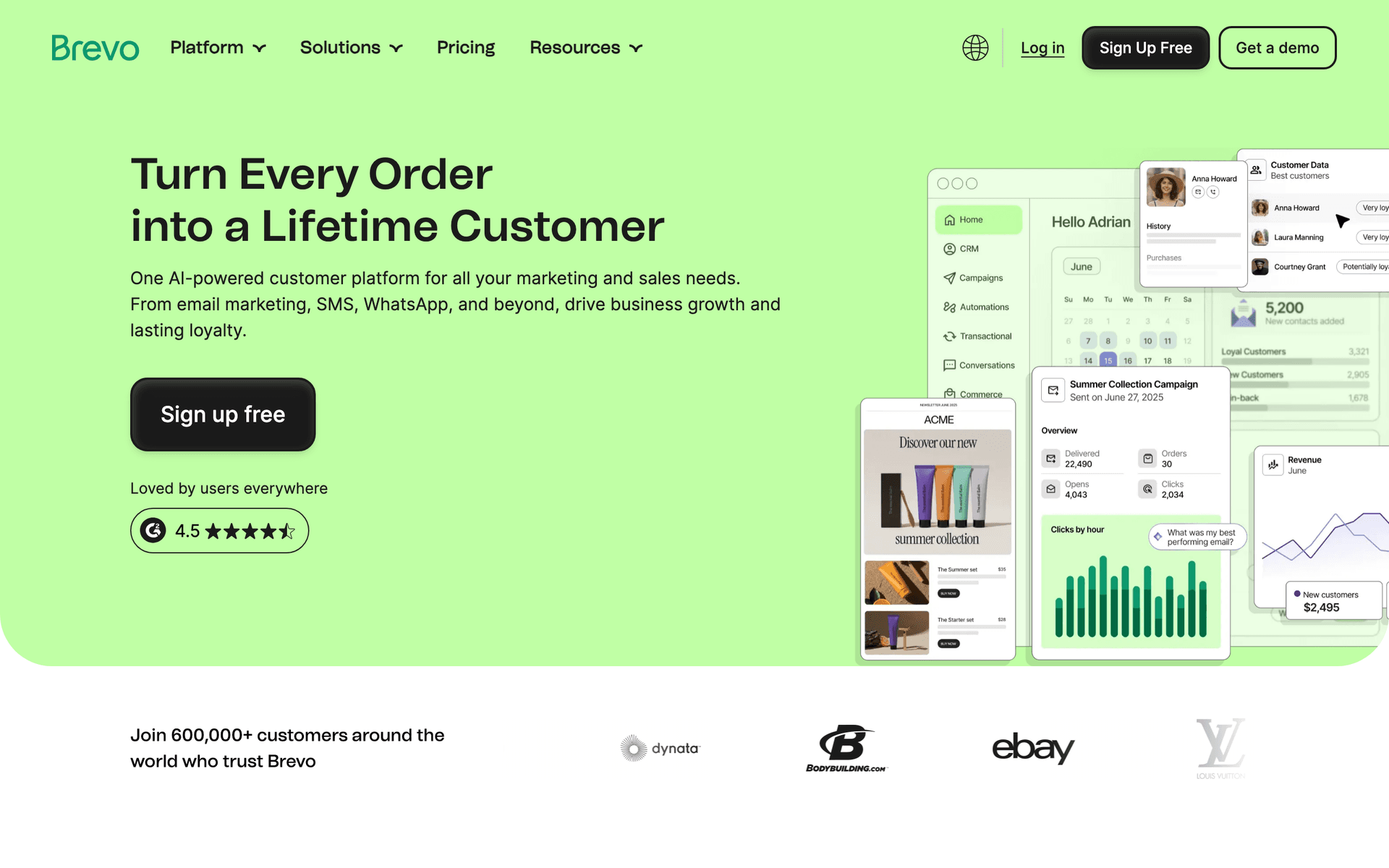
Brevo is the budget-friendly option for kids stores that need the basics without breaking the bank. Pay-by-email pricing keeps costs low when you are sending segmented campaigns to specific age groups rather than your entire list. SMS is included for flash sale alerts on seasonal items. Transactional emails handle order confirmations and shipping notifications. Custom attributes let you store child data, but the automation for age-based lifecycle campaigns is basic compared to Klaviyo or ActiveCampaign. Best for stores that want affordable email and SMS together while they grow.

Best for
Budget kids product stores
Pricing
Free up to 300 emails/day, then from $25/month

Pros

  • Budget-friendly
  • SMS included
  • Pay by email
  • Transactional email

Cons

  • Basic automation
  • No child data fields built in
  • Limited lifecycle features
  • Basic templates
#8
Omnisend

E-commerce email and SMS for kids and baby stores.

Visit
Omnisend dashboard screenshot

Omnisend's multi-channel automation suits kids and baby brands that coordinate seasonal campaigns across email, SMS, and push notifications around back-to-school, holiday toy season, and new baby gifting peaks. Product recommendation engines surface age-appropriate toys and clothing based on previous purchases - helping parents discover what is right for their child's developmental stage without doing additional research. The abandoned cart workflow is effective for baby gear where high-ticket items like strollers and car seats see significant cart drop-off during the price comparison phase. Visual product blocks showcase colorful kids product photography well within automated email flows.

Best for
Kids stores running multi-channel seasonal campaigns
Pricing
Free up to 500 emails/month, then from $16/month

Pros

  • Multi-channel automation
  • Age-based recommendations
  • Seasonal campaign tools
  • Cart abandonment

Cons

  • Best with Shopify
  • Learning curve
  • Higher cost at scale
  • Limited custom data
#9
Sendlane

Behavioral email for baby and kids product stores.

Visit
Sendlane dashboard screenshot

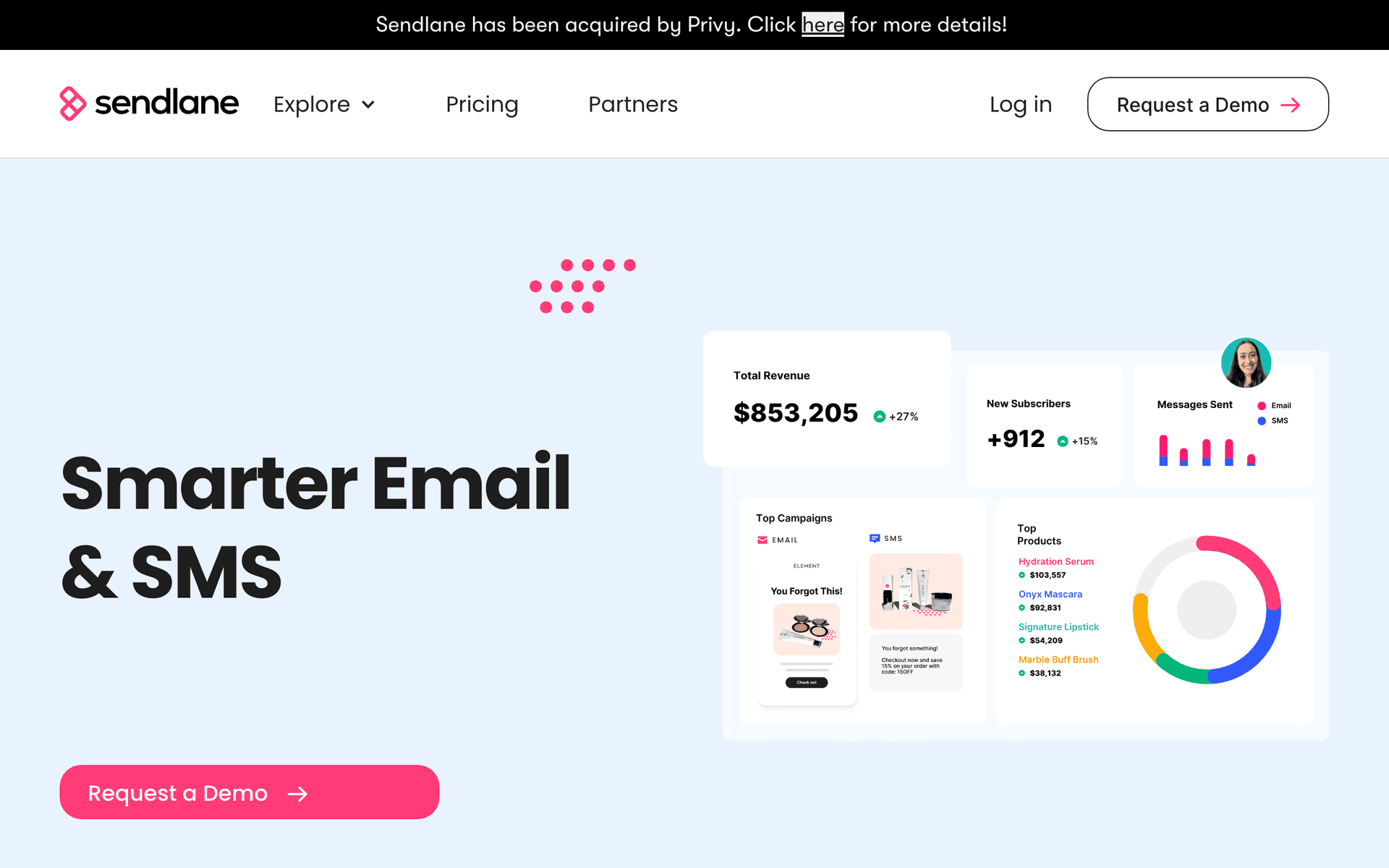
Sendlane tracks how parents browse baby and kids product pages - identifying when a customer shifts from infant gear to toddler toys, which signals a life stage transition worth targeting with age-appropriate product recommendations. Deep Shopify integration captures browsing sessions alongside purchase data, building behavioral profiles that reveal seasonal shopping patterns around birthdays, holidays, and school events. Revenue attribution shows kids brands which lifecycle email sequences drive the highest long-term customer value as children grow through different product categories. The platform handles the complex segmentation that stores need to reach parents at the right moment in their child's development.

Best for
Kids brands with complex lifecycle segmentation needs
Pricing
From $100/month

Pros

  • Behavioral tracking
  • Life stage detection
  • Revenue attribution
  • Complex segmentation

Cons

  • Premium pricing
  • Setup complexity
  • Overkill for small stores
  • No free tier
#10
Attentive

Enterprise SMS and email for kids and baby brands.

Visit
Attentive dashboard screenshot

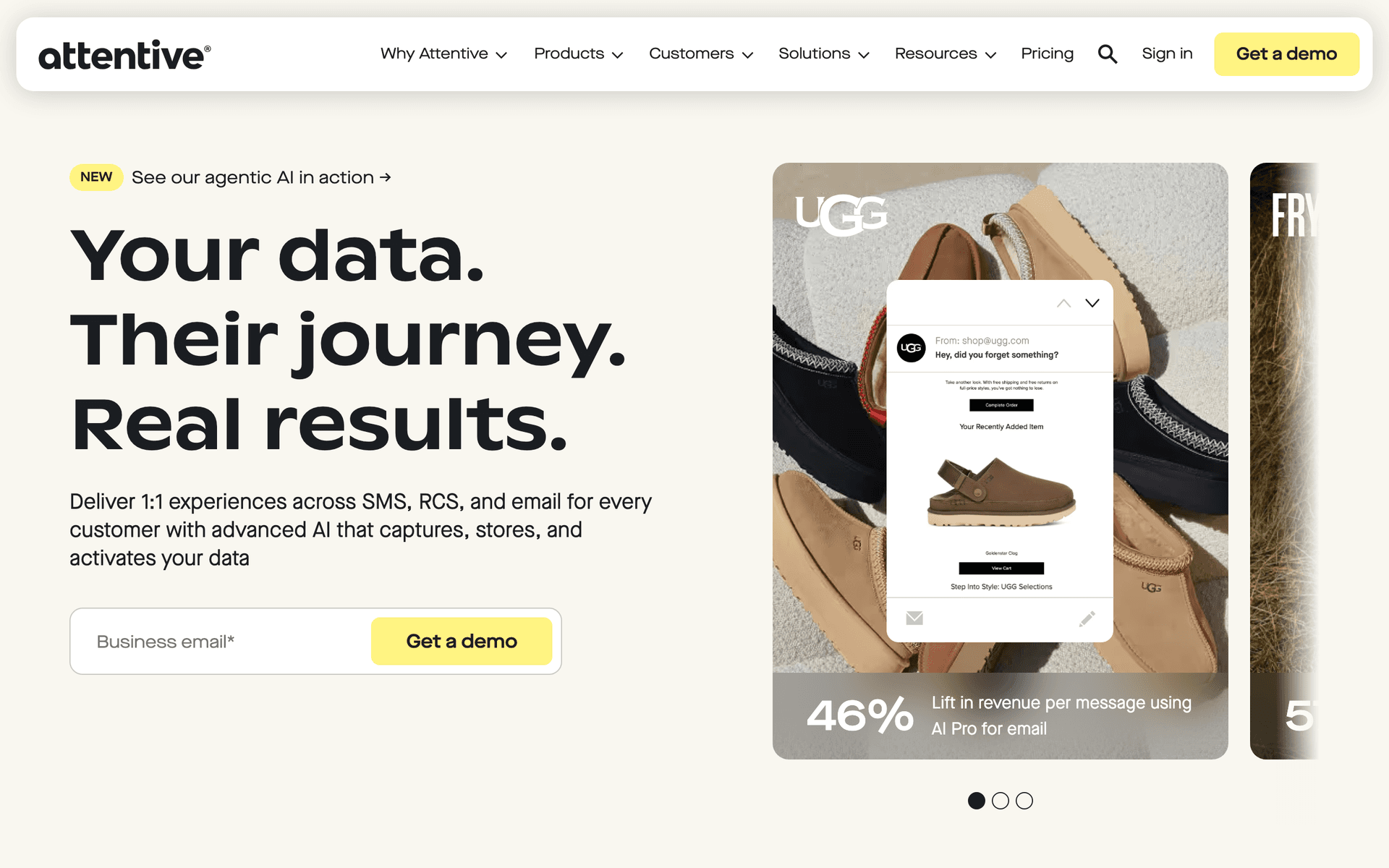
Attentive powers established baby and kids brands that want to reach parents via SMS during peak gifting seasons - holiday toy campaigns and birthday season alerts perform well via text because parents actively searching for gift ideas respond to direct purchase links. Two-tap mobile sign-up tools capture phone numbers from parents at the moment of highest intent, building opted-in SMS audiences for future product launches. Enterprise-level segmentation lets brands separate new parent communications from toddler-stage messages, keeping content relevant to each family's current situation. High-volume seasonal campaigns for baby brands shipping millions of units need Attentive's deliverability infrastructure.

Best for
Enterprise kids and baby brands at scale
Pricing
Custom enterprise pricing

Pros

  • Enterprise SMS scale
  • Gift season campaigns
  • Life stage segmentation
  • High deliverability

Cons

  • Enterprise pricing
  • Not for small brands
  • Long onboarding
  • Contract required
#11
Postscript

SMS for Shopify kids and baby stores.

Visit
Postscript dashboard screenshot

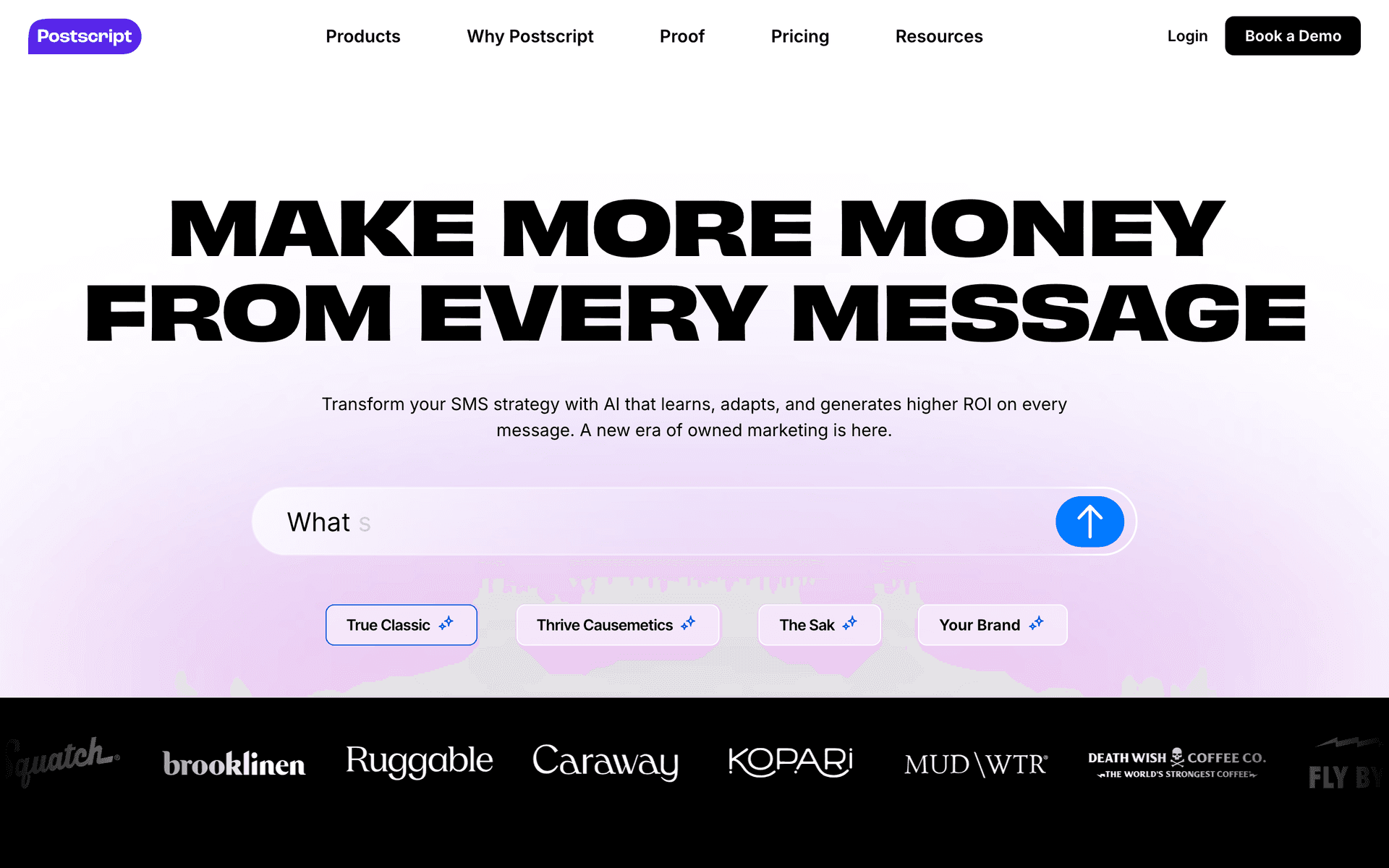
Postscript SMS suits Shopify kids brands sending back-in-stock alerts for popular toys and limited-edition seasonal items that parents want to know about the moment inventory is available. Shopify order history sync lets brands segment parents who bought newborn gear and target them with toddler product launches timed to match developmental milestones. Flash sale SMS campaigns for clearance children's clothing and holiday toy promotions generate immediate traffic that outperforms email for time-sensitive events. Parents who have opted into SMS for a trusted kids brand respond well to direct purchase links during seasonal shopping periods.

Best for
Shopify kids brands using SMS for product alerts
Pricing
From $100/month + SMS costs

Pros

  • Shopify-native
  • Back-in-stock alerts
  • Flash sale SMS
  • Order history sync

Cons

  • Shopify only
  • SMS costs extra
  • No email marketing
  • Premium pricing
#12
Yotpo

Reviews, loyalty, and SMS for baby and kids brands.

Visit
Yotpo dashboard screenshot

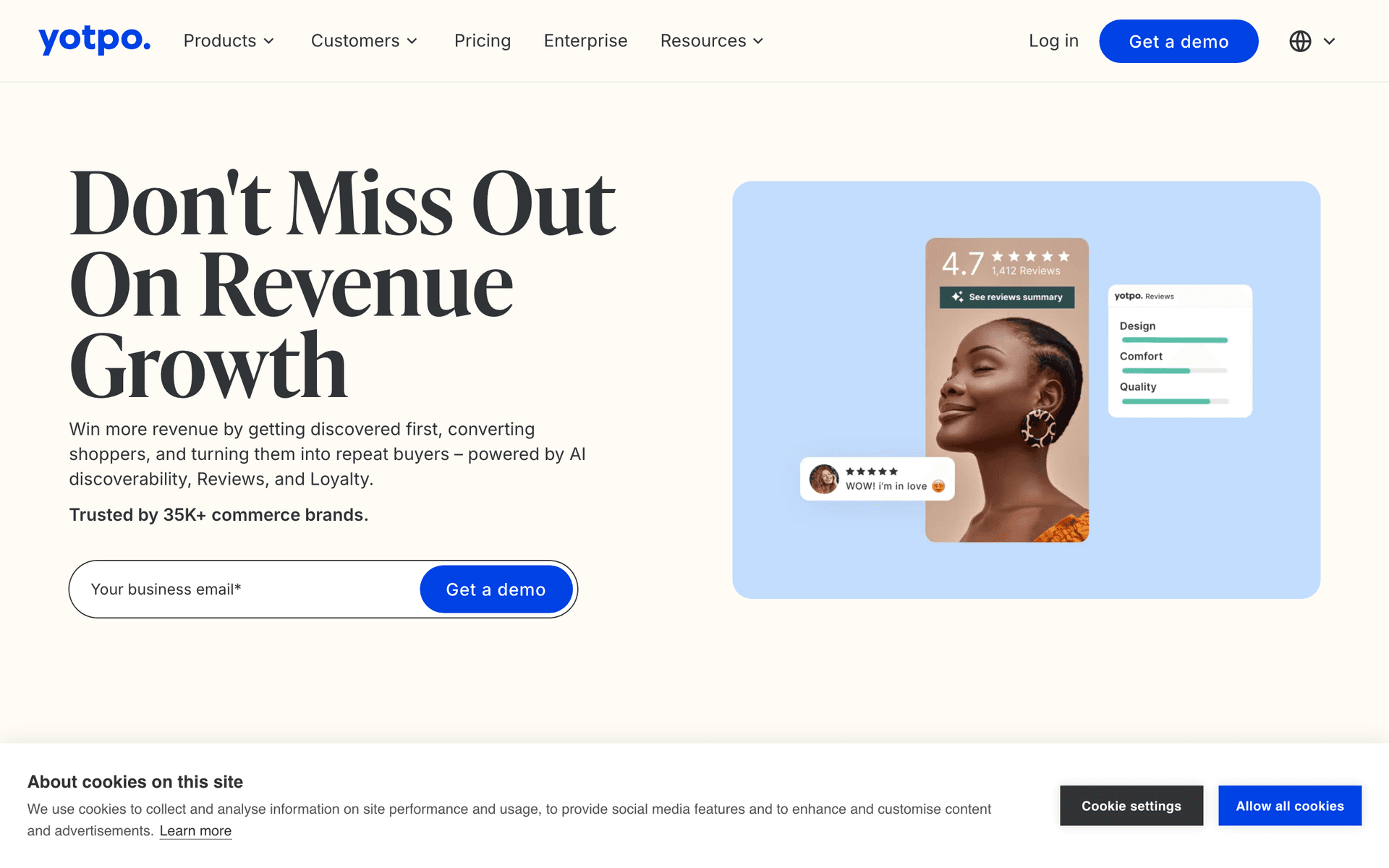
Yotpo connects reviews, loyalty programs, and SMS into a retention platform that helps baby and kids brands build the trust that cautious parents require before buying products for their children. Verified purchase reviews with photos of real children using products are highly persuasive for parents researching the best stroller, baby monitor, or educational toy - and Yotpo's review request automation collects these systematically. Loyalty programs that reward parents for purchases and referrals encourage repeat buying as children grow through different product phases. SMS milestone alerts tied to loyalty points expiration or new collection drops keep engaged parents returning to shop.

Best for
Baby and kids brands building trust through reviews
Pricing
From $79/month

Pros

  • Review automation
  • Real customer photos
  • Loyalty programs
  • SMS integration

Cons

  • Multiple modules needed
  • Gets expensive
  • Setup complexity
  • Learning curve
#13
Flodesk

Beautiful email design for kids and baby brands.

Visit
Flodesk dashboard screenshot

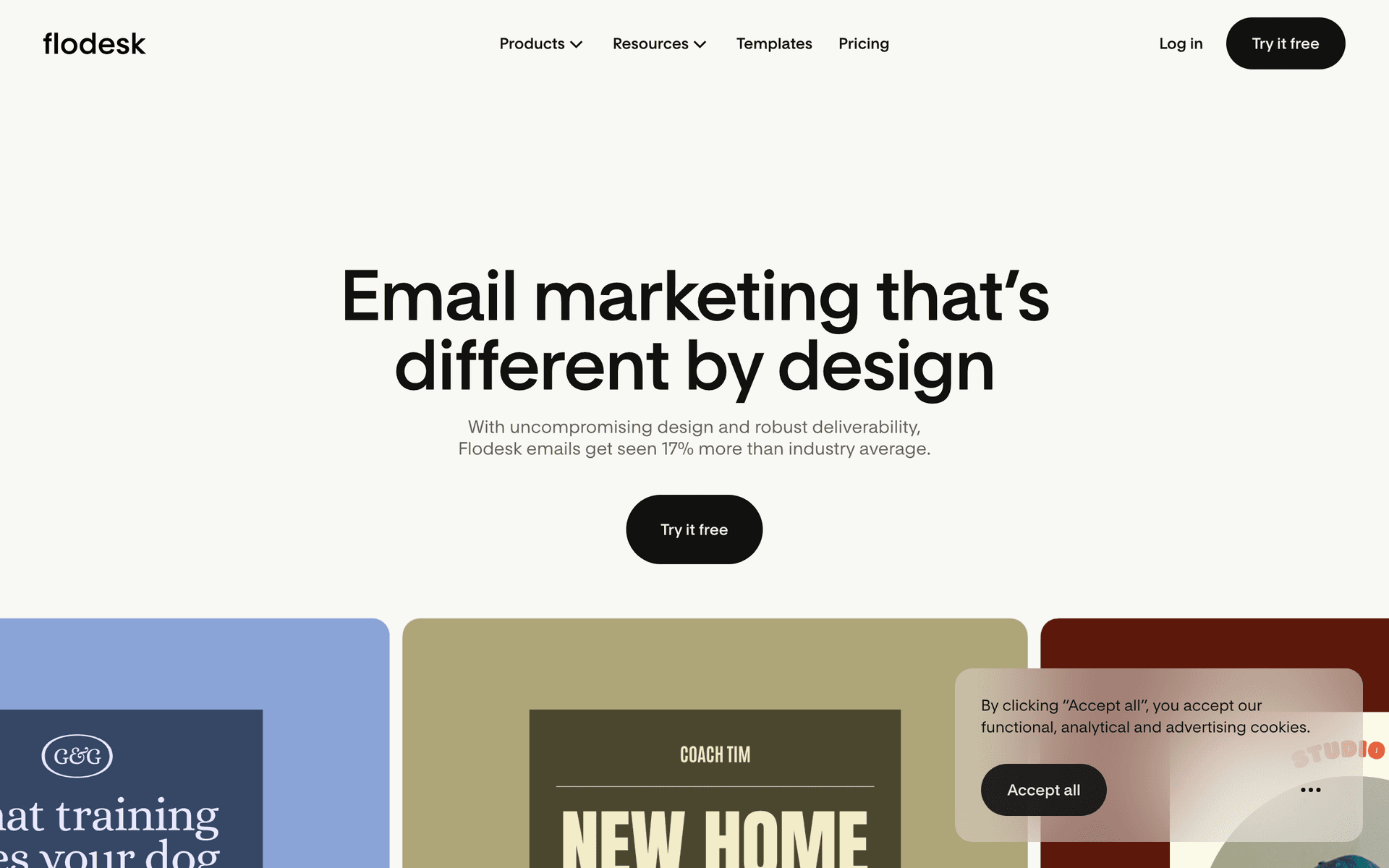
Flodesk's visual templates work well for baby and kids brands that want their email communications to match the warm, design-forward aesthetic of their product positioning. Flat-rate pricing at $38 per month makes it accessible for small children's boutiques and baby brands building their initial audience without worrying about list size costs. Colorful, well-designed templates suit playful kids brand aesthetics, and the simple editor lets small brand teams produce polished campaigns quickly. For kids and baby brands that prioritize beautiful newsletter content and new collection announcements over complex automation, Flodesk delivers strong visual results.

Best for
Design-forward kids and baby brands
Pricing
Flat $38/month unlimited

Pros

  • Beautiful templates
  • Flat-rate pricing
  • Easy design control
  • Playful aesthetic fit

Cons

  • Limited automation
  • No e-commerce integrations
  • Basic segmentation
  • No SMS
#14
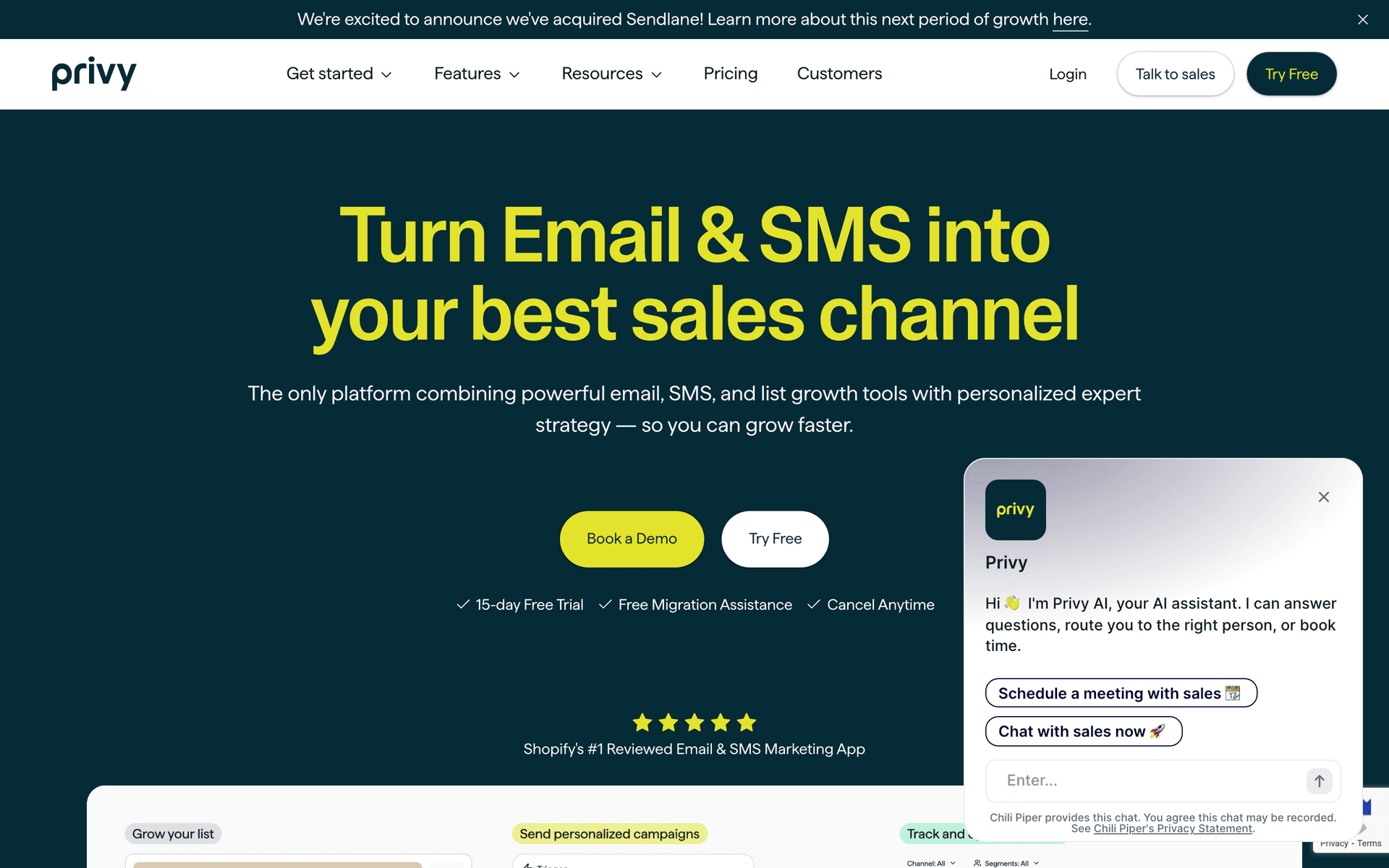
Privy

Popups and email for Shopify kids and baby stores.

Visit
Privy dashboard screenshot

Privy helps kids and baby Shopify stores grow their email and SMS subscriber lists with targeted popups that capture parents at the moment they are browsing product pages or reading product reviews. Exit-intent popups with a first-order discount convert hesitant parents who were comparing prices on strollers or baby gear between multiple stores. Cart abandonment emails for high-ticket baby items follow up with additional safety certifications and customer testimonials that address the trust concerns parents have when buying products for their children. Privy's Shopify-native setup is fast for baby brands without dedicated technical resources.

Best for
Shopify kids brands growing subscriber lists
Pricing
Free up to 100 contacts, from $30/month

Pros

  • Shopify-native popups
  • Exit-intent capture
  • Trust-building cart recovery
  • Fast setup

Cons

  • Shopify only
  • Basic automation
  • Limited segmentation
  • Simple features
#15
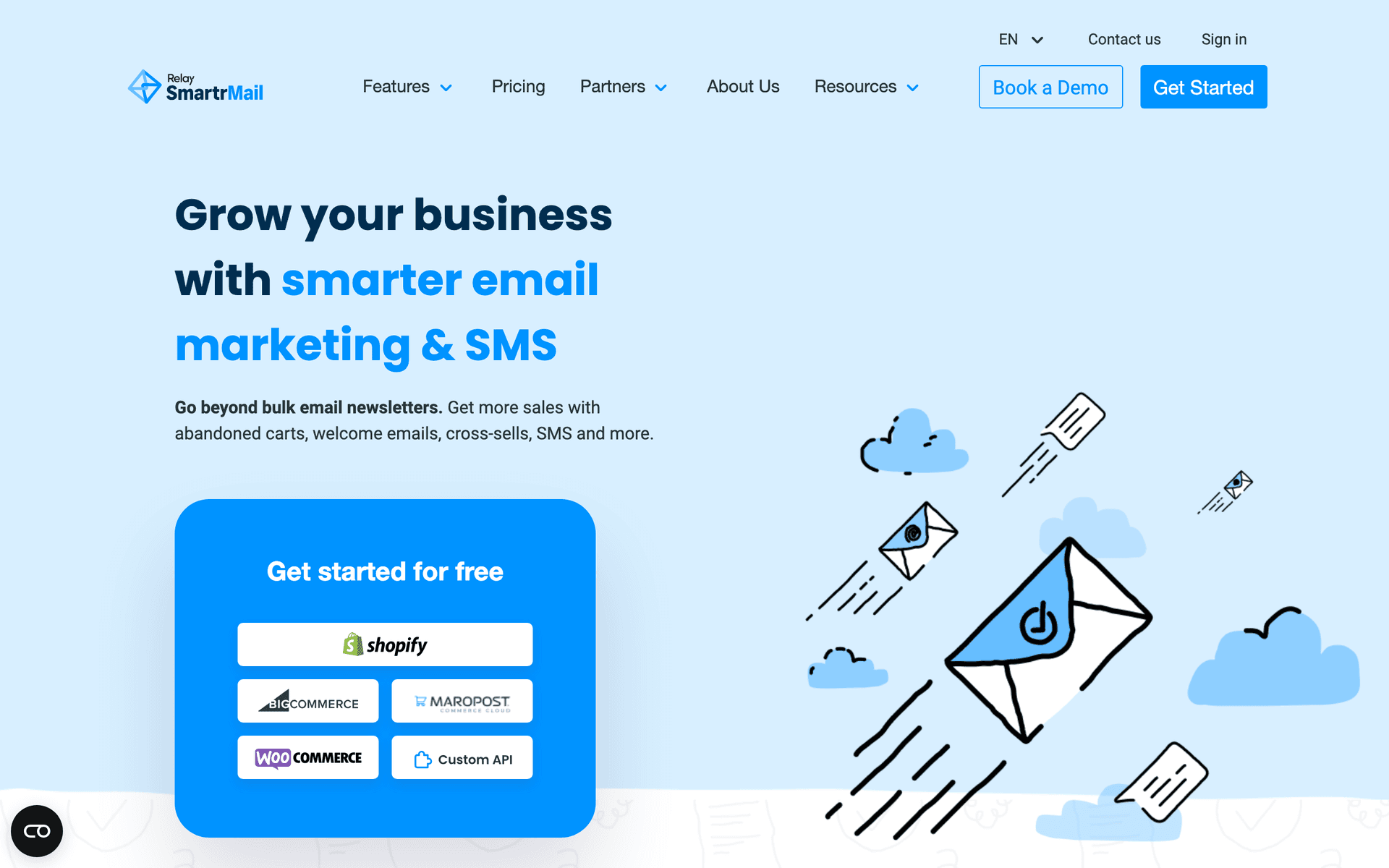
SmartrMail

AI product recommendations for kids and baby stores.

Visit
SmartrMail dashboard screenshot

SmartrMail's AI surfaces age-appropriate product recommendations based on past purchases - suggesting toddler toys for customers who bought infant gear, or school-age products when purchasing patterns suggest a child is reaching that milestone. The Shopify, WooCommerce, and BigCommerce integrations pull live inventory and pricing into newsletters automatically, keeping product emails current without manual updates to the catalog. Seasonal newsletters curated by AI for birthday gift season and back-to-school shopping reduce the content creation burden for kids brands with large catalogs. Affordable pricing makes it accessible for small to mid-sized children's retailers.

Best for
Kids stores with large age-segmented catalogs
Pricing
From $19/month

Pros

  • AI age-based recommendations
  • Multi-platform support
  • Automated seasonal newsletters
  • Affordable

Cons

  • Limited behavioral depth
  • Basic segmentation
  • Less brand control
  • Smaller feature set
#16
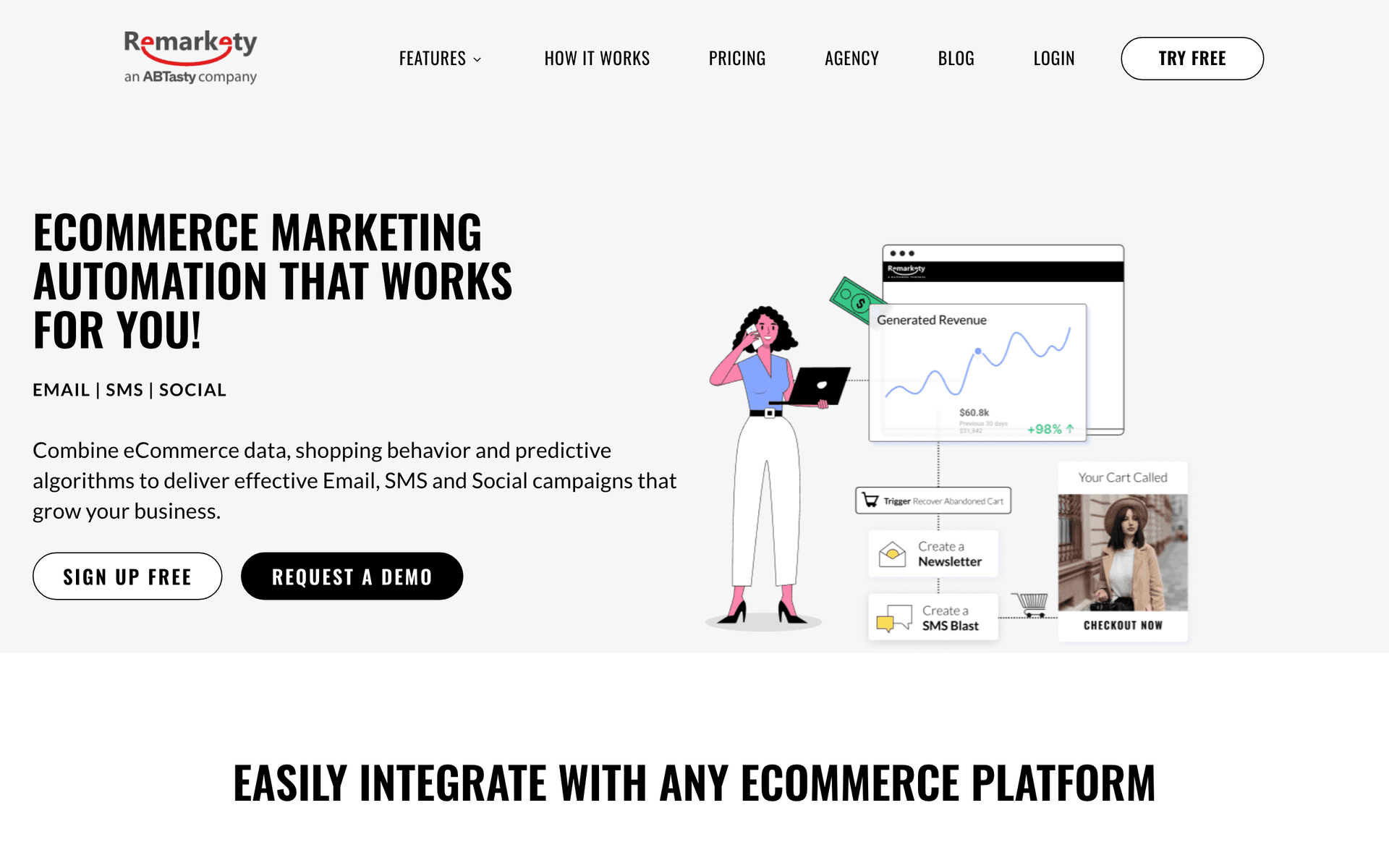
Remarkety

E-commerce email automation for kids product stores.

Visit
Remarkety dashboard screenshot

Remarkety specializes in e-commerce email automation with customer lifetime analysis that helps baby and kids brands identify customers approaching natural replenishment points - like parents who bought diapers and are likely to need the next size up. Purchase frequency analysis reveals which kids product categories drive repeat purchasing and which are one-time buys, allowing brands to focus retention effort where it creates the most value. Segmentation by purchase history and child age data supports lifecycle campaigns that follow families through different developmental stages. The platform's e-commerce focus means automations are built around purchase behavior rather than generic email engagement.

Best for
Kids stores focused on repeat purchase optimization
Pricing
From $25/month

Pros

  • E-commerce specialization
  • Purchase frequency analysis
  • Lifecycle segmentation
  • Replenishment triggers

Cons

  • Smaller user base
  • Limited design options
  • Basic visual builder
  • Less community support
#17
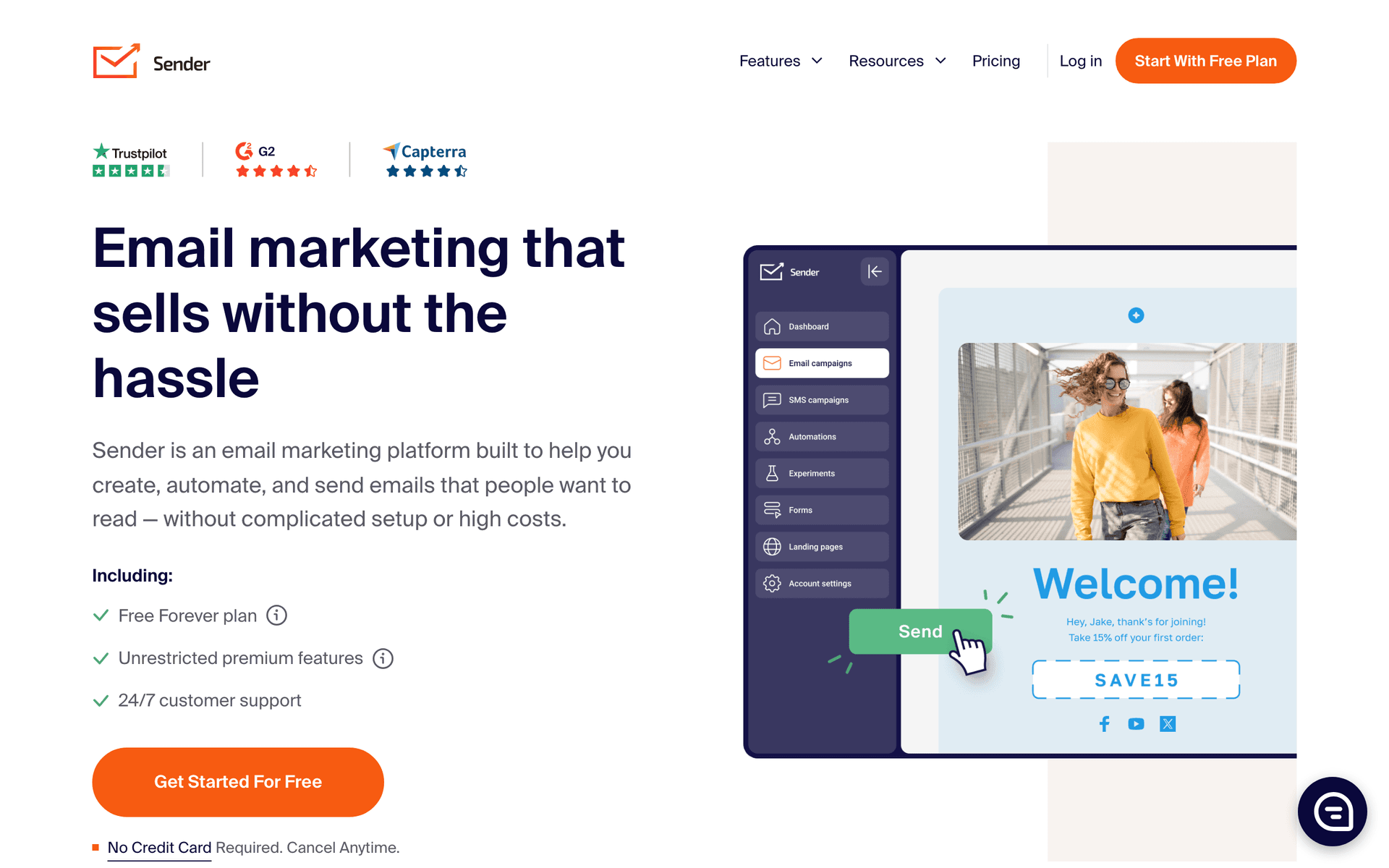
Sender

Affordable email and SMS for kids and baby stores.

Visit
Sender dashboard screenshot

Sender gives emerging baby and kids brands multi-channel email and SMS at price points that work before scale justifies premium platform investment. Automation workflows handle welcome sequences, cart abandonment, and post-purchase follow-ups for stores that need the fundamental flows without enterprise complexity. The free tier with up to 2,500 subscribers accommodates early-stage baby brands building their initial parent audience before paying. Segmentation by product category lets brands send targeted campaigns to parents of different aged children without manual list management.

Best for
Early-stage kids brands on tight budgets
Pricing
Free up to 2,500 subscribers, from $8/month

Pros

  • Generous free tier
  • SMS included
  • Affordable scaling
  • Basic segmentation

Cons

  • Limited advanced features
  • No child data fields
  • Fewer integrations
  • Basic automation
#18
Seguno

Shopify-native email for kids and baby stores.

Visit
Seguno dashboard screenshot

Seguno lives inside Shopify admin so kids and baby brands manage email alongside store operations without switching platforms. Product blocks automatically pull children's product SKUs into newsletters, making seasonal collection announcements fast without manual product additions. Back-in-stock automations notify parents who viewed sold-out items - a common scenario for popular toys and limited baby gear drops. For Shopify baby and kids stores that want reliable integrated email without additional platform overhead, Seguno's tight Shopify relationship keeps everything simple and organized.

Best for
Shopify kids stores wanting integrated simplicity
Pricing
Free up to 250 subscribers, from $35/month

Pros

  • Lives inside Shopify
  • Auto product blocks
  • Back-in-stock alerts
  • Simple setup

Cons

  • Shopify only
  • Limited automation depth
  • Basic segmentation
  • No child data fields
#19
EmailOctopus

Simple affordable email for kids and baby stores.

Visit
EmailOctopus dashboard screenshot

EmailOctopus provides kids and baby brands affordable email marketing that covers the essential flows without premium pricing. Standard automation handles welcome sequences, cart abandonment, and post-purchase follow-ups for stores that need reliable email without paying for advanced features they will not use. The simple builder creates clean, readable emails showcasing product photography for parents who are researching purchases for their children. For brands that have outgrown free tools but are not yet ready for specialized platform pricing, EmailOctopus delivers solid deliverability at predictable cost.

Best for
Budget-conscious kids stores needing basics
Pricing
Free up to 2,500 subscribers, from $9/month

Pros

  • Very affordable
  • Simple interface
  • Easy migration
  • Reliable deliverability

Cons

  • Limited automation
  • Basic e-commerce features
  • No child data fields
  • No SMS

Feature Comparison

FeatureKlaviyoSequenzyDripOmnisend
Age-based segmentation
Custom properties
Attributes
Custom fields
Basic tags
Milestone automation
Yes
Via automation
Via workflows
Limited
AI product recommendations
AI-powered
No
No
No
SMS marketing
Yes
No
Limited
Yes
Pay-per-email pricing
No
Yes
No
No
Revenue attribution
Yes
Yes
Yes
Yes
Shopify integration
Deep
Native
Yes
Yes
Free tier
Yes
No
Yes

Common Mistakes to Avoid

We see these mistakes over and over. Skip the learning curve and avoid these from day one.

Sending the Same Emails to All Parents

A parent of a newborn and a parent of a five-year-old have completely different product needs. Sending the same promotional email to both wastes half your sends and trains parents to ignore your emails. Segment by child age range at minimum.

Stopping Communication After the First Year

Many kids stores focus on baby products and lose engagement as children grow. Kids need new products at every stage from toddler through pre-teen. Keep the relationship going with age-appropriate recommendations for years.

Discounting Too Aggressively in Welcome Series

Parents shopping for their children prioritize safety and quality over price. Leading with aggressive discounts can signal low quality. Instead, lead with trust signals - safety certifications, material quality, and parent testimonials.

Ignoring Seasonal Alignment With Age Data

Combine age-based data with seasonal timing for maximum impact. A child turning 5 in August needs back-to-school gear. A toddler turning 2 in December is perfect for age-appropriate holiday gifts. Layer these data points.

Not Personalizing With the Child's Name

If you collect the child's name, use it in subject lines and email body. Parents respond strongly to seeing their child's name. Subject lines like 'Emma is turning 1 - here are our picks' dramatically outperform generic alternatives.

Email Sequences Every Kids & Baby Product Store Needs

These are the essential automated email sequences that will help you grow your business and keep clients coming back.

Age-Based Product Recommendations

Child reaches new age milestone

Recommend products appropriate for each stage as the child grows.

When child turns 6 months
{{child_name}} is 6 months! Time for these essentials

Products for 6-month milestones: solid food starters, sippy cups, activity toys.

When child turns 1 year
Happy first birthday, {{child_name}}! New favorites for year two

Toddler products: walking shoes, toddler toys, safety gear.

When child turns 2 years
{{child_name}} is 2! Here is what they will love next

Products for active toddlers: ride-on toys, art supplies, potty training.

New Parent Welcome Series

First purchase or signup with due date/birth date

Welcome new parents and guide them through early product needs.

Immediately
Welcome to {{store_name}}! We are here for every stage

Welcome with brand story. What to expect from your emails.

Day 5
The essentials every new parent actually needs

Curated essentials list based on the child's current age. No fluff.

Day 12
What to expect in the next 3 months with {{child_name}}

Upcoming milestones preview with product recommendations.

Seasonal Campaign: Back to School

August (for school-age children)

Capture back-to-school spending for families with school-age kids.

6 weeks before school
Back-to-school checklist for {{child_name}}

Age-appropriate school supply and gear checklist. Early bird deals.

3 weeks before school
The gear {{child_name}} actually needs this year

Best sellers for their age group. Customer reviews from other parents.

1 week before school
Last-minute back-to-school essentials

Final push with fast shipping guarantee. Last chance deals.

Email Marketing for Kids & Baby Product Stores

Kids and baby stores have one of the longest potential customer lifetimes in e-commerce. A parent acquired during pregnancy can keep buying from you for over a decade as their child grows from newborn to pre-teen. The key is keeping your email relevant at every stage, and that means your product recommendations need to grow with the child.

The Core Email Strategy for Kids Stores

  1. Age-based automation sends the right products at the right time as children grow
  2. Milestone campaigns catch parents when they are actively shopping for the next stage
  3. Seasonal peaks like back-to-school and holidays drive major revenue spikes
  4. Parenting content builds trust and keeps parents engaged between purchases

Setting Up Age-Based Email Architecture

The foundation of kids store email marketing is the child's birth date. With this single data point, you can:

  • Calculate the child's current age dynamically
  • Predict when they will need the next clothing size
  • Time milestone campaigns to specific developmental stages
  • Align product recommendations with age-appropriate needs

How to collect birth dates effectively:

At checkout, add a field asking for the child's birth date or due date. Frame it as "Tell us your child's birthday so we can send age-perfect recommendations." Most parents willingly share this information because it means receiving relevant emails instead of generic promotions.

Building Your Milestone Email Calendar

Map your product catalog to child development milestones and create automated emails for each:

Newborn to 3 Months

  • Essential care items (diapers, wipes, bottles)
  • Sleep products (swaddles, bassinets)
  • First outfits and going-home sets

3 to 6 Months

  • Activity gyms and tummy time toys
  • Teething products
  • First solid food preparation items

6 to 12 Months

  • Crawling safety gear
  • High chairs and feeding essentials
  • First shoes and walking support

1 to 2 Years

  • Toddler-safe toys
  • Potty training supplies
  • Transition from crib to toddler bed

2 to 5 Years

  • Preschool preparation items
  • Creative play and art supplies
  • Outdoor play equipment sized for toddlers

5 Years and Up

  • School supplies and backpacks
  • Sports and activity gear
  • Room decor for growing kids

Seasonal Campaign Strategies

Back-to-School (August)

This is the biggest seasonal opportunity for kids stores. Segment by age group and send age-appropriate checklists:

  • Elementary school: Backpacks, lunch boxes, school supplies, first-day outfits
  • Middle school: Locker supplies, tech accessories, age-appropriate fashion
  • General: Organization products, study space setup, routine-building tools

Start back-to-school campaigns 6 weeks before school starts. Parents who shop early spend more.

Holiday Gifting (November-December)

Create gift guides segmented by age. Parents, grandparents, and family friends all shop for children during the holidays. Consider:

  • Age-specific gift guides ("Best gifts for 2-year-olds")
  • Price-tier gift guides ("Under $25", "Under $50", "Special gifts")
  • Last-minute gift options with guaranteed delivery dates

Spring and Summer

Outdoor play gear, sun protection, swim essentials, and summer activity products. Time these to weather patterns in your customers' regions if possible.

What a Healthy Email List Looks Like

For a kids store doing $500K-$1M in annual revenue:

  • 5,000-15,000 subscribers segmented by child age range
  • 30-35% open rates on age-targeted campaigns
  • 4-6% click rates on product recommendation emails
  • 20-25% of total revenue attributed to email
  • Milestone emails generating 2-3x the revenue of generic newsletters
  • Low unsubscribe rates (under 0.3%) because emails are genuinely relevant

Integration Recommendations

E-Commerce Platform

Most kids stores run on Shopify. Choose an email tool with native Shopify integration for automatic product sync, order data, and customer import. Klaviyo and Sequenzy both offer strong Shopify connections.

Review Collection

Pair your email tool with a review platform like Judge.me or Stamped. Collect reviews specifically mentioning the child's age - "perfect for my 8-month-old" reviews are far more persuasive than generic star ratings.

Loyalty Programs

Kids stores benefit from loyalty programs because of the repeat purchase nature. Smile.io or LoyaltyLion integrate with most email platforms and let you trigger reward-based emails.

Getting Started Checklist

  1. Choose your email platform based on budget and technical comfort
  2. Set up child birth date collection at checkout and signup
  3. Create age-range product collections in your store
  4. Build a welcome sequence that sets expectations and delivers value
  5. Create your first milestone email for the most common customer age range
  6. Plan seasonal campaigns for the next two upcoming seasons
  7. Set up cart recovery automation
  8. Start collecting age-specific product reviews

Parents trust stores that understand their children's needs. Email marketing that grows with the child demonstrates that understanding at every stage.

How We Evaluated These Tools

Tools were evaluated based on their ability to handle age-based customer data, trigger milestone campaigns automatically, integrate with e-commerce platforms for product sync, and support multi-year customer lifecycle journeys. We tested each platform by setting up a child birth date attribute and building a 12-month milestone sequence.

Frequently Asked Questions

Ready to grow your kids & baby product store practice?

Start your free trial today. Set up your first email sequence in minutes with AI-powered content generation.

Related Industries

Sequenzy - Complete Pricing Guide

Pricing Model

Sequenzy uses email-volume-based pricing. You only pay for emails you send. Unlimited contacts on all plans — storing subscribers is always free.

All Pricing Tiers

  • 2.5k emails/month: Free (Free annually)
  • 15k emails/month: $19/month ($205/year annually)
  • 60k emails/month: $29/month ($313/year annually)
  • 120k emails/month: $49/month ($529/year annually)
  • 300k emails/month: $99/month ($1069/year annually)
  • 600k emails/month: $199/month ($2149/year annually)
  • 1.2M emails/month: $349/month ($3769/year annually)
  • Unlimited emails/month: Custom pricing (Custom annually)

Yearly billing: All plans offer a 10% discount when billed annually.

Free Plan Features (2,500 emails/month)

  • Visual automation builder
  • Transactional email API
  • Reply tracking & team inbox
  • Goal tracking & revenue attribution
  • Dynamic segments
  • Payment integrations
  • Full REST API access
  • Custom sending domain

Paid Plan Features (15k - 1.2M emails/month)

  • Visual automation builder
  • Transactional email API
  • Reply tracking & team inbox
  • Goal tracking & revenue attribution
  • Dynamic segments
  • Payment integrations (Stripe, Paddle, Lemon Squeezy)
  • Full REST API access
  • Custom sending domain

Enterprise Plan Features (Unlimited emails)

  • Visual automation builder
  • Transactional email API
  • Reply tracking & team inbox
  • Goal tracking & revenue attribution
  • Dynamic segments
  • Payment integrations
  • Full REST API access
  • Custom sending domain

Important Pricing Notes

  • You only pay for emails you send — unlimited contacts on all plans
  • No hidden fees - all features included in the price
  • No credit card required for free tier

Contact

  • Pricing Page: https://sequenzy.com/pricing
  • Sales: hello@sequenzy.com