
18 Best Email Marketing Tools for Shopify Stores in 2026 (Tested & Compared)

Shopify makes it easy to start selling. The difficult part is turning a first purchase into a second one without manually exporting customers, rebuilding product lists, or sending the same promotion to everyone.
That is what separates a Shopify email marketing tool from a generic newsletter platform. A useful integration should know when someone viewed a product, abandoned checkout, completed an order, received a shipment, bought for the first time, or has not returned in 90 days. It should let you use those events in campaigns and automations without stitching together five plugins.
I compared 18 tools for Shopify stores across integration depth, catalog sync, abandoned-cart recovery, post-purchase automation, segmentation, revenue attribution, SMS, deliverability, ease of setup, and pricing. This is not a list where every platform gets called “great.” Shopify Email is genuinely enough for some stores. Klaviyo is genuinely too expensive or too complex for others. Sequenzy is a useful value option, but it is not the deepest ecommerce platform on this list, and I will explain that distinction throughout.
If you want the structured industry guide with benchmarks, implementation tips, and sequence examples, see the full email marketing tools guide for Shopify stores. This page is the editorial roundup: why each tool belongs on the list, where it wins, and where it stops being the right choice.
Quick comparison table
| Tool | Best for | Starting price | Shopify integration | Standout feature |
|---|---|---|---|---|
| Sequenzy | Value-focused lifecycle email | Free up to 2.5k emails/mo | Native store sync and API | AI-built sequences and email-volume pricing |
| Klaviyo | Serious Shopify stores | Free up to 250 contacts, then from $20/mo | Deepest native integration | Predictive analytics and product recommendations |
| Omnisend | Email + SMS + push | Free up to 250 contacts, then from $16/mo | Strong ecommerce integration | Prebuilt multichannel workflows |
| Shopify Email | New stores and simple campaigns | Free for the first 10k emails/mo | Built into Shopify | Zero setup and catalog-aware templates |
| Drip | Email revenue attribution | From $39/mo | Ecommerce integration | Visual workflows and purchase reporting |
| Seguno | Staying inside Shopify admin | Free up to 250 subscribers | Shopify-native app | Embedded workflow and discount codes |
| ActiveCampaign | Complex journeys and B2B | From $29/mo | Shopify integration | Automation builder and CRM |
| Mailchimp | Familiar general marketing | Free up to 500 contacts | Shopify connector | Templates and broad ecosystem |
| Brevo | Large lists on a budget | Free up to 300 emails/day | Shopify integration | Volume pricing and transactional email |
| MailerLite | Simplicity and forms | Free up to 250 subscribers and 2,500 emails/mo | Shopify integration | Clean editor and landing pages |
| Privy | Popups and list growth | Free limited plan, paid from $30/mo | Shopify-focused | Exit-intent and signup conversion tools |
| Attentive | Enterprise SMS-led retention | Custom, typically $500+/mo | Deep Shopify data | Unified SMS and email for scaled DTC |
| Postscript | Shopify-native SMS programs | Custom email pricing | Shopify-native | SMS segmentation by product and LTV |
| Yotpo Email | Reviews and loyalty brands | Suite pricing | Shopify ecosystem | Review and loyalty-triggered messaging |
| SmartrMail | Lower-cost product recommendations | From $29/mo | Shopify-focused | Dynamic catalog recommendations |
| Sendlane | Mid-market brands | From $100/mo | Strong ecommerce integration | Email, SMS, reviews, and attribution |
| Recart | Abandoned-cart SMS | From $299/mo | Shopify-native | Narrow, high-intent cart recovery |
| Retention.com | Anonymous visitor identification | Custom | Shopify-compatible | Turns some anonymous traffic into contacts |
Best Shopify email marketing platform by use case
Best Shopify email tool for serious ecommerce stores: Klaviyo
Klaviyo is the default recommendation when Shopify is the business and email is already a material revenue channel. Its value comes from the density of the customer profile: orders, products, browsing behavior, predicted lifetime value, churn risk, and engagement can all feed one segment or flow.
The price and complexity are real. At 10,000 profiles, the bill is materially higher than Shopify Email, Brevo, or Sequenzy. But if product recommendations, browse abandonment, SMS, and revenue attribution generate more incremental revenue than the subscription costs, Klaviyo is the most complete option here.
Best Shopify email platform for email, SMS, and push: Omnisend
Omnisend is the practical middle ground. It gives small and mid-size stores prebuilt ecommerce workflows plus email, SMS, and push without requiring a full enterprise implementation. The product picker and discount-code tools make the first revenue-driving campaigns quick to launch.
It does not match Klaviyo's predictive depth, but most stores do not need a data science project to recover carts and build a post-purchase program. Omnisend is usually the better choice when multichannel messaging matters more than the deepest possible Shopify intelligence.
Best Shopify email tool for a tiny store: Shopify Email
Shopify Email is hard to beat before the store has meaningful list size or revenue. It lives in the Shopify admin, uses the existing product catalog, and Shopify provides the first 10,000 emails each month at no charge. The lack of a separate platform bill and integration project is valuable when the store is still proving demand.
The ceiling is low. Once you need serious segmentation, multi-step cart recovery, browse abandonment, conditional post-purchase content, or advanced testing, the savings stop being worth the missed opportunities.
Best value Shopify email tool: Sequenzy
Sequenzy is the most interesting value option when the store wants AI-assisted sequence creation, email-volume pricing, and transactional email in the same platform. It is especially useful for seasonal stores or stores with a large historical database where paying for every inactive contact is painful.
It is not the right pick if your main requirement is predictive product recommendations, browse abandonment, or SMS at scale. For those, Klaviyo and Omnisend deserve priority. Sequenzy wins when core lifecycle flows and cost control matter more than the largest ecommerce feature surface.
Best Shopify email tool for staying inside the admin: Seguno
Seguno is for merchants who chose Shopify partly because they want a simple, integrated operating system. Campaigns, discounts, products, and basic automations stay close to the Shopify admin, so the team spends less time switching contexts.
The tradeoff is portability and depth. It is Shopify-only, and stores with complex cross-channel programs will outgrow it sooner than they would a dedicated platform.
What a Shopify email platform actually needs
The word “integration” is too vague to decide a platform. Two tools can both list Shopify and expose very different data.
1. Real customer and consent sync
The platform needs customer profile fields, subscription status, tags, marketing consent, and unsubscribe state. If consent does not stay synchronized, a technically correct flow can still create a compliance and trust problem.
2. Order and product data
At minimum, sync order history, line items, product names, images, prices, categories, discounts, refunds, and fulfillment status. This is what powers product-specific post-purchase emails and meaningful VIP or lapsed-buyer segments.
3. Abandoned checkout events
A single abandoned-checkout email is not the same as a recovery program. Look for an event that includes the cart contents, customer identity, checkout URL, and timing. The best tools let you branch based on cart value, product category, previous purchases, and whether the customer returned.
4. Post-purchase and replenishment triggers
The sale is the beginning of retention, not the end. A platform should let you send education, review requests, cross-sells, replenishment reminders, and VIP treatment based on what was actually purchased.
5. Dynamic product content
Product cards should come from the catalog rather than requiring manual image uploads and links for every campaign. Dynamic recommendations are useful, but a reliable catalog picker is the baseline.
6. Revenue attribution that you can interpret
Open rates are useful for diagnosing a message. They are not enough to choose a platform. You need campaign and flow revenue, attribution windows, order-level detail, and a way to distinguish direct revenue from inflated last-click reporting.
7. Pricing that matches your list shape
Contact-based pricing is not inherently bad. It becomes painful when the store has years of inactive subscribers, seasonal traffic, or a large list that receives only a few campaigns. Model the cost at your actual list size and monthly send volume, not the price on the homepage.
8. Deliverability controls
Your tool should support SPF, DKIM, and DMARC, suppression handling, bounce and complaint monitoring, engagement-based segments, and a sensible ramp-up process. A tool cannot rescue a store that keeps mailing inactive contacts, but weak infrastructure can make good practices harder.
How we evaluated these Shopify email tools
The evaluation used the workflows a store would actually launch, not a generic feature checklist:
- Connect a store and verify customer, order, product, and consent sync.
- Place a test order with multiple products and a discount.
- Abandon a checkout and inspect the event payload and timing.
- Build a welcome series, cart-recovery flow, and post-purchase sequence.
- Create segments for first-time buyers, repeat buyers, VIPs, and lapsed customers.
- Test a product block and confirm the links, images, prices, and variants are correct.
- Check whether refunds, unsubscribes, and duplicate events are handled safely.
- Compare pricing at 1,000, 5,000, and 10,000 contacts or the equivalent send volume.
The scoring emphasis is Shopify-specific: integration quality and useful ecommerce triggers matter more than whether a platform also includes a webinar builder or generic landing-page feature.
The 18 best Shopify email marketing tools
1. Sequenzy — best value for AI-built lifecycle email
Best for: Shopify stores that want core automation, AI-assisted setup, and pricing that does not scale with inactive subscribers.
Pricing: Free up to 2,500 emails/month, then paid plans from $19/month depending on the current volume tier.
Sequenzy's Shopify integration syncs customers, orders, and product data, then exposes those events to the sequence builder. The useful part is not “AI” as a slogan; it is the ability to describe a concrete job—recover abandoned carts, educate a new buyer, win back customers after 90 days—and get a complete starting sequence with timing, subject lines, and copy.
The pricing model is the other differentiator. A store with 20,000 historical contacts but only 30,000 monthly sends does not automatically pay for 20,000 profiles. That can make the economics much better than Klaviyo for seasonal or unevenly engaged stores.
The limitations are important. Sequenzy does not have Klaviyo's predictive analytics, AI product recommendation engine, or mature SMS ecosystem. The Shopify integration is newer, so a store with unusual checkout apps should test every event before launch. It is best for cart recovery, welcome, post-purchase, win-back, transactional email, and hybrid Shopify-plus-Stripe workflows—not the most advanced DTC personalization.
What it does well:
- AI generates usable first drafts of complete ecommerce sequences.
- Email-volume pricing can be cheaper for large, unevenly engaged lists.
- Shopify and transactional email can live in the same platform.
- API access gives technical teams a path for custom events.
Where it falls short:
- No predictive product recommendations.
- Less mature browse-abandonment coverage than Klaviyo.
- No SMS-first ecosystem.
- Newer integration means more event validation is appropriate.
Verdict: The best value choice when core lifecycle automation and predictable cost matter more than the deepest ecommerce feature set.
2. Klaviyo — best for serious Shopify stores
Best for: DTC brands that treat email as a primary revenue channel and can justify a specialist platform.
Pricing: Free for a small contact list, paid email plans from around $20/month and rising sharply with profiles; SMS is additional.
Klaviyo is the benchmark for Shopify depth. Customer profiles can include purchases, product views, carts, discounts, predicted lifetime value, churn risk, and engagement. That data model supports granular segments such as “customers who bought the cleanser, viewed the refill, have not purchased in 90 days, and opened at least two emails this month.”
The flow library is equally important. Welcome, abandoned cart, browse abandonment, post-purchase, replenishment, win-back, VIP, sunset, and back-in-stock programs have strong starting templates. The product recommendation engine can pull from the catalog and rank products using behavioral data instead of showing the same bestseller to everyone.
The downside is cost and operational weight. At 10,000 profiles, the email bill can be a serious line item before SMS. It is also easy to build a technically impressive flow that nobody on the team understands well enough to maintain. Klaviyo is worth it when the additional revenue from product intelligence and attribution is measurable; it is overkill for a store still sending one newsletter a month.
What it does well: Deep Shopify event model, predictive analytics, product recommendations, prebuilt flows, SMS, and strong ecommerce reporting.
Where it falls short: High cost at scale, a real learning curve, complex configuration, and a template editor that is functional rather than exceptional.
Verdict: The best dedicated Shopify platform for stores with enough volume and team capacity to use its depth.
3. Omnisend — best multichannel middle ground
Best for: Shopify stores that want email, SMS, and push notifications in one approachable ecommerce platform.
Pricing: Free for up to 250 contacts on the entry plan; paid plans begin around $16/month and scale with contacts and channels.
Omnisend is the strongest practical Klaviyo alternative for many small and mid-size Shopify stores. The product picker makes catalog-driven email straightforward, and the prebuilt workflow library covers welcome, cart recovery, browse abandonment, post-purchase, and win-back use cases.
The multichannel workflow is the reason to choose it. An email can be followed by SMS or push based on engagement, all from one automation canvas. That is more useful than a long list of channels if the store actually has consent and a strategy for using them.
Omnisend trails Klaviyo on predictive analytics and the most sophisticated Shopify behavior. SMS credits can also make the monthly bill less predictable than the entry plan suggests. Still, for a store that wants to launch useful ecommerce automation without weeks of implementation, Omnisend is unusually balanced.
Verdict: The best middle-ground choice when email and SMS matter together and Klaviyo feels too expensive or complex.
4. Shopify Email — best for a new store
Best for: New Shopify stores sending newsletters, product launches, and simple promotions.
Pricing: Shopify provides the first 10,000 marketing emails each month at no charge; additional volume is billed according to current Shopify rules.
Shopify Email's biggest feature is that it is already there. No integration, no second billing relationship, and no need to recreate the catalog. The editor can pull products and brand assets from the store, which is enough for a new merchant to send a credible campaign in an afternoon.
The limitations show up when email becomes a revenue system. Segmentation is basic, automation is narrow, and a store does not get the same depth of browse behavior, product recommendations, testing, or revenue attribution as a dedicated ecommerce platform. Shopify's basic abandoned-checkout messaging should not be confused with a full three-email cart-recovery program.
Read Shopify's current email pricing rules before budgeting because allowances and overage rates can change.
Verdict: Start here if the store is small. Upgrade when the missed revenue from missing flows exceeds the cost of a dedicated platform.
5. Drip — best email-first revenue attribution
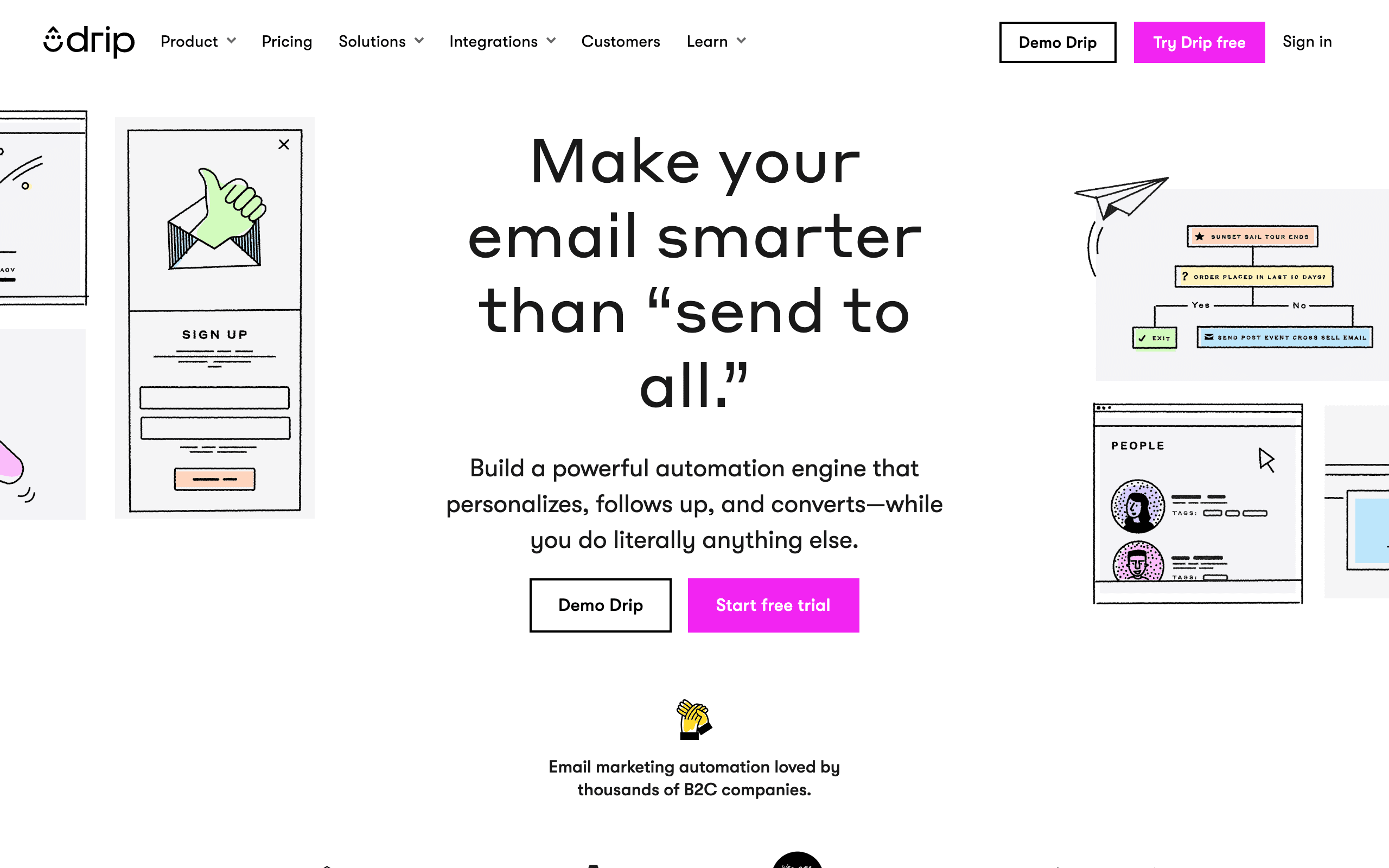
Best for: DTC brands that want visual workflows and clear purchase attribution without adding SMS to the same platform.
Pricing: From about $39/month for 2,500 contacts, with no permanent free tier.
Drip is built around ecommerce behavior rather than general newsletters. Its visual workflow builder handles conditions, delays, branches, and purchase-based segments, while reporting ties campaigns back to revenue. For a team that wants to answer “which flow made money?” rather than “which email had the highest open rate?”, that focus is valuable.
It is more email-first than Omnisend and less predictive than Klaviyo. The higher starting price and lack of built-in SMS make it a deliberate choice, not an automatic recommendation for a new store.
Verdict: A strong email-only option for a store that values customer intelligence and revenue reporting.
6. Seguno — best Shopify-native workflow
Best for: Shopify-only merchants who want campaigns and automations close to the Shopify admin.
Pricing: Free for a small list, with paid plans starting around $10/month.
Seguno's appeal is operational. Products, discounts, customers, and campaign creation sit inside the environment the merchant already uses. Prebuilt flows cover welcome, cart abandonment, thank-you messages, and basic retention without introducing a large separate platform.
The tradeoff is a smaller feature surface. Seguno is not designed for a complex multichannel program, predictive modeling, or a store that may later need WooCommerce and custom storefront support.
Verdict: A sensible Shopify-only upgrade from Shopify Email when simplicity matters more than maximum flexibility.
7. ActiveCampaign — best for complex journeys and B2B
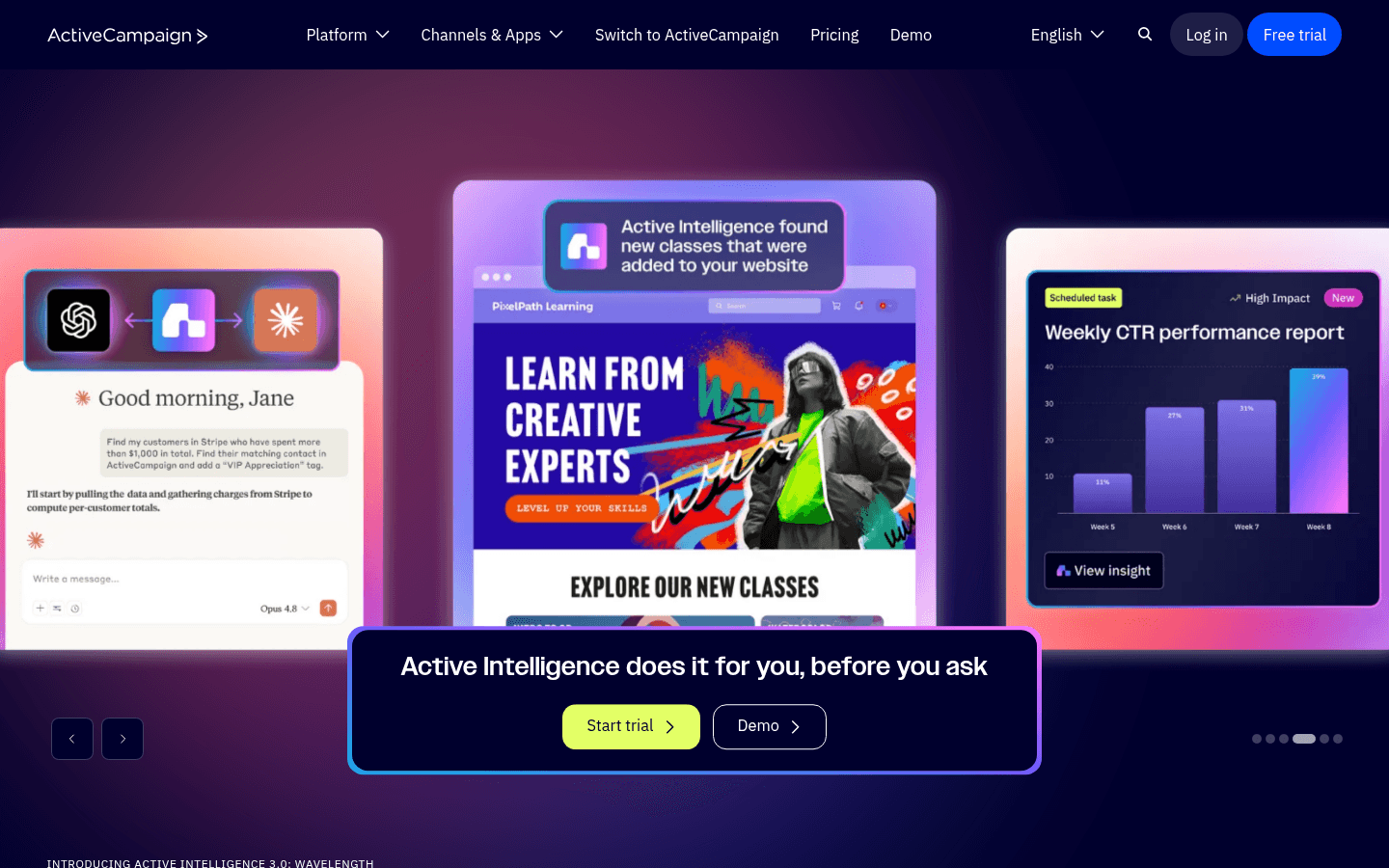
Best for: Shopify businesses with branching lifecycle journeys, wholesale sales, lead scoring, or CRM needs.
Pricing: From about $29/month for 1,000 contacts, with advanced features gated by plan.
ActiveCampaign has one of the most capable automation builders in the category. A Shopify store can use purchase events inside long-running journeys with conditional logic, lead scoring, goals, waits, and CRM tasks. That is valuable for a brand that sells to both consumers and wholesale accounts or has a sales-assisted motion.
It is not ecommerce-first. The team will build more from scratch than it would in Klaviyo or Omnisend, and product recommendations are not its defining strength. Choose it because the CRM and branching matter, not because it happens to connect to Shopify.
Verdict: Excellent for complex customer journeys; unnecessary for a straightforward DTC flow set.
8. Mailchimp — best familiar general-purpose option
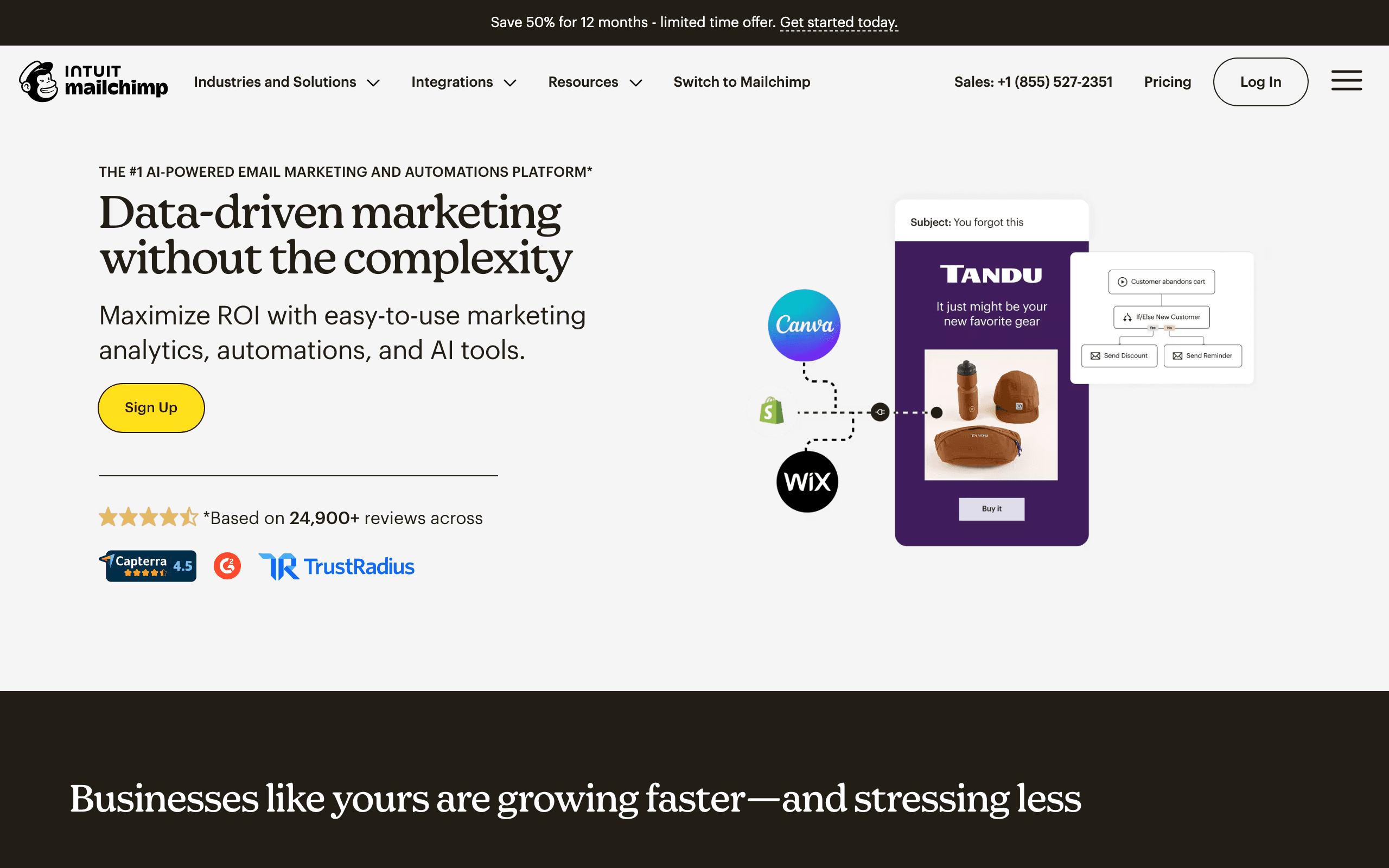
Best for: Small stores that prioritize familiar campaign creation, templates, forms, and broad integrations.
Pricing: Free for up to 500 contacts on the entry tier, then contact-based pricing.
Mailchimp is still useful when the store needs newsletters, landing pages, forms, and a tool a freelance marketer already knows. Its Shopify connector can sync customer and order data for basic segmentation and campaigns.
The reason it ranks below ecommerce-first tools is not that it cannot send a Shopify email. It is that cart, product, browse, and revenue workflows are less central to the product. Pricing also climbs quickly as the list grows. Test sync reliability and the exact events your store needs before committing.
Verdict: Fine for general marketing; rarely the best long-term Shopify retention platform.
9. Brevo — best volume-based budget option
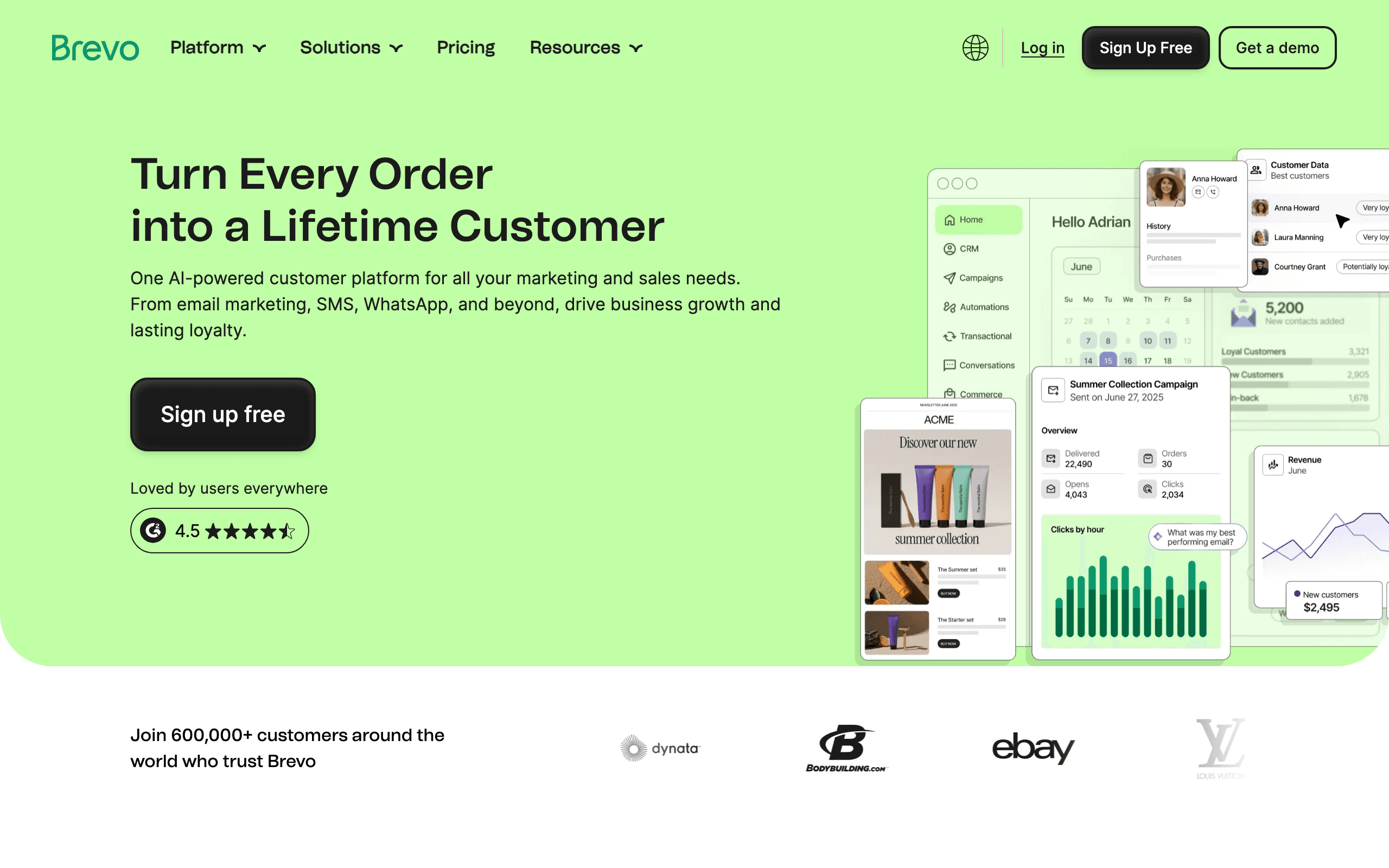
Best for: Stores with large contact databases, moderate send frequency, and a need for transactional email or SMS alongside campaigns.
Pricing: Free plan with a daily send allowance; paid plans begin around $25/month depending on volume.
Brevo charges more around email volume than total stored contacts, which can be a meaningful advantage for seasonal Shopify stores. Transactional email, SMS, and basic CRM features also make the platform broader than a newsletter tool.
Its Shopify automation is not as deep as Klaviyo, Drip, or Omnisend. If the program depends on browse behavior, dynamic recommendations, and revenue per flow step, the cheaper bill may not compensate for the missing capabilities.
Verdict: Strong budget economics when the store sends selectively; less compelling for advanced product-led personalization.
10. MailerLite — best for simplicity and landing pages
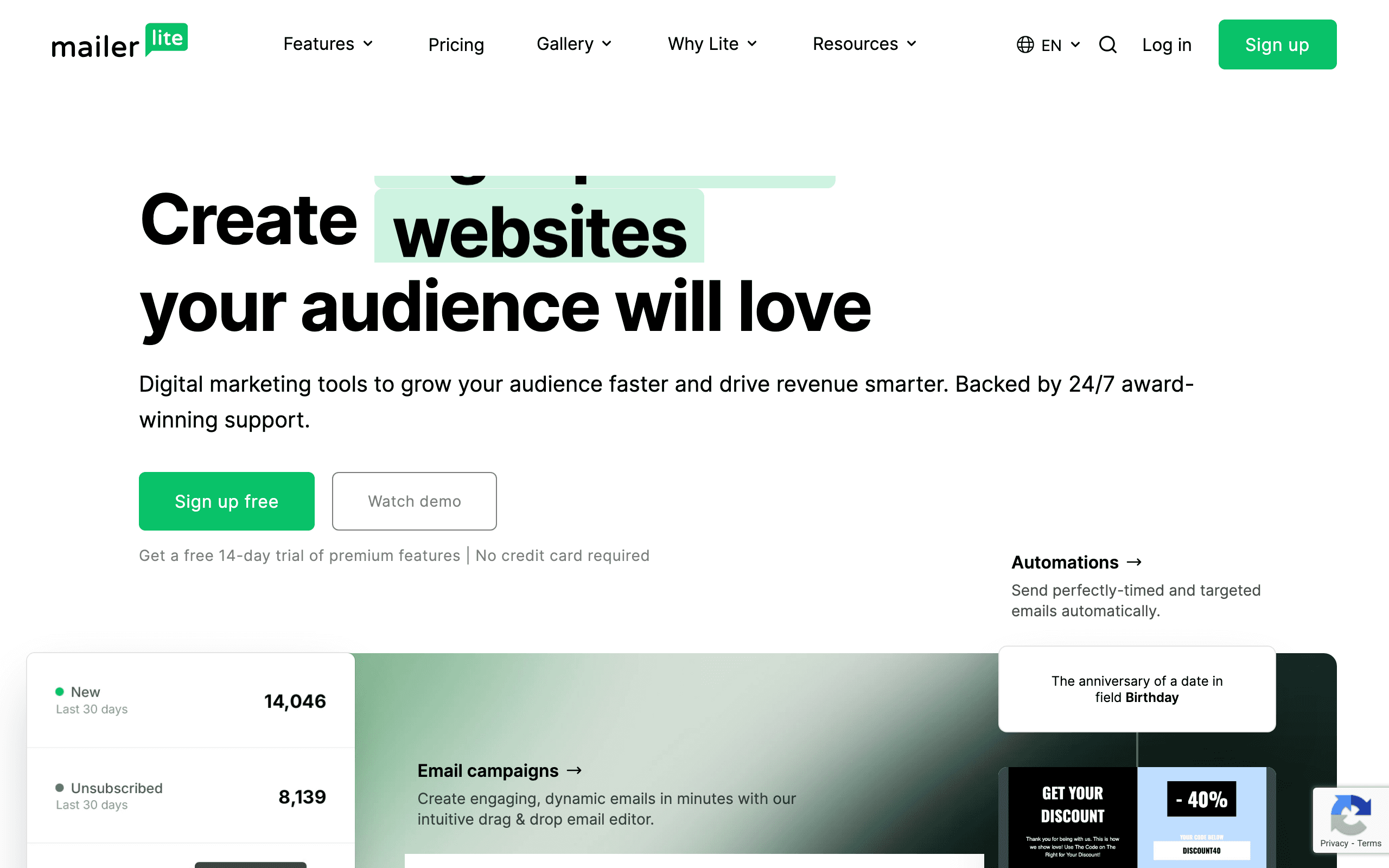
Best for: Small Shopify stores that need a clean editor, forms, landing pages, and basic automations.
Pricing: Free for up to 1,000 subscribers on the entry plan, then from around $10/month.
MailerLite is approachable and inexpensive. It can handle newsletters, welcome series, simple post-purchase follow-ups, landing pages, and list growth without the learning curve of an ecommerce specialist.
The Shopify connection is comparatively basic. If every email needs a dynamic product recommendation or a segment based on multiple order conditions, use Klaviyo, Omnisend, Drip, or Sequenzy instead.
Verdict: Good starter value when email is still mostly campaigns and simple sequences.
11. Privy — best for list growth
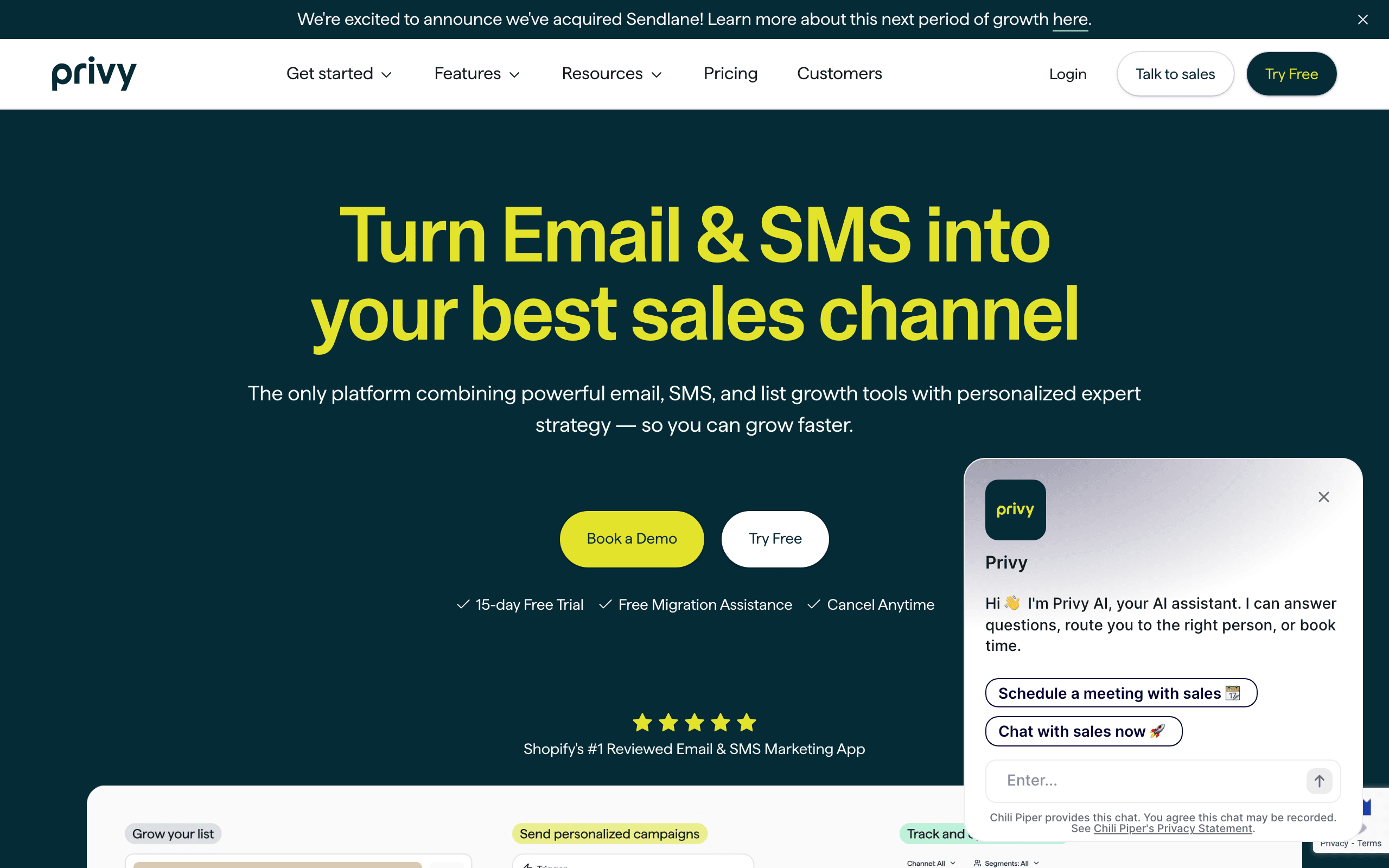
Best for: Stores whose biggest email problem is capturing more subscribers, not building a more sophisticated flow.
Privy began with Shopify popups and still does that job particularly well: exit intent, spin-to-win, cart-saver prompts, and targeted signup forms. The email and SMS layer is useful for welcome and cart campaigns, but the list-growth tools are the primary reason to choose it.
Many stores use Privy alongside Klaviyo or Omnisend rather than as the entire email stack. That can be the right architecture if list growth is the bottleneck and the primary platform already handles retention.
Verdict: A conversion and capture specialist, not a replacement for a full ecommerce ESP.
12. Attentive — best for scaled SMS-led DTC
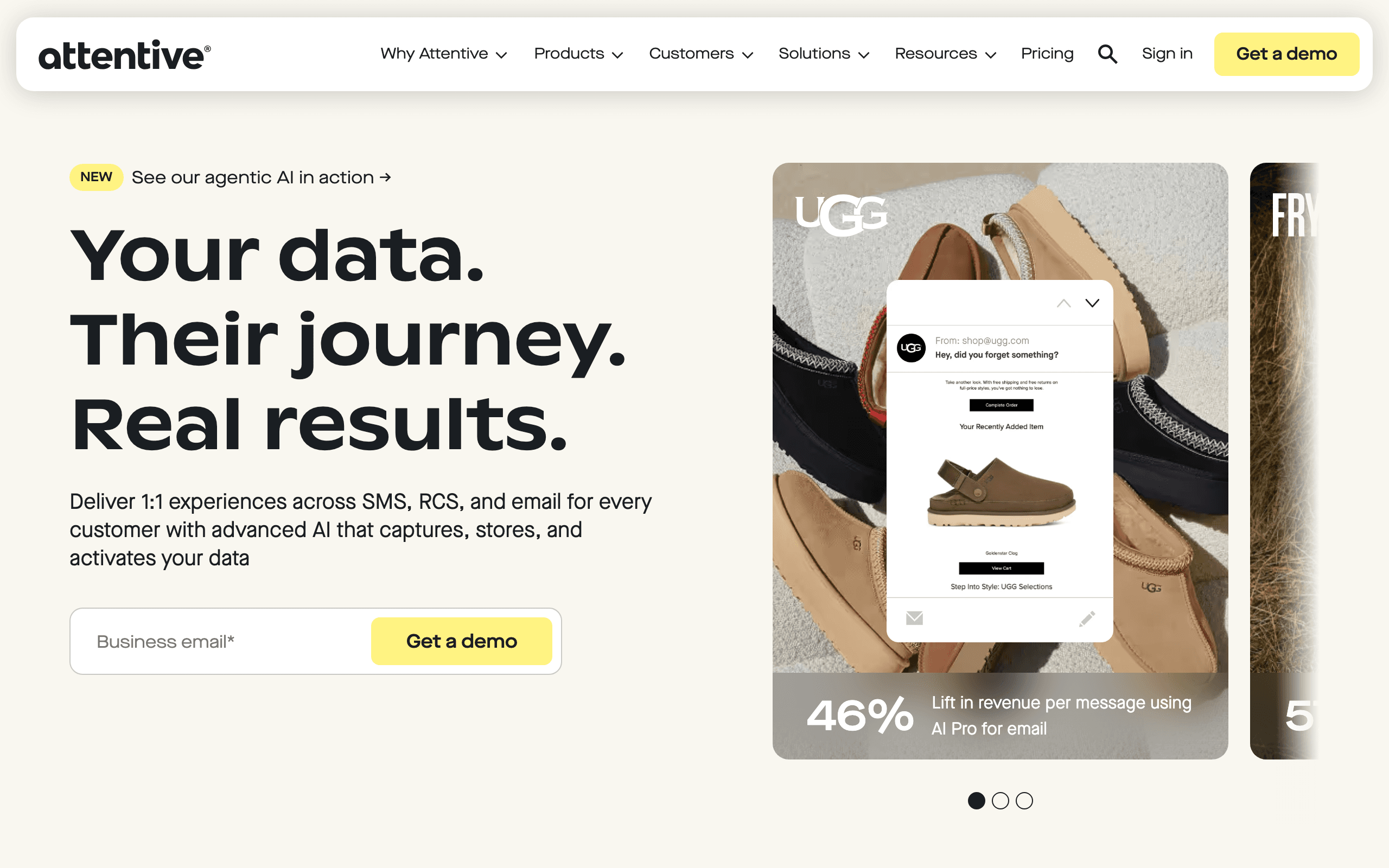
Best for: Large Shopify brands where SMS is a managed revenue channel and email must share the same customer strategy.
Pricing: Custom and sales-led, commonly hundreds of dollars per month with meaningful minimums.
Attentive is not a realistic choice for a new store. It becomes relevant when a DTC brand has enough traffic, subscribers, SMS volume, and internal marketing capacity to justify dedicated account support and cross-channel orchestration.
The advantage is a unified SMS and email program with Shopify attribution. The disadvantages are cost, onboarding effort, contract complexity, and a feature set that is excessive for a store still proving its first flows.
Verdict: Enterprise SMS-led retention, not ordinary Shopify email marketing.
13. Postscript — best SMS-first Shopify program
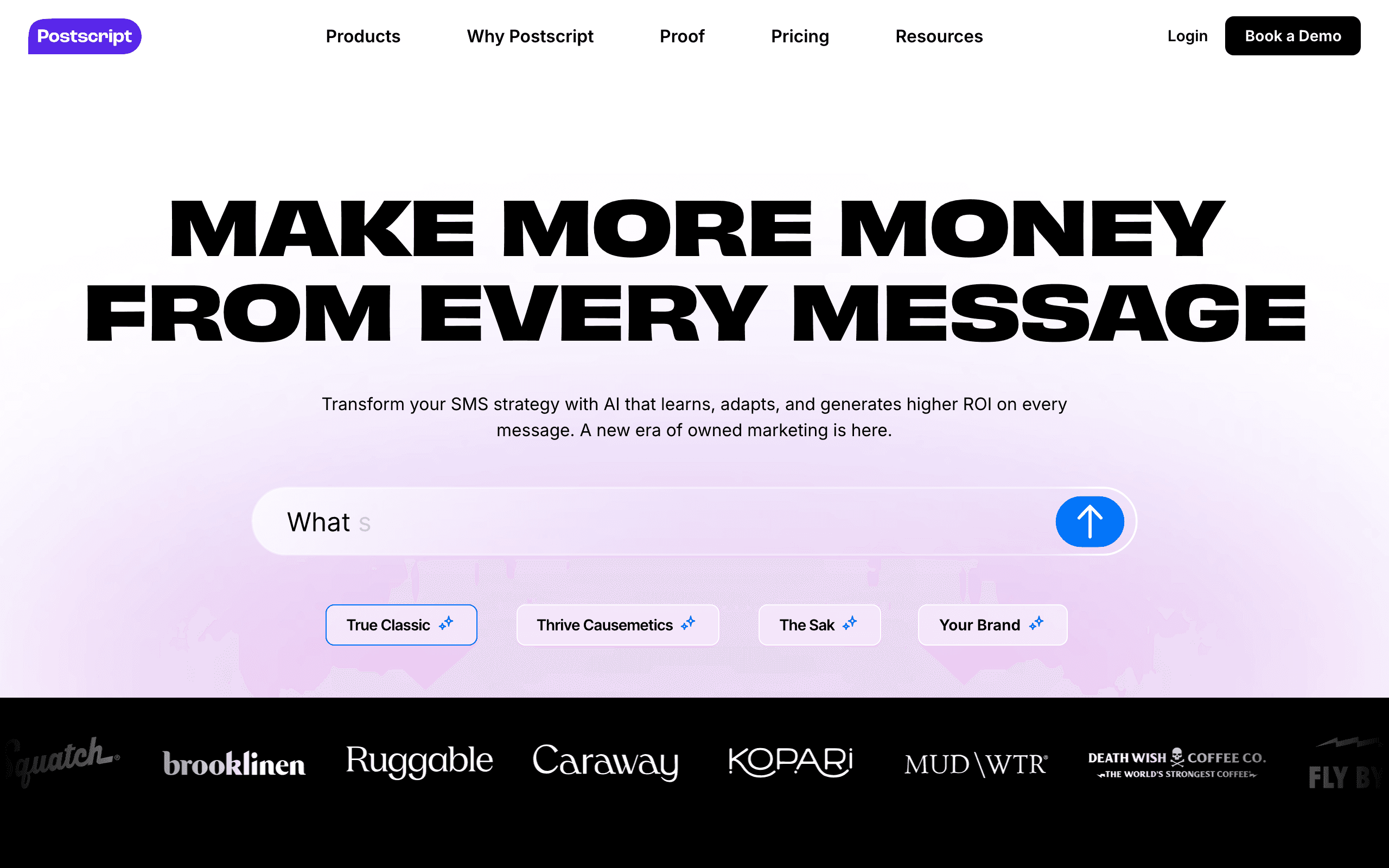
Best for: Shopify merchants whose retention program starts with SMS and needs email in the same subscriber context.
Postscript is Shopify-native and strong at product-, LTV-, and order-frequency segmentation for SMS. Its email offering is newer and should not be evaluated as though it were a mature email-first platform.
Choose Postscript when SMS is the strategic center. If the store mainly wants newsletters, cart recovery email, and post-purchase education, Klaviyo, Omnisend, or Sequenzy are more natural.
Verdict: A strong SMS-led option with email support, not the default email-only recommendation.
14. Yotpo Email — best for review and loyalty ecosystems
Best for: Shopify brands already using Yotpo Reviews or Loyalty.
Yotpo Email's value is the shared ecosystem. A review submission, loyalty-tier change, or reward event can become part of the messaging strategy in a way that a standalone email tool would need to recreate.
Standalone, it is less compelling than Klaviyo, Omnisend, or Drip. The suite only makes sense when reviews, loyalty, user-generated content, and retention are being managed together.
Verdict: A sensible ecosystem choice; a weak reason to switch email platforms by itself.
15. SmartrMail — best lower-cost catalog recommendations
Best for: Shopify stores that want product recommendations without Klaviyo-level pricing.
SmartrMail is Shopify-focused and makes catalog-aware recommendations a central feature. It is useful for stores where cross-sells and repeat purchases matter more than a large CRM or multichannel platform.
The compromise is ecosystem size, editor polish, and breadth. It is a more focused tool than Klaviyo, which can be a feature for a small ecommerce team and a limitation for a larger one.
Verdict: Worth evaluating when product recommendations are important and Klaviyo is too expensive.
16. Sendlane — best mid-market Klaviyo alternative
Best for: Growing Shopify brands that have outgrown starter tools but want to compare options before accepting Klaviyo's pricing.
Sendlane combines email, SMS, reviews, segmentation, and ecommerce attribution for mid-market stores. It is positioned between approachable ecommerce platforms and enterprise retention suites.
Reporting and ecosystem depth are not as polished as Klaviyo's, and the starting commitment is higher than a small store needs. At the right scale, though, the cost savings and unified feature set are worth a serious evaluation.
Verdict: A credible mid-market shortlist, especially for brands running multiple retention channels.
17. Recart — best for abandoned-cart SMS
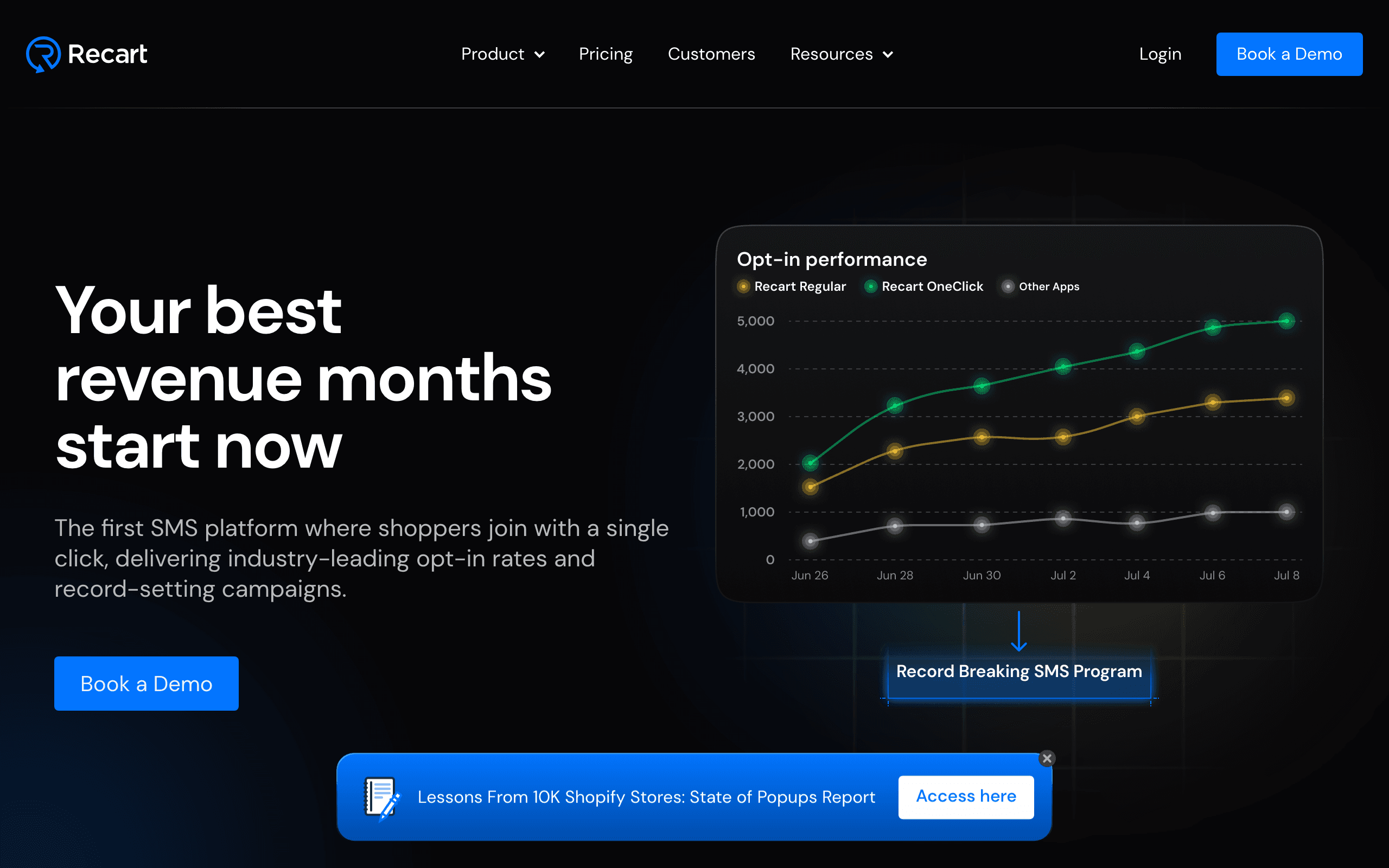
Best for: Stores with a measurable abandoned-cart leak that want a specialized SMS recovery layer.
Recart is intentionally narrow. It focuses on cart recovery through personalized SMS and can reference actual cart contents. That can produce fast ROI when checkout abandonment is the largest gap in the current program.
It is not a replacement for a primary email platform. A store generally pairs it with Klaviyo, Omnisend, Sequenzy, or another tool for newsletters and lifecycle email.
Verdict: A specialist add-on for cart revenue, not a complete Shopify email stack.
18. Retention.com — best for high-traffic list expansion
Best for: High-traffic stores that already have strong consent, deliverability, and compliance practices and want to investigate anonymous visitor identification.
Retention.com is not a conventional email marketing platform. It attempts to identify some anonymous visitors and make them addressable. That can expand the top of the funnel, but the consent model, list quality, and deliverability implications require careful review.
Use it as a supplement to a real email platform, never as a substitute for permission-based signup, welcome, cart, and post-purchase programs.
Verdict: A specialized acquisition layer for mature teams; not a beginner recommendation.
The Shopify pricing decision: contacts versus sends
Shopify stores often overfocus on the first-month price. The more useful question is what happens when the store reaches 5,000 or 10,000 contacts.
Contact-based platforms charge for database size. This is attractive when most subscribers are active and the flows rely on rich profiles. It becomes expensive when a store has years of inactive contacts, seasonal shoppers, or a large list that receives only occasional campaigns.
Send-volume platforms charge for actual messages. This is often better for a seasonal brand, a store with a large historical database, or a team that sends a few targeted campaigns rather than weekly broadcasts to everyone.
| Store pattern | Usually worth comparing | Why |
|---|---|---|
| Under 1,000 active subscribers | Shopify Email, Seguno, MailerLite | Keep setup and fixed cost low while proving demand. |
| 1,000–5,000 active subscribers | Omnisend, Sequenzy, Drip, Klaviyo | Core flows begin to pay for better data and automation. |
| 5,000–10,000 active subscribers | Klaviyo, Omnisend, Drip, Sendlane | Product data, attribution, and multichannel economics matter. |
| Large list, seasonal sending | Sequenzy, Brevo, Shopify Email | Pay for sends rather than every dormant contact. |
| $1M+ annual DTC revenue | Klaviyo, Sendlane, Attentive | Dedicated retention operations can justify deeper platforms. |
Do the math with your own list. A $20 plan is not cheaper if it leaves your highest-value flow impossible to build. A $150 plan is not better if the team never uses its predictive features.
The five Shopify flows to build first
Most stores do not need 25 automations on day one. Build these in order.
1. Welcome series
Trigger: New subscriber with no completed order.
Suggested sequence:
| Timing | Job | Content |
|---|---|---|
| Immediately | Set expectations | Brand promise, incentive if applicable, and what subscribers will receive. |
| Day 2 | Build trust | Bestsellers, customer proof, founder story, or product education. |
| Day 5 | Reduce friction | Shipping, returns, sizing, ingredients, guarantees, or FAQs. |
| Day 7 | Ask for the purchase | A clear product recommendation and a reason to act now. |
Do not put every subscriber into the same offer. Suppress people who purchase and move them to post-purchase.
2. Abandoned checkout recovery
Trigger: Checkout started or cart abandoned, depending on the integration.
Suggested sequence:
| Timing | Job | Content |
|---|---|---|
| 1 hour | Restore context | Show the actual product and return to checkout. |
| 24 hours | Resolve hesitation | Answer shipping, returns, fit, availability, or product questions. |
| 48–72 hours | Create a final reason | Use urgency or a limited incentive only if margins allow it. |
The first email should not lead with a discount by default. Many customers need reassurance, not a lower price.
3. Post-purchase education
Trigger: Order placed or fulfilled.
Send delivery expectations, product-use guidance, care instructions, and a review request at a sensible time for the product. A useful post-purchase sequence lowers support load and creates the conditions for a second purchase.
4. Cross-sell or replenishment
Trigger: Product purchased plus expected usage window.
A replenishment reminder for skincare, supplements, coffee, or consumables should be based on actual product cadence. Cross-sell a complementary product only when the relationship is logical. “You bought a camera; here are ten random products” is not personalization.
5. Win-back
Trigger: No purchase after the normal repurchase window.
Start with new products, education, or a customer-favorite collection. Use a discount only after you know the audience is price-sensitive. End the sequence with a sunset or preference-management step so unengaged contacts do not damage deliverability.
Shopify segmentation that actually changes the message
Start with behavior, not demographics:
- First-time buyers versus repeat buyers.
- VIP customers by revenue or order count.
- Customers who bought a specific category but not its logical companion.
- Subscribers who started checkout but never purchased.
- Customers who purchased once and have passed the expected repurchase date.
- Highly engaged subscribers who have not bought yet.
- Customers with refunds, support issues, or delivery delays.
The segment is only useful if the message changes. Do not create 40 segments and send the same campaign to all of them.
Common Shopify email mistakes
Staying on Shopify Email after the store needs revenue automation
Shopify Email is a good starting point. It becomes a problem when the team keeps using it after cart recovery, post-purchase, and win-back are clearly missing. The cost of the platform is easy to see; the cost of unbuilt flows is hidden.
Choosing Klaviyo because every other store uses it
Klaviyo is excellent, but it is not a status symbol. If the store has 600 subscribers and sends two newsletters a month, a simpler tool may produce more value because the team will actually operate it.
Treating every Shopify integration as equal
Test product data, cart events, refunds, fulfillment status, and consent. A connector that syncs contacts but misses checkout events is not a complete ecommerce integration.
Discounting every abandoned cart
Discounts train customers to wait. Start with product context and reassurance. Add an incentive only after measuring whether it creates incremental conversions rather than subsidizing customers who would have purchased anyway.
Ignoring deliverability while growing the list
Large signup campaigns can create a list with poor engagement. Authenticate the domain, suppress hard bounces, separate transactional from marketing consent, and sunset subscribers who do not engage after a reasonable reactivation attempt.
How to choose by Shopify store stage
New store with little email revenue
Start with Shopify Email, Seguno, MailerLite, or Sequenzy. Build a welcome series and basic cart recovery before investing in advanced segmentation. The goal is to prove that subscribers and customers respond to email.
Growing store with repeat-purchase potential
Compare Omnisend, Drip, Sequenzy, and Klaviyo. At this stage, the important question is whether product and order data can support post-purchase, cross-sell, and win-back programs.
Established DTC store
Klaviyo, Omnisend, Drip, Sendlane, and Attentive belong in the serious evaluation. Compare total cost, SMS economics, attribution windows, team workflows, and support—not just the feature list.
Hybrid Shopify and subscription business
Look at whether the platform can connect Shopify and Stripe or your billing system. A unified subscriber profile can be more valuable than an ecommerce feature that the team will never use.
Shopify email marketing FAQs
What is the best email marketing tool for Shopify?
Klaviyo is the strongest option for deep Shopify data, product recommendations, and advanced ecommerce attribution. Omnisend is a better middle ground for email, SMS, and push. Shopify Email is enough for many new stores. Sequenzy is the value pick for AI-assisted core flows, unified transactional email, and send-volume pricing.
Is Shopify Email enough for a small store?
Usually, yes. Shopify Email is enough for early newsletters, launches, and basic promotions. Move when you need multi-step cart recovery, purchase-based segmentation, browse abandonment, post-purchase branching, product recommendations, or reliable flow revenue reporting.
Is Klaviyo worth it for Shopify?
It is worth it when the additional revenue from product-level segmentation, recommendations, SMS, and attribution is greater than the monthly cost and the team has the capacity to use the platform. It is not automatically worth it for a small list or a simple campaign schedule.
Can I use Sequenzy with Shopify?
Yes. Sequenzy supports Shopify-oriented customer, order, product, and lifecycle workflows, along with API-based events. It is a good fit when the store wants AI-assisted sequences and does not want the bill to grow with every inactive subscriber. Validate the exact events from your store before turning on a live flow.
How many emails should an abandoned-cart sequence have?
Start with three: a reminder after about an hour, reassurance after a day, and a final message after two or three days. Adjust based on product price, purchase cycle, and margin. Do not assume a discount is required.
What Shopify data should an email platform sync?
At minimum: customer identity, marketing consent, order history, line items, product catalog, checkout events, fulfillment status, refunds, and unsubscribe state. Browsing behavior, discounts, customer tags, and subscription data become increasingly useful as the store grows.
How do I move from Shopify Email to another platform?
Export subscribers, consent fields, suppression lists, forms, templates, discount logic, campaign history, and existing automations. Rebuild the welcome, cart, and post-purchase flows first. Run parallel tests, verify unsubscribe behavior, and only then retire Shopify Email.
Should a Shopify store use both Klaviyo and another email tool?
Sometimes, but two marketing platforms create duplicate profiles, conflicting suppression lists, and attribution confusion. A specialist add-on such as Privy or Recart can make sense when it solves a distinct list-growth or SMS problem. Avoid two overlapping email systems without a clear ownership model.
Final recommendation
Here is the honest shortlist:
- Use Shopify Email if the store is new and the program is still basic.
- Use Seguno if Shopify-native simplicity matters more than portability.
- Use Omnisend if email, SMS, and push belong in one approachable platform.
- Use Klaviyo if product data, predictive analytics, and revenue attribution justify the cost.
- Use Drip if email-first customer intelligence and revenue reporting are the priority.
- Use Sequenzy if you want AI-built core flows, unified transactional and marketing email, and pricing tied more closely to sends than dormant contacts.
- Use Sendlane or Attentive only when the store has the revenue and operating capacity for a more managed mid-market or enterprise program.
The best Shopify email marketing tool is not the one with the longest feature list. It is the one that receives trustworthy store events, supports the flows your team will actually maintain, and makes the economics work at your real scale.
For the implementation details, benchmarks, and sequence examples, continue to the Shopify store email marketing guide. If you are specifically replacing Shopify Email, see Shopify Email alternatives.