
Overview
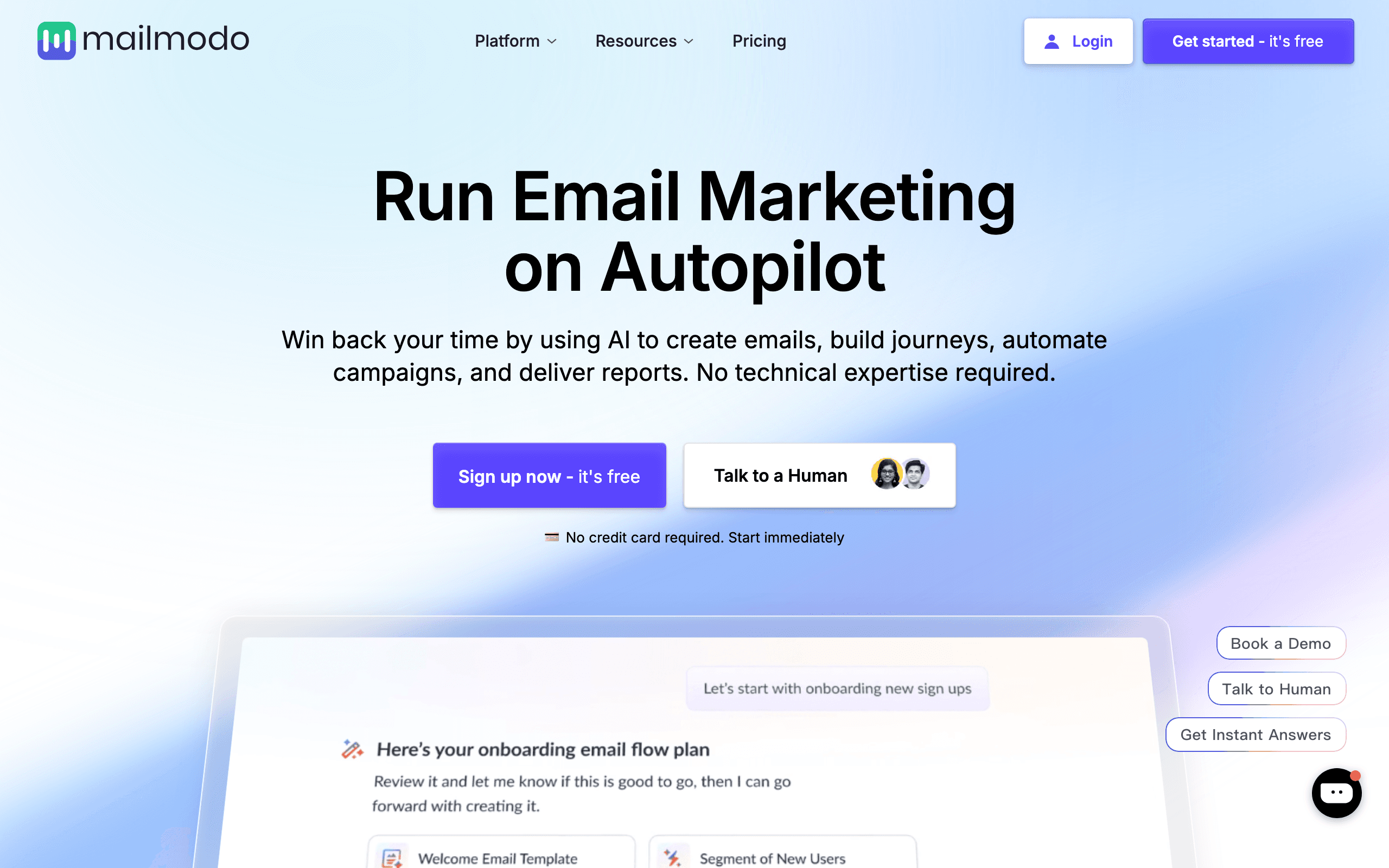
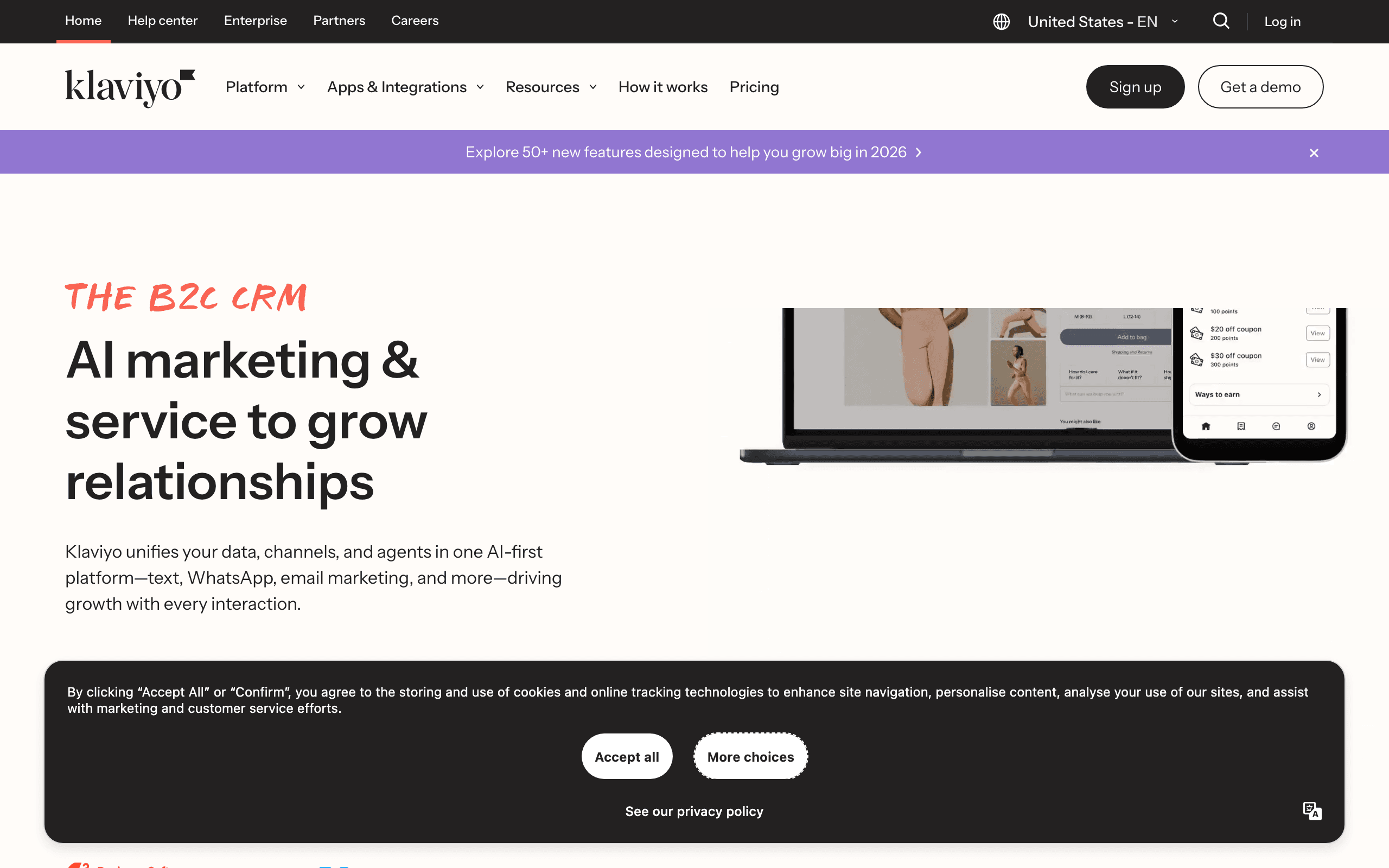
Mailmodo and Klaviyo represent two different approaches to email marketing. Mailmodo, a YC-backed startup (W21), focuses on AMP technology for interactive emails. Klaviyo is the dominant e-commerce email platform with deep Shopify integration. For more context, see our Klaviyo comparison.
The right choice depends entirely on your business type and email client demographics.
The AMP Email Reality
Mailmodo's key differentiator is AMP email - a technology that allows interactive elements like forms, surveys, quizzes, and carousels directly in the email. Users can complete actions without clicking through to a website.
The catch: AMP only works in Gmail and Yahoo Mail. Outlook, Apple Mail, and most other clients display a fallback HTML version without interactivity. For B2B audiences with Outlook-heavy usage, you won't see AMP benefits.
E-commerce Capabilities
Klaviyo dominates e-commerce email. The Shopify integration is exceptional - real-time sync of customer data, purchase history, and browsing behavior. Features like predictive analytics (CLV, churn risk), browse abandonment, and product recommendations are industry-leading.
Mailmodo offers basic e-commerce integrations but cannot match Klaviyo's depth. If you run a serious e-commerce operation, Klaviyo is the clear choice for automation and segmentation.
Email Client Compatibility
This is Mailmodo's biggest limitation. While Gmail and Yahoo Mail support AMP, they represent only 50-60% of consumer email opens. B2B audiences often favor Outlook, which shows only the fallback HTML.
Klaviyo's emails work identically across all clients. What you design is what everyone sees, regardless of their email app.
Pricing Comparison
At 10,000 subscribers, Mailmodo Pro costs $78/month versus Klaviyo's $150/month. Mailmodo is cheaper, but Klaviyo includes SMS, predictive analytics, and deeper integrations.
For pricing comparison with other platforms, the value equation depends on your specific needs.
When Each Platform Shines
Choose Mailmodo when: You need interactive surveys or forms in email. Your audience primarily uses Gmail. You're experimenting with AMP technology. You want a lower-cost option for basic marketing.
Choose Klaviyo when: You run e-commerce, especially Shopify. You need advanced segmentation and revenue tracking. Email client compatibility is important. You want combined email + SMS in one platform.
For SaaS Companies
Neither Mailmodo nor Klaviyo is built for SaaS. Klaviyo focuses on e-commerce, Mailmodo on AMP experimentation. If you run a software business, consider Sequenzy for Stripe integration and subscription-aware automation.
E-commerce Depth vs Email Innovation
Klaviyo's dominance in e-commerce email stems from years of deep platform integration. Real-time Shopify data sync means every email can reference a customer's purchase history, browsing behavior, and predicted lifetime value. Abandoned cart flows, browse abandonment sequences, and post-purchase campaigns work automatically based on store events.
Mailmodo's AMP technology could theoretically enhance e-commerce emails with interactive product browsing or in-email add-to-cart functionality. But without the deep integration with e-commerce platforms that Klaviyo provides, these interactive features operate in isolation from actual store data.
The Email Client Reality for E-commerce
E-commerce audiences use diverse email clients. Customers shop on phones with default mail apps, on desktop computers with Outlook, on tablets with Apple Mail, and in web browsers with Gmail. This diversity makes Mailmodo's AMP limitation particularly problematic for e-commerce.
When half or more of your customers cannot see interactive email features, the business case for AMP technology weakens significantly. Klaviyo's universal compatibility ensures every customer receives the same experience regardless of their email client choice.
Revenue Attribution and Analytics
Klaviyo's revenue attribution connects email campaigns directly to sales data. You can see exactly how much revenue each email, automation, or segment generated. This data-driven approach justifies marketing spend and guides strategy.
Mailmodo tracks engagement metrics like in-email form completions and survey responses, but does not connect to revenue data in the same depth. For e-commerce businesses where email marketing ROI measurement is critical, Klaviyo's analytics are substantially more valuable.
E-commerce Data Integration
Klaviyo syncs deeply with Shopify and WooCommerce, pulling in product catalogs, purchase history, and browsing behavior to power its automations. Mailmodo's ecommerce integrations are more basic, since its real focus is AMP emails that let subscribers fill out forms or take quizzes without leaving their inbox, though that only works in Gmail and Yahoo Mail. If your automations depend on rich product and purchase data, Klaviyo's integration depth matters more than Mailmodo's interactive-email trick.
Revenue Attribution and ROI
Klaviyo attributes revenue to individual campaigns and flows in detail, which is central to how ecommerce teams justify their email spend. Mailmodo's revenue tracking is comparatively basic; its selling point is claimed higher engagement from AMP-powered interactive elements like in-email surveys and forms, not granular attribution. If proving ROI campaign by campaign is the priority, Klaviyo's reporting gives you more to work with than Mailmodo currently offers.
Cart Recovery and Product Flows
Klaviyo's abandoned cart and browse-abandonment flows are advanced, built from years of ecommerce-specific tuning, and its templates are tailored for online stores. Mailmodo's cart recovery and win-back flows are more basic, and its templates lean toward its AMP interactive format rather than deep ecommerce personalization. For pure cart-recovery performance, Klaviyo's flows are the more proven choice; Mailmodo's advantage only shows up if your Gmail- and Yahoo-heavy audience will actually interact with in-email forms.
Use-case matchups
| Need | Better fit | Why |
|---|---|---|
| Interactive AMP campaigns and in-email forms | Mailmodo | Mailmodo's cited strengths are AMP email, no-code editing, and in-email interaction. |
| Shopify and ecommerce lifecycle automation | Klaviyo | Klaviyo's cited strengths include deep Shopify integration, predictive analytics, and revenue attribution. |
| Product, cart, browse, and post-purchase flows | Klaviyo | Klaviyo is built around ecommerce data and product-triggered automations. |
| SaaS billing and subscription lifecycle email | Sequenzy | Sequenzy is listed as SaaS-focused with Stripe integration, while this page notes it is not an ecommerce or AMP tool. |
Pricing reality
Mailmodo is listed at $78/month for Pro with AMP email support and automation. Klaviyo is listed at $150/month for an Email plan with ecommerce features included. Sequenzy is listed at $49/month for SaaS-focused email without AMP or ecommerce positioning.
Klaviyo is the highest listed price here, but the cited value is ecommerce depth and revenue attribution. Mailmodo is cheaper and better aligned to interactive campaign experiments, not full ecommerce lifecycle infrastructure.
Review signals
Mailmodo reviews cited here emphasize interactive AMP email, no-code editing, and in-email forms. The limitations are AMP support varying by client and the learning curve.
Klaviyo reviews cited here emphasize deep Shopify integration, predictive analytics, and revenue attribution. The tradeoffs are cost at scale and an ecommerce-focused product shape.
Best Fit by Campaign Experience
Best interactive email platform for AMP forms and surveys
Mailmodo fits teams testing in-email forms, surveys, quizzes, and AMP experiences for audiences with strong Gmail or Yahoo support. It should be evaluated first when inbox interaction is the experiment and ecommerce depth is secondary.
Best ecommerce email platform for Shopify product flows
Klaviyo fits stores that need Shopify data, product-triggered automations, cart recovery, segmentation, SMS, and revenue attribution. Choose it when ecommerce lifecycle revenue matters more than interactive email creative.
Best SaaS email platform for billing-triggered lifecycle
Sequenzy fits SaaS teams that need Stripe lifecycle messages, transactional email, and campaigns without AMP or ecommerce positioning. It is the relevant alternative when subscription events are the email trigger.
Migration checklist
- Export subscribers, profiles, segments, product/catalog mappings, templates, automations, forms, suppression data, and revenue reports.
- If moving to Klaviyo, map store events, product feeds, cart events, browse events, and purchase history before rebuilding flows.
- If moving to Mailmodo, identify which ecommerce flows can become AMP campaigns and which need another ecommerce automation tool.
- Rebuild cart recovery, welcome, post-purchase, win-back, and product recommendation campaigns in priority order.
- Reconfigure SPF, DKIM, DMARC, tracking domains, sender identities, integrations, and unsubscribe handling.
- Test Gmail/Yahoo AMP versions, fallback HTML, ecommerce event triggers, and attribution before switching sends.
Decision checklist
- Choose Mailmodo if interactive email is the experiment and ecommerce depth is not the deciding factor.
- Choose Klaviyo if Shopify data, product flows, segmentation, and revenue attribution are central.
- Avoid Mailmodo if most revenue depends on ecommerce event automation.
- Avoid Klaviyo if you do not run an ecommerce business and will not use its commerce data model.
- Choose Sequenzy if the business is subscription software rather than retail ecommerce.









