Updated 2026-01-26

12 Mailmodo Alternatives That Work Everywhere

AMP emails are innovative, but they don't work in Outlook or Apple Mail. Here are alternatives that reach your entire audience reliably.

TL;DR

Quick answer: If you're a SaaS founder, use Sequenzy ($49/mo for 10k). E-commerce? Klaviyo or Omnisend. Complex automations? ActiveCampaign or Customer.io. Creators? ConvertKit. Budget-conscious? MailerLite, Moosend, or AWeber. Need webinars? GetResponse.

12 Best Mailmodo Alternatives

Our Pick for SaaS Companies
#1
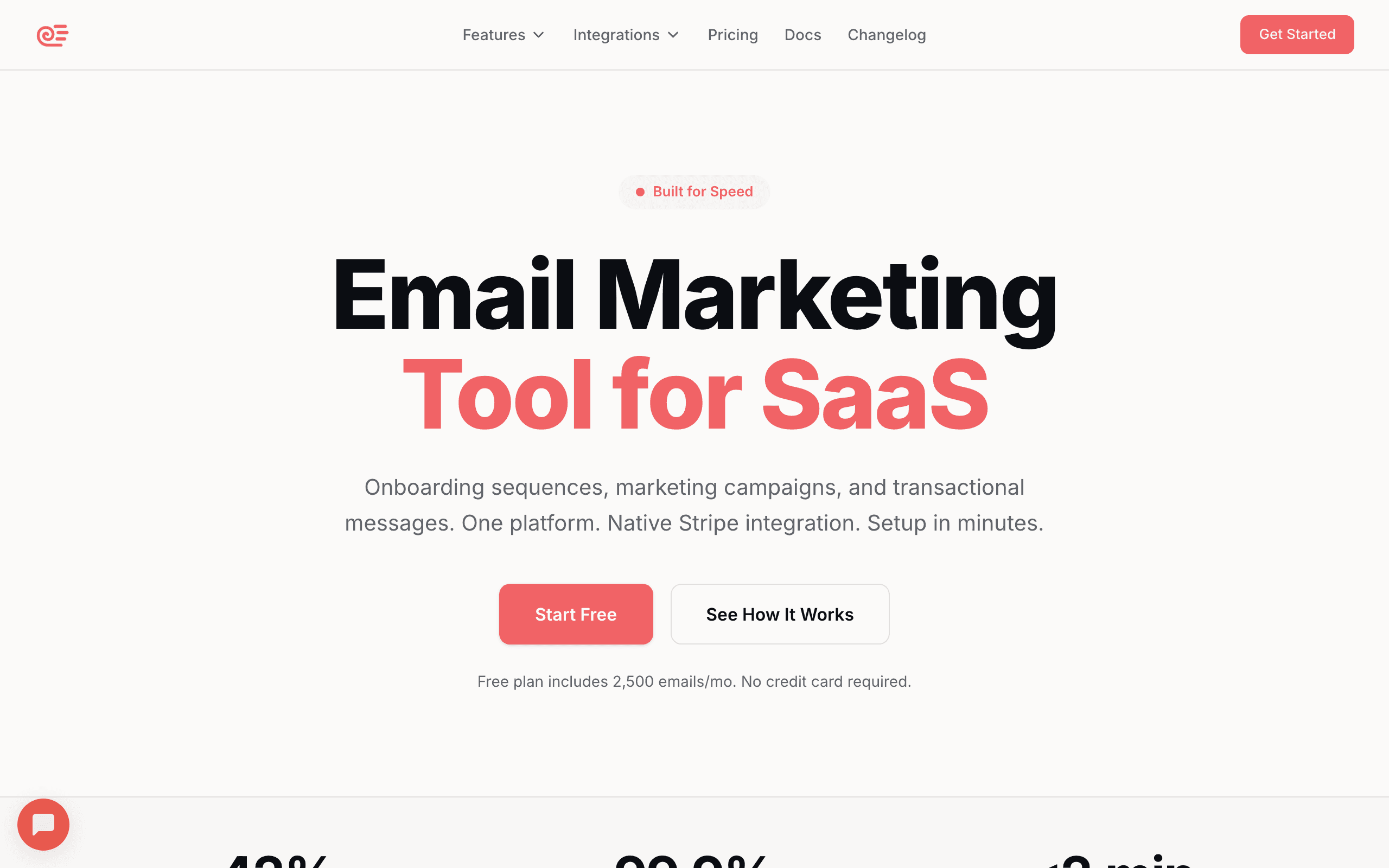
Sequenzy

Built for SaaS founders who want AI to handle email content. Tell it what you want, get complete sequences generated. Stripe integration means customer data stays in sync without manual work.

Visit
Best for
SaaS founders who'd rather build product than write emails
Pricing
$49/month for 10k subscribers

Pros

  • AI generates your email sequences from simple prompts
  • Stripe integration syncs customer data automatically
  • Transactional and marketing emails in one platform
  • Simple pricing - $49 for 10k, no credit nonsense
  • Direct founder support when you need help

Cons

  • No AMP email support (but works in all clients)
  • No SMS marketing
  • No landing page builder
  • Newer platform with less history
#2
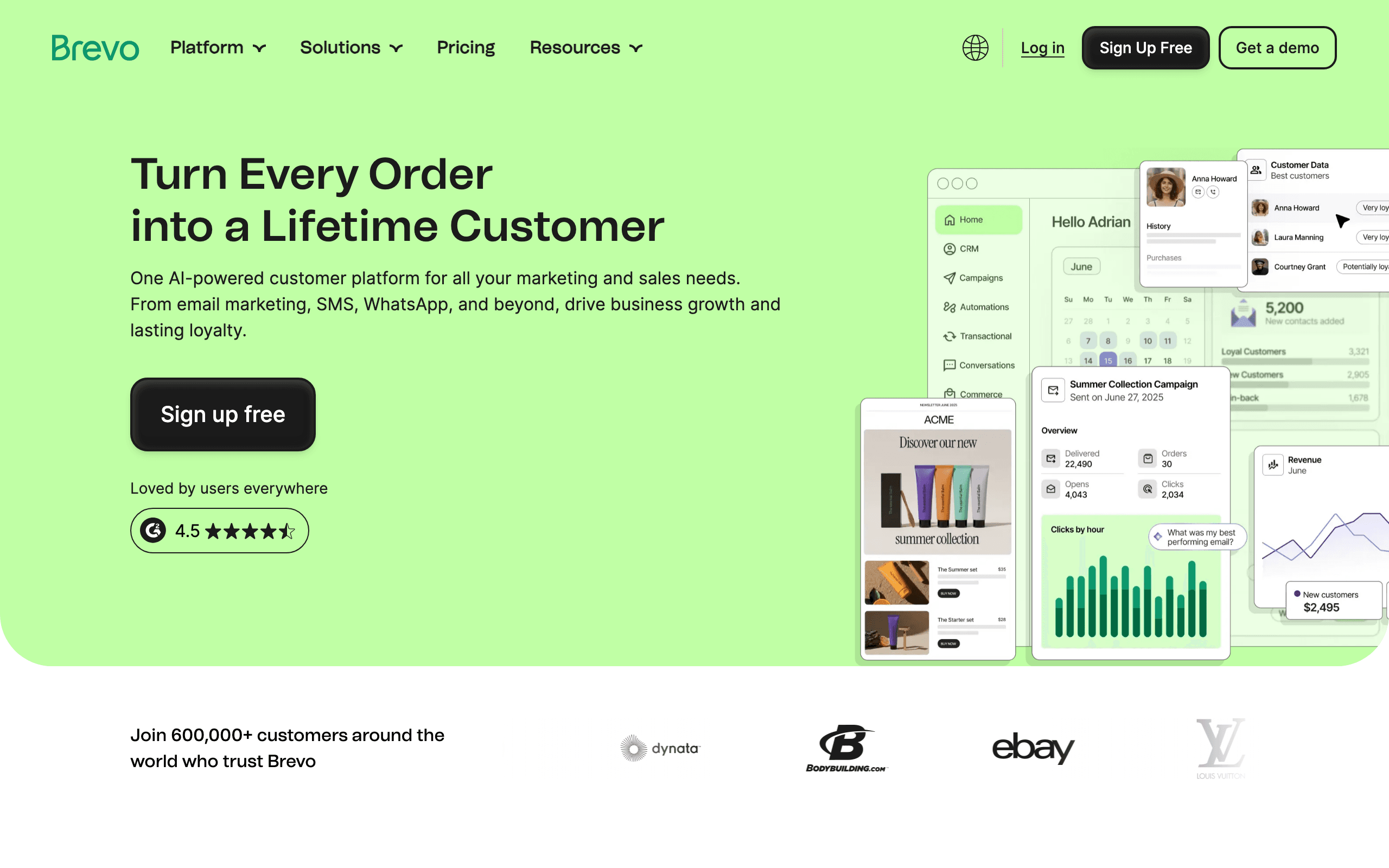
Brevo

Formerly Sendinblue. The affordable all-in-one that actually delivers. Unlimited contacts, pay by email volume. SMS, CRM, and transactional all included.

Visit
Best for
Budget-conscious businesses needing multiple channels
Pricing
$25/month for unlimited contacts (pay per email)

Pros

  • Unlimited contacts on every plan
  • SMS marketing included
  • Transactional emails built in
  • CRM features at no extra cost
  • Works in all email clients

Cons

  • Pay-per-email can add up at scale
  • Interface feels dated in places
  • Deliverability reviews are mixed
  • Support is slow on lower tiers
#3
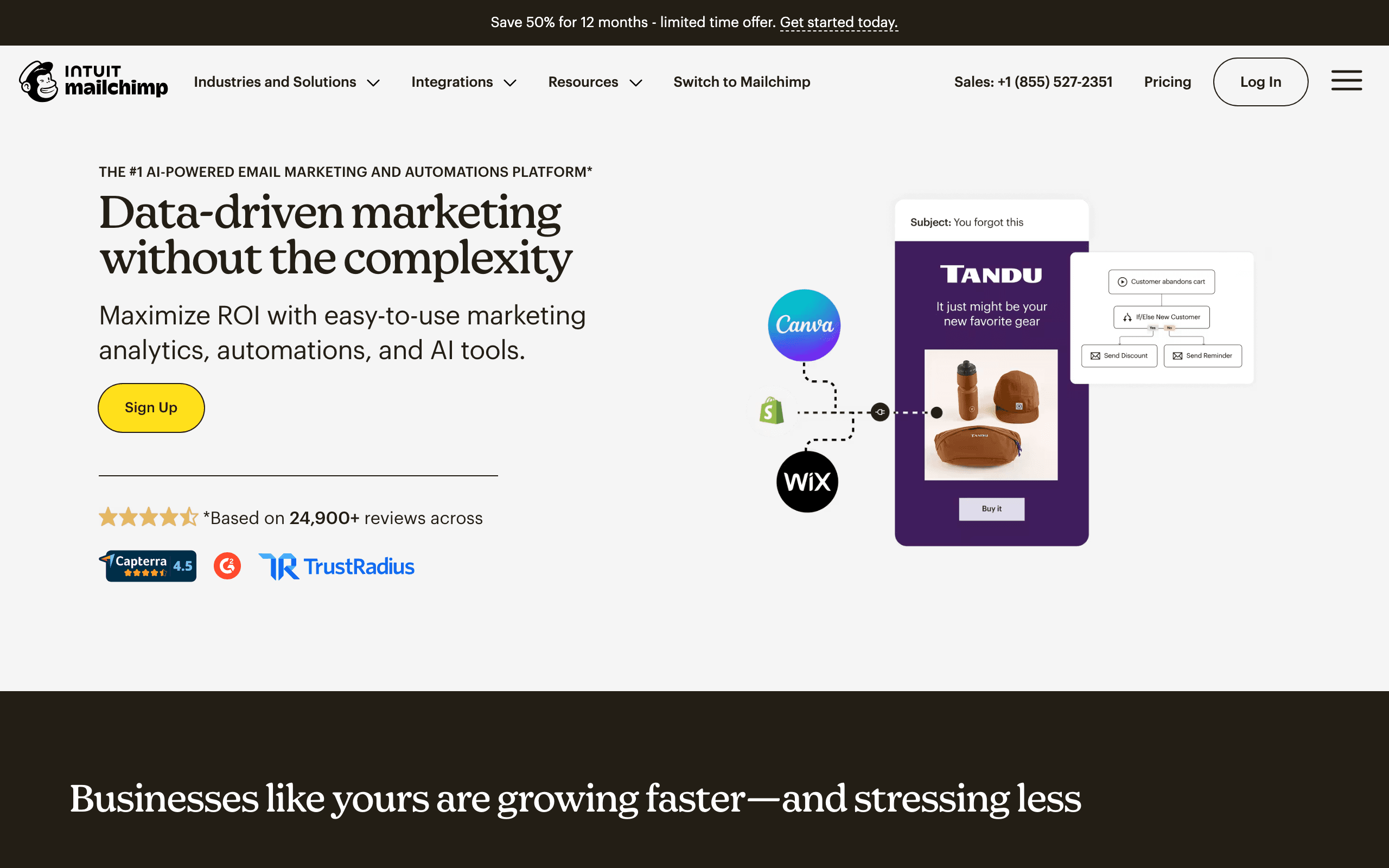
Mailchimp

The established name everyone knows. Comprehensive features, massive integration ecosystem, but pricing has gotten expensive since Intuit bought them.

Visit
Best for
Teams who need extensive integrations and established tooling
Pricing
$110-135/month for 10,000 contacts

Pros

  • Integrates with basically everything
  • Extensive template library
  • Landing pages and website builder
  • Well-documented with huge knowledge base
  • Reliable deliverability track record

Cons

  • Expensive - charges for unsubscribed contacts
  • Feature bloat for simple use cases
  • No transactional without extra cost
  • Support quality declined post-Intuit
#4
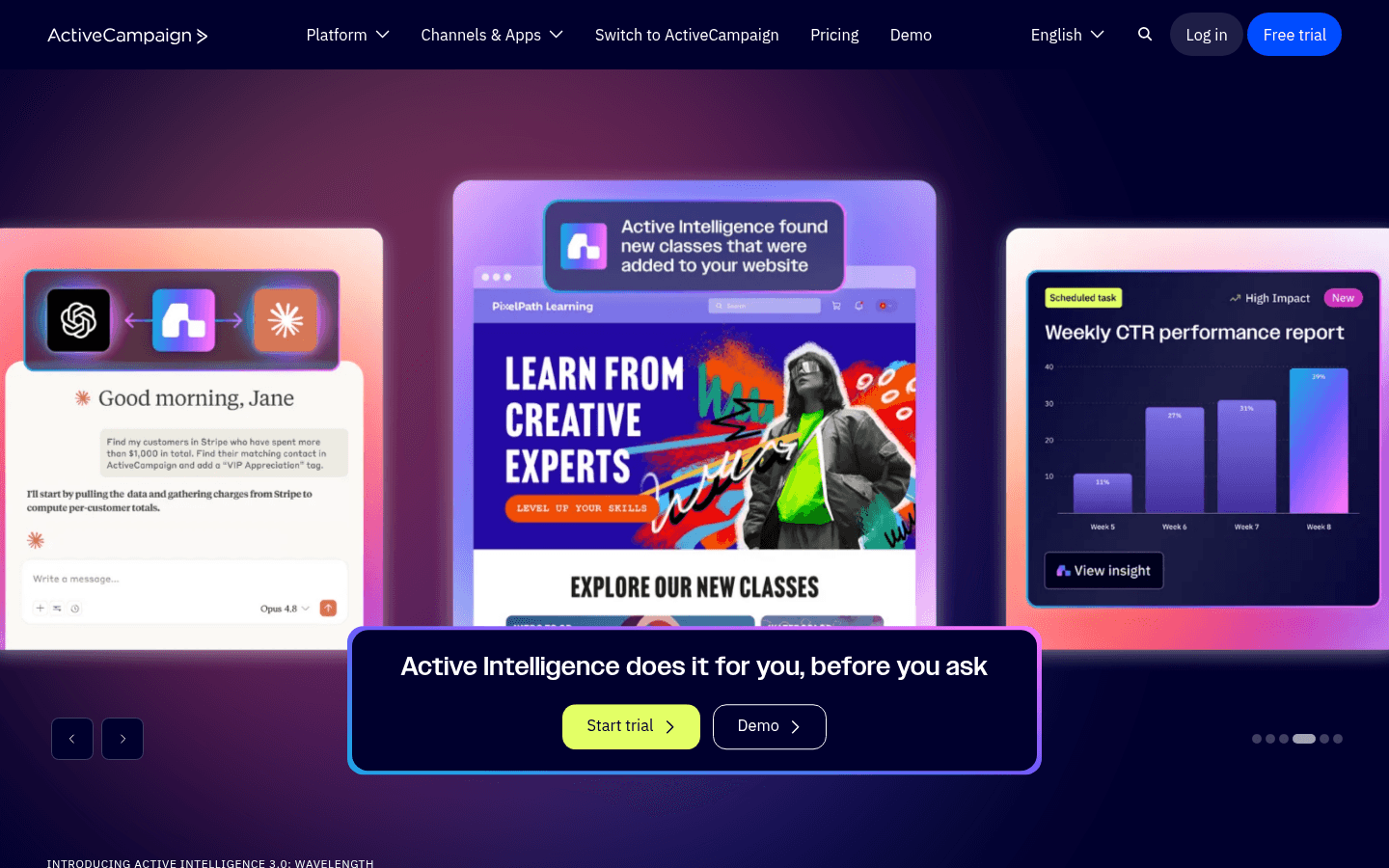
ActiveCampaign

The automation powerhouse. If you need complex conditional workflows, lead scoring, and CRM integration, ActiveCampaign can handle whatever you throw at it.

Visit
Best for
Businesses with sophisticated automation requirements
Pricing
$79/month for 10,000 contacts (Lite plan)

Pros

  • Most powerful automation builder available
  • Built-in CRM with sales pipelines
  • Conditional logic that handles any workflow
  • Strong deliverability
  • Extensive integration options

Cons

  • Steep learning curve - plan for setup time
  • Pricing increases with features and contacts
  • Overkill for simple newsletter needs
  • No native transactional email
#5
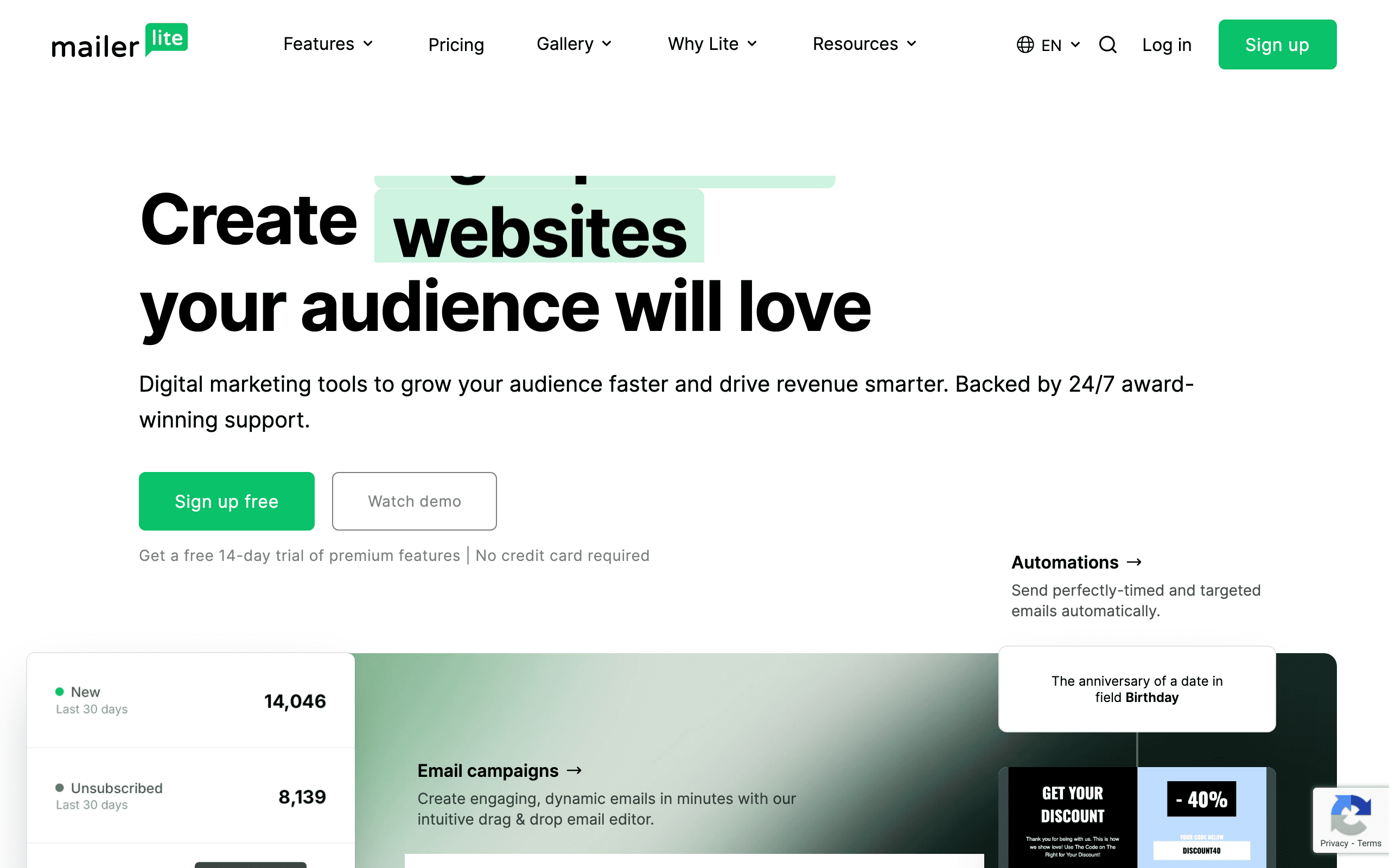
MailerLite

The affordable all-rounder. Solid email marketing with landing pages and even a basic website builder included. Great value for small teams.

Visit
Best for
Small businesses wanting features without high costs
Pricing
$50/month for 10,000 subscribers

Pros

  • Actually affordable compared to most competitors
  • Landing page builder included
  • Website builder for simple needs
  • Decent automation capabilities
  • Generous free tier (1,000 subscribers)

Cons

  • Interface can be clunky
  • Advanced features feel limited
  • Deliverability could be better
  • Support is slow on free/lower tiers
#6
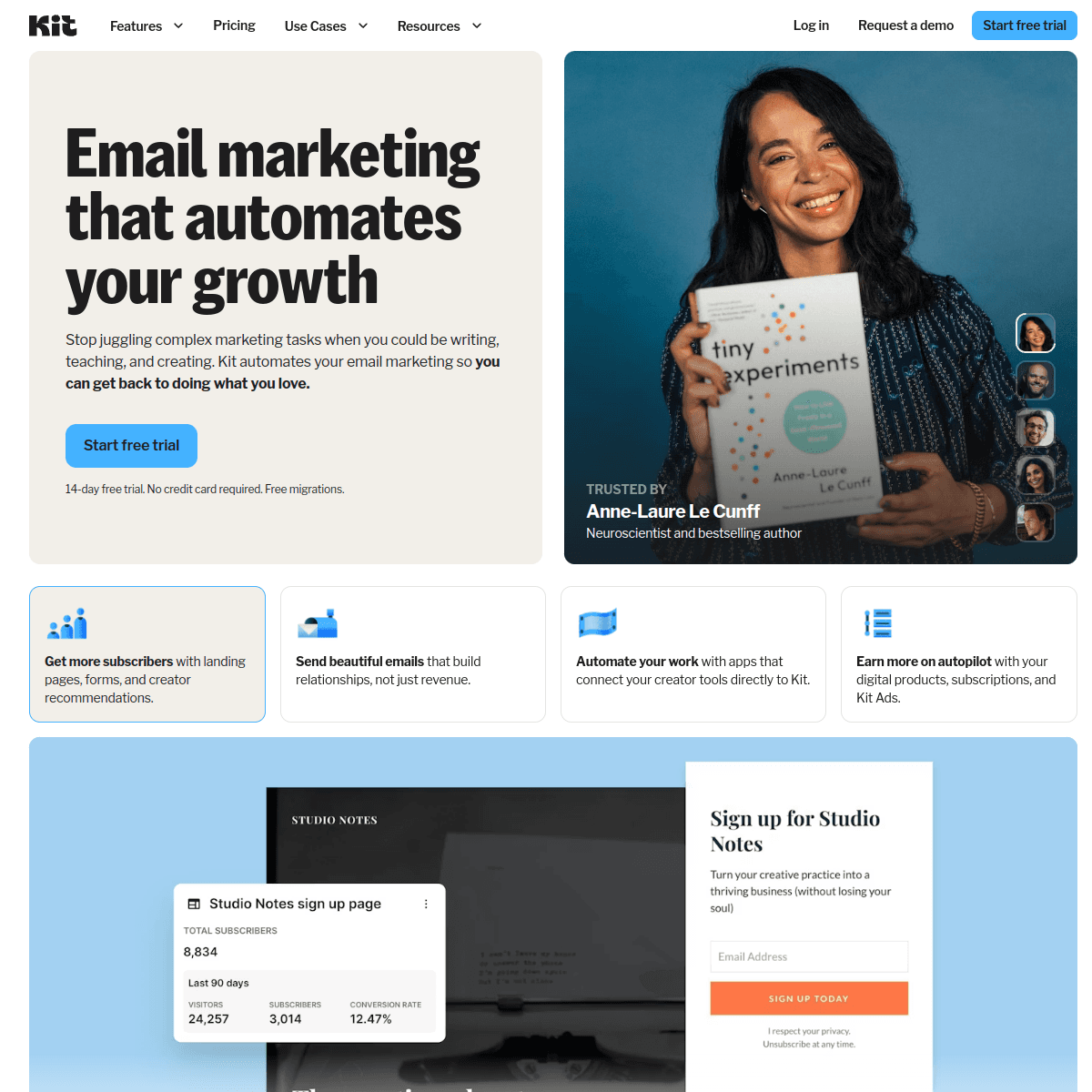
ConvertKit

The creator's email platform. Now called Kit. Built for bloggers, YouTubers, course creators, and newsletter writers. Landing pages and digital product sales included.

Visit
Best for
Creators, bloggers, course sellers, newsletter writers
Pricing
$119/month for 10,000 subscribers

Pros

  • Landing pages that look professional
  • Sell digital products directly
  • Strong creator community
  • Intuitive visual automation builder
  • Solid deliverability

Cons

  • Premium pricing ($119/mo for 10k)
  • Not built for SaaS or e-commerce
  • No transactional email support
  • Segmentation could be more powerful
#7
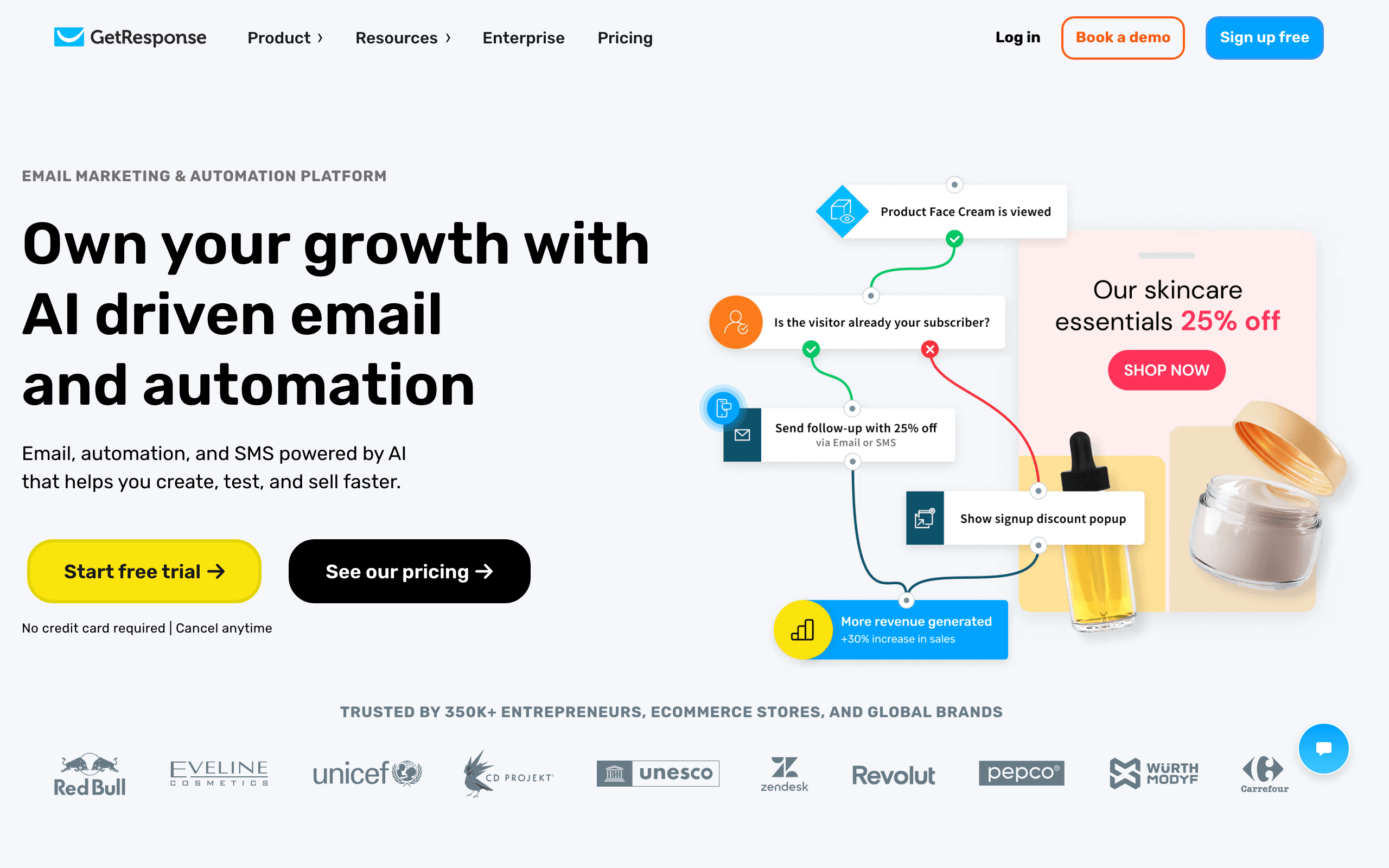
GetResponse

Email marketing meets webinar platform. If you run online events and need email in one place, GetResponse combines both. AI features for content and subject lines too.

Visit
Best for
Marketers who need webinars and email together
Pricing
$59/month for 10,000 contacts

Pros

  • Webinar platform built right in
  • AI email and subject line generator
  • Solid landing page builder
  • Conversion funnels included
  • Decent automation capabilities

Cons

  • Jack of all trades, master of none
  • Webinar quality is basic compared to dedicated tools
  • Interface can feel cluttered
  • No transactional email
#8
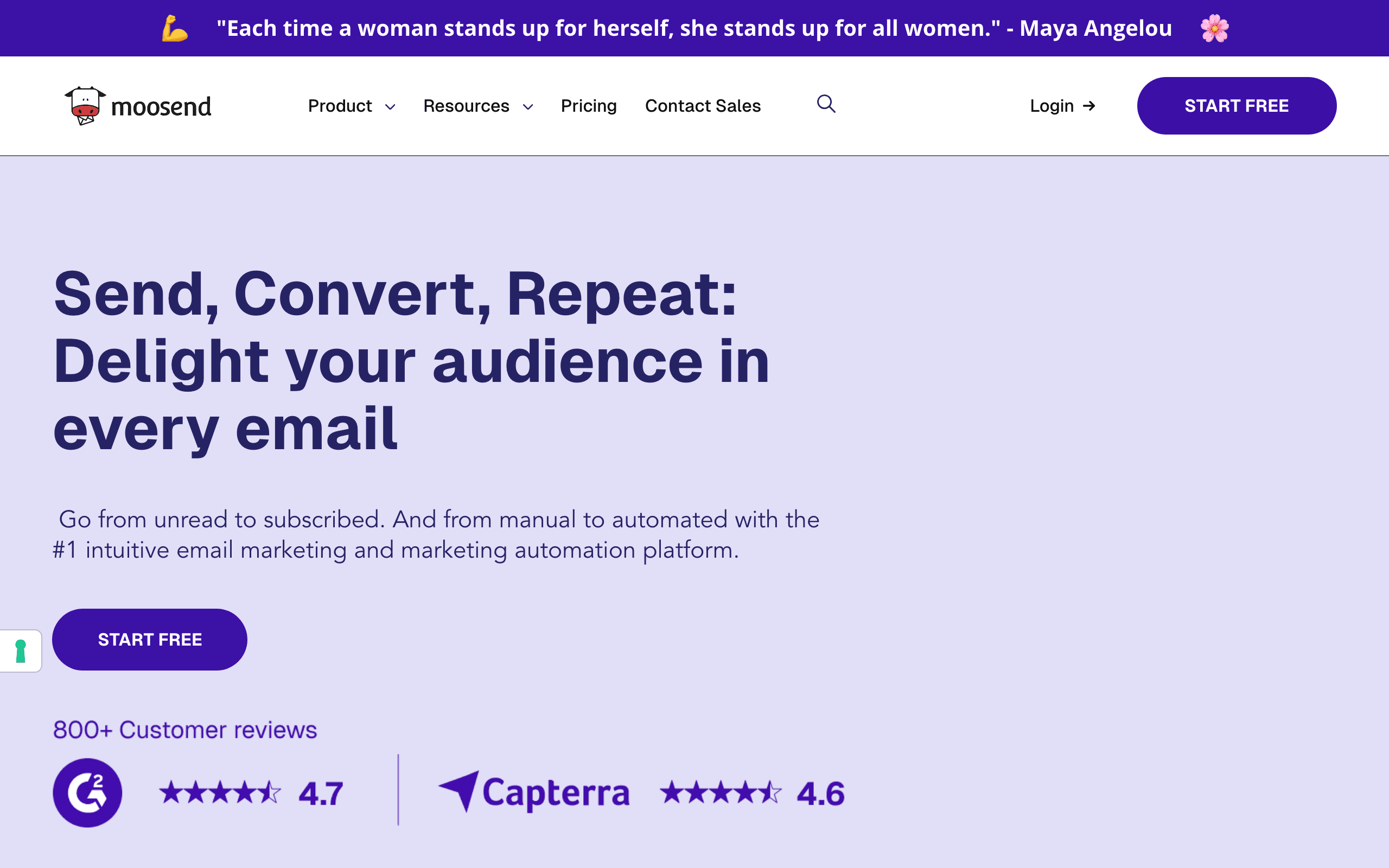
Moosend

Budget-friendly option with surprisingly capable automation. Now owned by Sitecore but still one of the cheapest platforms that actually works.

Visit
Best for
Startups and small businesses on tight budgets
Pricing
$32/month for 10,000 subscribers

Pros

  • Very affordable pricing
  • Drag-and-drop automation builder
  • Real-time analytics
  • Good landing page builder
  • Unlimited emails on paid plans

Cons

  • Owned by Sitecore now (enterprise direction)
  • Fewer integrations than competitors
  • Template designs are basic
  • Support can be slow
#9
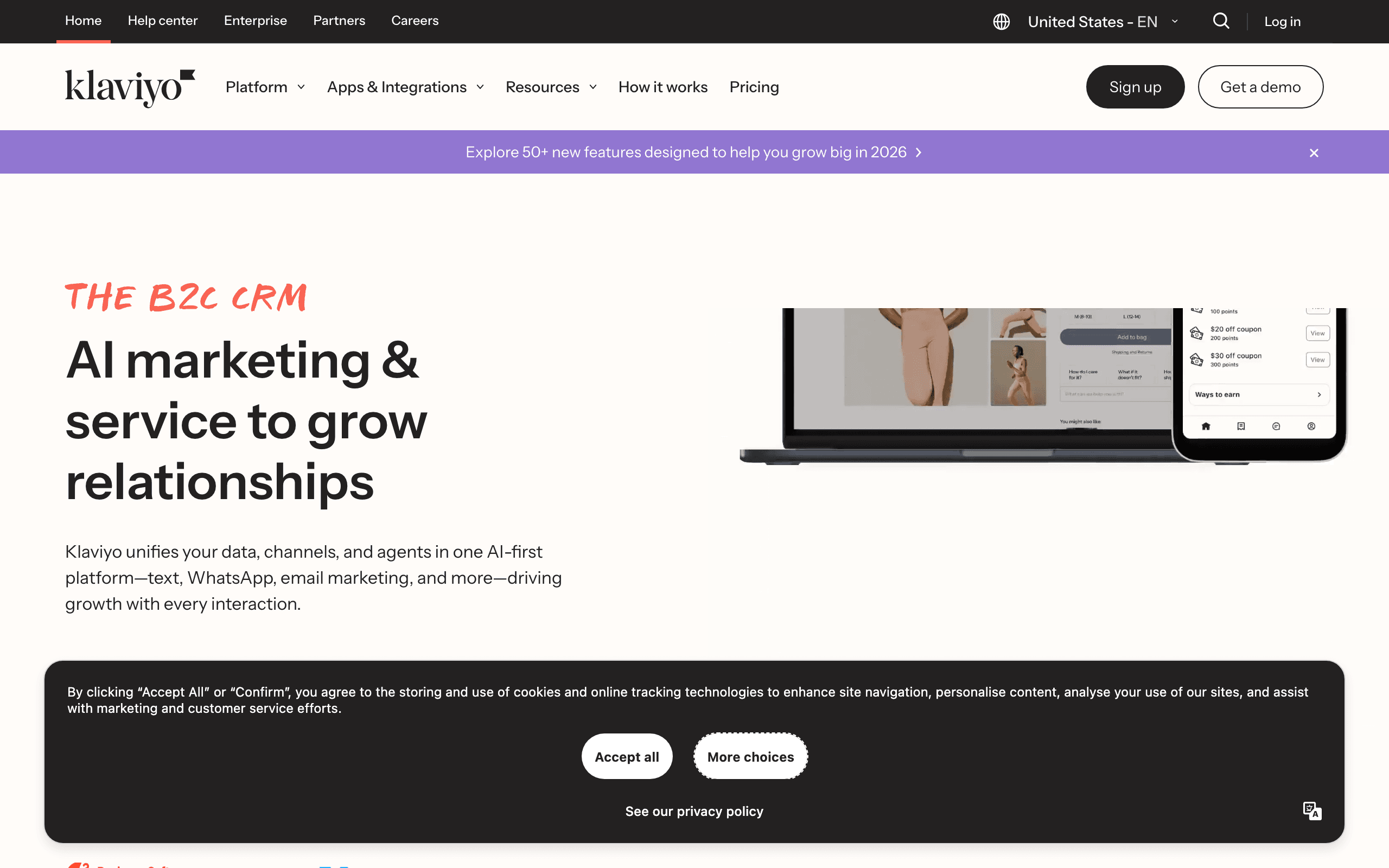
Klaviyo

The e-commerce email powerhouse. Deep Shopify and WooCommerce integrations, predictive analytics, and SMS built in. Not cheap, but purpose-built for selling products online.

Visit
Best for
E-commerce businesses serious about revenue from email
Pricing
$100/month for 10,000 contacts

Pros

  • Best-in-class Shopify and WooCommerce integrations
  • Predictive analytics for customer lifetime value
  • SMS marketing included in platform
  • Abandoned cart and product recommendation flows
  • Strong revenue attribution tracking

Cons

  • Expensive compared to alternatives
  • Overkill if you're not doing e-commerce
  • Learning curve for all the features
  • Not built for SaaS or service businesses
#10
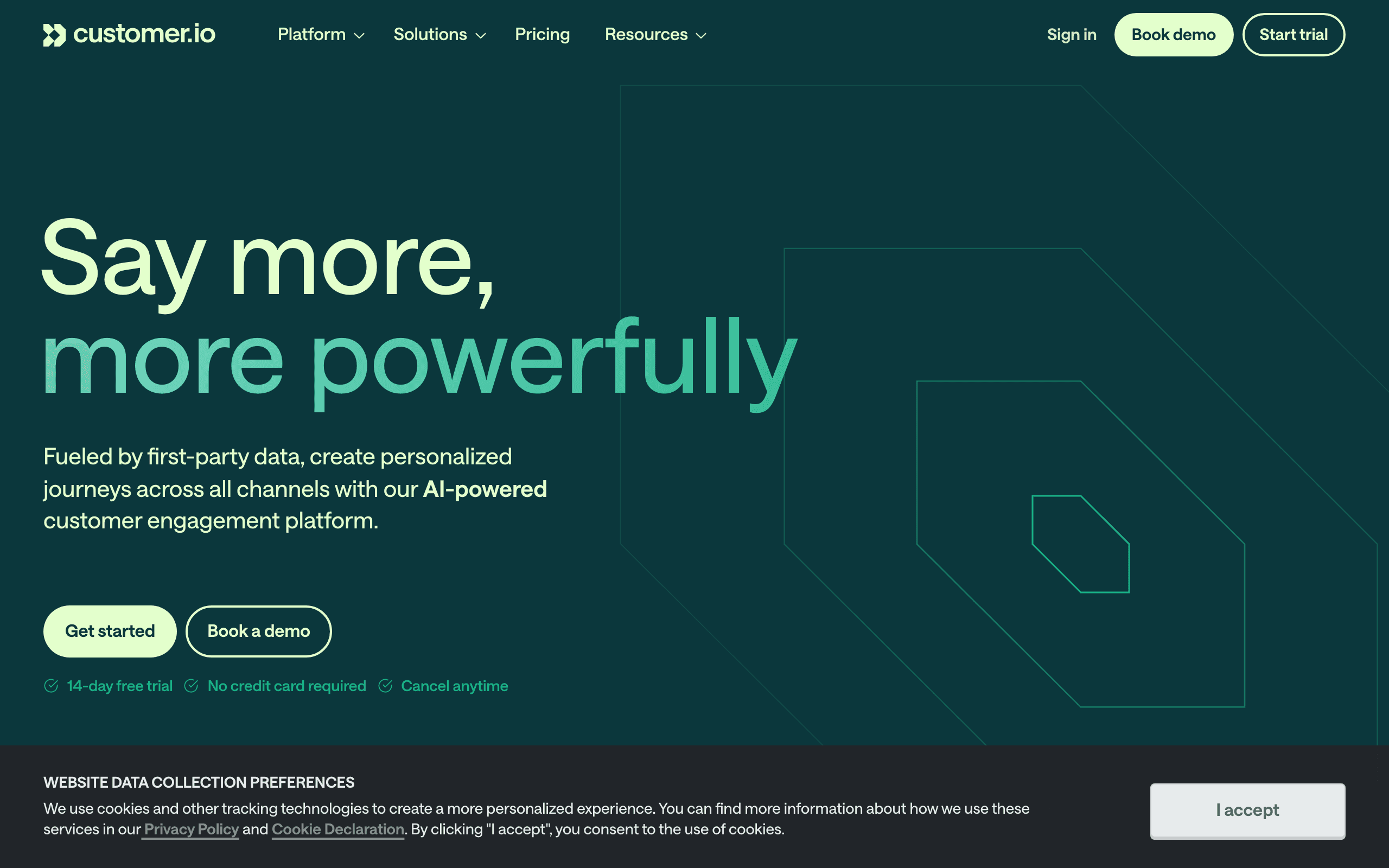
Customer.io

Behavioral messaging platform for product-led companies. Trigger emails based on user actions in your app. Strong API-first approach and data pipeline integrations.

Visit
Best for
Product-led companies with technical teams
Pricing
$100/month for 5,000 profiles (Essentials plan)

Pros

  • Event-driven messaging based on user behavior
  • Excellent API and data pipeline integrations
  • In-app messages and push notifications
  • Visual workflow builder with branching logic
  • Strong developer documentation

Cons

  • More expensive than traditional email tools
  • Requires technical setup to get value
  • No built-in landing pages
  • Steep learning curve for non-technical users
#11
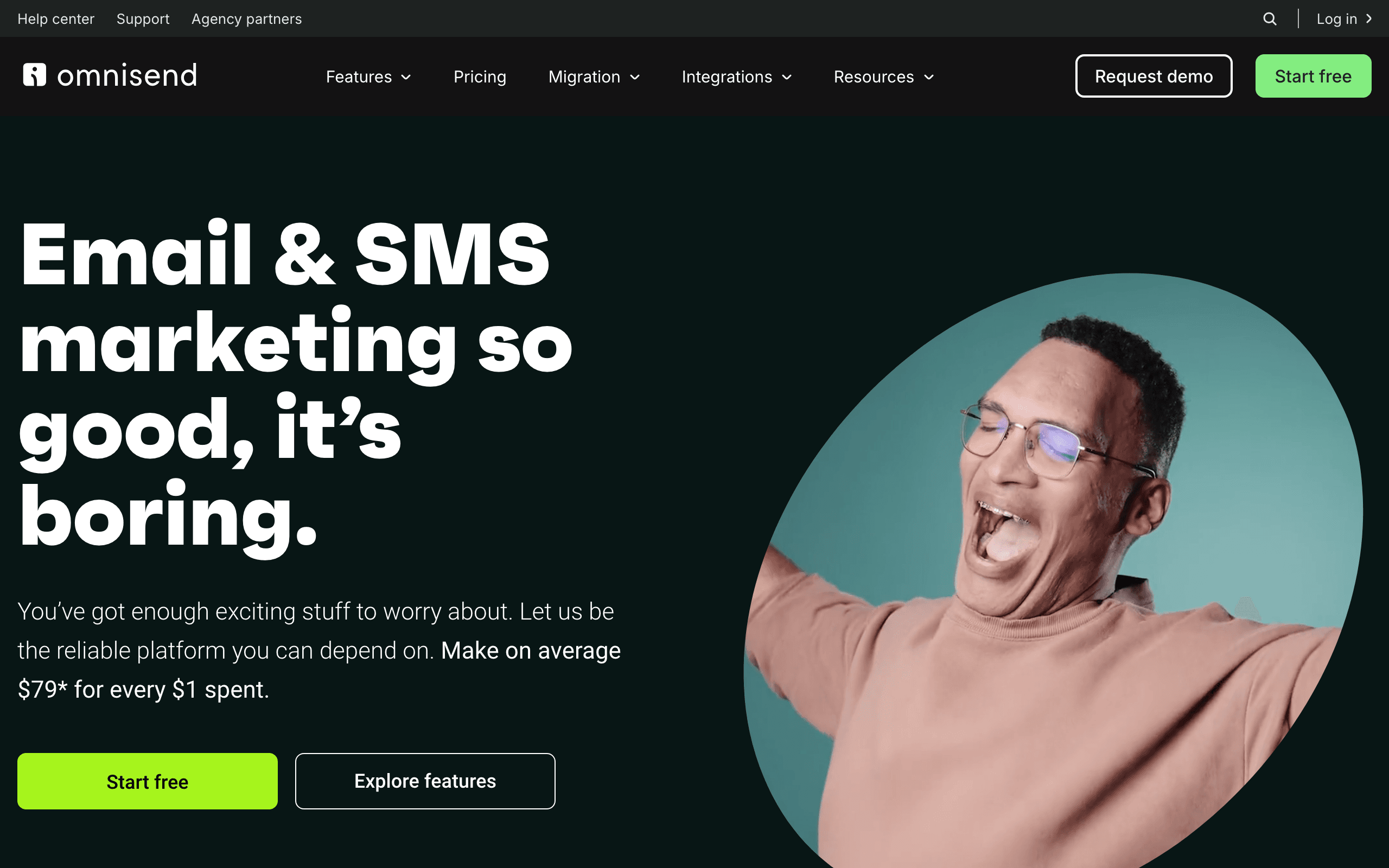
Omnisend

E-commerce marketing automation with email, SMS, and push notifications. Built specifically for online stores with pre-built workflows for cart abandonment, welcome series, and more.

Visit
Best for
E-commerce businesses wanting multichannel automation
Pricing
$59/month for 6,000 contacts

Pros

  • Purpose-built for e-commerce with Shopify/WooCommerce
  • Email, SMS, and push in one platform
  • Pre-built automation workflows ready to use
  • Good product recommendation features
  • More affordable than Klaviyo

Cons

  • Less powerful than Klaviyo for advanced use cases
  • Analytics not as deep
  • Not suitable for non-e-commerce businesses
  • Free tier limitations are strict
#12
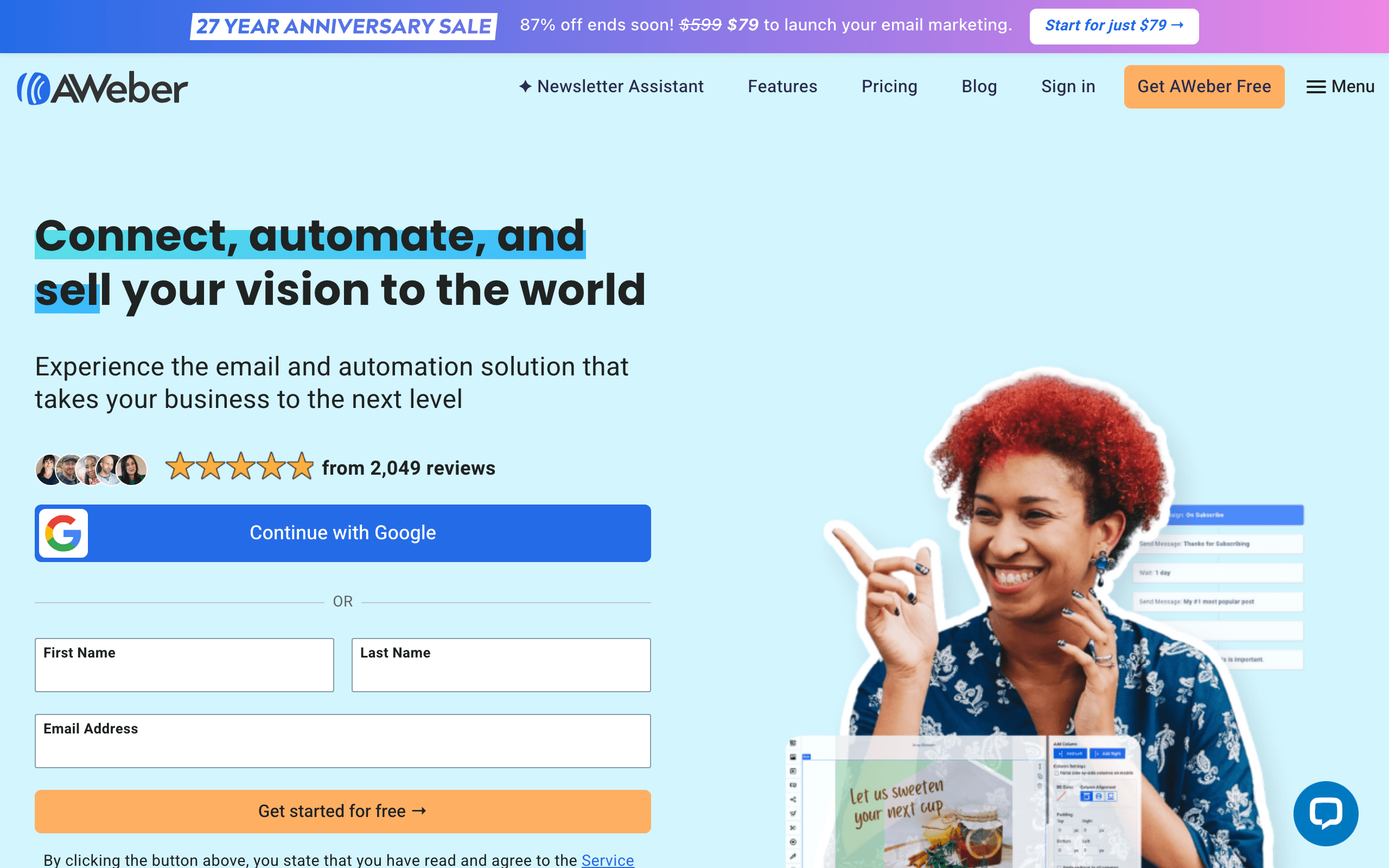
AWeber

One of the original email marketing platforms, still going strong. Simple, reliable, and affordable. Good for people who want email marketing without complexity.

Visit
Best for
Small businesses wanting simple, reliable email marketing
Pricing
$25/month for 2,500 subscribers

Pros

  • Been around since 1998, very stable
  • Simple to use, minimal learning curve
  • Good deliverability track record
  • Phone support available
  • Landing pages and signup forms included

Cons

  • Automation features are basic
  • Interface feels dated
  • Not built for modern SaaS or e-commerce needs
  • Pricing not competitive at scale

Why People Are Looking Beyond Mailmodo

AMP emails have limited client support

Mailmodo's key feature is AMP emails - interactive forms, carousels, and surveys inside the email itself. Cool concept. Problem: AMP doesn't work in Outlook, Apple Mail, or most desktop clients. You're building for maybe 30-40% of recipients. Everyone else sees a fallback that defeats the purpose.

Credit-based pricing gets confusing

Mailmodo uses email credits instead of subscriber-based pricing. At scale, calculating actual costs requires spreadsheet math. Most alternatives just charge per subscriber - simpler to budget and compare. You shouldn't need a calculator to understand your email bill.

Learning curve for AMP

Creating AMP emails requires understanding a different paradigm. The editor helps, but if you're not using AMP features extensively, you're paying for complexity you don't need. Standard HTML emails work everywhere and are easier to build.

Limited integrations compared to established players

As a YC-backed startup founded in 2020, Mailmodo has fewer native integrations than platforms like Mailchimp or ActiveCampaign. If your stack includes niche tools, you may need Zapier or workarounds. Established platforms connect directly to most things.

Feature Comparison

FeatureMailmodoSequenzyBrevoMailchimpActiveCampaignMailerLiteConvertKitGetResponseMoosendKlaviyoCustomer.ioOmnisendAWeber
Price at 10k subs
$99+
$49
$25+
$110-135
$79
$50
$119
$59
$32
$100
$150+
$59
$65
Free tier
500 contacts
100
Unlimited
500
None
1,000
1,000
500
None
250
None
250
500
AI content
Transactional
Extra $
Landing pages
SMS
Works everywhere
AMP limited
Automations
Best
Best
Basic
Stripe sync
API quality
OK
Good
OK
OK
Good
OK
OK
OK
OK
Good
Best
OK
OK

When to Use Each Platform

Choose Sequenzy if...
  • You're building a SaaS and want AI to write your emails
  • You use Stripe and need customer data to sync automatically
  • You want marketing and transactional emails in one platform
  • You prefer direct founder support over ticket systems
Choose Stay with Mailmodo if...
  • AMP interactivity is core to your strategy and your audience uses Gmail/Yahoo
  • You've invested heavily in AMP email templates
  • Your email engagement metrics improved significantly with AMP
  • You need in-email forms and surveys for your specific use case
Choose Brevo if...
  • Budget is your primary concern
  • You need SMS alongside email marketing
  • You want unlimited contacts with pay-per-email
  • You need transactional email included
Choose ActiveCampaign if...
  • You need complex conditional automation workflows
  • You want CRM and email marketing integrated
  • Lead scoring is important to your sales process
  • You have time to invest in proper setup
Choose ConvertKit if...
  • You're a creator, blogger, or course seller
  • You need landing pages for lead capture
  • You want to sell digital products directly
  • You value community and creator-focused features
Choose MailerLite if...
  • You need landing pages on a budget
  • You're a small business starting email marketing
  • You want a generous free tier to start with
  • Simple automation is sufficient for your needs
Choose Klaviyo if...
  • You run a Shopify or WooCommerce store
  • Revenue attribution from email is important to track
  • You want predictive analytics for customer lifetime value
  • You need SMS and email in one e-commerce platform
Choose Customer.io if...
  • You have a technical team comfortable with APIs
  • You want to trigger emails based on user behavior in your app
  • You need data pipeline integrations with Segment or similar
  • You're building a product-led growth company
Choose Omnisend if...
  • You need e-commerce email but Klaviyo is too expensive
  • You want pre-built automation workflows out of the box
  • You need SMS and push notifications for your online store
  • You prefer something simpler than Klaviyo's complexity
Choose AWeber if...
  • You want a simple, proven platform that just works
  • Phone support matters to you
  • You're running a small business or blog
  • You don't need advanced automation or e-commerce features

Honest take: Should you actually leave Mailmodo?

Mailmodo built something genuinely innovative with their AMP email focus. Interactive forms, carousels, and surveys inside emails - that's legitimately cool. The question is whether it's practical for your specific situation.

Here's my honest assessment after testing the alternatives:

Switch if your audience doesn't use Gmail

AMP emails require Gmail or Yahoo Mail. If you're in B2B SaaS where Outlook and Apple Mail dominate, your AMP features are invisible to most of your list. You're paying for complexity that only a fraction of subscribers can experience. Standard HTML emails reach 100% of inboxes.

Switch if you want simpler pricing

Mailmodo's credit-based system works for some, but subscriber-based pricing is easier to understand and budget. With tools like Sequenzy at $49/mo for 10k or Brevo with unlimited contacts, you know exactly what you're paying without calculating email credits.

Switch if you need deeper integrations

Mailmodo is YC-backed and founded in 2020 - impressive growth, but fewer years means fewer native integrations. If your stack includes tools that Mailchimp or ActiveCampaign connect to directly but Mailmodo requires Zapier for, you might hit friction.

Stay if AMP is working for you

If you've seen measurable improvements from AMP interactivity and your audience is primarily Gmail users, Mailmodo's unique approach might be worth the tradeoffs. Check your email client breakdown in analytics before deciding.

What makes each alternative different

Let me break down when each option makes sense:

For SaaS companies: Sequenzy

If you're building a SaaS product, you probably don't want to spend hours writing email sequences. Sequenzy's AI generates them from simple prompts. Describe your onboarding flow, and it creates the emails. Stripe integration means customer data syncs automatically - trial conversions, plan changes, cancellations all reflected in your segments without manual work.

It combines transactional emails (password resets, receipts) with marketing in one platform at $49/mo for 10k subscribers. Read our guide on the best email tools for SaaS.

For budget constraints: Brevo

Brevo (formerly Sendinblue) charges by email volume, not contacts. Unlimited subscribers on every plan. If you have a large list but don't email frequently, this model saves money. SMS marketing and transactional emails are included too.

For complex automations: ActiveCampaign

ActiveCampaign has the most sophisticated automation builder available. Conditional logic, lead scoring, CRM pipelines - if your workflows have dozens of branches and conditions, this is where to go. It's not simple to set up, but once configured, it handles complexity that other platforms can't match.

For creators: ConvertKit

ConvertKit (now Kit) is built for the creator economy. Landing pages, digital product sales, newsletter monetization. If you're a blogger, YouTuber, or course creator, the features align with how you work. Not cheap at $119/mo for 10k, but purpose-built for creators.

For webinars: GetResponse

GetResponse combines email marketing with a built-in webinar platform. If you run regular online events and want everything in one place without integrating separate tools, this handles both. AI features for content and subject lines too.

For tight budgets: Moosend or MailerLite

Moosend at $32/mo for 10k with unlimited sends, or MailerLite at $50/mo with landing pages included. Neither is the most sophisticated, but both cover the basics well for businesses watching every dollar.

For e-commerce: Klaviyo or Omnisend

If you're running an online store, Mailmodo's AMP emails aren't what you need. Klaviyo is the industry standard for e-commerce email with deep Shopify integration, abandoned cart flows, and revenue attribution. It's expensive at $100/mo for 10k contacts, but the ROI tracking justifies it for serious stores.

Omnisend offers similar e-commerce features at a lower price point ($59/mo). Less powerful analytics than Klaviyo, but gets the job done with pre-built automation workflows.

For product-led companies: Customer.io

Customer.io takes a behavioral approach. Instead of broadcast campaigns, you trigger messages based on what users do in your product. Great for onboarding flows, feature adoption, and re-engagement. Requires technical setup and costs more ($100/mo for 5k profiles), but the event-driven model is powerful for PLG companies.

For simplicity: AWeber

AWeber has been around since 1998 and that's actually its selling point. No fancy features to learn, no complex automations to build. Just reliable email marketing that works. If you're a small business owner who wants to send newsletters without a learning curve, AWeber delivers that.

Migration from Mailmodo

Moving off Mailmodo is straightforward for most setups:

  1. Export subscribers - Download your list as CSV from Mailmodo's audience section. Use our email validator to clean it.

  2. Document your automations - Screenshot Mailmodo workflows before starting. AMP templates won't transfer, so note what each email should accomplish.

  3. Rebuild as standard HTML - Your AMP templates need to become standard email templates. This is the main work if you built complex interactive emails.

  4. Import and reconnect - Upload subscribers to the new platform, recreate automations, update signup forms on your site.

  5. Warm up sending - Don't blast your full list immediately on a new platform. Use our warmup calculator to plan.

For simple setups: a weekend project. If you have complex AMP templates: budget a week to properly rebuild them.

My recommendations by situation

After testing all these:

  • SaaS founder? Start with Sequenzy. AI writes your sequences, Stripe syncs automatically, transactional included.

  • E-commerce store? Klaviyo for serious stores, Omnisend if budget is tighter.

  • Product-led growth? Customer.io for behavioral messaging based on user actions.

  • Budget-conscious? Brevo for unlimited contacts or Moosend for cheapest per-subscriber pricing.

  • Complex workflows? ActiveCampaign. Nothing else matches its automation depth.

  • Creator/blogger? ConvertKit. Purpose-built for how you work.

  • Need webinars? GetResponse. Email + webinars in one platform.

  • Want simplicity? AWeber. Proven platform that just works, with phone support.

  • Big team, lots of integrations? Mailchimp. Not cheap, but connects to everything.

The AMP email reality check

Let's be direct about AMP: it's innovative technology with real limitations. Google created it, but Microsoft and Apple haven't fully embraced it. Most B2B audiences have significant Outlook and Apple Mail usage where AMP is invisible.

Before committing to AMP-focused tools, check your email client breakdown in your current analytics. If Gmail is 70%+ of your audience, AMP might be worth it. If it's 40% or less, you're building features most subscribers can't see.

Standard HTML emails work everywhere. They're easier to build, test, and maintain. Sometimes the boring choice is the right choice.

What about deliverability?

Deliverability depends more on your practices than your platform. That said:

  • Mailmodo has solid deliverability as a newer platform that's selective about customers
  • AMP emails can sometimes trigger spam filters in unsupported clients
  • Established platforms like Mailchimp have longer track records but more mixed customer quality
  • Platforms that vet customers (like Sequenzy's manual approval) tend to maintain better IP reputation

The biggest factor is your own list hygiene. Clean regularly with our email validator, remove bounces promptly, and use our blacklist checker to monitor your domain.

Frequently Asked Questions

Sequenzy is built specifically for SaaS. It has AI that writes your email sequences, Stripe integration for automatic customer sync, and combines transactional + marketing emails at $49/mo for 10k subscribers. Unlike Mailmodo's AMP focus, Sequenzy's emails work in every client.

AMP for Email is a Google-led initiative that Microsoft and Apple haven't fully adopted. Outlook, Apple Mail, and most desktop clients don't support AMP, showing fallback HTML instead. This limits AMP's usefulness to primarily Gmail and Yahoo Mail users, roughly 30-40% of most B2B audiences.

Mailmodo can work for e-commerce, but platforms like Klaviyo or Omnisend are purpose-built for it. They have deeper Shopify/WooCommerce integrations, abandoned cart flows, and product recommendation engines. Mailmodo's AMP features are interesting but not e-commerce specific.

Mailmodo uses email credits instead of subscriber-based pricing. You buy credits and use them as you send. This can be cheaper or more expensive than alternatives depending on your send frequency. Most competitors charge by subscriber count, which is easier to predict and budget.

Brevo (formerly Sendinblue) offers unlimited contacts starting at $25/month, paying only for emails sent. Moosend is $32/month for 10,000 subscribers with unlimited sends. MailerLite has a free tier for 1,000 subscribers and paid plans start at $10/month.

Honestly, no platform fully replicates AMP's in-email interactivity with the same depth. However, you can use embedded videos (where supported), animated GIFs, and link to interactive landing pages. For surveys, tools like Typeform links often get better completion rates than in-email forms anyway.

Relatively straightforward. Export your subscriber list as CSV, import to your new platform, and recreate automations. The main challenge is if you've built complex AMP templates - those won't transfer and you'll need to rebuild as standard HTML. Budget a weekend for simple setups.

Mailmodo's deliverability is generally solid. As a newer platform, they're selective about customers, which helps IP reputation. However, AMP emails themselves can sometimes trigger spam filters in clients that don't support them, depending on how the fallback is configured.

ActiveCampaign has the most powerful automation builder with conditional logic, lead scoring, and CRM integration. It's significantly more capable than Mailmodo's automation features. If automation is your primary concern and budget allows, ActiveCampaign is the answer.

Probably not. Mailmodo's value proposition is AMP interactivity - if you're just sending newsletters, you're paying for features you won't use. Simpler tools like ConvertKit, MailerLite, or Sequenzy will handle newsletters well at lower cost or with better features for that use case.

Sequenzy handles both in one platform with unified pricing. Brevo also includes transactional email on all plans. Mailchimp charges extra for transactional (via Mandrill). Most other alternatives require a separate transactional service like Resend or Postmark.

Yes. Sequenzy has AI that generates complete email sequences from prompts - just describe what you want and it creates the content. ConvertKit and GetResponse also have AI features for subject lines and content suggestions. Mailmodo actually has AI too, so this isn't a reason to switch from them specifically.

Klaviyo is the gold standard for e-commerce email. Deep Shopify and WooCommerce integrations, abandoned cart flows, product recommendations, and revenue attribution. It's expensive ($100/mo for 10k) but purpose-built for online stores. Omnisend is a more affordable alternative at $59/mo with similar features but less powerful analytics.

Customer.io is excellent if you have a technical team and want behavioral messaging based on user actions in your app. It's more expensive than Mailmodo and requires setup time, but the event-driven approach is powerful for product-led companies. Not recommended if you just need basic email marketing.

Brevo offers unlimited contacts on their free tier (limited by daily sends). MailerLite gives you 1,000 subscribers and 12,000 monthly emails free. ConvertKit's free tier includes 1,000 subscribers with basic features. AWeber's free plan covers 500 subscribers. Mailmodo's free tier is limited to 500 contacts.

Sequenzy, Brevo, Customer.io, and Klaviyo all handle both marketing and transactional emails in one platform. Most others require a separate service like Resend or Postmark for transactional. This is actually one area where Mailmodo also does well with built-in transactional support.

Klaviyo and Omnisend have SMS deeply integrated for e-commerce workflows. Brevo includes SMS marketing at competitive rates. ActiveCampaign offers SMS through their platform as well. For SaaS companies, SMS is less common but Twilio integrations work with most platforms.

AWeber is reliable and simple, which has value. It's been around since 1998 and just works. However, its automation features are basic compared to modern alternatives, and the interface feels dated. Good for small businesses wanting simplicity, but not for SaaS or e-commerce companies needing advanced features.

Customer.io is better for product-led growth. It's built around behavioral triggers and user actions in your app. Mailmodo's AMP focus is more about email interactivity than user behavior tracking. Customer.io also has better API and data pipeline integrations for PLG companies.

Ready to try Sequenzy?

Start your free trial today. AI-generated sequences, Stripe integration, and direct founder support included.

Sequenzy vs Mailmodo: Direct Comparison

See a detailed side-by-side comparison of features, pricing, and when to choose each platform.

Compare →

More Alternatives

Sequenzy - Complete Pricing Guide

Pricing Model

Sequenzy uses subscriber-based pricing. You only pay for subscribers active in sequences (automations). Inactive subscribers are free to store.

All Pricing Tiers

  • 0-100 subscribers: Free (Free annually) - 2k emails/month
  • 101-1,000 subscribers: $19/month ($205/year annually) - 15k emails/month
  • 1,001-5,000 subscribers: $29/month ($313/year annually) - 60k emails/month
  • 5,001-10,000 subscribers: $49/month ($529/year annually) - 120k emails/month
  • 10,001-25,000 subscribers: $99/month ($1069/year annually) - 300k emails/month
  • 25,001-50,000 subscribers: $199/month ($2149/year annually) - 600k emails/month
  • 50,001-100,000 subscribers: $349/month ($3769/year annually) - 1.2M emails/month
  • 100,000+ subscribers: Custom pricing (Custom annually) - Unlimited emails/month

Yearly billing: All plans offer a 10% discount when billed annually.

Free Plan Features (0-100 subscribers)

  • Visual automation builder
  • Transactional email API
  • Reply tracking & team inbox
  • Goal tracking & revenue attribution
  • Dynamic segments
  • Payment integrations
  • Full REST API access
  • Custom sending domain

Paid Plan Features (1,000 - 100,000 subscribers)

  • Visual automation builder
  • Transactional email API
  • Reply tracking & team inbox
  • Goal tracking & revenue attribution
  • Dynamic segments
  • Payment integrations (Stripe, Paddle, Lemon Squeezy)
  • Full REST API access
  • Custom sending domain

Enterprise Plan Features (100,000+ subscribers)

  • Visual automation builder
  • Transactional email API
  • Reply tracking & team inbox
  • Goal tracking & revenue attribution
  • Dynamic segments
  • Payment integrations
  • Full REST API access
  • Custom sending domain

Important Pricing Notes

  • You only pay for subscribers who are active in automations/sequences
  • Storing inactive subscribers is free
  • No hidden fees - all features included in the price
  • No credit card required for free tier

Contact

  • Pricing Page: https://sequenzy.com/pricing
  • Sales: hello@sequenzy.com



