
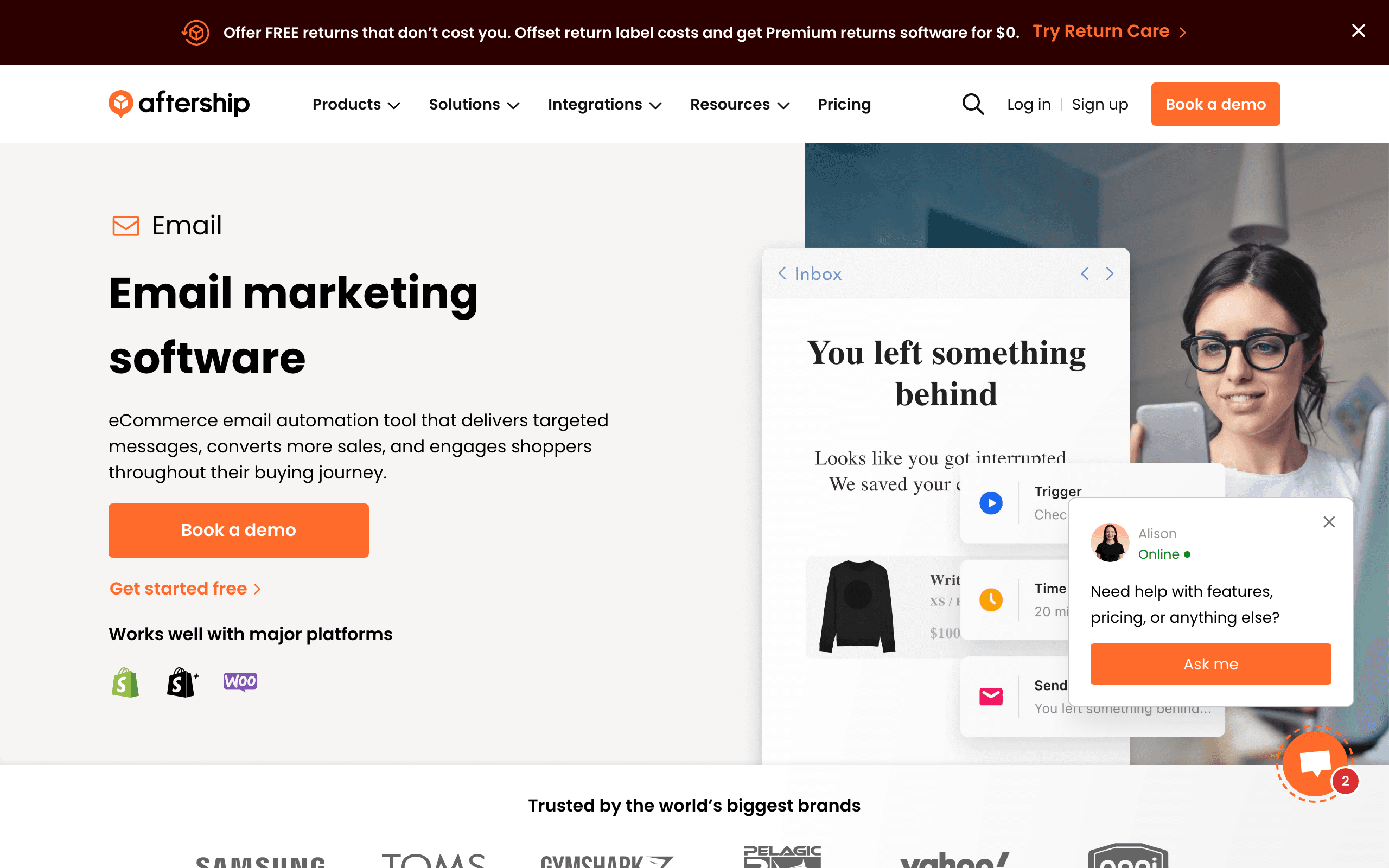
Shopify app workflow or enterprise lifecycle
Automizely and Braze can both support ecommerce retention, but they sit at different levels of the stack. If Shopify marketing automation, popups, forms, discounts, and basic recovery emails are central to your plan, Automizely deserves a closer look. If the team needs journeys across email, push, in-app, SMS, webhooks, and product events, Braze is the more relevant category.
Use-case matchups
| Need | Better fit | Why |
|---|---|---|
| Shopify popups, forms, and basic recovery | Automizely | It maps to a simpler store app workflow. |
| Cross-channel lifecycle journeys | Braze | Email, push, in-app, SMS, and webhooks are closer to Braze's core use case. |
| Event-heavy app or web lifecycle messaging | Braze | It depends on clean events, attributes, identity, and engineering ownership. |
| Cart recovery and newsletters only | Automizely or Sequenzy | Braze may be more platform than the team needs. |
| Stripe lifecycle and transactional email | Sequenzy | That is closer to product and subscription lifecycle email. |
Best Fit by Channel Mix and Event Ownership
Best ecommerce email tool for Shopify capture and recovery
Automizely is the better fit when the immediate job is Shopify capture, popups, forms, discounts, and simple recovery email. It is most relevant for store teams that do not need a full customer engagement platform or a deep event-tracking program.
Best customer engagement platform for mobile and web journeys
Braze is the stronger fit when messages need to coordinate across app, web, email, push, in-app, SMS, webhooks, and product events. It should be considered when engineering can maintain identity and event quality, and lifecycle marketing has enough volume to justify the platform.
Best email tool for subscription and transactional lifecycle
Sequenzy is the better fit when the team wants lifecycle email, transactional messages, Stripe events, Shopify or WooCommerce campaigns, and newsletters without managing mobile SDKs or cross-channel orchestration. It is a narrower tool, but that can be an advantage when email is the actual job.
Pricing reality
The pricing comparison is directional, not a real quote. Automizely pricing depends on Shopify app plan, contacts, usage, and plan limits. Braze pricing depends on channels, audience size, event volume, selected features, implementation, and contract terms. The fair comparison includes the internal cost of event tracking, SDK setup, identity work, and ongoing campaign operations.
Where Automizely wins
Automizely wins when you will actually use Shopify app simplicity, popups and forms, basic ecommerce automation. It is easiest to justify when those features are tied directly to revenue recovery or repeat purchase campaigns.
Where Braze wins
Braze wins when lifecycle orchestration is the hard part. It is more relevant when the business has app sessions, logged-in web behavior, product events, multiple channels, and enough team capacity to maintain sophisticated journeys.
Review signals
Do not stop at star ratings. Existing review themes for Automizely point to Shopify app simplicity, practical ecommerce workflows, and reporting, with cautions around plan limits, setup effort, and support expectations. For Braze, read reviews from teams running similar channels and event volume, then check comments about campaign workflow, integrations, usability, advanced features, implementation complexity, and pricing at scale.
Evaluation checklist
| Question | Better fit | Why |
|---|---|---|
| Do you need popups, forms, and Shopify capture campaigns? | Automizely | It maps to a simpler ecommerce app workflow. |
| Do you need push, in-app, SMS, email, and webhooks in one journey? | Braze | Cross-channel orchestration is the core buying reason. |
| Does engineering own event tracking and identity? | Braze | Braze depends on clean events, attributes, and identifiers. |
| Is the work mostly cart recovery and newsletters? | Automizely or Sequenzy | Braze may be more platform than needed. |
| Do Stripe/subscription lifecycle events matter most? | Sequenzy | That is closer to product lifecycle email. |
Migration checklist
Moving between Automizely and Braze requires event and identity planning:
| Item | What to check |
|---|---|
| Contacts and consent | Export email/SMS consent, unsubscribes, bounces, complaints, and suppression state. |
| Identity | Map email, phone, user ID, anonymous ID, device ID, Shopify customer ID, and region. |
| Events | Map page views, product views, carts, purchases, refunds, app events, and custom lifecycle events. |
| Push and in-app | If using Braze channels, plan SDK setup, device tokens, permissions, and QA. |
| Popups and forms | Rebuild onsite capture, discounts, embedded forms, and display rules. |
| Journeys | Rebuild welcome, cart, browse, post-purchase, winback, push, in-app, SMS, and webhook flows. |
| Experiments | Archive A/B tests, holdouts, variants, and historical reporting. |
| QA | Test event volume, suppressions, frequency caps, channel priority, and opt-outs before launch. |
Where Sequenzy fits
Sequenzy is the simpler route when ecommerce email is the job. It is built for Shopify, WooCommerce, Stripe lifecycle email, newsletters, and transactional messages without adding SMS, loyalty, or enterprise personalization you may not use.
Decision checklist
| Choose | When |
|---|---|
| Automizely | You mainly need Shopify capture, popups, forms, discounts, basic recovery, and simpler ecommerce email. |
| Braze | You need cross-channel lifecycle orchestration across app, web, push, in-app, SMS, webhooks, and email. |
| Sequenzy | You need simpler Shopify, WooCommerce, Stripe lifecycle, newsletter, and transactional email in one stack. |
| Re-check pricing | Contacts, channel mix, event volume, SDK work, implementation, and support level can change the real cost materially. |









