
Compare a guided ecommerce program against a larger cross-channel platform
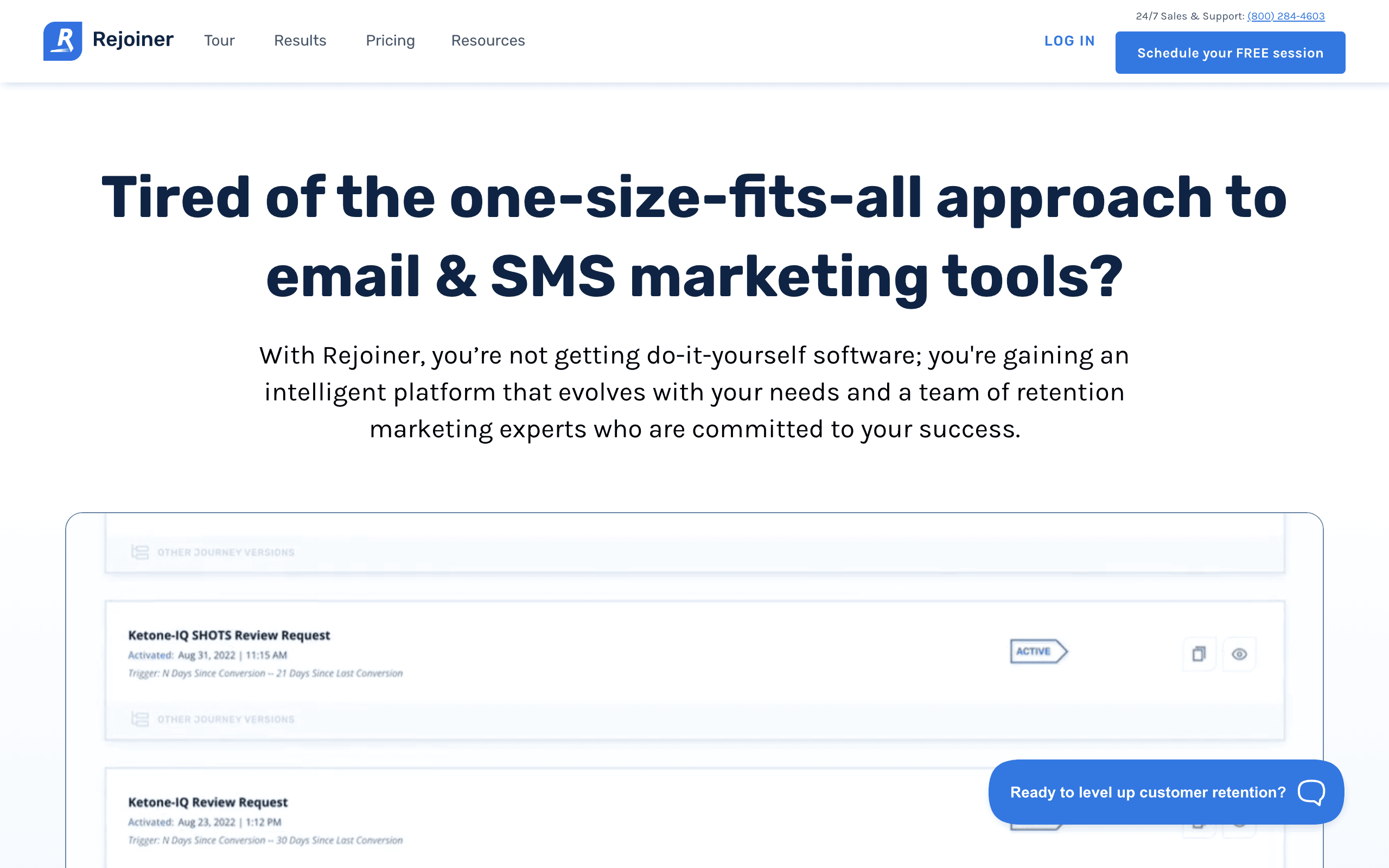
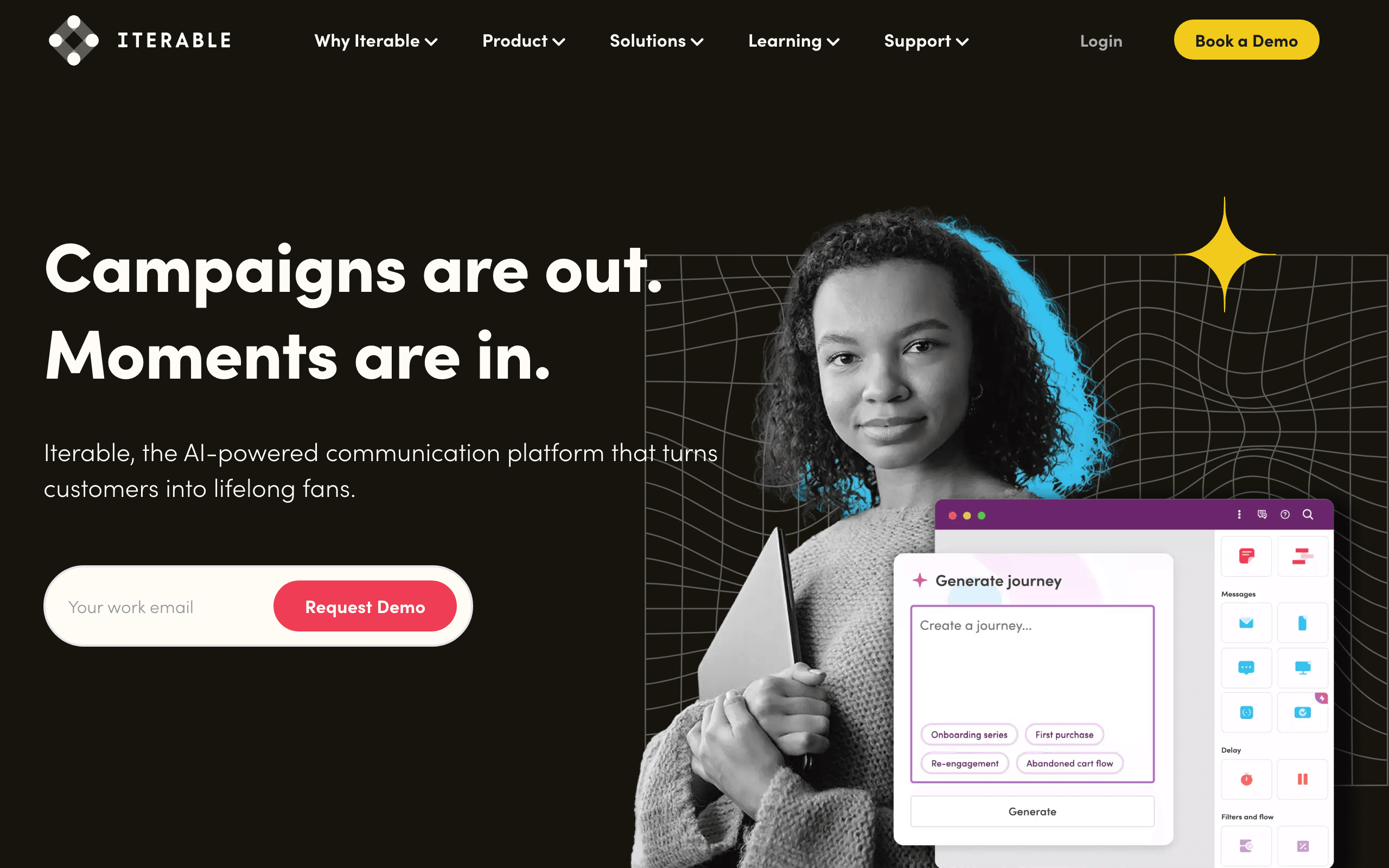
Rejoiner is more specialized: ecommerce retention strategy, cart recovery, lifecycle email, SMS, and optimization help. Iterable is broader: cross-channel lifecycle marketing for teams that want to orchestrate email, SMS, push, in-app, and event-based campaigns at larger scale.
That makes this comparison less about whether both can automate campaigns and more about whether your team wants a focused ecommerce partner or a flexible enterprise lifecycle platform.
Use-case table
| Use case | Better starting point | Why |
|---|---|---|
| Ecommerce retention team wants strategy plus execution support | Rejoiner | Rejoiner is easier to evaluate when the goal is improving store lifecycle revenue with guided support. |
| Large lifecycle team needs multiple channels and complex journeys | Iterable | Iterable is usually more relevant when the team has data, operations, and channel scale to manage. |
| Cart recovery, post-purchase, and repeat purchase are the main problems | Rejoiner | A specialist ecommerce workflow is easier to justify when the use cases are retail-specific. |
| Brand needs cross-channel testing and event-based orchestration | Iterable | Iterable can be a better fit when messages need to coordinate across email, SMS, push, and app surfaces. |
| Simple Shopify/WooCommerce email and transactionals | Sequenzy | A smaller email-first stack is better when neither managed services nor enterprise orchestration is required. |
Where Rejoiner is stronger
Rejoiner is stronger when the ecommerce team wants expertise and implementation help around lifecycle revenue. If the roadmap is abandoned cart, browse recovery, post-purchase, replenishment, winback, and SMS tied to store behavior, Rejoiner is the more direct option.
It is less compelling when the organization has a central lifecycle team that already owns data operations and wants to build across many channels and brands.
Where Iterable is stronger
Iterable is stronger when scale and channel complexity are the point. It can make sense for teams coordinating multiple audiences, products, apps, regions, and message types from a shared lifecycle platform. The tradeoff is that the buyer needs the operational maturity to manage data, QA, approvals, templates, and channel governance.
For a store comparing Iterable to Rejoiner, the key question is whether the organization is ready to operate a larger platform or would get more value from a focused ecommerce partner.
Pricing reality
Rejoiner pricing should be evaluated around ecommerce retention support and managed strategy. Iterable pricing should be modeled around profiles, events, channels, data integrations, experiments, journeys, and lifecycle-team ownership.
Review signals
The cited Rejoiner review themes should be read for lifecycle strategy, cart recovery, email/SMS retention, hands-on support, setup effort, and pricing clarity. Iterable review themes should be read for cross-channel orchestration, journey building, experimentation, event setup, and send-time optimization. The review split is managed ecommerce retention versus self-operated lifecycle infrastructure.
Migration checklist
- Document every current Rejoiner journey by trigger, channel, segment, revenue role, and owner.
- Identify which future journeys require push, in-app, SMS, or event-based orchestration beyond ecommerce email.
- Confirm how ecommerce events, product catalog fields, consent, and historical purchases will be modeled in Iterable.
- Decide who owns QA for data, templates, journeys, and deliverability after migration.
- Start with the highest-revenue lifecycle flows before expanding into broader cross-channel campaigns.
Buying questions to ask
- Is the team buying software, services, or both?
- Which channels are truly needed in the first six months?
- Does the organization have lifecycle operations support for a larger platform?
- How will ecommerce revenue attribution be compared after migration?
- What implementation help is included versus handled by partners or internal teams?
Where Sequenzy fits
Sequenzy is the simpler path when the desired outcome is email automation, not a managed retention engagement or broad enterprise orchestration. It fits Shopify, WooCommerce, and subscription teams that want marketing and transactional email in one focused product.
Use-case matchups
| Need | Better fit | Why |
|---|---|---|
| Managed ecommerce retention strategy | Rejoiner | Rejoiner is stronger when the team wants service-backed retention programs, lifecycle planning, and hands-on optimization. |
| Enterprise journey execution | Iterable | Iterable is stronger when the team wants to own enterprise journey execution directly in-platform. |
| Email-first store or subscription lifecycle | Sequenzy | Sequenzy fits when the team wants Shopify, WooCommerce, Stripe, newsletters, and transactional email without SMS or managed-service scope. |
Best Fit by Journey Program Size
Best managed retention service for ecommerce teams
Rejoiner fits brands that want service-backed retention strategy and optimization instead of building a large lifecycle marketing function in-house.
Best enterprise journey platform for complex customer programs
Iterable is the better fit for teams running large journey programs across channels, audiences, experiments, and customer states.
Best email platform for lean commerce lifecycle programs
Sequenzy fits teams that want the useful lifecycle pieces for stores and subscription products without taking on enterprise journey-platform scope.
Decision checklist
- Choose Rejoiner if managed ecommerce retention is the main need and you want strategy and hands-on support alongside the software.
- Choose Iterable if enterprise journey execution is the main need and the team can operate it directly.
- Avoid Rejoiner if you only want self-serve software with no service layer, since its main strength is the guided program behind the tool.
- Avoid Iterable if the missing piece is retention strategy, not tool access.
- Consider Sequenzy if the practical need is email automation, transactional email, and lifecycle messages tied to Stripe or your store.








