Updated 2026-03-15

Best Email Marketing Tools for Book & Media Stores

Readers always want the next great book. Email helps them find it at your store.

Book and media stores have a built-in email marketing advantage: readers are always looking for their next read. A customer who finishes a thriller wants another thriller. Someone who just read a self-help book wants the next one on their list. Email recommends the right books to the right readers at the right time, turning one-time buyers into loyal customers. I reviewed 19 email marketing tools for book and media stores, focusing on genre-based segmentation, new release automation, author spotlight campaigns, and reader engagement strategies.

TL;DR

Sequenzy is the best value for bookstores with large reader lists because pay-per-email pricing keeps costs manageable with low-AOV products like books. Klaviyo is the best feature set for established stores that want AI-driven book recommendations and can justify the higher per-contact cost. MailerLite is a strong free option for small independent bookshops that mostly send curated newsletters.

Why Book & Media Stores Need Email Marketing

Genre-Based Recommendations

Reading preferences are deeply personal. A mystery reader does not want romance recommendations. Genre-based segmentation lets you send curated book lists that match each reader's tastes.

New Release Campaigns

Book lovers want to know when their favorite authors have new releases. Automated new release announcements drive pre-orders and day-one sales.

Repeat Purchase Potential

Readers consume books regularly. Someone who reads 2-3 books a month is a potential customer 24-36 times per year. Email keeps your store in their consideration set for every purchase.

Community Building

Book clubs, reading challenges, author Q&As, and curated reading lists build a community around your store that Amazon cannot replicate. Email is the channel that makes this community personal.

Books & Digital Media Sellers Email Marketing Benchmarks

Know these numbers before you start. They'll help you set realistic goals and pick the right tool.

25-35%
Average Open Rate

Book-related emails achieve above-average open rates because readers are genuinely interested in discovering new books. Genre-specific recommendations outperform generic newsletters by 10+ percentage points.

3-5%
Average Click Rate

Click rates are highest for curated genre recommendations and author spotlight emails. Including cover images and personal bookseller notes increases clicks significantly.

Sunday-Tuesday, 8-10 AM
Best Send Time

Weekend mornings and early-week mornings work well because readers plan their reading during these windows. Sunday morning is particularly strong for bookstore newsletters.

$0.10-0.30
Newsletter Revenue Per Email

Due to lower AOV, revenue per email is lower than other e-commerce categories. Volume and frequency make up for it - weekly newsletters to engaged readers generate consistent revenue.

Important Tips Before You Choose

Lessons from books & digital media sellerswho've been doing this for years. Save yourself the trial and error.

Segment by genre preference above everything else

Reading preferences are deeply personal. A mystery reader does not want romance recommendations. Track which genres customers buy and tag them accordingly. Genre-based segmentation is the single most impactful thing you can do for bookstore email marketing - it turns generic product pushes into curated recommendations.

Hand-pick recommendations to compete with Amazon

You cannot beat Amazon's recommendation algorithm, but you can beat their curation quality. Hand-picked recommendations from real booksellers with personal notes about why each book is great feel more trustworthy than an algorithm. Lean into the human curation angle in every email.

Time new release announcements to reader behavior

Send genre-specific new release emails at the beginning of each month when readers are planning their next reads. A curated list of 5-8 new releases in their preferred genre with cover images and brief descriptions drives more sales than a generic new arrivals blast.

Use post-purchase recommendations with good timing

Wait at least 7 days after purchase before recommending similar books - give the reader time to start their current book. A recommendation email that arrives when they are midway through a great read feels perfectly timed.

Watch your unit economics closely

Books are low-AOV products ($15-30 typically). Contact-based email pricing can eat into margins quickly. Pay-per-email platforms like Sequenzy or Brevo are often 2-3x more cost-effective for bookstores with large reader lists compared to contact-based tools.

19 Best Email Marketing Tools for Books & Digital Media Sellers

#ToolDescriptionBest ForPricing
1KlaviyoE-commerce email with product catalog and AI recommendations.Established bookstores wanting AI-driven book recommendationsFree up to 250 contacts, then from $20/month
2SequenzyAI-powered email with affordable pay-per-email pricing.Bookstores wanting affordable automation for large reader listsFree up to 2,500 emails/mo, then $19/mo (unlimited contacts)
3DripE-commerce email with revenue attribution.Mid-size bookstores wanting data-driven email$39/month for 2,500 contacts
4OmnisendE-commerce email with SMS and product tools.Bookstores wanting solid basics at a fair priceFree up to 250 contacts, then from $16/month
5MailchimpPopular email with free tier and simple setup.Independent bookshops starting email marketingFree up to 500 contacts, then from $13/month
6MailerLiteSimple email with generous free tier and clean design.Bookstores wanting a generous free tier with clean designFree up to 1,000 subscribers, then from $10/month
7BrevoBudget email with pay-by-email pricing.Budget bookstores with large listsFree up to 300 emails/day, then from $25/month
8KlaviyoAdvanced e-commerce email with AI book recommendations for established stores.Established book stores wanting AI-powered genre recommendations and reading series follow-upsFree up to 250 contacts, then from $20/month
9OmnisendE-commerce email and SMS for book stores on Shopify.Shopify bookstores wanting email and SMS automation for new releases and cart recoveryFree up to 250 contacts, then from $16/month
10DripRevenue-attributed email for book stores tracking which recommendations sell.Data-driven book retailers wanting revenue attribution on recommendation campaigns$39/month for 2,500 contacts
11SendlaneReal-time behavioral email for book stores with active reader communities.Book stores with engaged reader communities wanting real-time behavioral emailFrom $99/month
12ActiveCampaignCRM and automation for book stores with complex genre segmentation.Multi-genre bookstores wanting separate automation tracks for distinct reader communities$29/month for 1,000 contacts
13SmartrMailAI book recommendations for stores with large catalogs.Large-catalog bookstores wanting automated AI reading recommendations in newslettersFrom $19/month
14SenderFree email and SMS for independent bookstores starting with email.Independent bookstores starting email marketing at zero costFree up to 2,500 subscribers and 15,000 emails/month, then from $15/month
15EmailOctopusBudget email for small bookstores and independent publishers.Community bookstores and independent publishers wanting basic email at zero costFree up to 2,500 subscribers, then from $9/month
16MailerLiteClean email for bookstores focused on reading newsletters.Independent bookstores focused on editorial reading newsletters and author eventsFree up to 1,000 subscribers, then from $10/month
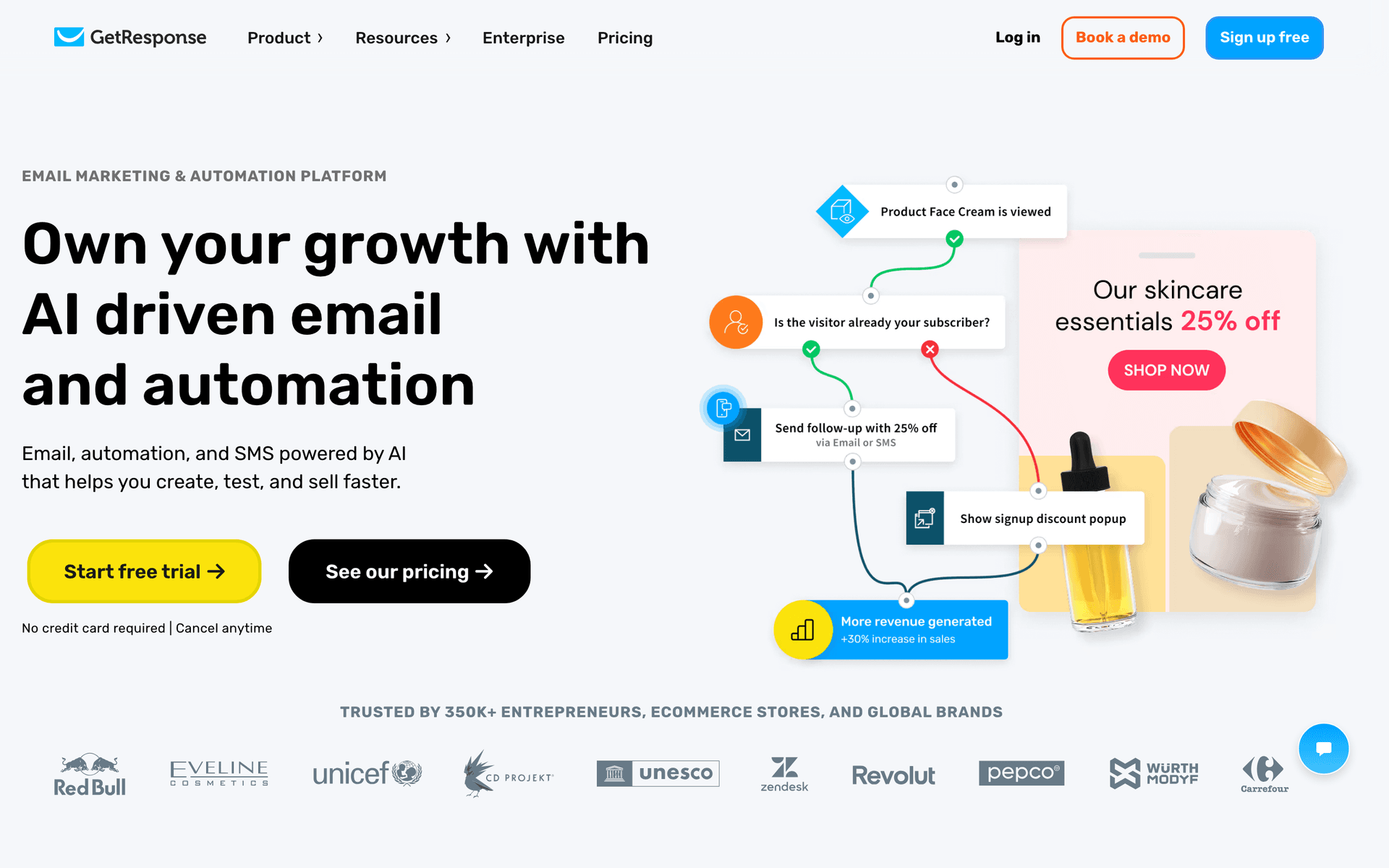
17GetResponseAll-in-one platform with webinars for bookstores hosting author events.Bookstores hosting virtual author events and book clubs wanting event and email unifiedFrom $19/month for 1,000 contacts
18MailchimpFamiliar email with free tier for bookstores.Bookstores wanting a familiar platform with extensive documentation and free tierFree up to 500 contacts, then from $13/month
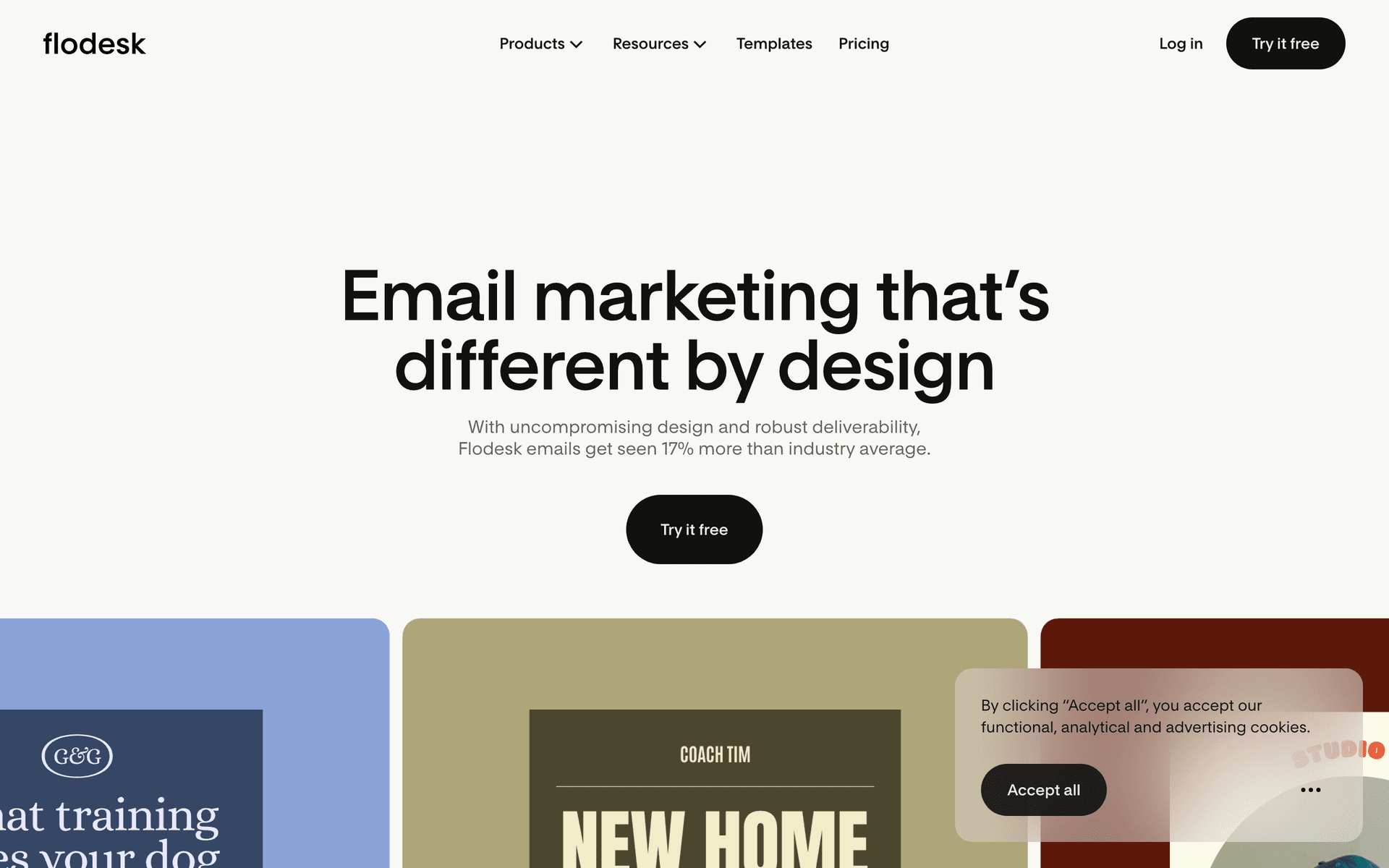
19FlodeskBeautiful email design for curated book subscription services and literary brands.Literary brands and book subscription services wanting beautiful editorial email design$38/month flat rate
#1
Klaviyo

E-commerce email with product catalog and AI recommendations.

Visit
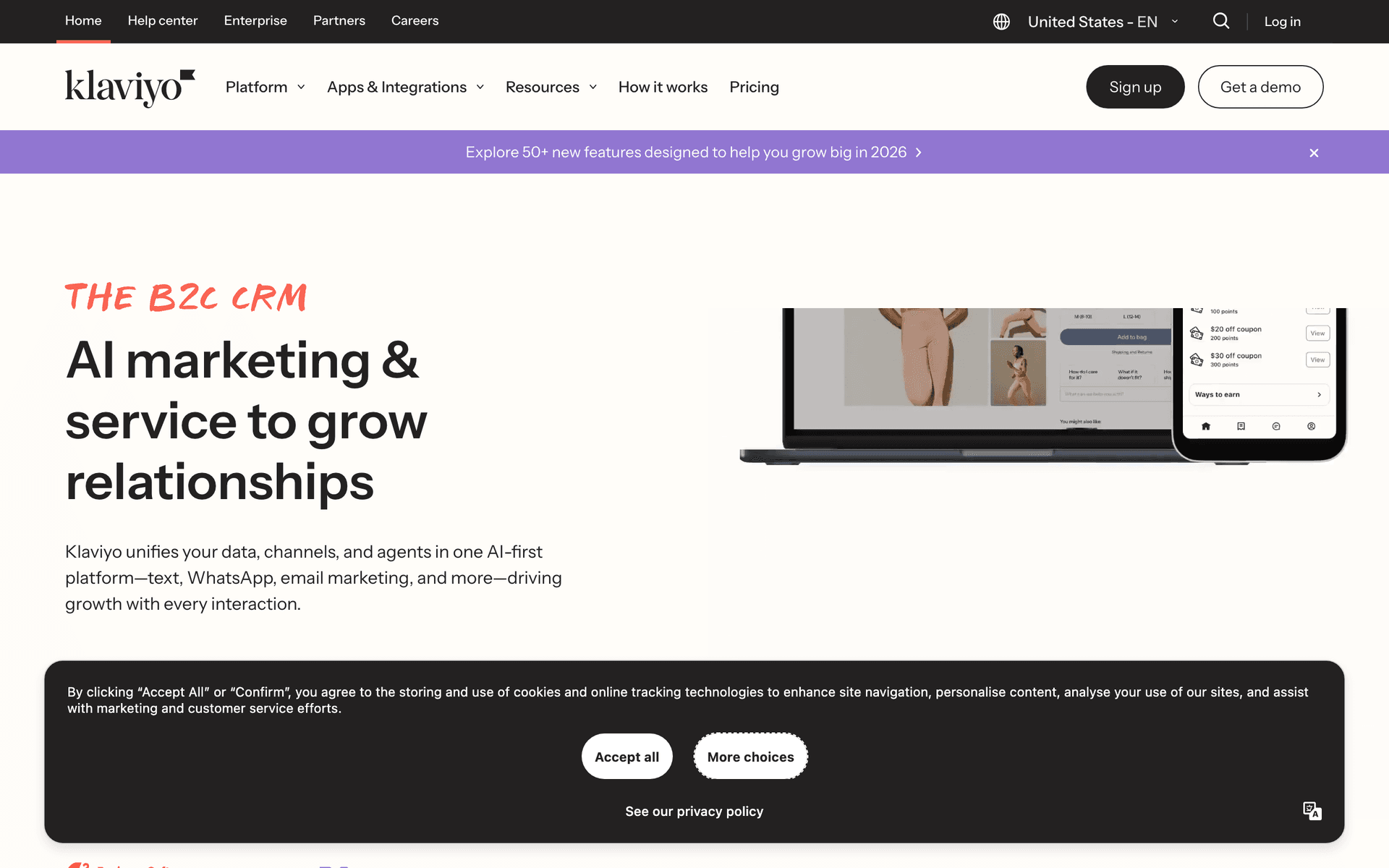
Klaviyo dashboard screenshot

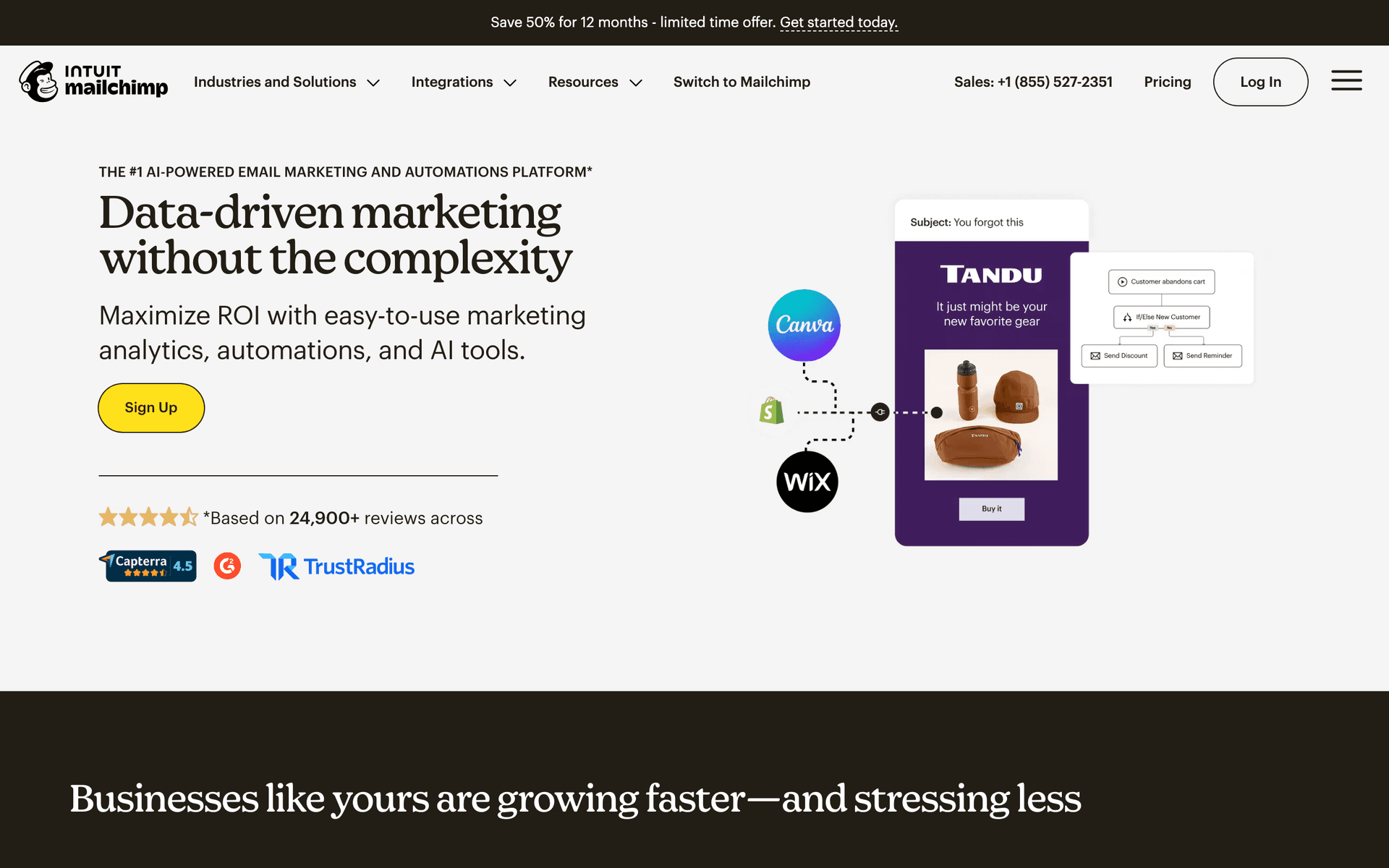
Klaviyo works well for bookstores because of its product catalog integration and AI recommendation engine. It can suggest books based on purchase history and browsing behavior, similar to how Amazon recommends titles. Genre segmentation through custom tags lets you send curated lists to specific reader groups. Browse abandonment catches someone who looked at a book but did not buy - useful for higher-priced special editions or box sets. The downside for bookstores specifically is that contact-based pricing gets expensive relative to revenue because books are low-AOV products. A store with 10,000 subscribers paying $150+/month needs significant email revenue to justify the cost.

Best for
Established bookstores wanting AI-driven book recommendations
Pricing
Free up to 250 contacts, then from $20/month

Pros

  • AI book recommendations
  • Product catalog integration
  • Genre segmentation
  • Browse abandonment

Cons

  • Expensive for low-AOV products
  • Contact-based pricing hurts bookstores
  • Complex setup
  • Overkill for small stores
Our Top Pick for Books & Digital Media Sellers
#2
Sequenzy

AI-powered email with affordable pay-per-email pricing.

Visit
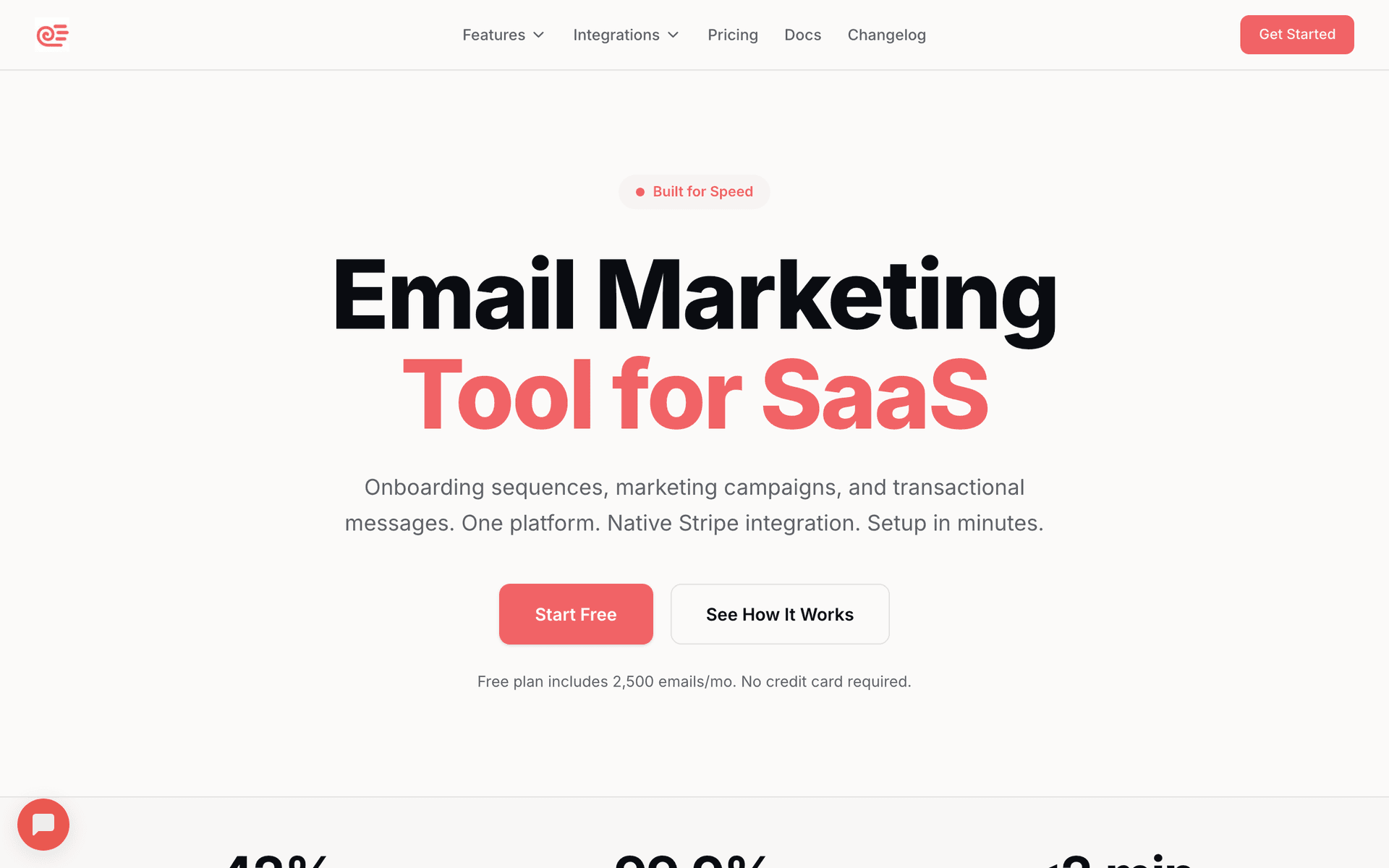
Sequenzy dashboard screenshot

Sequenzy is a strong choice for bookstores specifically because of the pay-per-email pricing model. Books have lower average order values than most e-commerce categories ($15-30), so contact-based pricing on other platforms gets expensive relative to revenue. Sequenzy's pricing stays manageable even with a large reader list - $29/month for 50,000 emails regardless of list size. We also offer a free tier up to 2,500 emails per month. The native Shopify integration syncs order data, and the AI sequence builder creates new release campaigns, genre-based recommendation flows, and reader engagement series quickly. The trade-off is no AI product recommendation engine like Klaviyo's - you build genre-based recommendation rules manually rather than having AI generate them from browsing behavior.

Best for
Bookstores wanting affordable automation for large reader lists
Pricing
Free up to 2,500 emails/mo, then $19/mo (unlimited contacts)

Pros

  • Pay-per-email pricing (great for low AOV)
  • AI builds genre campaigns fast
  • Native Shopify integration
  • Good for large subscriber lists

Cons

  • No AI book recommendations
  • Newer platform
  • No built-in SMS
  • No product catalog browsing
#3
Drip

E-commerce email with revenue attribution.

Visit
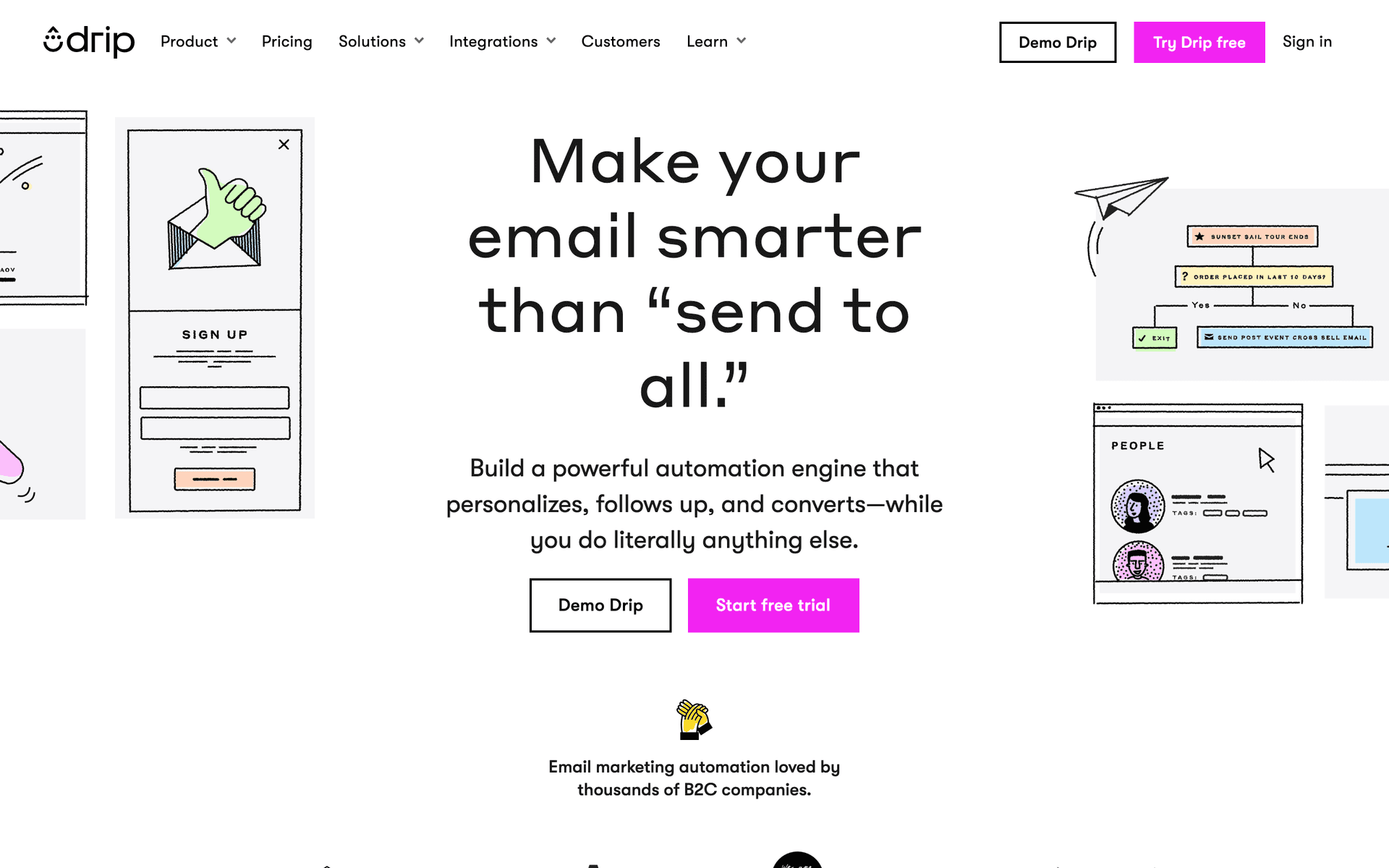
Drip dashboard screenshot

Drip shows which book recommendation emails actually drive revenue, which is valuable data for optimizing your email strategy. Revenue attribution helps you understand whether your genre-curated lists or your bestseller roundups generate more sales, so you can invest your time accordingly. Visual workflows handle new release announcements and post-purchase recommendation sequences well. At $39/month minimum with no free tier, the cost requires meaningful email revenue to justify - best for mid-size bookstores already generating consistent sales from email.

Best for
Mid-size bookstores wanting data-driven email
Pricing
$39/month for 2,500 contacts

Pros

  • Revenue attribution
  • Visual workflows
  • Good segmentation
  • E-commerce focused

Cons

  • Expensive per contact for low AOV
  • No free tier
  • Higher starting price
  • Limited book-specific features
#4
Omnisend

E-commerce email with SMS and product tools.

Visit
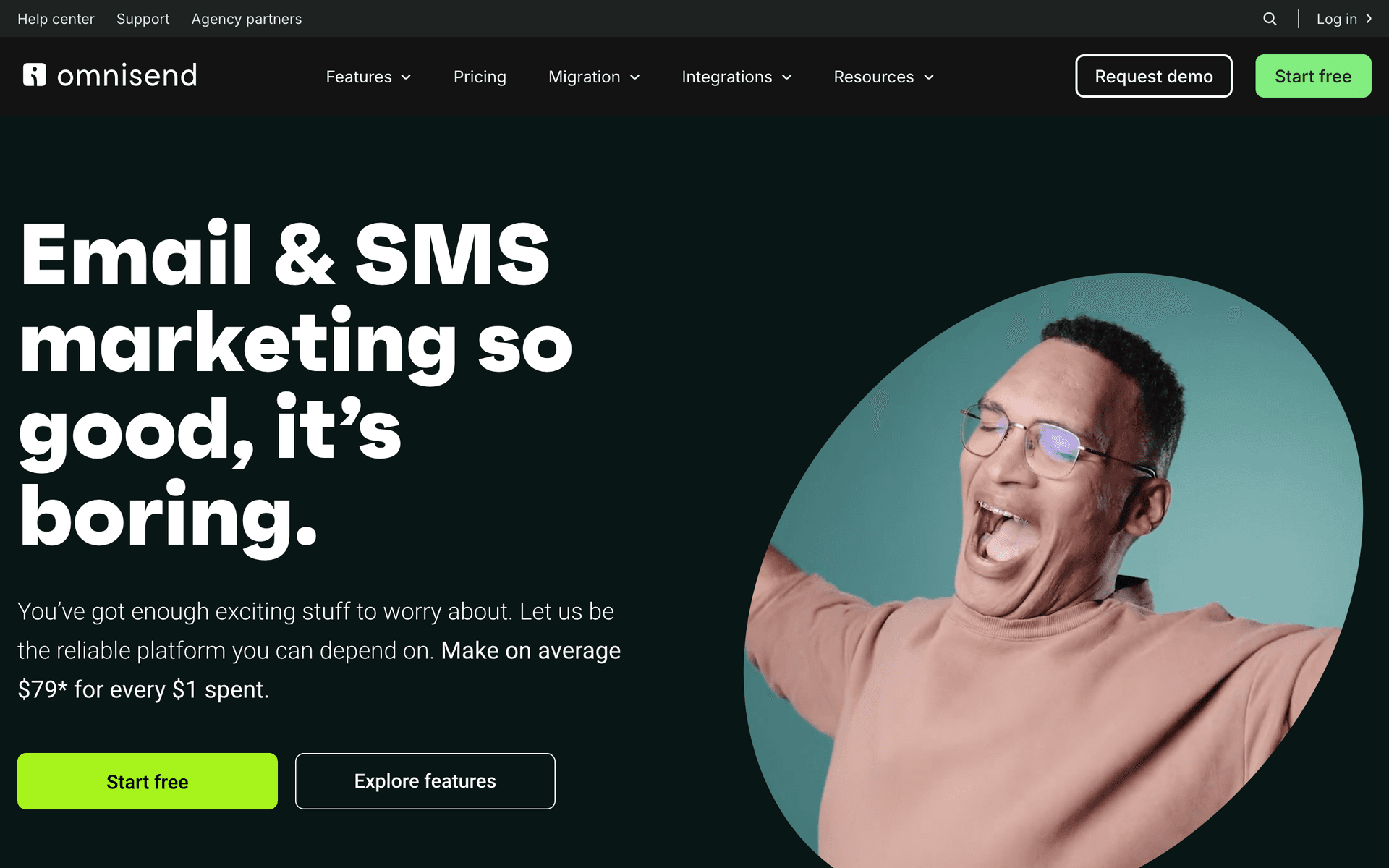
Omnisend dashboard screenshot

Omnisend covers bookstore basics well: cart recovery, welcome series, and post-purchase recommendations. The product picker makes building book showcase emails with covers and descriptions easy - drag books from your catalog directly into the email. SMS works for limited-edition releases, signed copy announcements, or local author events where urgency matters. Pricing is reasonable and more affordable than Klaviyo at comparable subscriber counts.

Best for
Bookstores wanting solid basics at a fair price
Pricing
Free up to 250 contacts, then from $16/month

Pros

  • Email and SMS
  • Product picker
  • Pre-built automations
  • Good pricing

Cons

  • No genre-based AI recommendations
  • Basic segmentation
  • Limited reporting
  • Contact-based pricing
#5
Mailchimp

Popular email with free tier and simple setup.

Visit
Mailchimp dashboard screenshot

Mailchimp is a reasonable starting point for small bookstores and independent bookshops. The free tier (500 contacts) helps keep costs down while you build your reader list. The template library has clean designs suitable for book recommendation newsletters. Basic product recommendations work for suggesting popular titles. For bookstores that mostly send a weekly curated newsletter rather than complex automated sequences, Mailchimp handles the basics. You will likely outgrow it as your automation needs become more sophisticated.

Best for
Independent bookshops starting email marketing
Pricing
Free up to 500 contacts, then from $13/month

Pros

  • Free tier
  • Easy to use
  • Clean templates
  • Many integrations

Cons

  • Basic automation
  • Limited genre segmentation
  • Gets expensive
  • Basic recommendations
#6
MailerLite

Simple email with generous free tier and clean design.

Visit
MailerLite dashboard screenshot

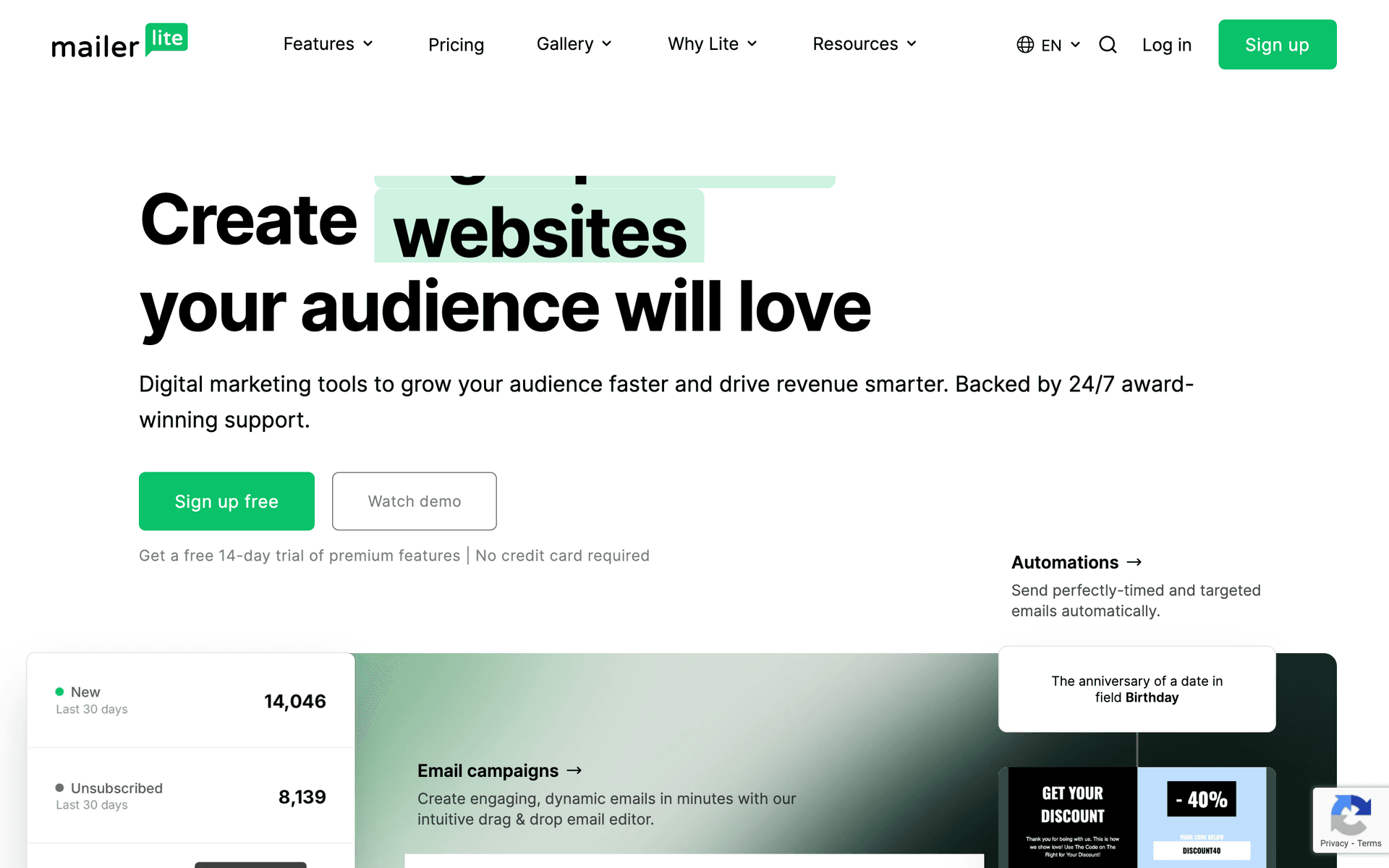
MailerLite deserves strong consideration for bookstores because of its generous free tier (1,000 subscribers) and clean design tools that produce attractive book recommendation emails. The newsletter builder works well for curated reading lists and author spotlights. Automation is decent for basic sequences at the price point. For bookstores that primarily send curated weekly newsletters rather than complex product-triggered flows, MailerLite handles the job beautifully at minimal cost.

Best for
Bookstores wanting a generous free tier with clean design
Pricing
Free up to 1,000 subscribers, then from $10/month

Pros

  • Generous free tier
  • Clean design tools
  • Decent automation
  • Affordable pricing

Cons

  • No e-commerce focus
  • Basic product integration
  • Limited segmentation
  • No revenue attribution
#7
Brevo

Budget email with pay-by-email pricing.

Visit
Brevo dashboard screenshot

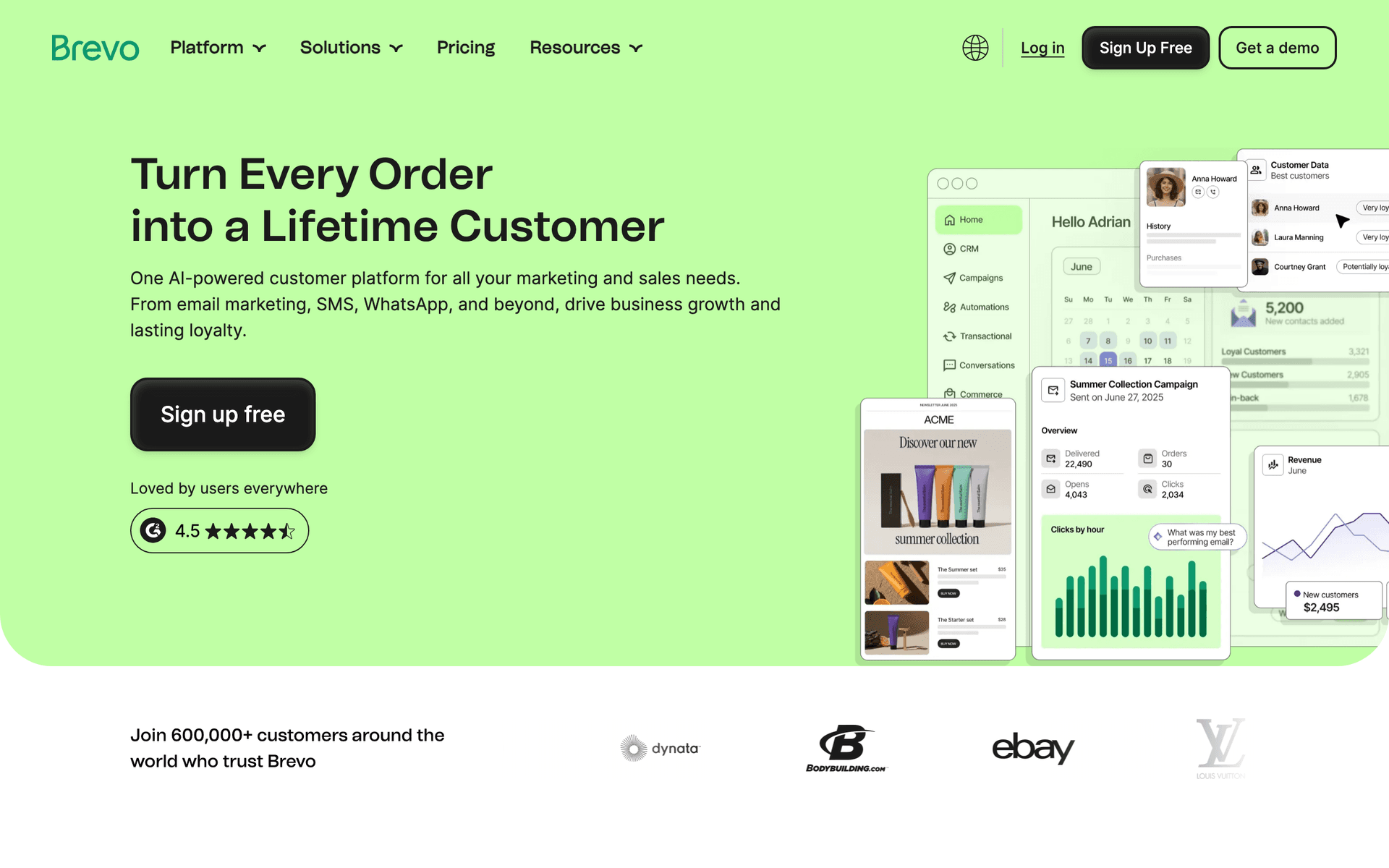
Brevo is another budget-friendly option for bookstores with large subscriber lists. Pay-by-email pricing means you are not penalized for having a large reader list - important for bookstores that naturally accumulate engaged subscribers. Transactional emails handle order confirmations. Basic automation covers welcome sequences and simple post-purchase flows. The feature set is limited compared to dedicated e-commerce platforms, but the pricing is right for bookstores watching their margins.

Best for
Budget bookstores with large lists
Pricing
Free up to 300 emails/day, then from $25/month

Pros

  • Budget-friendly
  • Pay by email
  • Transactional email
  • Unlimited contacts on free tier

Cons

  • Basic automation
  • No product recommendations
  • Limited features
  • Basic templates
#8
Klaviyo

Advanced e-commerce email with AI book recommendations for established stores.

Visit
Klaviyo dashboard screenshot

Klaviyo's AI product recommendation engine is well-suited for bookstores with large catalogs. The platform analyzes purchase history to recommend books in genres and by authors that each reader has previously enjoyed. Custom subscriber properties store genre preferences, reading pace, and series progress - enabling hyper-relevant new release emails that feel like a personal recommendation rather than a mass promotion. For independent bookstores generating significant online revenue where personalized recommendations are a competitive advantage over Amazon, Klaviyo's investment is justified.

Best for
Established book stores wanting AI-powered genre recommendations and reading series follow-ups
Pricing
Free up to 250 contacts, then from $20/month

Pros

  • AI book recommendations
  • Custom genre preference properties
  • Series completion automation
  • Revenue attribution

Cons

  • Expensive at scale
  • Contact-based pricing
  • Complex setup
  • Overkill for small stores
#9
Omnisend

E-commerce email and SMS for book stores on Shopify.

Visit
Omnisend dashboard screenshot

Omnisend provides the e-commerce automation essentials for book and media stores on Shopify - cart abandonment for readers who browsed and hesitated, post-purchase follow-ups suggesting books in the same genre, and win-back campaigns for inactive readers. SMS works for new release alerts for popular authors where readers want immediate notification. The product catalog sync pulls book titles from the store catalog for automated recommendation emails. For book retailers on Shopify wanting pre-built e-commerce automation with SMS, Omnisend delivers solid coverage.

Best for
Shopify bookstores wanting email and SMS automation for new releases and cart recovery
Pricing
Free up to 250 contacts, then from $16/month

Pros

  • Pre-built e-commerce automations
  • Email and SMS for release alerts
  • Shopify integration
  • Free tier available

Cons

  • No reading preference AI
  • Contact-based pricing
  • Basic genre segmentation
  • Not book-specific
#10
Drip

Revenue-attributed email for book stores tracking which recommendations sell.

Visit
Drip dashboard screenshot

Drip tracks which email campaigns generate the most book and media sales, helping store owners understand whether genre-based recommendations, author spotlights, or new release alerts drive the most revenue. For book retailers who curate their email content strategy and want data on which approaches work best, Drip's revenue attribution informs better decisions. E-commerce playbooks include post-purchase cross-sell sequences that suggest books by the same author or in the same genre after each purchase.

Best for
Data-driven book retailers wanting revenue attribution on recommendation campaigns
Pricing
$39/month for 2,500 contacts

Pros

  • Revenue attribution
  • Genre recommendation playbooks
  • E-commerce focused
  • Good segmentation

Cons

  • No free tier
  • Higher starting price
  • Not book-specific
  • Contact-based pricing
#11
Sendlane

Real-time behavioral email for book stores with active reader communities.

Visit
Sendlane dashboard screenshot

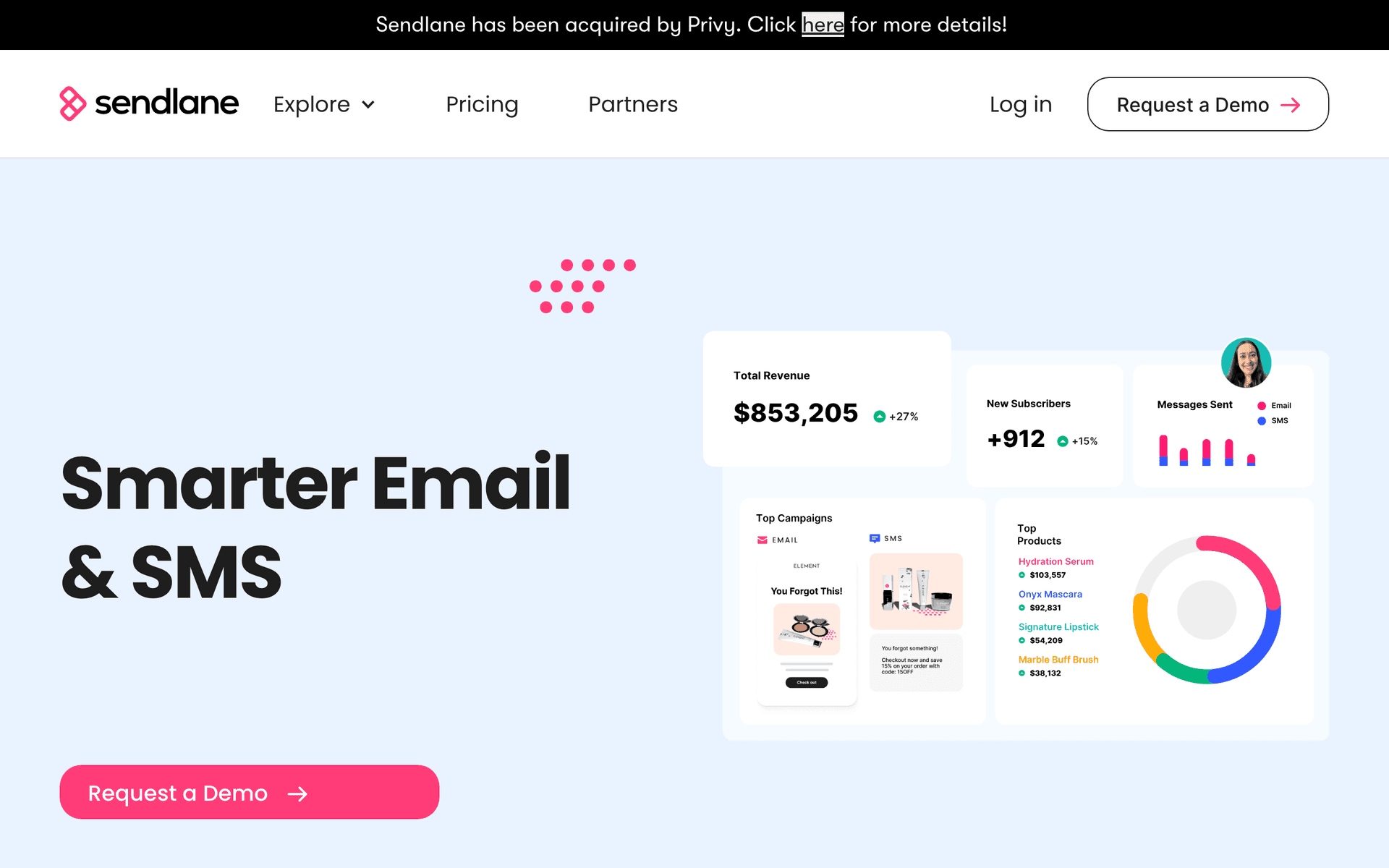
Sendlane captures real-time reading and browsing behavior for book stores - when a reader browses the mystery section for several minutes without buying, an immediate follow-up featuring mystery recommendations converts better than a delayed generic campaign. Revenue attribution shows which author spotlights and genre emails drive the most purchases. For book stores with active reader communities and high email engagement, Sendlane's real-time triggers maximize the commercial value of each reader interaction.

Best for
Book stores with engaged reader communities wanting real-time behavioral email
Pricing
From $99/month

Pros

  • Real-time behavioral triggers
  • Revenue attribution
  • Email and SMS
  • Good for engaged readers

Cons

  • Expensive starting price
  • No free tier
  • Not book-specific
  • Overkill for small stores
#12
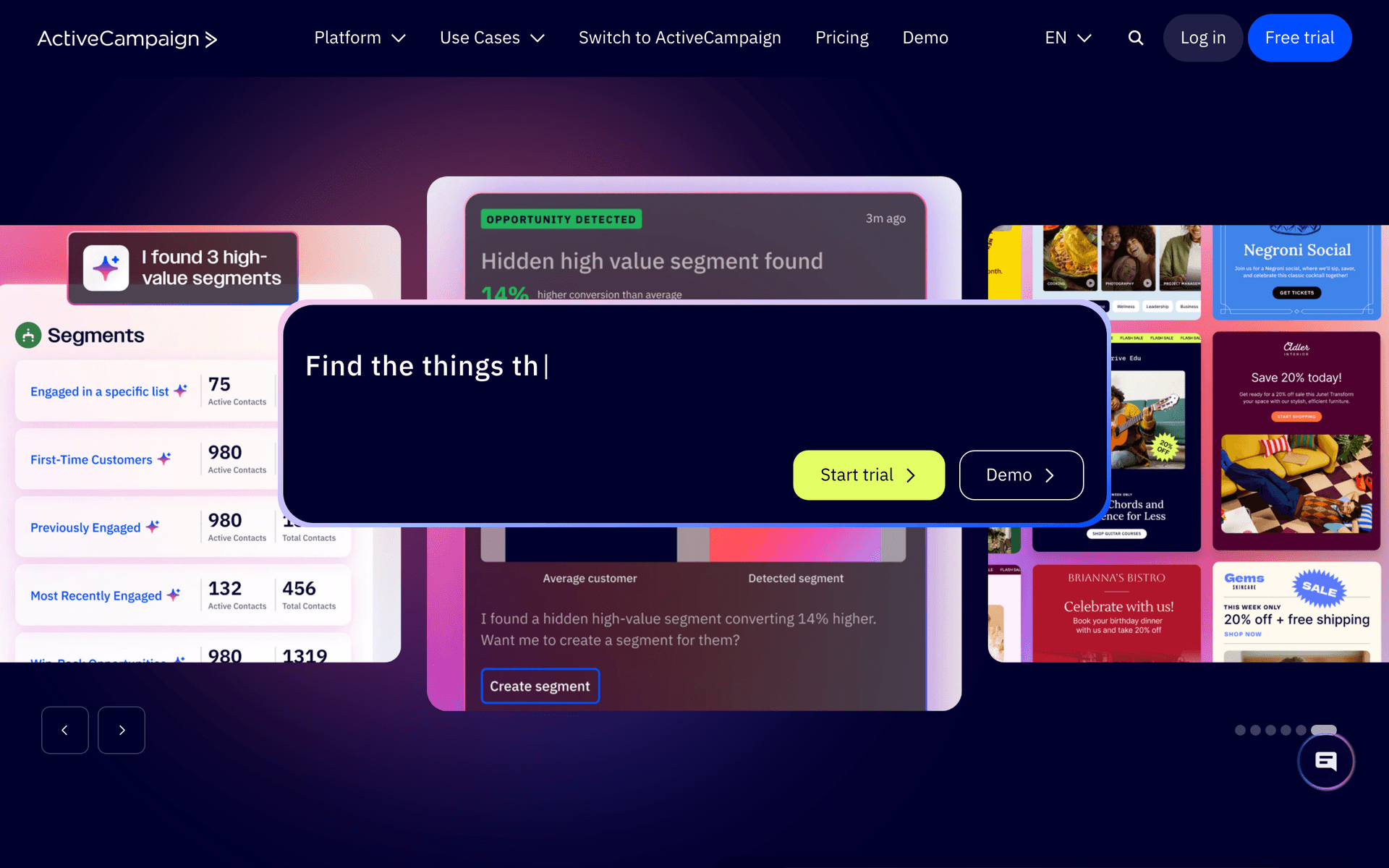
ActiveCampaign

CRM and automation for book stores with complex genre segmentation.

Visit
ActiveCampaign dashboard screenshot

ActiveCampaign works well for book stores that stock multiple genres and want to maintain separate reader communities with distinct email tracks. CRM features track individual reader relationships over time - noting genre preferences, reading pace, and author loyalties. Complex conditional automation routes thriller readers into one sequence and literary fiction readers into another, each receiving relevant new releases and author spotlights without cross-contamination. For bookstores treating different genre communities as separate marketing segments, ActiveCampaign provides the segmentation depth.

Best for
Multi-genre bookstores wanting separate automation tracks for distinct reader communities
Pricing
$29/month for 1,000 contacts

Pros

  • Multi-genre segmentation
  • CRM for reader relationships
  • Complex conditional automation
  • Good for community-focused stores

Cons

  • Not book-specific
  • Complex interface
  • Higher price per contact
  • Steep learning curve
#13
SmartrMail

AI book recommendations for stores with large catalogs.

Visit
SmartrMail dashboard screenshot

SmartrMail's AI recommendation engine is particularly valuable for bookstores with large catalogs where manually creating personalized reading recommendations is impractical. The AI analyzes purchase patterns to suggest titles that readers are likely to buy based on what similar readers have purchased. For bookstores carrying thousands of titles, automated AI recommendations in regular newsletter emails ensure every reader gets a relevant suggestion without manual curation for each segment.

Best for
Large-catalog bookstores wanting automated AI reading recommendations in newsletters
Pricing
From $19/month

Pros

  • AI reading recommendations
  • Large catalog support
  • Shopify integration
  • Automated newsletter builder

Cons

  • Recommendation-focused only
  • No SMS
  • Limited advanced automation
  • Smaller platform
#14
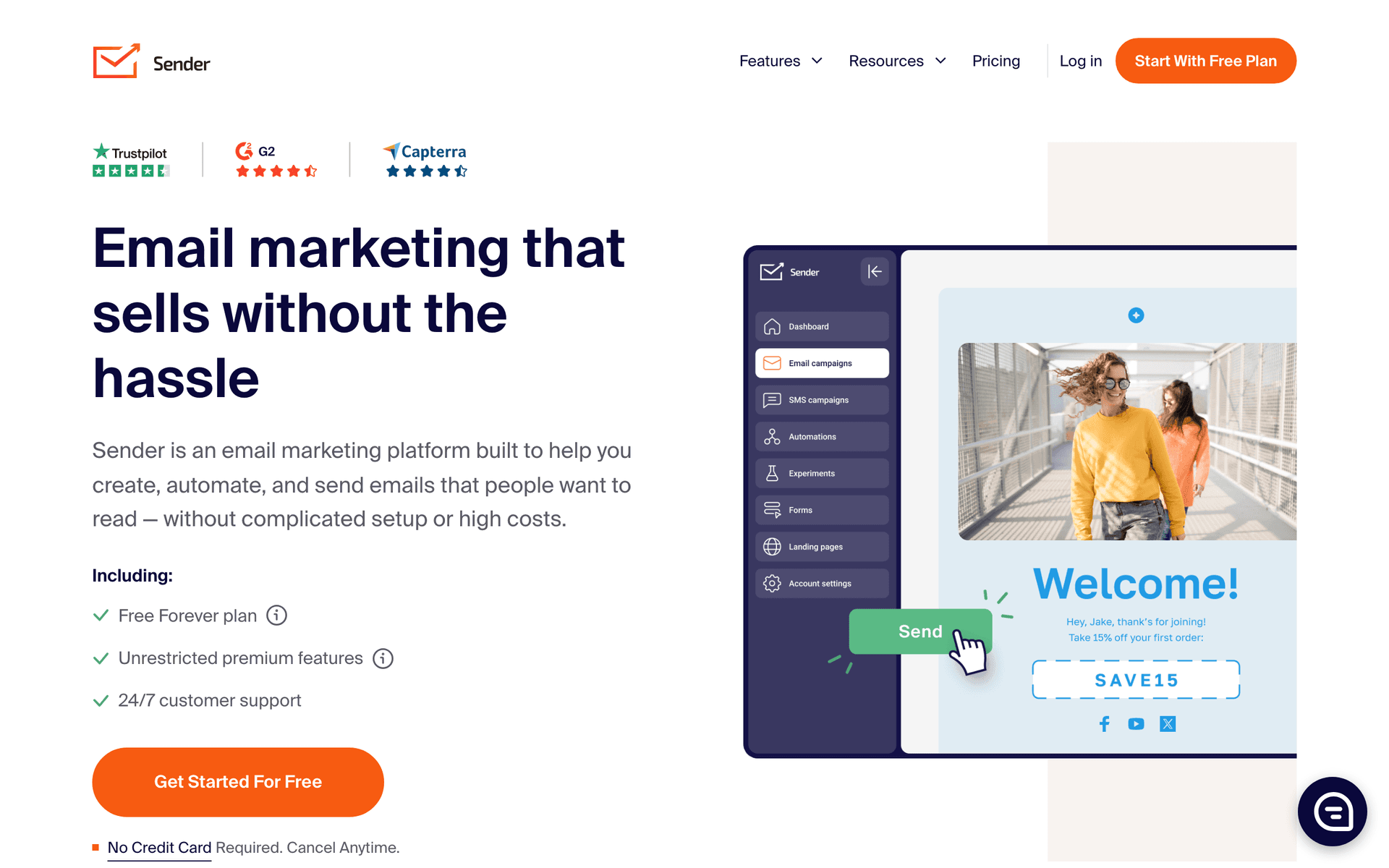
Sender

Free email and SMS for independent bookstores starting with email.

Visit
Sender dashboard screenshot

Sender provides 2,500 subscribers and 15,000 monthly emails with automation free - enough for an independent bookstore to run weekly reading newsletter campaigns, new release announcements, and author spotlight series at zero cost. The automation builder handles welcome sequences and basic post-purchase book recommendations with a clean visual interface. For independent bookstores operating on thin margins who want email marketing running without adding overhead costs, Sender's free tier covers the launch phase effectively.

Best for
Independent bookstores starting email marketing at zero cost
Pricing
Free up to 2,500 subscribers and 15,000 emails/month, then from $15/month

Pros

  • Generous free tier
  • Automation included free
  • Good for newsletters
  • SMS on paid plans

Cons

  • No AI book recommendations
  • Basic e-commerce integration
  • Limited genre segmentation
  • No revenue attribution
#15
EmailOctopus

Budget email for small bookstores and independent publishers.

Visit
EmailOctopus dashboard screenshot

EmailOctopus offers 2,500 subscribers and 10,000 monthly emails free, making it accessible for independent bookstores and small publishers who want to send reading newsletters and new release announcements without any email platform cost. Basic automation covers welcome sequences for new reader subscribers and simple promotional campaigns for author events and book launches. For community-focused bookstores that host author events and want to communicate with their local reader community affordably, EmailOctopus provides the essentials.

Best for
Community bookstores and independent publishers wanting basic email at zero cost
Pricing
Free up to 2,500 subscribers, then from $9/month

Pros

  • Very generous free tier
  • Simple interface
  • Good for newsletters
  • Very affordable

Cons

  • No e-commerce integrations
  • No genre recommendation features
  • Basic segmentation
  • No SMS
#16
MailerLite

Clean email for bookstores focused on reading newsletters.

Visit
MailerLite dashboard screenshot

MailerLite is well-suited for bookstores whose primary email format is an editorial reading newsletter featuring new arrivals, author spotlights, and staff picks. The clean email editor produces visually appealing newsletter layouts for book cover showcases and author interview features. The free tier (1,000 subscribers, 12,000 emails per month) suits independent bookstores in the audience-building phase. Landing pages help capture subscribers from author events and social media promotions for book launches.

Best for
Independent bookstores focused on editorial reading newsletters and author events
Pricing
Free up to 1,000 subscribers, then from $10/month

Pros

  • Generous free tier
  • Clean newsletter design
  • Landing pages for events
  • Affordable

Cons

  • No AI book recommendations
  • Basic e-commerce integration
  • No SMS
  • Limited genre segmentation
#17
GetResponse

All-in-one platform with webinars for bookstores hosting author events.

Visit
GetResponse dashboard screenshot

GetResponse has a unique feature for bookstores: built-in webinar hosting. For bookstores that host virtual author readings, book club discussions, and launch events, the ability to run webinars and capture attendees as email subscribers within one platform simplifies operations. The landing page builder creates author event pages that collect email signups. For book retailers building community through author events and wanting to connect those events to email nurture sequences, GetResponse handles the full event-to-email pipeline.

Best for
Bookstores hosting virtual author events and book clubs wanting event and email unified
Pricing
From $19/month for 1,000 contacts

Pros

  • Built-in webinar for author events
  • Landing pages for book launches
  • All-in-one platform
  • Good for community-building

Cons

  • Interface feels dated
  • Not book-specific
  • No genre recommendation AI
  • Basic e-commerce automation
#18
Mailchimp

Familiar email with free tier for bookstores.

Visit
Mailchimp dashboard screenshot

Mailchimp is a practical starting point for bookstores and digital media sellers who want a well-known platform with a free tier (500 contacts) and extensive documentation. The visual email builder handles book cover showcase layouts and author spotlight formats well. Customer Journey Builder provides basic automation for welcome sequences and new release notifications. For book retailers who value a large user community and extensive learning resources while getting started with email marketing, Mailchimp offers a familiar entry point.

Best for
Bookstores wanting a familiar platform with extensive documentation and free tier
Pricing
Free up to 500 contacts, then from $13/month

Pros

  • Free tier
  • Familiar interface
  • Large user community
  • Good template library

Cons

  • Basic genre segmentation
  • No AI recommendations
  • Gets expensive at scale
  • Not book-specific
#19
Flodesk

Beautiful email design for curated book subscription services and literary brands.

Visit
Flodesk dashboard screenshot

Flodesk creates visually beautiful emails well-suited for book subscription boxes, curated literary brands, and independent bookstores with strong visual identity. Book cover photography and literary editorial content look exceptional in Flodesk's clean, minimalist templates. The flat-rate pricing ($38/month) provides predictable cost regardless of subscriber count. The limitation is minimal e-commerce automation - no cart recovery, no genre-based product sequences. Best for bookstores creating editorial newsletters and curated reading guides rather than automated e-commerce sequences.

Best for
Literary brands and book subscription services wanting beautiful editorial email design
Pricing
$38/month flat rate

Pros

  • Beautiful editorial design
  • Great for curated book content
  • Flat-rate pricing
  • Easy to use

Cons

  • No e-commerce automation
  • No genre recommendations
  • Very basic automation
  • No cart recovery

Feature Comparison

FeatureKlaviyoSequenzyDripOmnisend
Genre-based segmentation
Custom tags
Attributes
Custom fields
Basic tags
AI book recommendations
AI-powered
No
No
No
Product catalog sync
Yes
Via Shopify
Yes
Yes
Pay-per-email pricing
No
Yes
No
No
Revenue attribution
Yes
Yes
Yes
Yes
Shopify integration
Deep
Native
Yes
Yes
Newsletter design
Advanced
Good
Good
Good
Free tier available
Yes
Yes
No
Yes

Common Mistakes to Avoid

We see these mistakes over and over. Skip the learning curve and avoid these from day one.

Sending the same recommendations to all readers

A sci-fi reader getting romance recommendations is a fast path to unsubscribes. Even basic genre segmentation dramatically improves engagement. Track purchase history and tag readers by their primary genre interests.

Ignoring the backlist opportunity

New releases get all the attention, but your backlist (older titles) represents most of your catalog. Author spotlight emails, themed reading lists, and backlist recommendations drive catalog sales that new-release-only strategies miss.

Using contact-based pricing with a large reader list

Bookstores naturally accumulate large subscriber lists because readers are engaged audiences. But books are low-margin products. Paying $150+/month for 10,000 contacts when your average order is $20 destroys your email marketing ROI. Choose pay-per-email pricing.

Neglecting the community aspect

Readers want community - book clubs, reading challenges, author Q&As. If your emails are only about selling books, you miss the engagement that builds lasting loyalty. Include community content in every newsletter.

Email Sequences Every Books & Digital Media Seller Needs

These are the essential automated email sequences that will help you grow your business and keep clients coming back.

Genre-Based New Releases

Monthly new release cycle

Send genre-specific new release roundups to segmented readers.

First week of month
This month's best new {{genre}} books

Curated list of 5-8 new releases in their preferred genre. Cover images and brief descriptions.

Mid-month
The {{genre}} book everyone is talking about

Spotlight on one standout new release. Excerpt or first chapter link.

End of month
Last chance: {{genre}} bestsellers this month

Best sellers recap. What readers bought the most. FOMO for limited editions.

Post-Purchase Reading Recommendation

Book purchase

Recommend similar books based on what the reader just bought.

Day 7 (enough time to start reading)
If you are enjoying {{book_title}}, you will love these

3-5 similar books. Same genre, similar themes, same author's other works.

Day 21
Readers who loved {{book_title}} also read these

Social proof recommendations. What other readers of this book also purchased.

Author Spotlight Series

Monthly or bi-monthly

Deep dives on authors to drive discovery and backlist sales.

Week 1
Author spotlight: Meet {{author_name}}

Author bio, interview excerpt, and catalog of their books. Start with their most popular.

Week 2
{{author_name}}'s top 3 books to read first

Reading order recommendation. Which book to start with and why.

Email Marketing for Book & Media Stores

Books are one of the most natural products for email marketing. Readers finish a book and immediately want the next one. They follow favorite authors, explore genres, and trust recommendations from sources they know. A well-curated bookstore email feels like getting a reading list from a trusted friend, and that is a powerful thing.

The bookstore email strategy:

  1. Genre-based recommendations match each reader's personal taste
  2. New release announcements drive pre-orders and day-one sales
  3. Author spotlights and backlist introduce readers to more titles and drive catalog sales
  4. Community content like reading challenges and book club picks builds lasting loyalty

Curation Is Your Advantage Over Amazon

You cannot match Amazon on price, selection, or convenience, but you can match them on recommendation quality and absolutely beat them on curation personality. Hand-picked recommendations with personal notes from booksellers feel authentic in a way that algorithms do not. This is your competitive moat in email marketing.

Watch Your Unit Economics

Books are low-AOV products ($15-30 typically), which means contact-based email pricing can eat into margins quickly. A store with 10,000 subscribers paying $150+/month for Klaviyo needs to generate significant email revenue to break even. Pay-per-email platforms like Sequenzy or Brevo are often 2-3x more cost-effective for bookstores with large reader lists.

Building a Genre-Based Email Program

Genre Tagging Strategy

Start by tracking what genres each customer buys. Most email platforms support tags or custom fields. Create tags for your major genre categories: mystery/thriller, literary fiction, science fiction/fantasy, romance, biography/memoir, self-help/business, history, and others relevant to your catalog.

The Weekly Curated Newsletter

Your weekly newsletter should feel like a personal recommendation from a knowledgeable bookseller:

  • One featured book with a personal review from a staff member
  • 3-5 new releases in popular genres with cover images
  • One backlist recommendation for a hidden gem
  • One community element - reading challenge update, book club announcement, or author event

Author Spotlight Campaigns

Monthly or bi-monthly author spotlight emails drive backlist sales:

  • Feature one author with a brief bio and interview excerpt
  • Recommend 3 books in reading order with links to purchase
  • Include a relevant genre tag for future segmentation

The Bookstore Email Calendar

Monthly Rhythm

  • Week 1: Genre-specific new release roundups
  • Week 2: Author spotlight or themed reading list
  • Week 3: Staff picks and reader recommendations
  • Week 4: Bestseller recap and community content

Seasonal Campaigns

  • January: New year reading goals and resolution book lists
  • Spring: Beach read and travel book previews
  • Summer: Vacation reading bundles
  • Fall: Award season coverage and literary fiction highlights
  • Holiday: Gift guide emails and gift card promotions

Getting Started

Start with these three priorities:

  1. Genre-tag your existing customers based on purchase history
  2. Set up a weekly curated newsletter with genre-specific sections
  3. Create a post-purchase recommendation sequence that waits 7 days then suggests similar titles

These foundations drive consistent revenue and build the reader loyalty that sets your store apart from Amazon. Add author spotlights, reading challenges, and community content as you refine your program.

How We Evaluated These Tools

I tested each platform by building three core workflows for book and media stores: a genre-based new release campaign, a post-purchase recommendation sequence, and an author spotlight series. I evaluated genre segmentation capabilities, newsletter design quality, automation sophistication, and critically, the cost-effectiveness at 5,000-15,000 subscribers with books' low average order values.

Frequently Asked Questions

Ready to grow your books & digital media seller practice?

Start your free trial today. Set up your first email sequence in minutes with AI-powered content generation.

Related Industries

Sequenzy - Complete Pricing Guide

Pricing Model

Sequenzy uses email-volume-based pricing. You only pay for emails you send. Unlimited contacts on all plans — storing subscribers is always free.

All Pricing Tiers

  • 2.5k emails/month: Free (Free annually)
  • 15k emails/month: $19/month ($205/year annually)
  • 60k emails/month: $29/month ($313/year annually)
  • 120k emails/month: $49/month ($529/year annually)
  • 300k emails/month: $99/month ($1069/year annually)
  • 600k emails/month: $199/month ($2149/year annually)
  • 1.2M emails/month: $349/month ($3769/year annually)
  • Unlimited emails/month: Custom pricing (Custom annually)

Yearly billing: All plans offer a 10% discount when billed annually.

Free Plan Features (2,500 emails/month)

  • Visual automation builder
  • Transactional email API
  • Reply tracking & team inbox
  • Goal tracking & revenue attribution
  • Dynamic segments
  • Payment integrations
  • Full REST API access
  • Custom sending domain

Paid Plan Features (15k - 1.2M emails/month)

  • Visual automation builder
  • Transactional email API
  • Reply tracking & team inbox
  • Goal tracking & revenue attribution
  • Dynamic segments
  • Payment integrations (Stripe, Paddle, Lemon Squeezy)
  • Full REST API access
  • Custom sending domain

Enterprise Plan Features (Unlimited emails)

  • Visual automation builder
  • Transactional email API
  • Reply tracking & team inbox
  • Goal tracking & revenue attribution
  • Dynamic segments
  • Payment integrations
  • Full REST API access
  • Custom sending domain

Important Pricing Notes

  • You only pay for emails you send — unlimited contacts on all plans
  • No hidden fees - all features included in the price
  • No credit card required for free tier

Contact

  • Pricing Page: https://sequenzy.com/pricing
  • Sales: hello@sequenzy.com